
The phone rings at 6:47 a.m. on a Tuesday. He’s standing in the kitchen, coffee half-poured, watching steam curl in the grey light, and the voice on the other end belongs to his sister-in-law. The words don’t arrange into meaning right away. Hospital. Last night. They did everything they could. The coffee keeps steaming. The microwave clock keeps counting. And somewhere between the second sentence and the third, the entire architecture of his life — every assumption, every plan, every morning that was supposed to follow this one — collapses into a silence with actual physical weight. His wife is dead. Forty-three. She was supposed to be home tonight.
Six miles away, in a different kitchen, a different man stands in a different kind of silence. His wife isn’t dead. She’s at her mother’s. She left four days ago, and the divorce papers she filed sit on the counter where she set them before walking out — right next to the fruit bowl, as if ending a seventeen-year marriage were a household errand she’d been meaning to get to. He hasn’t moved the papers. Hasn’t moved the fruit bowl. Barely moved at all. His wife is alive, reachable by phone, probably drinking coffee right now in a kitchen that used to be her mother’s. The silence in his house isn’t the silence of death. It’s the silence of rejection — someone choosing to be somewhere he is not.
Both men are in agony. Both will spend the next year navigating a grief disorienting enough to reshape how they understand themselves, their capacity for love, their place in the world. But the grief they’re carrying isn’t the same grief, and the world tends to treat it as though it is — or worse, treats one man’s pain as legitimate and the other’s as a character flaw. That confusion counts among the most destructive blind spots in how male suffering gets understood. For anyone navigating either one right now, understanding the difference isn’t academic. It’s the difference between finding footing and drowning on dry land.
The Mechanism: Two Nervous Systems, Two Different Wounds
| Aspect | The Death of a Partner | the Death of a Marriage |
|---|---|---|
| Core Philosophy | Defined in article | Defined in article |
| Best For | See breakdown below | See breakdown below |
| Scientific Backing | Named studies cited | Named studies cited |
| Difficulty Level | Varies by implementation | Varies by implementation |
| Our Verdict | Read the full analysis below | |

Neuroscientist and psychologist Jaak Panksepp, whose work on the brain’s PANIC/GRIEF system mapped the neural architecture of loss, found social separation activates the same neural circuits as physical pain. The anterior cingulate cortex lights up identically for a sprained ankle and for the loss of a primary attachment figure. That’s why grief feels like a physical wound — because in every functional sense, it is one. The nervous system registers the loss of a bonded partner the way it registers a blow to the body.
Here’s where widowhood grief and divorce grief fork at the neurological level, and it matters more than most people realize.
When a partner dies, the attachment system receives one catastrophic input: gone. The brain’s threat-detection network — the amygdala, the hypothalamic-pituitary-adrenal axis, the entire stress-response cascade — fires once, at full intensity, and starts the long work of recalibration. Psychiatrist George Bonanno at Columbia University spent two decades studying bereavement and found roughly 65 percent of people who lose a spouse show remarkable natural resilience: they grieve hard, stabilize within twelve to eighteen months, and carry the loss as integrated memory rather than active wound. Devastating, but the nervous system knows what to do with it. The input was clean. Clean inputs get processed.
Divorce grief runs neurologically messier, and the research reflects it. Psychologist Paul Amato, whose longitudinal work on divorce outcomes has followed thousands of couples over decades, found the emotional aftermath of divorce takes two to four years on average to fully stabilize — nearly double the typical bereavement window. Not because divorce hurts more than death. Because divorce is intermittent. The threat-detection system never gets to fire once and recalibrate. It fires continuously, in small doses — every text about custody logistics, every sighting of her car parked somewhere new, every alimony payment, every holiday-schedule negotiation. The nervous system keeps trying to process a wound that keeps reopening.
Psychiatrist Sue Johnson, who developed Emotionally Focused Therapy and spent her career mapping the neuroscience of adult attachment, describes this as the difference between absence and ambiguity. When attachment gets severed by death, the brain — however painful this sounds — eventually accepts the absence as permanent and starts reorganizing. When attachment gets severed by divorce, the brain confronts something it’s genuinely not wired to handle well: the presence of an absence. She exists. She’s reachable. She chose unreachability. The attachment system keeps firing toward her because she’s still in the world, still technically accessible, and the brain keeps getting the signal that something should be done about it. No finality to grab onto. So the system spins.
Neurobiologist Helen Fisher at Rutgers University scanned the brains of recently rejected people and found the neural signature of romantic rejection activates the brain’s reward circuitry — specifically the regions tied to craving and withdrawal from addictive substances. Not just sadness. The neurological equivalent of withdrawal from something the brain had been dosing on daily for years. Which explains why the emotional chaos after divorce can feel more destabilizing than straightforward grief: it stacks loss on craving on threat-response on the particular cruelty of knowing the drug’s still out there somewhere, just no longer available.
Attachment researcher Stan Tatkin, who works with couples using a neuroscience-based model, frames the difference this way: widowhood grief is the loss of a secure base that stood intact until it didn’t. Divorce grief is the loss of a secure base that was already eroding, combined with the revelation that the foundation was less stable than believed. Both collapse. But when a solid wall falls, at least the location of the rubble is known. When a wall that was secretly crumbling finally gives way, there’s no telling what else might be compromised.
The Lie: Grief Is Grief, Pain Is Pain

Well-intentioned. Also wrong in ways that cause real harm.
Saying grief is grief ignores the mechanism. Like saying a broken bone and a fever are both just injuries, so treat them the same. Don’t. A broken bone needs immobilization and structural repair. A fever needs an entirely different intervention. Treating them identically out of some principle of pain-equivalence doesn’t honor the patient — it abandons him to a protocol built for someone else’s wound.
The widower told his grief is “the same as” divorce grief gets an implicit message that recovery should follow a similar timeline, with similar tools, similar social support. It won’t. His grief runs different. Different arc. Some of what helps is different too. When recovery takes longer or shorter than the model predicts, he concludes something’s wrong with him — when actually something’s wrong with the model.
The divorced man told grief is grief absorbs a different kind of damage. Because in the same cultural breath insisting “all grief is equal,” the world also makes clear through its actions that his grief counts for somewhat less. The widower gets casseroles; the divorced man gets advice. The widower gets time off work without question; the divorced man gets told he’ll be fine and should get back out there. The widower’s pain gets treated as sacred; the divorced man’s pain gets treated as a problem to optimize away, or worse, as evidence of some character deficit that produced the divorce in the first place.
The advice machinery activating around divorced men runs particularly corrosive. Friends turn into amateur forensic accountants of the marriage, calculating blame percentages and dispensing corrections. Even well-meaning conversations carry a prosecutorial tone: had you two tried counseling? Were you communicating? What was your part in it? Nobody asks a widower whose wife died of cancer what his part in the outcome was. The moral clarity of death shields the widower’s grief from interrogation. Divorce offers no such shield.
The result: divorced men often end up grieving inside a courtroom — perpetually on trial, always defending, never fully free to feel what’s felt without someone suggesting the feeling itself is evidence of complicity. That environment makes genuine grief work nearly impossible.
There’s a second lie, aimed specifically at widowers: that the clean wound of widowhood means recovery should run linear and dignified. It doesn’t, and won’t. Clean wounds are still wounds. Absence of contamination doesn’t reduce severity. And the social scaffolding materializing around widowers — the meals, the check-ins, the formal sympathy — carries an expiration date of roughly six months, after which the world quietly assumes he should be moving on. That assumption is its own injury. Nobody moves on from the death of someone they loved. They move with it. The grief gets incorporated, not eliminated. That process takes as long as it takes, which is almost always far longer than the people around him find comfortable.
The lie underneath both lies: that grief is a problem with a solution, a temporary system malfunction the right inputs will correct. Grief isn’t a system malfunction. It’s the price of having loved something, and the only people who never pay it are the ones who never built anything worth losing.
The Protocol: What Each Grief Actually Requires
-
Resist the nobility trap. The social support system around widowers carries a hidden cost: it incentivizes performing grief a particular way. The noble widower. The dignified man who holds it together at the funeral, speaks beautifully about his wife, handles the logistics with quiet strength. That performance has its place, but it can’t become the only mode. Grief that’s always performed publicly never gets processed privately. Set aside time, regularly, for grief nobody sees — ugly, frightened, angry, honest. The part that doesn’t photograph well is usually the part needing the most room to breathe.
-
Don’t rush the timeline to protect other people’s comfort. The six-month expiration on social support is a real phenomenon, and it isn’t a problem to solve. When friends start hinting at “getting back out there” or gently suggesting he seems stuck, that’s not clinical advice from people who’ve studied bereavement. It’s social awkwardness hunting for resolution. His grief owes their comfort nothing. George Bonanno’s research at Columbia found prolonged grief — extending well past social expectation — represents a natural variation in a healthy response, not pathology. Some grief takes two years. Some takes five. The metric isn’t calendar time. The metric is whether the loss is being integrated or just circled.
-
Watch for idealization and name it when it happens. The dead wife, in memory, never left dishes in the sink, never had a bad morning, never said anything unkind. She turns perfect precisely because she’s no longer around to be imperfect. This idealization feels like love and loyalty, but it’s also a barrier — to processing the actual relationship, which was real and complicated and therefore worth grieving accurately, and to any future connection with a living woman who can’t compete with a saint. Name it on sight. That’s the idealization talking. Her actual self — flawed, specific, irreplaceable — is what deserves the grief. The perfect version is a construction.
-
Separate the grief from the logistics. In the first months after a partner’s death, administrative demands stack on top of the grief with no regard for timing. Estate matters. Financial reconfiguration. Children’s needs. The practical machinery of life doesn’t pause for bereavement. Build deliberate separation between logistics time and grief time. Logistics need the functional mind. Grief needs something else entirely. Running both simultaneously means neither gets what it needs, and the practical competence the logistics demand can create a false signal that the emotional material is being handled better than it actually is.
-
Find one person who can witness without advising. Not necessarily a therapist, though a good one earns the fee. A person — a friend, a sibling, someone in a bereavement group who’s walked the road — who can sit with what’s being carried without trying to fix it, accelerate it, or make it more comfortable for themselves. The capacity to be witnessed in grief without being advised is rarer than it should be, and harder to find. One witness is enough. One person who knows the real version. That’s the minimum viable support structure.
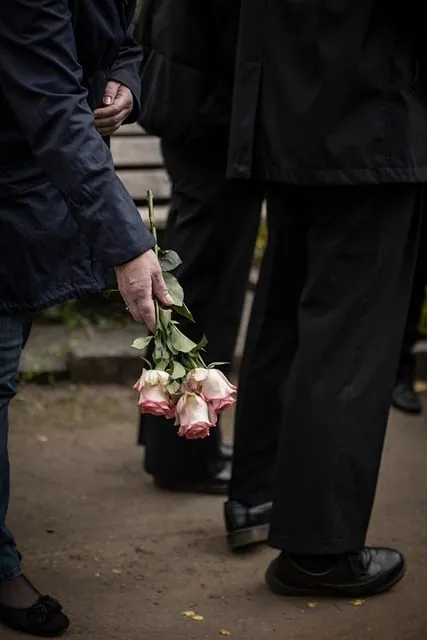
For the man navigating widowhood grief, the protocol runs on five core elements.
For the man navigating divorce grief, the protocol runs differently in critical ways.
-
Reduce contact to the minimum functional floor. The attachment system keeps firing toward her because she’s still accessible. Every unnecessary contact — the text that isn’t about the kids, the check-in on how she’s doing, the late-night message told itself as practical — is a hit of the substance being withdrawn from. Not coldness. Neuroscience. Helen Fisher’s research on romantic rejection found reducing contact is the single most effective behavioral intervention for disrupting the craving circuit. Set the minimum contact required by logistics — co-parenting, legal matters, finances — and treat everything above that floor as a cost, not a comfort. It’ll feel like withdrawal because it is withdrawal.
-
Discharge the contaminated memories deliberately. Unlike the widower whose memories function as sanctuaries, the divorced man’s memories are active pain sources because they’ve been retrospectively contaminated — every happy moment now carries a second reading asking was this real? The way through isn’t avoidance but distance. A useful reframe: that moment was real when it happened. Her happiness in that photograph was genuine in the moment. That she later left doesn’t retroactively delete the emotional content of everything before. The marriage held real love. It also ended. Both true simultaneously, and the mind capable of holding both without collapsing them into a single verdict heals faster.
-
Run the honest inventory — once. The divorce came from somewhere, and that somewhere includes contributions from both people. The divorced man who refuses the inventory pays for it later in repeated patterns. But the inventory needs doing once, consciously, with discipline — not as an ongoing background prosecution running permanently. Write it down. What patterns got brought into the marriage? What got tolerated that shouldn’t have been? What went unsaid, or got said too often, or avoided entirely? Get specific. Then close the document. The inventory is data for reconstruction, not a life sentence. Running it once, honestly, is recovery work. Running it continuously is self-punishment dressed as accountability, accomplishing exactly what self-punishment always accomplishes: nothing, except staying put.
-
Manage the anger’s specific targets. The widower’s anger has no address. The divorced man’s anger has a name, a phone number, and a custody schedule. That specificity makes the anger easier to work with and more dangerous when mismanaged. Targeted anger, examined and released, becomes information. Targeted anger, nursed and refined, becomes bitterness — the one emotional state that looks like strength from the outside while corroding everything it touches from within. The test: is this anger moving toward something, or keeping him tethered to her? Anger driving action is a resource. Anger driving obsessive replay of the wrong done is a tax — the emotional toll of divorce compounds when paid voluntarily, daily, inside a man’s own head.
-
Build the identity before rebuilding the relationship. The divorced man’s central wound isn’t losing her — it’s the revocation of an identity built partly around being her husband. That identity needs reconstruction on a foundation not requiring another person to exist. Who is he without the husband role? Not who he was before the marriage — that man’s gone, and chasing him back is as futile as chasing a country that no longer exists. Who is he now, holding everything the marriage taught, including the painful inventory? That reconstruction takes time and requires actually doing things — building, working, training, creating — rather than thinking about doing things. Identity isn’t a conclusion reached through reflection. It’s an accumulation of evidence collected through action.
The Proof: What the Research Shows About Men and Relationship Loss

A 2013 study in the American Journal of Epidemiology tracking 12,522 people found widowed men carried a mortality risk in the year after their wife’s death 70 percent higher than married men of the same age. The elevated mortality came from multiple sources — cardiovascular events, accidents, and, notably, what researchers termed “failure to seek medical care,” essentially a clinical label for isolating and pushing through. Women who lost spouses showed elevated mortality risk too, but smaller and with faster recovery trajectories. Men, on average, had fewer social ties outside the marriage, leaned on their wives as primary emotional support, and had no redundant system to fall back on once that support disappeared.
The divorce data runs equally stark. Sociologist Robin Simon at Florida State University analyzed the psychological impact of major life stressors across gender and found divorce produces higher rates of depression and anxiety in men than women — the inverse of the cultural assumption that women take it harder. The reason, per Simon’s research, is twofold. First, men typically lose more of their social network in a divorce: her friends, her family, the social infrastructure she maintained. Second, men more often defined their sense of purpose and identity through the husband-and-father role, so losing that role hits at a deeper structural level. Women who divorce tend to have maintained more of their independent identity throughout the marriage.
Men, socialized to anchor to the provider-and-protector role, often find the whole scaffold collapses once the role’s removed.
John Gottman’s longitudinal research at the University of Washington offers a third data point. Gottman spent decades studying couples to find predictors of relationship success and failure, identifying what he called the “Four Horsemen” — contempt, criticism, defensiveness, stonewalling — as the patterns most predictive of divorce. What matters here isn’t divorce’s causes but what Gottman found about recovery: men who divorced and failed to rebuild social connection within two years showed significantly higher rates of prolonged emotional distress than those who deliberately reconstructed their support networks. The male loneliness epidemic isn’t background noise. For divorced men, it’s a health risk with a documented mortality gradient.
The study capturing the fullest picture is Paul Amato’s long-running research on divorce outcomes, published in the Journal of Marriage and Family. Amato found the divorced men who recovered fastest shared three characteristics: maintained at least one high-quality relationship outside the marriage, engaged in meaningful work or contribution (not just employment — something actually cared about), and processed the grief consciously rather than through the standard male displacement activities of overwork, alcohol, and sexual distraction. Those three characteristics map directly onto what the protocol above tries to build. Not a coincidence.
Across multiple studies, the data shows something the culture doesn’t like saying plainly: men are often more fragile in the aftermath of relationship loss than women, not because men are weaker, but because men systematically carry fewer redundant support structures and less practice at the emotional processing grief requires. The solution isn’t declaring men victims of this dynamic. It’s building the missing infrastructure before it’s needed and using it aggressively once it is.
The Hard Truth: What Neither Man Wants to Hear

Not disrespect to the woman lost. Respect for her actual self — human, imperfect, specific, real. The perfect version is a projection. Grieve the real one. Let the projection go. She deserves the honest grief more than the flattering one.
For the divorced man: he probably knows more about why the marriage ended than he’s admitting to himself.
Not because he caused it alone — marriages aren’t solo projects, both people always contribute to the outcome. But the inventory, run honestly rather than defensively, almost always surfaces two or three things known as problems at the time and left unaddressed. Avoidances. Accommodations. Conversations skipped because he didn’t know how to have them or didn’t want to face what they’d reveal. Patterns recognized but left in hope they’d resolve on their own. Not indictments. Information. The man who uses that information — names it, understands it, deliberately changes it — isn’t going to replicate the same marriage with the next person. The man who defends against it will.
The hardest version of this truth: some marriages end because one person checked out and nobody said so. The process of falling out of love usually isn’t a sudden event — it’s a slow accumulation of small abandonments, each individually survivable, collectively fatal. If that’s what happened, the inventory isn’t answering “whose fault was the abandonment” but “what made the abandonment feel safer than the conflict of staying present?” That question has an answer, and the answer lives in his own history, not hers. That’s where reconstruction starts.
For both men: the comparison trap is poison, and the temptation will come.
At some point, the widower tells himself at least there are good memories, that the divorced man has it worse because his love story was contaminated. At some point, the divorced man tells himself at least she’s still alive, that the widower’s grief is clean while his is the complicated one. Both moves serve the same function: attempts to quantify pain toward a verdict about whose suffering deserves more acknowledgment. Neither man’s pain shrinks because the other’s exists. Grief doesn’t run on a fixed supply. No zero-sum here. Treating it as competition just avoids the actual work of processing it.
The hard truth underneath both griefs is simple: the loss isn’t the end of the story. It’s the point where the story becomes worth telling. The man who loses a wife — to death or to choice — and uses that loss to understand something real about love, about himself, about what he’s willing to build and protect and fight for — that man isn’t diminished by what happened. He’s equipped by it. The cost is real. So’s the return. But only with the work, and the work isn’t comfortable, and nobody’s coming to do it in his place.
The Children: Grief Under a Watching Audience

The widower becomes both parents overnight. No custody schedule, no handoff, no co-parenting app. He’s all of it: the pickup, the homework, the sick days, the nightmare at 3 a.m. — managing everything while barely able to function himself. He also has to field questions with no satisfying answer. Where did Mommy go? Why can’t she come back? Will you die too? The temptation — saying whatever makes a child feel better in the moment rather than something true — is overwhelming, understandable, and usually a mistake. Kids tolerate truth better than adults think. What they can’t tolerate is inconsistency — the sense the adult doesn’t know what’s real either.
The divorced father faces a different wound: the slow-motion reduction of fatherhood. Daily presence turns into a schedule. Every other weekend. Wednesday dinners. Alternating holidays. The reduction is sudden and permanent, but the deeper injury is structural. He loses more than time — he loses context. No longer knows what happened at school today, the fight with a friend, the inside joke that developed last Tuesday. His kids build a relationship with their mother containing chapters he’ll never read. Not malice, usually not even deliberate — just what happens when presence generates knowledge and presence gets cut by 70 percent.
Both situations demand the same fundamental skill: emotional intelligence under conditions of personal depletion. Running on empty while the kids need a full tank. The only way to thread that without burning out or shutting down is treating grief processing as maintenance, not indulgence. Process the material so it doesn’t leak onto the kids. The man refusing to address his grief because he’s “too busy” or “needs to be strong for the kids” eventually dumps the unprocessed material onto them anyway — through irritability, withdrawal, emotional unavailability, or the subtle atmospheric pressure of a man carrying something heavy and pretending otherwise.
The kids feel the weight. Always. The question is whether they also see the model for what to do with it.
The Body: Grief That Lives Below the Mind

The widower’s body carries somatic memory — the specific weight and warmth of her in the bed, the rhythm of her breathing at night, the geography of her presence in shared spaces. These arrive in ambush: a particular quality of light at a certain hour, a scent on a stranger in a grocery store, the way a coat hanging on a hallway hook can make a room suddenly uninhabitable. The body’s storing information the mind has started processing, and they’re not on the same schedule. When intimacy with someone new eventually gets considered, he faces not just social awkwardness but the physical strangeness of touch belonging to someone else. New skin feels like a jurisdiction violation. Normal response. Also a signal from the body that the somatic processing isn’t finished, regardless of what the rational mind’s decided about “being ready.”
The divorced man’s body carries a different toxin: jealousy. Visceral awareness that she might be in someone else’s bed tonight. Not rational — the concept of “ownership” isn’t an appropriate frame for another human being, and every man with any emotional intelligence knows it. The body doesn’t know it. It runs on imprint and territory, and the imprint doesn’t respond to evolved frameworks about healthy autonomy. It responds to threat signals, and knowing that the person a nervous system spent years bonding to is now bonding to someone else counts as a threat signal of the most primitive kind. It produces a physical response — nausea, chest tightness, intrusive images — no amount of rational thought fully prevents.
Physical activity isn’t just helpful for both griefs — it’s physiologically necessary. Bereavement research consistently shows men who exercise regularly and vigorously stabilize emotionally faster than those who don’t — not because exercise solves the grief, but because the stress hormones accumulating from grief need metabolic clearance, and the body needs a physical channel for the cortisol and adrenaline generated by threat-detection running on loop. Not a self-help suggestion. Basic stress physiology. Running, lifting, swimming, boxing — mechanism doesn’t matter. What matters is giving the body regular opportunity to discharge what it’s accumulating.
Both men eventually have to reckon with intimacy. The widower needs to understand new physical connection doesn’t betray the memory. The divorced man needs to understand his ex-wife’s body is no longer his emotional territory. Neither lesson lands quickly. Both require the body, not just the mind, to reach a different understanding. The body’s timeline runs slower than the mind’s, more stubborn, and ultimately more reliable. Once the body finally adjusts, the adjustment is real. Until then, trust the mind to plan and the body to follow — eventually.
The Identity Demolition: Different Failures, Different Reconstruction

The widower’s identity crisis is an absence crisis. He was the man who built that life, that home, that future, with that specific woman. When she dies, those identities don’t transfer. They just cease. He’s still a father, still a professional, still a son and brother, but the central organizing identity — the one giving the others shape and meaning — is gone. The void isn’t a blank slate. It’s a negative space, shaped exactly like what used to fill it. The reconstruction challenge: build new structure around a permanent architectural absence without trying to fill the space with a replica.
The divorced man’s identity crisis is a revocation crisis. “Husband” wasn’t deleted by fate — it was taken away by judgment. Stamped “insufficient” by the one person whose evaluation of adequacy mattered most. The widower lost a role to death. The divorced man lost a role to a verdict. And verdicts invite a question with no equivalent in widowhood: if I’d been different, would the verdict have been different? The phantom of a better version — more present, more communicative, less defensive, less distracted — lives inside that question permanently. The widower knows no version of himself could’ve prevented the cancer. The divorced man spends years wondering whether a different version could’ve held it together.
That phantom needs confronting directly, not avoiding. Yes, a different version might have produced a different outcome. Probably true. And the version standing here right now, having been through what he’s been through, having done the inventory, having understood the patterns — that’s the only version available. The past version who might have saved it is gone. The future version who won’t repeat the mistakes doesn’t exist yet. He’s building that man right now, with whatever time and tools are on hand. The work of reconstruction after divorce isn’t returning to who he was. It’s becoming someone he wouldn’t have been without the wreckage.
Both reconstructions need the same foundational material: a reason to get up not contingent on her continued presence in his life. Something that belongs to him entirely — a project, a discipline, a commitment to his children, a skill under construction, a contribution that existed before her and continues after. The man basing recovery on finding the next relationship is outsourcing reconstruction to a stranger who hasn’t shown up yet. The man building identity from his own choices and actions has something no future loss can fully take — because it was never contingent on anyone else to begin with.
FROM THE LIBRARY ›
Death Partner Death Q&A: Widowhood vs. Divorce Grief
Is grief after divorce as serious as grief after a partner’s death? Neurologically and psychologically, yes. Multiple bereavement studies using the same emotional distress measures show nearly identical acute grief responses in the first three months following either loss. The subjective experience differs — and the social support structures differ dramatically — but the nervous system’s response to losing a primary attachment figure runs similar regardless of cause. Dismissing divorce grief as “lesser” because the person’s still alive is medically inaccurate and practically harmful. The person bonded to is gone from daily life. The attachment system doesn’t grade on cause.
Why do divorced men often seem angrier than widowers? Because their grief has a specific target. The widower’s anger points somewhere abstract — fate, God, the universe’s indifference — enormous but diffuse, no object to confront. The divorced man’s anger has a name, a phone number, a child pickup schedule. Targeted anger is both easier to process (it has direction) and more dangerous (it can calcify into bitterness). The divorced man consumed by anger toward his ex-wife pays a daily emotional tax funding nothing, compounding over time. The question worth asking: is this anger moving toward something better, or keeping him tethered to someone who’s already moved on?
How long does grief after losing a partner or spouse typically last? Research by George Bonanno at Columbia University suggests roughly 65 percent of widowed individuals stabilize emotionally within twelve to eighteen months, though they continue carrying the loss as integrated memory permanently. For divorce, Paul Amato’s longitudinal research found a two-to-four-year window for full emotional stabilization. These are averages with substantial individual variation — timelines get shaped by marriage quality, presence of children, available support, prior trauma history, and whether recovery work gets actively engaged or bypassed. A man doing no recovery work at all won’t recover faster than average. He’ll recover slower.
What is “contaminated grief” and how is divorce grief different from widowhood grief? Contaminated grief is grief interrupted by competing emotions that prevent any single process from running to completion. In divorce grief, losing the relationship gets simultaneously contaminated by anger at the person who left, self-doubt about adequacy, jealousy if she’s moved on, guilt about the kids, and occasional relief the conflict’s over. These emotions interrupt each other constantly. Grief can’t complete its cycle because anger barges in; anger can’t fully discharge because grief follows right behind. Widowhood grief, while devastating, tends to run cleaner — the loss has a single source and direction, without the contaminating presence of rejection, blame, or ambiguity. Neither grief is easier. They’re structured differently, requiring different processing approaches.
How do you support a man going through divorce grief without making it worse? Stop trying to explain it, fix it, or locate the cause. The most damaging thing well-meaning friends do is bring a forensic approach — hunting for the explanation, the breakdown of blame, the thing he did or didn’t do that produced this outcome. What a grieving divorced man needs is what a grieving widower gets automatically: presence without verdict. Let him talk without turning it into a case study. Resist the urge to locate his culpability or his ex-wife’s. The analysis can wait. What the nervous system needs first is a witness — one person who knows what’s actually happening and responds with presence rather than correction.
Should a widower or divorced man seek therapy? For many men, a skilled therapist experienced in male emotional processing and versed in attachment theory ranks among the highest-value investments available after either loss. The caveat is “skilled” — a therapist defaulting to passive listening and open-ended reflection isn’t what most men need. What moves the needle: structured work, identifying specific patterns, running the honest inventory, developing concrete strategies for the grief protocol, having someone hold accountability. If the first therapist feels like narrating feelings into a waiting room, find a different one. The field has better options. Research on outcomes for men in therapy after spousal loss stays consistently positive once the right match gets found.
What is the biggest mistake men make when recovering from the loss of a partner? Confusing activity with processing. The man who throws himself into work, training, socializing, or a new relationship immediately after a major loss often looks, from outside, like he’s handling it well. He isn’t handling it — he’s deferring it. The grief doesn’t expire while he’s busy. It accumulates, with compound interest, in the background of every activity used to avoid it. The deferred grief surfaces eventually at the worst possible time: mid-new-relationship, mid-professional-crisis, as an emotional shutdown arriving without warning that makes no sense to the people around him. The man who does the processing work during the acute phase pays the cost once. The man who defers it pays it later, usually with interest, usually when he can least afford it.
Editorial StandardsCorrectionsMedical DisclaimerAbout Our ContentAffiliate DisclosureSite Map