
The alarm goes off at 5:30 AM and Marcus hits snooze twice. By the time he’s sitting at his desk at 7:15, he’s had two coffees and still feels like he’s operating through wet concrete. He had every intention of going to the gym this morning. He had every intention of not eating the bagel he’s currently on. By 11 AM he’s already snapped at a colleague over something minor, agreed to a project he didn’t want, and spent forty minutes in a meeting where his contribution was approximately nothing. He’ll blame the day. He’ll tell himself he’s been stressed. He’ll promise tomorrow will be different.
He’s been sleeping five and a half hours a night for eight months.
This article is about what that’s actually doing to him — at the cellular level, in the prefrontal cortex, inside the hormonal cascade that governs every choice he makes — and what can be done about it. The research on discipline and sleep is not a wellness talking point. It’s some of the strongest and most consistent neuroscience of the last three decades. And it tells a story that most productivity culture refuses to acknowledge: willpower isn’t a character trait. It’s a biological resource. And sleep is the machine that rebuilds it every night.
Trying to build discipline on top of chronic sleep deprivation isn’t a character failure. It’s an attempt to run a high-performance engine on empty. The men who understand this — really understand it — don’t just sleep better. They perform better across every domain: fitness, focus, emotional control, decision quality, relationships. Sleep is not one variable among many. It is the upstream variable that shapes all the others.
The Body: What Sleep Deprivation Actually Does to You
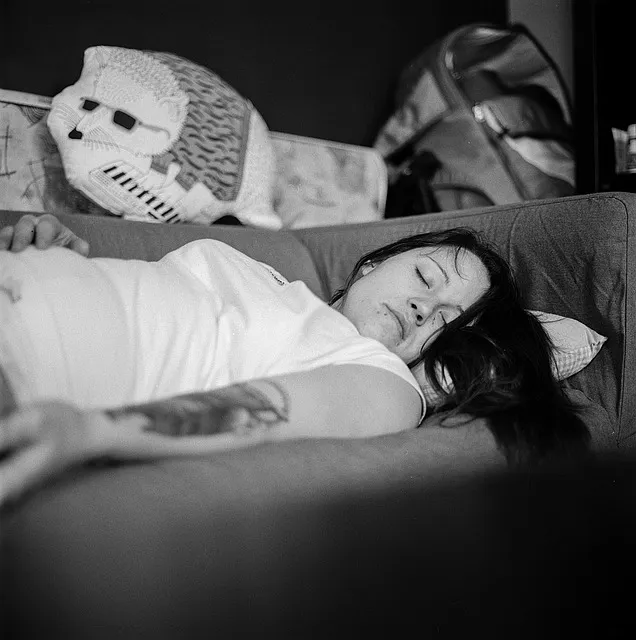
Sleep deprivation compromises the prefrontal cortex in ways that directly mimic frontal lobe damage. That is not a metaphor. Matthew Walker, a neuroscientist and sleep researcher at the University of California Berkeley, has shown that the sleep-deprived brain’s prefrontal cortex shows measurably reduced activity on fMRI scans, in patterns that resemble what neurologists see in patients with prefrontal lesions. IQ points don’t disappear. The executive function that lets you use the IQ points you have does.
Simultaneously, the amygdala — the brain’s threat-detection and emotional-reactivity center — becomes hyperactive. In a well-rested brain, the prefrontal cortex acts as a governor on the amygdala, dampening raw emotional reactions before they turn into impulsive behavior. In a sleep-deprived brain, that governor disconnects. A 2007 study published in Current Biology found sleep-deprived subjects showed 60% greater amygdala reactivity to negative stimuli than well-rested controls. The emotional thermostat stops regulating. Small frustrations become large ones. Large frustrations become explosions. The ability to stay calm under pressure — which is largely what discipline looks like in real life — degrades in direct proportion to the hours of sleep lost.
Then there’s the hormonal picture. Inadequate sleep drives cortisol (the primary stress hormone) upward. Chronic cortisol elevation suppresses testosterone, impairs insulin sensitivity, accelerates muscle breakdown, and promotes fat storage — particularly visceral fat around the abdomen. A 2011 study published in the Annals of Internal Medicine found dieters who slept 5.5 hours versus 8.5 hours lost the same total weight, but the distribution was radically different: the sleep-deprived group lost 55% of their weight from lean muscle mass while the well-rested group lost 80% of their weight from fat. Eating perfectly and training consistently doesn’t matter — sleep deprivation still sabotages the composition goal, because the hormonal environment it creates is built for fat storage and muscle breakdown.
Ghrelin, the hormone that signals hunger, increases with sleep deprivation. Leptin, the hormone that signals satiety, decreases. The net effect: a tired man is hungrier, less easily satisfied, and drawn specifically toward calorie-dense, high-sugar, high-fat foods — the exact foods discipline is supposed to keep him away from. The research here is concrete: a 2004 study from the Public Library of Science Medicine found sleeping under six hours was associated with a 23% higher likelihood of obesity compared to sleeping seven to nine hours. Sleep deprivation doesn’t just impair the willpower to resist bad food. It biochemically increases the craving for it.
The immune system, the cardiovascular system, and cognitive processing speed all degrade on inadequate sleep. But for the man trying to build discipline, the most important degradation is at the decision layer. Every difficult choice — the workout when there’s no desire to, the meal prep instead of delivery, the hard conversation instead of avoidance — draws on prefrontal resources. Sleep is what restores those resources overnight. Without it, every day starts with a deficit, and the deficit compounds across weeks and months until the man in the bathroom mirror barely recognizes the one who made the commitments.
The Science: What Forty Years of Research Actually Shows
The science here didn’t arrive all at once. It accumulated across decades, from different research groups, using different methodologies, and the convergence is what makes it credible. The story of how sleep and self-regulation interact is one of the most well-replicated narratives in behavioral neuroscience.
The Walker studies on emotional regulation. Matthew Walker’s lab at UC Berkeley has produced some of the most important sleep research of the last twenty years. In a landmark 2007 study published in Current Biology, Walker and colleagues used fMRI to compare brain activity in sleep-deprived versus well-rested subjects while showing them emotionally disturbing images. The prefrontal-amygdala connectivity in sleep-deprived brains had essentially disconnected — the top-down regulatory control that keeps emotional reactions proportionate was gone. Walker described it as the brain reverting to a more primitive operational pattern, reactive rather than reflective. The implications for any man trying to exercise emotional discipline — staying patient in conflict, making measured decisions under stress, resisting impulsive behavior — are direct and significant.
The Roy Baumeister ego depletion research and its sleep connection. Baumeister’s famous research at Florida State University on ego depletion established that self-control draws on a limited resource that depletes with use. His studies, including those published in the Journal of Personality and Social Psychology in 1998, showed subjects who had exerted self-control on one task performed worse on subsequent self-control tasks — suggesting willpower is more like a muscle that fatigues than a character trait that either exists or doesn’t. Later research connected ego depletion directly to sleep: the overnight sleep cycle is one of the primary mechanisms by which this resource is restored. The prefrontal cortex recovery that happens during deep slow-wave sleep is the biological substrate of what Baumeister was measuring behaviorally. Discipline, in this framework, isn’t something you have. It’s something that gets rebuilt every night, or doesn’t.
The Harrison and Horne decision-making studies. Yvonne Harrison and James Horne at Loughborough University in the UK conducted a series of studies in the late 1990s and early 2000s examining how sleep deprivation affects higher-order decision-making. Their findings, published in Neuropsychologia and the Journal of Sleep Research, showed sleep-deprived subjects were able to handle routine, predictable tasks reasonably well but became significantly impaired on novel, flexible decision-making — the kind that requires weighing competing options against long-term goals. This is precisely the type of decision-making that discipline demands: choosing the gym over the couch isn’t a simple calculation. It requires holding long-term identity and goals against immediate comfort and making a deliberate choice. Sleep deprivation specifically degrades that capacity.
The Dinges sleep restriction studies. David Dinges at the University of Pennsylvania ran controlled sleep restriction studies where subjects were limited to six hours of sleep per night for fourteen days — a schedule that represents a rough average for chronically sleep-deprived adults in Western countries. His team used the Psychomotor Vigilance Task to measure sustained attention and cognitive performance. The results, published in Sleep in 2003, showed that after ten days at six hours per night, subjects’ performance was as impaired as subjects who had been kept awake for twenty-four hours straight. The devastating part: the six-hour subjects didn’t perceive themselves as significantly impaired. They rated their own sleepiness as moderate while their objective performance was catastrophic. This subjective-objective gap is one of the most important findings in all of sleep research, because it means accurately assessing your own impairment while chronically under-slept isn’t possible. You feel okay. You are not okay.
The Spiegel-Van Cauter hormone studies. Karine Spiegel and Eve Van Cauter at the University of Chicago were among the first to rigorously document the hormonal consequences of sleep restriction. Their 1999 study in The Lancet restricted healthy young men to four hours of sleep for six nights and found significant impairments in carbohydrate metabolism and elevated cortisol levels by the sixth night. Their follow-up work quantified the ghrelin-leptin disruption: sleep-deprived subjects had 24% higher ghrelin (hunger signal) and 18% lower leptin (satiety signal) compared to well-rested controls. These aren’t trivial numbers. They represent a significant biochemical push toward overeating that no amount of willpower reliably overcomes, because the hormonal signals are more powerful than the prefrontal override. Discipline-based approaches to diet that ignore sleep are attempting to fight biology with motivation. The biology wins.
The Killgore risk-taking studies. William Killgore at Harvard Medical School studied how sleep deprivation affects risk assessment and decision-making in high-stakes scenarios. His work, published in Sleep in 2006, found sleep-deprived subjects made riskier financial decisions, were less capable of accurately assessing probability, and showed a bias toward reward even when objective analysis suggested caution. The prefrontal cortex’s risk-weighting function — its ability to hold “this feels good now” against “this will cost me later” — degrades with sleep loss. A tired man is a more impulsive man, not because his values changed but because the neural machinery for translating values into behavior has been compromised.
What all of this research establishes, cumulatively, is a concept worth naming the Willpower Reserve: the biological capacity for disciplined behavior that sleep builds and deprivation destroys. The Willpower Reserve isn’t a metaphor. It has a neurological substrate (prefrontal cortex activity), a hormonal signature (testosterone, cortisol, ghrelin, leptin), and a behavioral expression (the quality of decisions under pressure). Every night of adequate sleep deposits into the Reserve. Every night of inadequate sleep makes a withdrawal. Run enough withdrawals and the Reserve empties, and no amount of motivational content, cold showers, or accountability apps will refill it, because the source has been removed.
The Protocol: Building Consistent, High-Quality Sleep

Step 1: Lock the schedule before anything else. Consistency of timing — going to bed and waking up at the same time every day, including weekends — is the single highest-impact change most men can make. The circadian rhythm is a biological clock that regulates virtually every system in the body. It runs on approximately 24-hour cycles and is anchored primarily by light exposure and behavioral consistency. When wake time varies by two or three hours across the week (late nights Friday and Saturday, early alarm Monday), that’s inducing what researchers call social jet lag — a chronic misalignment between the biological clock and the behavioral schedule. A 2012 study in Current Biology found social jet lag of just one hour was associated with a 33% increased likelihood of obesity, independent of total sleep duration. Pick a wake time achievable seven days a week and hold it for two weeks before adding any other change.
Step 2: Manage light strategically. Light is the primary signal the circadian clock uses to determine time of day. Morning bright light — within 30 minutes of waking, ideally outdoors — triggers a cortisol pulse that sets the clock, improves alertness, and, importantly, sets the timing for melatonin production roughly 12-14 hours later. Evening blue light from screens suppresses melatonin at precisely the time it needs to be rising. A 2014 study in the Proceedings of the National Academy of Sciences found reading on a light-emitting device for four hours before bed delayed melatonin onset by 90 minutes, reduced melatonin levels by 55%, and impaired next-morning alertness even after eight hours of sleep. Implement a screen curfew 60-90 minutes before bed, or use blue light filtering glasses and enable night mode on devices if complete cessation isn’t realistic.
- Morning anchor: Get 10 minutes of outdoor light within 30 minutes of waking. On cloudy days, still go outside — diffuse daylight is 10x brighter than indoor lighting.
- Evening cutoff: Screens off 60 minutes before bed minimum. Replace with reading physical books, conversation, light stretching, or nothing — boredom is fine.
- Bedroom darkness: The bedroom should be dark enough that a hand held in front of the face is invisible. Blackout curtains or a quality sleep mask. Even small amounts of light during sleep suppress melatonin and fragment sleep architecture.
Step 3: Control temperature. Core body temperature needs to drop 1-2 degrees Fahrenheit to initiate and maintain sleep. This is why a hot room makes sleep difficult. Research from the University of South Australia and replicated elsewhere shows an ambient temperature of 65-68°F (18-20°C) is optimal for most adults. A warm shower or bath 60-90 minutes before bed paradoxically helps — it dilates blood vessels in the skin, releasing heat and accelerating the core temperature drop sleep requires. A real mechanism, not bro-science. Setting a thermostat helps directly; without that option, at minimum ensure ventilation and consider a fan or cooling mattress pad.
Step 4: Eliminate the obvious chemical disruptors. Caffeine has a half-life of five to seven hours in most adults, meaning a 3 PM coffee still has half its stimulant load in the system at 8 PM. Cut caffeine by 1 PM at the latest — noon for anyone particularly sensitive or drinking more than two cups daily. Alcohol is more insidious: it sedates initially (making sleep onset faster) while fragmenting the sleep architecture in the second half of the night, particularly suppressing REM sleep, which is critical for emotional regulation and memory consolidation. A 2018 study in JMIR Mental Health found even moderate alcohol consumption (one to two drinks) reduced sleep quality by 24% in men. The sleep after drinking feels like sleep. It is not restoring what a sober night would restore.
Step 5: Build a wind-down sequence. The transition from wakefulness to sleep requires a progressive down-regulation of the nervous system — a shift from sympathetic (fight-or-flight) to parasympathetic (rest-and-digest) dominance. A consistent pre-sleep routine trains this transition through repetition. The body learns to associate the routine with sleep onset. The routine does not need to be elaborate. It needs to be consistent. A 20-30 minute sequence might include: dimming lights, changing into sleep clothes, light stretching or breathing exercises, brief reading of something non-stimulating. The specific elements matter less than doing them in the same order at the same time every night. After two to three weeks, the routine itself begins to induce drowsiness through conditioned association.
Step 6: Address sleep anxiety directly. Lying awake struggling to fall asleep, or waking at 3 AM unable to return to sleep — the worst response is lying in bed staring at the ceiling. This creates a conditioned arousal response — the brain begins to associate the bed with alertness and anxiety rather than sleep. The sleep restriction approach from Cognitive Behavioral Therapy for Insomnia (CBT-I) is the gold standard here: if sleep doesn’t come within 20 minutes, get up, go to a different room, do something boring in dim light, and return only when genuine sleepiness sets in. Counterintuitive but effective. CBT-I has a success rate that matches or exceeds sleep medication in clinical trials, with effects that last after treatment ends, unlike medication.
Step 7: Use strategic napping only as a tool, not a crutch. A 20-25 minute nap taken before 2 PM can partially restore prefrontal function and reduce the cognitive deficit of mild sleep debt. Keep it under 30 minutes to avoid deep sleep and the grogginess that comes with waking from it. A NASA study of military pilots found a 26-minute nap improved alertness by 54% and performance by 34%. Napping doesn’t replace nighttime sleep, and regular reliance on naps to function signals a real problem with nighttime hours. But as a tactical supplement on high-demand days, a well-timed nap is a legitimate performance tool that most men dismiss out of cultural prejudice rather than evidence.
The Proof: What Happens When Men Actually Fix Their Sleep

In a landmark study conducted with U.S. Army soldiers at the Walter Reed Army Institute of Research, researchers tracked decision-making, emotional regulation, and combat performance under varying sleep conditions over extended periods. The data showed soldiers restricted to four to six hours of sleep per night for one week showed performance decrements on simulated mission-critical tasks equivalent to soldiers who had been awake for 48 hours straight. Their self-rated performance didn’t match their objective scores — they consistently believed they were performing adequately when measurements showed severe impairment. This subjective-objective gap is the same phenomenon Dinges documented: sleep deprivation impairs the very faculties used to evaluate whether those faculties are impaired.
The athletic data is equally striking. Cheri Mah at Stanford University conducted a study — published in Sleep in 2011 — with college basketball players who extended their sleep to ten hours per night for five to seven weeks. Average sprint times improved by 4%, free-throw shooting accuracy improved by 9%, three-point field goal percentage improved by 9.2%, and reaction time improved significantly. No supplements, no additional training, no coaching changes. Sleep extension alone produced performance improvements that would be considered significant in any athletic context. The men sleeping six or seven hours weren’t performing at their ceiling — they were performing at the ceiling their sleep allowed.
Consider what this means for the average man trying to improve his discipline through training, diet, and mental habits. If athletes at the peak of their training and motivation see 9% improvements in precision and 4% improvements in speed from sleep extension alone, what are the equivalent gains available to a man going from five and a half hours to eight? The performance ceiling moves. Not because he got more talented or more motivated — because the biological substrate supporting his performance was finally adequate.
The weight management data tells a similar story. Studies from the University of Chicago and Stanford have shown adequate sleep is associated with lower BMI, better insulin sensitivity, and reduced cravings for high-calorie foods — independent of dietary choices and exercise. Men who fix their sleep without changing anything else about their diet or training typically see improvements in body composition. They’re not eating differently. The hormonal environment sleep creates makes the same choices produce better results.
One more data point worth holding: in 2015, researchers at Carnegie Mellon University published a study in Sleep examining the relationship between sleep duration and susceptibility to the common cold. Subjects who slept less than six hours were 4.2 times more likely to catch a cold than those sleeping seven hours or more, after controlling for all other health factors. The immune system’s recovery and recalibration happens during sleep. The man proud of his grind, dismissing adequate sleep as weakness, isn’t just making worse decisions and gaining body fat — he’s also getting sick more often and recovering from training more slowly. There is no scenario in which chronic sleep deprivation is a competitive advantage.
The Mistakes: Where Men Get This Wrong
Mistake 1: Treating sleep as a productivity input rather than a biological requirement. The framing of sleep as something to optimize for better performance beats treating it as weakness, but it still misses the point. Sleep isn’t a performance hack. It’s a biological imperative in the same category as oxygen and food. Treating it as optional — managed when convenient and sacrificed when busy — isn’t a choice between sleep and productivity. It’s a choice between productive work and impaired work, because work done while under-slept is lower quality, takes longer, and produces more errors. The man who sleeps six hours to get two extra hours of work done typically produces less net value than the man who sleeps eight and works with a full prefrontal cortex for the remaining hours.
Mistake 2: The 4 AM alarm without the corresponding bedtime. The internet is full of men celebrating early wake times as evidence of discipline. Some of them are genuine — bed at 8:30 PM, eight hours logged. Many of them are sleeping five or six hours and calling it discipline when the correct term is voluntary sleep deprivation. A 4 AM wake time is only sustainable and healthy with lights out by 8 to 8:30 PM. Waking at 4 AM after going to bed at 11 PM isn’t discipline. It’s discipline performed for an audience while the biological foundation discipline requires gets destroyed underneath it.
Chronotype research adds another layer to this. Roughly 25% of people are genuine morning chronotypes who naturally feel alert and perform well in the early hours. The remaining 75% have intermediate or late chronotypes and perform better on a somewhat later schedule. Forcing a late chronotype into a 4 AM wake routine doesn’t create early-morning productivity. It creates chronic social jet lag and impaired performance across the entire day. The most disciplined move is figuring out the sleep schedule that gives seven to nine hours and fits actual life circumstances — then holding that schedule with the consistency of a professional athlete. The clock reading on the alarm doesn’t matter. The hours in bed do.
Mistake 3: Using alcohol as a sleep aid. This is so common it deserves its own space. Alcohol sedates — neurologically distinct from sleep. Natural sleep involves specific architecture: light sleep transitioning to deep slow-wave sleep, cycling into REM, repeating across the night. Alcohol suppresses REM and disrupts the second half of the sleep cycle, which is disproportionately REM-rich. REM sleep is where emotional processing happens, where the amygdala recalibrates, where the day’s experiences get integrated into memory. A man who drinks two or three beers before bed every night might sleep eight hours and still wake up emotionally reactive, mentally foggy, and without the discipline-supporting benefits those eight hours should have provided. The hours are fake. Restoration doesn’t happen on alcohol-impaired sleep architecture.
Mistake 4: Trying to fix sleep with supplements instead of behavior. Melatonin is overused. It’s a signal hormone, not a sedative — it tells the body it’s nighttime, but doesn’t produce sleep the way sleep pressure and circadian alignment do. High-dose melatonin (the 5-10mg commonly sold in American pharmacies) can actually disrupt natural melatonin signaling over time. For anyone using melatonin, the evidence supports 0.5-1mg taken 30-60 minutes before bed as a timing signal, not a sleep drug. Magnesium glycinate has reasonable evidence for improving sleep quality in people who are deficient (a significant portion of the population). Ashwagandha has some RCT support for reducing cortisol and improving sleep quality. But none of these replace the behavioral foundations in the protocol above. A supplement on top of a broken sleep schedule is lipstick on a broken machine.
Mistake 5: Sleeping in on weekends to “catch up.” Weekend sleep extension can partially compensate for weekday sleep debt, but the compensation is incomplete and comes with costs. A 2019 study in Current Biology found “recovery sleep” on weekends did not fully reverse the metabolic damage of weekday sleep restriction — subjects who slept in on weekends still showed elevated caloric intake and disrupted insulin sensitivity compared to those who maintained consistent sleep. The social jet lag created by the weekday-to-weekend schedule shift also destabilizes the circadian clock, making Monday harder and the entire following week slightly worse. The solution is not sacrificing weekend sleep — it’s bringing weekday sleep close enough to adequate that the weekend difference stays small.
What People Ask About Discipline Sleep Research
How many hours of sleep do men actually need for optimal discipline and performance? The evidence points to seven to nine hours for most adults, with individual variation. The National Sleep Foundation’s 2015 consensus panel reviewed 312 studies and confirmed this range. Below seven hours, cognitive and emotional performance degrades measurably for most people. Above nine hours, there are associations with health problems, though this likely reflects an underlying cause (illness, depression) rather than excess sleep being harmful. A practical test: needing an alarm to wake up means insufficient sleep. Waking naturally before the alarm feeling rested means the range is right. Most men who claim to function fine on six hours have adapted to feeling impaired — they’ve lost the reference point of what well-rested feels like.
Can sleep deprivation cause anxiety and make emotional regulation harder? Yes, and the mechanism is well-documented. The 2007 Walker study showed a 60% increase in amygdala reactivity under sleep deprivation, combined with reduced prefrontal-amygdala connectivity. In practical terms: the emotional alarm system becomes louder and the regulatory system becomes quieter simultaneously. This produces a state that resembles anxiety without necessarily meeting criteria for an anxiety disorder — heightened threat sensitivity, difficulty downregulating from stressors, disproportionate emotional responses. Men who struggle with irritability, reactivity, or difficulty managing stress should assess their sleep before assuming something else is wrong. Often things improve substantially once the sleep improves. For men interested in nervous system regulation, sleep is the foundation that makes every other regulation tool more effective.
Does exercise timing affect sleep quality? Yes, but less dramatically than often claimed. Vigorous exercise within two to three hours of bedtime raises core body temperature and increases sympathetic nervous system activity, which can delay sleep onset in some people. However, a 2019 meta-analysis in Sports Medicine found evening exercise (ending up to one hour before bedtime) did not significantly impair sleep quality across most subjects. Morning or early afternoon exercise is theoretically optimal — it aligns with natural cortisol rhythms and avoids the temperature issue — but evening is fine if that’s the only available window. Consistent exercise at any time substantially improves sleep quality compared to no exercise. Don’t let perfect timing become an excuse not to train.
What’s the connection between sleep and testosterone in men? Significant. The majority of testosterone production in men happens during sleep, specifically during the slow-wave deep sleep phases of the first half of the night. A 2011 study in the Journal of the American Medical Association found one week of sleep restriction to five hours per night in healthy young men reduced daytime testosterone levels by 10-15% — an effect equivalent to ten to fifteen years of normal aging. Low testosterone correlates directly with reduced motivation, increased body fat, impaired muscle synthesis, lower mood, and reduced competitive drive. Men concerned about testosterone levels who are sleeping six hours or less should fix the sleep before exploring any other intervention. It’s the most direct hormonal lever available.
I have a newborn and can’t control my sleep. What do I do? When fragmented sleep is unavoidable, focus on what’s controllable. Go to bed as early as possible — every additional minute of total sleep matters. Short naps (20-25 minutes) during the day when the baby sleeps can partially restore prefrontal function even without preventing cumulative debt. Split nighttime duties with a partner when possible to maximize one longer uninterrupted block. Maintain basic health habits as non-negotiables even when performance dips — training, adequate food, hydration. And calibrate expectations accordingly: this is a temporary season with a biological ceiling on performance. This isn’t failure. It’s a parent with a newborn on fragmented sleep. Lower the performance bar for now, protect the fundamentals, and wait for the sleep to stabilize. The sleep-stress cycle breaks when circumstances change — the job isn’t to break it through willpower but to keep the foundation intact until it does.
Is the link between sleep and discipline in men well-established by research? The connection is among the most robustly replicated findings in behavioral neuroscience. The Dinges sleep restriction studies, Walker’s emotional regulation research, Killgore’s risk-taking work, Baumeister’s ego depletion framework, and Spiegel and Van Cauter’s hormonal data all point to the same conclusion from different methodological angles. The effect sizes are large, the findings replicate across labs and populations, and the biological mechanisms are understood at a cellular level. This is not an emerging hypothesis. It’s established science that hasn’t filtered into mainstream productivity and self-improvement culture because the solution — sleep more, consistently — isn’t a sellable product.
What’s the single most impactful change to start with tonight? Fix the bedtime. Calculate the fall-asleep time needed to get seven and a half hours before the alarm, add 30 minutes for wind-down and sleep onset, and commit to that time tonight. Put the phone in another room — this single action eliminates the primary source of pre-sleep stimulation for most men. Set the bedroom thermostat to 66-68°F if possible. Don’t try to implement the entire protocol at once. Hold the fixed bedtime for two weeks before adding anything else. The circadian clock stabilizes in roughly that timeframe, and once it does, falling asleep and waking up become measurably easier. The Willpower Reserve fills from the first night of adequate sleep. Not to 100% — the recovery is gradual — but measurably. Start tonight. Not next Monday. Tonight.
How Sleep Connects to the Full Discipline System
Every tool in a disciplined man’s toolkit has a biological foundation, and that foundation is sleep. Understanding why sleep fails is the starting point. The foods that support sleep quality are part of the nutritional layer. The architecture of deep sleep explains what’s actually happening during those hours and why all of it matters. Building discipline practices — tracking emotional responses, managing training, trying to stay consistent with habits — on top of inadequate sleep is attempting to build a second floor before finishing the first.
The Willpower Reserve concept reframes everything. Discipline isn’t a character test passed or failed. It’s a biological resource replenished or depleted. The men who appear endlessly disciplined are not fighting harder against the same internal resistance everyone else is fighting. They’re operating with a fuller reserve — which allows the disciplined choice with less friction, which allows consistent execution, which produces the results that look from the outside like extraordinary willpower but are from the inside simply what it feels like to be adequately rested.
Start here. Not with another productivity system. Not with a new morning routine. Not with a supplement stack. With the thing biology actually requires to support everything else being built. Sleep isn’t what gets sacrificed for discipline. It’s what makes discipline possible.
Related: Discipline vs. Punishment: Why Most People Confuse Them