
The question came at dinner. It always comes at dinner. His wife set down her fork and said, quietly, “I feel like I’m married to a wall.” Not angry. Not dramatic. Just tired — the particular exhaustion of a woman who has been knocking on a door for seven years and finally accepted it may never open. David didn’t get defensive. He didn’t fight back. He went flat. His face did the thing it does — that practiced blankness — and he said he was sorry she felt that way, and the conversation ended. He described this exchange to his therapist three weeks later, still confused by his own reaction. “I wanted to reach her,” he said. “I could feel myself wanting to. And then something just… closed.” He paused. “I don’t know where that comes from.”
His therapist had a pretty good guess.
Generational trauma in relationships doesn’t announce itself. It doesn’t arrive with a diagnosis or a dramatic origin story. It arrives at dinner tables, in the flat seconds after a simple question, in the space between what a man wants to give and what his body will allow him to give. It lives in the gap between knowing and doing — in the man who understands that emotional availability matters and still can’t produce it, who loves his wife and still can’t reach her, who sees himself going through the motions and can’t stop. That gap has a history. It was built by men he may have never met, under conditions he never experienced, and it has been renovated and passed down with almost perfect fidelity across three or four generations.
This is what gets examined here: not just the why of generational trauma in relationships, but the exact mechanism by which a war that ended decades before a man was born is still running his nervous system at dinner tonight. And more importantly, what actually gets done about it.
The Mechanism: How Trauma Travels Across Generations
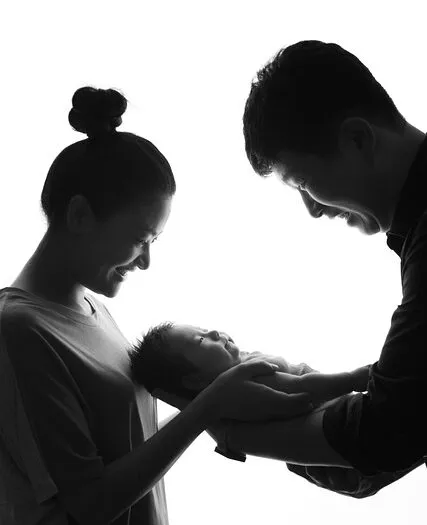
The first is epigenetic. Rachel Yehuda’s landmark research at Mount Sinai, published in Biological Psychiatry in 2015, studied the children of Holocaust survivors and found measurable changes in cortisol regulation — the body’s primary stress-response hormone — that were not explained by the children’s own life experiences. The stress of the parents had altered gene expression in ways that were passed to offspring. The same findings have replicated across combat veterans’ children, famine survivors’ descendants, and abuse victims’ families. The technical term is epigenetic methylation: trauma chemically tags certain genes, affecting how they express, and those tags can be inherited. A grandfather’s war may have literally altered the stress-response architecture a grandson was born with. This isn’t metaphor. It’s molecular biology.
The second channel is behavioral. A traumatized father raises his children inside the only emotional environment he knows how to create — which is the one his trauma built. Emotional suppression, hypervigilance, explosive anger, absence, unpredictability, or the stone-wall flatness David described — these aren’t personality traits. They’re somatic imprints: the nervous system’s learned response to chronic threat, now expressed as a parenting style. The children absorb these patterns through thousands of micro-interactions. By age five, they’ve already internalized the rules: which emotions are acceptable in this house, which ones make Dad disappear, which ones bring punishment or contempt. They didn’t choose these rules. They didn’t know there were other rules. The architecture was installed before they had language to question it.
The third channel is attachment. John Bowlby’s attachment theory, refined by Mary Main’s Adult Attachment Interview research at Berkeley in the 1980s, established something clinically important: the way a parent regulates their own emotional state directly predicts the attachment style of the child. A parent who shuts down under emotional stress produces an avoidant child — one who learns, at the deepest level of the nervous system, that emotional needs will not be met and are safest when suppressed. That avoidant child grows into an adult who struggles with intimacy that feels foreign, who stonewalls in marriage not because he doesn’t care but because the circuits for sustained emotional presence were never fully built. And when he becomes a father, the whole system starts again.
Call this the Closed Loop — the self-perpetuating system by which unprocessed trauma produces emotional patterns that produce parenting environments that produce children with the same emotional patterns. The Closed Loop isn’t fate. But it runs on autopilot unless someone intervenes, and the intervention requires understanding exactly what’s being dealt with.
What the Closed Loop Looks Like From Inside a Marriage
If a man is carrying generational trauma into a relationship, here’s what the internal experience tends to look like — described with enough precision that most men will either recognize themselves or recognize someone they love.
There’s a wall. Not a metaphorical wall — an actual physiological event. When a partner reaches for him emotionally — when she asks a real question, expresses a real need, or initiates a difficult conversation — something happens in his nervous system before his cortex even registers it. The amygdala fires. Threat signals cascade. Breathing shallows. The jaw tightens. And before anything has been consciously decided, he’s behind glass. Present in the room. Unavailable in the ways that actually matter. Stan Tatkin, a couples therapist and researcher who developed the PACT model of couples therapy, describes this as the “primitive brain” overriding the “ambassador brain” — the survival circuits shutting down the relational circuits because, somewhere deep in the threat-detection architecture, emotional proximity was coded as danger.
His grandfather knew why. He’d seen things that made emotional exposure genuinely life-threatening — not metaphorically, but literally. Soldiers who showed fear or weakness in combat were liabilities. Men who fell apart under pressure put others at risk. Emotional shutdown was a survival technology, developed in real-time under real threat, and it worked. He came home. He survived. And he couldn’t switch it off, because nobody knew how and there was no cultural permission to try. So he parented from behind his wall, and his son grew up reading the wall as normal, as the standard emotional temperature of adult men, as what strength looks like. And that son’s wall was less about war and more about… nothing in particular. Just the ambient training. And his own son grew up reading his wall too. And now that wall is showing up in a marriage decades later, a wife sitting across the table tired, and a man wanting to reach her and — something just closes.
The Closed Loop is particularly vicious because it’s invisible from inside it. The man who’s running it doesn’t experience himself as emotionally unavailable. He experiences himself as stable. As controlled. As the adult in the room who doesn’t get swept up in drama. He’s providing. He’s reliable. He shows up. What he can’t see is that showing up physically while being absent emotionally is its own kind of desertion — slower, quieter, and in many ways more confusing for the people around him because there’s nothing they can point to, no single incident, just the slowly accumulating evidence that he’s not really there.
The Lie: What Conventional Wisdom Gets Catastrophically Wrong
The dominant cultural narrative about men and emotional unavailability goes something like this: the problem is that men have been taught not to express feelings, so the solution is to teach men to express feelings. Encourage vulnerability. Create safe spaces. Have more conversations. The logic sounds reasonable. It’s also, in practice, almost completely useless for men with actual generational trauma, and here’s why.
The instruction “be more vulnerable” assumes the obstacle is permission — that a man knows how to be emotionally present and is simply withholding it because of societal norms. For men with a traumatized nervous system, this is like telling a person with a broken leg to walk it off. The issue isn’t permission. The issue is that the nervous system has been wired, through thousands of repetitions across multiple generations, to shut down emotional access under exactly the conditions where vulnerability would be required. The “be more open” instruction lands at the cortex. The shutdown happens in the brainstem. The cortex and the brainstem are running different software, and in any conflict between them, the brainstem wins. That’s not a design flaw. That’s the architecture.
The second piece of bad advice is its apparent opposite: “just man up and push through the discomfort.” This comes from the tougher end of the cultural spectrum and it has the same problem from the other direction. It assumes the issue is willpower. It isn’t. A man cannot willpower his way past a dysregulated nervous system any more than he can willpower his way past a broken arm. The shutdown isn’t a choice being made and then refused to be unmade. It’s a reflexive physiological response running below the level where choice operates.
The third piece of bad advice is the most expensive: “understanding your childhood explains the pattern, and explanation is healing.” This produces men who can narrate their generational trauma with real sophistication — who know the epigenetic research, who’ve mapped the transmission from grandfather to father to self — but whose behavior at dinner has not changed one degree. Understanding is not healing. It’s the map. The map and the territory are not the same thing. David, the man from the opening, had been in talk therapy for two years before any of this became operational rather than theoretical. He had an excellent understanding of his father’s emotional limitations and his grandfather’s wartime history. His wife still felt married to a wall.
The Protocol: Breaking the Closed Loop

Level One: The Body
The trauma lives in the body, which means the body is where this has to start. Not with insight. Not with conversation. With the physical experience of staying present under emotional pressure — and that requires building the capacity before it’s needed in a real situation.
- Physiological downregulation practice. The shutdown response is a sympathetic nervous system activation — the body in fight-or-flight. To interrupt it in real time requires a practiced downregulation skill. The most research-supported is extended exhale breathing: inhale four counts, exhale eight counts, repeat for two minutes. The extended exhale activates the vagal brake, which is the parasympathetic mechanism that can physiologically override the threat response. Andrew Huberman’s research at Stanford on the “physiological sigh” — a double inhale through the nose followed by a long exhale through the mouth — shows this is the fastest known method for reducing physiological arousal in real time. Practicing this daily, not just during conflict, builds the reflex. The downregulation needs to become automatic before the wall goes up, not something a man is trying to remember once he’s already behind it.
- Somatic noticing without action. Twice a day, sit with eyes closed for five minutes and scan for the physical signals that precede the shutdown: tight shoulders, shallow breathing, locked jaw, subtle chest constriction. These signals are the early warning system, and most men with generational trauma have learned to ignore them so completely that there’s zero awareness the shutdown is coming until it’s already gone. The practice is not to do anything about these sensations. Just to notice them. Naming and locating a sensation in the body reduces its intensity — research by Matthew Lieberman at UCLA confirmed this in a 2007 study in Psychological Science: putting feelings into words (affect labeling) reduces amygdala activation. This is the “name it to tame it” mechanism, and it works below the level of insight.
- Deliberate exposure: stay in the room. Start small. Find a situation that activates mild emotional discomfort — not the most loaded trigger, but something with a 3/10 intensity — and practice not leaving. Not physically leaving, and not the psychological departure behind glass. Feel the activation. Use the exhale breathing. Stay. The goal in the first month isn’t to be emotionally open. The goal is to build the physical capacity to remain present under activation, which is the prerequisite for everything else. A man who can stay in the room is a man whose partner can eventually reach.
Level Two: The Relationship
The relationship needs a new operating agreement — one that accounts for the reality of the Closed Loop rather than pretending it doesn’t exist. This requires one honest conversation, done once, not as a confession and not as an excuse but as a briefing.
- The Briefing Conversation. Tell a partner, in plain language, what the Closed Loop is and what it looks like from the inside. Name the specific physiological signals: “When my jaw locks, I’m behind the wall.” “When I go flat, it’s the shutdown, not contempt.” “The ‘fine’ answer means I’m not fine but I can’t access it right now.” This gives her the map of the minefield. It isn’t vulnerability for its own sake — it’s operational intelligence that changes how conflict lands for both people. When she can name what’s happening (“the wall just went up”) and he can hear it as an observation rather than an accusation, the loop has its first interruption point.
- The Twenty-Minute Rule. John Gottman’s research at the University of Washington showed that during high-conflict conversations, the male cardiovascular system remains elevated for significantly longer than the female cardiovascular system — often 20+ minutes after the conflict appears resolved. Trying to have a productive emotional conversation when one partner is still physiologically flooded is neurologically pointless. Agree in advance: if either partner calls a break, it’s a twenty-minute minimum, non-negotiable, and then both come back. The break isn’t abandonment. It’s physiology management.
- Micro-disclosures, not grand gestures. Recovery from the Closed Loop doesn’t look like one breakthrough conversation. It looks like Tuesday night when the wall starts to go up and instead of “fine” the answer is “rough day — give me a few minutes.” It looks like a thirty-second check-in before bed: one true sentence about how things are actually going. These micro-disclosures feel insignificant. They aren’t. Each one is a small software update to a nervous system that learned emotional expression leads to danger. The update is: tried emotional disclosure. She didn’t attack. Didn’t die. Try again.
Level Three: The Identity
This is where most protocols miss. The behaviors change temporarily and then revert because the identity underneath them hasn’t shifted. If a man still, at some deep level, believes that emotional availability is weakness — if the man he wants to be is the controlled, unflappable provider who doesn’t need things — then the Closed Loop has an identity-level home base it keeps returning to.
Changing the behavior without changing the identity is renovation without a foundation.
The identity shift required is this: from “a man who doesn’t need emotional connection” to “a man who is building the capacity for emotional connection.” Note that the second version doesn’t require arrival. It doesn’t require being open and vulnerable and emotionally fluent right now. It requires working on it — claiming, as a project, the development of a capacity currently lacking. That’s a masculine identity. Building difficult things is masculine. And emotional discipline — the sustained, unglamorous, often frustrating project of expanding a nervous system’s range — is one of the hardest things a man can build.
The Proof: What Forty Years of Research Actually Shows
John Gottman started filming couples in the 1970s. His Love Lab at the University of Washington has now followed thousands of couples over decades, and the data is brutal in its clarity about what kills relationships and what saves them.
The single most predictive variable in relationship dissolution isn’t conflict frequency. It isn’t money or sex or compatibility. It’s what Gottman calls “emotional bids” and their acceptance rate. An emotional bid is any attempt to connect — a comment about the weather, a question about the day, a hand reached across the table. Gottman’s research found that couples who stay together respond to emotional bids positively approximately 87% of the time. Couples who divorce respond positively approximately 33% of the time. The math is simple and devastating: a partner reaching emotionally and finding a wall more than two-thirds of the time puts a marriage statistically on a path to its end, regardless of intentions, provision, or love.
The second finding is about the Four Horsemen — Gottman’s term for the four communication patterns that most reliably predict relationship failure. Contempt is the most lethal, with a predictive accuracy for divorce that Gottman’s team confirmed across multiple longitudinal studies. Contempt isn’t always the dramatic, sneering variety. It’s often the quiet kind: the eye-roll when a partner expresses a fear categorized as irrational, the slight impatience when she cries about something filed under not a big deal, the subtle disdain for emotional expression experienced as maturity. For men with generational trauma, this quiet contempt has a specific origin. In a post-war household, emotional expression wasn’t just discouraged — it could destabilize the fragile equilibrium that kept the family functioning. Contempt for emotion was structural. It was useful. And two generations later, it’s the thing quietly corroding a marriage while a man wonders why she seems to need more than he understands how to give.
The third data point is the 5:1 ratio. Gottman’s research established that stable relationships require approximately five positive interactions for every one negative interaction. During conflict, this ratio can drop dramatically — but stable couples repair quickly and return to positive territory. Men with the Closed Loop running often have no idea how negative the ratio has gotten, because the wall that protects from feeling activated also protects from feeling the cumulative damage. He’s not tracking the ratio. She is.
Gottman’s data on intervention is equally important: couples who make it to his intervention programs show measurable improvement in emotional attunement within twelve weeks of sustained practice. The nervous system does update. The Closed Loop can be opened. The timeline is months, not years — but it requires doing the body-level work, not just the insight-level work, and it requires both partners understanding what they’re dealing with.
The Hard Truth: About Accountability and Inheritance

A partner doesn’t care — and shouldn’t have to care — whether emotional unavailability comes from epigenetic inheritance or plain choices. She cares whether the work is happening. Whether today is different from yesterday. Whether the man she’s betting her life on is moving toward something or standing still with a well-researched explanation for why. Insight without action is sophisticated avoidance. And if there’s one skill men with the Closed Loop have developed to a high level, it’s avoidance — the ability to be thoroughly, intellectually engaged with a problem while making precisely zero behavioral changes.
The critical detail is that a partner needs and deserves to hear this — not once as a grand declaration, but as the ongoing operational reality of the marriage:
“I know this has cost you. I know you’ve been reaching for a door that mostly stays closed. I’m not asking you to wait indefinitely or to lower your standards. I’m asking you to stay in this with me while I build something I was never taught to build. And I’m committing — specifically, with timelines — to the work that makes that possible.”
For the partner of a man running the Closed Loop: compassion without capitulation is the only frame that works. Understanding what’s being dealt with — the architecture, the inheritance, the genuine difficulty of rewiring a nervous system calibrated for survival — doesn’t erase what she still needs. Those two things are not contradictory. “I know this is hard for you and I’m not going anywhere and I still need this” is the most productive sentence available in this dynamic. It holds him accountable without contempt, which is exactly the emotional temperature under which the Closed Loop can begin to open.
What it cannot be is indefinite. A man who understands the Closed Loop and is actively working to break it deserves patience. A man who understands the Closed Loop and uses that understanding as a permanent alibi does not. Knowing the difference is allowed. Requiring movement, not perfection — but movement — is allowed. The capacity for growth under genuine pressure is the thing to look for, and it is visible. It shows up in small moments. It shows up at dinner tables.
What You Owe the Next Generation
Here’s the part that should cut through every other consideration. A man who doesn’t interrupt the Closed Loop hands it to his children. Not maybe. Certainly. They’re already learning the rules of the house — which feelings are welcome, which ones make Dad go flat, which expressions of need produce warmth versus withdrawal. They’re calibrating their nervous systems to match the emotional temperature being set, the same temperature their father set, the same temperature his father set before him.
A son builds a model of masculinity from watching his father. If the model is a man who provides but doesn’t connect, who is physically present but emotionally unavailable, who handles every external challenge with competence but treats his own inner life as something to be managed and suppressed — that’s the template carried forward into future relationships. And twenty years from now, a partner will ask how his day was, and he’ll say “fine,” and something will close that he can’t explain, and the Closed Loop starts again. Not because anyone intended it. Because nobody stopped it.
Being a good father is not about perfection. It’s about interruption. It’s about being the generation that says: this pattern ends here. Not because the healing is complete — it won’t be — but because of a refusal to be a passive conduit for pain that started somewhere he never was. That refusal has to be active. It has to show up in the small moments. It has to be visible to children in the form of a father who doesn’t always have it together but who is clearly, genuinely, working on something.
A grandfather couldn’t do this. He didn’t have the neuroscience, the clinical frameworks, or a culture willing to acknowledge that men could be psychologically injured and psychologically repaired. He did the best he could with nothing, and that deserves acknowledgment. A father may have had more tools and used fewer of them than he might have, for reasons partly cultural and partly the Closed Loop running on autopilot. The full picture is available now — what neither of them had. The only question is whether it gets used, or whether the same inheritance gets handed down again — wrapped in good intentions and delivered in silence.
Sources & Further Reading
Generational Trauma Relationships Q&A: Generational Trauma in Relationships
What is generational trauma in relationships and how does it actually work?
Generational trauma in relationships refers to unprocessed psychological injury that transmits from one generation to the next through three simultaneous channels: epigenetic changes in stress-response genes (documented in Rachel Yehuda’s Holocaust survivor research), behavioral patterning through parenting environments, and attachment disruption via John Bowlby’s attachment theory. The result is a nervous system calibrated for threat-conditions that no longer exist, producing emotional shutdown, misdirected anger, or chronic disconnection in relationships. It’s distinct from personality — it’s an architectural feature built by prior generations’ survival needs.
How do I know if my relationship problems come from generational trauma or just bad habits?
The clearest signal is the gap between wanting and doing. Men with generational trauma can genuinely, clearly want emotional connection with a partner and simultaneously be physiologically unable to produce it in the moment — the wall goes up before any conscious decision is made. Bad habits are patterns being chosen and could stop being chosen with sufficient motivation. The Closed Loop is a reflexive nervous system response that bypasses choice. A second signal: tracing the pattern back through the family usually finds it in the father and often in his father too. The same flat withdrawal. The same shutdown under emotional pressure. The same combination of genuine love and genuine unavailability.
Can a marriage survive one partner carrying significant generational trauma?
Yes, but only with active intervention, not passive tolerance. Gottman’s research confirms that emotional attunement improves with specific, sustained practice — the nervous system does update. The prerequisite is that the partner carrying the Closed Loop acknowledges it clearly and engages with body-level work (physiological regulation, somatic awareness, nervous system retraining), not just talk-level insight. The prerequisite for the other partner is understanding the mechanism clearly enough to distinguish the wall from contempt — because they feel identical from the outside and require completely different responses. Marriages with this dynamic fail most often not from lack of love but from misdiagnosis: treating architectural limitation as willful withholding.
What type of therapy actually works for generational trauma — and what doesn’t?
Standard talk therapy, while valuable for insight, has limited effectiveness for nervous system patterning that predates language and operates below conscious awareness. The modalities with strongest evidence for body-stored trauma are EMDR (Eye Movement Desensitization and Reprocessing), somatic experiencing (developed by Peter Levine), and PACT (Psychobiological Approach to Couple Therapy, developed by Stan Tatkin). All three work directly with the body’s stored threat responses rather than only with narrative understanding. Internal Family Systems (IFS), developed by Richard Schwartz, is also well-regarded for intergenerational material. The trap to avoid: years of intellectually sophisticated therapy that produces excellent analysis and zero behavioral change. A man who can explain his patterns brilliantly while his partner still feels the wall needs a different modality.
How do I explain generational trauma to my partner without it sounding like an excuse?
The distinction is commitment, not explanation. “This is where the pattern comes from” is explanation. “This is where the pattern comes from, here’s the specific work being done to change it, here’s what to expect in the next 90 days, and here’s how to tell when the wall has gone up so it can be used as practice rather than missed” — that’s accountability with context. A partner doesn’t need to understand the neuroscience. She needs to see movement. Give her the map (specific signals, what shutdown looks like from the inside) and the commitment (specific practices, specific timelines, specific asks). That combination transforms explanation into operational information usable in real time rather than a narrative that provides an out.
Will my children inherit my emotional patterns even if I’m working on them?
The research on this is detailed and, ultimately, hopeful. What children inherit most powerfully is not the pattern itself but the relationship to the pattern — whether it’s acknowledged and worked on or denied and passed along intact. A father who has the Closed Loop running but is visibly, actively interrupting it — who names his shutdown, who repairs quickly, who shows his children that men work on hard things — provides a fundamentally different model than a father who performs emotional unavailability as a virtue. The research on parenting and attachment consistently shows that parental self-awareness is the single most protective factor against intergenerational transmission of trauma. Healing doesn’t have to be complete to protect children. The work just has to be visibly underway, in front of them.
Is there a difference between generational trauma and just being emotionally unavailable as a man?
Yes, though they can look identical from outside. Emotional unavailability as a general male pattern is cultural — the socialization of boys to suppress emotional expression, which emotional intelligence research consistently shows is widespread and damaging. Generational trauma is something specific layered on top of that cultural baseline: a nervous system that has been epigenetically and behaviorally altered by prior generations’ unprocessed injury, producing not just cultural suppression but a genuine physiological threat-response to emotional intimacy. The practical difference matters for treatment: cultural suppression responds reasonably well to insight, communication skills, and changed norms. Nervous system patterning from generational trauma requires body-level intervention — a brainstem response can’t be talked out of existence. Extensive insight work with no movement in the pattern points to the deeper level.
How long does it take to break the generational trauma cycle in a relationship?
The honest answer is: noticeable change in three to six months of consistent body-level practice; meaningful relationship change in one to two years; full nervous system retraining (where the new responses become the default rather than the effortful choice) closer to three years. Phillippa Lally’s research at University College London found automatic behavior formation takes an average of 66 days — and what’s being built here is not one habit but a new default emotional operating mode, which means many overlapping habits built sequentially. What can be told to a partner, with confidence, is that the trajectory of change will be visible within 90 days of consistent practice. Not completion — trajectory. A nervous system that’s learning to stay in the room looks different from a nervous system that’s still behind the wall, and that difference is visible to anyone paying attention at a dinner table.
The Practical Framework: Applying Generational Trauma Relationships Grandfathers In Real Life
Editorial StandardsCorrectionsMedical DisclaimerAbout Our ContentAffiliate DisclosureSite Map