
The message arrives at 11:14 PM. Short. Clinical in the way only painful messages ever are. You read it once and your chest locks — not metaphorically, the actual muscles between your ribs tighten like a fist closing. You read it again. Not because you missed anything. Because your nervous system is refusing to accept the signal your eyes just sent it. The ground under you has disappeared and you are in freefall, plummeting toward the one question you have spent years engineering your life to avoid: Am I enough?
And now — right now, in this exact moment — someone, somewhere, is composing a helpful message that begins: “Don’t take it personally.”
That’s the pep talk. Every mentor, every well-meaning friend, every self-help podcast that has clearly never dealt with rejection at the level of a three-line text message at 11 PM. Don’t take it personally. It’s not about you. Their rejection is a reflection of them, not of you. You nod. You say the right words. You perform the mature response. But inside your body, something ancient and physiological is happening that no amount of cognitive reframing is equipped to touch.
This article is about what actually happens when you get rejected — in your nervous system, in your narrative engine, in the architecture of your identity — and what to do about it that isn’t either falling apart or pretending it doesn’t hurt. There’s a framework worth knowing here — the Pain-Story Split — and once you understand it, the way you handle rejection changes at the root level, not the surface level.
The Moment: Rejection Is a Physiological Event, Not a Cognitive One

Eisenberger’s follow-up work, published in Science in 2003, confirmed the overlap was not metaphorical. Social pain and physical pain share neural substrates so extensively that taking acetaminophen — Tylenol — before a socially threatening situation measurably reduces the hurt feelings, by exactly the same mechanism it reduces a headache. The signal is that similar. The cascade of cortisol and norepinephrine and inflammatory cytokines that floods your system after rejection is neurochemically indistinguishable from the cascade after physical injury.
So when someone tells you to “just not take it personally,” what they are asking you to do, in precise physiological terms, is: stop feeling a punch while it’s landing. They are asking you to override a neurobiological response that evolved over hundreds of thousands of years — a response designed to keep you within the tribe, because for most of human history, exile from the group meant death. The people whose DNA you carry were the ones for whom social exclusion triggered a full-body emergency. The ones who shrugged it off didn’t survive long enough to have descendants.
You are not weak for feeling rejection deeply. You are the product of every ancestor who was wired to feel it. The pain is not a malfunction. It is the system working exactly as designed. And understanding this is not the same as surrendering to it — it is the starting point for dealing with it accurately.
The Mechanism: The Pain-Story Split
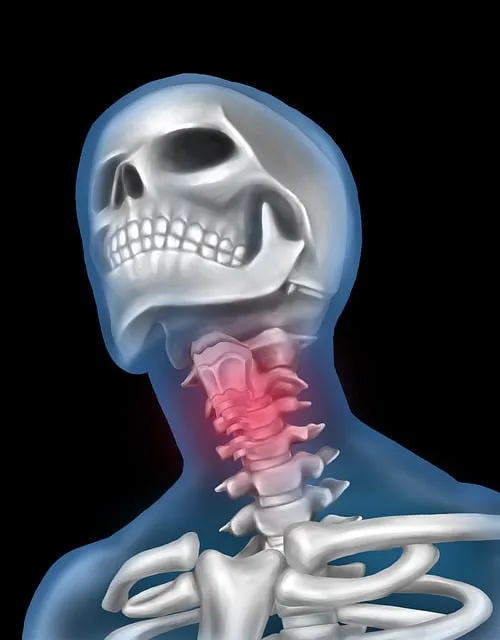
The pain itself is fast. Neuroanatomist Jill Bolte Taylor documented what she called the “ninety-second rule”: any neurochemical cascade, left uninterrupted by thought, will peak and begin to metabolize within approximately ninety seconds. The cortisol spike, the chest constriction, the gut drop — these are fast, involuntary, biologically bounded. The body has been processing threat signals for three hundred thousand years. It knows how to complete the cycle. Left alone, the acute pain of rejection would crest and begin to pass in about ninety seconds.
But the mind does not leave it alone. The mind does what the mind is evolutionarily designed to do: it constructs a narrative. And the narrative engine — what neuroscientists call the default mode network, the brain’s self-referential processing system — does not tell a neutral story. It tells the worst available version, and it tells it on loop.
The default mode network activates within seconds of a rejection event and begins building a case from the fragments. And the case it builds, in a man who has not learned to interrupt the process, is always the same story with the same conclusion: This happened because of what I am. I was rejected because I am not enough. I will always be rejected because I will never be enough.
The Pain-Story Split names the divide between these two events. On one side: the pain — fast, involuntary, biologically bounded, survivable in ninety seconds. On the other side: the story — slow, constructed, potentially infinite, the engine of everything that turns a moment of rejection into months of suffering.
Ninety seconds of neurochemical pain becomes ninety days of identity crisis. Not because the rejection was catastrophic. Because the narrative engine took a wave of pain and built a monument out of it. The split is where the real work lives.
The Lie: The Advice That Makes It Worse

The first is “don’t take it personally.” As established above: this advice asks you to suppress a physiological event. What it actually produces, in a man who hears it enough, is not equanimity. It produces a gap. He doesn’t stop feeling the pain. He stops admitting the pain. He learns to say “it’s fine, I’m over it” while his gut churns and his jaw stays locked for three days. He learns that the correct response to rejection is to perform imperviousness — and the gap between the performance and the reality becomes the breeding ground for every dysfunction that follows. The anger that leaks out sideways. The emotional flatness his partner calls “being distant.” The drinking that starts at five instead of seven. The problem was never that he felt the pain. The problem is that he was told feeling it made him defective.
The second is “you need thicker skin.” This one is worse. Thick skin is not a virtue. Thick skin is scar tissue — the result of repeated exposure to pain without adequate processing. The emotional equivalent of a burn that heals without treatment: dead tissue that protects the area from future sensation, at the cost of all sensation. Plenty of men build such thick skin that they can no longer feel their own lives happening. They hold their children and experience a vague awareness that an emotion should be present — like reaching for a limb that’s been amputated. The thick skin didn’t protect them. It buried them alive inside their own bodies.
Both pieces of advice make the same category error: they target the pain when the pain is not the problem. The pain is appropriate, bounded, survivable. The problem is the story. And by attacking the pain — suppressing it, toughening against it — these approaches leave the narrative engine completely untouched and fully operational. You stop feeling the hit. The story keeps running anyway. And a story that runs without the body’s pain to anchor it to the present becomes something worse than pain: it becomes identity.
There’s also the motivational culture version: use rejection as fuel, let the haters motivate you, turn the pain into ambition. This is avoidance with better branding. The man who uses rejection as fuel has not processed the rejection. He has monetized it. He has taken the pain — which was trying to tell him something about vulnerability and loss — and transmuted it into aggression, into proving, into the relentless drive to show every person who ever rejected him that they were wrong. You can build serious material success on that engine. But the engine never turns off, because the goal was never success. The goal was vindication. And vindication requires a permanent audience of people who doubted you, which means you are still — after all the money and the achievement — organizing your life around the people who rejected you. That is not freedom.
The Protocol: Working the Pain-Story Split in Real Time
- Don’t flee the sensation — stay with it, you’re in pain not danger
- Locate the sensation physically — chest, gut, throat, jaw — not the emotion
- Breathe into the location for ninety seconds — let the neurochemical cascade complete
- Catch the story at the moment of generation — label it “story” and return to sensation
- Extract information after the window closes — from a regulated nervous system, not an activated one

Step one: Don’t flee the sensation. Rejection hits. Phone buzzes, email arrives, the room shifts. Your first reflex is to put the phone down, close the laptop, distract yourself, move away from the feeling. That impulse is your nervous system treating pain like danger. But pain and danger are different things. You are not in danger. You are in pain. Stay exactly where you are. Leaving the sensation before it completes is how you guarantee a return visit at three in the morning.
Step two: Locate the sensation, not the emotion. Find where in your body the rejection is living. Your chest? Solar plexus? Throat? Jaw? Name the location and the physical quality — not the emotion. Not “I feel rejected” (that is already a story). “There is a tight, hot pressure in the center of my chest that is making it hard to breathe fully” — that is a sensation. The distinction matters because naming a sensation keeps you in the body, where the pain can metabolize. Naming an emotion activates the narrative engine, which will immediately begin generating explanatory content about why the emotion is there and what it proves about you.
Step three: Breathe into the location for ninety seconds. This is the Bolte Taylor window. Direct your exhale toward wherever the sensation lives. Let it be exactly as large and as painful as it actually is — not bigger, not smaller, not wrapped in reassurance. The goal is not to make the feeling go away. The goal is to communicate to your own nervous system: I can hold this. This will not destroy me. Stay with the sensation without explanation, without narrative, without reaching for your phone. Ninety seconds. That is the entire physiological requirement.
Step four: Catch the story at the moment of generation. The narrative engine will start constructing its case within the first few seconds. “She never really valued me.” “I’ll never be good enough.” “This always happens.” You will feel the pull of these stories because they carry a peculiar comfort — the comfort of explanation, of knowing why. The moment you notice the narrative beginning, label it with one word: story. Not “wrong story” or “irrational story.” Just: story. Then return attention to the sensation. Chest. Gut. Breath. Body.
Step five: Extract information after the window closes. Once the ninety seconds have passed — once the acute cascade has crested and your prefrontal cortex is back online — there is space for something previously impossible: accurate assessment. Not the panicked mid-storm assessment. Clear-eyed, regulated assessment. And what it reveals is that the rejection contains information, not a verdict. She ended it: that’s information about compatibility, timing, needs, behavior. Not about your fundamental worth. You didn’t get the job: that’s information about fit, priorities, timing. Not about your competence. No rejection, ever, under any circumstances, is a statement about your worth as a human being. It is a statement about fit at a specific moment in time. But you cannot access that accuracy while your amygdala is still running the show. The information is waiting. It requires a regulated nervous system to read it clearly.
This protocol is not glamorous. It does not look like strength from the outside — a man sitting still, breathing, not reacting. But it is the hardest thing most men have ever tried to do, because it requires staying inside a pain they have spent their entire lives learning to run from, escape, suppress, or convert into something more manageable. The first time you do it, ninety seconds will feel like nine minutes. The tenth time, it will feel like ninety seconds. The fiftieth time, it will feel like something you have always known how to do.
The Proof: The Identity Trap and Why Men Fall Into It

“She left me” becomes “I am the kind of man who gets left.”
“I didn’t get the job” becomes “I am not capable enough.”
“They stopped calling” becomes “I am fundamentally unlikeable.”
Notice the grammatical shift. The verb moves from past tense to present tense. The subject moves from the event to the self. The scope moves from specific and bounded — this one thing, one time — to universal and permanent — everything, always. This is the identity trap, and once a man falls into it, the rejection stops being something that happened to him and becomes something that he is. He does not carry a wound. He becomes the wound.
Mark Leary at Duke University has spent three decades studying what he calls the sociometer — the brain’s ongoing monitoring system that tracks social acceptance in real time, similar to a fuel gauge for belonging. Leary’s research, published across multiple journals including Psychological Review, found that self-esteem functions less as a stable trait and more as a sociometer readout: it rises with acceptance and drops with rejection in real time, independently of the person’s actual capabilities. In studies where participants were given negative feedback about their social skills, self-esteem plummeted even when the participants were told the feedback was randomly generated. The sociometer does not care about facts. It runs on social signal, and rejection is the strongest negative signal it receives.
This is why men who are objectively high-performing, who have demonstrable competence in multiple domains, can be brought to their knees by a single romantic rejection or a single professional “no.” The sociometer does not consult their resume. It logs the signal — not wanted — and translates it directly into a temporary collapse in the felt sense of worth. What happens next depends entirely on whether the man understands the Pain-Story Split. If he doesn’t, the collapse gets narrated into permanence. If he does, the collapse crests and passes, as every neurochemical event does, and he is left with information instead of identity.
There is also the anticipatory dimension. For most men, the fear of rejection does more damage than rejection itself. The chronic background hum of what if they say no is not a thought — it is a somatic state. Elevated resting heart rate. Shallow breathing. A jaw clenched so habitually that relaxation has become the foreign sensation. This anticipatory dread keeps men in cages they built themselves: in jobs they’ve outgrown because applying means risking a “no,” in relationships that died two years ago because leaving means vulnerability, performing a safe, approved version of themselves for an entire lifetime because being fully seen means risking the one thing their nervous system cannot tolerate.
The man who has never been rejected has never been seen. He has offered only what is safe, shown only what is pre-approved, risked only what he could afford to lose. He has lived his entire life in the shallow end and called it swimming.
The fear of rejection does not protect you from pain. It guarantees a different kind — the dull, inescapable pain of a life built around avoiding the thing, rather than being large enough to survive it.
Building Rejection Tolerance: The Nervous System Work

Cold exposure. Not because cold showers are magical but because deliberate cold stress gives the nervous system repetition at a specific skill: being activated — heart elevated, breath shallow, every impulse screaming get out — and choosing to stay. The cold cannot actually hurt you. The discomfort is real and the danger is not, which is structurally identical to rejection. Two minutes a day of that practice widens the window. The gap between the rejection hit and the return to baseline compresses from days to hours to minutes, not through understanding, but through repeated successful completion of the activation-and-recovery cycle.
Extended exhale breathing. Inhale for four counts, exhale for eight. This directly stimulates the vagus nerve, activating the parasympathetic system and building what researchers call vagal tone — the nervous system’s capacity for faster recovery from activation. Higher vagal tone correlates with better emotional regulation, faster heart rate recovery after stress, and reduced cortisol reactivity. It is the physiological substrate of what people call composure, and it is built through practice, not through deciding to be calm.
Voluntary exposure at escalating stakes. This is the deliberate practice of seeking small rejections — not as desensitization but as nervous system education. Ask for an upgrade you don’t qualify for. Submit work to an outlet above your current level. Tell someone what you actually think instead of what you’ve calculated they want to hear. Each carries a real probability of a real “no,” and each “no” gives your body an opportunity to practice the full Pain-Story Split cycle: activation, sensation location, ninety-second window, story interception, return to baseline. What happens over weeks and months is not that rejection stops hurting. It’s that the recovery time compresses. The first time, the “no” reverberates for days. The tenth time, hours. The fiftieth time, minutes. And with each successful cycle, the range of life available to you — the risks you can take, the desires you can speak, the truths you can tell — expands.
This is confidence built on demonstrated capacity to survive failure, which is the only kind that actually holds under pressure. Confidence built on a streak of successes is a house of cards — one “no” can knock it over. Confidence built on knowing you can metabolize a “no” is structural. The man who has been rejected fifty times and recovered fifty times is not afraid of the fifty-first. He has the data.
The Hard Truth: The Counterfeit Self

The counterfeit self is not who you are. It is who you calculated would be accepted. And the terrible thing is that it often succeeds. People approve of it. They hire it, date it, befriend it. Which means the approval you receive — the approval you have worked so hard to secure — is approval of a performance. And deep inside, the actual self remains untouched by any of it. This is why some men can be surrounded by love and still feel entirely alone. The love is real. It is directed at the counterfeit. The actual man is standing behind the mask, knowing at a level below thought that if they saw the real thing, without the performance, they would leave.
This is the hard truth: the solution to chronic rejection sensitivity is not better coping. It is not thicker skin, not wider emotional windows, not faster recovery times — though all of those help. The solution is becoming willing to be actually seen. To present the real thing and risk rejection of the real thing, which is more terrifying than anything the counterfeit ever faced because the stakes are genuinely higher. If the counterfeit gets rejected, you can write it off as a misunderstanding. If the real you gets rejected, there is nowhere left to hide.
But the inversion holds, and it changes everything: if the real you is accepted, you are actually, finally, free. Not just approved. Not just liked by a careful audience who has seen only the curated version. Free, because the gap between what you perform and what you are has closed, and you no longer have to spend the immense daily energy required to maintain the distance between them.
Most men, if they are honest, know exactly which parts of themselves they have hidden. They know the opinions they don’t share, the desires they don’t admit, the fears they perform around, the grief they have compressed into something that looks like stoicism. The counterfeit is not built from nothing — it is built from the real self with the unacceptable parts systematically removed. The work is not to manufacture a new self. It is to stop performing the removal. To stop hiding the parts you were told were too much, too soft, too strange, too honest. To find out, perhaps for the first time, whether the people in your life actually want to know you — or just the version of you that makes them comfortable.
That question is the most frightening question a man can ask. It is also the only question worth asking. Because a life built on an answer to a question you were too afraid to ask is not a life. It is an avoidance strategy with good furniture.
FAQ: Handling Rejection Without Falling Apart
Why does rejection hurt so much physically — the chest tightness, the gut drop, the actual physical sensation? Because social pain and physical pain activate the same neural architecture. Eisenberger and Lieberman’s 2003 fMRI research at UCLA found that the dorsal anterior cingulate cortex and anterior insula — both regions central to physical pain processing — fire in response to social rejection with measurable intensity. The body processes being excluded from the group the same way it processes being struck, because for most of human evolutionary history, exile from the group meant death. The physiological response is not an overreaction. It is the appropriate response of hardware that is three hundred thousand years old.
How long should rejection actually hurt? When does normal pain cross into something that needs attention? The acute neurochemical cascade — the immediate physical pain — should peak and begin to pass within ninety seconds if left uninterrupted by rumination. What extends rejection pain into days or weeks is the narrative engine, not the original event. If you find rejection from a single event still dominating your thinking after two to three weeks, the story has taken over from the pain, and the work is interrupting the narrative loop rather than waiting for the pain to fade. If rejection sensitivity is causing you to systematically avoid situations where rejection is possible — not applying, not pursuing, contracting your life — that pattern is worth examining closely with someone qualified to help you examine it.
What is the Pain-Story Split and how does it change how you respond to rejection? The Pain-Story Split is the distinction between the physiological pain of rejection — the cortisol cascade, the chest constriction, the gut drop, which peaks in ninety seconds and metabolizes without intervention — and the narrative the mind constructs on top of that pain, which can run indefinitely and converts a bounded event into a permanent identity. Understanding the split lets you work on the right mechanism. The pain doesn’t need to be fixed or suppressed. It needs to be felt through. The story needs to be interrupted at the moment of generation, labeled as story, and not allowed to draw conclusions about your fundamental worth. Most rejection management advice targets the pain and leaves the story untouched, which is why it doesn’t work.
Is it possible to get rejected so many times that you genuinely stop caring? You can build faster recovery times through the kind of voluntary exposure practice described in this article — and eventually a “no” that once disrupted you for a week might only register for twenty minutes. But “not caring” in the sense of feeling nothing is not the goal and is not achievable without the kind of emotional shutdown that costs far more than it saves. Mark Leary’s sociometer research suggests that social acceptance monitoring is continuous and involuntary — your brain will always register rejection as a meaningful signal. The goal is not to silence the signal. It is to hear it accurately, let the physiological response complete, and refuse to let the narrative engine convert the signal into a verdict about your worth.
How do you handle rejection from someone you genuinely care about — a relationship ending, a close friend pulling away — versus low-stakes rejection like a job application? The protocol is the same. The duration and intensity differ because the sociometer reading correlates with how much belonging you had invested in that specific relationship. A rejection from someone you’ve been with for four years activates a larger cascade than a rejection from a hiring manager you met once — proportional to the investment. What this means practically is that the ninety-second window may need to be revisited multiple times over days as the acute response re-activates. The story interception work is also more demanding because the narratives generated by high-stakes rejection are more elaborate, more emotionally resonant, and backed by years of actual shared history. The same five-step protocol applies, but you may run through it twenty times before the narrative engine stops generating new material.
Men are told to suppress rejection pain — “be tough,” “don’t let it show.” What actually happens to that suppressed pain? Research on emotional suppression by James Gross at Stanford, published in the Journal of Personality and Social Psychology, found that suppression increases physiological arousal while decreasing expressive behavior — meaning the body is actually more activated, not less, while the face shows nothing. Suppressed negative emotion also impairs memory formation, increases stress hormone levels chronically, and correlates strongly with worse relationship quality over time. The pain does not disappear when it is suppressed. It goes underground. It becomes the chronic low-level activation that looks like “being fine” while the jaw is permanently clenched, the sleep is poor, and the irritability leaks out sideways at everyone who didn’t cause the original pain.
Is there a difference between being sensitive to rejection and having rejection-sensitive dysphoria (RSD)? Yes. Standard rejection sensitivity is the learned tendency to anticipate and react strongly to rejection based on past experience — it exists on a spectrum and is trainable through the approaches in this article. Rejection Sensitive Dysphoria is a distinct condition associated strongly with ADHD, in which rejection triggers a sudden, intense emotional response — described by those who experience it as feeling overwhelming, sometimes unbearable — that comes on in seconds and can last for hours. RSD appears to be neurological rather than learned, and it does not respond to standard emotional regulation training the way ordinary rejection sensitivity does. If rejection triggers responses that feel qualitatively different from what is described in this article — if they feel sudden, overwhelming, and out of proportion in a way you have no ability to influence — it is worth discussing with a psychiatrist, specifically in the context of ADHD evaluation.
Coming Back to the Room
You’re still staring at your phone. The message hasn’t changed. The rejection is real and the pain is real and your chest is tight and somewhere between your sternum and your gut there is a sensation that feels like a trapdoor opening over nothing. That’s real. You’re allowed to call it real. You don’t have to wrap it in gratitude or purpose or the universe’s plan. Pain is pain.
What it is not: a verdict. What it is not: evidence. What it is not: a fact about who you are or what you are worth or what the rest of your life will look like.
It is a ninety-second neurochemical event — ancient, involuntary, survivable — and it is surrounded by a narrative engine that is already working very hard to convert it into something permanent. Your job, in this moment, is to feel the first thing and refuse the second thing. To let the wave hit, fully, without either drowning in it or pretending there is no wave.
Put the phone down. Find the sensation in your body. Breathe toward it. Let it be exactly as large as it is, for exactly as long as it needs to be. When the story starts — and it will start within seconds — label it. Story. Return to the breath. Return to the sensation. Ninety seconds.
When the window closes, the information will be there waiting. The actual information — about compatibility, timing, fit, what you want, what you need to do differently, where you go next. That information is useful. The story the narrative engine was building was not. It never was. It was just pain wearing the costume of meaning.
You are a man sitting in a room, holding a pain that will pass. That’s all. That’s everything. The rejection was a moment. What you do with the next moment is the only thing that matters now.
Sources & Further Reading
Editorial StandardsCorrectionsMedical DisclaimerAbout Our ContentAffiliate DisclosureSite Map