
Lewis Howes built his public career on the image of the high performer. Professional athlete, a record-setting Arena Football League player who parlayed his athletic identity into entrepreneurship and then into one of the most successful podcasts in the personal development space, The School of Greatness. He interviewed elite performers. He wrote about peak achievement. He was, to his audience, the embodiment of what masculine success looked like: physically imposing, financially successful, relationally confident, the apparent master of his own destiny.
What his audience didn’t know, and what he’d spent most of his life not knowing about himself, was that beneath that performance of strength was a man who’d been sexually abused as a child, who’d built his identity around achievement precisely because he couldn’t tolerate the vulnerability of being seen, and who was lonely, defended, and increasingly hollow behind the mask of success. The Mask of Masculinity: How Men Can Embrace Vulnerability, Create Strong Relationships, and Live Their Fullest Lives, published in 2017, is the account of how he came to understand this and what he found when he started to take the mask off.
The book is organized around nine masks Howes identifies as the primary ways men hide their authentic selves behind performances of strength, confidence, or indifference. Each mask is a defense against vulnerability — a strategy for navigating the world without being genuinely seen, genuinely connected, or genuinely at risk of genuine hurt. The masks work, in the short run. They provide a form of protection and, often, a form of social recognition. In the long run, they cost men exactly the things that make life worth living: deep relationships, genuine intimacy, a sense of being known and loved for who you actually are.
The Nine Masks
The first mask is the stoic mask — the performance of emotional impenetrability many men learn early and practice throughout their lives. The stoic man doesn’t cry. Doesn’t complain. Doesn’t admit fear, uncertainty, or pain. He processes everything internally or not at all. This mask is often celebrated as strength, and it does have genuine adaptive value in certain contexts: functioning under pressure without being overwhelmed by emotion is a real capacity worth developing. The problem is when the performance of stoicism becomes permanent — when the man is no longer choosing to control his emotional expression in specific contexts but has lost access to his emotional experience entirely. The man who cannot cry is not stronger than the man who can; he’s less human, less connected to his own experience, and less capable of the kind of genuine intimacy that requires the willingness to be moved.
The second mask is the athlete mask — the conflation of masculine identity with physical performance and competitive achievement. For men who are genuinely skilled athletes, this mask provides an identity that feels solid and externally validated. For the vast majority of men who aren’t professional athletes but who’ve organized their self-concept around athletic identity, it creates a fragile foundation: the man who is “the athletic guy” is always one injury, one losing streak, or one year away from an identity crisis. More fundamentally, the athlete mask limits a man’s range — his identity becomes about what his body can do, a narrow container for the full range of what a human being is.
The material mask is the equation of masculine value with financial accumulation and the display of wealth. Explicitly reinforced by consumer culture, which has spent decades associating male identity with the right car, the right watch, the right level of income. Men who wear this mask experience their net worth as their self-worth, which means financial setbacks are existential threats rather than practical problems. They invest enormous energy in accumulating and displaying material symbols of success while systematically neglecting the inner dimensions of their lives. The material mask produces men who are impressive to look at from the outside and who feel empty at the center.
The aggressive mask is the use of intimidation, domination, and anger to maintain a sense of power and ward off perceived threat. Men who wear this mask have learned, often early and often through genuine threat, that the best defense against being hurt is to be the most dangerous presence in any environment. The aggression usually isn’t genuine enjoyment of violence; it’s fear wearing the clothes of strength. The cost is the destruction of the relationships and communities that would otherwise provide genuine safety — the thing the aggression is supposedly protecting against.
The sexual mask is the reduction of intimacy to conquest — using sexual success as a metric of masculine worth and avoiding genuine emotional intimacy through the pursuit of physical encounters that require nothing deeper than performance. Howes is frank about his own experience with this mask: the sexual pursuit that substitutes for the genuine connection it superficially resembles, the accumulation of “victories” that leave a man increasingly lonely because the victories require neither knowing nor being known. The sexual mask is one of the most culturally reinforced masks men wear, and one of the most effective at preventing the genuine intimacy that would actually address the loneliness underneath it.
The joker mask uses humor as a permanent defense against vulnerability — deflecting any serious emotional moment with a joke, transforming pain into performance. The joker is often the most socially successful person in the room, and his humor is often genuinely valuable. The problem is when humor becomes the only register available — when the joker cannot be serious, cannot be vulnerable, cannot let a moment of real feeling land without immediately converting it into entertainment. The joker mask keeps the world at arm’s length while appearing to engage it.
The invincible mask is the refusal to acknowledge limitation, vulnerability, or need — the performance of total self-sufficiency that prevents a man from asking for help, acknowledging difficulty, or letting anyone see his actual condition. Men who wear this mask often achieve impressive things through their refusal to quit, but they also suffer in unnecessary silence, delay help until problems become crises, and carry burdens they could share but won’t because sharing would require admitting they have limits. The invincible mask kills men — through delayed medical care, through unaddressed depression, through the stoic endurance of situations that should be changed.
The know-it-all mask is the use of expertise, certainty, and intellectual dominance to avoid the vulnerability of not knowing. Men who wear this mask have organized their identity around being the authority in the room and experience the admission of ignorance or uncertainty as a threat to that identity. The know-it-all cannot learn from criticism because criticism threatens the mask. He cannot receive feedback because feedback implies inadequacy. Closed to the outside — which means closed to growth.
The alpha mask is the broadest and in some ways most pervasive: the performance of dominance, leadership, and status that defines social value in terms of hierarchy and treats any position other than the top as failure. Closely tied to the competitive orientation many men develop early and that produces genuine achievement when properly channeled. Its shadow side is the inability to be subordinate, to follow, to collaborate without needing to win, or to occupy any position other than dominance without feeling diminished.
The Cost of the Masks
Howes is careful to acknowledge that each mask has genuine adaptive value. The stoic mask isn’t purely a defense mechanism — regulating emotional expression under pressure is a real strength. The alpha mask produces real leadership capacity. The athlete mask produces real physical discipline. He’s not saying the qualities associated with these masks are bad. He’s saying that when these qualities become the entirety of a man’s identity — when they’re the mask rather than one facet of a richer self — the cost is enormous.
The most fundamental cost is relational. A man who lives behind masks cannot have genuine relationships, because genuine relationships require showing up as you actually are — with your fears and uncertainties and wounds, as well as your strengths. The people who love a man’s mask aren’t loving him. They’re loving a performance. When the performance must be maintained at all costs, the relationship becomes a source of exhausting vigilance rather than genuine restoration. The loneliness that results is a specific kind — the loneliness of being surrounded by people who like you and not known by any of them.
The second major cost is the loss of self. Men who live inside their masks for long enough begin to lose the ability to locate themselves apart from the performance. They don’t know what they feel, because the mask prevents genuine contact with feeling. They don’t know what they want, because the mask’s requirements have replaced personal desire with the imperatives of the performance. They don’t know who they are, because the self has been subordinated to the role for so long that the distinction has become hard to detect.
The third cost is physical. The chronic stress of maintaining a performance — of being perpetually vigilant against the possibility of being seen — activates the body’s stress response systems in ways that, over years and decades, produce the range of cardiovascular, immune, and inflammatory problems associated with chronic stress. Men die earlier than women for multiple reasons, but the relentless physiological cost of performed invulnerability is one of them.
The Howes Story: Personal Testimony
The book is most powerful in its autobiographical sections — particularly Howes’s account of the sexual abuse he suffered as a child and the way that abuse shaped his subsequent identity construction. He was abused by a teenage babysitter when he was around five years old. He processed the experience, as most abused children do, with the tools available to a five-year-old — primarily the conclusion that he must have done something wrong, must be fundamentally deficient, must protect himself from ever being vulnerable again.
Everything that followed — the athletic career, the entrepreneurial success, the sexual conquests, the carefully maintained image of strength and invulnerability — can be read as an elaborate defense against the vulnerability that was weaponized against him in that early experience. The masks weren’t arbitrary choices. They were survival strategies developed by a wounded child and maintained, with diminishing returns, by an adult who hadn’t yet understood why they were there.
The turning point came through therapy and through relationships with mentors and peers who modeled a different kind of masculine identity — men who were strong and successful by conventional measures but who were also genuinely vulnerable, genuinely connected, and genuinely at peace with themselves in ways that Howes recognized he was not. He began the process of taking the masks off. He found, as people who do this work consistently find, that what was underneath wasn’t the weakness he feared but a self capable of genuine connection, genuine joy, and genuine strength of a kind the masked performance had never provided.
Vulnerability as Strength
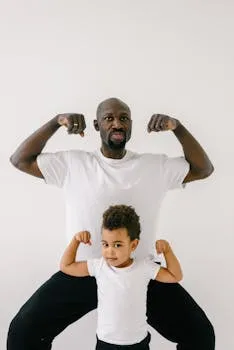
Hard argument to make to men who’ve spent their lives equating vulnerability with weakness, because the equation is reinforced at every level of male socialization. Boys learn early that vulnerability invites attack — that showing fear, showing pain, showing uncertainty creates an opening competitors and adversaries will exploit. This learning isn’t entirely wrong. In genuinely adversarial environments, vulnerability can be exploited. The error is applying adversarial logic to every environment, including the intimate relationships and communities of trust where vulnerability is the prerequisite for genuine connection.
Howes distinguishes between strategic and authentic vulnerability — between disclosure that’s calculated and disclosure that’s genuine. The man who performs vulnerability as a manipulation tactic is still wearing a mask; he’s just added vulnerability to the repertoire of performances. Authentic vulnerability is different: the genuine willingness to be seen as you actually are, including the parts that are uncertain, wounded, or insufficient. It doesn’t require full disclosure in every context. It requires the capacity for genuine disclosure when the relationship and the context warrant it.
The Path to Authentic Power
The book’s constructive project is articulating what Howes calls “authentic power” — a form of masculine strength that doesn’t require performance or defense, that draws on genuine self-knowledge and genuine connection rather than the maintenance of an image. Explicitly contrasted with the power the masks provide: the power of intimidation, dominance, accumulation, and performance, real in a limited sense but also exhausting, fragile, and ultimately hollow.
Authentic power, as Howes describes it, has several components. It requires self-knowledge — knowing who you actually are, what you actually feel, what you actually want, separate from the social roles you play. It requires the capacity for genuine intimacy — at least a few relationships in which you show up as yourself rather than as a performance of yourself. It requires a sense of purpose that’s intrinsically motivated — something you pursue because it genuinely matters to you, not because it validates the mask. And it requires the willingness to receive feedback, acknowledge limitation, and grow — which requires taking off the know-it-all and invincible masks that prevent genuine learning.
The path from masked performance to authentic power is not, Howes makes clear, a single dramatic revelation. It’s a practice — a repeated, ongoing discipline of choosing genuine engagement over defended performance. He provides exercises, reflective questions, and specific practices for working with each of the nine masks. The tone is practical rather than therapeutic, oriented toward men who want a concrete path rather than an invitation to process.
Relationships and Brotherhood
One of the book’s most important themes is male friendship and brotherhood — the specific kind of connection between men that contemporary culture both needs and largely fails to support. Howes argues many men are deeply lonely — not for lack of social contact but for lack of genuine connection, the kind that requires dropping the masks and showing up as something more than a performance of competence and strength.
The research on male friendship shows a consistent pattern: men have fewer close friendships than women, the friendships they have are typically less emotionally intimate, and the gap in genuine social connection is one of the most reliable predictors of the health and wellbeing disparities between men and women. Men who have at least one genuine friendship — at least one person with whom they can be real — show significantly better outcomes across physical and mental health measures.
Building this kind of friendship requires the same thing building any genuine relationship requires: the willingness to be vulnerable, to show up beyond the mask, to risk being seen as you actually are. Men heavily invested in their masks find this genuinely difficult — the joker deflects, the invincible man refuses to acknowledge need, the stoic man has no access to the emotional content genuine intimacy requires. Howes argues that one of the most important investments any man can make in his own life is cultivating at least one relationship of genuine depth and genuine honesty.
The Mask and the Mirror: How Others See What We Cannot

Howes addresses this through the lens of his conversations with women — partners, friends, sisters — about what they actually experience when close to masked men. The consistent theme isn’t contempt but grief: grief for the man who’s not fully present in his own life, grief for the relationship that can’t reach its full depth because of what’s being withheld, grief for the intimacy that’s technically available but practically inaccessible behind the performance. Women who love men behind masks don’t, typically, want a different man. They want the man who’s already there to be more fully available — to show up in the fullness of what he actually is rather than the portion the mask permits.
This framing matters because it reframes the work of taking off the masks not as a concession but as a gift — to the people who love you, who are waiting for more of you than you’ve been willing to offer, who would welcome the vulnerable, uncertain, fully human version of you that you’ve been protecting them from. The man who does this work isn’t becoming less; he’s becoming more. He’s making himself available in ways his relationships have needed all along.
Mentorship and the Models We Need
One of the more quietly powerful arguments in the book concerns the role of mentorship — specifically the role of men who model a different kind of masculinity — in enabling other men to begin removing their masks. Howes is explicit that he didn’t develop the courage to examine his own masks in isolation. He did it through relationships with men further along the journey — men who were successful in the conventional sense but who were also genuinely vulnerable, genuinely connected, and genuinely at peace with themselves in ways that made him recognize, by contrast, what he lacked.
This observation points to something important about how masculine transformation actually works. Information alone is insufficient. A man can read every book about vulnerability and still not be able to practice it, because the gap between intellectual understanding and embodied practice isn’t bridged by more information. It’s bridged by seeing the thing lived — by having a relationship with someone who demonstrates it’s possible to be strong and vulnerable simultaneously, that being known doesn’t destroy you, that genuine connection is available on the other side of the masks.
This is why mentorship isn’t merely a nice supplement to the individual work of masculine development. It’s structural — the same way physical training requires more than reading about exercise, and genuine leadership requires more than studying leadership theory. The knowledge can be transmitted through books and ideas. The capacity has to be developed in relationship, in the presence of someone who models the thing that needs to be learned. Howes is the beneficiary of that kind of mentorship, and the book is in some ways his attempt to pass it forward — to be, for his readers, the kind of model whose existence makes the journey seem possible. The transmission of a different model of masculinity — one more complete, more humane, more honest — requires the embodied presence of men who are living it. Books can point the direction. Mentors can show you it’s real. The crisis of masculine identity that both Howes and the broader research literature document is, in part, a mentorship crisis — a deficit of men available to pass on a version of manhood genuinely worth having.
The Body and the Mask
Howes brings his athletic background to an observation many books in this space miss: the masks aren’t only psychological. They’re physiological. The man who has spent decades wearing the invincible mask, the stoic mask, the aggressive mask — that man carries the masks in his body. The chronic tension of held emotions, the constant vigilance of the defended self, the long-term activation of the stress response that comes from never feeling genuinely safe — these are physical states with physical consequences. The research on chronic stress, emotional suppression, and their downstream effects on cardiovascular health, immune function, and inflammatory processes is consistent: the body pays the cost of the psychological defenses.
This adds a practical urgency to the book’s argument that goes beyond the relational and psychological dimensions. The man who takes off the masks — who develops genuine emotional access, genuine relational safety, the ability to rest in the knowledge of being known — isn’t just improving his relationships and his sense of aliveness. He’s reducing his allostatic load, the cumulative physiological cost of chronic stress and defended living. The research on what happens to stress biomarkers when people engage in genuine emotional processing and authentic social connection is encouraging: the body, like the psyche, responds to genuine safety.
Howes doesn’t go deeply into the physiological research — this isn’t primarily a neuroscience book — but he draws on his athletic training to make the point in practical terms. The body work and the inner work aren’t separate projects. The discipline and self-awareness he developed as an athlete — the ability to notice what the body is doing, to attend to its signals rather than override them, to train for specific outcomes through deliberate practice — transfers directly to the project of emotional development. The man who can apply athletic discipline to his inner life has access to a form of development more powerful than either purely athletic or purely psychological approaches alone.
From Masks to Mission

The intuitive assumption is that purpose comes first — that you find your mission and then you can afford to be authentic because you’re secure. Howes inverts this. Purpose, in his account, is downstream of authenticity. The man living behind masks is not fully in contact with his genuine desires, his genuine values, or the genuine contribution he’s positioned to make. He’s oriented toward satisfying the mask’s requirements — toward achievement, validation, sexual conquest, or whatever the mask demands — and that orientation, while it produces real results by conventional measures, doesn’t produce genuine fulfillment because it isn’t actually connected to who he is.
When the masks begin to come off — when the man begins to access his genuine emotional life, his genuine relationships, and his genuine sense of what matters — the question of purpose becomes both clearer and more urgent. What does he actually care about? What does he actually want to build? What contribution is he actually positioned to make, from his specific gifts, his specific experiences, his specific understanding of what the world needs? These questions can’t be answered by the masked man because the mask is answering them for him, and the mask’s answers are always about external validation rather than genuine meaning.
This is why so many men who achieve the goals their masks set for them — the money, the status, the sexual success, the competitive victories — find themselves experiencing something unexpected: not fulfillment but emptiness. Not satisfaction but the question “is this it?” The answer is that they achieved the mask’s goals, which were never actually their goals. The genuine goals — genuine connection, genuine meaning, the contribution only they’re positioned to make — are still waiting, behind the mask, for the moment when the man is ready to pursue them. That moment is available at any age, in any circumstance. It requires only the courage to begin.
The Wider Cultural Frame
Howes situates the nine masks within a broader cultural argument about masculinity — about the way contemporary culture both demands and punishes genuine masculine vulnerability. Men are increasingly told the traditional masks are toxic and should be discarded, but the discarding is rarely accompanied by a compelling positive vision of what should replace them. The result is a cultural double-bind: the old masks are condemned, but the vulnerability that would be required to live without them is also condemned as weakness.
The men who work through this double-bind most successfully, Howes argues, are those who’ve developed a strong enough inner identity to not require external validation — who’ve done enough inner work to know who they are independent of the cultural moment’s demands. Not a call for indifference to culture or for a retreat into private self-absorption. A call for the kind of internal groundedness that makes it possible to engage authentically with culture rather than being driven by it.
The Verdict on The Mask of Masculinity
The Mask of Masculinity is not a perfect book. The nine-mask framework is somewhat loosely constructed — the masks overlap significantly, and the distinctions between them aren’t always as clear as the organizational scheme implies. Some chapters feel less developed than others. And Howes’s voice, direct and personal throughout, occasionally tips into the motivational-speaker register in ways that reduce the book’s intellectual depth.
But the book earns its place in the conversation because of its authenticity. Howes isn’t theorizing about masks from the outside; he’s describing, with considerable personal courage, the masks he wore and the cost they extracted. That personal testimony makes the abstract argument concrete in a way theory alone cannot. When he describes the loneliness of the sexual mask, the exhaustion of the invincible mask, the hollowness of the material mask — he’s describing his own experience with enough honesty to make it recognizable to the men reading.
The core insight is sound and important: the masks men wear to protect themselves from vulnerability are also the masks that prevent them from having the things that make life genuinely worth living. Not a novel insight — it’s been articulated in various forms by psychologists, philosophers, and contemplative traditions across centuries. What Howes contributes is a framing specifically grounded in male experience, delivered by a man who’s lived both sides, organized in a way accessible to men who wouldn’t typically pick up a book about vulnerability and emotional authenticity. The nine-mask taxonomy gives men something to work with — a specific vocabulary for identifying what they’re doing and why it’s costing them — that abstract discussions of emotional health rarely provide. In a cultural moment when the conversation about masculinity is often more heat than light, and when men on multiple sides of the debate are more concerned with winning arguments than improving lives, Howes keeps his attention on the practical: what specifically are men doing that’s hurting them, and what specifically can they do differently? That focus is rare and valuable. Taking the masks off is not an act of weakness but of courage — the courage to be seen as you actually are and to discover that the self underneath the performance is capable of genuine strength, genuine connection, and genuine joy. That’s a message most men need to hear, and Howes delivers it with the credibility of someone who’s lived it.
The man who reads this book and recognizes himself in one or more of the nine masks has already done something important: he’s named the pattern. Naming a pattern isn’t the same as changing it, but it’s the prerequisite for change. The mask that has no name cannot be examined or challenged. The mask that’s been identified can be watched, questioned, and eventually, through the practice Howes describes, set down. Not permanently and not all at once — the masks are habits of a lifetime and aren’t dissolved by a single insight. But progressively, deliberately, in the specific situations and relationships where genuine connection matters most, a man can begin to live more fully as himself. That’s the invitation of the book, and it’s a genuine one. For men at any stage of the journey — whether just becoming aware of the masks or having worked on them for years — the framework provides both a mirror and a compass. The mirror shows you what you’re doing. The compass points toward something worth working for. Both are essential, and both are present in this book at the level practical, embodied masculine development actually requires.
Related: The Richest Man in Babylon Summary
Related: Radical Candor Summary
Related: American Sniper Summary
The Practical Framework: Applying Mask Masculinity Summary In Real Life
NOT JUST READING ABOUT IT ›
Join the Wolf Pack — mentorship and accountability for men who are done thinking about change
References
Editorial StandardsCorrectionsMedical DisclaimerAbout Our ContentAffiliate DisclosureSite Map