
November 19, 2011. Kyle Carpenter was twenty-one years old, lying in a field hospital in Helmand Province with a jaw that no longer existed, a collapsed lung, and one eye destroyed by the same grenade he had thrown his body onto to save the Marines next to him. When he finally surfaced from a medically induced coma weeks later, he did not recognize the face in the mirror. Titanium plates. Surgical mesh. And then the rage came — which, by his own account, was more terrifying than combat, more terrifying than nearly dying. Not because the anger was irrational. Because it was enormous, it had nowhere to go, and nobody had ever taught him what to do with it.
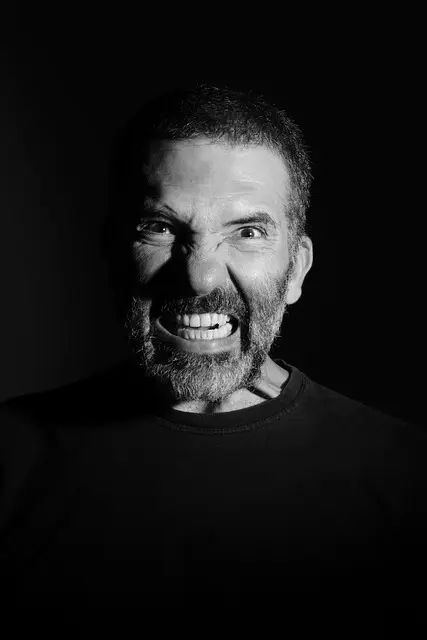
Carpenter channeled his fury into an eighteen-month physical reconstruction his doctors called medically unprecedented. Ran marathons on legs held together with titanium rods. Enrolled at the University of South Carolina. Graduated. In 2014, President Obama awarded him the Medal of Honor — the youngest living recipient at the time. When a journalist asked how he endured the recovery, Carpenter said something that goes straight to the center of >the entire question of transforming anger: “I didn’t stop being angry. I stopped letting the anger make the decisions.”
That’s the architecture of the Anger Dividend, in one sentence. You don’t eliminate the emotion. You change who’s holding the controls.
The Thesis: Your Anger Is Not the Problem
Anger is a biological signal with a ninety-second chemical lifespan, a specific neurological signature, and two hundred thousand years of evolutionary purpose. It exists because it was adaptive — it fueled the physical response to real threat and the social response to real injustice. The problem isn’t that you feel it. The problem is that you’re running a pre-civilization operating system in a context that mostly doesn’t involve bears.
The Anger Dividend is the concept at the center of this piece: anger, treated as raw resource rather than reaction, produces measurable returns. The men who collect it aren’t men without anger. They’re men who’ve built a conversion system — a specific sequence that intercepts the emotion between ignition and expression, routes the energy through deliberate channels, and turns the output from damage into fuel. Every man reading this is already generating the raw material. The only open question is the conversion rate.
None of this is motivational language. It’s a description of a specific neurological process, and the steps to run it are concrete, evidence-based, executable today. The science section below covers the mechanism. The method section hands over the system. The rest of the piece covers the failure modes, the edge cases, and the deeper question of why most men never collect the dividend at all — not because they lack the capacity, but because nobody ever showed them how the machine works.
The Neuroscience Behind the Anger Dividend
In 2006, neuroanatomist Jill Bolte Taylor published research through the Indiana University School of Medicine that changed how clinicians understand emotional duration. Taylor documented that the complete chemical lifespan of an emotion — from amygdala activation to full biochemical dissipation — runs about ninety seconds. Amygdala fires. Cortisol and norepinephrine flood the bloodstream. Heart rate spikes. Muscles tense. Then, if no secondary trigger reactivates the cascade, the chemistry clears on its own inside roughly a minute and a half. The implication, which Taylor later expanded in her 2008 book My Stroke of Insight, is not small: any anger lasting longer than ninety seconds is being actively maintained. Not by the original trigger. By thought.
That finding is the foundation everything else here sits on. The ninety-second window isn’t a metaphor. It’s a biological fact about your blood chemistry. What happens in that window — and immediately after — decides whether the energy converts into something useful or detonates into something you’ll spend weeks apologizing for.
Dr. Matthew Lieberman at UCLA’s Social Cognitive Neuroscience Laboratory demonstrated the next piece in a 2007 study published in Psychological Science. Lieberman’s team showed participants emotionally provocative images while measuring amygdala activation via fMRI. Participants who simply labeled what they felt — saying or thinking “I am angry” rather than acting on it — showed amygdala activation reduced by up to 50 percent. Lieberman called this “affect labeling.” The mechanism is direct: verbal identification of an emotional state activates the right ventrolateral prefrontal cortex, which dampens the amygdala’s threat response. Six words — “I am angry and I know it” — start the neurological transfer of control from the limbic system to the prefrontal cortex. From reaction to decision.
The failure mode that destroys this transfer is suppression. A 2017 study in Frontiers in Human Neuroscience by Denson, Pedersen, Friese, Hahm, and Roberts examined the neural correlates of anger regulation using fMRI. Participants who used cognitive reappraisal — deliberately reframing what an anger-inducing event meant — showed increased activation in the dorsolateral prefrontal cortex and decreased amygdala activity. Participants who tried to suppress the emotion showed the opposite: amygdala activity actually went up. The brain reads suppression as a second threat. Now you’re not just angry. You’re angry about being angry, and the cascade escalates. This is the neuroscience behind why “just calm down” is the most counterproductive thing anyone has ever said to an angry man. It demands suppression. Suppression makes it worse. The research is not ambiguous on this point.
And getting it wrong has a cardiovascular price tag, documented in cold numbers. A 2009 meta-analysis by Chida and Steptoe published in the Journal of the American College of Cardiology (PubMed) found that chronic anger and hostility increased the risk of coronary heart disease events by 19 percent in healthy populations and 24 percent in populations with existing cardiac risk. A 2016 study in the European Heart Journal (PubMed) found the two-hour window following an intense anger episode carried an 8.5-fold increased risk of heart attack — an 850 percent spike, not a rounding error. The anger you’re not converting isn’t just an emotional problem. It’s a scheduled cardiovascular event.
Here’s the other half of the equation, the part that rarely gets said out loud: norepinephrine, the primary neurotransmitter behind the anger response, is one of the most powerful performance-enhancing chemicals the human body produces. Sharpens focus. Increases processing speed. Elevates pain tolerance. Floods the system with glucose for immediate energy. Elite athletes call it being locked in. Military units call it combat clarity. Chemically it’s identical to what happens when you’re furious. The difference is direction. Controlled norepinephrine is an asset. Uncontrolled norepinephrine is a liability. The Anger Dividend is the gap between those two outcomes, and the system below is how it closes.
The Anger Dividend Conversion System: 7 Steps
Theory without method is just something to quote at dinner. Here’s the step-by-step conversion system, each step grounded in the neurological or physiological mechanism it engages. None of this requires retreats, apps, or a therapist on speed dial. It requires a timer and a willingness to be slightly less impulsive than you were yesterday.
-
The 90-Second Survival Window. When anger ignites, the only job for the next ninety seconds is to not act. Don’t speak. Don’t text. Don’t email. Don’t make any decision connected to the trigger. Set a physical timer if it helps — yes, the kind that makes you look ridiculous pulling out your phone to count down ninety seconds, which is exactly why it works. During those ninety seconds, the cortisol and norepinephrine cascade peaks and starts dissipating on its own. Walk to a different room. Step outside. Phone face-down. The goal isn’t composure. The goal is non-action during the biochemical peak. Surviving this window is the only entry point to the Anger Dividend. Everything else assumes the first minute and a half didn’t already get blown.
-
Tactical Breathing. After the initial window, run four cycles of box breathing: inhale four seconds, hold four seconds, exhale four seconds, hold four seconds. Navy SEALs use this before breaching. Surgeons use it before first incision. Elite athletes use it in the seconds before competition. A 2017 study in Frontiers in Psychology confirmed that controlled diaphragmatic breathing significantly reduced cortisol levels and activated the parasympathetic nervous system within sixty seconds. Four cycles takes sixty-four seconds. In that time heart rate drops ten to fifteen beats per minute and the prefrontal cortex starts coming back online. Combat mode to command mode. That’s the shift, and it happens here.
-
Name the Emotion Beneath the Anger. Anger is almost always a secondary emotion — the bodyguard standing in front of something more vulnerable. Once breathing stabilizes, ask exactly one question: “What am I protecting myself from feeling right now?” Not “why am I angry” — that question keeps you inside the anger. The underneath question moves you past it. Common answers: fear of loss, fear of irrelevance, shame of inadequacy, grief over something ending, helplessness at an outcome that can’t be controlled. Say the real emotion out loud. Lieberman’s affect-labeling research shows vocalization — not just internal recognition — is what actually dampens amygdala activation. “I’m afraid she’s losing respect for me” is chemically different from just thinking it.
-
Reframe the Operational Question. Reframing is not positive thinking. It’s changing which question is running. “Why is this happening to me?” creates victimhood. “What is this telling me I need to act on?” creates agency. A man stuck in traffic, furious he’ll miss his daughter’s recital, can stay in “these idiot drivers ruined this” — or reframe to “I care enormously about being present for her and I need to restructure my schedule so this never happens again.” Same anger. Same traffic. Radically different downstream output. The reframe isn’t about denying the frustration. It’s about pointing the energy at something addressable.
-
The 24-Hour Forge. Within the first hour after an anger episode, write down exactly what triggered it. Not vague impressions — the specific moment, the specific words, the specific sensation in the chest or jaw or hands. Then impose a twenty-four-hour moratorium on any decision or confrontation connected to the trigger. During those twenty-four hours, answer three questions in writing: What boundary was crossed? What actually needs to change? What is the smallest concrete step that can happen in the next forty-eight hours? This is where the Anger Dividend converts from potential into actual. The anger provides the fuel. The delay provides the aim. The three questions provide a target worth building toward.
-
Physical Discharge. Within twelve hours of the episode, complete a minimum of thirty minutes of intense physical exertion. Not a walk. Hard, demanding physical work that leaves you breathing heavy — lifting, sprinting, rowing, heavy bag work. Anger deposits cortisol and adrenaline in the bloodstream for a specific reason: ancestors fought or fled. Modern men sit in traffic and seethe. That mismatch — chemical payload with no physical outlet — is what converts acute anger into chronic tension, insomnia, and the cardiovascular damage documented above. Complete the stress cycle the body already started. Give it the exertion it’s biochemically asking for.
-
Evening Debrief. Before sleep, spend five minutes reviewing any anger episodes from the day. Three questions, no more: Did I survive the ninety seconds? Did I identify the emotion underneath? Did I take constructive or destructive action? After two weeks of consistent debriefs, most men discover that 80 percent of their anger comes from 20 percent of their life — and that 20 percent is specific, addressable, fixable. Without the debrief, anger episodes are just things that happened. With it, they become data. The Anger Dividend cannot be collected on incidents nobody examined.
Proof: The Anger Dividend in Real Lives

Stockdale later developed what he called “the Stockdale Paradox”: confront the brutal facts of your current reality while maintaining unwavering belief that you’ll prevail in the end. Underneath the philosophy, though, was something more practical — a conversion system. He channeled his fury into building a covert communication network among prisoners using a tap code, establishing a code of conduct for resistance that specified exactly how much torture a man should endure before giving a false confession, organizing collective acts of defiance timed for strategic impact rather than emotional satisfaction. Every refusal to cooperate was a decision, not an outburst. The anger never left him. He directed it with the precision of a military strategist. Medal of Honor, 1976. He later taught philosophy at Stanford, framing the entire POW experience as applied Stoicism — feel everything fully, choose which emotions get to act. The Anger Dividend, collected under conditions that would break most men.
The domestic version is quieter but no less consequential. Dr. John Gottman’s research at the University of Washington’s Love Lab — four decades, over three thousand couples — turned up one finding that connects directly to how men handle anger in families. Couples where the male partner could identify the emotion beneath his anger — fear, shame, grief, helplessness — had a divorce rate of 17 percent. Couples where he couldn’t, where anger was the only available label, had a divorce rate of 67 percent. The variable wasn’t anger intensity. It was emotional precision. “I’m afraid you’re pulling away from me” instead of slamming a door creates a fundamentally different relational trajectory. A 2014 study in the Journal of Family Psychology found children of emotionally literate fathers had 40 percent fewer behavioral problems in school and significantly higher emotional intelligence scores by age twelve. The Anger Dividend collected in a marriage doesn’t stay in the marriage. It compounds into the next generation.
The Trap: Three Ways Men Fail to Collect the Dividend
Most men who attempt this fail within sixty days. Not because the method doesn’t work. Not because the science is wrong. Because they walk into one of three specific traps that destroy the conversion before it gains traction. Worth naming these — they look like success from the inside.
Trap 1: Mistaking suppression for regulation. The most common failure. A man decides to “control his anger,” which in practice means going silent, stuffing it down, congratulating himself for not exploding. That’s not regulation. That’s a pressure cooker with the valve welded shut. Suppression doesn’t eliminate anger — it stores it. And stored anger always finds an exit: passive aggression, chronic sarcasm, emotional withdrawal, explosive episodes that appear to come from nowhere but have been building for months. Denson’s 2017 neuroimaging research is unambiguous: suppression increases amygdala activation. Feel nothing as a strategy, and the Anger Dividend isn’t being collected. It’s being compressed into a future event with a worse blast radius.
Trap 2: Using anger as identity. Some men become so accustomed to anger that it becomes their operating system. Makes them feel powerful, alert, righteous. Simplifies a complex world into enemies and allies — cognitively comfortable even when it’s factually wrong. Surrendering the anger feels like surrendering strength, and for men whose self-concept is built entirely on toughness, that trade feels catastrophic. This is the addiction model. Norepinephrine — the primary neurotransmitter of the anger response — is structurally similar to adrenaline. For men who feel powerless everywhere else, anger is the one state that makes them feel alive and in control. The Anger Dividend requires recognizing that the power anger provides is borrowed against future damage. The energy is completely real. The interest rate is fatal. There’s a guy — everyone knows one — who’s been “justifiably furious” about the same business dispute for six years. His case is airtight. His business hasn’t moved in six years. The anger is flawless and completely useless.
Trap 3: Processing in isolation. Anger festers in solitude. Feeds on unchallenged narratives built when no outside perspective is present. A man processing anger alone is both prosecutor and defense attorney in his own trial — and the prosecution always wins. Every internal replay reinforces the same conclusion: you were right, they were wrong, the anger is justified. No new information enters the system. The story calcifies into certainty, certainty calcifies into resentment that poisons every relationship it touches. A trusted relationship — a mentor, a men’s group committed to honest conversation, a therapist who won’t just validate you — supplies the outside perspective solo reflection can’t manufacture. Speak the anger aloud to men who’ll neither judge it nor indulge it, and it stops being a private storm. It becomes shared material that can be examined and redirected. Carrying it alone isn’t strength. It’s the isolation that keeps the whole cycle locked in place.
The Physical Architecture of Anger Conversion
Anger doesn’t live only in the mind. It lives in the body — shoulders, jaw, lower back, gut. Chronic unprocessed anger creates chronic physical tension. The muscles that tighten when the emotion floods the system don’t always release when it passes. Over months and years that tension becomes structural. Jaw clenching leads to TMJ disorders and cracked teeth. Shoulder tension produces chronic headaches. Gut tightness disrupts digestion and nutrient absorption. The anger a man refuses to convert emotionally, his body converts physically. The body is a meticulous accountant.
Which is why Step 6 — physical discharge — is not optional. It’s medical. When anger deposits combat chemicals in the bloodstream, those chemicals exist to fuel physical action. The mismatch between the chemical payload and the absence of physical exertion is what converts acute anger into chronic tension and the cardiovascular damage documented above. Running hard, lifting heavy, rowing, hitting the bag — these burn the cortisol and adrenaline anger creates and complete the stress cycle the emotion started. There’s a real distinction between use and avoidance here: using exercise to metabolize anger so the prefrontal cortex can think clearly is strategy. Using exercise to avoid feeling anger is suppression with a gym membership, and the result is the same pressure cooker from Trap 1 — just with better cardiovascular fitness.
“The fire is identical. The relationship to the fire is different. One man stands in the flame and flails. The other picks up the hammer and starts shaping metal.”
After thirty minutes of intense exertion, whatever felt catastrophic ninety minutes ago will feel solvable. Nothing external changed. Biochemistry changed. And biochemistry changes everything downstream: the conversation with the partner, the email to the colleague, the decision about the problem that’s been sitting on the desk for three weeks. Physical discharge isn’t therapy. It’s systems maintenance on the machine that has to make every other decision in a man’s life.
The Contrarian Case: Why Anger Management Is the Wrong Goal

Dr. Howard Kassinove and Dr. Raymond Chip Tafrate’s research at Hofstra University, published in their 2002 work Anger Management: The Complete Treatment Guidebook for Practitioners, found that anger episodes in the general population decrease naturally by 60 percent when the underlying life stressor is resolved — independent of any anger-specific intervention. The anger was never the disease. It was the symptom. Treating the symptom while ignoring the disease is like taping over the check-engine light and calling it a repair.
Men who achieve lasting transformation don’t manage their anger. They resolve the conditions that generate it. Leave the job that makes them seethe every Sunday evening. Have the conversation with their partner they’ve been avoiding for two years. Set the boundary with family that costs temporary approval and buys permanent peace. Address the financial stress, the health decline, the career stagnation keeping cortisol elevated from the moment their eyes open. The Anger Dividend isn’t collected by managing the emotion in perpetuity. It’s collected by resolving enough chronic stressors, setting enough clear limits, building enough honest communication patterns that the baseline level of anger drops to where it no longer needs constant containment. The anger was the alarm. The alarm was doing its job. Fix the fire and the alarm stops on its own.
How the Anger Dividend Connects to the Broader Discipline Architecture
The Anger Dividend doesn’t exist in isolation from the rest of personal development. It connects directly to how a man approaches problems, how he sustains effort under pressure, how he builds an identity that doesn’t require external validation to stay stable. The same neural pathways governing emotional regulation — the prefrontal cortex’s capacity to override limbic impulses — are the pathways governing deliberate practice, delayed gratification, sustained effort. Not metaphor. Neurology. The prefrontal cortex doesn’t run separate departments for anger regulation and strategic thinking. One system. The work on anger trains the infrastructure every other discipline function runs on.
Train the pause — the ninety-second survival window, the tactical breathing, the affect labeling — and the training isn’t just for anger situations. It’s the exact cognitive mechanism that lets a man resist the pull of helplessness when a situation genuinely sits outside his control, hold a difficult conversation without escalating, sustain a demanding physical protocol when every impulse screams for relief. Master the anger, master the override mechanism that governs every impulse. The returns compound in ways the initial effort doesn’t advertise.
Here’s a case worth sitting with, because it isn’t clean. A man spends better than a year after a significant professional failure running something close to a hundred percent of his emotional processing through the anger channel. The fury is legitimate — circumstances genuinely unfair. His case against the other party is watertight; he could walk you through it today, dates and dollar amounts and the exact moments the warning signs were visible and got missed. And while he’s perfecting that case, opportunities he isn’t paying attention to close, relationships he isn’t investing in deteriorate, and the actual work sits exactly where it was on day one. A friend eventually asks a question that stops him cold: “What are you going to do about it?” Not what happened. Not whose fault it was. Just — what’s the move? He doesn’t have one. He’s spent a year polishing an answer to a question nobody asked him. The Anger Dividend has a cost: you cannot collect it and spend energy on righteous replay at the same time.
Early in this work, start with the 90-Second Protocol and run it for thirty consecutive days. Neuroplasticity research confirms consistent repetition over that window starts creating automatic neural pathways — the pause stops requiring conscious effort and starts becoming reflexive. Pair it with physical discharge and the evening debrief, and there’s the foundation of a system that doesn’t just reduce the damage anger causes but converts the energy into something that actually builds. The men who come through the hardest experiences with something to show for it aren’t men who didn’t feel the fire. They’re men who built a forge around it. The difference between a wildfire and a forge isn’t the temperature. It’s the containment. Build the forge. Start tonight.
FROM THE LIBRARY ›
Harnessing Fire Transforming: Your Questions Answered About the Anger Dividend
What is the Anger Dividend and how does it work?
The Anger Dividend is the measurable return produced when anger — treated as a raw energy resource rather than a reaction — gets deliberately converted into directed action instead of being spent on reaction or suppressed. The mechanism is neurological: the ninety-second chemical lifespan of an anger episode (documented by Jill Bolte Taylor’s research at Indiana University) creates a window in which the prefrontal cortex can regain control from the amygdala. Affect labeling, tactical breathing, and cognitive reappraisal are the tools that execute that transfer. The dividend is what gets built with the energy once the transfer completes — better decisions, improved physical performance, stronger relationships — against what gets destroyed when the energy fires without direction.
Is anger always a secondary emotion, or can it be a primary response?
In situations of direct physical threat — someone swinging at you — anger operates as a primary response. But in the vast majority of daily anger episodes involving coworkers, partners, traffic, unmet expectations, anger functions as a protective layer over a more vulnerable emotion: fear of loss or irrelevance, shame of inadequacy, grief over something ending, helplessness at an uncontrollable outcome. The clinical test is straightforward: if the anger persists after the physical danger has passed, a deeper emotion is driving it. Gottman’s four-decade research on couples confirms this in relational contexts. Identifying that deeper layer is the single most-used skill in the whole conversion process.
How long does it take to change ingrained anger patterns?
The ninety-second protocol produces measurable results from the first application — biochemistry doesn’t require training to dissipate cortisol on schedule. The deeper behavioral change — shifting from reactive to deliberate under pressure — follows the neuroplasticity timeline established by Dr. Phillippa Lally’s 2009 research at University College London, published in the European Journal of Social Psychology (PubMed): the average time to form an automatic habit is 66 days, with a range of 18 to 254 days depending on behavioral complexity. Anger responses involve overriding deeply embedded limbic pathways, so expect the higher end. Ninety days of the evening debrief and the 90-Second Protocol is a realistic target for reflexive change.
Does converting anger mean never expressing it?
The opposite. Suppressed anger is more dangerous than expressed anger — Denson’s 2017 neuroimaging research confirmed suppression increases amygdala activation rather than reducing it. The goal isn’t silence. The goal is precision. There’s a chemical and relational difference between “You never listen to me” — accusation, escalation guaranteed — and “I feel unheard when I bring up financial concerns and I need us to set aside time to address them” — assertion, resolution possible. The first is anger controlling your mouth. The second is you controlling the anger. Express it every time. Express it with the accuracy of a man who ran the 90-Second Protocol first.
Can physical exercise replace the emotional processing steps?
Physical exercise metabolizes the chemical byproducts of anger — cortisol, adrenaline, norepinephrine — and completes the stress cycle the emotion initiated. Essential, not optional. But exercise alone doesn’t touch the cognitive and relational dimensions. A man who lifts heavy after every argument but never examines what triggered it will be strong and still chronically angry. Exercise is Step 6 of the conversion system, not the whole system. Use it to clear the biochemical noise so the prefrontal cortex can do the analytical work of Steps 3, 4, and 5. Body and analytical mind — two interfaces to the same operating system. Both need deliberate input.
What if my anger is justified — if someone genuinely wronged me?
Justified anger is still anger. Floods the system with cortisol. Impairs prefrontal function. Carries cardiovascular risk if sustained chronically. The question is never whether the anger is justified. The question is what happens with it. A man fired unfairly has every right to be furious. If that fury drives him to build something better, the anger paid a dividend. If it drives him to send a company-wide email at midnight, the anger was spent with nothing in return. Justification doesn’t change biochemistry. The ninety-second rule applies whether you’re right or wrong. The forge doesn’t ask whether the iron deserved to be heated.
How does anger connect to the broader resilience system?
The Anger Dividend sits at the intersection of emotional regulation and problem-solving discipline. The conversion system trains the same prefrontal override mechanism that governs every other form of impulse control — delay of gratification, resistance to procrastination, the ability to hold a difficult position without escalating. This is why men who complete rigorous physical and mental discipline protocols consistently report their anger responses transformed as a byproduct: they weren’t training for anger specifically. They were training the underlying architecture anger regulation runs on. The capacity to reframe adversity in real time is the same capacity required to convert anger before it detonates. Same system. Different inputs.
What is the relationship between anger and the 90-second rule?
The 90-second rule — derived from Jill Bolte Taylor’s neuroanatomy research — identifies the complete chemical lifespan of an emotional cascade from trigger to biochemical clearance. Practically, that leaves two options in any anger episode: survive the ninety seconds without action, after which the chemistry clears and the prefrontal cortex regains control, or act within the ninety seconds, meaning every word and decision gets made with the amygdala in charge and the planning capacity offline. The rule isn’t a metaphor for patience. It’s a description of blood chemistry. Everything downstream in the conversion system depends on the ninety-second window being survived intact. That’s the only gate. Everything else is downstream of it.
Editorial StandardsCorrectionsMedical DisclaimerAbout Our ContentAffiliate DisclosureSite Map