
London, May 1940. Nazi Germany has just swept through France in six weeks, the British Expeditionary Force is trapped at Dunkirk, and the man who just became Prime Minister is lying in bed at 8 AM dictating correspondence to a secretary while eating breakfast off a tray, a scotch-and-soda sweating on the nightstand, a lit cigar already going. Across the English Channel, the most efficient military machine ever assembled is preparing to cross. In Downing Street, the new PM is working from bed — wearing a silk dressing gown, reviewing intelligence reports, scrawling minutes in red ink — and nobody in his orbit seems to think this is a problem.
That man was Winston Churchill. And the bed office was not a quirk or an indulgence. It was the first element of what I’ve come to call the Churchill Operating System — a daily architecture so precisely engineered that it produced, over sixty years of active public life, an output that no conventional routine would have generated. When you map it out hour by hour, what looks like chaos resolves into structure. What looks like self-indulgence reveals itself as deliberate energy management. And what looks like an impossible act to replicate turns out to be, at its core, a set of transferable principles that any serious person can steal.
Churchill’s winston churchill discipline routine was not about early mornings and cold showers. It was about something more sophisticated and, frankly, more useful: matching your highest-energy hours to your highest-stakes work, protecting cognitive function through strategic rest, and building creative recovery into the architecture of the day rather than hoping to fit it in around the edges. The man ran Britain through its darkest hour on a schedule that would get you fired from most corporate jobs. That is worth studying carefully.
The Churchill Operating System: A Framework for High-Output Living
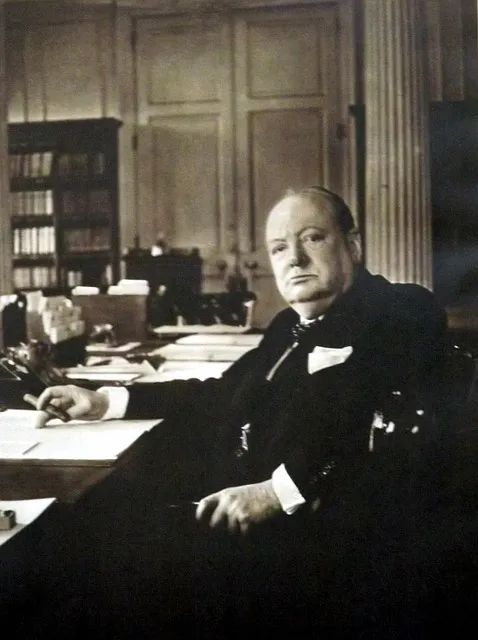
I want to be honest about something before we go further. I spent years being suspicious of the “study how great men spent their mornings” genre of productivity content, because most of it is just dressed-up inspiration porn: look at this remarkable person, now feel bad about yourself and buy a journal. The Churchill Operating System is different, and I’ll show you why — because each element maps to a specific cognitive or physiological mechanism that has since been validated by neuroscience. Churchill didn’t know why his system worked. He built it empirically, through trial and error across decades, the way a skilled engineer builds a bridge before stress-testing equations exist. The equations came later. The bridge stood first.
The Bed Office: How Churchill Started Every Day
Churchill’s morning began between 7:30 and 8 AM, and it began in bed. Not in the sense that he was slowly waking up and scrolling a phone — there were no phones to scroll, and in any case Churchill was immediately operational. His secretary arrived, the newspapers were already spread across the duvet, and the dictation began. Memos, responses, policy positions, speech fragments — all of it poured out while he was technically still horizontal, breakfast tray in front of him, the first whisky-and-soda of the day already mixed at the heavily diluted ratio his valet maintained. Churchill called this period his “golden hours,” and he used them without interruption until approximately 11 AM.
The mechanism here is something modern sleep researchers have since mapped precisely. The period immediately after waking — what neuroscientist Andrew Huberman at Stanford calls the “post-sleep adenosine clearance window” — is characterized by elevated norepinephrine and dopamine with cortisol still rising toward its daily peak. Cognitive function during this window is optimized for verbal production, associative thinking, and strategic reasoning. Churchill was exploiting this window without knowing its biochemical basis, using it for exactly the tasks it supports best: writing, dictating, and synthesizing complex information. His body was horizontal but his brain was running at something close to peak performance.
The bed also solved a practical problem that Churchill had identified early in his career: meetings destroy mornings. By receiving visitors from bed rather than at a desk, Churchill controlled the formality, duration, and agenda of interactions. Visitors couldn’t settle into their chair and run long. The environment created urgency. Business got done and people left. Churchill remained in his most productive cognitive state without burning it on social friction. This is prioritize and execute applied to time itself: the highest-value cognitive work gets the highest-quality attention, and low-value social interactions get compressed into environments that minimize their cost.
The Strategic Nap: Churchill’s Most Underrated Discipline Tool
Every afternoon, without exception, Churchill retired to his bedroom between 1 and 2 PM, changed into his nightclothes, and slept for one to two hours. This was not a catnap on the couch. This was full-on, pajamas-and-blackout-curtains sleep. His staff knew not to disturb him during this period. Wartime didn’t change this habit — if anything, Churchill was more insistent about it when the operational tempo was highest. During the Blitz, he napped. During D-Day planning, he napped. During summit meetings with Roosevelt and Stalin, he found ways to nap.
Churchill himself was explicit about what the nap did for him. He told the House of Commons during a particularly brutal parliamentary session: “You must sleep some time between lunch and dinner, and no halfway measures. Take off your clothes and get into bed. That’s what I always do. Don’t think you will be doing less work because you sleep during the day. That’s a foolish notion held by people who have no imagination. You will be able to accomplish more. You get two days in one — well, at least one and a half.”
He was correct, and the research has since confirmed it with uncomfortable precision. A 2008 study at the Salk Institute for Biological Sciences by Sara Mednick — published in the Proceedings of the National Academy of Sciences — found that a 90-minute nap containing REM sleep restored performance on perceptual tasks to the same level as a full night of sleep, while participants who did not nap showed deteriorating performance across the afternoon. NASA research confirms that a 26-minute nap improves pilot performance by 34% and alertness by 54%. Churchill’s two-hour nap was, by these metrics, a profound cognitive enhancement — not a luxury, but a performance intervention that reset his capacity for the evening production window. The science of deep sleep makes clear that the architecture of when you sleep matters as much as the duration. Churchill built a structure that captured two partial sleep cycles per day, and his evening work capacity was the dividend.
The cultural resistance to napping in most professional environments is real, and it’s worth naming directly. We have built an office culture that treats being awake for sixteen consecutive hours as a virtue signal, despite a mountain of evidence that afternoon cognitive performance without sleep is objectively terrible. Churchill didn’t care what the culture said. He measured his output and protected what produced it. That is the definition of deliberate practice applied to daily structure.
The Production Window: Why Churchill Worked Until 2 AM
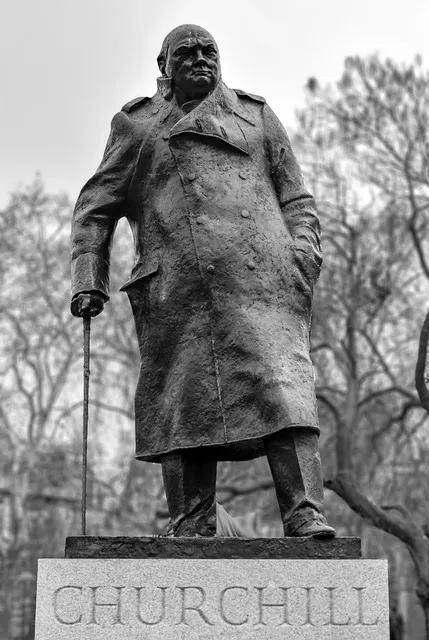
The nap made the Production Window possible. Without the afternoon reset, Churchill’s cognitive resources would have been depleted by evening, and the late-night output would have been diminished. This is the key mechanical insight of the Churchill Operating System: the nap is not a concession to fatigue. It is the charging mechanism for the most productive block of the day. The morning Bed Office produces tactical output — correspondence, decisions, responses. The evening Production Window produces strategic output — the major work, the speeches, the books, the long-form thinking. And the nap is the bridge between them.
Churchill’s total sleep, spread across the two windows, was approximately 7.5 to 8 hours — well within the range that sleep science identifies as optimal for high cognitive performance. He wasn’t running on fumes. He was running on a different architecture than the people around him, and that architecture allowed him to be productively alert for windows when they were cognitively drained.
Recovery Architecture: Painting, Bricklaying, and the Science of Active Rest
Churchill took up painting in 1915, during the worst period of his career. The Gallipoli campaign had been a catastrophe, he had been forced out of the Admiralty, and he was facing what he described as the worst depression of his life. A friend introduced him to oil painting almost as a joke, and Churchill discovered something that would sustain him for the next forty years. He painted over 500 canvases, exhibited under a pseudonym, sold work that was purchased without his identity being known, and wrote an essay called “Painting as a Pastime” that is one of the most insightful pieces ever written about the psychology of creative recovery.
Churchill identified the mechanism himself with unusual precision for someone writing in 1921: “The cultivation of a hobby and new forms of interest is therefore a policy of the first importance to a public man. To be really happy and really safe, one ought to have at least two or three hobbies, and they must all be real.” The word “real” is doing the work here. Churchill meant something specific: a real hobby demands genuine engagement, actual skill, and the kind of focused attention that pulls your mind completely away from its primary preoccupation. Reading about your problems while nominally “relaxing” is not a real hobby. Scrolling a phone is not a real hobby. An activity that requires your complete attention — where a wandering mind produces a visible mistake — is a real hobby, and that is what makes it restorative.
The neuroscience behind this was formalized decades after Churchill’s death. When the prefrontal cortex (responsible for the kind of analytical, sequential thinking that political and literary work demands) is engaged for extended periods, it accumulates metabolic waste products — principally lactate — that impair function. Activities that shift processing to different brain regions (the visual cortex and motor cortex for painting, the motor cortex and body schema for bricklaying) allow the prefrontal cortex to clear these waste products without the person having to be genuinely idle. This is why Churchill emerged from a painting session or a bricklaying afternoon not just relaxed but cognitively sharper — the rest was active but anatomically targeted. It’s the same principle that makes movement-based practices more restorative than passive rest for people doing intensive cognitive work.
Churchill also built walls. Literally. At his country estate Chartwell, he constructed a full-length brick wall in the kitchen garden, laying bricks personally at a rate that impressed the professional bricklayers he employed. He was so serious about this that he joined the Amalgamated Union of Building Trade Workers. When a journalist asked him once why he laid bricks, Churchill replied, “To build a wall, obviously.” The joke was the answer. Bricklaying is meditative, rhythmic, physically demanding, and completely absorbing. The same quality that makes it boring to watch is what makes it restorative to do. Your mind has nothing to think about except mortar and level, and that is the entire point.
The Correspondence Engine: How Churchill Multiplied His Reach Without Fragmenting His Attention
Churchill dictated everything. In modern terms, he had a voice-to-text workflow with human transcriptionists, and he used it with a systematic efficiency that would impress a modern productivity consultant. His system had three layers: he produced rough dictation during the Bed Office hours, his secretaries typed and organized it, and he reviewed and annotated the output either in a second dictation pass or with his red pen.
The entire system was designed around one principle: Churchill’s cognitive output should never be throttled by physical input bottlenecks.
This matters more than it sounds. Most people allow their communication to consume their best cognitive hours. They sit down in the morning, open their email or equivalent, and spend the peak of their daily cognitive window processing other people’s agendas. Churchill did the inverse: he used the morning peak to produce, and he handled responses within that production flow rather than letting responses dictate the flow. His secretaries handled the incoming correspondence, triaged it, and presented him with the relevant items. Churchill responded by voice, in sequence, without needing to context-switch between production and response modes. The output was a volume of correspondence that would be impossible to match through conventional typing and responding.
For the modern person building their own version of the Churchill Operating System, the principle translates directly: identify your peak cognitive window and protect it from incoming demands. Respond to messages during a designated window, not reactively throughout the day. The phone addiction research is clear that each notification triggers a context-switch that costs roughly 23 minutes of focused work to recover from. Churchill’s pre-digital world had fewer notifications but the same underlying problem — other people’s demands competing with primary work — and his solution was architectural rather than willpower-based. He didn’t try harder to ignore distractions. He built a system that structurally prevented the distractions from reaching him during production time.
The Black Dog: What Churchill’s Depression Reveals About Real Discipline
The most common misconception about Churchill is that he was a naturally confident, energetic, bullish personality who could sustain his output because he was constitutionally designed for it. The historical record is the opposite. Churchill suffered from severe, recurring depression throughout his adult life, what he called “the black dog,” and it was not a mild melancholy. His personal physician, Lord Moran, documented episodes where Churchill could not work for days, sat alone in rooms without speaking, and described feelings of despair that he found almost impossible to articulate. During the 1930s “wilderness years” — when he was politically isolated and widely dismissed as a warmongering has-been — the depression was particularly severe.
What Churchill did with his depression is worth examining carefully, because it is exactly the opposite of the modern therapeutic framework for managing it. He worked through it. Not as a form of denial or toxic stoicism that eventually destroyed him — he lived to 90 and remained intellectually active to near the end — but as a deliberate management strategy built on the one thing he knew to be true from decades of empirical observation: work created momentum, and momentum was the only thing that reliably moved the black dog back. Painting was specifically therapeutic in a way that writing wasn’t, because it demanded visual attention that the depressive mind couldn’t easily colonize with dark narrative. Bricklaying similarly. The productive physical activities weren’t distractions from depression; they were his clinical protocol for managing it.
This connects to something important about the Churchill Operating System as a whole: it was not designed for ideal conditions. It was designed to produce output when conditions were actively bad. Churchill built a routine that worked when he was depressed, when he was politically isolated, when he was physically ill, when the world was literally on fire. The robustness of the system — its ability to function across radically varying psychological and external conditions — is one of its most underappreciated features. Most people design their routines for their best days. Churchill designed his for his worst, and it happened to work well on his best days too. That asymmetry is the whole game. A system that only works when you feel good is not a discipline system. It’s a motivation system, and motivation is notoriously unreliable.
The American Psychological Association’s research on willpower confirms what Churchill discovered empirically: willpower-based approaches to sustained performance degrade under stress, while system-based approaches maintain performance because the structure itself provides the momentum rather than requiring the person to generate it internally each day. Churchill’s routine worked on bad days because it was habit, not inspiration. The bed office happened at 8 AM because it always happened at 8 AM, not because Churchill woke up feeling motivated. The nap happened at 1 PM because it always happened at 1 PM. The system carried him through the days when nothing internal was carrying him, and that is the most practical thing you can learn from studying it.
What Modern Science Says About the Churchill Operating System
Churchill built his routine empirically, but each of its five components has since been validated by research that Churchill could not have known about. Running through them systematically is useful not just as confirmation but because understanding the mechanism makes it easier to adapt each component intelligently.
The Bed Office
exploits what neuroscientist Matthew Walker at UC Berkeley calls “sleep inertia clearance” — the 30-to-90 minute window after waking when adenosine has been cleared by sleep but cortisol has not yet peaked. During this window, the brain is in a state of high neuroplasticity ideal for verbal production and associative thinking. Churchill’s habit of beginning work immediately upon waking, rather than slowly transitioning through social media and email, captured this window almost perfectly. Walker’s research, documented in his 2017 book Why We Sleep, confirms that the quality of cognitive work done in this window is measurably higher than work done after the first 90 minutes of waking activity — a finding that makes Churchill’s immediate-dictation habit look less eccentric and more precise.
The Strategic Nap is supported by the most robust body of sleep research in this area. Matthew Walker’s lab has demonstrated that a 90-minute nap containing NREM Stage 2 sleep and REM sleep offsets the hippocampal saturation that accumulates through morning learning and work. The hippocampus, which acts as the brain’s short-term storage buffer, fills progressively through morning activity and begins impairing new encoding by early afternoon — explaining the characteristic post-lunch cognitive dip that most office workers attempt to fight with coffee. A full nap resets the hippocampus by moving short-term memories to cortical storage, clearing capacity for the evening’s work. Churchill’s two-hour nap was, functionally, a hard drive defragmentation run at midday. His evenings were cognitively sharp because he was starting the evening with a clean buffer.
The Production Window reflects Churchill’s chronotype. Research by Katharina Wulff at Oxford’s Sleep and Circadian Neuroscience Institute confirms that approximately 20% of the population have chronotypes shifted toward late evenings (what the popular press calls “night owls”), and forcing these individuals to produce their primary work in the early morning — as most corporate schedules require — measurably impairs performance. Churchill’s late-evening production window aligned with his natural chronotype, giving him access to his cognitive peak at the time his body was actually prepared for it. The sleep timing literature makes clear that fighting your chronotype is a tax on every working hour you spend doing it.
Recovery Architecture maps to what Stanford psychologist Carol Dweck calls “effortful engagement in a different domain” — the finding that performance in a primary skill area is enhanced by deliberate engagement in a secondary skill area that draws on different cognitive resources. Churchill’s painting and bricklaying were not merely recreational; they were cross-training for his prefrontal cortex. The deliberate practice research by Anders Ericsson at Florida State University suggests that the limiting factor in extended cognitive performance is not capacity but recovery — and that active recovery (novel skill engagement) produces faster restoration than passive rest. Churchill’s afternoons of painting were more restorative than equivalent time spent reading, napping beyond the strategic window, or doing nothing, because they engaged different cognitive systems while resting the ones depleted by writing and politics.
The Correspondence Engine reflects what cognitive scientists call “batching” — the practice of grouping similar cognitive tasks to reduce the switching cost between different types of work. Research by David Meyer at the University of Michigan confirms that task-switching imposes a time cost of 25-40% on the tasks involved, and that this cost is eliminated when similar tasks are grouped and performed sequentially. Churchill’s dictation system batched all outgoing communication into a single production mode, eliminating the switching cost that most professionals pay every time they interrupt a creative task to respond to a message. His correspondence was prolific not despite this system but because of it — batching allowed him to process in a single sustained session what would have taken double the time if interspersed through the day.
How to Build Your Own Churchill Operating System
Churchill’s exact schedule — lying in bed until 11 AM, sleeping in the afternoon, working until 2 AM — is not available to most people with jobs, children, and social obligations that don’t care about your chronotype. But the Churchill Operating System is architecture, and architecture can be adapted to different sites without changing the structural principles. Here is how to extract the five components into a modern format.
-
Identify your peak window and protect it completely. This is the foundation of the system. Whether you’re a morning person or a night person, you have one period of two to three hours per day when your cognitive function is measurably higher than the rest of the day. For most people this is either the first two hours after full waking or the period from roughly 9 PM to midnight. That window gets no email, no meetings, no calls, no social media. It gets your hardest work only. Churchill spent his morning window on production. The medium doesn’t matter. The protection does. Use a monk mode protocol during this window if environmental distractions are the problem.
-
Take the nap, or build an equivalent reset. If your schedule permits a 20-to-30-minute nap between 1 and 3 PM, take it and observe the evening results for two weeks before judging the experiment. If napping isn’t possible, a 20-minute non-sleep deep rest (NSDR) protocol — lying still with eyes closed while following a body-scan audio — produces approximately 70% of the hippocampal clearance of a full nap, according to Huberman’s 2022 research. If neither is possible in your environment, even stepping outside for 15 minutes of natural light exposure and physical movement will partially reset the adenosine accumulation driving the afternoon dip. The goal is a break that is physiologically distinct from more sitting at a desk — which, despite feeling like rest, provides almost none of the cognitive reset that physical stillness or movement produces.
-
Build a recovery activity that demands full attention. Not Netflix. Not scrolling. Not reading about your professional domain. Something that makes your hands do things and your eyes track something other than a screen, and that would produce visible errors if your mind wandered. Churchill used painting and bricklaying. The specific activity doesn’t matter. The full-attention requirement does. Options that work well include: cooking a recipe from scratch at the edge of your skill level, drawing or sketching anything at all, a musical instrument at any level of competence, any physical sport with active opponents, woodworking, climbing. The test is simple: if you could do it while thinking about work, it doesn’t count. Choose something that won’t let you. This is the key to sustainable high performance over years rather than months — your recovery determines your ceiling more than your effort does.
-
Batch your communication into dedicated windows. Churchill’s entire Correspondence Engine can be distilled into one rule: communication has dedicated time and production has dedicated time, and they do not overlap. Build two communication windows — one after your morning production block, one in the late afternoon — and process all messages only then. Use the time between windows to produce. Your messages will receive the same response they would have received if you’d answered them immediately, and you will reclaim the 25-40% switching cost that reactive communication was imposing on everything else. This single habit, combined with protecting primary work time, is the most impactful element of the Churchill Operating System for most modern knowledge workers, because it solves the problem that most corporate cultures have made invisible: that the structure of communication in most organizations is optimized for the sender’s convenience and the recipient’s distraction.
-
Build a system for your worst days, not your best. This is the meta-principle of the Churchill Operating System, and it is the one most often missed. When you design a routine, don’t design it for the days when you’re energized, motivated, and operating well. Design it for the days when the black dog is present — when you’re depressed, anxious, hungover, grieving, ill, or just empty. What is the minimum version of this routine you can execute on a day when you have nothing? That minimum version is the real routine. Everything above it is the bonus. Churchill’s minimum was: get to work from bed, take the nap, find something with his hands. On his worst days, he did exactly that. The production that followed wasn’t his best work, but it was production, and production always beat silence in the long game. Build your own minimum and make it a commitment to yourself that is as non-negotiable as breathing.
The Results: What the Churchill Operating System Actually Produced
It is worth being specific about the output, because the specific numbers make the abstract efficiency claims concrete. Over the course of his life, Winston Churchill wrote 43 books totaling approximately 15 million words — more than the complete works of Dickens and Shakespeare combined. He delivered hundreds of major parliamentary speeches and wartime broadcasts. He served as a Cabinet minister in six different governments over five decades. He won the Nobel Prize in Literature in 1953, citing specifically his mastery of historical description and brilliant oratory in defending human values. He completed over 500 oil paintings, 145 of which were exhibited at the Royal Academy of Arts. He laid 30,000 bricks. He raised four children. He fought in four wars across three continents.
The output is not the argument for the system. The argument is the 60-year duration and the quality under pressure. Churchill was not producing his best work in ideal conditions during his twenties. He was producing his most important work in his sixties and seventies, during civilizational emergencies, while managing depression, while being personally targeted by the most effective propaganda machine in history, while sleeping fewer total hours than most of his contemporaries. The system aged better than the man’s biology should have permitted. That is the signature of architecture that works: it produces results in the conditions it was designed for, not just the conditions the designer hoped for.
His 1940 speeches — “We shall fight on the beaches,” “Their finest hour,” “Never in the field of human conflict” — were written in the Production Window, between 10 PM and 2 AM, after the afternoon nap, after dinner with the Chiefs of Staff. They were built the same way Churchill built everything: from the bottom of the Operating System up. The words that held Britain together came out of a routine, not a moment of inspiration. That is either deflating or profoundly encouraging, depending on whether you have a routine yet.
Adapting the Churchill Operating System for People Who Can’t Lie in Bed Until 11 AM
The honest version of Churchill adaptation for most people starts with two questions. First: what is your actual peak cognitive window, and how much of it are you currently giving to other people’s agendas? Second: what is your current recovery architecture, and does it actually recover you, or does it just fill time?
Most people will find, on honest inspection, that they are spending their peak cognitive hours on the lowest-value activities (email, meetings, administrative tasks) and their low-energy hours on the highest-value activities (creative work, strategic thinking, the projects that actually matter). This inversion is so common in modern workplaces that it feels normal, but it is expensive. The Churchill Operating System inverts the inversion: put your best hours on your best work, and let everything else fill around it.
The minimum viable version of the Churchill Operating System for someone with a conventional job, a family, and a commute looks like this: a 90-minute protected production window in either the morning (before the household is active) or the evening (after it has settled); a genuine 20-minute reset at midday that is physically distinct from sitting at a desk; one weekly activity that demands enough physical engagement to prevent your mind from going back to work; and batched communication in two windows per day rather than continuous reactive processing. That’s four changes. The combined effect of those four changes, maintained for 90 days, produces a measurable shift in output quality and volume that has nothing to do with motivation and everything to do with architecture.
The sleep architecture research from the National Sleep Foundation and the cognitive performance data are unambiguous: the quality of your output is determined less by how hard you try and more by how well you’ve structured the conditions for your brain to operate at its best. Churchill didn’t know the neuroscience. He figured out the structure. You have the advantage of both. There is no excuse for the inversion.
The Trap: Three Ways People Misread Churchill’s Routine
- Misreading 1: The drinking was the point. Churchill consumed alcohol from morning until night, and this fact has been extracted from context by an impressive range of people with an impressive range of agendas. The reality, documented by Lord Moran and corroborated by the accounts of everyone who worked with Churchill for extended periods, is that his drinks were heavily diluted to the point where his daily alcohol consumption was roughly equivalent to a couple of standard drinks by modern measurement standards. His whisky-and-sodas were filled mostly with soda. His champagne was nursed over hours. He was almost never impaired. The performance record confirms this — nobody running a genuine drinking problem through wartime could have produced the volume and quality of work Churchill produced in his 60s and 70s. The drinking was a social ritual, an anxiety management tool, and a personal comfort. It was not the source of the output, and anyone who uses Churchill as justification for their own drinking while producing a fraction of his output is performing some impressive motivated reasoning.
- Misreading 2: The unconventional hours prove discipline is personal. Yes and no. Churchill’s specific schedule — bed at 2 AM, up at 8 AM, nap at 1 PM — reflected his chronotype and his specific professional context, neither of which can be directly copied. But the principle underlying those hours is universal: your primary work should occupy your highest-quality cognitive window, and your recovery should be genuine recovery. The specific times are variables. The principle is constant. Copying Churchill’s hours without understanding the principle is like copying an athlete’s workout without understanding the training theory — you’ll get the form without the function, and you’ll wonder why it isn’t working.
- Misreading 3: Churchill was naturally resilient. He was constitutionally resilient in some ways (an unusual capacity to tolerate uncertainty, a genuine indifference to personal danger that several biographers attribute to the depression making death less frightening than a continuing life). But the psychological record is clear that Churchill struggled with darkness, self-doubt, and despair throughout his life, and that his output was the product of a built system operating despite those conditions rather than a natural personality operating through them. This distinction matters because it means the system is available to people who don’t share Churchill’s constitution. You don’t need to be built like Churchill to run the Churchill Operating System. You need to build a system that works on your worst days, practice it until it becomes automatic, and let the automatic behavior carry you through the days when nothing else can. That is the discipline under pressure that Churchill demonstrated, and it is replicable precisely because it is systematic rather than temperamental.
How the Churchill Operating System Connects to the Resilient Wisdom System
The Churchill Operating System sits within a broader framework for building the kind of sustained performance that most people can only maintain in short bursts. The key connections are worth naming explicitly because they show how the pieces work together.
The principle of deliberate practice applies directly to the Production Window: uninterrupted, high-quality focused work at the edge of your current capacity produces skill development and output that distributed, distracted work cannot replicate regardless of total hours invested. Churchill’s late-night dictation sessions were, functionally, deliberate practice sessions — deep engagement with the craft of rhetoric and historical writing, sustained for multiple hours, with immediate feedback from his secretaries and revision cycles built into the process.
The prioritize and execute discipline is the meta-principle behind the Correspondence Engine: identify what most needs to happen, protect the conditions for it, and let everything else be organized around it rather than organizing your primary work around everything else. Churchill was ruthless about this. His secretaries’ primary function was to shield him from demands that didn’t warrant his personal attention. The principle is the same regardless of whether you have secretaries or just an auto-responder.
The no zero days framework maps directly to Churchill’s minimum viable routine — the commitment to produce something, however small, on every day, including the worst days. Churchill never had zero-output days during active periods of his career because the structure of his operating system prevented them. The Production Window happened. The Bed Office happened. Even on days when the black dog was severe, the system carried him forward by removing the need to generate internal motivation each morning. Operating from structure rather than mood is one of the deepest practical lessons Churchill’s life demonstrates.
If you want to test your own version of the Churchill Operating System in a structured container, the 30-day discipline challenge provides exactly the external accountability structure that makes new architectural habits take hold before they become intrinsic. The kaizen approach — 1% daily improvement compounded over months — is the appropriate metric for evaluating this kind of system change, because the results are not visible on any given day and unmistakable over 90 days.
FAQ: Winston Churchill’s Discipline Routine
What was Winston Churchill’s daily routine? Churchill’s routine followed a biphasic structure built around his natural chronotype. He woke between 7:30 and 8 AM, spent the morning in bed dictating correspondence and reviewing papers until around 11 AM, then dressed for meetings and lunch. An afternoon nap of one to two hours followed, then dinner with guests used as a political and intellectual instrument, then a production window of intense writing and dictation from roughly 10 PM to 2 AM. Total sleep across both windows averaged 7.5 to 8 hours. The system prioritized his two highest-productivity windows (morning and late night) for primary work and used the midday reset to bridge between them.
Why did Churchill work from bed every morning? Churchill’s morning bed office was a deliberate productivity mechanism rather than laziness. By receiving visitors and dictating correspondence from bed, he captured the post-sleep cognitive peak (high neuroplasticity, elevated dopamine and norepinephrine) without the energy cost of formal meetings. He also controlled the environment to keep interactions brief — visitors couldn’t settle in and run long when the host was in pajamas. His secretaries confirmed this was his most reliably productive window of each day. Modern sleep research by Matthew Walker at UC Berkeley has since confirmed that the cognitive state Churchill was exploiting is real and measurable.
How did Churchill manage his depression while maintaining such high output? Churchill’s “black dog” depression was managed primarily through the Operating System itself rather than through treatment. Painting provided what he described as complete mental absorption — the visual demands of oil painting prevented the depressive mind from constructing dark narratives. Physical work like bricklaying provided rhythmic, embodied engagement that grounded him. Most importantly, the routine was designed to function regardless of psychological state — the system carried him on days when internal motivation was zero. The American Psychological Association’s research on willpower confirms this approach: behavior systems outperform willpower during stress and low motivation, which is precisely when Churchill’s system was most tested and most demonstrably effective.
What can a modern person realistically take from Churchill’s routine? The five core principles of the Churchill Operating System translate directly: protect your peak cognitive window for primary work only; take or simulate a midday reset that is physiologically distinct from more desk time; build a recovery activity that demands full attention and uses different cognitive systems than your primary work; batch communication into dedicated windows rather than processing reactively throughout the day; and design your minimum viable routine for bad days, not good ones. You don’t need to work until 2 AM or lie in bed until 11 AM. You need the structural logic underneath those specific habits.
Did Churchill’s unconventional schedule reduce his effectiveness as a wartime leader? The opposite is documented. Churchill’s chiefs of staff — including Field Marshal Alanbrooke, whose diaries provide the most detailed account of Churchill in operational mode — noted that Churchill’s capacity for sustained cognitive work in the late evening exceeded that of men twenty years younger on conventional schedules. Alanbrooke wrote with genuine frustration about being called to late-night strategy sessions that Churchill ran with total clarity at 1 AM while his younger subordinates were fading. The Operating System produced a man who was cognitively sharper in crisis than his conventional-schedule contemporaries. That advantage was not accidental.
How does Churchill’s approach to creative recovery apply to non-creative professions? The principle is universal. Any profession that requires extended cognitive engagement — law, medicine, finance, engineering, management — depletes the same prefrontal resources that Churchill depleted through writing and politics. The recovery mechanism (switching to an activity that demands full attention from a different cognitive system) applies regardless of what the primary work is. An accountant who spends evenings learning to throw pottery is getting the same prefrontal recovery that Churchill got from painting. The specific activity is far less important than the full-attention requirement. Choose something that produces visible errors when your mind wanders, and it will work.
What role did Churchill’s reading and intellectual life play in his routine? Churchill was an omnivorous reader throughout his life — history, biography, military strategy, economics, philosophy — and this reading was woven into both his Bed Office hours and his correspondence. But it served a specific function in the system: it was the raw material for the Production Window, not the output. Churchill read the same way a good cook shops — purposefully, with the final dish in mind. His speeches and books drew on reading that had been processed and synthesized, not simply accumulated. The reading habit, combined with the reflective capacity that his painting and walking practices developed, produced the quality of synthesis that distinguished his writing from contemporaries who had read equally widely but thought less carefully about what they’d read.
NOT JUST READING ABOUT IT ›
Join the Wolf Pack — mentorship and accountability for men who are done thinking about change
The Legacy of the Operating System
Churchill died in January 1965 at the age of 90. The Operating System had been running, in various configurations, for over sixty years. The final decade of his life was diminished by a series of strokes that impaired his mobility and communication, but even then the structure was present: the morning in bed, the afternoon rest, the evening gathering of family and a few close friends. The system persisted past the point where the content could. That is not a mournful observation. It is evidence that the architecture was genuinely autonomous by the end — it had become Churchill rather than Churchill choosing it each day, which is the only outcome worth building toward.
The question that Churchill’s life poses, and that his Operating System answers, is not “how do I feel more motivated?” Motivation was not a reliable resource for Churchill. The question is: “what architecture will produce the results I want regardless of how I feel on any given day?” That question leads to a different kind of discipline — quieter, less dramatic, less photogenic than the version that gets quoted on Instagram, but enormously more productive over any period longer than a week. Churchill’s version involved a silk dressing gown, a heavily diluted whisky, a cigar, and a secretary taking dictation at 8 AM while bombs fell on the city outside. Your version will look different. The structure underneath it should look the same.
Build the Operating System. Run it on your worst days. The results appear, as they always do, slowly and then all at once.
Related: Leonardo da Vinci's Discipline Routine: What He Did Daily
Editorial StandardsCorrectionsMedical DisclaimerAbout Our ContentAffiliate DisclosureSite Map