
The box arrived on a Wednesday. Inside: a coffee mug from a job title no longer held, a framed photo from a marriage that had ended six months earlier, three cable ties, a wall calendar from two years ago. His brother had packed it from the storage unit, unable to face doing it himself. He put the box in the corner of his new apartment — one bedroom, radiator that clanked — and didn’t open it for three weeks.
Take a guy we’ll call Daniel, who described the box eighteen months later, sitting across a table with the particular calm of a man who’s been through the fire and come out the other side. The box had become, in the telling, the hinge between everything before and everything after. The moment it finally got cut open — not to preserve its contents but to throw most of them away — was the moment starting over became real. “Kept the coffee mug,” he said. “Tossed the calendar. Some things earn their place in the next chapter. Most things don’t.”
That distinction — what earns its place versus what gets left behind — is the central question of every rebuild. Starting over quotes for men fill the internet, most designed to wallpaper over the difficulty rather than help work through it. This collection is built differently. Every quote here was chosen because it carries genuine weight, forged by people who had actual skin in the game — Viktor Frankl in Auschwitz, Nelson Mandela in a prison cell, J.K. Rowling on welfare with a manuscript in her bag. Not motivational decorations. Tools.
The 75 quotes are organized into eight themes mapping to the actual sequence of a real rebuild — the courage to move, letting go of the old identity, the mechanics of a fresh start, reinvention under pressure, building from zero, patience during the slow phase, moving without looking back, and the larger arc of second chances. Use them accordingly — not as inspiration, but as starting over quotes for men that give a clearer view of where things actually stand in the process. And whichever one hits hardest, don’t share it. Use it.
There’s also a framework at the end — the Rebuild Ledger — for turning these quotes from something read into something operated with.
The Quotes About Courage to Begin Again

“It takes courage to let go of the familiar and embrace the new.” — Alan Cohen
Cohen identified the central paradox — the familiar is comfortable even when it’s costing you, and the new is terrifying even when it’s saving you. The familiar job slowly killing self-respect. The city where everyone knows the man who failed. The identity that stopped fitting years ago. Courage isn’t the absence of fear about releasing them. It’s the willingness to release them anyway, because staying costs more than going.
“Rock bottom became the solid foundation on which I rebuilt my life.” — J.K. Rowling
Rowling was a single mother collecting welfare checks when she wrote the first Harry Potter manuscript. She didn’t start over from strength. She started from the bottom of the barrel and turned the barrel into bedrock. This is the first thing separating men who rebuild from men who stay stuck — understanding rock bottom has a structural property. It doesn’t give. Everything above it can shift. The floor holds.
“The secret of change is to focus all of your energy not on fighting the old, but on building the new.” — Socrates (attributed via Dan Millman)
Most men waste the first year of a rebuild fighting the old life instead of constructing the new one — fighting the divorce settlement, relitigating the decision that cost the promotion, compiling the case file of everyone who wronged them. The old life can’t hear the argument against it. The new life sits unbuilt in the meantime. Every hour fighting backward is an hour the new life waits.
“I can be changed by what happens to me. But I refuse to be reduced by it.” — Maya Angelou
Angelou survived abuse, racism, poverty, and the kind of displacement that would break most people twice. Change, she understood, is unavoidable — loss changes you, failure changes you, betrayal changes you. Reduction is a choice. A man starting over isn’t denying what happened. He’s refusing to let it write the final line.
“You are never too old to set another goal or to dream a new dream.” — C.S. Lewis
Lewis wrote this having outlived his mother as a child, fought through the trenches of World War I, spent decades as an atheist before his conversion, and lost his wife to cancer after just four years of marriage. Not offering comfort from a comfortable life. Offering testimony from a life broken and rebuilt multiple times. The imagination doesn’t expire. Neither does the will to use it.
“Do not be embarrassed by your failures, learn from them and start again.” — Richard Branson
Branson’s launched hundreds of ventures. A significant number failed spectacularly and publicly. His operating system treats failure as tuition, not verdict. A man embarrassed by failure will never risk the kind of starting over that produces something worth having. Embarrassment is just pride pointed in the wrong direction — protecting the reputation instead of building the life.
“The only impossible journey is the one you never begin.” — Tony Robbins
The rebuild doesn’t require certainty. It requires a first step — not “I will succeed,” not “I have it figured out,” just “I am going to try.” That decision, made honestly and without conditions attached to the outcome, is the most powerful single move available to a man in transition. Everything else comes after it. Nothing comes before it.
“Out of suffering have emerged the strongest souls; the most massive characters are seared with scars.” — Kahlil Gibran
Gibran rebuilt his entire life in exile, a Lebanese poet writing in a country that wasn’t his, in a language that wasn’t his first, carving out a legacy from displacement. His scars weren’t evidence of failure. They were evidence of survival. The scars aren’t something to minimize or hide. They’re the material record of a man designed to be broken who declined the invitation.
“It is never too late to be what you might have been.” — George Eliot
Mary Ann Evans wrote under a male pen name in Victorian England, because a woman’s name on a novel meant the work would be dismissed. She understood reinvention at a molecular level — not just changing careers but changing entire identities. The person one might have become isn’t a ghost haunting regrets. It’s a blueprint. Blueprints don’t expire. They wait.
Letting Go of What Was
The hardest part of starting over is usually not the building. It’s the releasing. Men carry the old identity, the old story, the old version of themselves like weight on a march — not because they want to, but because they don’t know how to set it down without feeling like abandonment. These quotes are about that specific difficulty.
“Some of us think holding on makes us strong, but sometimes it is letting go.” — Hermann Hesse
Hesse won the Nobel Prize and spent decades in the tension between attachment and freedom. The insight he kept returning to: holding on to what no longer works isn’t strength. It’s a refusal to grieve. The grip feels like resolve. It’s actually rigidity. A rigid man can’t be rebuilt — only broken further. Grief isn’t weakness. It’s the prerequisite for the next chapter.
“When I let go of what I am, I become what I might be.” — Lao Tzu
Identity’s the heaviest cargo a man carries. “I am a husband.” “I am an executive.” “I am the guy who built that company.” Strip the labels away — divorce, layoff, collapse — and the temptation’s panic, grabbing for new labels immediately. But Lao Tzu understood that emptiness isn’t a vacuum to be filled. It’s potential waiting for the right form.
What might be only has room to emerge when what was stops filling the space.
“You can’t start the next chapter of your life if you keep re-reading the last one.” — Michael McMillan
Rumination isn’t processing. There’s a difference between sitting with what happened and replaying it on a loop, adding commentary and alternative endings. Processing moves through the experience toward something else. Rumination orbits it indefinitely. A man replaying the betrayal, the failure, the loss — not to understand it but to reinforce it — is worshipping a chapter that ended. Close the book. The next one’s blank.
“The evidence confirms, unless you let go, unless you forgive yourself, unless you forgive the situation, unless you realize that the situation is over, you cannot move forward.” — Steve Maraboli
Maraboli stacks the conditions in sequence, and the one most men skip is the second — forgiving yourself. Easier to forgive what was done to you than what you did. The mistakes made, the opportunities missed, the version of self not proud of — most men carry those like a life sentence. The rebuild can’t happen on a foundation of self-punishment. Forgiveness of yourself isn’t excusing the behavior. It’s the decision to stop letting it own you.
“Letting go means to come to the realization that some people are a part of your history, but not a part of your destiny.” — Steve Maraboli
This distinction’s surgical and necessary. The friend who enabled the worst habits. The relationship that confirmed the wrong things about yourself. The mentor who stopped being useful three years ago. Not everyone right for chapter one belongs in chapter two. Not a betrayal of those people. An act of honesty about what the next version of life actually requires.
“Nothing in the universe can stop you from letting go and starting over.” — Guy Finley
Either deeply comforting or deeply challenging, depending on where things stand. Because if nothing in the universe can stop it, whatever’s stopping it is internal. The prison door was never locked from the outside. The chains are the story kept being told about why moving isn’t possible. See that, and the story loses its authority. Once the story loses its authority, the door opens.
“In the process of letting go you will lose many things from the past, but you will find yourself.” — Deepak Chopra
The hidden reward of loss. The title, the house, the reputation, the easy comfort of being known as the man who had it together — all of it gets lost. And in that loss, stripped of every external marker, the person underneath all of it gets encountered. Most men never meet themselves because they’re buried under everything owned and everything expected of them. Loss clears the debris.
What’s underneath is the man who does the rebuilding.
“Grief does not change you. It reveals you.” — John Green
Grief strips away the performance. What remains isn’t a weakened version — it’s the real one. The man underneath the career, the marriage, the social identity. Grief doesn’t create the cracks in character. It shows which parts of character were actually solid and which were held together by scaffolding that just fell. The solid parts are what gets built from. And they can’t be seen until the scaffolding’s gone.
On Fresh Starts and New Beginnings

“Every moment is a fresh beginning.” — T.S. Eliot
Eliot won the Nobel Prize and understood time better than almost any writer of his century. This insight’s quietly radical — no catastrophe required to start over. Every moment’s already a fresh beginning. No waiting required for January 1st, the divorce finalizing, the new apartment. This moment, the one happening right now, is a beginning. The only question is whether there’s enough awareness to recognize it as such.
“For what it’s worth: it’s never too late or, in my case, too early to be whoever you want to be.” — F. Scott Fitzgerald
Fitzgerald understood the American obsession with reinvention from the inside out — and its costs. The man who wrote Gatsby knew the past has a gravitational pull and fighting it is the only real work of a human life. Permission to start over comes from exactly one place, and it isn’t the circumstances aligning correctly. It’s from within. That permission’s already available. Nobody else grants it.
“With the new day comes new strength and new thoughts.” — Eleanor Roosevelt
Roosevelt understood renewal’s biological as much as philosophical. Sleep resets the nervous system. Cortisol levels reset. The neural consolidation happening during rest produces, literally, a different brain than the one from the night before. The new day isn’t a metaphor for hope. It’s a physiological mechanism for starting again. Use it.
“No one can go back and make a brand-new start, but anyone can start from now and make a brand-new ending.” — Carl Bard
The past is fixed. Not a tragedy — a structural fact. The decision can’t be undone, the relationship unbroken, the words unsaid. But the ending’s still being written. A man spending his energy trying to undo the past is working the wrong side of the ledger. The future’s the only column with any fluidity left in it. Work on that part.
“And suddenly you know: It’s time to start something new and trust the magic of beginnings.” — Meister Eckhart
Eckhart, a thirteenth-century mystic, described the moment of decision as sudden — not gradual. Most men wait for it to feel right, for the fear to subside, for conditions to align. But there comes a day when the accumulated weight of staying still exceeds the fear of moving. Something clicks. Eckhart calls that click “magic” — not because it’s supernatural, but because its arrival’s unmistakable. When it comes, trust it.
“The first step towards getting somewhere is to decide you’re not going to stay where you are.” — J.P. Morgan
Morgan’s insight is deliberately practical. No destination required. No fully formed plan. Just the decision to stop accepting the current position. The destination reveals itself to the man already moving. Clarity comes from motion, not deliberation. Nobody thinks their way into a fresh start. Moving is the only way in.
“You may have a fresh start any moment you choose, for this thing that we call ‘failure’ is not the falling down, but the staying down.” — Mary Pickford
Pickford was one of the founders of Hollywood and rebuilt her career multiple times through the seismic shift from silent film to talkies — an industry transition that destroyed most careers of her generation. Her definition of failure is precise — not the falling, but the staying down. Anyone reading this who’s still breathing, still trying, still showing up — by Pickford’s definition, hasn’t failed yet. Just between the fall and the stand.
“There are far, far better things ahead than any we leave behind.” — C.S. Lewis
Lewis wrote this while processing the death of his wife Joy, documenting his grief in real time in A Grief Observed. Not naive optimism. A man who’d earned the right to say it through decades of loss, said it anyway — not because the evidence was conclusive but because the alternative was stopping. Starting over means believing this on credit, before the proof arrives.
On Reinvention and Becoming Someone New
Personal reinvention isn’t a self-improvement project. It’s an identity rebuild — the deliberate construction of a new version of self on top of the rubble of the old one. These quotes come from people who actually did it, not people who wrote about it from safety.
“Life isn’t about finding yourself. Life is about creating yourself.” — George Bernard Shaw
Shaw rejected the entire premise of “finding yourself” — as though the authentic self were a lost object hiding somewhere in the couch cushions of the past. Identity isn’t discovered. It’s built. Deliberately. Daily. Through the choices made about what standards get held, what’s tolerated, what refuses to be tolerated. Nobody needs to find themselves. They need to build themselves — and the construction process is the purpose, not just the means to an end.
“I am not what happened to me. I am what I choose to become.” — Carl Jung
Jung drew the sharpest possible line between circumstance and identity. What happened — the abuse, the failure, the betrayal, the loss — is data. What gets chosen is a decision. A man defining himself by his worst moment has surrendered authorship of his own story to people and events that no longer deserve that much power. Reclaiming authorship is the central act of reinvention.
“We must be willing to let go of the life we planned so as to have the life that is waiting for us.” — Joseph Campbell
Campbell spent his career mapping the hero’s journey across every culture in human history and found the same pattern in all of them — the hero must release the planned life to receive the actual one. The planned life was the map. The life waiting is the territory. Never the same place. The gap between them isn’t a mistake. It’s the territory itself. Navigation required.
“Your present circumstances don’t determine where you can go; they merely determine where you start.” — Nido Qubein
Qubein arrived in America as a teenager with fifty dollars, no English, no contacts. Became a university president and a multimillionaire entrepreneur. His starting point was a disadvantage by every conventional metric. His trajectory demonstrated what research on locus of control has confirmed repeatedly — starting points and ending points have almost nothing to do with each other. What’s started with determines very little. What gets done with it determines everything.
“Your life does not get better by chance, it gets better by change.” — Jim Rohn
Rohn built an empire — and mentored Tony Robbins — on one principle: personal responsibility. Life doesn’t improve because the economy recovers, the right opportunity appears, or circumstances align. It improves because something’s deliberately changed about how it’s operated. This is the single most uncomfortable insight in the entire canon of starting over quotes — waiting for external conditions to improve isn’t hope. It’s abdication.
“Reinvent yourself over and over and over until you find home. There is no timeline for the soul.” — Malebo Sephodi
The idea of one clean shot at building an identity — get it right this time or face judgment — is a lie that keeps men from attempting the next version. Most people who built something worth having required several attempts to find the right form. Reinvent as many times as it takes. No rule requires arriving somewhere on schedule. The soul isn’t on a deadline.
“Every strike brings me closer to the next home run.” — Babe Ruth
Ruth held the strikeout record for years alongside the home run record. He understood something most men resist — failure and success aren’t opposites. They’re sequential. The strikeout’s part of the sequence that produces the home run. The failed business is part of the sequence that produces the successful one. A man starting over isn’t moving backward from his last failure. He’s moving forward in the sequence.
“Remembering that you are going to die is the best way I know to avoid the trap of thinking you have something to lose.” — Steve Jobs
Jobs said this after being fired from the company he founded, after a cancer diagnosis, and after rebuilding Apple into the most valuable company on earth. Death clarifies the calculus of risk. Remember the end’s fixed, and the fear of starting over dissolves — because “what do I have to lose?” has a very clear answer once the numbers run to their conclusion. The only real loss is a life unlived.
On Building from the Ground Up

“The best time to plant a tree was twenty years ago. The second best time is now.” — Chinese Proverb
This proverb eliminates the most popular excuse in the catalog — that it should have started sooner. Yes. It should have. That information’s completely useless right now. The second best time is now — not a better now, not a more prepared now, not a less damaged now. This now. Anyone who plants the tree today is further ahead than anyone spending today wishing it had been planted earlier.
“I have not failed. I’ve just found 10,000 ways that won’t work.” — Thomas Edison
Edison’s reframe isn’t optimism. It’s engineering. Each failed attempt eliminates a dead end and narrows the viable options. A man who’s tried and failed ten times has more actionable information than a man who’s never tried. Ten ways it doesn’t work, known cold. Genuinely useful. Failure is data. The more of it accumulated, the more precisely the building proceeds.
“The greatest glory in living lies not in never falling, but in rising every time we fall.” — Nelson Mandela
Mandela spent twenty-seven years in a prison cell and emerged to lead a nation. His definition of glory has nothing to do with an unblemished record. Everything to do with the pattern of getting up. A man with a spotless history who’s never been tested has no idea whether he can rise. A man rebuilding from the rubble of a serious fall is demonstrating something more valuable — the capacity to stand again, the only capacity that actually matters long term.
“In the middle of difficulty lies opportunity.” — Albert Einstein
Einstein wasn’t being philosophical. He was being observational. Opportunity doesn’t arrive after the difficulty clears. It’s embedded inside the difficulty itself — in the gaps the crisis reveals, the skills the pressure develops, the connections that form between people building through the same hard time. A man who can see opportunity while standing in the middle of his own crisis is already in rebuild mode.
“Success is not final, failure is not fatal: it is the courage to continue that counts.” — Winston Churchill
Churchill led Britain through a war that could’ve ended Western civilization and understood both poles of the outcome spectrum are temporary. The success achieved wasn’t permanent — which is why losing it doesn’t end anyone. The failure being experienced isn’t permanent either — which is why it doesn’t define anyone. The only thing running on a continuous line is the courage to keep going. That’s the thing worth building.
“When everything seems to be going against you, remember that the airplane takes off against the wind, not with it.” — Henry Ford
Ford went bankrupt before building one of the most successful companies in American industrial history. His metaphor’s aerodynamically correct — resistance creates lift. The headwinds being faced — financial pressure, uncertainty, the loneliness of rebuilding without a safety net — aren’t proof of going the wrong direction. They’re the mechanism generating lift. Keep the wings level and keep moving forward.
“What lies behind us and what lies before us are tiny matters compared to what lies within us.” — Ralph Waldo Emerson
Emerson built American transcendentalism on this principle — the internal world outweighs the external in every direction. Past failures and future uncertainties are both small compared to the character, will, and capacity for adaptation currently carried. The raw material for the rebuild isn’t out there waiting to be found. It’s already inside. The work’s excavation, not acquisition.
“Fall seven times, stand up eight.” — Japanese Proverb
The math is simple, relentless, demands nothing glamorous. One more stand than falls. The proverb doesn’t promise the falls stop. Doesn’t promise they’ll hurt less. Doesn’t promise anyone notices or applauds the standing. It promises that whoever keeps standing will always be on their feet when the count ends. The only guarantee worth having.
“A year from now you may wish you had started today.” — Karen Lamb
A time-travel exercise. Stand in the shoes of a future self, one year from today, looking back at this moment. Grateful the starting happened today? Or carrying the same weight currently carried about the year before? The future self’s memories are being built in this exact moment. Give him something to be grateful for, because he’ll have to carry whatever gets decided here.
On Patience with Yourself During the Rebuild
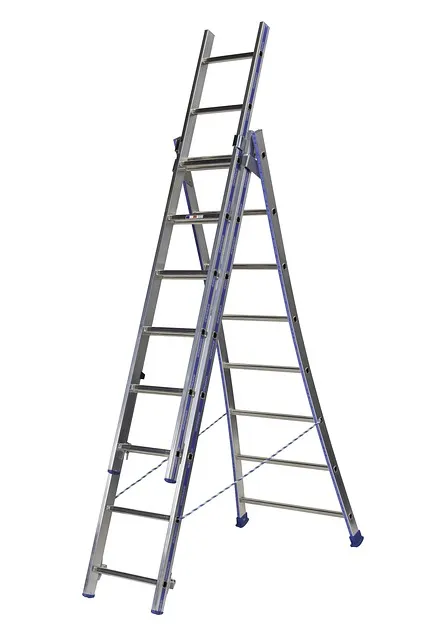
“Have patience with all things, but chiefly have patience with yourself.” — Saint Francis de Sales
De Sales understood self-impatience is the most expensive kind. Patience is easy with traffic, with bureaucracy, with people who move slowly — and then savage self-treatment follows for not rebuilding fast enough. The rebuild takes time. Impatience with the timeline doesn’t accelerate it. It corrodes the quality of what’s being built, because a man who hates where he is while building is putting that hatred into the structure.
“Be not afraid of going slowly; be afraid only of standing still.” — Chinese Proverb
Speed is a vanity measure. Movement’s the only measure that matters. A man moving one brick per day in the right direction covers more ground in a year than a man waiting for the energy to build an entire wall in a single surge. One brick per day is 365 bricks per year. That’s a structure. Standing still is zero bricks. No partial credit for having meant to start.
“Patience is not the ability to wait, but the ability to keep a good attitude while waiting.” — Joyce Meyer
Sitting still and seething isn’t patience — it’s just delay with resentment attached. Patience is the internal posture of a man working steadily and trusting the work will compound, even when the compounding isn’t visible yet. A man rebuilding with bitterness builds a bitter life. A man rebuilding with patience builds something he can actually stand to live in.
“The wound is the place where the Light enters you.” — Rumi
Rumi’s insight is counterintuitive and essential. The broken places aren’t weaknesses to be hidden or patched over as fast as possible. They’re openings. A man shattered by the divorce, the failure, the diagnosis — those cracks are where understanding enters. There’d be no depth, no clarity, no particular kind of strength currently being developed if everything had gone according to the original plan. The wound is the curriculum.
“Not until we are lost do we begin to understand ourselves.” — Henry David Thoreau
Thoreau went to Walden Pond to find himself and discovered being genuinely lost is the prerequisite to self-knowledge. A man who’s always had a clear path has never been forced to ask the foundational questions — who am I without the career? Without the relationship? When all the external markers are stripped away? Being lost isn’t a bug in the rebuild. It’s the diagnostic phase — the only phase where the real answers surface.
“One day, in retrospect, the years of struggle will strike you as the most beautiful.” — Sigmund Freud
Freud understood the paradox of memory — periods of greatest struggle often become the periods of greatest meaning in hindsight. A man in the middle of rebuilding can’t see this yet. The years currently being lived — the hard ones, the slow ones, the ones where nothing seems to be working — will one day be the ones looked back on with the most pride. Not because the hardship was good. Because what got built during it was. There’s no way to know that yet. But it’s true.
“He that can have patience can have what he will.” — Benjamin Franklin
Franklin was a school dropout who became a Founding Father, inventor, diplomat, scientist, and writer across multiple decades. His competitive advantage wasn’t brilliance — it was compounding effort over time. Patience isn’t passive. It’s the discipline to keep working when results haven’t appeared yet. A man sustaining effort without visible reward is accumulating something invisible that becomes visible all at once. That’s how compounding works. Looks like nothing, and then it doesn’t.
“And once the storm is over, you won’t remember how you made it through. But one thing is certain: when you come out of the storm, you are not the same person who walked in.” — Haruki Murakami
Murakami described the transformation every man who completes a serious rebuild eventually recognizes. The storm changes you. Not in the expected ways, not on the wanted timeline, not in the planned direction. But the man who comes out the other side isn’t a recovered version of the old man. He’s a different man — different tolerances, different priorities, different understanding of what actually matters. Stronger is too simple a word. More real is closer to it.
On Moving Forward Without Looking Back

“You can’t go back and change the beginning, but you can start where you are and change the ending.” — C.S. Lewis
Lewis returned to this theme throughout his life because he’d earned it multiple times over. A man who lost his mother as a child, who fought in the trenches, who lived as an atheist for decades and then rebuilt his worldview from the ground up, understood beginnings are fixed but endings aren’t. The beginning was written by forces beyond control. The ending’s still there to write. Focus there.
“Turn your wounds into wisdom.” — Oprah Winfrey
Winfrey was born into poverty, survived abuse, was fired from her first television job, became the most successful media personality in American history. The operational word in this quote is “into” — not “alongside” or “despite.” The wound becomes the source material for the wisdom. Not around it. Through it. Moving forward without looking back doesn’t mean pretending the wounds didn’t happen. It means converting them into building material.
“Finish each day and be done with it. Tomorrow is a new day.” — Ralph Waldo Emerson
Emerson gave the simplest possible daily protocol for forward momentum — complete the day, acknowledge its imperfections, release it. Most men carry each day’s failures into the next day like accumulating debt. Emerson says let it go — not because the mistakes don’t matter, but because carrying them forward doesn’t fix them and actively prevents tomorrow from being different. The debt doesn’t get paid by carrying it. It gets paid by building something better today.
“If you want to fly, you have to give up the things that weigh you down.” — Toni Morrison
Morrison chronicled the African American experience with unmatched depth and understood weight and flight are mutually exclusive. The resentments, the grudges, the outdated self-image, the fear of judgment from people who watched the failure happen — these aren’t spiritual problems to be resolved. They’re physical loads. Release them — not because the people who caused the harm deserve forgiveness, but because moving matters more. The weight serves their memory. Does nothing for the future.
“A man is not old until regrets take the place of dreams.” — John Barrymore
Barrymore gave the most accurate definition of aging ever articulated. Nothing to do with years. A twenty-five-year-old consumed by regret is old. A sixty-year-old consumed by what comes next is young. A man in the middle of a serious rebuild is, by definition, a man with dreams — because rebuilding requires dreaming about what could be built. That makes him younger than he thinks, regardless of what the calendar says.
“Man cannot discover new oceans unless he has the courage to lose sight of the shore.” — Andre Gide
Gide, the Nobel Prize-winning French author, gave the definitive image of forward commitment. The shore is the old life — visible, familiar, a known quantity. The ocean’s the new life — vast, uncertain, full of things not appearing on any current map. Both can’t be held at once. Keep the shore in view and the deeper water never gets discovered. At some point the shore has to disappear. The ocean’s where life happens now.
“The world breaks everyone, and afterward, many are strong at the broken places.” — Ernest Hemingway
Hemingway wrote this in A Farewell to Arms, and it remains the most honest sentence about resilience in the American literary canon. Not some people. Everyone. But the breaking isn’t the final entry. It’s the middle of the story. What comes after — the strengthening at the broken places — is what defines the man. Moving forward without looking back means accepting the strength now sits precisely where the breaking happened, and the breaking was the price of admission to that kind of strength.
“Do not dwell in the past, do not dream of the future, concentrate the mind on the present moment.” — Buddha
Buddha’s instruction isn’t about suppressing memory or ignoring the future. It’s about where the work actually happens. The past can’t be rebuilt. The future can’t be controlled. The present moment is the only place action’s possible. Full attention on what’s controllable right now — this hour, this decision, this brick — is all the operational power needed. That focus is the only forward momentum that exists.
On Second Chances and the Resilience of the Human Spirit
The final category is the widest lens. These quotes are about the larger pattern — not the specific mechanics of any individual rebuild, but the human capacity to absorb catastrophic loss and produce something extraordinary from the wreckage. They’re the evidence base for believing the rebuild’s worth doing.
“Every saint has a past, and every sinner has a future.” — Oscar Wilde
Wilde was imprisoned, publicly destroyed, died in exile. He understood from the inside that no man’s story is one-dimensional. The man with the worst past still has a future. The man with the most catastrophic public failure still has the capacity to build something that redefines his story. Still breathing means still having a future. What it contains isn’t determined by what the past contained. That determination belongs to whoever’s living it.
“When we are no longer able to change a situation, we are challenged to change ourselves.” — Viktor Frankl
Frankl wrote this from Auschwitz, which earns it a weight most quotes about starting over can’t claim. When the external can’t be changed — the diagnosis is what it is, the collapse happened, the relationship’s over — the challenge shifts completely inward. Not passive acceptance. A decision about what kind of man emerges. That decision is the second chance. Always available. The Nazis couldn’t take it from Frankl. Whatever’s happened can’t take it from anyone else either.
“We delight in the beauty of the butterfly, but rarely admit the changes it has gone through to achieve that beauty.” — Maya Angelou
The butterfly’s the version posted on social media — the reinvention complete, the comeback achieved, the rebuilt life in full operation. The cocoon’s the version nobody photographs — the darkness, the dissolution, the months where the old form has broken down and the new form hasn’t emerged yet. The cocoon phase is where the real building happens. The dissolution’s the mechanism, not the failure. The beauty requires it.
“Do the best you can until you know better. Then when you know better, do better.” — Maya Angelou
This removes the shame from the entire sequence. What could be done got done with what was known at the time. Some of it was inadequate. Some was wrong. Some actively made things worse. It was still the best available with the information and capacity on hand. Now there’s more known. So more gets done. No condemnation in that sequence. Only forward motion.
“Only those who dare to fail greatly can ever achieve greatly.” — Robert F. Kennedy
Kennedy said this during one of the most turbulent periods in American history, and it stands as a challenge to every man standing at the threshold of a serious rebuild. The magnitude of what gets built is directly proportional to the magnitude of the failure risked. A life designed around minimizing failure produces a small life. A life designed around daring to attempt what might fail produces the only life worth the time it takes to live it.
“There is no greater agony than bearing an untold story inside you.” — Maya Angelou
A man who doesn’t start over carries the weight of an untold story — the story of who he could become if he found the nerve to try. That untold story’s heavier than the failure. Heavier than the shame. Heavier than the fear of what people will say about a second attempt. The agony of the unlived version is the greatest agony there is. Start telling the story. The chapter that’s been waiting doesn’t write itself.
“It always seems impossible until it’s done.” — Nelson Mandela
Mandela said this about apartheid. Said it after twenty-seven years in a prison cell and after serving as the first democratically elected president of South Africa. Right now, the rebuild looks impossible. The financial crater too deep. The emotional damage too extensive. The distance between where things stand and where they need to be, too large. Seems impossible. Seemed impossible to Mandela for twenty-seven years. And then it was done. Keep going.
“What we call the beginning is often the end. And to make an end is to make a beginning. The end is where we start from.” — T.S. Eliot
Eliot closed Four Quartets — widely considered the greatest poem of the twentieth century — with this meditation. The end of the marriage is the beginning of independence. The end of the career is the beginning of purpose. The end of the identity that no longer fits is the beginning of the one that will. The end is, structurally and precisely, where the starting happens. The beginning’s already underneath everyone’s feet. Build from it.
The Rebuild Ledger: A Protocol for Using These Quotes as Tools
-
Identify your current phase honestly. The eight sections in this article map to actual phases of a rebuild — courage to begin, letting go, fresh start mechanics, reinvention, construction, patience during the slow period, forward momentum, the long arc. One of these phases is being lived right now. Not all of them simultaneously. Find the section where the quotes hit hardest — that’s the phase. Write it in the left column. Be specific — not “I’m rebuilding” but “I’m in the slow phase and starting to doubt the whole project.”
-
Select one quote that names your current situation precisely. Not the most inspiring one. The most accurate one. The one saying “yes, that’s exactly where I am.” Write it in the right column. This is the Rebuild Ledger anchor — the quote returned to when resistance spikes. Men who use a single precise anchor quote consistently outperform men who collect dozens of inspirational ones. One knife beats forty decorative ones. Connects directly to working the problem: precision beats volume.
-
Extract the single action the quote implies. Every quote in this collection implies something that could be done differently today. Rowling’s quote implies: start building from the actual floor, not the floor wished for. Franklin’s patience quote implies: what’s the one action being delayed because results haven’t shown up yet? Mandela’s impossibility quote implies: what’s the next step currently being called impossible? Write the action in the right column below the quote. This is bias for action applied specifically to the restart process.
-
Run a weekly phase check. Every Sunday, open the Rebuild Ledger and ask one question: still in the same phase, or has movement happened? Moved — update the left column and select a new anchor quote from the corresponding section. Haven’t moved — ask why, not as self-criticism, as diagnostic information. The Rebuild Ledger isn’t a journal of emotions. It’s a navigation instrument. Kaizen applied to the rebuild — 1% better this week than last week. Over months, that compounds into an entirely different life.
-
When someone asks how the rebuild is going, answer from the Ledger, not from your mood. Mood says it’s going terribly or going fine depending on what happened this morning. The Ledger says what phase, what the phase requires, and what got done about it this week. Answer from the Ledger. More accurate and more useful — and it stops the rebuild from getting hijacked by the emotional volatility that’s a completely normal part of the process. This is emotional discipline in practice — not suppressing the emotion, not letting it run the navigation system either.
Reading quotes isn’t the same as using them. The difference between a quote that inspires for six minutes and one that changes how you operate for six months isn’t the quality of the quote. It’s what happens with it after the tab closes. The Rebuild Ledger is a framework for converting these starting over quotes for men from passive inspiration into active navigation tools.
The Rebuild Ledger works as a two-column document — physical or digital, doesn’t matter. One column: Where I Am. The other: What This Phase Requires. Here’s how to populate it.
The Rebuild Ledger isn’t a productivity hack. It’s a navigation system for a period of life that’s genuinely confusing — where the old landmarks are gone and the new ones haven’t appeared yet. The quotes in this collection aren’t wall decorations. They’re way-markers from people who were in the same fog, built something real from it, and left notes. The Ledger is how those notes get followed systematically instead of sporadically.
For a deeper framework on the identity reconstruction side of this — not just the motivational fuel but the actual mechanics of rebuilding who you are — the article on how to reinvent yourself goes into the specific protocols. For men dealing with the particular challenges of starting over at midlife, the starting over at 40 field guide addresses the financial, identity, and relationship dimensions that come with rebuilding in the middle chapters of a life. And for the acute phase where motivation keeps collapsing, the piece on failure as a teacher reframes what the setbacks are actually for.
The man who started over isn’t asking for a shortcut back to where he was. He’s building something better. These quotes, and the people behind them, are the evidence it can be done. The Rebuild Ledger is how they become operational. The rest is bricks.
Reader Questions About Starting Over Quotes About Starting Over

What is the most powerful starting over quote for men specifically? The quotes that tend to resonate most for men rebuilding after a serious loss are the ones separating cause from agency — Frankl’s “When we are no longer able to change a situation, we are challenged to change ourselves,” and Jung’s “I am not what happened to me. I am what I choose to become.” Both speak directly to the dynamic most men face in a rebuild — the loss was real and genuinely wasn’t fully their fault, but the response belongs entirely to them. That combination of acknowledged reality and full ownership is where the most durable rebuilds begin. The Rebuild Ledger framework in this article is built on exactly that principle.
Is it normal to feel worse before feeling better when you start over? Yes, and the psychology explains why. Leave a familiar situation — even a bad one — and the brain’s reward circuitry loses a known source of predictability. Research on psychological adaptation published in Psychological Science shows humans systematically underestimate how quickly they adapt to new circumstances in both directions — recovery from losses happens faster than expected, and adjustment to gains happens faster than expected too. The acute discomfort of the early rebuild phase is real, but temporary — and it typically precedes a period of accelerated growth, because the pressure of starting over forces decisions and development comfort never would. Feeling worse initially isn’t a signal the wrong move got made. It’s the neurological cost of doing something genuinely new.
How do you use quotes about starting over without just collecting them passively? The difference between active and passive use is the action step the quote implies. A quote about courage implies a specific act of courage being postponed. A quote about patience implies a specific project being abandoned prematurely. The Rebuild Ledger protocol in this article provides the structure — identify the current phase, select one precise anchor quote, extract the single action it implies, execute that action within 24 hours. Quotes collected without action steps are inspiration — useful for about six minutes. Quotes connected to specific actions are tools. The distinction between them is the difference between reading about rebuilding and actually rebuilding.
What’s the difference between starting over and running away from your problems? Starting over is forward motion with a clear-eyed understanding of what’s being left and why. Running away is motion without the acknowledgment — moving to avoid facing what the situation actually revealed about the choices made. The diagnostic question: has the left column of the Rebuild Ledger been completed honestly — what actually happened, what the role in it was, what’s being chosen to learn from it. Done that, and concluded the situation can’t be rebuilt in its current form — starting over is the intelligent move. Moving before completing that inventory — before acknowledging what happened and what it means — is running, and a version of the same problem will show up in the next location, because the unexamined parts travel too. Rewriting the moment — doing the honest inventory before moving — is what separates a restart from an escape.
How long does it actually take to rebuild a life after a major collapse? Research on major life transitions — documented in APA resources on resilience — suggests the acute disruption phase typically lasts six to eighteen months. Meaningful functional rebuilding — stable finances, stable relationships, stable sense of identity — more commonly takes two to five years. Men who’ve rebuilt from serious failures report the timeline isn’t linear — periods of rapid progress followed by plateaus, and the plateaus are often longer than the progress phases. The important metric isn’t speed. It’s direction. Confucius was precise about this — doesn’t matter how slowly you go as long as you don’t stop. The Rebuild Ledger weekly phase check is designed to help distinguish between a plateau (still building, just slowly) and a stop (actually quit and calling it a pause).
Can starting over quotes actually help with depression or anxiety during a rebuild? Quotes aren’t clinical interventions, and clinical depression or anxiety calls for a qualified professional — not a quote collection. That said, the research on cognitive reframing, sitting at the core of CBT and ACT, does support the idea that the language used to describe a situation has measurable effects on emotional state and behavioral capacity. A quote providing a precise reframe — shifting “I failed” to “I have data about what doesn’t work” — engages the same cognitive mechanism that therapy uses. The most effective quotes for this purpose aren’t the most inspiring ones. They’re the most accurate — the ones naming the exact situation and providing a clear alternative interpretation. That’s what the Rebuild Ledger anchor quote is designed to do — not make anyone feel better, but give the brain a more functional story to operate from.
What do you do on the days when the starting over quotes feel hollow? Every man rebuilding has those days — usually when the gap between where things are and where they need to be feels too wide to close, and the words that helped last week feel like Instagram captions this week. On those days, the quotes aren’t the tool. Action is the tool. The smallest possible action in the right column of the Rebuild Ledger — one phone call, one application submitted, one page written, one set completed — produces a small dose of the experience of agency. That experience doesn’t require a quote to feel real. It is real. The sequence, consistent with what the research on post-traumatic growth shows, is: action first, motivation second. On the hardest days, skip the quote. Reach for the smallest action available in the next ten minutes. Let the momentum rebuild the motivation. The quotes will mean something again by tomorrow.

How to Reinvent Yourself: The Rebuild Blueprint for Men Who Need a Fresh Start — The identity, career, and relationship frameworks for a systematic personal reinvention.
Starting Over at 40: A Field Guide for Men Who Lost the Plot — For men navigating the specific pressures of midlife reinvention, including financial recovery and building a second act with actual substance.
175 Resilience Quotes That Hit Different When You’re in the Fire — A companion collection from people who survived worse and built more.
The Four-Step Process to Becoming Entirely Unbreakable — The structural framework underneath every successful rebuild, built on decades of research into resilience under real pressure.
Master the Inner Locus of Control — The psychological foundation that determines whether a restart gets built from or a story of what happened stays lived in.
Editorial StandardsCorrectionsMedical DisclaimerAbout Our ContentAffiliate DisclosureSite Map