
The garage was supposed to be a workshop. That was the original plan — a space for projects, for building things, for the satisfying kind of work that produces something real with your hands. Instead, by the time Marcus sold his house in Portland and moved into a 680-square-foot apartment in 2019, the garage had become a museum of abandoned intentions. Two kayaks, a band saw he’d used twice, a collection of high-end camping gear still in original packaging, a stationary bike wearing a coat of jackets, and approximately forty-seven boxes of things he could not identify without opening them. The clearing out took three weekends. He rented a trailer. He made eleven trips to the donation center. By the end, he had liquidated six years of purchases and recovered roughly two hundred dollars in resale value from items that had cost him, by his rough calculation, somewhere north of twelve thousand.
What Marcus described afterward wasn’t really about the money. The money was embarrassing but survivable. What got him was the recognition that nothing in the garage had made him happier than the day he bought it. Some of those items had given him the specific, clean pleasure of anticipation — the idea of the kayak, the imagined version of himself paddling at dawn, the identity of a man who does things like that. The kayak itself, the physical object sitting under a tarp accumulating spider webs, had delivered nothing. It had taken up space, generated guilt every time he looked at it, and eventually cost him money to dispose of. The transaction had run exactly backward from what he’d been sold.
This piece is about the nine mindset shifts that make minimalism stop being a project a man does and start being a person he is. Not tactics. Not a decluttering method. Not a way to fold shirts. The operating system: the layer of belief, perception, and identity that determines whether a relationship with stuff changes permanently or whether the garage gets cleaned out and filled back up within three years. Because that is what mainstream advice does — the research on behavior change is clear about this: tactical interventions without paradigm shifts produce temporary results. A system can be reorganized without being upgraded, and reorganized systems always drift back toward their original configuration. Marcus knew this. That is why, before moving into the apartment, he did something harder than clearing the garage. He rewrote nine things he believed about objects, ownership, and himself.
The Person Behind the Pattern: Why Clutter Is a Symptom

Randy Frost and Gail Steketee found, when they studied the psychology of acquisition at Boston University over two decades, that people who accumulate excessively do so because of the way they assign meaning and value to objects, not because they lack storage space or organizational skills. The attachment is cognitive before it is physical. The acquisition impulse activates the same reward circuits as social connection and status signaling. The accumulation is not random. It is the brain solving a problem — just not the problem it looks like on the surface.
This matters because it tells you where to intervene. If the problem is cognitive and psychological, then the solution has to be cognitive and psychological. A belief system cannot be organized away. An identity that requires objects to feel complete cannot be decluttered away. Marcus spent three weekends clearing his garage and emerged with an apartment that filled up to approximately 80 percent of its previous density within eighteen months — not because he lacked discipline, but because he had changed his environment without changing the operating system that created the environment in the first place. The nine shifts below are the operating system upgrade. Each one targets a specific belief or perceptual pattern. Together they create what could be called the Minimal Viable Identity — the self-concept that makes minimalism not a practice maintained but a person already being.
One more thing before starting. These shifts are presented in sequence because they build on each other. The first three are perceptual — they change how objects are seen. The middle three are behavioral — they change how objects are related to. The final three are identity-level — they change who a man understands himself to be. Working through them in order matters, where possible. The perceptual shifts without the identity shifts tend to produce a more sophisticated version of the same pattern. The identity shifts without the perceptual shifts tend to produce a rigid, joyless minimalism that lasts about six months before collapsing. All nine are needed, in roughly this sequence.
The System: Nine Mindset Shifts, Layer by Layer
Here’s each shift, the way a good mechanic explains a repair — specifically enough to do it yourself, quickly enough not to lose the thread. Each shift has a name, a mechanism, and a concrete practice. The name exists so it can be called up under pressure, standing in a store making a decision, needing the operating system to run the right subroutine. The mechanism explains why this works neurologically and psychologically. The practice is the daily rep that builds the reflex.
Shift 1: The Lifecycle Lens
Most people see objects in the present tense only. A shirt exists at the point of purchase. The lifecycle before and after — extraction, manufacturing, transport, use, disposal — is invisible. This is not an accident. Modern retail has deliberately collapsed the lifecycle of a product into a single moment, the transaction, because the full lifecycle is a story that would significantly reduce enthusiasm for the transaction.
The Lifecycle Lens is the discipline of seeing the full arc before deciding. Three questions, asked before any acquisition: Where did this come from? What did it cost the world to get here? Where will it go when it’s no longer wanted? These are not rhetorical. They are assessment questions, the way a structural engineer asks about load-bearing capacity before approving a renovation. Due diligence on a decision, before committing to it.
The practice: for one week, pick up three objects per day — a food item, a clothing item, an electronic item — and trace their lifecycle as far back and forward as possible. Precision isn’t the point. Building the reflex of asking is the point, not the expertise of answering. Within two weeks, the questions become automatic. Within a month, a significant number of purchases die at the first question — not from principle, but because the actual transaction has become visible, and the visible transaction is frequently not one worth wanting.
Shift 2: Stewardship Over Ownership
The myth of permanent ownership is one of the most costly cognitive errors the operating system runs. Money gets exchanged for an object and the brain codes that object as yours in some deep, final sense. But permanence is a story. The atoms in that object existed before you were born. They will exist after you die. At best, you are a temporary custodian — a checkpoint in the long journey of matter through time.
Stewardship reframes the entire relationship. A steward does not accumulate for accumulation’s sake. A steward maintains, uses well, and eventually passes forward. The hoarding impulse dissolves when it’s genuinely internalized that ownership was never the true relationship. Only a checkpoint. Nothing on loan can be hoarded.
The practice: when the pull to acquire something shows up, substitute the word “steward” for “own.” Wanting to steward a new jacket. Wanting to steward a third kitchen appliance. The linguistic shift is small. The cognitive effect is significant. Stewardship asks different questions than ownership. A steward asks: Am I the right person for this? Can I maintain this well? Is there a better custodian? Ownership asks only: Can I afford it?
“He who is not contented with what he has, would not be contented with what he would like to have.” — Socrates
Shift 3: The Maker’s Test

The Maker’s Test is a decision protocol to run before discarding or replacing any object. Three steps. First: Can this be repaired? Not “Is repair convenient?” but “Is repair physically possible?” Second: Can the repair be learned? Most repairs are simpler than manufacturers would prefer anyone to believe. A YouTube search and forty minutes solves problems designed to sell a replacement. Third: If self-repair isn’t possible, does someone nearby have the skill? A cobbler, a seamstress, a small electronics shop, a neighbor who is handy. These people exist, and using them is an act of economic resistance against the planned obsolescence machine.
The Japanese practice of kintsugi — repairing broken pottery with gold — treats fracture as part of an object’s story, not a flaw to be hidden. Things that get repaired carry the labor, the attention, the decision to value durability over novelty. They become more meaningful with each repair, not less. And they change how things get acquired in the first place. Fewer objects of higher quality get bought, with the intention of maintaining them. Craftsmanship over one’s own environment becomes the default.
Shift 4: True Cost Accounting
Convenience is the currency of modern life, and it’s being spent without anyone reading the exchange rate. Every choice of disposable over durable, single-use over reusable, delivered over locally sourced, is a trade: present ease for future cost. The exchange rate is brutal, and deferred costs compound.
True Cost Accounting prices every decision at its actual cost, not its sticker price. The actual cost includes the environmental externalities, the social impact, the opportunity cost of the materials, and the disposal burden. Run this calculation and the convenient option is almost never the cheap option. It is the most expensive option dressed in a low price tag. The single-use coffee cup is not cheaper than a reusable one. It is astronomically more expensive across the full ledger. Most of that price is just being paid by someone else. An ecological footprint is a measure of how much of that deferred cost is being generated each day.
The practice: spend one week asking one question before every purchase and every disposal decision. Not “What does this cost?” but “What is the full cost of this?” Getting the number exactly right is not the point. The point is building the neural pathway — making the question automatic. After a week, it starts asking itself, and behavior shifts in response without willpower or effort. A circuit has been rewired.
Shift 5: Sharing as Force Multiplication
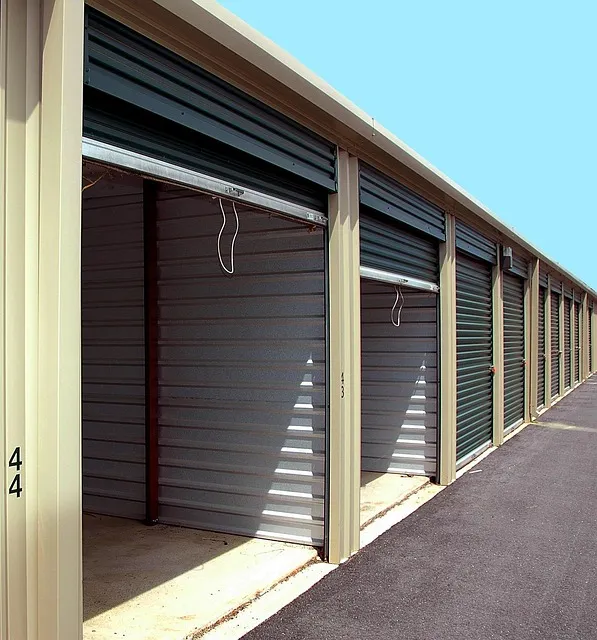
Sharing is not charity. It is tactical superiority. In resource allocation terms, it is the difference between every soldier carrying their own artillery and a unit pooling equipment for maximum effect. Shared resources increase the capability of every participant while reducing the logistical burden on each one. Tool libraries, clothing swaps, community gardens, equipment co-ops — these are not feel-good social experiments. They are structurally superior allocation systems. They deliver more utility per unit of material than individual ownership can. The only reason they are not the default is that they are terrible for corporate revenue.
The practice: pick one category of objects that sits idle most of the time — tools, kitchen equipment, camping gear, books. Find one person who uses that category intermittently. Propose a sharing arrangement. Notice what happens not just to the objects but to the relationship. Sharing creates bonds that purchasing cannot. It creates reciprocity, conversation, mutual reliance — the raw materials of community that minimalism can build rather than destroy.
Shift 6: The Release Protocol
Every unused object in a space exerts a low-grade psychological drag. It occupies mental bandwidth. It generates micro-decisions every time eyes pass over it. Multiply that across hundreds of objects and cluttered spaces producing anxious minds stops being a mystery. Objects aren’t just being stored. Unresolved decisions are, and each one draws from the same cognitive budget needed for work, relationships, and clear thinking.
The Release Protocol is the practice of letting go proactively, without waiting for the pressure of a decluttering binge. The operating principle: if something hasn’t been used in ninety days and it isn’t seasonal, it belongs to someone who will use it. Not the landfill — someone. This distinction matters. Throwing things away is disposal. Giving things away is circulation. When an object moves to someone who needs it, it goes from dormancy in one space to active use in someone else’s life. Its utility is restored. And what no purchase provides gets gained instead: the lightness of a mind unburdened by excess.
The attachment piece deserves direct attention. Most people who struggle with releasing possessions don’t struggle with the concept of having less. They struggle with the emotional weight of letting go. Objects become proxies for memories, identities, and relationships. The sweater is not a sweater — it is the trip, the person, the version of self that existed at the time. But this is a category error. The memory is stored in the nervous system, not in the sweater. The sweater is a trigger, not a container. Remove the trigger and the memory remains. Physical anchors are not required for psychological experiences.
Practice releasing without announcement, without expectation of gratitude, without keeping score. Leave books at a little free library. Drop kitchen equipment at a community center. Being seen giving isn’t the point. The point is developing the internal muscle of release — making letting go as natural and reflexive as breathing out. The exhale is not a loss. It is the precondition for the next breath.
Shift 7: The Multi-Use Discipline

Single-use thinking is the most wasteful cognitive habit embedded in consumer culture. It assigns one function to one object and considers the relationship complete. A glass jar held pasta sauce. Now it’s garbage. But that jar is also a drinking glass, a storage container, a vase, a propagation station for plant cuttings, and a gift container for homemade items. None of those things needed buying, because the jar was already there. It just couldn’t be seen, because single-use thinking had narrowed perception to one function per object.
The relevant practice is the Five-Function Filter: before discarding any object, identify five alternative uses for it. If five can be identified, it is not waste. It is an underutilized resource. If none can genuinely be found — if the object has no remaining functional potential — then and only then does it enter the disposal stream. Run this filter for thirty days and waste output drops significantly, not from trying harder but from seeing better. Apply the same lens to acquisitions: before buying anything new, ask how many functions it can serve. A cast-iron skillet can sear, bake, fry, roast, broil, and serve. It will outlast its owner. A single-purpose gadget serves one function and occupies space until it gets thrown out. Fill a life with multi-use objects and fewer of them get needed, easier maintenance follows, and waste drops without any additional discipline required.
Shift 8: Local Sourcing as Resistance
Every object in a home has a supply chain. Most of those chains are absurdly long. A cotton t-shirt might involve cotton grown in Uzbekistan, yarn spun in India, fabric woven in Bangladesh, dyed in Vietnam, assembled in Cambodia, shipped to a distribution center in Europe, trucked to a city, and driven home in a car. Eight countries, five continents, thousands of miles of fossil-fuel-powered transportation for a garment worn a handful of times. This is the global supply chain at peak absurdity, funded every time the cheapest option on the shelf gets chosen.
Going local is not a lifestyle preference. It is an act of resistance against a system that has externalized its costs onto communities and ecosystems that have no voice in the transaction. Buying from a local farmer or craftsperson shortens the supply chain, reduces embedded transportation emissions, keeps money circulating in the community, and builds a relationship with the maker — which creates accountability that no global supply chain can replicate. A local maker whose name is known will not sell garbage.
A faceless factory on the other side of the world has no such constraint.
The deeper shift is accepting seasonality — the understanding that not everything can be had all the time, and that this is not deprivation but alignment with actual reality. Great-grandparents ate what grew. They preserved what they could. They waited for what was not yet ready. That waiting was not suffering. It was sanity. Map the local food ecosystem this week. Find the farmers’ markets, the community-supported agriculture programs, the producers whose names can be learned. Shift ten percent of the food budget toward local sources. The deeper conversion happens at identity: a node in a global extraction network becomes a participant in a local ecosystem instead. That shift rewires how everything gets thought about, not just food.
Shift 9: The Identity Rewrite
Every shift described above will fail if this one is skipped. The Lifecycle Lens can be mastered, the Maker’s Test practiced, True Cost Accounting run perfectly, resources shared, things released freely, sourcing done locally, utility maximized — and old patterns will still return within a year. Because the deepest layer of the operating system is not behavioral. It is identity. Who does a man believe himself to be?
If any version of “someone who expresses himself through what he owns” is in the self-concept, that identity is entangled with consumption. And an identity entangled with consumption will always regenerate consumptive behavior, regardless of how many tactical interventions get stacked on top of it. The wardrobe, the car, the tech stack, the home decor — these are not just objects. They are identity infrastructure. Removing them feels like removing pieces of the self. In a sense, pieces are being removed. But the pieces being removed were never really the self. They were prosthetics — external scaffolding for an internal structure that was never given the chance to stand on its own.
The rewrite begins with an audit. Look at the last fifty purchases. For each one, ask honestly: was this bought because it was needed, or because feeling like the kind of person who owns it was needed? The honest answer, for most people, is that at least half were identity-driven rather than need-driven. The shirt was not about warmth. It was about appearing a certain way. The kitchen appliance was not about cooking. It was about performing the role of someone who cooks well. Strip the identity layer away and the actual needs — the things required for survival, health, meaningful work, and genuine connection — turn out to be startlingly few.
The new identity is not defined by what a man owns. It is defined by what he does, what he creates, what he contributes, and how he shows up for the people who depend on him. It is defined by competence, not consumption. By character, not possessions. This identity is harder to build because it cannot be purchased. It must be forged — through discipline, through discomfort, through the slow accumulation of experiences that test a man and the slower integration of what those tests reveal. But once it is built, it does not need external validation. It does not need the newest model. It does not need anything a store can sell, because its foundation is internal, self-sustaining, and not dependent on a supply chain.
“No man is free who is not master of himself.” — Epictetus
The Results: What the Upgrade Actually Produces

His purchasing frequency dropped by roughly 60 percent within the first six months. Not deprivation. The Lifecycle Lens and True Cost Accounting had made the actual cost of most purchases visible, and a significant number of those purchases simply did not survive the three-question audit. Items that had previously passed through his cart on the strength of a good deal or a momentary impulse now triggered an evaluation process that most of them lost. The ones that survived were better quality, more deliberately chosen, and used more consistently. His total spending did not drop by 60 percent — it dropped by around 35 percent. The rest of the savings came from buying fewer but better things, which is a different relationship with money than either deprivation or abundance culture offers.
His living space stabilized. This is the result that surprised him most. Previous decluttering attempts had produced a temporary tidiness that degraded within months. After installing the identity-level shifts — particularly Shift 9 — the inflow slowed without conscious effort. He stopped browsing. He stopped accumulating things out of boredom. He stopped using acquisition as entertainment, which is what most online shopping actually is. The space stayed clear not from discipline but because the part of the operating system that generated the inflow had been rewritten.
His relationship with his remaining possessions deepened. This is the result that sounds the most abstract until it’s experienced firsthand. Owning less means knowing what’s owned. Maintaining it. Using all of it. The cast-iron pan he had owned for six years and used maybe a dozen times became, after the shift, the pan used every day — because it was one of three cooking implements he owned, because he had repaired its seasoning himself, because a relationship with it existed that was impossible when it was one item among hundreds competing for attention. The Stoics talked about this. Marcus Aurelius wrote about seeing objects as they are, stripped of the stories projected onto them — not to diminish them but to relate to them accurately. Accurate relationship with objects is only possible when there are few enough of them to actually see.
His anxiety level dropped measurably. This one has research behind it. A 2010 study by Darby Saxbe and Rena Repetti at UCLA found that women (a pattern that appears to generalize to men as well) who described their homes as cluttered showed higher cortisol levels throughout the day than women who described their homes as restful. Cortisol is the stress hormone. Clutter is not just psychologically uncomfortable — it is physiologically expensive. Marcus noticed it as a kind of ambient quietness in his mind that he had not felt in years, and that he initially attributed to other changes in his life before making the connection. The unresolved-decision drag that every unused object creates had been generating a low-grade stress response for so long that he had normalized it. Removing it felt like removing a sound he had stopped noticing. The silence was startling.
The Adaptation: What This Looks Like for a Normal Person
Marcus’s situation — garage clearout, apartment move, fresh start — gave him an unusually clean entry point into the framework. Most people do not have that. Most people are implementing these shifts inside a running life: a household that is already full, a partner who does not share the same enthusiasm for minimalism, kids who generate entropy at an industrial scale, a job that creates decision fatigue that makes thoughtful consumption feel impossible by Thursday evening. So — concretely, about adaptation.
Start with shifts 1, 2, and 9. These three produce the most use relative to effort, and they require no changes to the physical environment. The Lifecycle Lens, Stewardship, and Identity Rewrite are purely cognitive — they happen inside the head, they can start today, and they will begin filtering acquisition decisions almost immediately. The first time something gets picked up in a store, the three Lifecycle questions get run, and it goes back on the shelf without drama — that’s the moment they start working. That moment, which costs nothing and produces nothing visible, is more valuable than any decluttering session ever done, because it prevents the next accumulation rather than cleaning up the last one.
Add shifts 3 and 7 in the second month. The Maker’s Test and Multi-Use Discipline change the relationship with what’s already owned. Start with one repair — whatever is broken or degraded in the home right now. Look it up on YouTube. Attempt the repair. The success rate is surprising, and the effect of that first successful repair on the operating system is disproportionate to the repair itself. Competence has been demonstrated. The manufacturer’s preferred outcome — replacement — has been shown to be not inevitable. Something got built. Do this once and the reflex begins to form.
Shifts 4, 5, and 6 can layer in as entry points get found. True Cost Accounting is easiest to start with a single product category — food is usually the most accessible because the supply chains are most visible. Sharing works best when one specific person and one specific category get identified rather than trying to build a whole system at once. The Release Protocol works best with a specific trigger: every time something new enters the space, something leaves. Not a rule imposed from outside, but a logical consequence of understanding that space is finite and attention is finite and every object competes for both.
Local sourcing (Shift 8) is a long game. Start with one market, one farmer, one food relationship. The shift in identity — from global consumer to local participant — takes months to consolidate. Give it that time. Perfection isn’t the goal. Moving the needle is, and a ten percent shift in sourcing, maintained over two years, produces a different person than a hundred percent shift maintained for two weeks before burnout sets in and Amazon wins again.
The partner situation deserves its own note, because it is one of the most common friction points. Someone else’s operating system cannot be installed by force. The shifts can be modeled, the results made visible, reasoning shared without evangelism — but the moment a partner’s relationship with their possessions starts being managed, inspiration has crossed into control, and that is a different problem entirely. The most effective approach is asymmetric: work the shifts on one’s own half of the equation, let the results speak, and let the other person arrive at their own version of the framework on their own timeline, if they arrive at all. A household where one person runs a low-clutter operating system and one person does not is still dramatically better than a household where both people are operating on full consumer default. Start with yourself. That is always the right starting point. It is also, in the context of holistic minimalism, the only starting point that works.
The real result of successful adaptation is not a cleaner house. It is a different quality of attention. When a large volume of possessions isn’t being managed, maintained, and processed, attention goes somewhere else. For most people who implement these shifts consistently, it goes toward experiences, relationships, and work that produces something real. The masculine operating system for minimalism is not about aesthetics. It is about resource allocation. Time and attention are finite. Everything spent managing objects is subtracted from everything else available. The nine shifts reduce that management overhead to near zero. What happens with the recovered resources is up to the man doing the recovering. But they have to be recovered first, and right now most of them are sitting in a drawer somewhere, underneath something long forgotten.
FROM THE LIBRARY ›
Reader Questions About Operating System Upgrade About Minimalist Mindset Shifts
What is the Minimal Viable Identity concept and how does it differ from regular decluttering advice?
Regular decluttering advice targets behavior — get rid of things, buy less, organize better. The Minimal Viable Identity concept targets identity: who a man believes himself to be determines what he does automatically, without willpower or rules. When the self-concept no longer includes “someone who expresses himself through possessions,” the acquisition impulse changes at its source rather than being suppressed at its output. This is why most decluttering approaches produce temporary results — they clean up the symptom without touching the cause. Frost and Steketee’s research at Boston University confirmed that attachment to objects is cognitive before it is behavioral. The cognitive architecture has to change first.
How long does it realistically take to see changes in purchasing behavior after starting these mindset shifts?
The Lifecycle Lens produces noticeable changes within one to two weeks because it intervenes at the decision point — the moment of potential acquisition — rather than afterward. Most people report catching themselves putting things back within the first week of running the three-question audit consistently. The deeper identity-level shifts (Shift 9) take three to six months to consolidate, which aligns with Phillippa Lally’s 2009 research at University College London showing that new automatic behavioral patterns take an average of 66 days to form, with complex habits taking longer. Expect tactical changes quickly and identity changes slowly. Both are real.
Does minimalism require a partner’s agreement to work in a shared household?
No, and attempting to require it is one of the fastest ways to create conflict and undermine progress. The nine shifts operate on one person’s relationship with objects, not the partner’s. A household where one person implements the framework consistently will see material changes in clutter levels, spending, and environmental impact even if the other person changes nothing, because the person implementing the shifts is responsible for a significant portion of the household’s acquisition and retention decisions. Work one side of the equation. Share the results, not the prescription. The evangelism instinct is understandable and almost always counterproductive.
What is the difference between minimalism as deprivation and minimalism as the Minimal Viable Identity?
Deprivation-model minimalism is defined by what’s absent. It requires constant discipline because the underlying identity still wants the things being denied. It is willpower-intensive, brittle, and frequently collapses under stress. The Minimal Viable Identity model produces minimalism as a natural output of who someone is — most of what consumer culture is selling simply stops being wanted, not through restraint but because the identity that found those things compelling has been upgraded. The difference is the same as the difference between a man who does not drink alcohol because he is white-knuckling sobriety and a man who does not drink because he genuinely does not want to. The external behavior looks identical. The internal experience is entirely different, and the durability reflects that difference.
How do you handle the emotional attachment to possessions during the Release Protocol?
The key distinction is between the object as a trigger and the object as a container. A trigger activates the memory or feeling but does not store it — the experience is stored in the nervous system, not in the physical item. Recognizing this distinction removes the false logic of “releasing this object loses the associated memory.” It doesn’t. What’s lost is a cue that was generating low-grade psychological drag every time it was encountered. The release of that drag is often experienced as relief rather than loss, particularly for objects tied to ambivalent memories. For genuinely meaningful objects, the test is: could this experience or relationship be recalled without the object? If yes — and it almost always is — the object is redundant to the memory. Keep what is irreplaceable. Release what is merely representative.
Can these mindset shifts apply to digital clutter as well as physical possessions?
They apply directly and with equal force. Digital clutter — the 47,000 unread emails, the 200 subscriptions, the apps not opened in a year, the 8,000 photos never looked at — generates the same cognitive drag as physical clutter because the brain processes it as an inventory of unresolved decisions. The Lifecycle Lens applies to digital subscriptions (what is the full cost of this recurring charge on attention and money?). The Release Protocol applies to files, apps, and emails on the same 90-day rule. The Multi-Use Discipline applies to software tools — one good text editor beats six mediocre apps. The identity shift is also necessary digitally: if the self-concept includes “someone who stays current with everything,” the digital accumulation is identity-driven and will regenerate regardless of how often it gets cleaned up.
What is the relationship between minimalism and financial freedom?
The connection is more direct than most financial advice acknowledges. The minimalist habit of living below your means is not primarily about frugality — it is about identity decoupling. When the self-concept is not entangled with the objects owned, the primary driver of discretionary spending (status signaling through acquisition) weakens significantly. Studies on consumer behavior consistently show that the majority of discretionary spending is identity-driven rather than need-driven. Reduce the identity-consumption entanglement through Shift 9 and the spending reduction follows automatically. There’s no teeth-gritting savings effort involved. Spending it stops being particularly interesting, because the things it would buy no longer register as meaningful. That is a fundamentally different relationship with money than budgeting provides, and it compounds over time the way interest compounds — exponentially, in the saver’s favor.
How do these nine shifts connect to broader resilience and mental clarity?
Clutter is not merely an aesthetic problem. The UCLA cortisol research demonstrates that it is a physiological stressor. Managing, maintaining, and processing a large volume of possessions generates decision fatigue that reduces the quality of every subsequent decision. The connection between minimalism and mental clarity runs through decision fatigue reduction — every object removed from an environment is one fewer decision being demanded. The nine shifts reduce total possession volume, which reduces daily decision load, which frees cognitive resources for work, relationships, and creative thought. This is also why minimalism and >holistic simplicity tend to compound: as the environment simplifies, thinking simplifies, which makes further simplification easier, which simplifies thinking further. The feedback loop runs in the right direction once it is started.
Editorial StandardsCorrectionsMedical DisclaimerAbout Our ContentAffiliate DisclosureSite Map