
Jake had been lifting for eight months — long enough to understand the difference between a deadlift and a Romanian deadlift, short enough that his body still treated every workout like a novel stimulus it had to urgently adapt to. He’d lost some weight without trying in the first two months just from starting to move regularly. But now he was at a decision point most fitness beginners hit around the six-month mark, when the initial easy progress has slowed and the real work of optimizing begins. He wanted to know if he had to pick — muscle or fat loss — or if the third path he’d read about was actually real.
Jake had been lifting for eight months and wanted to know if he should bulk or cut. He was about twenty pounds heavier than he wanted to be — enough body fat that he didn’t feel comfortable at the beach — but he also had almost no muscle, which meant losing the fat first would leave him looking like a smaller version of a skinny person rather than the lean, athletic build he was after. His gym coach had given him two options: eat in a surplus to build muscle (and accept getting fatter first), or eat in a deficit to lose fat (and accept building almost no muscle in the process). Neither option appealed to him. He wanted to know if there was a third path.
Body recomposition — simultaneously building muscle and losing fat — is that third path, and it’s more accessible to people in Jake’s position than most fitness advice acknowledges. The fitness industry has spent considerable energy arguing about whether it’s possible, but the science is less ambiguous than the debates suggest: for specific populations, under specific conditions, body recomposition is not only possible but the expected outcome of the right training and nutrition protocol. Jake happens to be in precisely the population most likely to achieve it. Understanding which population that is, why it works for them and not for others, and exactly what the conditions need to be — that’s the substance of this article.
The Recomp Debate: Why It Became Controversial
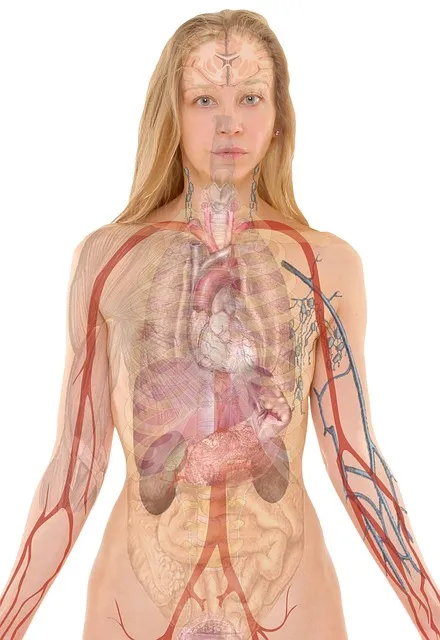
The flaw is in the assumption that energy balance works as a single, instantaneous, whole-body state. In reality, energy balance in the body operates with significant temporal variation — hour to hour, day to day — and with tissue-specific differences in metabolic state. Muscle cells and fat cells are not in identical energy states at the same moment. A person eating at maintenance calories may have muscle cells in a locally anabolic state following resistance training while fat cells are simultaneously in a net lipolytic state — overall calorie balance neutral, tissue-level composition still shifting.
The practical observation that some people are clearly undergoing recomposition has been consistent enough that the research community eventually focused on understanding when and why it occurs rather than whether it occurs at all. The Barakat et al. 2020 review, published in the Strength and Conditioning Journal, provided a comprehensive synthesis of the evidence and established the conditions under which recomposition is most reliably achievable. It confirmed what coaches had observed anecdotally for decades: the phenomenon is real, it’s population-specific, and the research supports both its existence and its limitations.
The Recomp Eligibility Checklist Framework
- Are you a training beginner? Individuals who have been resistance training for less than one year, or who have trained inconsistently (fewer than two sessions per week) for less than two years, retain “beginner gains” potential — the elevated anabolic sensitivity that allows muscle protein synthesis to proceed at higher rates than in trained individuals even without a calorie surplus. In true beginners, the body upregulates muscle protein synthesis in response to any novel resistance training stimulus regardless of caloric state. Multiple studies document muscle gain alongside fat loss in untrained individuals on caloric restriction, including Barakat’s review citing studies showing simultaneous compositional changes in previously untrained subjects on modest deficits with high protein and resistance training.
- Are you a returning lifter after a significant break? Individuals returning to resistance training after six or more months away experience “muscle memory” — a phenomenon driven by the retained myonuclei in atrophied muscle fibers that allows faster re-accretion of muscle mass than initial building. The neuromuscular re-adaptation phase and the elevated satellite cell activity in returning lifters creates a window of elevated anabolic response that can support muscle gain even during modest caloric restriction. This window is typically four to eight weeks, depending on the length of the training break.
- Are you significantly overfat (body fat percentage above 25% for men, above 30-32% for women)? Individuals with high body fat have a unique metabolic advantage for recomposition: the adipose tissue stores create an endogenous energy substrate that can fuel anabolic processes even when dietary intake is at or slightly below maintenance. The stored fat essentially provides a “caloric surplus” at the tissue level for muscle protein synthesis to proceed while overall energy balance is neutral or slightly negative. This mechanism, combined with the observation that high body fat is associated with reduced anabolic resistance to resistance training in some research, makes significantly overfat individuals a third population where recomposition is routinely achievable.
The single most important practical contribution of the recomposition research is the identification of who can and cannot achieve meaningful simultaneous muscle gain and fat loss. The populations where recomposition is reliably achievable and those where it’s effectively impossible are distinct, and confusing them leads to wasted months of suboptimal programming.
The Recomp Eligibility Checklist determines whether someone is a recomp candidate. Check any of the three positive criteria below, and body recomposition is likely achievable. Fail all three, and a dedicated bulk-then-cut sequence will be more efficient for the goal at hand.
Who Recomposition Does Not Work For
The other side of the Recomp Eligibility Checklist is equally important: lean, well-trained individuals attempting body recomposition are choosing a highly inefficient strategy, and they’ll make far more progress with dedicated phases.
A lean individual (body fat below 12% for men, below 20% for women) who has been training consistently for two or more years has essentially exhausted the physiological conditions that make recomposition work. Anabolic sensitivity is normalized — muscle protein synthesis responds to training and protein but requires an anabolic hormonal environment that a calorie surplus supports and a deficit suppresses. Adipose stores are insufficient to meaningfully subsidize anabolic processes at the tissue level — a ten percent body fat man simply doesn’t have the fat stores to simultaneously fuel muscle building at any significant rate. The neuroendocrine response to dieting (reduced testosterone, increased cortisol, reduced anabolic signaling) becomes pronounced more quickly, because there’s less metabolic buffer to draw on.
For this population, the physiology is clear: meaningful muscle gain requires a calorie surplus, and meaningful fat loss requires a calorie deficit. Attempting both simultaneously at this level of training advancement means negligible progress toward either goal — the worst possible outcome compared to clear progress toward one goal at a time through dedicated bulk and cut phases.
The frustration that lean, trained individuals experience with recomposition attempts is not a training or nutrition execution failure. It’s the predictable result of applying a strategy the evidence doesn’t support for their population. Worth knowing, because a significant portion of the fitness community’s recomposition marketing is aimed at exactly this population: lean people who want to get leaner and more muscular without ever committing to a deliberate gaining phase. The physiology doesn’t cooperate with that preference, and understanding the fact saves months of frustration.
Barakat 2020: The Definitive Review
Christopher Barakat and colleagues published their review of body recomposition in the Strength and Conditioning Journal in 2020, titled “Body Recomposition: Can Trained Individuals Build Muscle and Lose Fat at the Same Time?” The paper synthesized the available research, examined the conditions under which recomposition occurs, and provided the most comprehensive evidence-based framework for understanding the phenomenon.
Key conclusions from the Barakat review: recomposition is reliably achievable in untrained beginners, significantly overweight individuals, and returning trained lifters. In trained, lean individuals, the evidence for meaningful simultaneous muscle gain and fat loss is sparse, and the magnitude of any documented effect is small — insufficient to meaningfully change body composition at a rate that competes with dedicated phases. The review found evidence for recomposition in trained individuals only under conditions of energy balance (maintenance calories), not deficit, and at rates far below what beginners achieve — suggesting even the “trained individuals can recomp at maintenance” claim should be qualified as applying to recently trained individuals rather than those with multiple years of consistent training.
The review’s practical synthesis aligned with what the evidence supports: beginners and significantly overfat individuals should prioritize recomposition; trained lean individuals should use sequential bulk and cut phases; the maintenance calories approach, as opposed to a true deficit, is the appropriate caloric strategy for recomposition when it’s achievable at all.
The Hormonal Environment of Recomposition
Body recomposition requires the body to simultaneously run anabolic processes (muscle protein synthesis, muscle repair) and catabolic processes (fat mobilization, fat oxidation). These don’t normally coexist efficiently, because the hormonal signals driving anabolism and catabolism are largely antagonistic — insulin promotes anabolism and suppresses fat mobilization; glucagon and catecholamines promote fat mobilization but suppress anabolic signaling.
The reason recomposition works for eligible populations isn’t that the body does something hormonally impossible. It’s that the processes are temporally separated within the day. The post-training window, particularly the several hours following resistance exercise, is dominated by elevated muscle-specific anabolic signaling (mTOR, IGF-1) driven by the training stimulus itself rather than by insulin or energy surplus. During this window, muscle protein synthesis can proceed at elevated rates even without a caloric surplus. The fat mobilization that contributes to fat loss occurs during the rest of the day, once the anabolic training signal has subsided and the modest caloric restriction or maintenance eating creates a fat-oxidation-favorable hormonal environment.
This temporal separation explains why training-day carbohydrate timing matters for recomposition: consuming carbohydrates around training supports the post-training anabolic window (glycogen restoration, insulin-driven amino acid uptake into muscle) while limiting carbohydrates during non-training portions of the day maintains the environment favorable for fat oxidation. It also explains why the recomposition phenomenon is training-dependent — without the training stimulus creating the muscle-specific anabolic window, the processes never separate temporally in the way that makes simultaneous outcomes possible.
Sleep is a critical hormone-regulatory period that disproportionately affects recomposition quality. The majority of growth hormone secretion occurs during slow-wave sleep, and growth hormone is a primary driver of post-training anabolic processes — tissue repair, fat mobilization. People sleeping fewer than seven hours per night have significantly impaired GH secretion, which directly impairs the muscle gain component of recomposition and reduces the training adaptation that makes the whole process work. For recomposition practitioners, sleep is as important as training and nutrition. It’s the metabolic environment where a significant portion of the actual tissue remodeling happens.
Comparing Recomposition to Dedicated Bulk and Cut Phases
For eligible populations — beginners, returning lifters, and significantly overfat individuals — recomposition and dedicated bulk-then-cut sequencing produce different timelines to similar outcomes. Understanding the comparison helps in choosing the right strategy for a specific situation rather than just going with whichever sounds more appealing.
For a true beginner at twenty percent body fat who wants to be fifteen percent body fat with thirty additional pounds of muscle: recomposition for nine to twelve months produces meaningful progress toward both goals simultaneously, at the cost of somewhat slower absolute progress on either goal than a dedicated phase would produce. A dedicated cut to fifteen percent body fat first (three to four months) followed by a lean bulk (six to nine months) would arguably produce better long-term outcomes for advanced composition goals, because the hormonal environment of dedicated phases is more favorable for each individual goal — but it requires the psychological commitment to a dedicated gaining phase that many people resist.
For a beginner at thirty percent body fat with minimal muscle: recomposition is almost universally the superior starting strategy. The significant overfatness provides the endogenous energy substrate that supports muscle gain during restriction, and the training response at this body fat level is typically excellent. Cutting to a lower body fat percentage before building muscle leaves the person at a lower weight but without the muscular foundation that makes the physique improvement worthwhile. Recomposition produces simultaneous improvement in both fat mass and lean mass during the same period, which is motivationally superior and logistically simpler.
For a trained individual at twelve percent body fat who wants to add more muscle with minimal fat gain: recomposition is the least effective strategy, and a clean lean bulk (two hundred fifty to three hundred calories above maintenance, high protein, consistent training) with seasonal mini-cuts is more efficient. The evidence is clear that at this level of training advancement, meaningful simultaneous muscle gain and fat loss isn’t achievable at any practically useful rate. The person who insists on recomposition at this stage will spend years chasing progress that six months of a dedicated bulk would produce.
The Nutritional Requirements for Recomposition
For individuals who qualify as recomposition candidates, the nutritional strategy requires precision that differs from both dedicated fat loss and dedicated muscle gain phases.
Calorie target: maintenance or slight deficit. The goal for recomposition is providing sufficient energy that muscle protein synthesis is not severely impaired while still maintaining a net energy environment that allows fat mobilization. For most recomposition candidates, this means eating at maintenance calories (TDEE for current body weight and activity level) or a very modest deficit of five to ten percent below maintenance. A deficit larger than ten to fifteen percent starts to impair MPS and anabolic hormones enough to prevent meaningful muscle gain. For significantly overfat individuals whose adipose stores are large relative to lean mass, a ten to fifteen percent deficit with maintenance-level protein intake may still support recomposition — their fat stores provide sufficient endogenous energy to supplement dietary intake for anabolic processes.
Protein: 1 gram per pound of body weight. Higher protein than typical fat loss recommendations is warranted for recomposition, because the goal is simultaneously maximizing MPS and minimizing MPB. Protein at approximately one gram per pound of total body weight provides a strong leucine-driven MPS stimulus and protects against the protein-sparing deficit that accelerates muscle loss during restriction. This is the higher end of the research range, reflecting the dual demand of the recomp goal.
Carbohydrates: timed around training. For recomposition, timing carbohydrate intake around training sessions maximizes their utility for performance and post-training glycogen restoration while minimizing their role in the portions of the day when fat oxidation is more appropriate. A practical approach: the majority of daily carbohydrates consumed in the meals surrounding training (two hours before and within two hours after), with lower-carbohydrate eating during non-training periods of the day.
Fat: sufficient for hormonal function. Dietary fat is essential for sex hormone production — testosterone, estradiol, and other steroid hormones are synthesized from cholesterol. Fat intake dropping below twenty to twenty-five percent of total calories consistently reduces testosterone in men, worsening the anabolic environment for muscle gain and compromising the hormonal milieu required for effective recomposition. Include sufficient healthy fats — olive oil, avocado, nuts, fatty fish — to support hormonal function while meeting the protein and calorie targets.
The Training Requirements for Recomposition
Training for body recomposition differs from training for either pure fat loss or pure muscle gain in its emphasis. The simultaneous goals require both a sufficient resistance training stimulus to drive MPS and maintain or build lean mass, and an energy expenditure component that supports the net negative energy balance fat loss needs.
Progressive overload is non-negotiable. Muscle doesn’t grow in response to doing the same thing repeatedly — it grows in response to progressive increases in mechanical tension, training volume, or mechanical damage over time. For recomposition candidates who are beginners, almost any resistance training protocol produces progressive overload, because any novel stimulus exceeds the adaptation threshold of untrained muscle. For returning lifters, ensuring loads and volumes progress session to session matters more, because the neuromuscular re-adaptation phase ends and genuine hypertrophic programming becomes necessary.
Training frequency of three to four days per week of full-body or upper-lower resistance training is the minimum effective dose for meaningful MPS stimulation across the whole body. Research on training frequency shows two MPS-stimulating sessions per week per muscle group is superior to one for muscle growth — three to four days per week of full-body training typically provides this frequency naturally, if programmed appropriately.
Cardio for recomposition should be positioned as an energy expenditure tool rather than a fat-burning tool specifically. Two to three sessions per week of thirty to forty-five minutes of moderate-intensity cardio (walking, cycling, swimming) contributes to total caloric expenditure and cardiovascular health without generating the cortisol load and recovery demand of intensive interval training that could impair resistance training adaptation. Keep cardio intensity moderate — the “fat-burning zone” framing is misleading, but the practical guideline of keeping cardio intensity low enough that it doesn’t compromise recovery from resistance training is sound.
Common Recomposition Mistakes That Undermine Results
Several consistent errors appear in recomposition attempts, worth documenting specifically because they’re common and each one can single-handedly undermine an otherwise sound protocol.
Training without progressive overload. The single most common recomposition failure in beginners is following a training program that doesn’t systematically increase challenge over time. Beginners can make initial progress on almost any program, because any resistance training stimulus exceeds their untrained baseline. But within four to eight weeks, the body adapts to that stimulus and muscle growth stops unless the training becomes progressively harder. Someone doing the same workout with the same weights used three months ago isn’t creating the stimulus for muscle growth, regardless of nutrition. Progressive overload — tracked lifts that increase in weight, reps, or sets over weeks — is non-negotiable for the muscle gain component of recomposition.
Insufficient calorie intake from misunderstanding “maintenance.” Many recomposition practitioners misestimate their TDEE and eat significantly below maintenance thinking they’re at maintenance, creating an aggressive deficit that impairs muscle protein synthesis and prevents the muscle gain component of recomposition. This leaves them with a standard fat loss outcome (weight loss including lean mass) rather than the intended recomposition. Calculate TDEE accurately, track intake for two weeks to verify the estimate is correct, and adjust if observed weight change suggests the estimate is wrong.
Insufficient protein dramatically below the one-gram-per-pound target. As established in the protein for fat loss article, most people significantly underestimate their protein intake. For recomposition specifically, adequate protein is the nutritional non-negotiable — the raw material for muscle protein synthesis and the signal for lean mass preservation. Tracking protein specifically for the first two to four weeks of a recomposition phase is essential to confirm the target is actually being met.
Abandoning the protocol too early based on scale weight. Covered in the measurement section, but worth reiterating: recomposition success is invisible on the scale. People who quit after four to six weeks because their scale weight hasn’t moved have almost certainly made meaningful composition progress they’re failing to see, because they’re using the wrong measurement tool. Commit to at least three months of consistent execution before evaluating the protocol, and use progress photos and strength metrics rather than scale weight as the primary assessment tools.
Measuring Recomposition Progress: The Scale Paradox
Recomposition is the most frustrating goal to measure, because the scale often shows minimal movement even when meaningful composition changes are occurring. Gaining muscle at the same rate fat is being lost means total body weight stays roughly constant by definition — and anyone using scale weight as their primary progress metric will conclude nothing is happening.
For this reason, body composition measurement is essential for recomposition practitioners. DEXA scans (dual-energy X-ray absorptiometry) are the most accurate available measurement tool for simultaneously tracking fat mass and lean mass changes, but they’re expensive and not widely accessible. Practical alternatives: progress photos taken monthly under consistent conditions are the most valuable accessible tool, because they capture the visual composition change the scale misses. Waist circumference tracking combined with simultaneous strength tracking — are the training lifts progressing? — is a useful pairing; a shrinking waist plus increasing lifts suggests fat loss plus muscle gain, the recomposition pattern. Bioelectrical impedance scales are inaccurate for absolute fat percentage but can track directional changes over weeks if used consistently under the same conditions (morning, fasted, same hydration state).
The most common recomposition failure mode is quitting too early because the scale isn’t moving, and assuming nothing is working. A person who gains two pounds of muscle and loses two pounds of fat over two months has achieved a meaningful four-pound body composition shift — objectively better in the direction they wanted — but their scale reading is identical to eight weeks ago. Without alternative progress metrics, they’ll conclude the protocol failed and pivot to something else. This is the recomposition measurement trap, and it derails more recomposition attempts than any nutritional or training error.
The Recomposition Timeline: What to Expect and When
Beginners can achieve body recomposition at rates that are genuinely impressive by training standards. In the first six to twelve months of consistent resistance training with adequate protein and maintenance calories, beginners can realistically expect to gain one to two pounds of muscle per month while losing similar amounts of fat — net scale weight change minimal to zero, composition dramatically improved.
Returning lifters in the muscle memory phase can expect similarly accelerated recomposition for four to eight weeks, after which the rate slows to more moderate levels or requires transitioning to a dedicated fat loss phase. The muscle memory effect is real but time-limited — once the previously-built muscle is restored, the anabolic advantage disappears.
Significantly overfat beginners or returning lifters can achieve recomposition for longer periods — potentially six to twelve months — before the advantages that overfatness provides (endogenous energy substrate, reduced anabolic resistance) are exhausted by the fat loss itself. These individuals are often the most dramatically transformed over the first year of consistent training and nutrition, precisely because all three positive eligibility criteria can apply to them at once.
“The question isn’t whether body recomposition is real. It’s whether you’re the person for whom it’s real. Knowing which category you’re in is worth more than any training program or supplement stack.”
Jake, from the opening, followed the recomposition protocol for seven months. He ate at maintenance calories with one gram of protein per pound of body weight, trained three days per week with full-body resistance training, and walked thirty to forty minutes daily. The scale moved twelve pounds downward over those seven months — not the zero a pure recomp produces, because he started from a significantly overfat position and could sustain a modest deficit. More importantly, his lean mass increased by six pounds on DEXA. He simultaneously lost eighteen pounds of fat and gained six pounds of muscle. He arrived at a body that was smaller, more muscular, and healthier than either a pure cut or a pure bulk would have produced in the same timeframe — exactly what his situation made possible. The third path was real. It was also exactly as earned as the other two — just structured differently, measured differently, and requiring patience for the scale’s stubborn indifference as the primary psychological skill the whole enterprise demands.
FAQ: Body Recomposition
Is body recomposition possible for beginners?
Yes, and it’s actually the expected outcome for most beginners who train consistently with progressive overload and eat adequate protein at or near maintenance calories. The elevated anabolic sensitivity of untrained muscle — sometimes called “newbie gains” — allows muscle protein synthesis to proceed at rates that support meaningful muscle gain even without a calorie surplus. Multiple research studies document simultaneous fat loss and muscle gain in previously untrained individuals following a resistance training program. One of the most reliable phenomena in exercise science, for this specific population.
How does alcohol affect body recomposition?
Alcohol impairs recomposition through multiple pathways: it suppresses muscle protein synthesis for up to twenty-four hours after consumption, even moderate intake; it disrupts sleep architecture, reducing GH secretion and the quality of overnight tissue repair; it elevates cortisol; and the calories from alcohol contribute to the caloric surplus while providing no nutritional value for the muscle-building process. Regular alcohol consumption significantly impairs recomposition outcomes regardless of whether total calorie targets are met. This doesn’t mean complete abstinence is required, but frequent drinking is meaningfully counterproductive to the goal in ways that go beyond just the caloric impact.
Can women achieve body recomposition?
Yes. The same eligibility criteria apply — beginners, returning lifters, and significantly overfat individuals are the populations where recomposition is most achievable, regardless of sex. Women have lower absolute levels of testosterone but respond to resistance training with muscle hypertrophy through different downstream pathways (IGF-1, mTOR activation) that are similarly responsive to training stimulus and protein intake. Recomposition rates in women tend to be somewhat lower in absolute terms (women build muscle more slowly than men on average), but the phenomenon works and the protocol is essentially identical.
How long does body recomposition take?
For beginners, meaningful composition changes are visible in the mirror within two to three months of consistent training and nutrition, though the timeline for DEXA-measurable changes is typically three to four months. Subjective strength improvements — the leading indicator of the training stimulus working — typically appear within three to four weeks. The recomposition phase can typically be sustained for six to twelve months depending on starting body composition before either the fat loss goal is achieved or the person transitions to a dedicated lean gaining phase. Post-recomposition, trained individuals who want to keep improving their physique generally do best with sequential bulk and cut phases rather than continued recomposition attempts.
Should I use a deficit, maintenance, or surplus for recomposition?
Maintenance calories is the most universally applicable recommendation for recomposition candidates. Significantly overfat beginners may achieve better results with a modest deficit (five to ten percent below maintenance), because their fat stores provide sufficient energy substrate for anabolic processes. Lean, advanced trainees attempting recomposition do best at maintenance or a slight surplus. No recomposition candidate benefits from an aggressive deficit (greater than fifteen percent), because the impairment of anabolic processes at large deficits prevents the muscle gain component of recomposition. When in doubt, eat at maintenance with high protein — the safest starting point for any recomposition attempt.
What if my scale weight doesn’t change during recomposition?
A stable scale weight is actually the expected pattern during successful recomposition — gaining muscle at the same rate fat is lost means total body weight doesn’t change. This is why the scale is a misleading progress metric for recomposition. Use progress photos, strength progression in training, and waist circumference measurements as the primary progress indicators. A stable scale weight combined with shrinking waist measurements and increasing training loads is a clear signal body recomposition is occurring as intended.
How does stress affect recomposition?
Chronic stress impairs recomposition through several mechanisms. Elevated cortisol from chronic psychological or physical stress suppresses testosterone, increases protein catabolism (muscle breakdown), promotes fat storage in the visceral depot, and impairs sleep quality — which is when significant GH secretion and tissue repair occurs. People with very high chronic stress loads have significantly worse recomposition outcomes than equally trained and equally well-nourished people with managed stress levels. Not a minor variable — studies of military recruits in high-stress training environments show dramatically worse body composition outcomes than equivalently trained civilian athletes, attributable in part to chronic stress hormone elevation. Managing life stress and protecting sleep quality are physiological interventions for recomposition, not just wellness recommendations.
Do I need supplements for body recomposition?
Creatine monohydrate has the strongest evidence base for supporting both muscle gain and body composition improvement. It works by increasing phosphocreatine availability in muscle cells, which supports higher training loads and volumes and indirectly supports greater lean mass gain over time. Five grams per day is the maintenance dose; a loading protocol (twenty grams per day for five to seven days) reaches saturation faster but isn’t required. Beyond creatine, a high-quality protein powder can help reach the one-gram-per-pound-of-body-weight protein target if whole foods alone are insufficient. Other supplements marketed for recomposition have limited or no credible evidence.
The Practical Framework: Applying Body Recomposition Build Muscle In Real Life
References
Editorial StandardsCorrectionsMedical DisclaimerAbout Our ContentAffiliate DisclosureSite Map