
In December 2009, several weeks before world leaders gathered in Copenhagen for what was billed as humanity’s last chance to save the planet, a server at the Climate Research Unit of the University of East Anglia was breached. Roughly 1,000 emails and 3,000 supporting documents were extracted and posted online. The emails were between the most prominent climate scientists in the world — the men whose models fed directly into the IPCC reports that governments used to justify trillion-dollar policy shifts. What they showed was not a scientific community wrestling transparently with difficult data. They showed researchers discussing how to “hide the decline” in temperature proxies, coordinating to prevent skeptical papers from being published, agreeing to delete raw data before it could be released under freedom-of-information requests, and referring to scientists who questioned their conclusions as people who needed to be “kept out” of the literature.
The event became known as Climategate. It was, and remains, the single most important moment in the modern history of the climate change debate — not because it definitively proved or disproved any scientific claim about global temperatures, but because it exposed the machinery behind the “consensus.” The scientists involved were not rogue actors. They were the IPCC lead authors. They were the people whose work formed the scientific backbone of every international climate agreement, every carbon tax, every Green New Deal-style policy proposal of the past three decades. A genuinely scientific community, when the emails dropped, would have responded with an investigation, public accountability, and a transparent review of the affected research. What happened instead was a coordinated institutional defense. Multiple official inquiries were conducted. All of them cleared the scientists of wrongdoing, using the narrow scope of “scientific misconduct” to sidestep the harder questions about transparency, data integrity, and the relationship between research and advocacy. The story was buried within a year. The same people were back at their desks, writing the same reports, feeding the same models into the same policy frameworks.
That sequence — manipulation exposed, accountability evaded, narrative restored — is the template for the climate change machine. And for anyone trying to understand how Cultural Marxism operates through institutional capture, this is about as instructive a case study as exists.
The Institutional Capture Playbook: How Science Became a Political Weapon

Climate science is the clearest demonstration of that playbook in action. The mechanism works in three stages. First, a consensus gets established by controlling the journals and funding structures. Scientists who produce results that confirm the narrative get published, cited, and funded. Scientists who produce results that complicate the narrative face rejection, defunding, and professional isolation. Not a conspiracy theory. The documented experience of multiple accomplished researchers. Dr. Judith Curry — a climate scientist with over 30 years of experience at Georgia Tech, former chair of the School of Earth and Atmospheric Sciences — resigned her tenured position in 2017 citing the “poisonous atmosphere” in academic climate science and the “tribal, lock-step” nature of the field. She had not denied that humans affect climate. She had published research suggesting that natural variability played a larger role than the consensus models acknowledged, and that uncertainty ranges were wider than commonly reported. For this, she was subjected to sustained professional harassment, her work dismissed by colleagues who had never engaged with its content.
Dr. Roger Pielke Jr. at the University of Colorado — not a climate skeptic by any reasonable definition — had his research funding targeted after he published data showing that economic losses from natural disasters, when properly adjusted for population growth and increasing wealth in disaster-prone areas, showed no clear trend attributable to climate change. His work was methodologically sound. It was inconvenient. Within months, investigative journalists who had received funding from climate-advocacy foundations were publishing articles questioning his integrity. He was the subject of a Congressional inquiry requested by a Democratic representative after one of his papers received media attention. He eventually stepped back from climate-related research entirely.
Second stage: once the consensus is manufactured and policed, it gets weaponized. The famous “97% of scientists agree” statistic — repeated so relentlessly that questioning it feels eccentric — comes primarily from John Cook’s 2013 paper in Environmental Research Letters. The paper examined approximately 12,000 scientific abstracts. Of those, roughly 66% expressed no position on whether human activity caused recent warming. Of the one-third that did take a position, 97% attributed some warming to human activity. So the actual basis for the “97%” claim is: 97% of the roughly 34% of abstracts that expressed an opinion. Not remotely the same as “97% of scientists agree that climate change is a catastrophic threat requiring immediate global governance.” But that second sentence is how the statistic functions in political discourse, and pointing out the difference gets treated as denying climate science.
The third stage is enforcement. Label skeptics as morally defective. Not wrong — evil. “Climate denier” is not a scientific term. It’s a rhetorical device modeled on “Holocaust denier” — designed to attach the moral weight of genocide denial to scientific skepticism. An ideology that needs to criminalize doubt to survive has stopped being science and started being religion. And the climate establishment functions exactly like a high-stakes religion: prophets (Al Gore projecting six-meter sea-level rise by 2100), scriptures (IPCC Assessment Reports treated as infallible), heretics (anyone who questions the models), and indulgences (carbon offsets — pay enough and your sins are forgiven).
The Real Environmental Crises Nobody Funds
Here’s what the carbon obsession actually costs: while the entire institutional weight of global environmentalism is concentrated on an invisible, odorless gas measured in parts per million, the environmental problems that are actually killing people and destroying ecosystems right now receive a fraction of the attention, funding, and political urgency.
Plastic pollution. Approximately 8 million metric tons of plastic enter the world’s oceans every year. A 2022 study published in PLOS ONE estimated there are now between 82,000 and 358,000 metric tons of plastic floating in the ocean’s surface layer alone, with vastly more on the seafloor and in the water column. Microplastics have been detected in human blood, breast milk, placenta tissue, and the lungs of surgical patients. The full human health implications are not yet understood, but the biological presence is not debatable. The sources are primarily land-based, concentrated in a small number of river systems in South and Southeast Asia — the Yangtze, Mekong, Indus, and a dozen others that collectively carry the majority of ocean-bound plastic. Addressing this is primarily an engineering and governance problem, solvable with existing technology, requiring targeted investment in waste management infrastructure in specific geographies. It does not require a global carbon framework. It does not require restructuring Western economies. It requires the kind of practical, localized, accountable intervention the climate establishment has no interest in, because plastic pollution creates none of the opportunities for wealth transfer and governance expansion that make the climate agenda so attractive to those pushing it.
Insect populations. A 2019 meta-analysis published in Biological Conservation — examining data from 73 studies across multiple continents — found that over 40% of insect species are in decline, and that insect biomass is dropping at approximately 2.5% per year. The primary drivers are habitat loss and pesticide use, not temperature change. Insects are the foundation of terrestrial food chains. They pollinate roughly 75% of the world’s flowering plants, including crops that feed a significant portion of the human population. The disappearance of pollinators represents a threat to global food security that is more immediate and more concrete than any sea-level projection for the 2080s. But insect conservation requires reforming agricultural practices, protecting habitat, and reducing pesticide use — none of which generates a carbon credit market, none of which justifies a global governance framework, and none of which requires the kind of economic restructuring that climate advocates have built their careers on demanding.
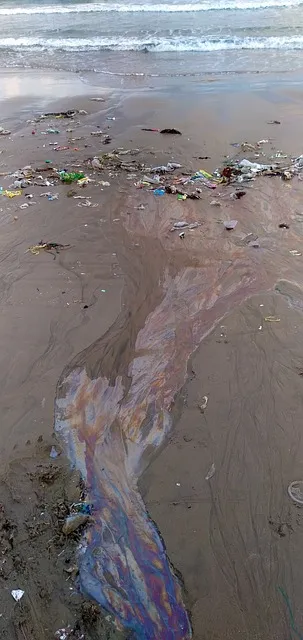
Soil degradation. According to the United Nations Food and Agriculture Organization, approximately 33% of the world’s topsoil is moderately to highly degraded. Soil is not a renewable resource on any human timescale — it takes roughly 500 years to generate one inch of topsoil through natural processes. Industrial monoculture agriculture — subsidized and incentivized by the same government interventions that climate advocates celebrate — is destroying the biological complexity that makes soil productive. The IPCC’s own reports acknowledge that soil carbon sequestration through regenerative agriculture practices could offset a significant fraction of human emissions while simultaneously improving agricultural resilience and food security. Yet regenerative agriculture receives a tiny fraction of the funding and political attention directed at solar panels and electric vehicles, because regenerative agriculture is fundamentally decentralized. It happens farm by farm, landowner by landowner, decision by decision. It does not require a bureaucracy. And that is precisely why it is ignored.
The Carbon Credit Architecture of Inequality
Follow the money long enough in any ideological movement and the actual incentives surface. The climate change industrial complex is no exception. The global carbon market was valued at approximately $909 billion in 2023, according to research by BloombergNEF. By 2030, projections from multiple financial institutions put it at over $2.5 trillion. Not a conservation budget. A financial industry.
Carbon credits work as follows. A corporation produces emissions through its operations. Instead of reducing those emissions, it purchases a credit representing a claimed reduction elsewhere — a forest that won’t be cut, a wind farm that will be built, a cooking stove in a developing country that will replace a fire. The purchaser adds the credit to its ledger and declares the emissions offset. Regulators, investors, and the public are satisfied. The environmental accounting is complete.
Except that in 2023, an investigation by The Guardian, Zeit Online, and Source Material — examining the carbon credit portfolio of Verra, the world’s largest carbon credit certifier — found that more than 90% of Verra’s flagship rainforest offset credits were “phantom credits” representing no real carbon reduction. The forests being credited were not in danger of being cut. The emissions reductions were not occurring. The entire system was generating paper transactions that produced revenue for project developers, certification fees for Verra, and “carbon neutral” labels for corporations — while doing nothing measurable for the atmosphere. Microsoft, Disney, Shell, Gucci — names that appear prominently in voluntary carbon offset disclosures — were buying credits from this system. They were buying the moral permission slip without the moral outcome.
Not a bug in the carbon credit system. A predictable consequence of creating a financial market whose underlying commodity — “carbon not emitted” — is fundamentally unverifiable. The trees that were planted can be counted. The trees that were going to be cut but weren’t cannot be. A counterfactual cannot be audited. Build a trillion-dollar market on an unauditable commodity, and the conditions for the largest greenwashing operation in financial history follow almost automatically. Which is exactly what got built.
Carbon taxes operate on the same dynamic at the policy level. They are sold as elegant market mechanisms: make carbon more expensive, and rational economic actors will use less of it. The theoretical framework is coherent. The implementation produces an entirely different result. Energy demand is what economists call “inelastic” — when the price rises, consumption does not fall proportionally, because people cannot simply choose not to heat their homes in January or not to drive to work when public transit does not exist. What happens is that energy costs rise, disposable income falls, and the burden falls disproportionately on working families for whom energy represents a larger share of household expenditure. The billionaire flying private to a climate conference in Davos faces no meaningful constraint. The single mother driving a 2009 Civic to a hospital shift pays more for gas and electricity and sees no tangible environmental benefit from the transaction.
British Columbia implemented one of the most studied carbon taxes in the world in 2008. Fifteen years of data show that it produced modest behavioral changes in the wealthiest quintile of the population and effectively functioned as a regressive tax on everyone below them. France’s “yellow vest” movement — which paralyzed the country for months in 2018-2019 — was triggered by a fuel tax increase marketed as climate policy. The protesters were not oil executives. They were rural and suburban workers who had no alternative to their cars and could not absorb another cost increase. Emmanuel Macron suspended the tax. The climate establishment’s response was to frame the protesters as obstacles to progress — people who cared more about their wallets than the planet. The framing revealed everything. Environmental policy that produces mass civil unrest among working people, met with a response that dismisses their economic reality, is not environmentalism. It’s class warfare using environmental language as cover.
What Capitalism Actually Did for the Environment
The Environmental Kuznets Curve is one of the most replicated findings in environmental economics. The hypothesis, developed by economists Gene Grossman and Alan Krueger in a 1991 NBER working paper examining data from the Global Environmental Monitoring System, is that environmental degradation initially increases as nations industrialize and grow wealthier, but then declines as GDP per capita rises above a threshold. The mechanism is straightforward: wealthy societies produce the surplus capital and technological capacity to solve pollution problems, create the consumer demand for cleaner products, and develop the regulatory institutions to enforce environmental standards. Poor societies do not have those luxuries. They are, by economic necessity, in the ascending phase of the curve.
The United States provides the most dramatic evidence. Between 1970 and 2020 — a period during which GDP roughly quadrupled in real terms — six major air pollutants tracked by the EPA fell by an average of 77%. Lead in the air fell by 99%. Sulfur dioxide fell by 93%. Nitrogen oxide fell by 61%. These improvements happened during a period of massive population growth, suburban expansion, and rising energy consumption. They happened because wealth generated the technology and public demand to clean up, not because the economy contracted. The idea that prosperity and environmental health are in fundamental tension is contradicted by every long-run dataset from wealthy democracies.
Contrast this with the environmental record of the 20th century’s great collectivist experiments. The Soviet Union managed one of the worst environmental disasters in recorded history without any external force helping it along. The Aral Sea — once the fourth-largest inland lake on Earth, supporting a thriving fishing industry and a complex regional ecosystem — was effectively destroyed by Soviet central planners who diverted its two feeder rivers for cotton irrigation. By the 1980s, the sea had lost 60% of its volume. By the 1990s, it had split into separate remnants. Fishing communities that had existed for generations were left with rusting ships sitting in desert sand, 150 kilometers from the nearest water. The fishing industry employed 60,000 people. It collapsed entirely. The ecosystem is not coming back. No committee of bureaucrats decided to do this because they were evil. They did it because central planning concentrates both power and consequences in ways that break the feedback loops that markets use to price destruction. Own everything, and accountability belongs to no one. And when accountability belongs to no one, the environment suffers first.
The freedom-based path to environmental restoration is not theoretical. The shale revolution that began in earnest around 2008 — driven entirely by private capital and private entrepreneurship, fought tooth and nail by the environmental establishment — did more to reduce American carbon emissions than any policy program in history. Natural gas displaced coal in electricity generation. Between 2007 and 2019, US energy-related CO2 emissions fell by approximately 15% even as the economy grew substantially. The fracking revolution was not an environmental program. It was an economic one. Entrepreneurs found a profitable way to access previously unreachable gas deposits. The environmental benefit was a consequence of economic competition, not a policy objective. That is precisely how environmental progress works in free societies — and precisely why it cannot be reconciled with the agenda of people who need a centralized policy framework to justify their power.
Nuclear energy tells the same story from a different angle. France generates approximately 70% of its electricity from nuclear plants and has among the lowest per-capita carbon emissions and lowest electricity prices in Europe. The technology exists. It is proven. It produces large-scale, reliable, zero-emission baseload power. The climate movement has spent four decades demonizing it, with the result that Germany — which spent over $580 billion on renewable energy subsidies through its Energiewende program — was simultaneously shutting down nuclear plants, missing its own emissions targets, paying some of the highest electricity prices in the world, and restarting coal generation when gas supplies from Russia were disrupted in 2022. If climate change were genuinely the existential emergency it’s presented as, nuclear energy would be at the top of every policy proposal. Its systematic exclusion from the climate agenda tells you something important about what the agenda is actually for.
The Green New Deal Decoded: What the Document Actually Says
The Green New Deal resolution introduced in February 2019 by Rep. Alexandria Ocasio-Cortez and Sen. Ed Markey is the clearest articulation of what the climate agenda is actually about. Not the media coverage of it — the document itself. It calls for, within a ten-year mobilization period: “meeting 100% of the power demand in the United States through clean, renewable, and zero-emission energy sources,” “upgrading all existing buildings in the United States,” “overhauling transportation systems,” “guaranteeing a job with a family-sustaining wage, adequate family and medical leave, paid vacations, and retirement security to all people of the United States,” “high-quality health care,” and “access to healthy food.” The document explicitly frames these as interconnected elements of the same program.
The question worth sitting with is simple: what does guaranteed employment for all Americans have to do with carbon emissions? What does universal healthcare have to do with sea levels? The answer is nothing — which is also the point. The climate crisis functions as the Trojan horse that carries the entire collectivist policy agenda through the gates. Accept the premise that the planet is in existential danger and only radical, coordinated government action can prevent catastrophe, and the authority of the state to restructure every dimension of economic and social life has implicitly been accepted along with it. Housing. Employment. Healthcare. Transportation. Food production. All of it becomes legitimately subject to state management in service of the emergency. The emergency does not need to be resolved — it only needs to be maintained.
An ongoing emergency is more useful than a solved one.
This is the Frankfurt School strategy applied to environmental policy: manufacture a crisis, use the crisis to demand institutional restructuring, use the restructuring to entrench ideological control, repeat. Herbert Marcuse — one of the Frankfurt School’s most influential figures — explicitly argued that liberal democratic norms of free speech and open debate should be suspended when those norms were being used to defend positions that contributed to oppression. “Repressive tolerance,” he called it. The climate establishment’s refusal to engage with dissent — its preference for institutional silencing over scientific debate — is Marcusean in its logic, even when the practitioners have never read Marcuse. The ideology does not require conscious coordination. It reproduces itself through institutional incentive structures that reward conformity and punish deviation.
Private conservation organizations demonstrate that this entire framework is unnecessary for genuine environmental protection. Ducks Unlimited — founded in 1937 by hunters and sportsmen — has protected or restored over 15 million acres of wetlands in North America. No government mandate. No carbon tax. Voluntary contributions from people who love the land and want their grandchildren to hunt the same marshes. The Nature Conservancy has preserved over 125 million acres globally, primarily through market mechanisms — purchasing land outright or negotiating conservation easements that give landowners financial value for maintaining habitat. These are not theoretical models. They are working systems producing measurable outcomes. They are also ignored by the climate establishment, because they demonstrate that effective environmental stewardship does not require the political infrastructure the climate establishment is selling.
The Position: Liberty and the Land
The distinction that matters — the one that cuts through every manipulative framing in this debate — is between genuine environmental stewardship and the political project that has annexed environmentalism’s language and moral weight.
Loving the natural world and rejecting carbon taxes are not in conflict. Believing industrial pollution is a serious problem and believing international climate frameworks are primarily power-consolidation mechanisms are not in conflict. Wanting clean rivers and opposing the Green New Deal are not in conflict. These positions become contradictory only when the premise gets accepted that caring about the environment requires surrendering judgment about the solutions being proposed — which is itself a manipulation. Caring about health does not mean accepting whatever a pharmaceutical company says about its products. Caring about safety does not mean accepting any surveillance system a government proposes. Caring about the environment does not mean accepting any policy framework that comes labeled “environmental.”
The moral case for environmental stewardship is real, and it is most naturally a conservative argument. The hunter who manages his land for wildlife habitat because it increases its value and sustains the game he loves. The rancher who rotates grazing to preserve grassland health because degraded range means degraded productivity. The fisherman who practices catch limits because he wants his son to fish the same waters. These people understand ecological systems through direct, personal, accountable relationships with specific pieces of land. They do not need a UN resolution to motivate them. They have what the climate bureaucracy structurally cannot create: skin in the game.
The Marxist appropriation of environmentalism systematically severs this connection between individual stewardship and environmental outcomes. It replaces personal accountability with collective guilt. It replaces the farmer who knows his soil with the policy analyst who has a model of his soil. It replaces local, accountable management with distant, unaccountable administration. And then it is surprised — or pretends to be — when outcomes deteriorate. The tragedy of the commons is not a failure of markets. It is a failure of ownership. When everyone owns something, no one protects it. When an individual or community owns something and bears the direct consequences of its degradation, it tends to be managed with a care that no regulation can replicate.
The deal being offered is not what it appears. It is not: “Help us save the planet.” It is: “Surrender control of your economic choices, your energy, your food, your movement — and we will manage the consequences for you.” The evidence that this trade produces better environmental outcomes is nonexistent. The evidence that it produces more concentrated political power is overwhelming. Recognize the offer for what it is, and decline it without apology.
California’s wildfire crisis is instructive. The state has the most aggressive climate policies in the United States, the highest carbon taxes, the most comprehensive regulatory framework. It also has forests that are catastrophically mismanaged — overstocked through decades of fire suppression policy, denied the thinning and controlled burns that Indigenous land managers used for centuries and that forest ecologists have recommended for decades. The fires are the predictable result. They have been predicted, repeatedly, in peer-reviewed forestry research. The solution — mechanical thinning, prescribed burns, managed grazing — is labor-intensive, locally accountable, and requires accepting that some trees will be removed. California’s political class, animated by climate symbolism, prefers electric vehicle mandates. The forests continue to burn.
What You Can Actually Do: A Framework for Real Stewardship

Start with consumption. Not because a government shamed anyone into it — because waste is genuinely stupid, and stupidity isn’t the goal here. Every piece of plastic not purchased is one fewer piece contributing to the ocean burden. Every purchase from a company whose supply chain can actually be evaluated is a more honest market signal than any carbon offset. Buy less, buy better, buy local where the practices can be seen with your own eyes. Not sacrifice. Precision.
Get educated on the actual science rather than the institutional summary of the science. Read primary research. Understand the difference between a model projection and an empirical measurement. When a claim is presented as “the science says,” ask which study, which sample size, which methodology, and what the confidence interval is. Climate science, like all sciences, contains a spectrum of certainty — from the well-replicated (CO2 is a greenhouse gas; human emissions have increased atmospheric CO2; average global temperatures have risen over the industrial period) to the highly contested (the exact sensitivity of climate to CO2 doubling; the relative contribution of human versus natural variability; the accuracy of regional and decadal projections from current models). The honest version of climate science is much more uncertain and detailed than the political version. That nuance is not an argument for inaction on genuine environmental problems. It is an argument against surrendering judgment to people who have an institutional interest in preventing anyone from reading the fine print.
Support free-market environmental mechanisms where they exist. Conservation easements. Private land trusts. Water rights markets that create financial incentives for efficient use. Reduced waste as a lifestyle principle, not a virtue signal. These are the tools that produce measurable outcomes without requiring political infrastructure.
When local government proposes climate-justified restrictions on land use, water rights, or energy access — engage. Not as someone who denies environmental problems, but as someone who refuses to accept that every environmental problem requires a government solution, and who insists on evaluating proposed solutions by their actual outcomes rather than their stated intentions. Local engagement is where the real decisions get made. The battle for whether the next generation inherits a free society or a managed one is not happening at the UN. It’s happening in city council meetings, state legislatures, and school board elections. The people pushing the climate agenda are counting on disengagement. They require it. A citizenry that shows up, asks hard questions, and refuses to accept that questioning the mechanism means denying the problem is the single most effective check on the institutional capture of environmental policy.
Own what you protect. This is the single principle that unifies every effective environmental stewardship model in history. The commons degrades. Private ownership protects. Not an ideology. An empirical observation replicated across ecosystems, cultures, and centuries. The most carefully managed forests in the world are privately owned. The most carefully managed fisheries operate under property-rights frameworks. The most productive agricultural land is managed by people who bear the consequences of degrading it. Give people genuine ownership and genuine accountability, and environmental stewardship follows naturally from rational self-interest. Remove ownership and accountability through collective management, and the environmental outcome is predictable — and universally bad.
FROM THE LIBRARY ›
Climate Change Trojan: Your Questions Answered
- First, ocean plastic: 8 million metric tons entering annually, microplastics now found in human tissue, concentrated sources in South and Southeast Asian river systems that are technically addressable with existing infrastructure investment.
- Second, insect decline: 40% of species in decline per a 2019 Biological Conservation meta-analysis, primarily driven by habitat loss and pesticide use, with direct consequences for agricultural pollination.
- Third, topsoil degradation: 33% of global topsoil moderately to severely degraded per the UN FAO, with regenerative agricultural practices demonstrating measurable restoration on decadal timescales.
- Fourth, freshwater contamination: groundwater and river system contamination from agricultural runoff, industrial discharge, and inadequate sanitation infrastructure affecting over 2 billion people.
Is it possible to believe climate change is real and still oppose the Green New Deal? Yes, and this is the distinction the climate establishment works hardest to prevent anyone from making. The empirical question — whether human activities are affecting global temperature — is separate from the policy question of what, if anything, governments should do about it, and by what mechanisms. Accepting the first proposition and rejecting a specific policy response on the grounds that it is economically destructive, politically opportunistic, or empirically unlikely to produce its claimed environmental outcomes are entirely compatible positions. The conflation of scientific questions with specific policy prescriptions is itself a rhetorical strategy, not a logical requirement. Germany’s Energiewende accepted the scientific premise wholeheartedly. After spending more than $580 billion on the policy response, Germany had higher emissions than before the program started, higher electricity prices than its neighbors, and had restarted coal plants as backup generation. Scientific accuracy and policy effectiveness are different questions requiring different evidence.
What was Climategate and why does it still matter? Climategate refers to the November 2009 release of approximately 1,000 private emails between prominent climate scientists at the University of East Anglia’s Climate Research Unit. The emails showed researchers discussing suppression of temperature data that didn’t fit their models, coordination to block skeptical papers from peer-reviewed journals, and plans to delete raw data before freedom-of-information requests could be fulfilled. The individuals involved were IPCC lead authors — the scientists whose work directly shaped global climate policy. Multiple official investigations cleared them of formal misconduct, but the investigations were narrowly scoped to avoid examining whether the underlying data manipulation affected the published science. It matters today because the same institutional structure that produced those emails continues to produce the reports that justify trillion-dollar policy commitments. The question “who benefits from this conclusion and what happens to researchers who reach different conclusions” remains as relevant as it was in 2009.
What is free-market environmentalism and does it actually work? Free-market environmentalism is the framework that assigns property rights to environmental resources — air, water, land, fisheries — and uses market mechanisms and legal accountability to internalize the costs of degradation. When a factory can be held legally liable by downstream property owners for water pollution, it internalizes the cost of pollution in ways that distant regulation cannot compel. When fishing communities hold tradeable catch rights, they have a financial interest in sustainable population management that government quotas never produce. The evidence base is substantial. New Zealand’s individual transferable quota system, implemented in 1986, reversed declines in multiple commercially important fish stocks. The private game reserve model in sub-Saharan Africa has maintained wildlife populations in areas where government conservation programs have failed. Ducks Unlimited’s voluntary model has protected 15 million acres of North American wetlands. These are not edge cases. They are the consistent empirical pattern across multiple environments and contexts.
Why do the world’s biggest polluters support climate agreements? China, which produces approximately 30% of global CO2 emissions — more than the United States, the European Union, and India combined — signed the Paris Agreement while simultaneously planning and building hundreds of new coal plants. The agreement’s structure, which categorizes China as a “developing nation” and imposes no binding targets, explains the apparent contradiction. International climate agreements have consistently imposed the heaviest regulatory and economic burdens on the already-industrialized Western democracies while providing development carve-outs to the countries producing the largest and fastest-growing share of emissions. The redistributive architecture is not incidental to the agreements — it is explicitly their purpose. The Paris Agreement, the Green Climate Fund, and related mechanisms are designed to transfer capital from productive Western economies to developing-country governments, primarily through intermediary institutions. Whether those transfers produce environmental outcomes is a secondary consideration, at best.
What are the real environmental problems that need urgent attention? Four problems have better empirical cases for urgency than the climate scenarios that dominate policy discussion.
All four are more tractable, more localized, and more immediately harmful than decadal temperature projections — and all four are systematically underfunded relative to carbon-focused climate programs.
Does rejecting the climate agenda mean you don’t care about the environment? Rejecting the political agenda operating under environmental branding is not the same as rejecting environmental concern. The hunter who manages habitat, the rancher who practices regenerative grazing, the farmer who builds soil health, the landowner who maintains native plant communities — these people produce tangible, measurable environmental outcomes. They generally have no interest in carbon credit markets, international climate frameworks, or government energy mandates. The question worth asking about any proposed environmental solution is not whether it sounds environmentally virtuous but whether it produces environmental outcomes. Carbon offset markets that are 90% phantom credits are not environmental policy. They are financial products sold to people who want to feel environmentally virtuous without changing their behavior. The distinction between genuine stewardship and performed stewardship is the most important one in this entire debate, and it is the one the climate establishment is most motivated to prevent anyone from making.
How do you talk about climate change with people who think disagreement means denial? By refusing the framing. The conversation worth having is not “do you believe in climate science” — that framing is designed to collapse the distinction between scientific questions and policy questions, and between empirical uncertainty and outright denial. The conversation worth having is: “What specific outcomes do you want to achieve, and what evidence do you have that your proposed mechanism will achieve them?” Most people pushing climate policy have not evaluated whether the mechanisms they support produce environmental outcomes. They support them because the positions are socially affiliated with values they hold, and opposing them feels like opposing those values. Separating the values (clean air, clean water, functional ecosystems, sustainable resource management) from the specific institutional mechanisms being proposed is how a conversation actually about results, rather than tribal affiliation, gets opened up. The same principle applies to every political debate where the question of means has been collapsed into the question of ends.
Editorial StandardsCorrectionsMedical DisclaimerAbout Our ContentAffiliate DisclosureSite Map