
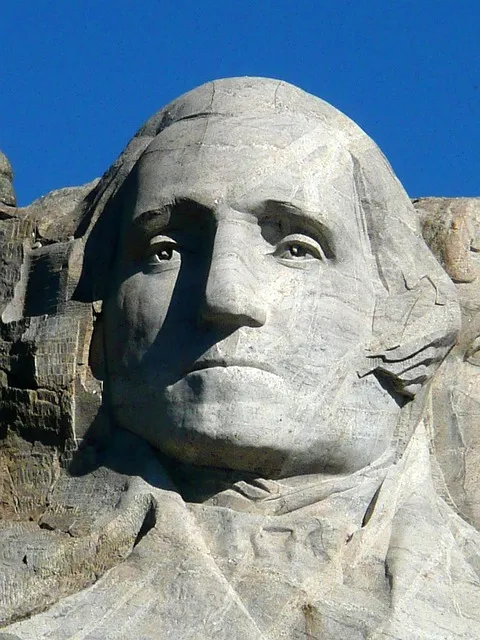
And then, in the spring, Baron Friedrich Wilhelm von Steuben arrived from Prussia and turned the survivors into a professional army. Valley Forge was not the story of Washington’s military genius — he wasn’t a genius. Valley Forge was the story of something rarer and more useful: the george washington discipline routine, a daily architecture of habits so consistent that it functioned as armor against catastrophe. His routine is still worth studying in 2026, not because you’re going to fight the British, but because the principles encoded in that routine are the same ones that separate people who sustain high performance from people who perform well when it’s convenient.
This article unpacks those principles through a proprietary framework called the Washington Discipline Stack — five layered disciplines that operated simultaneously in Washington’s life, and a practical adaptation for building your own version today.
Who Washington Actually Was Before the Monument
The marble-monument version of Washington is useless for learning anything. The real man is more interesting and considerably more instructive.
George Washington was born in 1732 in Westmoreland County, Virginia, into a family that was comfortable but not wealthy. His father Augustine died when George was eleven. He never attended college. He was largely self-educated through voracious reading and practical experience — he was working as a professional land surveyor at sixteen, a job that took him into the wilderness for weeks at a time and required precision, physical endurance, and the ability to navigate hostile terrain with minimal support. By twenty-two, he was commanding Virginia militia in the opening skirmishes of what would become the French and Indian War, and making catastrophic tactical errors that would have ended most military careers. He walked into an ambush at Fort Necessity in 1754 and had to surrender — his first significant engagement as a commander was a defeat.
Washington spent the next two decades building Mount Vernon into one of the most productive agricultural operations in Virginia, serving in the House of Burgesses, and educating himself in military theory, politics, and science. He was meticulous about records — his diaries run to millions of words covering weather, crop yields, expenses, visitors, and observations. This was not the behavior of a man waiting for greatness to arrive. This was the behavior of a man who understood that the gap between average and excellent is filled with boring, consistent attention to things other people can’t be bothered to track.
When the Continental Congress appointed him commander-in-chief of the Continental Army in 1775, Washington had never commanded more than a few thousand men. He was being given charge of a continental military campaign against the most powerful professional army on earth, with troops who had no training, no uniforms, and no reliable pay. He lost the first major engagements. He lost New York. He lost Philadelphia. He kept fighting. And because he kept fighting — because the army existed as long as Washington refused to stop — the British eventually ran out of political will to continue a war they couldn’t decisively win.
After the victory, he voluntarily surrendered his sword and returned to his farm. King George III said: “If he does that, he will be the greatest man in the world.” Washington did that. Then he served two presidential terms, stepped down again, and died at Mount Vernon in 1799 at sixty-seven, having never taken a title, a salary as general, or a position he wasn’t supposed to hold. The discipline of restraint — knowing what not to do — was as central to his legacy as anything he actually did.
This is the man whose daily routine we’re examining. Not the myth. The man who lost battles, controlled a violent temper through decades of deliberate effort, managed impossible logistics, and voluntarily gave up power when history was handing it to him on a plate. That man’s habits are worth your attention.
Introducing the Washington Discipline Stack
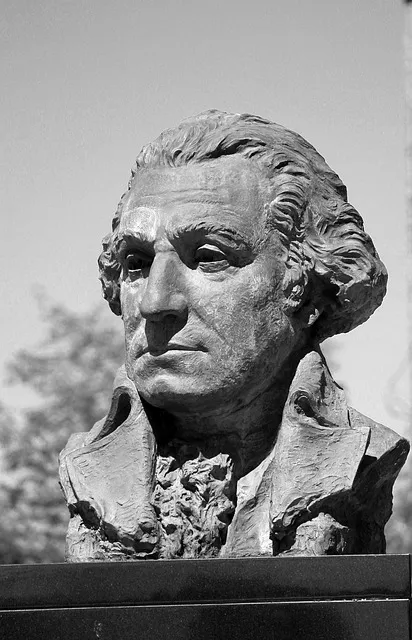
The five layers are: Temporal Discipline (the structure of his day), Information Discipline (how he processed the world), Emotional Discipline (how he managed his internal state publicly), Physical Discipline (the body as operational asset), and Character Discipline (the alignment between private behavior and public role). Each layer has a specific modern application. Each one is learnable. And each one compounds with the others the way interest compounds in an account — slowly at first, then faster than you can track.
We’ll work through all five, but first: the schedule itself, because the schedule is where the Stack makes its first appearance.
George Washington’s Daily Schedule in Full
Washington kept no single published “morning routine” — he would have found the concept baffling. What historians have reconstructed comes from his detailed diaries, letters, accounts from household staff, and observations from the hundreds of visitors who passed through Mount Vernon and the army’s various headquarters over forty years. The picture that emerges is remarkably consistent across his civilian and military life, which itself tells you something: this was not a performance for observers. It was the actual operating system.
- 4:00 AM — Rise. Washington rose before dawn year-round. In winter this meant candlelight before 5 AM. His household staff reported that he was typically working before the rest of the house stirred. During the Revolution, he rose even earlier when operational tempo demanded it — there are accounts of him dictating letters by firelight at 3 AM before a major engagement. The predawn hours were treated as a private resource, a period of low interruption he used for the work requiring the most thought.
- 4:00–6:00 AM — Correspondence and planning. Washington was one of the most prolific letter writers in American history. The Library of Congress holds over 17,000 items in his papers, and historians estimate he wrote or dictated somewhere between 20,000 and 30,000 letters over his lifetime — roughly two per day, every day, for decades. This correspondence was not administrative busywork. His letters were strategic documents: instructions to generals, appeals to governors for supplies, political persuasion directed at a skeptical Congress, intelligence reports, and the daily management of a five-farm agricultural operation during the periods he was at Mount Vernon. The morning hours were where this work happened, before the day’s interruptions arrived.
- 6:00–7:00 AM — Breakfast. Simple and consistent: hoecakes (cornmeal pancakes with butter and honey), tea, occasionally cold meat. No elaborate production. The meal served its function — fuel — and that was the end of it. Washington ate the same breakfast for most of his adult life. This is a small detail that carries a large principle: the elimination of daily micro-decisions about trivial things is energy preserved for decisions that matter. Barack Obama wore the same color suits for the same reason. Washington arrived at the same conclusion two centuries earlier.
- 7:00 AM–Noon — Active command and inspection. During the Revolution, this was the operational core of his day: troop inspections, officer briefings, tactical review, camp condition assessment. He moved through the army on horseback, which served both logistical and morale functions — his presence was itself a message. At Mount Vernon in peacetime, the same period was spent riding his five farms on horseback, covering up to twenty miles some days, inspecting crops, workers, equipment, and soil with the same granular attention he brought to military logistics. He kept daily records of everything he observed. His farm diaries are extraordinary documents — line by line accounts of what was planted, what grew, what failed, what the weather did, what the labor costs were, what the yields produced. This is not a man who managed from a distance and trusted reports. This was hands-on, daily, unbroken accountability to reality.
- Noon–2:00 PM — Dinner. The main meal of the eighteenth century was at midday. Washington dined formally, frequently with guests — politicians, military officers, diplomats, and the endless stream of visitors that came to Mount Vernon as a matter of social obligation and genuine admiration. He was a disciplined host: conversations were substantive, the table was ordered, the tone was dignified without being cold. These meals were also political work. Washington understood that relationships were built at tables, and he invested in those relationships with the same intentionality he brought to everything else.
- 2:00–5:00 PM — Continued administrative work. More letters, more meetings, more logistical management. Washington did not have a concept of “deep work” and “shallow work” — he would not have recognized the contemporary terminology — but his schedule implicitly honored the distinction. The cognitively demanding work happened in the morning. The afternoon was for responses, administrative management, and meetings that required his presence but less of his full concentration.
- 5:00–9:00 PM — Supper, reading, and social time. Light supper in the early evening, followed by reading, conversation with family and close guests, and whatever evening correspondence hadn’t been handled in the morning. Washington read widely: military history, agricultural science, political philosophy, and an extensive collection of newspapers that he used to track public opinion. He retired early by modern standards.
- 9:00–10:00 PM — Sleep. Six to seven hours. Consistent. Every night. There is no record of Washington bragging about sleeping four hours or running on adrenaline. He treated sleep as a non-negotiable operational input, not a luxury to be sacrificed when things got demanding. Matthew Walker’s research at UC Berkeley, published in Why We Sleep (2017), has confirmed what Washington practiced by instinct: chronic sleep reduction below seven hours degrades decision-making, emotional regulation, and physical recovery at rates most people significantly underestimate. Washington’s army was always short on everything. Sleep, apparently, was the one thing he protected.
The Five Layers of the Washington Discipline Stack
Now that the schedule is on the table, let’s pull the architecture out of it. Each layer of the Washington Discipline Stack is present in the schedule above — and each one has a modern translation that’s immediately applicable.
Layer 1: Temporal Discipline
The predawn rising is the most copied element of Washington’s routine and the most frequently misunderstood. People try to wake at 4 AM, hate it for a week, give up, and conclude that early rising is for people with different genetics. What they missed is the purpose of the early rising, not the time itself.
Washington rose early because he needed protected time — a window the rest of the world couldn’t interrupt. The specific time was 4 AM because that was the edge of available light and the boundary before household activity began. If his household had started at 3 AM, he would have risen at 2. The point was the protected window, not the hour. The discipline of deliberate practice research confirms this: the single most consistent finding across high performers in every field is not a specific wake time — it’s a consistent block of daily uninterrupted work dedicated to the thing that matters most. Washington’s predawn hours were his version of this. Your version may be 5 AM or 6 PM, depending on your life. The discipline is protecting it, not the timestamp.
Modern application: identify the two to four hours per day when you are at peak cognitive function. Build a fence around them. Treat every encroachment on those hours as the logistical problem Washington treated supply shortages — something to be solved immediately, not accommodated. Monk Mode is one structured way to enforce this protection.
Layer 2: Information Discipline
Washington was an obsessive recorder. Two to three hours of correspondence every morning. Daily farm diaries. After-action reports. Financial records. Weather logs. He was not recording for posterity — most of this material was never intended for publication. He was recording because the act of writing forced clarity, and clarity was the raw material of every decision he made.
There’s a specific cognitive mechanism here that modern research has confirmed. Psychologist James Pennebaker at the University of Texas spent three decades studying the effects of expressive writing on performance and decision-making. His 1997 meta-analysis in the Journal of Consulting and Clinical Psychology found that structured daily writing — not journaling about feelings, but recording observations, decisions, and their outcomes — measurably improved problem-solving efficiency and reduced the cognitive load of unresolved issues. Washington was running this protocol long before the research existed to explain why it worked.
The second component of Washington’s Information Discipline was his reading. He consumed newspapers voraciously — multiple papers per day when available — not for entertainment but for signal. He was tracking how different audiences were framing the war, what the political weather in various states looked like, where public opinion was shifting. This is intelligence gathering disguised as a reading habit. His decisions about how to communicate with Congress, how to request supplies, how to position military setbacks in public letters — all of this was informed by the reading he did in the evenings. He was not reacting to information. He was processing it into strategy.
Modern application: keep a daily operations log. Not a diary. A log. What happened, what decisions you made, what the outcomes were. Do this for thirty days and you will have a dataset about your own performance that is more useful than any amount of self-reflection. For more on the mechanics of this, see our guide to building a warrior’s operational code.
Layer 3: Emotional Discipline
This is the layer people most often omit from discussions of Washington’s discipline, which is ironic because it was the one he worked hardest on for the longest time.
Washington had a violent temper. This is well-documented by his contemporaries and by Washington himself in his private letters, where he occasionally describes the effort required to keep it under control. As a young officer, he was known for explosive anger. By the time he was commanding the Continental Army, accounts describe a man of almost unnatural composure in public — steady, deliberate, calm in the face of catastrophic news. This was not his natural temperament. It was the result of decades of deliberate effort to manage the gap between what he felt internally and what he expressed externally.
The mechanism he used — though he would not have described it this way — was identical to what modern psychology calls emotional regulation through deferred expression. He felt the anger. He acknowledged it. He chose not to act from it in the moment. Then, often hours later, he dealt with the underlying cause through letters or direct conversation, from a position of recovered composure rather than reactive heat. His letters to incompetent officers or obstructionist politicians — and there were many — are models of controlled, precise communication that conveys dissatisfaction without losing the relationship.
His officers watched him do this throughout the war and understood its significance. When Washington was calm, they believed the situation was manageable. When a commander in chief falls apart in front of his troops, the troops understand that the situation is unmanageable, and they act accordingly. Washington’s composure was not a personal preference. It was operational infrastructure. For how this connects to nervous system regulation under pressure, see our article on downregulating to dominate high-stakes situations.
Layer 4: Physical Discipline
Washington was, by contemporary standards, a serious physical specimen. He stood 6’2″ at a time when the average adult male height was around 5’7″. He was known for exceptional strength, endurance, and riding ability. He rode hard every day — often covering fifteen to twenty miles on horseback during his farm inspections — and this was not recreational. The physical maintenance of his body was a strategic asset, and he treated it as one.
The horseback riding served multiple functions simultaneously. It was exercise. It was inspection. It was presence — showing up in person to every part of his operation rather than managing through intermediaries. And it was data collection: you cannot assess the actual condition of crops, workers, or soldiers from a headquarters. You have to ride through it. Washington’s physical discipline and his information discipline were the same activity, which is a beautiful efficiency that most people never achieve because they treat exercise as a separate category of life rather than as a delivery mechanism for the things they actually need to do.
His diet was similarly strategic. Simple, consistent, adequate. He was not ascetic about food — he drank Madeira wine with dinner and enjoyed good meals when available — but he did not make food a source of complexity or reward. It was fuel. The discipline of treating your body as a performance system rather than a comfort delivery mechanism is something that modern sleep science and nutrition research have confirmed exhaustively, but Washington was operating from the same framework intuitively two centuries earlier.
Layer 5: Character Discipline
The fifth layer is the one that made the other four sustainable, and it is the one most people skip because it’s the least tangible and the most demanding.
Washington spent years in his early life copying and memorizing the 110 Rules of Civility and Decent Behavior, a French Jesuit manuscript on social conduct that he transcribed as a teenager. This was not merely an exercise in penmanship. He was encoding a behavioral operating system — a set of principles for how to act in every social situation, which he could execute without having to deliberate in real time. The rules covered everything from not picking your teeth in public to how to conduct yourself when in the company of your betters, and the effect of years of internalizing them was a man who behaved consistently across all contexts: in front of soldiers, diplomats, kings, and servants.
This alignment between private and public behavior — what you do when no one is watching matches what you do when everyone is watching — is what character actually means in operational terms. It is also extraordinarily hard to fake for long. Washington’s officers trusted him because his behavior was predictable. His political opponents respected him because his integrity was consistent. His enemies underestimated him because they assumed everyone pursued power the way they did, and Washington simply did not. The decision to relinquish his military commission in 1783 stunned the world precisely because the world assumed he was bluffing — that at the last moment, like every other successful revolutionary commander in history, he would hold on. He didn’t.
The character discipline was real, not performed.
Modern application: write down your own five core behavioral principles. Not goals. Principles — standards for how you act regardless of circumstances. Then compare your actual behavior last week to those principles, line by line. The gap between what you say your principles are and what your behavior demonstrates them to be is the real measure of character discipline. For more on building unshakable internal standards, that piece will meet you where this one ends.
The Science Behind Why Washington’s Stack Actually Works

Washington’s morning correspondence routine became so deeply habitual that he maintained it through the most chaotic years of the war. Letters from Valley Forge in February 1778 are as organized, precise, and clearly thought through as letters from Mount Vernon in peacetime. The content changed. The structure did not. That consistency is what basal ganglia automaticity looks like from the outside: the behavior runs regardless of circumstances because it has been sufficiently practiced to leave the realm of effort and enter the realm of reflex.
Phillippa Lally’s research at University College London, published in the European Journal of Social Psychology in 2010, found that habit formation takes an average of 66 days — not the widely cited 21-day figure. That 66-day average spans a range of 18 to 254 days, depending on the complexity of the behavior and the individual’s psychology. Washington’s Stack was built over years, which is why it held under conditions that would have shattered a habit of months. The depth of the groove matters as much as the quality of the behavior.
The emotional regulation component has its own neuroscience. Stanford psychologist James Gross published his process model of emotion regulation in Psychological Review in 1998, identifying two primary strategies: cognitive reappraisal (changing how you interpret a situation before it generates a full emotional response) and expressive suppression (feeling the emotion fully but controlling its outward expression). Suppression, Gross found, works in the short term but generates physiological costs — it activates the sympathetic nervous system and impairs cognitive function in the person doing the suppressing. Reappraisal works better: it changes the emotional response before it escalates, with fewer physiological costs. Washington appears to have used both, but his practice of waiting — of not responding to provocative information immediately, of giving himself time to reframe before acting — aligns more closely with reappraisal. He was not suppressing his temper. He was changing how he interpreted situations before responding to them. That distinction is why the discipline held for decades without apparent psychological cost. Learn more about transforming anger into directed energy using similar principles.
The physical discipline layer connects to what neuroscientist John Ratey documented in Spark: The Revolutionary New Science of Exercise and the Brain (2008). Ratey synthesized decades of research showing that regular aerobic exercise — the kind Washington got through daily horseback riding and extensive walking — increases BDNF (brain-derived neurotrophic factor), a protein that promotes neuronal growth and the formation of new connections. In practical terms: Washington’s daily riding was making his brain better at the cognitive work he needed it for. The physical discipline was not separate from the intellectual discipline. It was funding it biochemically.
Washington’s Best Discipline Quotes — Decoded
Washington’s most famous statements on discipline are often quoted without context, which strips them of their operational meaning. Here’s what he actually meant.
“Discipline is the soul of an army. It makes small numbers formidable, procures success to the weak, and esteem to all.”
This was written not as motivational copy but as a direct instruction to officers in 1759. Washington had watched undisciplined militia collapse in the face of professional British troops throughout the French and Indian War. The specific word “soul” is significant: he was not saying discipline produces an army. He was saying discipline is the army. Without it, numbers, weapons, and even courage are largely irrelevant. With it, inferior forces can hold against superior ones — which is precisely what the Continental Army did for eight years against the most professional military in the world.
“It is better to offer no excuse than a bad one.”
Washington said this after a subordinate offered a transparently weak justification for a failure. The statement is deceptively deep. A bad excuse does two things simultaneously: it fails to explain the actual problem, and it signals that the person offering it is more interested in avoiding responsibility than in fixing the situation. Washington had no patience for either. An honest admission of failure — “I got it wrong, here’s what I’m going to do about it” — gives a commander everything he needs. A bad excuse wastes everyone’s time and degrades trust. This is Layer 5 of the Stack (Character Discipline) in a single sentence.
“Perseverance and spirit have done wonders in all ages.”
Written in December 1777, from Valley Forge. Not a motivational abstraction — a tactical assessment. Washington was doing the math on what resources he actually had and concluding that the two variables he retained control over, when supplies and manpower and political support were all failing, were perseverance and morale. He was identifying his army’s actual competitive advantage and naming it clearly. This is working the problem at its most direct: when everything else is stripped away, what do you still have?
“Associate with men of good quality if you esteem your own reputation; for it is better to be alone than in bad company.”
From the Rules of Civility, transcribed in his teens. Washington lived this his entire life — his inner circle was carefully chosen and fiercely maintained. He tolerated difficult personalities (Hamilton’s arrogance, Jefferson’s political maneuvering) but only insofar as their abilities served the mission. He had a clear-eyed understanding that the people closest to you set the behavioral baseline you operate against. This is the Character Discipline layer applied to social architecture. It also explains why his warrior’s code of duty was never just personal — it was embedded in the quality of the relationships he built around himself.
How to Build Your Own Washington Discipline Stack
The Washington Discipline Stack is not a schedule to copy. It is an architecture to adapt. Here is a structured protocol for building your own version, layer by layer, over 66 days — the minimum formation period for complex habits.
-
Week 1–2: Establish your protected window (Temporal Discipline). Pick the two-hour block in your day when your cognition is sharpest. For most people this is 90 minutes after waking. Do one thing in that window, the same thing, every day. No email, no phone, no news. This block is non-negotiable for the next 66 days. When something intrudes, treat it the way Washington treated supply interruptions — as a logistics problem to be solved, not a reason to abandon the mission. If you currently have no protected time, this step alone will change your life.
-
Week 2–3: Start your operations log (Information Discipline). Every evening, spend ten minutes writing three things: what decision you made today that mattered most, what the outcome was, and what you would do differently. No word count requirement. No format. Just honest, specific observation. You are building a dataset about your own decision-making. At 30 days, review the log and identify the patterns. You will find two or three things you keep getting right, two or three things you keep getting wrong, and the specific conditions under which each happens. This is more useful intelligence than anything in a productivity book.
-
Week 3–4: Install one physical anchor (Physical Discipline). Not a full exercise program. One anchor: the same physical activity, the same time, every day. Fifteen minutes of walking. Twenty minutes of lifting. Whatever. The criteria are: it has to happen daily, it has to happen at the same time, and it has to involve genuine physical exertion. The basal ganglia needs repetition to build the groove. The biochemistry (BDNF, cortisol regulation) kicks in consistently after about three weeks. This is your physical discipline compound interest — invisible for weeks, then impossible to ignore. Understanding how sleep and physical activity interact will help you optimize when to place this anchor.
-
Week 4–5: Practice the emotional pause (Emotional Discipline). For four weeks, implement one rule: before responding to anything that provokes a strong reaction, wait 90 seconds. Not because 90 seconds solves anything — but because neuroscientist Jill Bolte Taylor’s research on emotion chemistry found that the initial physiological cascade of an emotional response typically clears in 90 seconds if you don’t re-stimulate it. After 90 seconds, you are choosing to stay in the emotion or let it go. Before 90 seconds, it’s largely chemistry. Washington’s practice of waiting before responding to provocative letters was the eighteenth-century version of this protocol. Pair this with the box breathing technique for acute high-pressure situations.
-
Week 5–6: Write your five principles (Character Discipline). Not values. Not aspirations. Behavioral principles — specific statements about how you act. Not “I am honest” but “I tell people the truth even when it costs me something.” Not “I am committed” but “I finish what I start unless I can articulate a specific reason to stop.” Write five. Put them somewhere you will see them every morning. Then, every Sunday, do a five-minute audit: did your behavior this week reflect each principle? Where was the gap? This is not a guilt exercise. It is a calibration exercise. Washington’s Rules of Civility were his written principles, internalized through decades of practice until they were fully automatic. Yours are a starting document. The automation comes from the audit. For the deeper architecture of internal locus of control this requires, that article is the natural next stop.
The full Stack takes 66 days to build at the minimum. Washington took years. The difference in durability is proportional. A Stack built over years survives an eight-year war. A Stack built in 66 days survives a hard quarter. Both are useful. Build the 66-day version first, then keep going.
Valley Forge: What the Stack Produces Under Maximum Pressure
The real test of any discipline system is not what it produces when conditions are good. It’s what it produces when everything is wrong simultaneously.
December 1777. The Continental Army has just lost Philadelphia — the capital of the nation they’re supposedly defending. Congress has fled to York, Pennsylvania. Quartermaster General Thomas Mifflin has essentially abandoned his post, leaving the supply system in collapse. The army has about 12,000 men, roughly 3,000 of whom are “unfit for duty” — barefoot, sick, starving. It is one of the coldest winters of the eighteenth century.
In this context, here is what Washington’s Washington Discipline Stack produced:
His correspondence during that winter — preserved in the Library of Congress — shows no deterioration in quality. The letters are as clear, as strategic, as carefully constructed as anything he wrote before the disaster. This is Temporal Discipline and Information Discipline holding under maximum pressure. The protected morning hours continued. The careful thinking continued.
His public composure held. There are no accounts from Valley Forge of Washington losing his temper in front of troops, despite the catastrophic conditions and despite the fact that he was receiving letters during this period from members of Congress and certain military officers — the Conway Cabal — who were actively trying to replace him. He wrote devastating rebuttals to the attacks in private. He maintained his command bearing in public. Emotional Discipline, precisely when it was most difficult.
He continued his daily inspections on horseback. In the worst winter the Continental Army ever experienced, Washington rode through the camp every day. Physical Discipline as demonstration. His presence told his troops something that no speech could: the situation is terrible and we are still here and I am still here and we are going to stay here until it changes. There is enormous power in showing up physically when showing up is difficult. The process of becoming unbreakable runs exactly through this kind of repeated presence under pressure.
And his character held. He refused to play the political games that would have made his position more secure but compromised his integrity. He repeatedly sent Congress honest assessments of his army’s condition rather than optimistic reports that would have pleased them. He turned down suggestions that he simply seize the supplies he needed from surrounding farms rather than continue the slow, failed process of formal requisition. He was right about the strategy and the character simultaneously. By spring, when Baron von Steuben arrived and began transforming the survivors into professional soldiers, Washington had an army that was still in the field, still functioning, still capable of being trained. The only reason that army existed was the Washington Discipline Stack, running under conditions that would have dismantled any system built on lesser foundations.
The One Thing People Get Wrong About Washington’s Discipline
The conventional read on Washington’s discipline is that it was about self-control. He woke early, managed his temper, ate simply, worked constantly — a portrait of a man imposing order on himself through force of will.
That reading misses the point entirely, and getting it wrong leads to the most common mistake people make when trying to build their own discipline system: treating discipline as something you apply to yourself, rather than something you build into your environment.
Washington did not wake at 4 AM through willpower every morning. He woke at 4 AM because his entire daily architecture was structured around that rising time. His correspondence system, his inspection schedule, his farm management — all of it was calibrated to start at 4 AM. Not waking at 4 AM would have created a cascade of problems: letters unwritten, rounds unmade, the day’s structure collapsed from the first hour. The early rising was not maintained by discipline in the sense of gritting your teeth and doing it. It was maintained by the structural consequences of not doing it — the same way most people reliably wake up for a flight at 3 AM without any particular struggle, because the consequences of missing it are immediate and concrete.
This is the insight that separates Washington’s approach from most modern discipline advice, which focuses relentlessly on motivation and willpower and very little on systems design. Habits and discipline are not the same thing, but they work best together when the discipline is used to build the system and the system then runs the behavior. Washington built a system. The system ran the behavior. The behavior produced the results. Willpower was the fuel for construction. Once the system was built, it ran on structure.
The other thing people get wrong: they think Washington’s greatest achievement was military. It wasn’t. His military record, objectively assessed, was mixed. He won some significant battles (Trenton, Princeton, Yorktown) and lost others badly (Brandywine, Germantown, Long Island). What makes him historically extraordinary is the political discipline — the restraint. Twice he held absolute power and gave it back. In a world where every successful revolution produces a new despot, Washington was the anomaly that proved the principle. And that anomaly was not an accident of character. It was a discipline he had been building since he was a teenager copying the Rules of Civility in his mother’s house in Virginia. Inner locus of control at civilizational scale is what we’re talking about. One man’s disciplined character changing the trajectory of a republic.
Adapting the Stack for a Normal Life
You are not fighting a revolution. You do not have 17,000 letters to write or five farms to inspect on horseback. The direct application of Washington’s schedule to a modern life would be absurd — he didn’t have a commute, a smartphone, or a Slack notification from someone who needs something “quick.”
What translates is the architecture, not the schedule. Here is the realistic adaptation:
Protected morning window:
45–90 minutes before the day starts its demands. Not checking email. Not scrolling. Working on the one thing that matters most. This is where Washington’s predawn correspondence lives in a modern context. The specific work changes. The protected window doesn’t.
- Daily logging: Ten minutes at day’s end. Three entries: one decision you made, one thing you noticed, one thing you’ll do differently tomorrow. If you’re serious about this, use a physical notebook. The act of writing longhand engages different neural circuitry than typing and produces better retention and reflection. Washington wrote everything longhand for sixty years. There’s a reason his thinking was clear.
- Physical anchor: Twenty to thirty minutes of daily movement, non-negotiable, tied to an existing habit (after morning coffee, before work, after school pickup). The specific activity matters less than the consistency. Exercise’s effect on cognitive output is dose-dependent but consistent: any regular movement improves performance. Washington’s fifteen miles on horseback is not the point. The daily physical commitment is the point.
- Emotional pause: 90-second rule before responding to anything emotionally charged. This is practical and immediate. Washington took hours or days. You can start with 90 seconds. Pair it with tactical box breathing for situations that make the 90-second wait genuinely difficult. If you want to understand the deeper mechanics of emotional mastery, the piece on mastering your emotions for leadership performance is built for exactly that.
- Weekly character audit: Sunday evening, five minutes, five principles. Not a lengthy journal entry. Five yes/no assessments. Did I act in accordance with each principle this week? Where I didn’t, why not? What changes next week? This is the minimum viable version of what Washington was building through decades of deliberate practice. Minimum viable is fine as a starting point. The point is starting.
The compound effect of these five practices, run consistently for a year, is not subtle. It is the difference between a person who is managed by their circumstances and a person who manages themselves through their circumstances. Washington’s life ran through circumstances that would have destroyed most people. The Stack is why they didn’t destroy him. Your circumstances are less extreme. The Stack is still worth building. For a structured container to build it in, the warrior’s code framework provides the philosophy; the daily practice provides the reality.
NOT JUST READING ABOUT IT ›
Join the Wolf Pack — mentorship and accountability for men who are done thinking about change
FAQ: George Washington’s Discipline Routine
What time did George Washington wake up every day? Washington typically rose between 4:00 and 5:00 AM throughout his adult life, in both wartime and peacetime. This was not driven by any particular philosophy about early rising — it was driven by the volume and nature of the work he needed to do before the rest of his household and command were active. His predawn hours were the highest-value uninterrupted time in his day, and he protected them as a strategic resource. During intense operational periods like the Valley Forge winter of 1777–1778, accounts suggest he sometimes rose at 3 AM to keep pace with correspondence demands.
What did Washington eat for breakfast? Washington’s standard breakfast was hoecakes — a cornmeal pancake eaten with butter and honey — along with tea and occasionally cold meat. His meals were simple and consistent throughout his adult life. He drank Madeira wine at dinner, enjoyed good food when available, but treated breakfast specifically as functional fuel rather than a social occasion. The consistency of his meals was itself a form of discipline: by eliminating daily decisions about food, he preserved cognitive resources for decisions that actually mattered.
How did Washington manage his temper? Washington had a notoriously explosive temper as a young man that he spent decades learning to control. The mechanism he used was essentially what modern psychology calls cognitive reappraisal — he trained himself to wait before responding to provocative information, giving himself time to change how he interpreted the situation before acting on it. This is distinct from suppression (pushing the emotion down, which has physiological costs) and is consistent with James Gross’s process model of emotion regulation. Washington’s letters to difficult subordinates and obstructionist politicians were often written hours or days after the provocation, from a position of recovered composure rather than reactive heat.
What is the Washington Discipline Stack? The Washington Discipline Stack is a framework developed in this article to describe the five interdependent disciplines that structured Washington’s daily life: Temporal Discipline (protecting high-value time), Information Discipline (systematic recording and reading), Emotional Discipline (managing internal state before expressing externally), Physical Discipline (maintaining the body as a performance system), and Character Discipline (aligning private and public behavior through written principles). The Stack is more robust than any single habit because each layer reinforces the others — when one is under pressure, the others provide structural support. The modern adaptation requires 66 days minimum to establish at the habit-formation level Phillippa Lally’s research identifies.
How did Washington’s discipline compare to other Founding Fathers? Washington was less intellectually brilliant than Jefferson, less strategically sophisticated than Hamilton, and less rhetorically gifted than Adams or Patrick Henry. What he had that none of them fully possessed was operational discipline: the ability to execute consistently over years and decades under conditions of chronic stress and inadequate resources. Jefferson, for all his genius, died $100,000 in debt from inability to manage his finances. Hamilton’s lack of emotional discipline contributed to multiple political crises and ultimately to his death. Franklin, the closest comparison among the founders, had extraordinary discipline in intellectual and professional domains but was notably undisciplined in personal conduct. Washington’s Stack was simply more complete — all five layers operating simultaneously — which is why his legacy as the indispensable man of the founding era is not disputed even by his strongest critics.
Can I realistically apply Washington’s discipline to a modern life? The schedule doesn’t transfer. The architecture does. A modern adaptation of the Washington Discipline Stack focuses on five practices: a 45–90 minute daily protected working window, a ten-minute daily operations log, a consistent physical anchor of 20–30 minutes, a 90-second emotional pause rule before responding to charged situations, and a weekly five-minute character audit against written personal principles. These practices collectively represent the five layers of the Stack in a form compatible with modern obligations, and when run consistently for 66 days, they produce measurable changes in decision quality, emotional regulation, and performance consistency — the same outputs Washington’s original Stack produced, scaled to a non-revolutionary context.
Why did Washington give up power twice? Washington understood that the long-term viability of the American republic depended on establishing the precedent that power flows from institutions, not individuals — that a leader who has earned his authority demonstrates that authority most fully by returning it to the people when his service is done. He had watched European history produce an endless cycle of revolutionary leaders becoming new tyrants. He chose to be the counterexample. This was not a simple decision: there were genuine political forces urging him to accept a monarchy, and his personal authority was sufficient that he could have done so successfully. The Character Discipline layer of the Stack — behaving in private and in extremis as you have stated your principles require — made the decision less a sacrifice than a logical extension of who he had spent fifty years becoming.
How long did it take Washington to build his discipline system? Washington began building the foundations in his early teens, copying the Rules of Civility at fourteen or fifteen. His operational diary habits were established by his mid-twenties. His emotional regulation improved visibly through his thirties and forties. The full Stack — all five layers operating consistently — was not complete until his fifties, when accounts of him during the Revolution describe the fully formed version of the man. The implication for modern practitioners is that the 66-day minimum habit formation timeline produces a working version, but the deep durability that carried Washington through Valley Forge is a product of years. Build the working version first. Then keep building.
Editorial StandardsCorrectionsMedical DisclaimerAbout Our ContentAffiliate DisclosureSite Map