
A grandmother kept a jar on her kitchen counter. Not a decoration — a function. Every week, vegetable scraps, coffee grounds, and eggshells went in. Every few weeks, she emptied it onto the garden. The tomatoes were remarkable. Asked once why she bothered instead of just throwing everything in the bin, she looked back like the question was absurd — like being asked why she bothered to sleep. “Why would I throw away something useful?” That was it. Not a lecture. Not an ideology. Just a woman who grew up without disposable income and never forgot that throwing things away has a cost — and keeping them useful has a return.
She also kept a clothesline, fixed her clothes instead of replacing them, made cleaning products from things that cost pennies, and drove the same car for nineteen years. She was not an environmentalist by any label she would have chosen. She was frugal in the old sense of the word — not tight-fisted, but unwilling to waste anything that still had value. And she died leaving her children more financial stability than most people twice her income ever managed. There is a whole lineage of this thinking — what our grandparents understood about minimalism that has been systematically sold out of the modern household.
That jar is worth thinking about when calculating what sustainable habits actually cost and return. Not in a vague “good for the planet” sense, but in hard dollars. Monthly totals. Annual totals. Decade totals. What the numbers show is that frugality and sustainability are not two separate conversations. They are the same conversation, dressed in different vocabulary, serving the same result: a life where less money flows out, less stuff accumulates, and less mental energy goes to managing the consequences of both. This post is the math behind that insight — and a framework for turning it into compounding returns.
The Wake-Up: What Your Trash Is Actually Costing You

This is the starting point for the Green Dividend framework: the idea that every sustainable habit adopted generates a return — a dividend — that lands in a bank account, a calendar, or a home’s usable space. Unlike stock dividends, which require capital to generate income, Green Dividends require only a behavioral shift. And unlike most financial advice, which asks you to earn more, the Green Dividend framework operates entirely on the spend-less side of the equation, which is mathematically more powerful for most people because it is not taxed, does not require a promotion, and compounds immediately.
The numbers are blunt. To understand how deeply the zero-waste principle stacks against conventional spending, start with energy. The average U.S. household spends roughly $182 per month on electricity. The Department of Energy estimates that 5–10% of that — call it $13–18/month — is phantom load: electronics plugged in and doing nothing, drawing power around the clock. That is $156–$216 per year spent on electricity that heats no room, powers no device in use, and accomplishes nothing except keeping standby lights blinking. Ten smart power strips at $15 each solve this problem for $150. Payback: under a year. Return for the next decade: $1,500–$2,000.
Paper towels: the average household uses 1–2 rolls per week, at roughly $3 per roll — $150–$300 per year on a product used once and thrown away. A set of twelve cloth rags costs $12–15 and lasts five or more years. Annual cost: under $3. The swing: $145–$297 per year, every year. Bottled water: one bottle per day at $2 is $730 per year, for water that flows from the tap for fractions of a penny per gallon. A $25 insulated water bottle eliminates the entire cost. Payback: 13 days. Return over five years: $3,625.
None of these feel like “investments” in the conventional sense. But they pay like investments. And they illustrate the core principle of the Green Dividend: stopping the purchase of disposables and stopping the waste of energy is not a sacrifice. It is collecting a return on a habit that should have been there anyway. The sustainability angle is real — less waste in landfills, less energy burned, less plastic produced. But the financial angle is immediate, personal, and frankly more motivating for anyone who has not yet romanticized the idea of living lightly. The planet benefits eventually. The bank account benefits this month.
The framing most people miss is this: what the consumer economy sells as “convenience” is actually a subscription. This connects directly to the daily money habits most financial advice covers — but rarely traces back to the structural consumption defaults that make those daily habits expensive in the first place. Not a product. Every pack of paper towels, every single-use cleaning bottle, every case of plastic water bottles is the first installment in an infinite payment plan with no exit unless one is deliberately built. The Green Dividend framework is that exit. Nobody is “going green” here. Subscriptions never consciously agreed to are simply being canceled — and that cash flow gets redirected to things actually chosen.
The Math: Running the Real Numbers on Sustainable Swaps
- Smart power strips / phantom load elimination: $156–$216/year
- Cloth rags replacing paper towels: $147–$297/year
- Reusable water bottle replacing bottled water: $705–$730/year
- Line drying + cold-water washing (energy + clothing longevity): $330–$360/year
- DIY cleaning products replacing commercial: $480–$485/year
- Meal planning reducing food waste by 25%: $675–$1,200/year
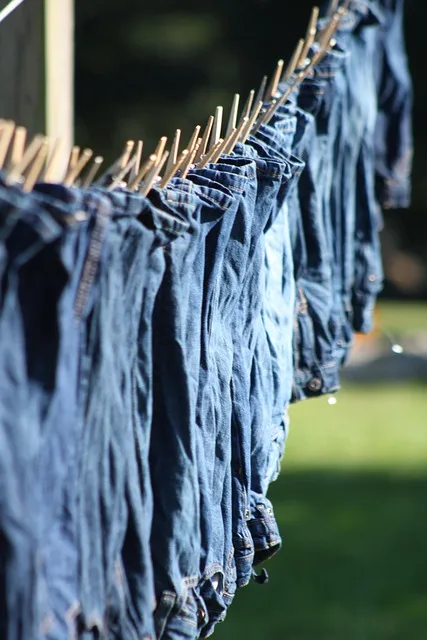
Laundry: A clothes dryer costs roughly $0.45–$0.75 per cycle in electricity, depending on the rate. Four loads per week at $0.60 average = $2.40/week = $124.80/year. Line drying costs $0. A basic drying rack: $20–25. Payback: under three months. Decade return: $1,220. Cold-water washing adds to this: roughly 90% of washing machine energy goes to heating water. Switching to cold saves approximately $60–90/year depending on load frequency. Combined — cold water plus line drying — laundry energy cost drops by 85–90%, saving $170–$200/year from a category almost nobody thinks to optimize.
The durability angle compounds this further. Heat degrades fabric. Dryer cycles break down fibers, fade colors, and shrink garments. Line-dried clothes last measurably longer — research from the American Cleaning Institute confirms heat exposure is the primary accelerant of textile degradation. For a household spending $800/year on clothing (the U.S. average is closer to $1,800, but $800 is used here for conservatism), extending garment life by 20% through line drying and cold washing saves $160/year in clothing purchases. Add that to the energy savings and laundry alone generates a $330–360/year Green Dividend from two habits.
Cleaning products: The American Cleaning Institute reports average household spending on cleaning supplies at $42/month — $504/year. That budget covers glass cleaner, bathroom cleaner, kitchen degreaser, floor cleaner, toilet bowl cleaner, stainless steel polish, drain cleaner, and the dozen other specialized bottles occupying the under-sink cabinet. What those specialized products actually are: mostly water, surfactants, and fragrance, priced at a 300–500% markup for the privilege of having a different bottle for each surface. The chemical reality is simpler. White vinegar (average $0.10/oz) cuts grease, removes mineral deposits, and disinfects surfaces. Baking soda ($0.02/oz) provides abrasive action for scrubbing. Castile soap ($0.15/oz diluted) handles floors, counters, and dishes. Total annual cost for all three: $18–22. Annual savings against the consumer cleaning budget: $480–485. One conversation change, $480 back in pocket, every year.
Food waste: The USDA estimates American households waste 30–40% of the food supply. Translated to individual household budgets: the average family spends $9,000–$12,000 per year on food and throws away $2,700–$4,800 of it. Meal planning — deciding what to cook before shopping, buying ingredients tied to actual meals, eating leftovers instead of throwing them out — consistently reduces household food waste by 25–50% in studies. At the conservative end, that is $675/year returned from a single planning habit. A forty-five-minute Sunday planning session pays at $15/hour for every hour of the year.
Transportation: AAA calculates the average annual cost of owning and operating a new vehicle at $10,728 in 2023 — including depreciation, insurance, fuel, maintenance, and fees. A used commuter bicycle costs $150–400 and requires $50–100/year in maintenance. If a bike replaces even 30% of car trips — a realistic target for anyone within 5 miles of their regular destinations — and reduces insurance, fuel, and wear costs proportionally, the conservative annual savings reach $1,500–2,500. For someone who can go car-free or car-lite with transit supplementation, the number becomes transformative: the entire $10,728 becomes available for other uses.
Electronics upgrade cycle: The average American upgrades their smartphone every 2.1 years, at a cost of $800–$1,000 per device. Extending that cycle to 4 years — keeping a phone until it genuinely fails rather than until marketing declares it outdated — saves $400–500 per cycle. Over a decade, one person saves $2,000–2,500 from this single decision. A family of four saves $8,000–10,000. The phone does not become less capable from the decision to keep it. It becomes less capable when a software update from the manufacturer quietly throttles its performance, which is a different thing — and worth knowing about.
Here is the consolidated view. These are annual Green Dividends from six habit changes:
Total annual Green Dividend from six habits: $2,493–$3,288. That is not a lifestyle sacrifice. That is a second side income generated by changing six routines, most of which require less effort than the disposable habits they replace. The compound effect over ten years, with conservative 3% annual inflation on consumer goods: $28,000–$37,000. From things that stopped being bought. For context on what that kind of recaptured cash can do when redirected purposefully, see how compound interest turns small recurring savings into significant wealth — the math runs the same direction whether the savings come from a raise or from canceling thirty years of paper towel subscriptions.
The System: Building Green Dividends That Compound Automatically

The infrastructure approach starts with a single concept — the Loop Break. The broader principle — that minimalism is an operating system, not an aesthetic — applies directly here: a life is not being decorated with fewer things. The default behaviors that cause money to leave the account automatically are being rewired. Every disposable habit operates as a closed loop: buy, use, throw away, buy again. The loop runs automatically. Nobody decides each week to buy paper towels; they just notice the roll is gone and add it to the list. The way to stop paying for a loop is not willpower — it is a one-time decision that breaks the loop at its weakest point, followed by a replacement that fills the function without the cost. A set of cloth rags breaks the paper towel loop. A reusable bottle breaks the bottled water loop. A spray bottle of vinegar solution breaks the cleaning products loop. Each Loop Break requires one purchase and one habit update. After that, the new behavior runs automatically, generating its Green Dividend every week without further decision-making.
Apply the Loop Break to a home systematically. Start in the room with the most loops running. For most households, that is the kitchen. For a structured audit before starting, the list of household items you genuinely do not need is a useful starting inventory — most of them are disposable by design. Count the disposables cycling through: paper towels, plastic wrap, zip-lock bags, bottled water, single-use coffee pods, plastic produce bags, cleaning products in individual bottles. Each one is a loop. Break them one at a time — not all at once, because simultaneous changes create the kind of friction that makes people quit after two weeks. One loop per week for two months covers the kitchen entirely. By the end, the grocery list has shrunk by eight to ten recurring items, the under-sink cabinet has freed up a full shelf, and the monthly food budget is measurably lighter.
Then move to the laundry room. Then the garage. Then transportation. The Loop Break methodology is scalable because each break requires only one decision, and the decision is permanent. Behavior isn’t being changed every day. Infrastructure gets changed once, and life continues inside that new infrastructure, generating dividends automatically.
The second pillar of the system is the Durability Premium — the practice of paying more upfront for things built to last, then calculating the True Cost Comparison to verify the investment. A $100 cast iron skillet, maintained properly, lasts generations. A $25 nonstick pan lasts two to three years before the coating degrades and needs replacing. Over twenty years: cast iron costs $100. Nonstick costs $175–$250 plus the environmental cost of disposing of degraded nonstick coating, which contains PFAS compounds. The durable option is cheaper and produces less waste. Every time. A $200 safety razor with a $10 pack of 100 blades costs $210 upfront and roughly $10/year ongoing. Cartridge razors run $15–20/month, or $180–240/year. Over five years: safety razor, $260 total. Cartridge system, $900–1,200 total. The “premium” purchase is the budget purchase when the math gets run.
Living below your means is not about deprivation — it is about this exact calculation. The consumer market is built to obscure True Cost Comparisons by keeping sticker prices low and replacement costs hidden. Every time the comparison gets run and durability gets chosen, a revenue stream designed specifically for the consumer gets opted out of. That is not frugality as a personality trait. That is financial literacy as a competitive advantage.
The third pillar is strategic subtraction — systematically removing categories of spending by changing one upstream decision. The biggest upstream decisions are also the most culturally loaded: housing size, car ownership, food sourcing. Most households never examine these because they feel fixed. They are not. A family that moves from a 2,400 sq ft home to a 1,400 sq ft home does not just save on mortgage or rent — it saves on utilities, furniture, cleaning time, maintenance costs, and the heating and cooling bill for a thousand square feet of space that mostly stored things that weren’t needed. The smaller home costs less in every dimension simultaneously. That is the Green Dividend compounding across the entire cost structure of a life, not just on individual product swaps.
Strategic subtraction pairs naturally with the principles in holistic minimalism — specifically the idea that every item eliminated from a life removes not just the purchase cost but the carrying cost: the space it occupies, the time spent managing it, the mental bandwidth allocated to tracking it. A home with 30% fewer possessions is not a deprived home. It is a home that costs less to heat, less to clean, less to insure, and less cognitive load to work through. Researchers at UCLA’s Center on Everyday Lives of Families found that clutter in the home elevated cortisol levels in women who described their homes as “stressful.” The stress of stuff is measurable. So is the relief of removing it — and so is the money saved when disposables stop cycling through a space that already contains more than needed.
The fourth pillar of the system — often overlooked because it does not involve purchasing anything — is the repair reflex. When something breaks, the default consumer response is replacement. A broken zipper means a new jacket. A cracked phone screen means a new phone. A dripping faucet means a call to a plumber or a resigned purchase of a new fixture. The repair reflex asks a different question first: can this be fixed, and how much would fixing it cost versus replacing it? A zipper replacement costs $8 at a tailor and takes fifteen minutes. A new jacket costs $60–200. A cracked phone screen can be repaired for $80–120 at a third-party shop and extends the phone’s useful life by two or three years, saving $600–800 in premature replacement. A dripping faucet requires a $3 washer and a YouTube video. The repair reflex is not nostalgia. It is mathematics applied to durability, and it generates Green Dividends every time it gets deployed instead of the default consumer replacement cycle.
None of this requires sacrifice in the sense that word is usually understood. Quality isn’t being given up. This isn’t deprivation. The cloth rags clean as well as paper towels. The vinegar cleans as well as the $8 bottle of branded surface spray. The line-dried shirt smells better than the dryer-dried one. The bicycle commute is healthier than the car commute. In category after category, the sustainable choice is not a lesser version of the conventional choice — it is a different mechanism that produces the same or better outcome at a fraction of the cost. That is the Green Dividend in its purest form: equivalent function, radically lower recurring cost, permanent return.
“The man who does not need things is richer than the man who has them.” — Seneca. The financial translation: net worth is not just what has been accumulated. It is also what has stopped bleeding. Every recurring expense eliminated without sacrificing function is permanent income at zero tax rate.
The Trap: The Five Ways People Misapply Green Frugality and End Up Poorer
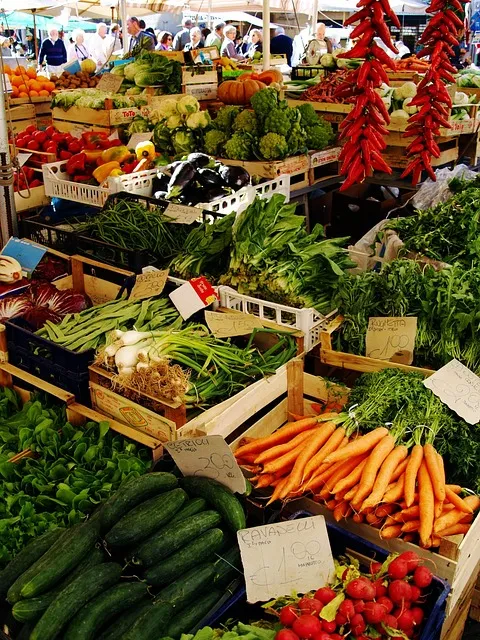
Trap 1: The Premium Organic Upgrade. A decision to eat more sustainably replaces the $4 bag of conventional apples with $8 organic apples, the $3 rice with $7 heirloom rice, the $5 chicken with $18 heritage breed chicken. The grocery bill doubles. Virtue is felt. The savings account does not follow. The Green Dividend from food comes from waste reduction and protein source diversification — specifically, replacing expensive animal protein with cheap legumes for several meals per week. Dried lentils cost roughly $1.20/pound and provide 12 servings of protein. Grass-fed beef costs $8–15/pound and provides 4 servings. The Green Dividend from food is not buying premium versions of the same foods. It is cooking differently. The premium organic aisle is a lifestyle product. The bulk dried beans section is an investment.
Trap 2: The Gear Acquisition Problem. A decision to reduce plastic waste turns into $400 spent on a complete set of premium reusable beeswax wraps, stainless steel containers, silicone bags, bamboo utensils, and a top-of-the-line compost bin with a subscription service for pickup. The gear costs more than the disposables it replaced would have for three years. The Loop Break works on simplicity. A glass jar with a lid stores leftovers. A cloth dish towel replaces plastic wrap. The cheapest reusable bottle does the same job as the $45 designer version. Going green does not require a green shopping haul. A large purchase as the first move toward sustainability is still inside the consumer loop — just a different branded section of it.
Trap 3: Confusing activism with savings. This is the most common trap for anyone who discovers the ecological case for minimalism before discovering the financial one. Attention to sustainability tends to surface a thousand causes worth supporting: ethical clothing brands, zero-waste subscription boxes, carbon offset programs, certified B-corp products at 40% premiums. All of these may be genuinely worthwhile from an environmental standpoint. None of them generate a Green Dividend. The Green Dividend only appears when sustainable behavior reduces spending, not when it redirects spending to a more ethical recipient. Supporting ethical companies is a values-based spending choice. It is not a frugality strategy and should not be confused for one.
Trap 4: The Sunk Cost Extension. A car bought two years ago is now under consideration for sale — going car-free, biking everywhere, using transit. But a loan with $8,000 remaining means selling the car means eating that cost. So the car stays, on the reasoning that the money’s already spent. This is the sunk cost fallacy in a sustainable living context. The $8,000 is gone regardless of what happens with the car. The only real question is whether, going forward, $10,728/year continues being paid to own and operate it. The decision to go car-free or car-lite should be made entirely on forward-looking math, not on what has already been spent. Most people who run this calculation honestly find that selling the car and paying off the loan still results in a positive financial position within 18–24 months. The sunk cost is not a reason to keep paying for something. It is just a number that needs accepting and moving past.
Trap 5: The All-or-Nothing Reset. An article like this one lands, motivation follows, every change gets attempted simultaneously in week one, the friction proves overwhelming, three of the changes get abandoned within ten days, and the conclusion becomes “sustainable living doesn’t actually work for my situation.” This is a sequencing problem, not a viability problem. The easy downsizing actions you can do right now exist for exactly this reason — not because the small stuff is all that matters, but because small wins build the momentum for the larger structural shifts. The Green Dividend framework compounds because each individual Loop Break is permanent. Breaking all loops at once creates too much cognitive load and too much upfront cost to feel like a win. The correct implementation is sequential: one loop per week, starting with the highest-dollar-return loop first. Break the bottled water loop week one. It costs $25 and returns $730/year. That single win, maintained for four weeks, generates more motivation than any manifesto. Then move to the next loop. Sequencing is not weakness. It is how the compound effect actually works — not through a single heroic commitment but through individual, permanent changes that accumulate.
The Proof: Three Households and What Their Green Dividends Actually Looked Like
The following are real patterns documented in behavioral economics research and financial planning case studies — not individual anecdotes, but representative composites of what the Green Dividend actually produces in practice across different household profiles.
Single urban professional, age 28, renting: The highest-use starting point for a single renter is transportation and food. A 2022 analysis by the Transportation Research Board found that urban professionals who shift from car ownership to transit and cycling reduce transportation costs by an average of $7,200–8,400/year. Combined with meal planning that reduces food waste from the U.S. average of 30% to 10%, annual food savings reach $600–900. Adding phantom load elimination ($200/year), cloth towels and reusable bottles ($850/year combined), and DIY cleaning products ($450/year), the total Green Dividend for a single renter making these changes: $9,300–$10,800/year. Not marginal. Life-changing. Directed into a Roth IRA or index fund from age 28, at historical average 7% returns: $1.1–1.3 million at retirement. From going green. The planet gets cleaner; a retirement fund gets built.
Family of four, suburban, owns home: Transportation savings are harder here — one car may remain necessary — but a second car is often optional. Eliminating a second vehicle saves $4,000–5,000/year. Meal planning with four people produces $1,500–2,400 in annual waste reduction. Scaling the home habit changes (four people generating four times the paper towel, cleaning product, and bottled water consumption): $2,800–3,200/year from Loop Breaks alone. Solar panels, for a family that owns their home — a $15,000–20,000 investment with 25-year lifespan — return $1,200–1,800/year in electricity savings after grid credit, producing a 30–40 year Green Dividend of $35,000–$55,000 against a $15,000–20,000 investment. Total annual Green Dividend for the family unit: $9,500–$12,400.
Empty nester couple, 55, own home outright: At this stage, the biggest Green Dividend levers are housing efficiency and consumption reduction for a household whose size has dropped but whose spending patterns have not. Downsizing from 2,800 sq ft to 1,400 sq ft (a move that is financially straightforward when the mortgage is paid) reduces utility costs by 40–50%, maintenance costs by similar proportions, and generates equity that can be redeployed. Weatherization — air sealing, insulation, HVAC servicing — on the current home returns $300–600/year in reduced heating and cooling. Composting, garden expansion, and reducing meat consumption by 3 meals per week together reduce grocery costs by $1,200–1,800/year for two people. Annual Green Dividend: $3,500–5,000, entirely from habits and one-time improvements, without touching investment accounts or changing income.
The pattern across all three profiles is consistent: the Green Dividend is not trivial. It is not $50/month. It is a genuine, calculable income equivalent that appears when sustainable behavior stops being treated as sacrifice and starts being treated as an infrastructure investment — each Loop Break a permanent revenue stream, each durable purchase an asset, each reduction in consumption a recurring dividend paid weekly, for life. For anyone who wants to see how this integrates with broader financial planning, building wealth regardless of starting income and sidestepping the common money mistakes are the natural companion reads — the Green Dividend is the supply side, and those frameworks address the deployment side of the same equation.
The FAQ: Frugality Through Sustainability, Answered Directly
Is going green actually cheaper, or does it just feel that way? The math is unambiguous on specific categories. A 2021 analysis in the journal Resources, Conservation and Recycling found that households adopting reusable alternatives to single-use plastics saved an average of $1,400/year per household in the first year alone — after accounting for upfront costs of the reusables. Energy efficiency improvements consistently return $2–$4 for every $1 invested over ten years, according to the American Council for an Energy-Efficient Economy. Meal planning studies from the USDA show 25–35% reductions in food waste. The savings are real and documented. They are not universally distributed — some green choices are more expensive — but the specific habits in the Green Dividend framework (Loop Breaks, durability premiums, waste reduction) reliably produce positive financial returns.
How do I start if I am already on a tight budget? Start with the zero-upfront-cost changes first: cold-water washing (no purchase required), unplugging unused electronics at night (no purchase required), meal planning from a blank paper and pen (no purchase required). These three changes together generate $200–400/year in savings with no capital invested. Once those savings accumulate, use the first month’s return — roughly $25–35 — to purchase a reusable water bottle, which then generates $730/year. The Green Dividend is self-funding: the early, zero-cost habits produce the capital to fund the small-purchase habits, which produce the capital to fund the larger-investment habits. Money isn’t required to start. One changed behavior is.
What are the five highest-return sustainable swaps ranked by annual financial return? Based on average U.S. household data: (1) Meal planning to reduce food waste — $675–$1,200/year return. (2) Reusable water bottle replacing bottled water — $705–$730/year. (3) DIY cleaning products replacing commercial products — $480–$485/year. (4) Line drying plus cold-water laundry — $330–$360/year. (5) Phantom load elimination via smart power strips — $156–$216/year. Total annual return from these five habits: $2,346–$2,991, with combined upfront costs under $100.
Does sustainable eating have to be expensive? No — and the data inverts the assumption entirely. The most sustainable protein sources are also the cheapest: dried lentils, black beans, chickpeas, and split peas cost $0.10–0.25 per serving of protein versus $1.50–$3.50 per serving from beef or chicken. A Harvard School of Public Health analysis found that a plant-rich diet costs on average $1.50 less per day than a meat-centered one. That is $547/year per person from a single dietary pattern shift. For a family of four, $2,200/year. Going fully vegetarian isn’t required to capture most of this return: replacing 3–4 meat-based meals per week with legume-based alternatives recovers 60–70% of the potential savings. Properly seasoned lentil soup costs $0.40 per serving. Ground beef chili costs $2.80 per serving. Both are satisfying. The difference is $2.40 per serving, every meal, for the rest of a life.
What about solar panels — are they worth the upfront cost? For homeowners, yes — with caveats. The national average installed cost for a residential solar system is $15,000–20,000 after federal tax credits. Annual electricity savings average $1,200–1,800 depending on system size, location, and utility rates. Payback period: 8–12 years. After payback, the system generates a pure Green Dividend for the remaining 13–17 years of its warranted lifespan. Total lifetime return over 25 years: $18,000–30,000 from a $15,000–20,000 investment. That is a 20–50% total return over the life of the investment, tax-free, in the form of reduced utility bills. Renters cannot access this directly, but utilities with community solar programs allow renters to subscribe to a share of a solar array and receive bill credits, often at 5–15% below standard rates. The investment case for solar is strong for homeowners with stable tenure and adequate roof exposure.
How does composting actually save money? Through three channels simultaneously. First, compost replaces purchased soil amendment and fertilizer for any garden or potted plants — $30–80/year in direct product replacement for even a small garden. Second, in municipalities that charge by trash volume or bag, reducing organic waste by 30–50% lowers trash bills — typically $50–120/year for households on volume-based billing. Third, and most importantly, composting forces visibility into how much food is being thrown away, which drives meal planning behavior that reduces food waste — the largest single Green Dividend available to most households. The compost bin is less an end in itself and more a feedback mechanism that makes the food waste problem viscerally visible. Over-buying produce stops when expensive organic vegetables are watched turning into soil weekly. That behavioral shift is where the real money is.
What is the fastest way to calculate the current “waste tax” — the money spent on habits the Green Dividend framework would eliminate? Run a thirty-day audit in three columns. Column one: list every recurring purchase that is a disposable or single-use product. Column two: estimate the annual cost (monthly spend × 12). Column three: research the reusable alternative and its upfront cost. Calculate the payback period for each: upfront cost ÷ annual savings = years to break even. Any item with a payback period under two years is a high-priority Loop Break. For most households, the audit reveals $2,000–4,000 in annual waste tax within thirty minutes of honest calculation. The discomfort of seeing the number is the point. Numbers do not respond to excuses. They respond to changed behavior — and changed behavior, in this framework, pays back immediately and permanently. That is the Green Dividend. Not a lifestyle. A revenue stream.
For a deeper look at how consumption patterns affect financial resilience, see The Minimalist Habit of Living Below Your Means. For the psychological mechanics behind sustainable consumption choices, see 10 Ways Minimalism Reduces Your Ecological Footprint. For the decluttering side of this equation, see When Less Is More: How Decreasing Clutter Increases Your Freedom. If the minimalist lens is new, understanding which type of minimalist you are and the three pillars of holistic minimalism provide useful framing for the identity shift that makes these habits permanent rather than temporary experiments.
Editorial StandardsCorrectionsMedical DisclaimerAbout Our ContentAffiliate DisclosureSite Map