
Marcus sat across from his attorney in a conference room that smelled like stale coffee and desperation. He was forty-one years old, a structural engineer who had designed bridges that would outlast him by a century. He could calculate load tolerances to six decimal places. He could predict exactly how much stress a steel cable could absorb before it snapped. What he could not explain — what he could not fit into any equation — was how he had handed over his savings account, his friendships, his sense of self, and eleven years of his life to a woman who, according to his attorney, had been running the same playbook on three other men simultaneously.
He wasn’t stupid. He had a master’s degree. He coached youth soccer on weekends. He called his mother every Sunday. And yet when his attorney slid the bank records across the table — two hundred and thirty thousand dollars transferred over six years, vacation packages for “her sick friend,” a down payment on a condo she’d registered in her sister’s name — Marcus said the thing that men in his position almost always say.
“I don’t understand how I let this happen.”
That sentence is the beginning of this episode. Not the money. Not the legal disaster. That sentence. Because if you can understand why a structurally intelligent, emotionally present, fundamentally decent man looks at the wreckage of eleven years and says I don’t understand how, you can understand everything about narcissistic abuse — and more importantly, you can build your way out of it.
The attorney had seen variations of this scene hundreds of times. Men with advanced degrees and decorated careers sitting across from her with the same expression: not anger, not despair exactly, but a particular bewildered incomprehension, as if someone had handed them a blueprint for a structure they had supposedly built and the blueprint bore no relationship to anything they recognized. The structure of their life, the structure of the relationship, the structure of who they had been — none of it matched what was in front of them now. And underneath the incomprehension was something more specific and more damaging: the unspoken certainty that a smarter man, a stronger man, a man who had paid better attention would have seen this coming and prevented it.
That certainty is wrong. This episode explains why.
Why This Conversation Is Different
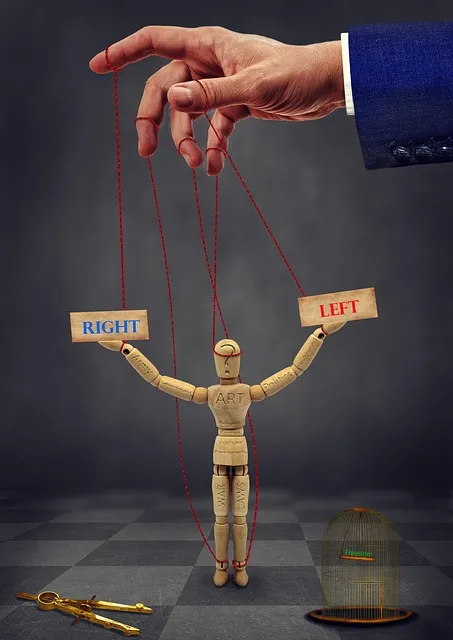
The mainstream recovery content will tell you to “honor your feelings,” “create space for grief,” and “practice radical self-compassion.” Some of it will suggest you were traumatized and need to work with a licensed therapist for years before you can function again. A subset of it will tip into ideology — framing your experience through gender-political lenses that either make you a victim of patriarchy or a fool for not seeing the signs sooner.
None of that is what you need. What you need is an accurate map of what happened to you, a clear-eyed understanding of how it happened, and a systematic protocol for rebuilding the one thing that was actually taken from you: your identity.
Craig Malkin, a Harvard-affiliated psychologist and the author of Rethinking Narcissism, makes a distinction that most people miss. He points out that narcissism exists on a spectrum — what he calls the “narcissism spectrum” — and that the most dangerous forms are not always the loudest or the most obviously grandiose. The covert narcissist, the vulnerable narcissist, the communal narcissist who performs altruism as a dominance strategy — these are the profiles that most often destroy men who consider themselves perceptive. Because you’re looking for the loud villain. You’re not looking for the person who weeps at the right moments, who makes you feel like a rescuer, who deploys your empathy as a weapon against you.
Ramani Durvasula, a clinical psychologist and professor at California State University Los Angeles, whose book Should I Stay or Should I Go is one of the few serious clinical resources that doesn’t devolve into either victimhood culture or pop-psychology theater, frames it this way: narcissistic relationships don’t destroy your life in one blow. They destroy it through a thousand small recalibrations, each of which seems reasonable in isolation, until you look up one day and don’t recognize the terrain.
That’s where Marcus was. That’s where a lot of men are when they finally find this content. And the goal of today’s episode is not to make you feel validated. It’s to give you a protocol — the Identity Reclamation Protocol — that treats your recovery as an engineering problem, because men like Marcus respond to systems, not sympathy.
What Actually Happened to You: The Mechanism
Let’s start with the mechanism, because you cannot fix a problem you don’t accurately understand.
Patrick Carnes, a psychologist whose work on betrayal bonds remains among the most clinically rigorous in this space, describes the core dynamic as this: narcissistic relationships operate through intermittent reinforcement. Not constant cruelty — intermittent reinforcement. The unpredictable alternation between intense reward and withdrawal creates a neurological attachment pattern that is, according to Carnes, functionally indistinguishable from the attachment pattern created by addiction.
This is not a metaphor. This is neuroscience. The dopaminergic reward system in the human brain responds more powerfully to unpredictable reward than to consistent reward. A slot machine keeps you at the lever longer than a machine that pays every time. A relationship that cycles through idealization, devaluation, and intermittent warmth creates a compulsive seeking behavior in the victim. You keep trying to get back to the idealization phase. You keep adjusting your behavior, shrinking your needs, abandoning your standards, because somewhere in the reward history of the relationship, there was a version of this person who made you feel extraordinary — and you are biologically wired to pursue that reward even as the punishment escalates.
Sandra Brown’s research, originally framed around women who love psychopaths but entirely applicable to men in similar dynamics, identifies what she calls “super traits” — characteristics that actually make high-functioning, conscientious men more vulnerable, not less. Conscientiousness. Empathy. Loyalty. The same qualities that make you a good father, a good engineer, a good friend, are the qualities that a narcissistic partner will identify, exploit, and eventually weaponize against you.
Your loyalty becomes leverage. Your empathy becomes a supply channel. Your conscientiousness becomes a mechanism for self-blame. Every time something goes wrong in the relationship, your brain — trained by a lifetime of solving problems through harder work and better judgment — runs the same calculation: What did I do wrong? What can I fix? How can I do this better?
The answer the narcissist is always providing, explicitly or implicitly, is: You. It’s you. Fix yourself.
And because you are a man who takes responsibility, because you were raised to believe that good men don’t make excuses, because you have internalized a standard of accountability that is genuinely admirable in non-abusive contexts — you believe it. And you shrink. And you keep shrinking. Until one day you don’t know what you actually think, what you actually want, or who you actually were before all of this started.
That is identity erosion. And it is the central wound of narcissistic abuse for men.
George Simon, a clinical psychologist who has spent decades working with both manipulators and their targets, adds a dimension to this picture that is underrepresented in the popular literature. Simon distinguishes between covertly aggressive personalities — who use subtle, underhanded tactics to get what they want while maintaining a socially acceptable exterior — and the openly grandiose narcissist that most people imagine when they hear the word. The covertly aggressive partner does not look threatening. They look charming, sometimes even self-deprecating. They win your trust specifically by appearing non-threatening, and they maintain control not through overt intimidation but through what Simon calls “impression management” — the constant calibration of how they appear to their target and to others around them. The man who has been with a covertly aggressive partner often cannot describe a single obviously abusive act. What he can describe is a decade of feeling confused, blamed, and progressively less himself, with no single identifiable cause.
Case Study: The High-Functioning Victim Nobody Sees

He had learned — not consciously, but through nine years of negative reinforcement — that having preferences created conflict. That expressing a want was the first step in a sequence that ended with him apologizing for his selfishness. That disagreeing with his wife’s interpretation of events was evidence of his emotional immaturity. He had been told, in moments of argument that always ended with him somehow the defendant, that he was “too logical,” “emotionally unavailable,” “unable to really connect.”
The gaslighting — and let’s use that word clinically, not as a social media buzzword, but as the specific pattern of systematic denial of perceived reality that Lundy Bancroft documents in forensic detail in Why Does He Do That, adapted here for male victims — the gaslighting had been so thorough that Daniel genuinely doubted his own perceptions. He was an emergency physician. He made life-or-death calls in real time under pressure. And he had been conditioned to believe that in the domain of his own marriage, his judgment was fundamentally unreliable.
The breaking point came not from any single dramatic event but from a conversation with a colleague — another physician who had gone through something similar — who said to Daniel: “When’s the last time you had an opinion about something that didn’t feel dangerous?”
Daniel thought about it for a full thirty seconds. He couldn’t remember.
That’s the diagnostic test. Not “was she mean to me?” Not “did she cheat?” Those questions matter, but they’re not the core question. The core question is: do you still have a self? Do you still know what you think, what you want, what you value, independent of whether it will cause a problem?
If you have to think about it for thirty seconds, you already have your answer.
What is particularly striking about Daniel’s case is that it was invisible to everyone around him. His colleagues saw a competent, decisive physician. His friends saw a quieter version of who he had been in his twenties, but attributed that to marriage and professional pressure. His wife, in social settings, was warm and funny and slightly solicitous of him in public in a way that read as affectionate. Nobody saw the private accounting. Nobody saw that every decision about where to eat dinner, what to do on weekends, how to spend money, which friends to maintain contact with had been progressively consolidated into her control through a process so gradual and so expertly managed that Daniel himself could not identify when it had started or how it had progressed.
Case Study: The Financial Architect
Michael was fifty-three when his third marriage ended. He was a financial planner with three decades of experience building wealth strategies for high-net-worth clients. He understood compound interest, risk management, diversification, and the psychology of financial decision-making. He had advised clients on protecting themselves from exactly the kind of asset stripping that had, over twelve years with his third wife, removed approximately eight hundred thousand dollars from his estate through a combination of lifestyle inflation, undisclosed personal expenses, and a business venture that she had initiated, controlled, and dissolved in ways that were technically legal and practically devastating.
Michael’s professional expertise had not protected him. It had, in a specific way, been turned against him. His third wife had identified early in the relationship that his professional identity was built on competence and certainty — on always having the answer, always being the most informed person in the room. She had positioned herself as someone who needed his expertise, who was learning from him, who admired his capacity in a domain she claimed to find impenetrable. This positioning had kept him in a role of teacher and protector in their financial relationship. He was not evaluating her financial behavior with professional skepticism. He was managing the relationship between his expertise and her deference. By the time the deference revealed itself as a strategy, the architecture had long been in place.
George Simon’s framework of covert aggression is illuminating here: the covertly aggressive person does not attack your strength. They neutralize it. They position themselves in relation to your strength in a way that takes it off the board as a protective mechanism. Michael’s financial acuity was neutralized by the relational dynamic that made deploying it feel like treating a partner as a suspect. The same empathy and relationship-preservation instinct that make good men good partners are the mechanisms by which their protective tools are dismantled.
The Betrayal Bond: Why You Can’t Just Walk Away

This is not how betrayal bonds work. Patrick Carnes’s research on betrayal bonding — a concept he developed through decades of clinical work with trauma survivors — establishes clearly that the intensity of the bond is not correlated with the quality of the relationship. It is correlated with the intensity of the trauma. High-stress, high-conflict, intermittently rewarding relationships create stronger neurological bonds than stable, loving ones. This is counterintuitive. It feels wrong. Men in particular feel tremendous shame about it, because they believe that a strong man would simply decide to be done and be done.
The research does not support this. The research says that leaving a narcissistic relationship is not primarily a decision. It is a withdrawal process. And like any withdrawal process, it requires structure, support, and a realistic timeline.
Malkin’s clinical framework identifies what he calls the “echo trap” — named after the mythological figure Echo, who could only repeat what Narcissus said. In the echo trap, the victim has spent so long reflecting the narcissist’s reality, validating the narcissist’s narrative, and suppressing their own perceptions that they lose the capacity to generate their own reality independently. When the relationship ends, the victim experiences not just the pain of loss but the disorientation of having no internal compass.
The narcissist’s voice — the critical, demanding, ever-disappointed voice — becomes indistinguishable from the victim’s own internal monologue.
That voice that says you’re too sensitive, you’re too needy, you’re too much, you’re not enough — after years in a narcissistic relationship, you don’t hear that as her voice anymore. You hear it as the truth.
This is the first and most critical problem the Identity Reclamation Protocol is designed to address.
Carnes’s betrayal bond research is particularly important for understanding why contact severance — the subject of Phase One of the protocol — is so difficult and so necessary. He found that survivors of high-intensity betrayal bonds, even when they cognitively understand the nature of the relationship, show physiological attachment responses to their abuser that are structurally similar to the attachment responses documented in intermittent-reinforcement addiction studies. The body does not distinguish between a person who made you feel good and a substance that made you feel good. Both activate the same dopaminergic seeking systems. Both produce withdrawal when access is removed. Both produce relapse under conditions of high stress or direct contact with the source. Understanding this does not eliminate the pull. It correctly frames the pull as a withdrawal response rather than as evidence that the relationship was valuable and should be reconsidered.
The Identity Reclamation Protocol: An Overview
- Contact Severance.
- Narrative Forensics.
- Voice Recovery.
- Social Infrastructure Rebuild.
- Identity Archaeology.
- Standard Reconstruction.
- And Re-entry Architecture.
The Identity Reclamation Protocol is a seven-phase framework. I want to be clear about what a framework is and isn’t. It is not a timeline. It is not a promise that if you do these things in this order, you will be fine by a specific date. It is a structural map — a set of domains to work through systematically, in roughly sequential order, with the understanding that real human recovery is not linear and you will cycle back through earlier phases as you progress through later ones.
The seven phases are:
Each phase has a specific goal, specific failure modes, and specific indicators that tell you you’re ready to move to the next one. Let’s go through each one.
Phase One: Contact Severance

Durvasula is unequivocal on this point: narcissistic people do not respond to relationship endings the way most people do. They do not accept them. They respond with hoovers — named after the vacuum cleaner, because the goal is to suck you back in. The hoover may take the form of sudden profound change (“I’ve been seeing a therapist and I finally understand what I’ve done”), crisis (“I’m in the hospital”), legal harassment, weaponized children, economic pressure, or social-network infiltration. Each of these is a mechanism for reestablishing contact, and each instance of contact resets the neurological withdrawal process.
Contact severance means: no calls, no texts, no emails, no social media monitoring, no asking mutual friends for updates, no driving past the house. If you share children — and this is where the protocol gets genuinely hard — contact is strictly limited to written communication about logistics, using a platform like OurFamilyWizard or similar, with nothing personal, nothing emotional, nothing that provides a foothold for re-engagement.
The men who resist this phase the most are the ones who believe they are strong enough to manage contact without being affected by it. They are almost universally wrong. Not because they are weak. Because the attachment system in the human brain is not under voluntary control. You cannot willpower your way out of a withdrawal response any more than you can willpower your way out of being cold. Contact severance is infrastructure, not a test of resolve.
The indicator that you’ve completed Phase One is not that the desire for contact disappears. The desire may not disappear for months or years. The indicator is that you have constructed a reliable barrier between the desire and the action, and you have maintained it consistently for at least ninety days.
There are situations in which complete contact severance is impossible — shared custody, shared business interests, court proceedings. In these situations, the goal is managed minimal contact: communication that is structured, written where possible, strictly logistics-focused, and reviewed before sending with a specific question: does this message provide any emotional information, any opportunity for manipulation, or any signal of continued emotional engagement? If the answer to any of those is yes, revise before sending. The standard is not perfection under these conditions. The standard is consistent, systematic reduction of every vector through which the former partner can reactivate the attachment dynamic.
Phase Two: Narrative Forensics
Marcus, the structural engineer, had a particular problem in Phase Two that is common to high-achieving men. He kept analyzing the relationship as if there were a logical explanation — a reason she had done this, a mistake he had made that had caused it, a specific decision point he could trace back to the origin of the problem.
Narrative forensics is not about finding the explanation. It is about building an accurate account — not a self-punishing account, not an exculpatory one, but an accurate one — of the relationship’s arc. The specific goal is to identify the moments of identity compromise: the points at which you abandoned a standard, suppressed a perception, or shrank a boundary because the cost of maintaining it had been made prohibitively high.
This is not the same as self-blame. Bancroft’s clinical framework makes a crucial distinction: understanding how you were manipulated is not the same as accepting responsibility for being manipulated. A structural engineer who can explain exactly how a bridge was sabotaged is not blaming himself for the sabotage. He is gathering information he needs to design better infrastructure going forward.
The narrative forensics exercise is this: write the relationship’s history in three columns. Column one: what happened. Column two: what you told yourself at the time. Column three: what you now understand was actually happening. The gap between columns two and three is not evidence of stupidity. It is a map of the cognitive distortions that were installed through systematic manipulation.
When Daniel did this exercise, he discovered something that shook him more than anything else in his recovery: he couldn’t identify the relationship’s beginning from an honest account of the first three months. The early idealization — the intensity, the specialness, the sense that she understood him in ways no one else ever had — had been so powerful that he had suppressed every early warning signal. Not because he was naive. Because the reward of being idealized was powerful enough to override his judgment.
Malkin calls this “the seduction of specialness” — the narcissist’s ability to make their target feel uniquely seen and valued, which creates such a powerful initial bond that early red flags are rationalized away. Understanding this mechanism — really understanding it, not just intellectually acknowledging it — is the work of Phase Two.
The second purpose of narrative forensics is identification of the “rationalization stack” — the specific sequence of justifications and self-persuasions that kept you in the relationship through each escalation of the pattern. Most men who do this exercise honestly find a remarkably consistent logic: each time the behavior escalated beyond what they had previously tolerated, they constructed an explanation that made staying reasonable. The explanation was often sophisticated and often partially correct — she was under stress, there were good reasons for her behavior, she had shown capacity for something better and would return to it. The rationalization stack is not evidence of gullibility. It is evidence of the specific cognitive architecture that the narcissistic dynamic is designed to exploit: the loyalty, the problem-solving orientation, the willingness to give benefit of the doubt that are genuine virtues in functioning relationships and weapons in dysfunctional ones.
Phase Three: Voice Recovery

After years of a relationship in which expressing a genuine opinion or need reliably produced punishment — argument, withdrawal, contempt, manipulation — the brain learns to suppress authentic expression before it reaches conscious awareness. You stop knowing what you think, because thinking something leads to saying it, and saying it leads to consequences, so it’s safer not to think it at all.
This is not a metaphor. This is a conditioned inhibition, and like all conditioned inhibitions, it persists beyond the conditions that created it. You leave the relationship and the suppression mechanism remains. You find yourself unable to say what you want at a restaurant. Unable to express a preference about weekend plans. Unable to disagree with a friend about something trivial. The suppression is generalized.
Voice recovery is not about “processing emotions.” It is about practicing authentic expression in low-stakes environments until the suppression mechanism begins to relax. This means: having opinions about small things. Disagreeing with people. Saying what you actually want to eat. Telling a friend you didn’t like the movie. These feel trivial. They are not. They are reps. You are rebuilding the neural pathways for authentic self-expression that were progressively shut down over the course of the relationship.
The indicator for Phase Three is not that you feel completely comfortable expressing yourself. It is that you can express a genuine opinion or preference in a low-stakes situation without it triggering the same physiological response — the bracing, the calculation, the anticipatory shutdown — that it triggered in the relationship.
A related component of voice recovery that deserves specific attention is the restoration of internal monologue. Men who have been in narcissistic relationships for extended periods often report that their interior voice has shifted to sound like their former partner — critical, evaluative, dismissive. The internal monologue that is supposed to be yours, the voice through which you process experience and form opinions, has been colonized. Voice recovery in this deeper sense means identifying the specific phrases, criticisms, and dismissals that belong to her and learning to hear them as her voice rather than as your own thoughts. This is not a quick process and it is not comfortable. It requires a level of interior attention that men are generally not trained for. But it is essential, because as long as her critical voice is operating as your internal voice, every act of self-expression is still being evaluated by her standard.
Case Study: The Social Disappearance
James was thirty-eight when his marriage ended. He had been with his wife since they were twenty-six. In the twelve years of the relationship, he had lost — lost is the right word, they didn’t leave, they were systematically excluded — his five closest friends from his twenties, his relationship with his brother, his involvement in the Brazilian jiu-jitsu gym he had trained at for four years before meeting her, and his habit of reading for two hours every night, which she had described, in the early years, as “antisocial” and, in the later years, as evidence that he “didn’t value the relationship.”
When James looked up at thirty-eight and took inventory, he found a social world that consisted of: his colleagues at work (cordial, not close), two couples they had befriended as a couple (who sided with his wife in the divorce), his mother (who didn’t know what to say), and a group chat from his college days that had been mostly silent for three years.
The social isolation that characterizes narcissistic relationships is not accidental. Durvasula’s clinical analysis identifies isolation as a key mechanism of control — not always conscious, not always deliberate, but functionally consistent across cases. The target is separated from the social infrastructure that might provide reality-checking, support, or an external perspective that contradicts the narcissist’s narrative. Without that external infrastructure, the only reality you have access to is the one being constructed for you inside the relationship.
James’s Phase Four work — Social Infrastructure Rebuild — was also the most immediately impactful for his recovery. Not because connection magically fixed him, but because being around people who knew him as himself, rather than as someone’s husband, reminded him that the self he had abandoned was still there, had always been there, and was recognizable to people who predated the relationship.
His brother picked up the phone. The jiu-jitsu coach said, “It’s been a while. Come in.” Those weren’t small things. They were the first evidence James had that the self he had been told was defective was, from any external perspective, perfectly intact.
The isolation mechanism deserves a more detailed examination because it is often the element of narcissistic control that men find hardest to see clearly from inside the relationship. It rarely presents as explicit prohibition. It presents as: “Your friends don’t really understand you the way I do.” “Your brother has never been fully supportive of you.” “That gym takes time away from us and we need this time.” “I feel like you care more about them than about our relationship.” Each of these is a reasonable-sounding concern that a caring partner might raise in a functioning relationship. In the context of a narcissistic dynamic, they are systematic disconnection from every relationship that might offer an alternative perspective on what is happening. By the time the isolation is complete, there is no one left who knows you well enough to notice what has been done to you. That is the design.
Phase Four: Social Infrastructure Rebuild

Carnes’s research on trauma recovery identifies social connection as the single most powerful protective factor against both the development and persistence of trauma responses. This is not about “having someone to talk to.” It is about the co-regulatory function of human social contact — the way that being in proximity to safe, known, trusted humans literally regulates the nervous system in ways that nothing else can replicate.
The social infrastructure rebuild has three components. First: reconnection with pre-relationship contacts. Not because those people are obligated to receive you, but because relationships that predate the narcissistic relationship are not contaminated by its narrative. Your old friends knew you before you were told you were fundamentally defective. Their perception of you is data that contradicts the installed narrative.
Second: new connections built around activity, not conversation. Men rebuild social connection most effectively through parallel activity — shared physical or creative endeavor in which connection is a byproduct rather than the stated purpose. Training together. Building something together. Playing sport together. The vulnerability of connection is more manageable when it is ambient rather than direct.
Third: at least one relationship in which honest disclosure is possible. This does not mean a therapist, though therapy can serve this function. It means one person — a friend, a sibling, a mentor — who can hear what actually happened and respond without either dismissing it or amplifying it into victimhood. The function of this relationship is reality-testing. You need at least one person who can tell you when the internalized narcissist’s voice is speaking and you’re mistaking it for truth.
The rebuild timeline is longer than most men expect. James took his jiu-jitsu coach’s offer. He went in once, felt strange, almost didn’t go back. He went back. By month three he was training regularly and had rebuilt acquaintance-level relationships with several men at the gym. By month six, one of those acquaintances had become the first person he had genuinely called a friend since his twenties. The timeline was not three months. It was six months to the first real friendship, and it began with showing up to something that felt uncomfortable, repeatedly, until it didn’t.
Phase Five: Identity Archaeology
This is the phase most men find simultaneously most important and most uncomfortable. Identity archaeology is the structured process of recovering the self that existed before the relationship, while integrating what you’ve learned during it.
The framing that resonates with most men I’ve worked with is this: the relationship didn’t create your deficits. It exploited them. The things that made you vulnerable — the difficulty expressing emotional needs, the tendency to solve problems rather than feel them, the loyalty that overrides self-protection, the belief that if you work hard enough you can fix anything — those things existed before her. Some of them are genuine strengths that were weaponized against you. Some of them are genuine gaps that need development.
The work of identity archaeology is sorting between the two.
The practical exercise: write two lists. The first list is titled “Who I Was Before.” Not an idealized version — an honest account. What did you value? How did you spend time voluntarily? What were you good at? What were you working on? What were you curious about? The second list is titled “What I Learned About My Gaps.” Not what she told you your gaps were — that list is almost entirely projection. What you actually discovered about yourself: the real difficulty with emotional expression, the real tendency toward conflict avoidance, the real pattern of prioritizing others’ comfort over your own judgment.
The intersection of those two lists is your starting point. The man who emerges from this process is not the man you were at twenty-five before the relationship. He is a more complete version — the one who has the foundation from before, plus the self-knowledge that only a serious crucible can produce.
The goal of recovery is not to return to who you were. The man you were before was partly the reason the relationship was possible. The goal is to become the man who is too grounded, too self-aware, and too clearly boundaried to be taken apart again.
Identity archaeology requires confronting a specific and uncomfortable truth: you had a role in the dynamic. Not in the sense of responsibility for being abused — you did not deserve it and could not have deserved it. But in the sense that the specific vulnerabilities that were exploited were real vulnerabilities, and they preexisted the relationship, and they will still be there when the next relationship begins unless you identify and address them. The man who completes Phase Five understands exactly what his gaps were, has done specific work on the most critical ones, and can now recognize — in real time, in a new relationship’s early stages — when those gaps are being targeted rather than when they are organically present in a relationship that is genuinely good for him.
Phase Six: Standard Reconstruction
- Self-expression (you stop saying what you think).
- Time and energy allocation (you stop investing in things that matter to you).
- And reality perception (you stop trusting your own interpretation of events).

Before the relationship, if you had standards, they were probably implicit. You knew what was acceptable and what wasn’t, but you hadn’t necessarily articulated it, tested it under pressure, or made it explicit enough to defend. That’s how most people operate. And it works fine until someone comes along who is specifically skilled at finding the gaps in implicit standards and gradually expanding them.
Standard reconstruction means making your standards explicit, writing them down, and treating them as commitments rather than preferences. Not as rules imposed from outside, but as expressions of who you are. When someone crosses a standard — tests it, pushes on it, makes you feel that holding it is unreasonable — your response is not negotiation. It is information gathering. You now know something about this person that is relevant to how much of yourself you will invest in them.
Durvasula’s clinical framework identifies three domains in which standards most commonly collapse in narcissistic relationships:
Standard reconstruction addresses all three.
For self-expression: I will say what I actually think in any relationship I have. The response I receive to my honest expression is data about the relationship. It is not an instruction to revise my expression.
For time and energy: I will maintain at least one domain — physical training, creative work, professional development, whatever — that belongs entirely to me and is not subject to negotiation. Not because I’m selfish, but because a man with no domain of his own is not a whole person and cannot be a full partner.
For reality perception: my perceptions are valid data. They may be wrong. They may require updating in light of new information. But “I perceive X” is the beginning of a conversation, not an error requiring correction.
There is a specific standard that deserves its own articulation because it is the one most frequently compromised in narcissistic relationships and the one most resistant to reconstruction: the standard that your inner life is your own. Your thoughts, your interpretations, your memories of events are yours. They may be imperfect. They may benefit from other perspectives. But they cannot be overwritten by a partner’s assertion that you are wrong about your own experience. The man who leaves a narcissistic relationship must rebuild, from the ground up, the baseline conviction that his experience of reality is authoritative data about his experience of reality. This sounds obvious. After years of systematic gaslighting, it is not obvious at all. It is the work.
Case Study: Re-entry After Catastrophe
- First, a one-year moratorium on new romantic relationships — not because he was broken, but because he needed twelve months of operating as a fully independent person to establish a baseline of what his life looked, felt, and tasted like without the gravitational pull of a relationship to organize around.
- Second, a specific list of behaviors — not red flags in the abstract, but the specific behaviors that had appeared in the first three months of both previous relationships, which he had explained away both times.
- Third, a trusted advisor — his brother, who had watched both relationships from the outside — who had explicit permission to say “this is the pattern” if he saw it forming again.
Robert was fifty-two when his second relationship with a narcissistic partner ended. The first had been his marriage in his thirties; the second had been a five-year cohabitation that had begun eight months after his divorce was finalized — before, as he now understood, he had done any real recovery work.
The pattern that Malkin describes as “narcissistic selection bias” — the tendency of people who have been in narcissistic relationships, without doing recovery work, to select into another one — had operated exactly as predicted. Robert had been drawn to the same qualities: the intensity, the exceptional attention, the sense that she truly saw him in a way that ordinary relationships didn’t. He had not recognized that what he was identifying as depth was actually skilled mirroring — a core narcissistic behavior in which the target is shown a reflection of their own best self.
At fifty-two, with two collapsed long-term relationships behind him and a daughter who was increasingly distant because she had watched her father disappear into his relationships, Robert was not in crisis about being alone. He was in crisis about the possibility that he would do it again. That the pattern was him. That the problem was him.
The work of Phase Seven — Re-entry Architecture — is exactly this problem. Not “how do I find someone good?” but “how do I build the structural conditions that prevent me from unconsciously selecting the same dynamic again?”
Robert’s re-entry architecture had three elements.
The one-year moratorium was the hardest element for Robert to commit to. He was fifty-two. He wanted a partner. The moratorium felt like a punishment. He implemented it not because it felt right but because the alternative — another five-year investment in the same dynamic — was a cost he could now calculate clearly. At the end of the year, he had built enough of an independent life that he was not entering the next relationship from a position of hunger. He was entering it from a position of completeness that did not require validation. The difference that made in who he attracted and what he found attractive was, in his words, “so obvious I can’t believe I didn’t see how starved I was before.”
Phase Seven: Re-entry Architecture

The architecture has four components. The first is timeline: enough time in independent functioning that your baseline is established. For most men, this is a minimum of twelve to eighteen months after genuine contact severance. Not twelve months of hoping she’ll come back. Twelve months of actually building a life that is genuinely satisfying independently.
The second is behavioral documentation. Write down, specifically, the behaviors from the previous relationship that you should have acted on and didn’t. Not general red flags you read about online — the specific behaviors. Early contempt disguised as humor. Subtle isolation tactics. The moment when your perception of an event was first systematically contradicted. These are your personal diagnostic criteria. Any new potential partner who displays them early is showing you something you are now equipped to read accurately.
The third is deceleration discipline. The narcissistic relationship almost certainly moved fast. The idealization phase is designed to create rapid, intense attachment before you have enough information to make a clear-eyed assessment. Re-entry architecture includes a commitment to a slower pace — not because slow is always better, but because your specific vulnerability is to intensity marketed as intimacy. Real intimacy is built over time through consistency, not through the overwhelming early rush that previously felt like recognition.
The fourth is social vetting. Any significant new relationship should be integrated into your social network within a reasonable time. You introduce her to your friends. You pay attention to how your trusted people respond. Not because their opinion overrides your judgment, but because the people who knew you before the previous relationship can sometimes see patterns in someone’s behavior toward you that you cannot see from inside the dynamic.
The deceleration discipline component requires more attention because it runs directly counter to the experience that men who have been in narcissistic relationships have been trained to identify as love. The early phase of the narcissistic relationship — the bombing with attention, the rapid declarations of deep understanding, the intensity that feels like finally being truly seen — is indistinguishable, from the inside, from what it produces: genuine, powerful attachment. The man who has been through this once is not inoculated against it happening again. He is primed for it, because his attachment system now associates that specific intensity with love itself. The re-entry architecture is designed to create time and structure between the encounter of that intensity and the decision to invest deeply — enough time to observe consistency, to notice behavior under pressure, to see how the other person treats people who have nothing to offer them, to let the intensity either deepen into something genuine or reveal itself as performance.
The Internalized Narcissist: The Work Nobody Talks About
Here is the part that most recovery content skips, because it’s uncomfortable, and because the recovery content industry is largely built on validation rather than confrontation.
After years in a narcissistic relationship, the narcissist’s voice becomes your own. The contempt, the criticism, the never-quite-enough standard — you no longer need her to apply it. You apply it to yourself, automatically, relentlessly, with a precision she never quite achieved because at least she had to do the work consciously. Your internal version is always on, always watching, always finding the evidence that you are, in fact, too much and not enough simultaneously.
This internalized critic is not a mental illness. It is a conditioned pattern. And like all conditioned patterns, it responds to systematic counter-conditioning. The work is not to silence the critic — trying to silence it gives it power. The work is to develop the capacity to hear it without treating it as authoritative.
Malkin’s framework refers to this as “developing an internal observer” — the capacity to notice the critical voice, identify its origin, and consciously choose whether to accept or reject its assessment. This is not positive thinking. It is critical thinking applied inward. When the voice says you were never good enough for her, the observer responds: that voice was installed by someone who needed me to believe that. I’m going to evaluate it by the same standard I’d apply to any other claim. What’s the evidence? What’s the counter-evidence? What would I tell a man I respected if he said this to himself?
The process is slow. It takes months, not days. But it is the most fundamental work of the entire protocol, because until the internalized critic’s authority is challenged, every other phase of recovery is being evaluated by the narcissist’s standard. You’re building a new identity and letting her judge whether you’ve done it right.
A specific practice that accelerates this work: keep a short daily log of critical internal statements. One entry per day: write down one self-critical thought that arose, identify whose language it sounds like, and write one factual counter-statement — not an affirmation, a factual statement. “I am fundamentally inadequate” becomes: “I have done several things today that required competence and that produced results. The statement ‘fundamentally inadequate’ is a global negative assessment that is inconsistent with the specific evidence available.” This is not inspirational. It is forensic. You are auditing the internalized critic’s claims against available evidence. Over weeks, the audit process becomes faster. Over months, the automatic generation of the critical claim itself begins to slow, because the neural pathway that used to run uncontested is now consistently interrupted.
What Bancroft Gets Right That Most Don’t
Lundy Bancroft spent decades working with abusive men — counseling them, evaluating them for courts, trying to understand what actually drives abusive behavior. His insights on the abuser’s psychology are therefore uniquely authoritative, and when adapted for the perspective of male victims, they provide something most resources don’t: a clear account of the abuser’s internal logic.
Bancroft’s central finding, adapted for this context, is that narcissistic abuse is not primarily driven by pathology. It is driven by entitlement. The narcissistic partner believes — deeply, functionally, operationally, even if not consciously articulated — that they are entitled to have their needs met above all others, entitled to have their perception of reality accepted as authoritative, entitled to respond with punishment when their expectations are not met.
This matters for male victims because it answers the question you keep asking yourself: Why? Why did she do this? What was wrong with her? Was she sick?
The answer, according to Bancroft’s framework, is that she did it because she believed she was entitled to. Not because she was sick in the way a broken leg is sick. Because she had a belief system — about her own importance, about your role, about what she was owed — that produced the behavior. Understanding this doesn’t make it okay. But it removes the mystery, and it removes the implicit question that haunts most male victims: Could I have fixed it? Was there something I could have done differently?
The answer is no. Not because you were perfect. But because the behavior was not a response to your inadequacy. It was an expression of her entitlement. No amount of improvement on your part would have resolved an entitlement that was never contingent on your performance.
Bancroft’s framework also illuminates the “therapeutic-speak” defense that many narcissistic partners deploy when confronted: the sudden discovery of their childhood trauma, the claims of having finally found a therapist who understands them, the deployment of psychological vocabulary to reframe control as hurt and manipulation as fear. Bancroft’s clinical experience makes him deeply skeptical of change in people whose abuse is entitlement-based rather than trauma-based. Entitlement does not respond to therapy in the way that trauma does, because entitlement is not an injury — it is a worldview. A person who believes they are owed deference does not discover in therapy that they were wrong. They discover in therapy a new and more sophisticated vocabulary for maintaining their worldview while appearing to have grown.
The Masculinity Trap Within the Trap
There is a specific dimension of narcissistic abuse recovery for men that receives almost no attention in the mainstream literature because it requires confronting something that is genuinely uncomfortable: the way that certain masculine cultural values made the abuse possible, and the way that those same values make recovery harder.
The values in question are not toxic. They are genuinely admirable in functioning contexts. Accountability — the willingness to take responsibility for your actions and their consequences. Stoicism — the capacity to endure difficulty without complaint. Self-reliance — the preference for solving your own problems rather than seeking external help. Loyalty — the commitment to the people and institutions you have chosen.
In a narcissistic relationship, accountability becomes the mechanism by which you accept responsibility for things that are not your fault. Stoicism becomes the mechanism by which you endure escalating mistreatment without identifying it as mistreatment. Self-reliance becomes the mechanism by which you avoid the external perspective that might challenge the narrative being constructed about you. Loyalty becomes the mechanism by which you stay far past the point at which any clear-eyed assessment would tell you to leave.
Recovering from a narcissistic relationship requires not abandoning these values but recalibrating when they apply. Accountability applies to your actual actions, not to events that were not your doing. Stoicism applies to genuine hardship, not to mistreatment that should be named and addressed. Self-reliance is appropriate for problems that are yours to solve, not for problems that require external input to even be seen clearly. Loyalty applies to people who are operating in good faith, not to people who are exploiting it.
The recalibration is not about becoming a different kind of man. It is about deploying your existing values with more precision — saving them for the situations they are actually designed for, rather than applying them uniformly to situations in which they function as vulnerabilities.
Internal Resources and Continuing Work
The Identity Reclamation Protocol described in this episode is the framework. The actual work happens in the doing of it — in the daily practice of the narrative forensics, the voice recovery exercises, the social infrastructure building, the standard articulation, and the internalized critic auditing. It is not a quick process and it is not a comfortable one. It is, however, a structured one. And for men who respond to structure — men like Marcus, like Daniel, like James and Robert — structure is the beginning of recovery.
Several other episodes address the adjacent territory. Episode 64 on Learned Helplessness addresses the specific pattern that narcissistic relationships often produce — the generalized conviction that your actions cannot change your outcomes — with a protocol for rebuilding agency from the ground up. Episode 63 on The Provider Trap examines how over-identification with the provider role can make men specifically vulnerable to the dynamics described here. Episode 65 on Why Men Don’t Ask for Help addresses the cultural barriers that prevent men from accessing the resources that could have interrupted these patterns earlier. The Resilience Principles section provides the foundational framework for the psychological robustness that makes future vulnerability of this kind less likely. And the Mindset Tools section contains the practical frameworks for the cognitive work that several phases of this protocol require.
Marcus got his money back, some of it, through a settlement that took two years of legal work. He rebuilt his finances over the following three years. He did not rebuild them the same way — the obsessive, metrics-driven accumulation that had been his primary identity before the relationship was replaced by something more deliberately balanced. He started coaching soccer again. He called his mother more. He moved his calendar block for Thursday evenings from “work — flex” to “non-negotiable off.” He did not do these things because they were easy. He did them because the forensics exercise had shown him precisely how the erasure of his life outside work had created the vacuum into which a narcissistic partner had moved. He was not making himself invulnerable. He was making himself more himself — grounded enough, present enough, full enough in his own life that no single relationship could again become the totality of his world.
That is what recovery produces. Not invulnerability. A self that is too inhabited to be vacated.
FAQ
Q: How do I know if my relationship was actually narcissistic abuse or if I’m just rationalizing a bad relationship?
The distinction matters and it has a specific diagnostic. Bad relationships are characterized by mutual failure, mutual dysfunction, mutual contribution to the problems. Both people behave in ways that damage the relationship and both people bear genuine responsibility. Narcissistic abuse is characterized by a systematic pattern: one person is consistently the source of reality-definition, blame-distribution, standard-application, and rule-enforcement, while the other consistently accommodates, adjusts, shrinks, and apologizes. The test is not whether she was ever wrong — everyone is sometimes wrong. The test is whether there was any mechanism in the relationship by which you could be right when she was wrong. If the answer is consistently no — if every conflict ended with you at fault regardless of what initiated it — that is the pattern. The other test is the identity erosion test: do you still know clearly what you think, what you want, and what you value? If you genuinely cannot answer those questions, something has been done to the person who should be answering them.
Q: I share custody of children with my ex. How do I do no-contact when I have to communicate with her regularly?
You do modified contact, which is fundamentally different from genuine contact. Modified contact means: all communication is in writing, using a co-parenting platform that creates a record. All communication is about logistics — scheduling, medical, school. You do not respond to emotional bait, do not volunteer personal information, do not engage with any communication that is not directly about the children’s logistics. If she calls, you let it go to voicemail and respond in writing if the content is legitimate. You do not explain your responses. You do not justify your decisions. You give information required for logistics and nothing else. This feels unnatural. It is extremely effective. The key insight from Durvasula’s framework: the goal of modified contact is to deny the former partner access to your emotional interior, which is what sustains the dynamic. You can share co-parenting information without sharing your emotional state. Maintaining that distinction is the work.
Q: Everyone in my social circle thinks she is wonderful. How do I deal with my experience being invisible?
This is one of the most specific and painful features of recovering from a covertly narcissistic relationship, and it has a simple and unsatisfying answer: you cannot make your experience visible to people who were not in the relationship. What you experienced happened inside the relationship, in private, in the specific interpersonal dynamic that the public version of her was specifically designed to contradict. The people who saw the public version do not have access to the private version. This is not a problem you can solve by convincing them. Attempting to convince people who are not open to updating their view will drain your energy, position you as bitter or unstable, and give her the narrative she wants. Your energy belongs in the protocol: rebuilding your identity, your social infrastructure, your standards. Let the public narrative go. Build the life that renders it irrelevant.
Q: I keep fantasizing about the early period of the relationship. Is this normal?
Yes, and it is one of the most predictable features of the betrayal bond withdrawal process. The idealization phase was real — it produced real neurochemical states, real experiences of connection, real memories of feeling extraordinary. The brain does not flag those memories as manipulation artifacts. It stores them as positive memories associated with this person. Missing them, fantasizing about their return, selectively retrieving them when you’re in pain — these are all features of the withdrawal process, not evidence that the relationship was actually good or that you made a mistake leaving it. The intervention is not suppression — trying to suppress the memories increases their power. It is contextualization: when the idealization memory arises, you pair it with the forensics data. The extraordinary early feeling was real. The person behind it was managing a specific strategy to produce that feeling, and the evidence of that management is in your three-column forensics document. Both things are true. Hold them simultaneously.
Q: My friends say I should just move on and stop talking about this. Are they right?
Partially. There is a specific failure mode in narcissistic relationship recovery in which processing becomes indefinite and the story of the relationship becomes a permanent organizing narrative rather than a chapter. If you find yourself, eighteen months out, still primarily defined by this relationship in your own mind and still reliably producing the same account of what happened in response to any opportunity — that is the failure mode your friends are identifying. The protocol is designed to prevent it: it has specific phases with specific completion indicators, and Phase Seven specifically addresses re-entry, which means returning to a full life is built into the structure. However, “just move on” without doing the identity work is how you end up in the same dynamic with a different person. The protocol is not indefinite processing. It is specific, bounded work that produces specific outcomes and then ends, leaving you with a rebuilt identity, rebuilt standards, and a rebuilt life.
Q: How do I know when I’m ready to start dating again?
Three indicators, specifically. First: you are not lonely. Your life has sufficient social infrastructure, meaningful activity, and identity grounding that a new relationship would add to it rather than complete it. The man who enters a relationship to fill emptiness is the man who will accept unacceptable terms to maintain occupancy of that emptiness. Second: you can describe, specifically and without emotional flooding, what happened in the previous relationship, what your role in it was, and what you have learned from it. Not in a scripted way — in a way that demonstrates genuine integration rather than either denial or ongoing raw wound. Third: your behavioral documentation from Phase Seven is complete and specific. You know what patterns to look for. You have at least one trusted person in your life who has permission to call out the pattern if they see it forming. When all three are true — not just one or two — you have the structural conditions for a different outcome. Enter when you have the structure, not when you have the feelings.
The Specific Damage to High-Functioning Men
A dimension of narcissistic abuse that deserves more explicit attention than most recovery frameworks provide is what it specifically does to high-functioning, competent men — the engineers, the physicians, the attorneys, the executives — and why the damage in this population is both more severe and more invisible than it is in men whose identity is less tied to competence and certainty.
For men who organize their identity around professional competence, the narcissistic relationship produces a specific and targeted form of identity damage: it attacks the one domain in which they have the most confidence. It doesn’t attack their professional skills directly — it attacks the confidence that their competence and judgment transfer from professional contexts to relational ones. Marcus, the structural engineer, had spent eleven years being told in a thousand different ways that the judgment he deployed successfully in complex engineering problems was somehow inapplicable to the domain of his own marriage. His precision was “coldness.” His analytical approach was “inability to connect.” His systematic thinking was “emotional unavailability.” Each attribution was targeted precisely at the traits that constituted his professional excellence and had been translated into characterological deficits by someone who needed him to believe that his central capacities were actually his central failures.
The damage this does is specific: it teaches highly competent men to distrust the competence they most rely on. Marcus came out of the relationship not just with identity damage in the generic sense but with a specific learned distrust of his own analytical judgment in relational contexts — the very judgment that should have been his most powerful protective tool. The forensics exercise, for men in this position, has an additional purpose beyond the standard narrative reconstruction: it specifically rehabilitates the analytical capacity as a valid and reliable tool in relational contexts. Marcus’s engineering mind, correctly deployed, would have read several early warning signs accurately if it had not been systematically trained to distrust itself in this domain. Rehabilitating that trust — rebuilding the conviction that the analytical tools that work everywhere else also work here — is a specific task within Phase Two for this population.
Durvasula’s clinical framework notes that narcissistic partners often demonstrate what she calls “competence targeting” — the specific identification and neutralization of the victim’s strongest protective assets. The charming, socially skilled partner targeting the socially awkward but professionally brilliant man. The emotionally volatile partner targeting the man whose professional strength is composure and measured response. The intellectually challenged partner targeting the academic or technical professional by framing intellectual rigor as a relational inadequacy. The targeting is not always conscious. But it is functionally consistent: the partner who most threatens the narcissist’s control is the one who is competent, perceptive, and capable of maintaining standards. The neutralization of that competence, in the relational domain, is the first strategic move. The Identity Reclamation Protocol specifically and explicitly reverses that neutralization as part of its core work.
Editorial StandardsCorrectionsMedical DisclaimerAbout Our ContentAffiliate DisclosureSite Map