
Limited hours in the day for learning. That’s the whole constraint. The reading vs podcasts debate isn’t really about which medium is superior — it’s about which one matches how a given man actually processes and retains information.
The short answer: reading wins for depth, podcasts win for breadth. The ideal practice uses both — podcasts for discovery, books for the depth and expertise that actually changes decisions.

Podcasts have exploded because they’re frictionless — learn while commuting, cooking, training. But frictionless consumption isn’t the same thing as effective learning. Reading demands more effort, and that effort is a big part of why it produces different cognitive outcomes.
Worth sizing the shift first. Edison Research’s Infinite Dial survey — the industry’s longest-running measure of American audio habits — has tracked podcast listening since the mid-2000s, back when the format was still a hobbyist RSS-feed curiosity built by Adam Curry and Dave Winer. Monthly podcast listenership in the U.S. has climbed from a rounding error to roughly half the population above age twelve. Not a niche habit anymore. It’s the default way a huge share of men now encounter new ideas, and the scale of that shift is exactly why getting the medium-matching decision right — or wrong — compounds over years, not weeks.
The two mediums also load the brain differently, and that’s not a metaphor — it’s measurable. Reading recruits the visual word form area and forces sequential decoding of symbols into sound and meaning; listening skips that step and goes straight to auditory language processing, which is why toddlers can follow a story years before they can read one. The catch is that the head start listening gets in childhood doesn’t hold. Thomas Sticht’s research for the U.S. Army in the 1960s and 70s — comparing auditory (“auding”) versus reading comprehension across thousands of recruits — found listening comprehension develops earlier and actually exceeds reading comprehension through roughly the sixth grade. Then the lines cross. From adolescence onward, reading comprehension keeps climbing while auding comprehension plateaus, and the gap widens fastest for exactly the material men care about getting right: dense argument, technical vocabulary, syntactically complicated sentences. Adults process complex material better on the page than through the ear. Old finding. Still holds.
Here’s the part nobody tells you: getting this wrong doesn’t just cost time. It can set you back. Men who throw themselves at the wrong approach often build resistance to the right one afterward, because they’ve already “tried everything” — when what they actually tried was the wrong thing, applied with total conviction. Clarity up front saves the frustration later.
What follows: a comparison across the criteria that actually matter for men trying to turn information into real change — retention, depth of understanding, time efficiency, and practical application.
WHAT IS READING?

Literacy researcher Maryanne Wolf, who has spent a career at Tufts mapping what she calls “the reading brain,” makes a point worth sitting with: reading is not a hardwired human capacity the way spoken language is. There’s no reading gene. The brain builds a new circuit for it out of parts originally evolved for vision, motor coordination, and spoken language, and it takes years of practice to wire properly. Once wired, though, that circuit does something listening never quite manages — it frees up cortical real estate for what Wolf calls the deeper reading processes: inference, critical analysis, perspective-taking, the capacity to sit with an author’s argument long enough to actually interrogate it. A man who reads rarely and then picks up a dense book is running that circuit on old tires. Give it repetition and the tires improve.
There’s also a control mechanism at work that has a name in cognitive science: desirable difficulty. UCLA psychologist Robert Bjork’s decades of memory research established that learning conditions which feel harder in the moment — slower, more effortful, requiring active retrieval — often produce dramatically better long-term retention than conditions that feel easy. Re-reading a dense paragraph, stopping to think through an argument, flipping back three pages to check a claim — all of that friction is the mechanism, not an obstacle to it. Podcasts remove nearly all of that friction. Which feels like an advantage right up until the goal shifts from consuming information to actually retaining it.

Podcasts deliver information at conversational pace — faster than most people read, but with less cognitive demand behind it. Ideal for commuting, exercising, any activity where reading isn’t physically possible. Long-form interview shows (Huberman Lab, Tim Ferriss, Lex Fridman) can be extraordinarily content-rich and expose listeners to ideas and thinkers they’d never stumble onto in books. The weakness: passive listening produces what Cal Newport calls the “illusion of knowledge” — feeling informed while retention stays poor, absent active note-taking.
| Reading | Podcasts | |
|---|---|---|
| Cognitive demand | Higher — meaning actively constructed at a slower pace | Lower — conversational pace, more passive |
| Retention | Better for complex, detailed material (per comprehension studies) | Weaker — the “illusion of knowledge” without active note-taking |
| Best for | Deep, retained understanding | Commuting, exercising, exposure to new ideas/thinkers |
Newport’s phrase has an academic cousin that predates it. Yale psychologists Leonid Rozenblit and Frank Keil published a 2002 paper in Cognitive Science on what they termed the “illusion of explanatory depth” — people consistently rate their understanding of how everyday things work (a zipper, a toilet, a helicopter) as far higher than it actually is, right up until they’re asked to explain the mechanism step by step, at which point the illusion collapses. Listening to a well-produced podcast generates a milder version of the same effect. A charismatic host and a fluent guest make an idea feel understood because it was easy to follow along with — not because it was actually absorbed at a level that survives being explained to someone else three days later.
There’s a name for that gap too: fluency. Psychologists Matthew Rhodes and Alan Castel published research in the Journal of Experimental Psychology: General showing that people’s real-time judgments of how well they’re learning something track how smoothly the material is being processed, not how much of it is actually being retained. Smooth, easy, well-narrated content gets rated as “learned” more confidently than it deserves. This is precisely the trap of a good podcast — the better produced it is, the more convincingly it can fool a listener into thinking retention happened when what actually happened was a pleasant hour of passive audio.
Worth a short historical detour, because the tension between these two mediums is not actually new — it just has new packaging. Socrates, by Plato’s account in the Phaedrus, argued against writing itself, worried that offloading memory onto external text would weaken the mind’s own capacity to hold and reason through ideas. He was, in a sense, making the ancient version of the argument now made against podcasts replacing books: that a lower-friction medium erodes a cognitive skill the harder one builds. The irony, well documented by classicists, is that the argument survives only because Plato wrote it down. Every generation seems to distrust whatever medium came after the one it grew up on. Worth remembering before assuming reading itself is some untouchable gold standard rather than simply the medium that happened to dominate for the last five centuries since Gutenberg made books cheap enough to own.
BOOKS AND PODCASTS AS LEARNING TOOLS: THE REAL DIFFERENCES
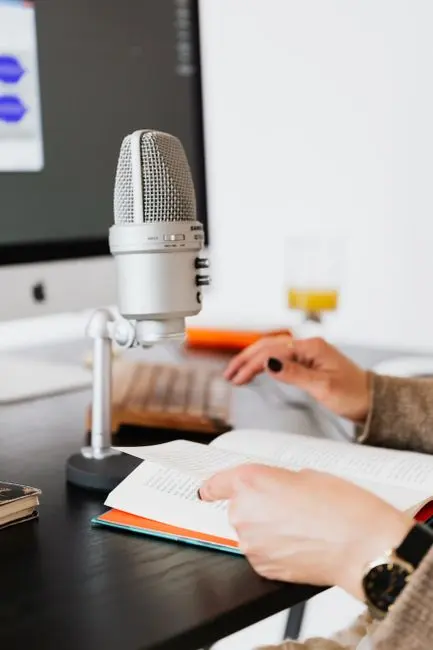
The gap between these two runs deeper than the usual surface-level comparison suggests. Quick orientation first, then the real breakdown — because the decision-making information lives in the detail, not the summary.
THE COGNITIVE SCIENCE OF WHY MODALITY ACTUALLY MATTERS
Before the criteria-by-criteria breakdown, the underlying mechanism is worth naming directly, because it explains why the two mediums keep producing different results even when the content itself is identical. Working memory — the mental workspace that holds information while it’s being processed into long-term memory — is small. Cognitive scientist Nelson Cowan’s 2001 revision of the classic “seven plus or minus two” estimate put functional working memory capacity closer to four chunks at a time. Four. Not a lot of room. Reading lets a person manage that narrow bandwidth actively: slow down on a dense sentence, stop entirely, re-read a paragraph that didn’t land, skip ahead and circle back. Australian educational psychologist John Sweller formalized this in 1988 as cognitive load theory, distinguishing between the load imposed by the material itself and the load imposed by how it’s being processed. Reading lets a person minimize the second kind. Podcasts, delivered at a speaker’s fixed pace with essentially zero ability to pause and reprocess mid-sentence without breaking the flow of a commute or a workout, hand the listener no such control. Complex material either gets in under the wire or it doesn’t, and there’s no rewind button most people actually use in practice.
Worth a genuine steelman here, though, because the research isn’t uniformly one-sided. Beth Rogowsky, along with Barbara Calhoun and Paula Tallal, ran a study published in SAGE Open in 2016 comparing reading, listening, and reading-plus-listening simultaneously on a comprehension quiz given immediately after the material. The finding that got quoted everywhere: no significant difference in comprehension scores across the three conditions. Read the study more carefully and the caveat matters more than the headline. The test was single-sitting, distraction-free, immediate. No delay before the quiz. No competing task like driving or lifting. No real-world noise. Which describes almost nobody’s actual podcast-listening conditions. Take away the quiet room and the immediate quiz, add a commute, a gym, a toddler yelling in the back seat, and a week’s delay before the information needs to be recalled — and the conditions under which reading and listening perform equivalently mostly stop existing. The lab result is real. The real world rarely replicates the lab.
DETAILED BREAKDOWN: WHERE EACH ONE WINS
Information Retention
Reading produces significantly higher retention than listening for most people. The reason is structural: the reader controls pace. Slow down for dense material. Re-read a paragraph that didn’t click the first time. Pause and actually think. Eyes scan back to a reference point earlier on the page. That active engagement — effortful processing, in the cognitive-science term — builds stronger memory traces. Written information also gets processed through spatial memory (where on the page, which chapter), which adds one more retrieval cue that listening simply doesn’t have.
Podcast retention runs lower, generally, because the listener cedes pacing control to the speaker. No pausing on a complex idea while driving. Miss a key point and the conversation has already moved on. The passive nature of listening — especially stacked on top of another activity — reduces how deeply anything gets encoded. Some listeners compensate by re-listening or taking notes, which helps, but it also erases the convenience that drew them to podcasts in the first place.
Take a guy we’ll call Derek, 34, a regional sales manager with a ninety-minute round-trip commute he’d been filling with business and economics podcasts for two years — three, four episodes a week, a real diet of them. He considered himself well-read on macroeconomics without having read a single book on the subject cover to cover. A colleague, half-joking, quizzed him after a shared episode on a specific mechanism the guest had walked through in some detail — how central bank balance sheet expansion actually transmits into asset prices. Derek could recall the guest’s tone, a joke that had landed, the host’s name. He could not reconstruct the mechanism itself, even in rough outline, ninety minutes after hearing what had felt, in the car, like total comprehension. That’s the fluency illusion operating exactly as the research predicts — and it’s a common enough pattern that it’s worth checking against before assuming a commute has been “spent learning” for the last two years.
The spatial memory point in the source material is worth a closer look, because it’s a bigger factor than it sounds. Readers routinely report knowing a fact was “on the left-hand page, about two-thirds down, near a chapter break” — a phenomenon researchers sometimes describe as the location memory effect for physical text. That spatial coordinate acts as an additional retrieval hook alongside the semantic content itself. Audio has no equivalent geography. A fact heard at minute 43 of an episode has no spatial anchor at all — just a fuzzy sense of “somewhere in the middle,” which is a far weaker cue than “bottom of the page, right after the chart.”
Depth of Understanding
Well-written nonfiction presents arguments with a structure and rigor conversation simply can’t match. A 300-page book on one topic delivers context, nuance, counterarguments, and evidence that even a three-hour podcast interview can only scratch. Reading also allows cross-referencing, checking citations, following tangents on the reader’s own terms. For genuinely complex subjects — psychology, biology, philosophy, finance — books are close to irreplaceable.
Podcasts excel at introducing ideas, offering multiple perspectives through interviews, making complex topics accessible through conversation. A good host asks the questions a listener would ask. But conversational depth is inherently limited — guests oversimplify, hosts move topics along for entertainment value, and the ephemeral nature of speech means precision often takes the hit. Podcasts are excellent for exposure to new ideas. Less reliable for actually understanding them.
Fair to steelman the counterpoint before moving on, because it’s a real one. Lex Fridman’s interviews regularly run three to five hours. Huberman Lab episodes routinely clear two. That’s genuinely more raw time-on-topic than most men will spend reading most books on a subject, and a guest with real expertise, given that much runway, can go deeper than a surface pass. The limitation isn’t length. It’s structure. A book has been drafted, cut, fact-checked, and revised — often across years and multiple editors — before a reader ever sees it. A podcast conversation is produced once, live, with no second draft. The best insight in a three-hour interview might arrive at minute 40 buried inside a tangent, never returned to, never cross-referenced against the guest’s own earlier claim at minute 12 that quietly contradicts it. A book’s job is to resolve those contradictions before publication.
A conversation’s job is to keep moving.
Time Efficiency
Reading requires dedicated attention — no meaningfully reading while doing something else. Feels like a disadvantage. Is actually a feature: forced focus means the time spent is genuinely productive. A focused hour of reading typically covers more ground and produces more insight than an hour of podcast listening. The real inefficiency is in the scheduling — a quiet block of time is required, and busy men often struggle to find one.
Podcasts win decisively on time efficiency for one reason: they convert dead time into learning time. Commutes, workouts, household tasks, walking — all become educational opportunities. A man with a 45-minute commute picks up 7.5 hours of learning a week without sacrificing anything else. No other medium makes that claim. The learning may run shallower per hour, but the sheer volume of ideas encountered can be massive.
Run the actual numbers on raw information throughput and the picture gets more interesting. Average adult silent reading speed for nonfiction sits around 250 to 300 words a minute with reasonable comprehension — faster readers push higher, but comprehension tends to degrade past around 400 without training. Conversational speech runs closer to 150 words a minute. Even a listener pushing playback to 1.5x or 2x speed is really just closing that gap back toward normal reading pace, not exceeding it. Research on sped-up playback — studies on speeded lecture video through the 2010s, largely converging on similar findings — has generally found comprehension holds up reasonably well up to somewhere around 1.5x to 2x normal speed for most listeners, then drops off more sharply beyond that as the auditory system runs out of room to process the incoming stream. Meaning: podcast listeners sprinting at 2.5x or 3x, a habit that’s become something of a badge of honor in productivity circles, are very likely trading comprehension for a bragging-rights number. The dead-time conversion argument in the source material is real and significant. The processing-faster-than-readers argument, less so.
Breadth of Exposure
Reading tends to build depth in specific areas, because books demand a time commitment. Nobody starts ten books in a month, so reading naturally narrows to topics already decided to matter. Valuable focus — but it creates a blind spot. Ideas outside the current interest zone get missed. Active readers compensate by varying selections on purpose, but the barrier to starting a new book is inherently higher than tapping play on a podcast.
Podcasts are unmatched for breadth. The low commitment threshold means hearing ideas from fields a man would never pick up a book about. A varied podcast diet exposes a listener to more diverse perspectives in a month than a year of focused reading would. This is where a lot of the best insights actually come from — connecting ideas across domains, which is exactly the blind spot of the specialist reader.
There’s a real mechanism behind why cross-domain exposure matters this much, and it isn’t just variety for its own sake. Journalist Steven Johnson, drawing on research into innovation networks, popularized the idea of the “adjacent possible” — the observation that breakthrough ideas rarely arrive from deep isolated focus on a single field, but from the collision of concepts from separate domains that happen to land in the same head at the same time. Cognitive scientist Kevin Dunbar’s lab studies of working molecular biology labs — recorded and coded over years, not self-reported — found that the most productive analogical reasoning, scientists solving a stuck problem by borrowing a concept from an unrelated field, happened disproportionately in casual group settings where people from different specialties were exposed to each other’s problems informally. Podcasts function as a low-cost version of that same exposure. A man who listens to a historian, a physiologist, and a poker player across three unrelated shows in the same month is stocking a mental library of transferable frameworks that a narrower reading diet, however deep, structurally cannot provide at the same rate.
Practical Application
Reading is better for building implementable systems. Highlight, annotate, create action items, return to specific passages when it’s time to implement. The physicality of a book, or even a highlighted Kindle passage, works as a reference tool. Men who build reading notes or implementation lists from what they’ve read report dramatically higher rates of actually changing behavior as a result.
Podcasts provide inspiration and motivation but are harder to translate into action. A great idea lands while driving, gets a mental note, and is forgotten by dinner. Without a system for capturing it — voice memos, a notes app, immediate calendar blocking — the gap between hearing and doing grows wide fast. The men who get the most out of podcasts treat them as idea intake and schedule separate processing time.
Two specific mechanisms explain why the note-and-review habit matters more than it sounds like it should. First: the testing effect, documented extensively by Henry Roediger and Jeffrey Karpicke in a 2006 Psychological Science paper — actively retrieving information (quizzing yourself, summarizing from memory, explaining a concept without looking) produces far stronger long-term retention than passively re-reading or re-listening to the same material, even when re-exposure feels more thorough in the moment. A highlighted passage that gets revisited and actively summarized in a reader’s own words a week later is retrieval practice. A highlighted passage that just sits there is not — it’s closer to re-reading, which research consistently ranks as one of the weaker study techniques available despite being the most commonly used one.
Second: the spacing effect, first documented by German psychologist Hermann Ebbinghaus in the 1880s using himself as the sole test subject — memorizing and re-testing nonsense syllables over intervals — and refined since into modern spaced-repetition systems, Piotr Wozniak’s SuperMemo algorithm being the best-known descendant. Information reviewed at increasing intervals over days and weeks sticks dramatically better than information crammed once and left alone. A reading-notes system that gets revisited on a schedule — weekly, then monthly — is quietly built on top of over a century of memory research. A pile of podcast-inspired mental notes that never get revisited at all is built on nothing. The gap between “capture system” and “no capture system,” described in the source material as a practical inconvenience, is actually the difference between information that becomes durable and information that evaporates within days regardless of which medium delivered it.
A third mechanism worth naming: implementation intentions, a concept psychologist Peter Gollwitzer laid out across a body of research summarized in a widely cited 1999 American Psychologist paper. Gollwitzer’s finding, replicated many times since, is that vague goals (“read more,” “apply what got heard”) rarely translate into action, but specific if-then plans (“once a chapter is finished, write one implementation sentence before closing the book”) dramatically increase follow-through. The men who actually change behavior from either books or podcasts are rarely the ones absorbing the most content. They’re the ones who’ve built a specific if-then trigger connecting consumption to action, which turns a highlighted passage or a voice memo from a good intention into something closer to a standing order the brain actually executes.
STRENGTHS AND WEAKNESSES OF READING
Strengths:
- Higher retention and deeper understanding per hour of engagement
- Self-paced — you control the depth and speed
- Better for complex, interconnected topics requiring structured argument
- Physical annotations create reusable reference material
- Builds sustained attention capacity over time
Weaknesses:
- Requires dedicated, distraction-free time blocks
- Narrower breadth of exposure (higher commitment per topic)
- Slower information intake overall
- Can become passive if you read without intention or note-taking
STRENGTHS AND WEAKNESSES OF PODCASTS FOR LEARNING
Strengths:
- Converts dead time into learning opportunities
- Unmatched breadth of exposure across diverse topics
- Conversational format makes complex ideas accessible
- Low friction — easy to start, easy to switch topics
Weaknesses:
- Lower retention for most listeners compared to reading
- No pacing control makes dense material hard to absorb
- Harder to translate into concrete action without a capture system
- Variable quality — many podcasts prioritize entertainment over accuracy
WHEN TO CHOOSE READING
Books win for genuine learning, expertise-building, deep comprehension. Want to actually know something — not just be conversationally familiar with it — read the primary sources. One book read carefully beats fifty podcast episodes on the same subject. Not close.
Prioritize reading before a decision that requires deep understanding — career changes, health protocols, financial strategies, relationship frameworks. Read when the subject is genuinely complex and demands sitting with ideas rather than just hearing them pass by. Read to build a personal library that can be referenced later. And read whenever a specific skill needs building or refining, because books give the structured, sequential instruction conversation can’t.
Worth being concrete about what “reading well” actually looks like mechanically, because most men who say they’ve “tried reading more” and given up were doing something closer to passive scanning. Annotate while reading — margin notes, underlines, a running list of questions the text hasn’t answered yet. At the end of each chapter, close the book and write two or three sentences from memory summarizing the core argument, no peeking. That’s retrieval practice, built directly into the reading habit rather than bolted on afterward. It adds maybe four minutes per chapter and roughly doubles what actually survives past the following week.
WHEN TO CHOOSE PODCASTS FOR LEARNING
Podcasts win for exposure, discovery, and learning while the hands are occupied. Best tool going for finding new ideas and authors worth investigating further, for staying current in fast-moving fields, and for learning from practitioners in a conversational depth books rarely replicate.
Prioritize podcasts to explore a new field without committing to a full book, to hear multiple expert perspectives quickly, when commute or active time currently sits unproductive, or when the motivational energy of hearing someone genuinely passionate talk about their subject is what’s needed. Podcasts also win for staying current — a book takes one to two years to publish; a podcast episode can address last week’s news.
One habit meaningfully closes the retention gap without giving up the convenience: the one-sentence voice memo. End of an episode, or right after a section that landed hard, thirty seconds into a phone’s voice recorder — what was the single most useful idea, and what’s the specific next action tied to it. Not a full recap. One idea, one action. Reviewed weekly, that thirty-second habit converts a chunk of the passive-listening deficit into something closer to the retrieval practice a reader gets for free by closing a book and summarizing.
COMMON MISTAKES MEN MAKE WITH THIS DECISION
- Counting podcast hours as equivalent to reading hours. An hour of focused reading and an hour of podcast listening while multitasking are not the same learning experience. Be honest about the depth of processing actually happening. Podcasts as background noise means entertainment, not education — which is fine, as long as the two don’t get confused.
- Reading only within the comfort zone. Twelve books on the same topic produces diminishing returns fast. Use podcasts to discover adjacent fields, then read deeply in whatever resonates. The best system uses podcasts for discovery and books for mastery.
- Not having a capture system for either medium. Consuming information without capturing and processing it is entertainment dressed up as productivity. For books: highlight, take notes, review weekly. For podcasts: voice memos or a quick-capture app for actionable ideas, processed in a weekly review. The processing step is where learning actually becomes behavior change.
- Chasing playback speed as a productivity flex. Covered above, worth restating as a standalone mistake because it’s common enough to earn one: 3x podcast speed as a personality trait. Somewhere along the way, listening to five episodes a day at maximum speed became a status signal in certain circles — proof of hustle, proof of information-processing horsepower. The research on sped-up audio comprehension doesn’t back the flex. Past roughly double speed, most listeners are pattern-matching familiar words rather than actually processing new arguments, which is a fine strategy for a show already half-understood on a second listen and a poor one for anything genuinely new.
- Treating every book as worth finishing. Sunk-cost thinking applied to reading is one of the quieter productivity killers around. A book that isn’t earning its chapters gets finished anyway out of some misplaced sense of obligation, eating weeks that could have gone to something denser and more useful. The inverse mistake shows up with podcasts too — subscribing to a feed out of habit long after the show’s quality has slipped, because unsubscribing feels like admitting a wasted year of episodes. Neither medium owes loyalty. Judge the next chapter or the next episode on its own merits, not on what’s already been sunk into it.
HOW TO MAKE THIS DECISION FOR YOURSELF
Three questions. First: what specific outcome is being aimed at — not a vague aspiration, a concrete, measurable result? The clearer the target, the easier it is to judge which approach actually serves it. Second: which one is more likely to actually get practiced consistently over the next 90 days? Consistency beats intensity, always. Third: which one addresses the current weakest point? Growth happens at the edges of current capacity, not in the places already comfortable.
Still unsure after those three? Try both — sequentially, not at the same time. Give each 30 days of genuine effort. Track something specific. Compare results. Direct experience is worth more than any article’s recommendation, because it accounts for the one variable no general advice can capture: the actual man doing it.
One last thing. Don’t let perfectionism about the decision itself become the delay. The gap between choosing Reading or Podcasts today is almost always smaller than the gap between choosing either one today and spending another month debating it. Action produces information. Deliberation without action produces more deliberation.
A simple 30-day test that actually produces usable data: pick one book and one podcast series on related-but-distinct topics. Read 20 minutes a day, listen 20 minutes a day, commute or otherwise. At the end of each week, without looking at notes, write down everything recalled from each — five minutes, no cheating. Compare the two lists at day 30. Most men running this test for the first time are surprised by the size of the gap, in one direction or the other, because it’s rarely as close as it feels while consuming either one in the moment.
THE BOTTOM LINE: READING WINS FOR DEPTH, PODCASTS WIN FOR BREADTH
The ideal practice uses both — podcasts for discovery and in-motion learning, books for depth and expertise. A podcast that gets a man excited about a topic is the referral that should send him to a book. Without books, podcasts produce wide but shallow knowledge. That’s the whole trade-off, really.
Read for depth, mastery, implementation, on topics that directly affect life decisions. Listen for breadth, discovery, and motivation during time that would otherwise sit unproductive anyway. The optimal system: listen to discover ideas and people worth pursuing, then read their books for real understanding. One medium feeds the other. A man who reads 20 books a year and works through 100 podcast episodes across varied topics is building a knowledge base neither medium alone could produce.
Derek, the sales manager from earlier, eventually ran a version of the 30-day test above without being told to. Kept the commute podcasts. Added twenty minutes of reading before bed on whatever topic a podcast had gotten him curious about that week — a habit built off the back of a single embarrassing quiz question from a colleague. Eight months later he could hold his own in a real conversation about the mechanism his colleague had originally asked about. Not because the podcast diet changed. Because a second medium got layered on top of it, doing the job the first one was never built to do.
References
Editorial StandardsCorrectionsMedical DisclaimerAbout Our ContentAffiliate DisclosureSite Map