
The trail started at 5 AM in darkness so complete that the headlamp caught nothing but the white breath rising from Marcus Webb’s mouth. He was three days into a seven-day traverse of the High Sierra — no guide, no booking confirmation, no hotel waiting. On his back was a 28-liter pack containing a shelter that weighed 900 grams, three days of food, a water filter, and the minimal clothing required to stay alive above 11,000 feet in early October. Total gear weight: 14 pounds. Total trip cost, including the train from Los Angeles: $340. He was a trial attorney making $280,000 a year who had, six months prior, spent $6,400 on a week at an all-inclusive in Cancun and come home feeling, as he put it afterward, “vaguely cheated by something I couldn’t name.”
The Cancun trip had everything. The infinity pool. The swim-up bar. The air-conditioned room with the ocean view and the pillow menu and the turndown service that left chocolate on his sheets. He ate well. He slept well. He was comfortable in a way that required no effort, no navigation, and no engagement with anything beyond the perimeter of the resort property. He returned home tan, slightly bloated from the buffets, and carrying a low-grade dissatisfaction he could not explain. Within three weeks, the trip had dissolved entirely from his memory except for a few photographs that looked identical to photographs his colleagues had taken at different resorts in different countries. He could not tell you what the ocean had smelled like. He could not tell you what he had talked about at dinner. He could not tell you a single thing that surprised him.
The Sierra traverse was different. On day two, a storm came through at midnight and his shelter rattled for three hours while rain turned to sleet and he lay in his sleeping bag doing mental arithmetic about whether his anchors would hold. They held. On day three, he descended into a valley and came across a family of ranchers who fed him tortillas and beans from their own lunch and refused to let him pay. On day four, his knee started talking to him at mile nine, and he spent the last six miles of the day managing each step with the deliberate attention you give a problem that matters. On day five, the sky cleared after dawn and the light came across the range at an angle that stopped him on the trail for twenty minutes. He did not take a photograph. He just stood there, breathing, watching the light move.
He came home from that trip with something he still struggles to name. Not relaxation — he was tired in a way that lasted four days. Not satisfaction exactly, though that was part of it. Something more like recalibration. As though the seven days of sustainable travel in the Sierra had reset a baseline he hadn’t realized had drifted. Eighteen months later, in the middle of a conversation about something else entirely, he brought it up unprompted, still unable to fully articulate it. But he had booked four more trips since then, all of them the same way: small pack, local transit, no reservations beyond the first night. He had not been back to an all-inclusive.
Marcus is not unusual. He is the rule, not the exception, among people who make this particular switch — from luxury insulation travel to what’s increasingly known as the Hard Travel Protocol. The pattern repeats consistently: one transformative experience of moving through the world with minimal infrastructure, followed by a permanent reordering of what “good travel” means, followed by a steadily declining interest in the conventional model. This article is about what produces that reordering, why it works, and exactly how to apply it — from gear to mindset to the specific habits that make leaving no trace not a sacrifice but a feature.
The Hard Travel Protocol: What It Is and Why Five Stars Means Zero Substance
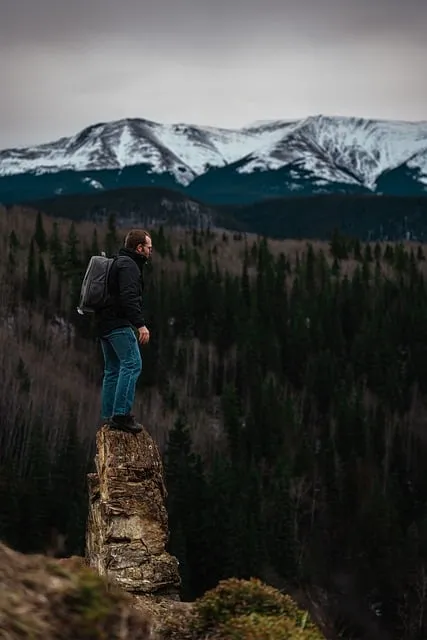
The system has four core principles, and each one connects to a body of research on experience, memory formation, and the psychology of satisfaction that the travel industry would prefer stayed unexamined.
Principle One: Velocity reduction. Speed requires infrastructure. Airports, highways, transfer vehicles, fuel depots — every element of the fast-travel system exists to move a body through space at a rate that makes the journey interchangeable with any other journey. Slowing down reduces the infrastructure footprint of movement and begins to actually inhabit the terrain between departure and destination. A train reveals landscape a plane eliminates. A bicycle covers ground a train obscures. Walking shows everything. The thrifty minimalist approach to travel begins with this shift: stop buying speed and start investing time. The two currencies are not interchangeable, and time consistently purchases a better experience.
Principle Two: Shelter portability. Every hotel is a permanent structure built on land that used to be something else. Every resort is a logistics operation of breathtaking complexity — power, water, food supply chains, waste management, staff transport — all of it maintained continuously so guests can sleep in comfort for seven nights and depart without once engaging with the systems that sustain that comfort. Carrying your own shelter — a tent, a hammock, a bivouac sack — collapses that entire infrastructure chain into something that weighs under a kilogram and leaves no permanent mark on the ground beneath it. This is not deprivation. It is precision. The minimum effective dose of shelter infrastructure, carried on the back, applied only when needed, and removed without a trace when moving on.
Principle Three: Local provisioning. Eat what is available where you are. The bread from the bakery that opened at 5 AM. The vegetables from the morning market. The fish that was caught that day by someone whose family has worked those waters for two generations. Resort dining is the global food supply chain at its most absurd — ingredients flown thousands of miles so tourists in Thailand can have the same breakfast they eat at home in Ohio. Eating locally accesses the highest possible freshness, supports the economic ecosystem of the place being visited, and encounters food genuinely specific to where you are. These are not sacrifices. They are upgrades. The tortillas Marcus Webb ate in that Sierra valley tasted better than anything on any buffet he had ever visited, and he’ll tell you so.
Principle Four: Infrastructure reuse. Take trains, not charter flights. Public buses, not private transfers. Mountain huts and locally owned guesthouses, not purpose-built resorts. Every piece of existing infrastructure used is infrastructure that does not need to be built. The minimalist principle that lifestyle choices exist within a larger ecological context applies directly here: every decision about how to move and where to sleep either reinforces extractive systems or supports regenerative ones. Using a train that runs whether you’re on it or not is categorically different from chartering a flight that burns fuel specifically because it was booked.
These four principles work as a system. Applying any one of them in isolation produces marginal improvement. Applying all four transforms the nature of the trip entirely — from an experience consumed to an experience inhabited. The difference is not a matter of preference. It is measurable in the quality and durability of the memories formed, and the research on that is unambiguous.
The Science of Why Hard Travel Creates Better Memories Than Comfortable Travel
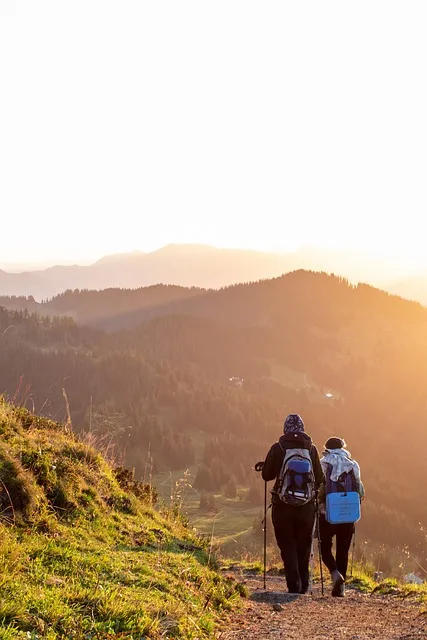
Neuroscientist Robert Sapolsky at Stanford has spent decades documenting the relationship between novelty, challenge, and memory formation. His work confirms a principle that is intuitive but rarely applied to travel planning: the brain assigns memory priority based on metabolic and cognitive investment. When an experience requires problem-solving, physical effort, or genuine uncertainty — not knowing where you’ll sleep tonight or whether a knee will hold for the next six miles — the brain classifies that experience as important and encodes it with the kind of sensory specificity that makes memories durable. The exact color of the light. The smell of rain on granite. The specific texture of the tortilla. These details survive because the brain was running in a mode that demanded full attentional bandwidth.
Resort experiences bypass this encoding mechanism almost entirely. There is no problem-solving. There is no uncertainty. The environment has been engineered specifically to eliminate every source of novelty, challenge, and unpredictability. The brain, receiving a continuous stream of pleasant but unthreatening stimuli that require no adaptation, files the entire experience under “comfortable” and overwrites it within months. This is why most people cannot differentiate their fifth resort trip from their fourth by the time they’re booking their sixth. The experiences are genuinely similar at the neurological level, because they were built from the same template of managed comfort.
Research on hedonic adaptation — the brain’s tendency to return to a stable emotional baseline regardless of life circumstances — compounds this effect. Psychologists Sonja Lyubomirsky at UC Riverside and Kennon Sheldon at the University of Missouri have published extensively on how experiential purchases fade faster when the experience is passive rather than active. A week of lying on a beach, eating at buffets, and watching resort entertainment generates an initial spike in positive emotion that decays back to baseline within weeks. A week of carrying your own weight, navigating unfamiliar terrain, and depending on local hospitality generates positive emotion that — because it is encoded more deeply, because it involved genuine effort and authentic connection — decays far more slowly. The resort vacation reads back as a good trip. The hard trip reads back as something that actually changed.
The physical dimension adds another layer. Walking fifteen to twenty miles a day with a loaded pack engages every major muscle group, taxes the cardiovascular system in a way that pool laps cannot match, and produces the kind of deep, metabolically earned sleep that no hotel mattress can manufacture artificially. Matthew Walker’s research at UC Berkeley on sleep quality — documented in his 2017 book and subsequent papers in Nature Reviews Neuroscience — confirms that physically demanding exercise in natural environments produces significantly superior sleep architecture: more slow-wave deep sleep, better REM consolidation, faster sleep onset. No sleep mask and white noise machine required after walking nine hours through mountain terrain. The body simply turns off, and the quality of that sleep — real sleep, earned sleep — is something resort guests with their temperature-controlled rooms and pillow menus never experience.
There is also the matter of what researchers call the “effort heuristic” — the documented tendency to assign greater value to outcomes that required effort to achieve. In a 2012 study published in the Journal of Consumer Psychology, researchers found that people consistently rated experiences they had worked harder to access as more satisfying than identical experiences obtained without effort, even when they could not identify any objective difference between them. The summit is the same whether reached by walking or by cable car. The experience of standing on it is not. The person who walked assigns a significance to the view that the person who rode cannot access, not because the view is different but because the effort of getting there has primed the brain to extract maximum value from the arrival. The Hard Travel Protocol is, among other things, a system for manufacturing that effort — for building the investment that makes the payoff real.
The Environmental Math: What Your Vacation Actually Costs the Planet
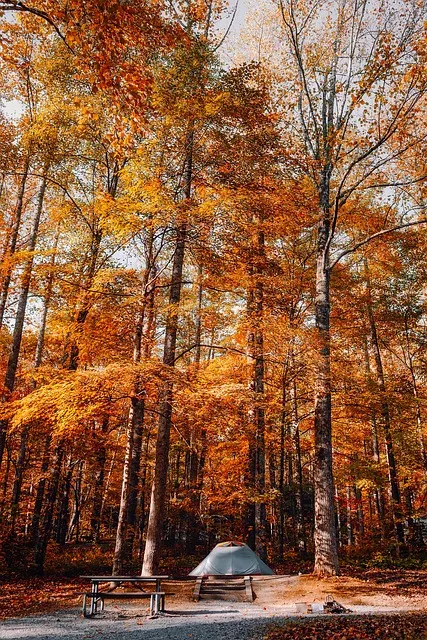
A round-trip transatlantic flight generates approximately 1.6 metric tons of CO2 per passenger. The climate science consensus — represented in the IPCC’s Sixth Assessment Report — assigns each person on Earth an annual carbon budget of roughly 2.3 metric tons to stay within 1.5°C warming thresholds. A single long-haul flight burns through 70% of that budget before reaching the hotel. The hotel, if it is a luxury resort, will consume between three and five times the energy per guest-night of a modest locally owned guesthouse — heated pools running continuously, air conditioning active in empty rooms, industrial laundries cycling sheets that were used for eight hours, buffets producing waste volumes that regularly exceed 30% of food prepared.
The cruise industry is worth examining separately because it is the most visible expression of this dynamic. The world’s largest cruise ships burn approximately 250 metric tons of heavy sulfur bunker fuel per day — a grade of fuel that would be illegal in most land-based applications due to its sulfur content. A single large cruise ship produces more sulfur oxide emissions than 13 million cars. These ships deliver their passengers to some of the most ecologically sensitive environments on the planet: coral reefs in the Caribbean, Arctic passages, island ecosystems that evolved in isolation over millions of years. The Galápagos, Venice, Dubrovnik, Santorini — places now receiving daily injections of sewage, noise, and foot traffic from four thousand passengers at a time, each spending an average of four hours on shore before retreating to the buffet.
Now compare that to the carbon footprint of someone traveling the Hard Travel Protocol way. Train from home to the trailhead: approximately 40-80 grams of CO2 per passenger-kilometer, compared to 255 grams for a domestic flight. Seven nights in a locally owned mountain hut running on regional power: a fraction of the resort’s per-night energy consumption. Food purchased at local markets: regional supply chains, no air freight, minimal packaging. The total carbon cost of a week-long hard travel trip — including all transit, all accommodation, all food — might run 80 to 120 kilograms of CO2. Not tons. Kilograms. That is roughly 5% of what the resort guest produced for a trip of equivalent duration. And the hard traveler had the better experience. The numbers are not close on either metric.
The economic picture is equally clear. Tourism leakage — the percentage of tourist spending that flows out of the host country through international hotel chains, corporate tour operators, and imported goods — runs between 50% and 80% in most developing-nation resort destinations. In some Caribbean and Pacific island nations, leakage exceeds 90%. The resort guest paying $500 a night is delivering perhaps $50 to the local economy. The independent traveler paying $40 a night at a family guesthouse and $20 a day at local markets is delivering close to $60 to the local economy — more actual local economic impact at a third of the total cost. The multiplier effect of locally circulated spending — estimated at 2-4x by development economists — means the backpacker is, counterintuitively, the more valuable visitor. Communities that have understood this — rural Portugal, northern Vietnam’s hill country, Japan’s Kumano Kodo walking routes — are actively building infrastructure to attract exactly this type of traveler.
The carbon math and the experience math point in the same direction. The trips that cost the least in environmental terms are the trips that deliver the most in transformational terms. This is not a coincidence. The conditions that minimize footprint — physical effort, material simplicity, dependence on local infrastructure, genuine exposure to unfamiliar terrain — are the same conditions that maximize the quality of the experience. Luxury insulates. The Hard Travel Protocol exposes. And exposure is where memory gets made.
Building the System: Gear, Preparation, and the Three-Season Rule
- A 25-35 liter pack with a hip belt and load lifter straps. Used market price: $40-80. New from reputable brands: $120-200. This is the one item worth buying well the first time, because a poorly fitting pack distributes weight incorrectly and will wreck shoulders and hips on any trip longer than two days.
- A shelter weighing under 1.5 kg. A single-wall tarp with a bivy sack is the most versatile and lightest option; a freestanding one-person tent is more comfortable and slightly heavier. Either works. Budget: $80-150 used, $150-300 new.
- A sleeping bag or quilt rated to the lowest expected temperature. Down insulation packs smaller and weighs less than synthetic for equivalent warmth; synthetic handles moisture better. The call depends on typical conditions. Budget: $80-200 used.
- A water filter. Squeeze-style filters like the Sawyer Squeeze weigh 57 grams and treat approximately 100,000 gallons of water. Cost: $30. This single item eliminates the need to carry or purchase bottled water for the entire trip, which eliminates both the weight and the plastic waste.
- A cooking system or no cooking system. A canister stove with a titanium pot weighs about 200 grams and costs $40-60 used. Or eat cold — nuts, dried fruit, local bread and cheese from morning markets — and save the weight entirely. Cold food eaten on a granite ledge above a valley is not inferior to hot food eaten at a resort table. It is contextually superior.
- Clothing for expected conditions. The merino base layer. One insulating mid-layer. One waterproof shell. One pair of hiking pants that dry quickly. Enough socks. Everything washes in a stream and dries on the outside of the pack while walking.
The Hard Travel Protocol requires equipment, and the equipment question is where most people either get it right or fall into a trap that the outdoor industry has spent considerable money engineering. Both are worth walking through.
The trap is the upgrade cycle. The outdoor industry generates approximately $20 billion in annual US revenue and sustains that number by releasing new gear every season — marginally improved designs, new colorways, proprietary fabric iterations with names that mean nothing in field conditions — and convincing buyers that last year’s kit is insufficient. It is an elegant piece of psychological manipulation, and it works exceptionally well on exactly the kind of person who cares about environmental impact, because that person has been successfully sold the idea that newer, lighter, and more technically advanced is inherently better. It is not. The most sustainable piece of gear is the one already owned. The greenest jacket is the one hanging in the closet right now, patched at the elbow and faded from years of use. If it keeps a body warm and dry, it is doing its job. Replacing it because a brand released a version that shaves 40 grams is consumerism in performance fabric.
The authentic protocol for gear is the military approach: buy the best affordable option once, maintain it obsessively, repair it when it fails, and replace it only when repair is genuinely impossible. A quality backpack, properly maintained, will serve for fifteen to twenty years. A well-cared-for waterproof shell will last a decade. Leather boots, resoled every few years by a competent cobbler, will outlast almost any synthetic alternative. The three-season test worth applying to every item in a kit is simple: if a single piece cannot serve across at least three seasons of the year, it does not earn space in the pack. A merino wool base layer that functions as insulation in winter, sun protection in summer, and sleepwear in all three. A shelter that works as rain cover, ground cloth, and wind break depending on configuration. A fixed-blade knife that covers food preparation, gear repair, and emergency tasks. Each item earns its weight by serving multiple roles.
Starting from scratch, a functional Hard Travel Protocol kit does not require spending significant money. The components are:
Total cost for a complete functional kit, purchasing used equipment thoughtfully: $300-500. This kit will serve for a decade minimum with proper maintenance. Amortized over ten years of use, the per-trip cost is negligible. Compare this to the $6,400 Marcus Webb spent on a single week in Cancun, and the economics become impossible to rationalize in any direction other than the Hard Travel Protocol.
Physical preparation matters as much as gear. The Hard Travel Protocol demands something conventional travel does not: arriving capable of doing the thing. This means training before the trip. Building the cardiovascular base to sustain six to nine hours of movement per day. Developing the core strength and joint stability to carry a loaded pack without injury. Learning basic navigation from map and compass, because GPS batteries die and cell service disappears above 6,000 feet. Understanding elementary wilderness medicine — blister management, sprain wrapping, the signs of dehydration and hypothermia. Cultivating the capacity for extended silence and solitude that nature travel requires and most people have trained themselves out of through constant connectivity.
This preparation is not a burden. It is the beginning of the trip. By the time boots hit the path, months of physical and intellectual capital have already been invested in the experience, and that investment — documented in the effort heuristic research cited above — primes the brain to extract maximum value from every moment of the actual journey. The change has already begun before departure. The trail just completes the work.
The Leave-No-Trace Framework: Seven Habits for Moving Through the World Without Marking It
The Leave No Trace Center for Outdoor Ethics has seven principles, and they form the foundation of what’s described here. But the framework extends beyond wilderness travel into a complete operational doctrine for moving through any environment — urban or wild, domestic or foreign — in a way that leaves the place better than or equal to how it was found. This is not environmentalism as identity. This is a set of practical habits that, once built, become as automatic as locking a front door.
Habit One: Plan ahead and prepare. Know the terrain before entering it. Study weather patterns, water sources, elevation changes, and emergency exit routes. Prepare meals to minimize packaging waste — buy in bulk and repackage into reusable bags before departure. Know the regulations for the areas being entered and follow them not because of the risk of a fine but because they exist for reasons that are usually ecologically sound. Preparedness is not just safety. It’s the difference between a person who moves through a landscape with competence and a person who stumbles through it and requires rescue, which has its own environmental and economic cost.
Habit Two: Travel and camp on durable surfaces. On established trails and in designated campsites, this is automatic. In off-trail terrain, it requires developing the visual literacy to read ground and identify surfaces — bare rock, dry gravel, snow — that can absorb foot traffic without damage, versus vegetation, wet soil, and cryptobiotic crust, which cannot. A misstep on a patch of cryptobiotic soil destroys biological material that took fifty years to establish. The habit of looking where you step, and choosing accordingly, is one that transfers directly to how you move through urban environments as well: staying on paths, avoiding trampling vegetation, treating shared spaces with the same respect you’d want visitors to apply to your own home.
Habit Three: Dispose of waste properly. Pack it in, pack it out. All of it. Food waste, packaging, human waste in sensitive environments using a cat hole or a WAG bag. This habit has a psychological dimension that matters for the broader Hard Travel Protocol: being responsible for the complete management of your own waste — when there is no bin that someone else empties, no toilet that someone else maintains, no cleaning crew that processes the evidence of your passage — produces a visceral awareness of how much gets consumed and how much gets generated. That awareness changes consumption patterns. Less packaging gets bought because the packaging has to be carried. Less food gets wasted because every gram of it is being carried. The accountability loop is tight and immediate, and it produces habits that extend far beyond the trail.
Habit Four: Leave what you find. The flower picked, the rock moved, the branch broken for a more comfortable camp setup — these are small individually and cumulative collectively. In high-traffic wilderness areas, the combined effect of millions of people making individually minor modifications to the field is measurable degradation. The habit here is restraint: observe, photograph, appreciate, and depart without altering. This is also one of the hardest habits to build, because there is a strong impulse to leave some mark — to demonstrate having been there, that the place mattered, that a relationship existed with it. Cairns, graffiti, carved initials — all of them are this impulse in different expressions. Resist it. The relationship with the place lives in the person who had it. It does not need to be engraved on the place itself.
Habit Five: Minimize campfire impact. Use a lightweight stove when cooking is necessary. Build fires only where they are permitted and clearly appropriate — established fire rings, below treeline, in areas where wood is abundant and fire risk is low. Use only fallen dead wood. Never build a fire in alpine zones, on sand where fires leave permanent scars, or in drought-affected areas where the risk profile is obvious. The campfire is culturally powerful — the fire circle is one of the oldest human experiences — but the romantic image of the crackling wilderness fire has to be weighed against the reality of overused fire rings, scarred stone, and the permanent soil sterilization that results from repeated fires in the same locations. When the stove serves the function better, use the stove.
Habit Six: Respect wildlife. Observe from distance. Do not feed. Store food in bear canisters or hung caches where regulations or conditions require it. The damage done by habituated wildlife — bears that associate humans with food, coyotes that have lost their natural avoidance behavior, birds that stop foraging naturally because tourists provide more efficient calories — is serious and often irreversible. A fed bear is a dead bear, eventually, when it becomes bold enough to constitute a public safety risk. The respect here is not sentimental. It is practical: wild animals remain functional participants in their ecosystems only as long as they remain behaviorally wild. The moment they start depending on human food sources, they become management problems, and management is frequently lethal.
Habit Seven: Be considerate of other visitors. Yield on trails. Keep your voice down in sensitive areas. Camp away from other parties. Don’t monopolize water sources or viewpoints. This habit is the social dimension of the Leave No Trace framework, and it connects to a broader principle of the Hard Travel Protocol: traveling this way makes you part of a community of people who share spaces ethically rather than a customer whose comfort is someone else’s job. That community is governed by informal norms rather than enforced rules, which means it runs on trust, reciprocity, and the assumption that everyone present is acting in good faith toward the shared resource. Behaving accordingly is both the right thing to do and the thing that preserves the culture of the spaces being used.
The Depth-Over-Distance Principle: Why the Best Trips Are Closer Than You Think
There is a second principle embedded in the Hard Travel Protocol that the travel industry has a specific financial interest in suppressing: the value of a trip is determined by depth of engagement with a place, not distance traveled to reach it. Call it the Depth-Over-Distance Principle, and it has consequences for both wallet and carbon footprint that are difficult to overstate.
A weekend spent walking a long-distance trail two hours from home — camping two nights, cooking on a stove, talking to farmers and forest workers along the way — will produce more durable memories, more genuine insight, and more measurable transformation than two weeks at a resort on the other side of the world. This is not a qualitative judgment about which experience sounds more appealing. It is a prediction about which one will still be alive in memory in three years. The mechanism is the one described above: novelty, challenge, effort, and authentic local interaction produce deeply encoded memories. Distance traveled produces nothing neurologically that proximity cannot produce, as long as the other conditions are present.
The reason the travel industry sells distance is because distance is expensive. A flight to the Maldives, a transfer to a water villa, four nights at $1,200 per night — this is a product with margins that sustain a global industry. A weekend camping trip fifty miles from home, reached by regional train, is a product that nobody profits from except the local guesthouse used on the last night, the market where lunch gets bought, and the transport company that runs the train. The industry’s entire marketing apparatus exists to convince you that the good stuff is far away and requires a significant financial transaction to access. It doesn’t. Minimalist destinations exist within a day’s travel of virtually every inhabited point on the planet. No passport is needed for a transformative travel experience. Boots and the willingness to walk out the front door without a reservation are enough.
The Depth-Over-Distance Principle also interacts directly with the environmental math. The closer the destination, the less carbon burned in transit, which is consistently the largest single component of a trip’s carbon footprint. Someone taking four weekend hard travel trips per year within their region — by regional train, on foot or bicycle — generates perhaps 150-200 kilograms of CO2 in total transit emissions. A single long-haul return flight generates 1.6 metric tons. The weekend traveler is producing roughly 10% of the carbon of the long-haul traveler, taking four trips to one, and — by the memory formation science — generating a richer and more durable body of experience. There is no trade-off here. The sustainable choice is also the better choice on every other metric that matters.
This requires a specific kind of willingness that is harder to cultivate than it sounds: the willingness to take the familiar landscape seriously. Most people drive past landscapes daily that would stop them cold if encountered somewhere foreign. The gorge an hour from a city. The historic route that runs through a region’s hinterland. The coastal path seen from the highway for years without ever being walked. These places carry histories, ecologies, and communities that are genuinely specific and genuinely interesting. The fact that they are close does not make them ordinary. It makes them accessible, which is a feature, not a limitation. The science of nature immersion and its effects on the brain shows measurable cognitive and emotional benefits from sustained time outdoors at any distance — the nervous system does not require an international flight to enter the state that produces those benefits.
What the Hard Travel Protocol Actually Produces: Specific Results Over Time
Concreteness about outcomes matters here, because lifestyle change articles have a tendency to describe processes without specifying results, which leaves the reader inspired but without an accurate picture of what they’re signing up for.
The first thing the Hard Travel Protocol produces is physical adaptation. One serious multi-day trip per quarter — four trips per year, each requiring four to seven days of sustained physical movement — measurably improves baseline fitness between trips. This is not a side effect. It is a primary output. Each trip creates a training stimulus the body adapts to in the weeks following, and each subsequent trip finds a better-prepared version of the traveler than the last. Marcus Webb started his first Sierra traverse with a knee that started failing on day three. His second trip, eight months later, was a five-day route with 2,000 more feet of elevation gain and his knee never spoke. The trips are the training. The destinations are the tests. And the compound effect of treating travel as a physical discipline rather than a recovery activity produces a body that is measurably more capable year over year.
The second output is navigational competence. Reading terrain, planning routes, identifying water, managing weather — these are skills that atrophy in the absence of use and sharpen rapidly with consistent application. After two or three serious hard travel trips, most people find that their spatial awareness, their weather reading, and their general capacity for physical problem-solving in unfamiliar environments has improved significantly. These skills transfer. Someone who can work through a mountain range by map and compass can work through a foreign city without GPS. Someone who can manage a multi-day caloric budget in the backcountry can manage any logistical problem that requires resource estimation.
The third output — and this is the one that is hardest to anticipate but most consistently reported by people who make this switch — is a recalibrated relationship with comfort. A week in conditions materially simpler than daily life reveals that the range of conditions within which a person can function well is much larger than daily life suggests. Sleep works fine in a tent. Eating goes well from a camp stove and a village market. Bureaucratic friction gets navigated in a language spoken imperfectly. Physical discomfort gets managed without becoming a crisis. And the return home is to a life that, by any objective measure, is vastly more comfortable than the one just lived for seven days — appreciated more specifically and complained about less reflexively. The threshold for what qualifies as a genuine problem shifts. Things that triggered frustration before the trip feel, in the days after, like the comfortable friction of ordinary life rather than injustices requiring complaint.
Marcus Webb described this in terms echoed by almost everyone who has spent serious time traveling this way: “I came back and I couldn’t complain about anything for about three weeks. Not because I was trying to be positive. Because I kept thinking about the family in the valley and their lunch, and the tent rattling in the sleet, and I’d look at whatever was annoying me — traffic, a difficult client, a broken appliance — and it just didn’t register as a problem. It registered as noise.” That recalibration fades over time. Which is why the trips keep happening.
The fourth output is the accumulation of specific, unrepeatable memories. This is perhaps the most practically significant result, because it determines the degree to which travel functions as a long-term investment in wellbeing rather than a temporary spike in positive emotion. Research by Thomas Gilovich at Cornell University — whose work on the “experience advantage” over material purchases has been widely cited in behavioral economics — shows that experiential memories provide greater and more durable life satisfaction than material acquisitions, specifically when those experiences involved effort, novelty, and social connection. The Hard Travel Protocol is a machine for generating exactly those three conditions. The memories brought home from a serious hard travel trip are specific, sensory-rich, and deeply personal in a way that standardized resort experiences structurally cannot be. They are also assets that compound: they inform how subsequent trips get approached, build an identity as someone who moves through the world with capability and respect, and provide the kind of meaningful narrative content that makes the dinner table conversation worth having.
How to Start: A Realistic Entry Point for Someone Who Has Never Done This
There’s an honest gap between where most people are and where the Hard Travel Protocol begins, and it’s worth naming, because one of the most common failure modes in lifestyle change is setting an entry point so far above current capacity that the attempt ends in a single bad experience that poisons the whole project.
Never spent a night outdoors as an adult? Don’t book a seven-day backcountry traverse. Start with one night. Drive to a campsite — not a backcountry site, a drive-up site — and sleep in a tent. Cook one meal on a camp stove. Get wet if it rains. That’s it. The objective is not to have a transformative experience. The objective is to establish that sleep outdoors is possible and functioning normally the next day follows, which is information a remarkable number of adults do not have about themselves because they have never tested it.
Done one-night camping but never loaded a pack and walked? Do a day hike with the full kit. Load the pack to trip weight, put it on, and walk eight miles on trail. The shoulders will reveal things about pack fit that no amount of store fitting can. The feet will reveal things about boot choice that matter before day two of a five-day trip. The body will give an honest assessment of the current fitness baseline that informs how much preparation is needed before committing to something longer.
Day-hiked with a loaded pack? Do a two-night trip. Not ambitious terrain. An established trail with a designated campsite, reliable water sources, and moderate elevation. The goal of the two-night trip is to solve logistical problems in conditions where a bad solution means minor discomfort rather than genuine risk. The sleep system’s performance becomes clear. What got packed unnecessarily becomes clear. The second day feels completely different from the first because the body has begun adapting, and the third morning — the morning of packing up and walking out — carries a specific kind of accomplishment that has no equivalent in a hotel checkout.
After two or three weekend trips of escalating length and complexity, the Hard Travel Protocol stops being something being tried and becomes something being done. The gear is familiar. The logistical decisions are routine. The physical baseline supports longer and more demanding routes. At this point, the question is not whether it’s possible but where to go and when — and that is a genuinely pleasant problem to have.
For urban environments and international travel applying the Hard Travel Protocol principles without backcountry camping, the translation is direct. Trains over flights wherever the time difference is less than twelve hours. Locally owned accommodation booked directly, not through platforms that extract 15-20% from the host. Markets and neighborhood restaurants over hotel dining. Walking and cycling over private transfers. A deliberate packing discipline that limits everything to one carry-on bag and eliminates checked luggage fees, cargo loading delays, and the psychological overhead of managing too much stuff. These modifications do not require a tent or a bear canister. They require a willingness to plan differently and arrive with less — and they produce most of the same benefits: deeper local engagement, lower environmental impact, stronger and more specific memories, and a consistently better trip at a consistently lower cost.
The goal is not to suffer for the sake of suffering. The goal is to remove the infrastructure that separates a traveler from the place they came to experience. Every piece of comfort eliminated from a trip is a piece of reality allowed back in. And reality — unfiltered, unmanaged, occasionally inconvenient — is where the actual experience lives. The resort sold a simulation. The Hard Travel Protocol delivers the original.
FROM THE LIBRARY ›
Common Questions About Redefining Luxury Travel About Sustainable Low-Impact Travel
Is sustainable travel really better than luxury travel, or is that just a preference? The research on memory formation, hedonic adaptation, and the effort heuristic suggests it produces more durable satisfaction — not as a matter of taste but as a consequence of how the brain encodes experience. Passive, managed experiences (resort travel) decay faster from memory and produce less lasting wellbeing than active, effortful experiences (hard travel) of equivalent duration. The carbon and economic data — 5% of resort emissions, 3x more money reaching local economies per dollar spent — make the case independent of the experiential dimension.
How do I apply the Hard Travel Protocol without camping or backpacking? The four core principles translate directly to urban and international travel: slow down (trains over flights, walking over taxis), sleep locally (guesthouses over chains, book direct), eat locally (morning markets, neighborhood restaurants, whatever the family is having), and use existing infrastructure (public transit, established accommodation, shared spaces). A trip to Lisbon or Osaka or Oaxaca built on these principles costs less, leaves a smaller carbon footprint, and produces a richer and more specific experience than the same destination visited through a package tour or an international hotel chain.
What is the minimum gear investment to start doing backcountry hard travel trips? A functional kit covering shelter, sleep, water filtration, and basic clothing can be assembled from the used gear market for $300-500. The one item worth buying well new is a properly fitting backpack, because poor load distribution causes injuries that end trips early. Everything else — shelter, sleeping bag, stove, filter — performs equally well used as new. Avoid buying new gear each season. The most sustainable piece of equipment is the one already owned and maintained well. A $150 used tent that serves for ten years is environmentally and economically superior to a $400 new tent replaced every three years.
How do I handle safety when traveling without guides, pre-booked accommodation, or itineraries? Preparation substitutes for infrastructure. Learn map and compass navigation before it’s needed. Study wilderness first aid through a WAFA or WFR course. File a trip plan with someone who will call emergency services if a check-in is missed. Carry a PLB (personal locator beacon) on trips in remote terrain — they cost $250-350, weigh 100 grams, and allow global emergency signaling without cell service. The risks of independent travel are real and manageable; they are also consistently overstated by an industry that profits from the conviction that a guide, a package, and a hotel are required to be safe abroad.
Does low-impact travel mean avoiding popular destinations entirely? No. It means choosing how to engage with them. Venice, the Cinque Terre, Machu Picchu, the Appalachian Trail — these places are stressed by volume and by a specific type of visitor (cruise passenger, day-tripper, package tourist) who concentrates impact in narrow windows and narrow corridors. Arriving by train, staying longer, sleeping in locally owned accommodation, and distributing movement across the full area rather than the photographic highlights distributes impact differently and often contributes net positively to the local economy and infrastructure. Some of the world’s most minimalist-friendly destinations are also some of its most beautiful.
How does the Hard Travel Protocol connect to minimalism more broadly? The same logic that drives the minimalist reduction of household consumption applies directly to travel: identify the minimum viable resources required to accomplish the goal, eliminate everything beyond that minimum, and discover that the things eliminated were not providing value but were providing insulation from the actual experience. The 28-liter pack is a travel application of the same principle as the capsule wardrobe or the single-function kitchen. Less infrastructure, more engagement. Less management overhead, more attention available for the experience itself.
What do I do about travel companions who want different things? This is the most common practical obstacle and the honest answer is: negotiate on principles rather than specific logistics. Someone who wants a bed can have a bed — a locally owned guesthouse is a bed that satisfies Hard Travel Protocol principles. Someone who wants good food can have good food — local restaurants produce better food than resort buffets, consistently. The non-negotiables are the transit choices (train over flight where feasible), the accommodation choices (local over chain), and the eating habits (local over imported). Most travel companions, once they experience the difference these choices make in the texture of the trip, convert without argument. The converts rarely go back.
Editorial StandardsCorrectionsMedical DisclaimerAbout Our ContentAffiliate DisclosureSite Map