
In 2013, Angela Duckworth stood on a TED stage and told seventeen million eventual viewers that grit — passion and perseverance for long-term goals — was the single most reliable predictor of success she’d found across a decade of research at West Point, the National Spelling Bee, and inner-city schools. The talk went viral. The word “grit” showed up in corporate retreats, parenting blogs, school curricula, and the vocabulary of every coach who’d previously said “mental toughness” and was looking for an upgrade. By 2016 her book had sold over a million copies. By 2020 the word “grit” had been laundered so thoroughly through the self-improvement industrial complex that it meant everything and therefore nothing.
Around the same time, a parallel conversation was building in organizational psychology, trauma research, and the military. That conversation was about resilience — not as a vague synonym for toughness, but as a measurable, trainable capacity to absorb disruption and return to function. The American Psychological Association published frameworks. The Army invested in resilience training programs across 1.1 million soldiers. Researchers at the University of Pennsylvania built entire curricula around it.
Two big ideas, similar audiences, overlapping vocabulary, and almost nobody drawing a precise line between them. That imprecision costs people. Gritty men have destroyed themselves because nobody told them when to stop pushing. Resilient men have floated comfortably through decades without ever committing to anything hard enough to matter. The difference between resilience and grit isn’t semantic. It’s the difference between knowing when to hold and when to flex — the exact framework this article is built to hand over.
What Resilience Actually Is — Not the Motivational Poster Version
| Aspect | Resilience | Grit |
|---|---|---|
| Core Philosophy | Defined in article | Defined in article |
| Best For | See breakdown below | See breakdown below |
| Scientific Backing | Named studies cited | Named studies cited |
| Difficulty Level | Varies by implementation | Varies by implementation |
| Our Verdict | Read the full analysis below | |
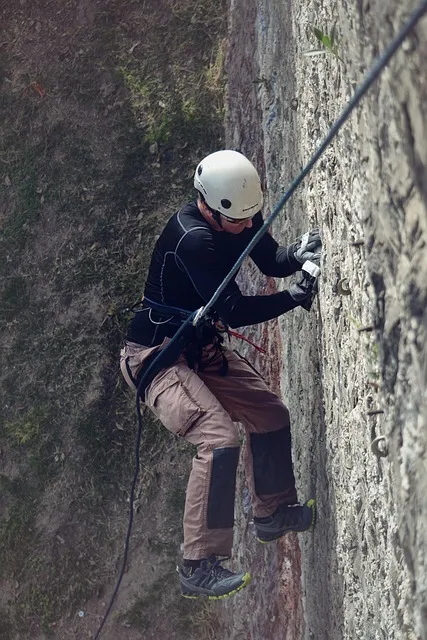
In human psychology, the same logic applies. George Bonanno at Columbia University spent twenty years studying bereavement, trauma, and how people actually respond to severe life disruption. His 2004 paper in American Psychologist identified three distinct trajectories: chronic dysfunction (people who struggled severely and remained impaired), recovery (people who struggled and eventually returned to prior function), and resilience (people who maintained relatively stable psychological functioning throughout). The resilient group — larger than most researchers expected, typically 35-65% in any given traumatic event — wasn’t people who felt no pain. They felt it. They just didn’t lose function.
Resilience operates on at least three levels simultaneously, and collapsing them together is one of the most common mistakes people make. Psychological resilience is the ability to process difficult emotions without being overwhelmed — to feel the weight without being buried by it. Cognitive resilience is the ability to think clearly under pressure, update a mental model when new information contradicts old assumptions, and adjust strategy mid-stream without losing a sense of direction. Physiological resilience is the nervous system’s capacity to activate a stress response when needed and return to baseline after — what researchers call vagal tone. People with high vagal tone recover from emotional activation faster, make better decisions under pressure, and show lower rates of chronic illness. It’s trainable, which gets covered later.
What makes resilience genuinely powerful, and what distinguishes it from raw toughness, is its flexibility. A resilient person doesn’t have one response to adversity. They have a repertoire. Sometimes the right response is to push harder. Sometimes it’s to rest. Sometimes it’s to change direction entirely. Resilience includes the judgment to know which response fits which situation, and that judgment is exactly what the motivational poster version always leaves out. Mental toughness and resilience are related but not the same — toughness is about endurance, resilience is about recalibration — and conflating them is exactly the kind of mistake that produces burnout in otherwise capable people.
What Grit Actually Is — And What Duckworth’s Research Actually Proved
Angela Duckworth’s 2007 paper in the Journal of Personality and Social Psychology defined grit as “perseverance and passion for long-term goals.” The two-factor structure matters: consistency of interest (the same top-level goal maintained over years, not months) and perseverance of effort (working hard even when progress stalls). Her measurement tool, the Grit Scale, predicted who survived Beast Barracks at West Point better than the Army’s own composite entry score. It predicted who advanced furthest in the National Spelling Bee better than IQ. It predicted which first-year teachers in low-income schools stayed past two years.
What the TED talk summary missed, and what most grit enthusiasts still haven’t absorbed, is the specific context in which Duckworth’s research showed grit to be predictive. West Point. Spelling Bees. Sales retention. Environments with a single well-defined goal, a known path toward that goal, and a clear signal — make it through Barracks or don’t — telling you whether to persist or quit. In these environments, the main predictor of success is whether you stay when it gets hard. That’s exactly what grit measures.
Change the environment and grit’s predictive power changes with it. In a 2016 review published in Perspectives on Psychological Science, Marcus Credé and colleagues re-analyzed 88 independent samples comprising over 66,000 participants. Grit explained only 3-4% of variance in outcomes when controlling for conscientiousness — a broader personality trait studied for decades. More relevant here: grit’s predictive value dropped significantly in environments with ambiguous goals, shifting contexts, or situations requiring frequent recalibration. Which is to say: most of actual life.
Grit is fundamentally directional. It assumes the identified goal is the right goal, that the chosen path is the right path, and that the main variable between here and there is willingness to persist. When those assumptions hold, grit is powerful. When any of them fail, grit without resilience becomes what might be called sunk-cost perseverance — the very expensive habit of continuing to invest in something primarily because so much has already been invested in it.
Duckworth herself has been clear about this limitation. In a 2016 interview with The Atlantic, she acknowledged: “I worry I’ve contributed, inadvertently, to an idea of grit as just bull-headed persistence.” Her co-authored work after the book gave increasing attention to what she called “wise grit” — the integration of perseverance with strategic updating. That nuance rarely made it into the corporate training rooms and Instagram posts that carried her original framing. Related: the full breakdown of Duckworth’s book and what she actually says versus what most summaries tell you.
The Flex-Hold Matrix: A Framework for Knowing Which Tool You Actually Need

Those two axes create four quadrants. In each quadrant, one tool is clearly dominant:
- Stable goal + Internal block → Deploy Grit. The goal is right, the path is known, and the thing in the way is a person’s own resistance. Keep showing up when it’s boring. Practice after it stops being exciting. Do the reps that don’t feel like progress but are. This is the grit domain. Changing direction here isn’t adaptation — it’s escape. The enemy is the voice that says “maybe this isn’t the right goal” every time a plateau appears.
- Stable goal + External force → Deploy Both. Something outside anyone’s control has hit progress, but the destination is still correct. A business setback, an injury, a relationship rupture. Resilience is needed to absorb the disruption and return to function. Grit is needed to hold the long-term commitment once recovered. This is where most high performers live most of the time, and it’s why the most effective people develop both capacities.
- Volatile environment + Internal block → Lean Resilience. The world has shifted enough that the previous goal or path may no longer be valid. The question isn’t whether to persist — it’s whether persistence is aimed at the right thing. Cognitive resilience is what lets a mental model get updated honestly without the update feeling like defeat. The internal block here is usually attachment to identity: three years of calling yourself a founder, and admitting the market doesn’t exist feels like admitting the three years were wasted.
- Volatile environment + External force → Full Resilience Mode. The disruption is large, the path is unclear, and the immediate priority is maintaining function, processing what happened, and re-establishing a stable base from which new direction can emerge. Deploying grit here — persisting doggedly toward a goal circumstances have already invalidated — is not admirable. It’s expensive. It looks like the entrepreneur who kept hiring into a collapsing market because pivoting felt like quitting.
The Flex-Hold Matrix is a diagnostic tool. It works by being honest about which quadrant applies — which requires a level of self-awareness that’s harder than it sounds, because grit and resilience are both culturally celebrated, and people construct elaborate rationales for being in the “noble persistence” box when they’re actually in the “burning down a building” box.
The question that most reliably locates the quadrant: Is the primary reason for the struggle that there hasn’t been enough pushing, or not enough adapting? Not enough pushing → grit. Not enough adapting → resilience. Both in play → both, with honesty required about the ratio.
This framework runs through the rest of the article, because it prevents the two most common mistakes in this conversation: deploying grit when resilience is what’s needed (grinding into the ground), and retreating to resilience when grit is what’s needed (repackaging quitting as strategic adaptation).
The Five Differences That Actually Matter in Real Life

1. Hold vs. Flex. This is the clearest way to feel the difference rather than just understand it. Grit holds — maintains direction, commitment, sustained effort toward a fixed point. Resilience flexes — absorbs, adjusts, re-establishes function without treating every adjustment as a failure of character. Neither is inherently superior. The mistake is confusing them. Holding when flexing was called for is a failure to update the map when the territory changed. Flexing when holding was called for means mistaking discomfort for a signal to change course.
2. Failure as obstacle vs. failure as data. Grit treats failure as an obstacle between here and the goal. The gritty response to failure: push harder, find another way, stay on path. Resilience treats failure as information about the environment or the approach. The resilient response: what does this reveal that needs adjusting? Neither response is always correct. In stable environments where the goal is valid, treating failure as an obstacle and pushing through it is exactly right. In volatile environments where the path needs updating, treating failure as an obstacle just means hitting the same wall more enthusiastically.
3. Burnout architecture. Grit without resilience creates a specific type of burnout researchers call “effort-reward imbalance” — the effort keeps going in, but the recovery infrastructure doesn’t exist, and the accumulated physiological and psychological debt eventually overwhelms the output. This is the classic high-achiever burnout profile: extremely gritty, consistently high-performing, no recovery, then sudden collapse. Resilience without grit creates a different pattern — perpetual recovery from setbacks that never quite accumulate into anything, because commitment to a goal never runs long enough or hard enough to hit the kind of wall that produces real growth. One person burns hot and fast. The other manages an indefinite plateau. Post-traumatic growth research consistently shows that the people who grow most from adversity have both: they held the commitment through the disruption and adapted their approach when the disruption revealed something important.
4. Time scale. Grit is a macro-level trait measured in years and decades. Duckworth’s Grit Scale asks about sustained interest over time — not days or weeks. Resilience operates at both macro and micro levels. A ten-year career disruption calls on it. So does a bad Tuesday. The daily practice of resilience — recovering from small frustrations without carrying them forward, returning to baseline quickly after stressful meetings, maintaining cognitive clarity under pressure — is where the capacity actually gets built. Waiting for a major adversity before practicing resilience means missing the reps. Related: this is exactly what nervous system regulation practice targets at the micro level.
5. Identity anchor vs. identity flexibility. Grit requires a stable identity anchor — “a runner,” “building this company,” “becoming a writer” — that doesn’t waver when circumstances suggest otherwise. That identity stability is what makes sustained commitment possible. Resilience requires a degree of identity flexibility — the ability to update a self-concept when circumstances genuinely demand it without it feeling like losing yourself. Holding a committed identity under pressure (grit) while remaining willing to update it when the situation clearly calls for it (resilience) is the combination that produces the most extraordinary outcomes. Only one of these ever leaves a person one disruption away from either burning out or drifting.
Resilience Grit Difference: What The Evidence Reveals
The science behind both constructs is richer and more specific than the TED-talk summaries suggest, and the specific findings change how these capacities should be trained.
On resilience, Bonanno’s twenty years of research at Columbia identified four key factors that distinguished resilient individuals from those who struggled in the aftermath of disruption: positive emotions (not toxic positivity, but the ability to experience genuine positive affect alongside negative), cognitive flexibility (the ability to shift perspective and find alternative interpretations), benefit-finding (the ability to identify what a difficult experience revealed or produced), and hardiness (Kobasa’s 1979 concept: commitment to goals, sense of control, and treatment of challenge as opportunity rather than threat). These factors are all trainable, and all of them appear in the Flex-Hold Matrix — particularly hardiness as the foundation that lets a person know which quadrant they’re in without catastrophizing.
On grit, the most important post-Duckworth finding comes from a 2019 paper by Muenks and colleagues in the Journal of Educational Psychology that tracked 1,120 students over two years. They found that grit’s relationship to academic performance was fully mediated by self-regulation — meaning grit’s predictive power came almost entirely through students’ ability to regulate their emotions and attention. Grit without self-regulation showed almost no independent predictive value. This matters practically: becoming grittier isn’t primarily a matter of motivation or passion — it’s developing better emotional and attentional control. Which is, in fact, a resilience capacity. The two systems are downstream of each other in important ways.
The research on physiological resilience is equally specific. A 2017 meta-analysis in Frontiers in Human Neuroscience by Zahn and colleagues found that high heart rate variability (HRV) — the primary measure of vagal tone and physiological resilience — consistently predicted better performance under pressure, faster emotional recovery, and lower rates of anxiety and depression across 37 studies. HRV is trainable: regular aerobic exercise, cold water exposure, controlled breathing protocols (particularly slow exhalation), and consistent sleep patterns all increase it measurably within weeks. Faster recovery, clearer thinking under stress, lower emotional reactivity — the levers aren’t glamorous. They work.
The most practically important research for the Flex-Hold Matrix comes from Carol Dweck at Stanford. Her growth mindset work identified that people who believe their abilities are developed through effort (growth mindset) respond to failure differently than people who see abilities as fixed (fixed mindset). Growth mindset people treat failure as information about effort or strategy — an update prompt. Fixed mindset people treat failure as verdict — evidence about who they are. In Flex-Hold terms, growth mindset is the meta-skill that makes the matrix work: it’s what allows staying in the grit quadrant when that’s right, and moving to the resilience quadrant when that’s right, without either choice threatening identity. A full breakdown of fixed vs. growth mindset explains why this is foundational to everything else.
There’s also the research on what psychologist Roy Baumeister at Florida State called “ego depletion” — the finding (subsequently complicated by replication issues, but the core phenomenon appears to hold) that self-regulatory resources deplete over the course of a day, and decisions made on depleted resources show more impulsivity, more short-termism, less grit. This has a practical implication: when depleted, the Flex-Hold assessment tends to bias toward flexibility, because quitting feels like recalibration when exhaustion is running the show. This is why sleep is not a recovery variable — it’s a performance variable. It’s what replenishes the regulatory capacity that makes both grit and resilience possible.
The Trap: When Grit Becomes the Enemy

The tell is always the same. Ask why he’s still on this path, and the answer involves the past: how long he’s been at it, how much he’s invested, what it would mean to stop now. That reasoning pattern — persisting because of what’s already been put in rather than what lies ahead — is the sunk cost fallacy wearing a motivational poster. Grit, in cultural mythology, is always noble. Sunk-cost perseverance looks exactly like grit from the outside, and often from the inside too, and that is the trap.
The diagnostic question that separates them: Starting over today with perfect knowledge of what the last three years produced, would this path get chosen again? Yes — that’s real grit, worth picking again, history as evidence of commitment rather than just investment. No — if the honest answer is “not with what’s known now” — then what’s keeping him there isn’t grit. It’s the psychological discomfort of acknowledging that smart, committed effort can be pointed in the wrong direction, one of the hardest things a driven person ever has to admit. Reframing failure is a specific skill, and it’s exactly what the move from sunk-cost grit to genuine resilience requires.
The inverse trap exists too, though it’s less celebrated. Resilience without grit produces a person perpetually adapting and never arriving. Always recalibrating, always open to new information, always willing to pivot — about to commit to something meaningful for about ten years running. Comfortable with disruption, excellent at recovery, good under pressure, and nothing built that required sustained commitment, because sustained commitment requires tolerating the stretch where results are invisible and boredom is the primary sensation. The Flex-Hold Matrix places this person firmly in volatile-environment framing regardless of whether the environment is actually volatile, because permanent flexibility feels like wisdom and is actually a comfortable avoidance of the boring part of any worthwhile project.
Applying the Flex-Hold Matrix to Specific Situations
Abstract frameworks die in the abstract. Here’s how the Flex-Hold Matrix applies in four specific contexts where the confusion between resilience and grit does the most damage.
Career disruption. Eight years spent building expertise in a specific field. The field is now being disrupted by technology, and a significant portion of that expertise will be automated within five years. Flex-Hold assessment: volatile environment, external force. Full resilience mode. The gritty response — double down on existing expertise, persist on the existing path, refuse to be distracted — is exactly wrong here. The situation requires cognitive resilience (updating the model of where value lives in the industry), adaptive capacity (building skills adjacent to existing expertise before the gap becomes a cliff), and the identity flexibility to become “someone becoming something new” rather than “someone defending what they already built.” Grit has a role once the new direction is clear — persistence to build new competency through the long boring phase. But the first move is flex, not hold.
Athletic performance plateau. A year of consistent training, and performance has stalled. Nothing seems to be working. Flex-Hold assessment: stable environment (the goal hasn’t changed), internal block (training approach or recovery is the variable). This is a grit domain with a technical adjustment — not a signal to question whether the goal should still be pursued, but a signal to audit the method. The resilient response (maybe the whole approach to fitness needs reconsidering, maybe this isn’t for me) is wrong here. The gritty response (keep showing up, the plateau is part of the process) is right, plus one tactical update: look at the specific variables — sleep, progressive overload, stress load — rather than questioning the commitment. Deliberate practice research from Ericsson shows that plateaus almost always indicate a training problem, not a talent problem.
Relationship under sustained stress. Months of a conflict cycle between two partners who are both committed to saving the relationship, which is itself worth saving. Flex-Hold assessment: volatile environment (patterns need to change), internal block (both people are contributing to the cycle). Both tools needed, in sequence. Resilience first: absorb the current reality without catastrophizing (“a hard cycle” rather than “this relationship is over”), maintain function, and update the approach — doing more of what isn’t working with more commitment is not the answer. Grit second: once new approaches are identified — different communication patterns, outside support, changed habits — persist through the awkward period when new approaches feel unnatural and old patterns reassert themselves. The work here is emotional discipline under pressure, and it’s exactly the kind of daily rep that builds Flex-Hold judgment over time.

How to Train Both: The Six Practices That Build Real Capacity
Understanding the framework perfectly and closing the gap between a weaker capacity and a stronger one are two entirely different accomplishments. The following six practices are organized around building both, the first three primarily developing resilience and the last three primarily developing grit.
- Stress inoculation in a controlled setting. Resilience is built through cycles of manageable stress followed by full recovery — the operative word being “full.” Cold exposure (two minutes of cold water after a hot shower), hard exercise with a programmed recovery week, a weekly extended fast — each creates a small disruption and a documented recovery. The system’s ability to return to baseline efficiently is what’s being trained here, not toughness — exactly what physiological resilience is. The protocol doesn’t need to be dramatic. It needs to be consistent and followed immediately by real recovery.
- The Flex-Hold journal. Once a week, write down the two or three situations currently requiring the most psychological energy. For each, answer the two diagnostic questions: Is the environment stable or volatile? Is the primary block internal or external? Fifteen minutes, and it consistently moves people toward a more accurate assessment of which tool is needed. The common finding: people discover they’ve been deploying grit in volatile environments (holding a course that should be updated) and resilience in stable environments (recalibrating when they should be grinding). Catching either misapplication before it compounds is enormously valuable.
- Recovery as a non-negotiable. The fastest way to improve resilience is treating recovery with the same seriousness as effort. Sleep hygiene is the foundation — not a wellness choice but an operational requirement. HRV (the best single-number indicator of physiological resilience) is most strongly predicted by sleep quality. Sleep disruption directly impairs the cognitive flexibility and emotional regulation that resilience depends on. Cutting sleep to add output while running a hard schedule is borrowing from resilience to fund grit, and the loan comes due.
- Public commitment to a single long-term goal. Grit’s consistency-of-interest component is strongly reinforced by social commitment. Tell three specific people — people whose opinion actually matters — what’s being built and on what timeline. The research on public commitment (Cialdini, Ariely) consistently shows it increases follow-through, because the pain of updating a commitment (telling those three people it’s shifted again) now has to be weighed against the discomfort of continuing. Not about ego. About using social accountability to create friction against the random pivoting that looks like adaptability but is actually commitment-avoidance.
- Deliberate practice over repeated practice. Duckworth’s research on grit consistently found that what separated the grittiest performers wasn’t just time on task — it was deliberate, effortful practice in the specific areas of weakness. Cal Newport’s work on deep work and K. Anders Ericsson’s research on expert performance both point to the same mechanism: the people who build deep competence over years aren’t the ones who spend the most hours — they’re the ones who spend their hours in the most uncomfortable zone, targeting specific deficits rather than rehearsing existing strengths. Comfortable practice builds confidence. It doesn’t build grit.
- Failure debriefs without verdict. Build a habit of reviewing failures and setbacks within 48 hours using two explicit questions: What did this reveal about the environment or the approach that needs updating? What did this reveal about a commitment worth holding even harder? The first question activates resilience-mode processing. The second activates grit-mode reinforcement. Running both questions on every significant setback trains the Flex-Hold judgment — not as an abstract concept, but as a practiced response pattern. Journaling for thirty days with this format alone changes how adversity gets categorized.
What Elite Performers Actually Do — The Hold and Flex in Action
The most revealing case for the Flex-Hold Matrix isn’t a single dramatic story — it’s a pattern across performers in different domains who all showed the same integration without necessarily having a framework to describe it.
Consider what Roger Federer’s career actually looked like at the detail level, not the highlight reel. He lost to Rafael Nadal on clay so consistently that entire stretches of his career were defined by that single recurring defeat. The gritty version of this story: he kept showing up. The fuller version is more interesting. Federer consistently and significantly adapted his game over his career — serve mechanics, footwork, the introduction of the SABR (Sneak Attack By Roger) tactic in his early thirties — while holding an unwavering commitment to the long-term goal of competing at the highest level. Full grit mode on the court, full resilience mode in the training room. The distinction between where he held and where he flexed is the story that explains the twenty Grand Slams.
The same pattern appears in business. Jeff Bezos at Amazon famously said “we are stubborn on vision, flexible on details.” That’s the Flex-Hold Matrix in a sentence. The vision — the most convenient store in the world, eventually — held with grit. The path, from books to everything, from retail to AWS to logistics infrastructure, flexed in response to what the environment revealed. The companies that failed against Amazon, including many that were more operationally excellent in their specific domains, were holding on details and flexible on vision — the exact opposite of the right configuration.
The military provides the clearest examples because the feedback is immediate and the stakes make rationalization expensive. The SEAL training pipeline’s selection doesn’t just test who can endure — it tests who can update under pressure. Hell Week isn’t survived by the person who decides in advance they won’t quit (pure grit). It’s survived by the person who, in the moments when quitting looks most rational, can accurately assess whether he’s facing a real limit or a comfort-zone wall and respond accordingly. The trainers know the difference. Instructors at BUD/S have described watching candidates quit who had the physical capacity to continue — men who misread comfort-zone resistance as genuine incapacity. The Flex-Hold assessment failed, and they paid for it. The unbreakable process is, at its core, about developing that accuracy under duress.
How to Know Which Capacity You’re Actually Weaker In
The question everyone asks after understanding the framework: which one needs more attention? The honest answer is that most people already know but don’t want to say it out loud, because one answer is unflattering and the other is also unflattering, just in a different direction.
Here are the tells. More grit is needed if: goals get abandoned after the initial excitement fades; “exploring” or “finding your path” has been the self-description for more than two years; the resume or project list shows many starts and few completions; the things worth being proudest of all took less than six months; the last time genuine boredom with something important got tolerated anyway is hard to remember. These are not character flaws. They’re the profile of someone whose natural resilience and adaptability have, without the counterweight of grit, produced a comfortable life with no anchors.
More resilience is needed if: burnout has hit more than once; signs of physical or cognitive depletion routinely get pushed through without adjustment; the go-to approach to most challenges is “just put your head down”; distinguishing signals to recalibrate from signals to persist is genuinely difficult; any suggestion of changing course reads as failure or weakness; recovery feels like lost time rather than maintenance of the system that makes performance possible. These are also not character flaws. They’re the profile of someone whose grit, without the counterweight of resilience, is at risk of becoming its own trap.
The cleaner diagnostic is forward-looking. Identify the most important project in play right now. Ask: what would too much grit here look like? Then ask: what would too much resilience here look like? One of those images should feel more familiar — more like a pattern already run before. The familiar one is probably the dominant tool. The less familiar one is the deficit. Close the deficit. That’s the path to becoming genuinely unbreakable: not maximizing strength, but developing the weaker axis until both tools are available when needed.
The full mindset toolkit on this site approaches every major challenge through this same lens. Not one tool fits every problem. The skill is knowing which tool fits this one. Pair this with the research on internal locus of control — because both grit and resilience are meaningless without belief that actions actually affect outcomes — and the complete architecture for navigating adversity without breaking in either direction is in place.
Resilience Grit Difference: Your Questions Answered: Resilience vs. Grit
Can you have grit without resilience? Temporarily, yes — white-knuckling through adversity on willpower and persistence is possible. But grit without resilience is physiologically unsustainable. The absence of recovery capacity means the stress of sustained effort accumulates without being processed, and the accumulated load eventually overwhelms output. This is the clinical profile of high-achiever burnout: maximum grit with minimum resilience, then sudden collapse. Research by Maslach and Leiter on burnout consistently identifies recovery-capacity deficits, not effort deficits, as the primary predictor of burnout in high performers. The engine without suspension eventually shakes itself apart.
Does research actually show grit predicts success? More narrowly than the popular summaries suggest. Duckworth’s original research showed grit predicted success at West Point, in the Spelling Bee, and in sales — all structured environments with clear, stable goals. A 2016 meta-analysis by Credé and colleagues covering 88 samples found grit explained only 3-4% of outcome variance when controlling for conscientiousness. The predictive power of grit is real but context-dependent: high in stable, goal-clear domains, lower in volatile or rapidly-shifting ones. The implication is that grit is a powerful tool in a specific range of conditions, not a universal success variable.
How do I know if I need to push through or let go? Use the two Flex-Hold questions. First: is the environment stable, or has it shifted significantly since the goal was set? Second: is the primary obstacle something internal (discipline, fear, comfort-seeking) or something external (market shift, structural change, force majeure)? Stable environment plus internal obstacle → push through. Volatile environment plus external force → resilience mode, which may include changing direction. The most common mistake: quitting feels like failure and adapting feels like wisdom, so every situation instinctively gets coded as volatile and external to justify the adjustment. Run the questions honestly, not to confirm the preferred answer.
What is the Flex-Hold Matrix? A framework introduced in this article for diagnosing which psychological tool — grit or resilience — a given challenge requires. It maps situations along two axes: stability of the goal and environment (stable vs. volatile) and source of the primary obstacle (internal vs. external). The four quadrants each favor a different tool or combination. Stable goal plus internal block equals deploy grit. Stable goal plus external force equals both tools. Volatile environment plus internal block equals lean resilience. Volatile environment plus external force equals full resilience mode. The framework is a diagnostic, not a prescription — the goal is an honest situational assessment, not finding the quadrant that justifies the easiest response.
How do you build resilience? Primarily through cycles of controlled stress and full recovery — what psychologists call stress inoculation. The key variables with the strongest evidence base: regular aerobic exercise (increases HRV, the primary measure of physiological resilience), cold exposure (trains the system’s return-to-baseline response), sleep quality (the most reliable predictor of HRV and emotional regulation), slow-exhale breathing protocols (directly stimulates the vagus nerve), and strong social connections (Bonanno’s research identified social support as one of the four primary resilience factors). The nervous system regulation practices this site covers are the operational layer beneath all of these. None are glamorous. All work.
Is resilience more important than grit? Resilience is the more fundamental capacity in the sense that grit is downstream of it — basic regulatory function is required to sustain long-term commitment. But the more accurate answer is that importance depends on the current deficit. Bouncing between projects for two years and building nothing points to a grit deficit. Burning out twice in three years points to a resilience gap. The right question isn’t which is more important in the abstract but which one needs developing right now to stop limiting results.
Can resilience be built at any age? Yes. The research on neuroplasticity is consistent: the brain’s regulatory circuits are modifiable well into adulthood. A 2015 review in Neuroscience & Biobehavioral Reviews found that resilience-related neural changes — particularly in the prefrontal cortex and HPA axis regulation — are produced by both exercise and mindfulness training at any age. The research on early childhood adversity shows early experience creates a baseline, but Bonanno’s data consistently showed late-developing resilience in adults who invested in the specific practices that support it. The baseline is not the ceiling.