

| Type | Status |
|---|---|
| BMAC (bone marrow aspirate concentrate) | Real research behind it |
| SVF (adipose-derived stromal vascular fraction) | Real research behind it |
| Strip-mall “stem cell” injections / amniotic fluid products | Often contain few or no viable cells by the time they reach the syringe |
A guy we’ll call James found this out the expensive way. Forty-nine, a shoulder that had been grinding since a warehouse job in his thirties, and a clinic ad promising “regenerative stem cell therapy” that turned out, on closer reading of the consent form, to involve amniotic fluid product with essentially no living cells in it by the time it reached the syringe. He didn’t know to ask the right question. Almost nobody does — the industry counts on it.
This isn’t a pitch for a supplement or a clinic. It’s not an attempt to prove every orthopedist wrong. It’s the actual mechanisms, the actual evidence, and the context that’s usually missing — enough to make a decision that’s informed instead of just expensive.
What Stem Cell Therapy for Joints Actually Means
Start with something obvious that keeps getting ignored anyway: the body doesn’t run in separate compartments. Every cell, tissue, and organ sits inside a web of dependencies too tangled to fully map. When a joint starts failing, the problem is rarely confined to one structure or one missing nutrient. It’s a systems failure, and treating it like a parts problem is exactly why so many people cycle through procedure after procedure without much changing.
The standard framing zeroes in on the most visible endpoint — the symptom that can be felt, the structure that can be imaged, the number on a lab report. Useful. Measurement matters. But it creates a specific illusion: that describing the outcome is the same as understanding the mechanism. It’s not, and mesenchymal stem cell research is a good example of exactly where that illusion breaks down.
Research on mesenchymal stem cells has accelerated hard over the past two decades, driven largely by better imaging and molecular biology. What it consistently shows is that the processes behind chronic joint conditions begin years, sometimes decades, before symptoms show up. By the time a joint is clinically diagnosable, significant physiological change has already happened, mostly out of sight.
The most dangerous health problems are not the ones that hurt. They’re the ones that progress silently until they can no longer be ignored.
Reactive medicine — wait for symptoms, then treat — works for acute injury. For chronic, progressive joint disease it’s closer to waiting until a bridge is visibly sagging before scheduling maintenance. By then, the remaining options cost more and do less than they would have five years earlier.
Here’s the part worth sitting with: the same slow biological drift that lets these conditions build over years also means they can improve given the right inputs — not any input, not more of everything, specifically the right ones, at the right dose, in the right order. That’s the rest of this piece.
The Biology Nobody Explains: How Stem Cell Therapy Actually Works
- Anabolic Phase: Synthesis outpaces breakdown. The natural state of a young, well-fed body under appropriate load. Every serious intervention is trying to get back here.
- Maintenance Phase: Roughly balanced. Sustainable, but no margin for error — bad sleep, added stress, a nutrient gap can tip it without warning.
- Catabolic Phase: Breakdown wins, consistently. Structure degrades, function follows. This is where most people land the first time they see a doctor — and it’s the phase conventional medicine diagnoses well and reverses poorly.
Most people’s understanding of joint biology comes from a high school health class, which is roughly like learning geopolitics from an airport paperback. The broad strokes are there. Everything that actually matters is missing.
Textbooks get the basic anatomy right. What they miss is how dynamic the tissue actually is — constantly remodeling in response to diet, movement, stress, sleep. Cartilage isn’t a static cushion wearing down like a tire. It’s living tissue running a permanent renovation project, and stem cell therapy works by injecting a concentrated source of the cells and signals that renovation runs on.
At the cellular level, joint tissue cycles constantly between breakdown and rebuild. Specialized cells assess structural integrity, clear damaged material, lay down new matrix. Under good conditions this holds for decades. Under bad ones — chronic inflammation, nutrient shortfall, mechanical overload, poor circulation — breakdown starts winning. Slowly, then all at once.
A useful three-phase way to think about where a joint sits:
Knowing which phase a joint is actually in — and what’s driving the imbalance — is the real foundation any protocol needs before it stands a chance of working. Skip it, and every intervention downstream is guesswork with better branding.
The signaling molecules involved in mesenchymal stem cell activity — cytokines, growth factors, hormones, mechanical signals moving through the extracellular matrix — are extremely sensitive to nutritional status. Specific micronutrients aren’t optional here. They’re the raw material the machinery can’t run without. More on that in the protocol section.
What the Stem Cell Evidence Actually Says
- Chronic low-grade inflammation drives most joint decline and is substantially modifiable through diet and lifestyle
- Mechanical loading signals are required for tissue maintenance — “use it or lose it” isn’t a cliché here, it’s molecular biology
- Several specific nutrients have strong mechanistic evidence for supporting cell-based repair, backed by human trials, not just petri dishes
- Sleep quality has outsized effects on regenerative capacity — underappreciated, badly underused in most protocols
- Gut microbiome composition shapes systemic inflammation and nutrient absorption all the way down to joint outcomes
There’s a familiar move in the regenerative-medicine world. A researcher publishes a study — Compound X shows a measurable effect on Outcome Y. Modest effect size, say 12% over placebo. Small sample, 60 people over 8 weeks. The researchers themselves note, in their own discussion section, that larger and longer trials are needed before anyone makes clinical recommendations from it.
Three months later that same finding is “clinically proven,” complete with testimonials from people who apparently had miraculous results. The modest effect size — gone. The small sample — gone. The researchers’ own caveats — definitely gone.
Not fraud, technically. Every individual claim can usually be traced to something real. But the cumulative impression — strong evidence, powerful intervention — runs well ahead of what the science actually supports. A slower kind of dishonesty, but dishonesty all the same.
So here’s mesenchymal stem cell therapy with calibrated eyes. What’s solid? What’s promising but early? What’s marketing dressed as science?
“The plural of anecdote is not data. But the absence of data is not evidence of absence. The skill is knowing which situation you’re in.” — adapted from Carl Sagan
High-confidence findings in mesenchymal stem cell research:
Promising but preliminary:
- Several newer cell-preparation techniques look strong in animal models and small human trials but lack the large, long-duration studies needed to recommend confidently
- Genetic variation creates real differences in individual response — personalized protocols consistently beat one-size-fits-all dosing
- Timing and sequencing of cell therapy relative to other interventions may matter as much as the therapy itself
Largely marketing:
- Any single product claiming to “solve” joint degeneration on its own — the biology’s too tangled for a single-lever fix
- Extreme elimination protocols with no evidence for the specific condition being treated
- Claims lifted from in-vitro studies and applied to human outcomes with nothing tested in between
The Risk Factors Nobody Talks About

James, for what it’s worth, checked every obvious box. Ate fine, trained regularly, no smoking history. His shoulder kept declining anyway, and the four things below turned out to be most of the reason why.
Chronic psychological stress. The cortisol cascade triggered by ongoing stress has direct catabolic effects on structural tissue. Not metaphorically — measurably. Elevated cortisol accelerates breakdown, blunts synthesis pathways, and builds the inflammatory backdrop underlying most progressive joint conditions. This research has held up for decades. The problem is “reduce your stress” isn’t a practical prescription, and nobody can patent it, so almost nobody pushes it.
Sleep architecture, not just sleep duration. It’s not only whether the hours add up — it’s whether the sleep stages cycle correctly. Deep slow-wave sleep is when growth hormone pulses fire, and growth hormone drives tissue regeneration. Disrupt the architecture — alcohol, screens, stress, undiagnosed apnea — and repair capacity drops no matter how many hours were spent in bed.
Gut dysbiosis. The gut microbiome regulates systemic inflammation through several mechanisms: intestinal barrier integrity, short-chain fatty acid production, immune signaling. An imbalanced microbiome creates a low-grade background stressor reaching every tissue system in the body, joints very much included.
Nutrient timing and absorption, not just intake. Eat the theoretically ideal diet and still end up functionally deficient if absorption is broken. Especially true for fat-soluble nutrients, which need dietary fat and bile flow to go anywhere. Plenty of people take the right supplements at the right dose and stay deficient because nobody checked whether the gut was absorbing any of it.
Movement patterns, not just movement volume. An hour of exercise followed by ten hours in a chair does not cancel out the ten hours. The body needs frequent, varied mechanical input throughout the day to keep maintenance signaling active. Nothing to do with fitness level — it’s about avoiding sustained static loads and the circulatory stagnation that comes with them.
The R.E.B.U.I.L.D. Framework for Stem Cell–Supported Repair
- Reduce Inflammation: Address the chronic low-grade inflammatory burden through diet, targeted supplementation, and lifestyle change. Not optional. Rebuilding tissue in an inflammatory environment is like renovating a house while someone keeps lighting small fires in the hallway.
- Ensure Nutritional Sufficiency: Identify and correct the specific deficiencies relevant to joint repair. A general multivitamin doesn’t count. Specific cofactors, right forms, evidence-backed doses.
- Build Mechanical Competence: Appropriate loading and movement protocols signaling maintenance and remodeling. Specifics depend on tissue type and current function.
- Upregulate Regenerative Hormones: Optimize growth hormone, IGF-1, testosterone, estrogen where relevant, through sleep, stress management, and targeted intervention.
- Improve Circulation and Clearance: Adequate blood flow and lymphatic drainage to deliver nutrients and clear waste. Poor circulation quietly multiplies every other dysfunction on this list.
- Use Targeted Therapeutics: Evidence-based specific interventions — BMAC, SVF, supplements, physical therapies — matched to the situation and the actual strength of the evidence.
- Develop Long-Term Maintenance: Sustainable habits that hold the gains. Biology doesn’t care how motivated anyone feels. It answers to consistent inputs over time, nothing else.
Sort through what the literature actually supports and the intervention categories collapse into a framework hitting the problem from several angles at once — because biology doesn’t run on isolated variables, whether anyone likes that or not.
The R.E.B.U.I.L.D. framework:
Order matters, and here’s the failure mode that shows up constantly: people jump straight to step six — the injection, the specific procedure — without touching the foundation first. Results disappoint, reliably. Not because the cell therapy doesn’t work. Because it can’t overcome an inflammatory burden, nutrient deficiencies, and hormonal dysfunction nobody addressed beforehand.
The body heals from the bottom up, not the top down. Fix the foundation before you worry about the roof.
The Nutrition Protocol Behind Cell Therapy Outcomes
- High polyphenol intake: Berries, dark leafy greens, olive oil, green tea. These compounds hit multiple inflammatory pathways at once and carry the strongest epidemiological and mechanistic backing of any dietary category for joint health.
- Adequate omega-3 fatty acids: EPA and DHA from fatty fish (or algae-based supplements) directly shift the balance between pro- and anti-inflammatory signaling. The dietary omega-6 to omega-3 ratio shifted from roughly 4:1 to 20:1 over the past century in Western diets, tracking closely with the rise in inflammatory conditions.
- Protein adequacy: Chronically underrated. Every repair process runs on amino acids as raw material. Suboptimal protein intake — common in adults over 40, especially women — creates a structural deficit no amount of supplementation fully covers. Evidence points to 1.6–2.2g per kilogram of body weight for anyone actively in tissue-repair mode.
- Micronutrient density: Depends on the tissue, but for joint health the key players are magnesium, zinc, vitamin D3, vitamin K2, and several conditionally essential compounds that become critical under high repair demand.
Nutrition advice runs on a spectrum from “scientifically validated” to “somebody’s opinion dressed up in confidence.” For stem cell–supported joint repair, here’s the end that’s actually earned its place.
The anti-inflammatory dietary pattern is the most robustly supported nutritional intervention across nearly every joint condition. Not a specific named diet — a set of principles that fit inside whatever eating pattern someone can actually sustain long-term. Core pieces:
What to minimize:
- Ultra-processed foods loaded with refined seed oils — industrial processing creates oxidized lipid byproducts driving inflammation through pathways whole-food fats simply don’t trigger
- High-glycemic carbohydrates eaten in isolation — the glucose spikes create post-meal oxidative stress that accumulates over years of repeated exposure
- Alcohol beyond one drink a day — metabolic byproducts impair regeneration and deplete several key micronutrients along the way
- Excess sodium alongside inadequate potassium — the ratio matters at least as much as either number alone
A word on supplements: the industry would love everyone to believe a poor diet can be supplemented away. It can’t. Supplements work best as precision tools — closing a specific gap, delivering a therapeutic dose of something hard to get from food alone. Not a replacement for the foundational dietary pattern, whatever the label promises.
Movement and Exercise: How Physical Activity Drives Recovery After Cell Therapy
- Start below perceived capacity: The first four weeks of any new loading protocol should feel conservative enough to finish each session thinking “could’ve done more.” Not weakness — letting adaptation happen before adding stress.
- Progress gradually, and track the response: Increase load, duration, or frequency by no more than 10% per week. Watch for delayed-onset symptoms — increased pain 24 to 48 hours after a session means recovery capacity got exceeded.
- Prioritize frequency over intensity: For tissue maintenance and repair, daily or near-daily lower-intensity loading beats two or three high-intensity sessions a week. Consistency of signal matters more than peak signal strength.
- Include both loading and mobility: Structural tissue needs mechanical stress for strength and full range-of-motion movement for fluid distribution and circulation. Neither alone gets the job done.
- Account for recovery time: Older adults and anyone with significant joint dysfunction need longer recovery windows between sessions. The error isn’t training hard occasionally — it’s training hard repeatedly without letting recovery catch up.
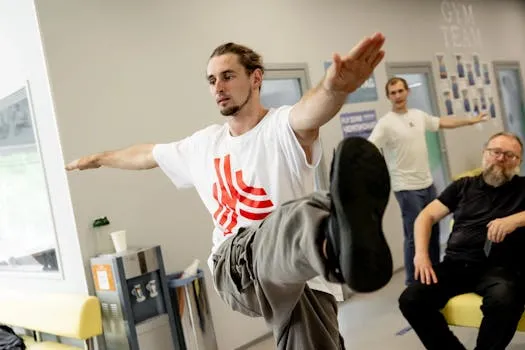
Tissue maintenance requires mechanical input, period. The cells responsible for building and maintaining structural tissue are mechanosensitive — they respond to load by upregulating synthesis and switching on repair pathways. Remove the load and those cells downregulate. That’s why prolonged immobilization causes rapid deterioration, and why “rest” as a long-term strategy for chronic joint issues consistently produces worse outcomes than appropriate activity.
Key word: appropriate. Not maximum load, not pain-through-it heroics. The sweet spot for most joint conditions sits between “not enough to stimulate adaptation” and “enough to cause additional damage.” Finding it, and staying in it, takes both knowledge and honest self-assessment.
General principles for the movement protocol:
Modalities with the strongest evidence for mesenchymal stem cell–supported repair:
- Resistance training with controlled eccentric loading — the lengthening phase under load has particularly strong evidence for tissue remodeling
- Walking — underrated, sustainable, mechanically appropriate for a remarkably wide range of conditions
- Swimming and water-based exercise — loading benefits with reduced impact, useful during periods of active inflammation or acute injury
- Yoga and similar movement practices — loading, mobility, and stress reduction addressed simultaneously
Supplement Tiers: What’s Worth Taking, and What’s Expensive Placebo
- Vitamin D3 with K2: D3 deficiency is close to epidemic in modern populations, with documented effects across nearly every tissue system relevant to joint health. K2 — specifically MK-7 — is required to direct calcium into the right tissues and works synergistically with D3. Doses: 2,000–5,000 IU D3 daily, 100–200mcg K2 MK-7. Test serum 25(OH)D and target 40–60 ng/mL.
- Magnesium: A cofactor in over 300 enzymatic reactions. Most Americans are deficient. Glycinate or malate forms beat oxide on bioavailability. Doses: 300–400mg daily, evening preferred.
- Omega-3 fatty acids: 2–4g combined EPA/DHA daily for therapeutic anti-inflammatory effect. Quality matters — look for third-party-tested products with documented TOTOX values below 26.
Plainly: most supplements marketed for joint repair carry weak evidence, inappropriate dosing, or forms too poorly absorbed to matter. The industry is barely regulated. Claims aren’t rigorously vetted. And the people selling these products have a financial interest in continued purchase that doesn’t perfectly align with anyone’s actual health outcome.
That said, several compounds have genuinely strong evidence supporting mesenchymal stem cell function, and dismissing the entire category because of the bad actors means tossing out real tools along with the garbage.
Tier 1 — strong mechanistic and clinical evidence:
Tier 2 — good evidence, context-dependent:
- Collagen peptides (relevant types for joint tissue) — evidence supports improved synthesis signaling when paired with vitamin C around a training session
- Curcumin/turmeric — needs a phospholipid complex or piperine for meaningful absorption; standard turmeric powder has next to none
- Zinc — commonly deficient, important across multiple repair processes; picolinate or glycinate preferred; 15–30mg daily, cycling recommended
Tier 3 — interesting but preliminary:
- Several novel compounds show early promise but lack the human trial volume to recommend with real confidence yet
- Individual response varies a lot — a dramatic result in one person can be almost nothing in the next
The question is never “does this supplement work?” The question is “does this supplement work, for this person, at this dose, for this specific mechanism?” Anything else is wishful thinking.
Advanced Strategies: When the Basics Aren’t Enough
- Undiagnosed hormonal dysfunction: Suboptimal thyroid function, low testosterone, estrogen imbalance can all severely impair repair capacity. Conventional thyroid lab ranges in particular have taken plenty of criticism for being too broad to catch functional suboptimality.
- Gut dysbiosis blocking absorption: A significantly dysregulated microbiome can compromise nutrient absorption enough that even high-dose supplementation produces inadequate serum levels. A comprehensive stool analysis can identify this.
- Mitochondrial dysfunction: Cellular energy production drives repair. Mitochondrial dysfunction — increasingly recognized as a piece of many chronic conditions — impairs that process in ways standard nutritional protocols don’t touch.
- Toxic burden: Accumulated heavy metals, persistent organic pollutants, or mold toxins can create inflammatory load and enzymatic interference that blocks repair mechanisms outright.
Say the foundation work is actually done. Diet dialed in. Sleep decent. Movement protocol consistent. Supplements appropriate and correctly dosed. And the joint still isn’t responding the way the evidence suggested it should.
This happens. Not because the protocol is wrong — because biology is genuinely complicated and individual variation is real. When foundational work doesn’t produce the expected result, the move is investigating what’s blocking progress before reaching for something more aggressive, like a second round of cell therapy.
Common blocks to a foundational protocol’s effectiveness:
Advanced interventions worth knowing about:
Photobiomodulation (red light therapy) has become one of the more interesting non-invasive options for joint tissue health, and one that pairs naturally with cell-based procedures. The mechanism involves cytochrome c oxidase activation inside mitochondria, boosting cellular ATP production and modulating inflammatory signaling. The clinical evidence is strongest for surface tissue but increasingly supports deeper-structure effects with the right devices and parameters.
Hyperbaric oxygen therapy (HBOT) delivers oxygen under pressure, dramatically raising tissue oxygen levels. The downstream signaling — including upregulated stem cell mobilization and growth factor production — extends well past the treatment session itself. Evidence is strongest for specific acute indications and growing steadily for chronic ones.
Advanced interventions belong after foundational optimization, not instead of it. The cost-to-benefit math is far more favorable once the biological environment is actually prepared to respond to a stem cell procedure in the first place.
Tracking Progress: The Metrics That Actually Matter
- Functional capacity: can the joint do what it’s supposed to do? Rate 1–10 weekly, track the trend, not the day.
- Pain levels if applicable: intensity, frequency, character. Note what aggravates it, what relieves it. This pattern data has real diagnostic value.
- Morning stiffness duration: resolving within 30 minutes suggests mechanical rather than inflammatory pathology; lasting past an hour suggests active inflammation.
- Energy levels and recovery: improving joint conditions typically show up alongside improved overall energy and faster recovery from activity.

Good tracking is the difference between a systematic protocol and expensive hope. For stem cell–supported joint repair specifically, here’s what to measure and how often.
Subjective metrics — weekly:
Objective metrics — as appropriate:
- Relevant lab markers: inflammatory (hsCRP, IL-6 where available), nutritional status (25-OH vitamin D, RBC magnesium, zinc), hormonal panel
- Imaging where indicated: follow-up studies at appropriate intervals to document structural change
- Functional testing: range of motion, strength testing, balance assessments specific to the joint in question
The single most important tracking principle: get a baseline before starting anything. No baseline, no way to measure change. Sounds obvious. Most people skip it anyway and then have no idea, three months in, whether they’re improving, holding steady, or quietly getting worse.
You cannot manage what you don’t measure. And you cannot improve what you don’t understand.
Implementing the Protocol: A Phased 90-Day Approach
- Get baseline labs: 25-OH vitamin D, hsCRP, RBC magnesium, complete metabolic panel, CBC, relevant hormonal markers. Don’t skip this. Data first.
- Start the anti-inflammatory dietary protocol. Cut ultra-processed foods and industrial seed oils. Add two servings of fatty fish weekly. Push polyphenol-rich foods to 5+ servings daily.
- Begin Tier 1 supplementation: D3/K2, magnesium glycinate, omega-3s, at the doses above.
- Implement sleep optimization: consistent wake time, no screens for 60 minutes before bed, room at 65–68°F, blackout conditions. Non-negotiable.
- Begin a baseline movement protocol matched to current capacity. Err conservative.
Everything above turns into noise without a starting point. Below is a prioritized, sequenced 90-day plan for optimizing outcomes around stem cell–supported joint repair. Follow the sequence. Resist the urge to do everything at once — biological systems respond better to sequential, progressive change than a wholesale overhaul dumped on them at once.
Days 1–30: Foundation
Days 31–60: Build
- Review lab results, adjust supplementation to the specific deficiencies found.
- Progress the movement protocol by 10% in volume or intensity, based on how the body responds.
- Add Tier 2 supplements once Tier 1 is established and well tolerated.
- Address any gut health issues identified — a quality probiotic, prebiotic fiber, elimination of specific dietary triggers if gut symptoms are present.
- Begin stress management work if HPA axis dysregulation is suspected — poor sleep despite good sleep hygiene, an afternoon energy crash, slow recovery.
Days 61–90: Optimize
- Repeat key labs, assess progress, recalibrate supplementation.
- Evaluate whether the foundational protocol is delivering the expected results. If not, work through the blocking factors from the advanced section.
- Progress the movement protocol to sustainable long-term volume.
- Identify and address any remaining lifestyle factors working against the protocol.
- Build a sustainable long-term maintenance plan. The goal was never to finish a 90-day protocol — it’s to build habits that hold up for life.
Reader Questions About Stem Cell Therapy for Joint Repair
Q: How long before results show up?
A: Depends on starting severity, age, and how consistently the protocol gets followed. Most people notice subjective improvement in energy and inflammation markers within 4–8 weeks of starting the foundational protocol. Structural change, where relevant, typically needs 6–18 months of sustained effort. Anyone promising faster is either measuring the wrong thing or selling something.
Q: Does a doctor need to be involved?
A: The foundational dietary and lifestyle pieces are safe to run independently. Supplementation at therapeutic doses benefits from medical supervision, especially with concurrent conditions or medications. Lab monitoring requires a physician’s order in most places. Cell-based procedures — BMAC, SVF, or otherwise — absolutely require proper medical oversight and should only happen through a legitimate, verified provider.
Q: What if the joint has already been medically treated?
A: This protocol doesn’t replace appropriate medical treatment. It’s a systematic way to optimize the biological environment that shapes repair capacity. In plenty of cases these interventions run alongside conventional treatment and improve the outcome. Talk openly with whoever’s providing that care about what’s being layered on top.
Q: What’s the single most common mistake?
A: Jumping to advanced interventions without fixing the foundation — or worse, going straight for a cheap injection at a clinic that can’t or won’t explain what’s actually in the syringe. Spending real money on specialized therapy while still eating poorly, sleeping badly, and managing stress worse is a losing bet. The biology doesn’t care how sophisticated the intervention looks. It only responds to total inputs.
Q: How does anyone know if it’s working?
A: Track the metrics from the tracking section. Look for trends over weeks and months, not day-to-day noise. The most reliable signal is sustained, consistent improvement in functional capacity — being able to actually do the things that prompted starting the protocol in the first place.
Q: Any contraindications worth knowing?
A: Several of the supplements above interact with common medications. Vitamin K2 interacts with anticoagulants. High-dose omega-3s raise bleeding risk. Magnesium can potentiate certain blood pressure medications. One more reason to loop in a healthcare provider before running a therapeutic-dose supplementation protocol.
Why This Actually Matters Long-Term
Back to James. Six months of consistently — not perfectly, consistently — running the foundational protocol alongside a properly sourced BMAC procedure this time, and the follow-up markers told a different story than the first set. Not a miracle. Not the kind of transformation that ends up in a clinic’s before-and-after slideshow. A measurable, meaningful shift in the direction of function instead of decline. Which, it turns out, is most of what recovery ever actually looks like.
That’s the real promise of evidence-based health optimization. Not miracles, not shortcuts. A trajectory that compounds — the same way a retirement account compounds, the same way a skill compounds, the same way a relationship compounds when it gets tended to. Decisions made today shape the range of options available five, ten, twenty years out.
The alternative is just as real, and just as quiet. Ignore the signals. Keep the habits slowly running up a biological debt. Wait until the symptoms can’t be ignored before doing anything about them. The research on that trajectory is every bit as solid as the research on the optimization trajectory — it just points the other direction.
Nobody needs to be perfect here. Consistent, yes. Willing to work with the biology actually present instead of the biology someone wishes they had, yes. And willing to play a long game, because it’s the only game that was ever actually on offer.
None of this requires a medical degree to understand or apply. It requires something harder: sustained commitment to treating the body like the long-term asset it actually is, instead of the low-maintenance appliance it’s often treated as until something breaks.
Start with step one. Today, not eventually. Not perfectly — just start. The trajectory gets set by the first step, and the compounding starts the moment that step actually happens.
Putting Stem Cell Therapy for Joint Repair Into Practice
References
Editorial StandardsCorrectionsMedical DisclaimerAbout Our ContentAffiliate DisclosureSite Map