

Michael Easter’s The Comfort Crisis: Embrace Discomfort to Reclaim Your Wild, Happy, Healthy Self (2021) is the book that puts a name on whatever happened to Nate, and to a sizable chunk of the modern world along with him. Easter, a health and fitness journalist who spent a month on a remote hunting expedition in Alaska as his primary field research, makes an argument simple on the surface and considerably deeper the further you go into it: the human organism evolved to require — not just tolerate, require — levels of physical challenge, uncertainty, boredom, and difficulty that modern comfort engineering has methodically stripped out of most people’s lives.
The result isn’t happiness. The result is Nate — physically healthy, materially comfortable, and dragging around a persistent sense of dissatisfaction, fragility, and meaninglessness that has become the default condition of the post-scarcity developed world. Easter calls this the “comfort trap”: the elimination of discomfort, which should in theory produce wellbeing, instead produces its opposite.
The Evolutionary Mismatch: Built for Hardship, Living in Comfort
Easter’s foundational argument is evolutionary mismatch theory, aimed specifically at comfort and challenge. The human organism spent hundreds of thousands of years in environments demanding real physical effort — walking miles daily, carrying heavy loads, enduring temperature extremes — plus intermittent food scarcity, real danger, frequent boredom, and the psychological work of navigating genuine uncertainty. Whatever physiological and psychological systems define the human organism today were shaped by, and calibrated to, those demands.
The last hundred years — the last thirty especially — have quietly removed most of that from daily life in industrialized countries. Temperature is managed. Food shows up whenever you want it. Physical effort became optional. Danger is nearly absent. Boredom dissolves instantly at the touch of a phone. Uncertainty gets minimized through planning, insurance, safety nets. These are real achievements, genuinely. They’re also, Easter argues, producing an organism whose adaptive systems keep running in the absence of the stimuli those systems were built to expect.
The consequences show up across a wide spread of research traditions: the metabolic cost of physical inactivity, the psychological cost of chronic comfort and stimulation, the cognitive cost of eliminating boredom, the social cost of losing shared challenge, and the existential cost of a life without meaningful difficulty in it anywhere. Easter doesn’t cherry-pick to make the case. He works through it methodically, pulling from exercise physiology, positive psychology, evolutionary biology — a wide net, cast carefully.
“Humans evolved to walk. Not run, not lift, not do yoga. But we also didn’t sit for eight hours a day. We were a species of walkers, and our bodies and brains are still expecting those miles.” — Michael Easter
Misogi: The Annual Challenge That Changes Everything
- Design one annual misogi — a challenge hard enough that completion is uncertain, significant enough that it changes your self-narrative. Not an adventure sport for its own sake, but a deliberate self-examination under genuine difficulty.
- Rebuild your relationship with boredom — practice sitting with unstimulated time daily. Not as meditation (which has a focus object), but as genuine unoccupied presence. Start with ten minutes. The discomfort passes and leaves something useful behind.
- Carry heavy things — rucking, loaded hiking, manual labor. The physiological benefits of load-bearing locomotion are substantial and largely unavailable from gym exercise. The psychological benefits of carrying something genuinely heavy for a genuinely long distance are equally real.
- Spend meaningful time in nature without technology — wilderness time specifically restores the attention systems that urban, digital environments deplete. The minimum effective dose appears to be several consecutive days, not a lunch-hour walk in the park.
- Remove one comfort that has become an expectation — the cold shower, the walk in uncomfortable weather, the one meal per week of fasting. Not as punishment, but as deliberate maintenance of the adversity tolerance that comfort erodes.
Easter’s single most important recommendation is the misogi — a Japanese concept lifted from ancient Shinto purification rituals and adapted for modern use by trainer and performance pioneer Marcus Elliot. In Easter’s framework, a misogi is an annual challenge meeting two criteria: it’s hard enough that finishing isn’t guaranteed, and it’s significant enough that it changes how you see yourself afterward.
The specific form matters less than those two criteria. One man’s misogi is a two-hundred-mile solo bike ride. Another’s is a multi-day wilderness fast. Another’s is swimming across some stretch of open water that scares him. The key ingredient is genuine uncertainty about finishing — a level of challenge training and preparation can’t fully insure against. The discomfort and the uncertainty aren’t flaws in the design. They’re the mechanism. Without them, nothing changes.
Easter walks through the psychological research on what happens when people successfully get through something genuinely hard. It’s not just pride at having finished. It’s a recalibration — of the whole relationship between self and difficulty. The man who completes a misogi doesn’t just add a line to his list of accomplishments. He gets new evidence about who he actually is, about his capacity to sustain effort through real uncertainty. And that evidence updates the self-concept in a way motivational talks, therapy sessions, and productivity systems don’t manage, because it isn’t abstract. It’s embodied. You know you can do hard things because you did one you weren’t sure you could.
That recalibration matters most for men who’ve lived mostly in comfort — who’ve never actually been tested against something capable of breaking them. For those men the misogi isn’t an adventure-sport hobby. Easter frames it as a psychological necessity — the corrective for a self-concept built entirely out of comfortable wins, which is structurally weak the moment difficulty shows up that comfort can’t buy its way out of.
Boredom: The Most Undervalued Resource
Easter’s chapter on boredom is one of the more original stretches of the book, and it makes an argument that cuts against the current media environment: boredom isn’t a problem in need of solving. It’s a cognitive and psychological resource, and it’s being destroyed — quietly, completely — by the round-the-clock availability of digital stimulation. The consequences aren’t hypothetical.
Research on boredom tolerance shows the capacity to sit with an unstimulated state — to tolerate the discomfort of mental quiet without reaching for a phone — correlates with creativity, problem-solving, emotional regulation, and the kind of introspective insight that identity development and values clarification actually depend on. Boredom is the cognitive state where the brain shifts from reactive to generative — from processing what’s coming in to synthesizing something of its own.
The smartphone has made that state nearly inaccessible for most adults in developed countries. Every moment that used to hold potential boredom — the waiting room, the elevator, the ten-minute line — now gets resolved instantly by the phone. The result, Easter argues, isn’t just less boredom. It’s atrophy of the cognitive state boredom used to produce — the reflective, creative, synthesizing capacity that needs the quiet instant stimulation refuses to allow.
This links up directly with Cal Newport’s solitude deprivation concept and the broader worry over dopamine dysregulation in the digital era. Easter adds the evolutionary layer: boredom tolerance isn’t a modern cognitive luxury. It’s an evolved capacity that served real functions in pre-digital environments — planning, social processing, creative problem-solving, managing seasonal downtime — and modern stimulation addiction is systematically wiping it out of the human cognitive repertoire. The full consequences aren’t understood yet. That doesn’t make them small.
Carrying Heavy Things: The Forgotten Physical Practice
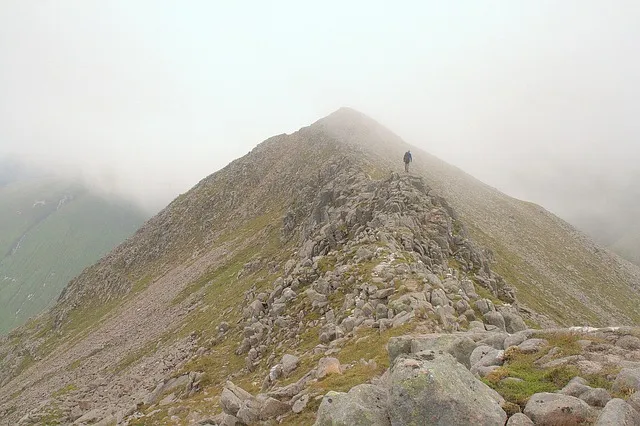
The physiological case is straightforward enough. Load-bearing locomotion produces adaptations in bone density, connective tissue strength, cardiovascular efficiency, and postural musculature that conventional gym work doesn’t replicate. Walking with a pack recruits muscles seated exercise never touches, produces joint-loading patterns running alone can’t match, and delivers the kind of sustained low-intensity cardiovascular effort that metabolic research keeps finding is independently protective of cardiovascular health — beyond what high-intensity training alone provides.
The psychological case is less obvious, and arguably more important. Carrying something genuinely heavy over a genuinely long distance is an exercise in managing sustained effort — pacing, mental strategy, the specific skill of holding effort through the exact moments when stopping is immediately available and tempting. Those skills don’t transfer automatically from gym training into real-world challenge the way actual load-bearing practice does. The man who’s carried a heavy pack twenty miles has a different relationship with his own body’s capacity — more accurate, less theoretical — than the man who’s only ever trained somewhere controlled and climate-managed.
Easter documents the military’s rediscovery of rucking as a fitness foundation. British special forces selection, for instance, uses extended loaded marches as its primary fitness test rather than anything measured in a gym. The performance that matters under genuine physical challenge is a different animal from what gym metrics track, and rucking performance lines up with real-world physical competence far better than isolated weight-lifting numbers do.
Nature Deficit: What Urban Comfort Costs
Easter draws on research from multiple scientific traditions to make the case for wilderness time as a physiological and psychological need, not a recreational luxury. Attention restoration theory (ART), developed by Rachel and Stephen Kaplan, documents the specific mechanisms by which natural environments restore the directed-attention capacity urban environments drain. Stress reduction theory (SRT) documents the physiological stress-reduction effects of nature exposure — cortisol reduction, blood pressure normalization, immune function improvement. Both traditions land on the same conclusion: the human organism runs better with regular exposure to natural environments, and the deficit from missing that exposure is real, and it’s measurable.
What Easter adds to that existing literature is the wilderness-depth requirement. Most research on nature’s benefits measures effects from urban parks or brief outdoor exposure. Easter’s argument, backed by research on extended wilderness expeditions, is that the deeper restoration — the actual recalibration of attention and stress systems — requires disconnecting from digital environments entirely and staying immersed in natural ones for a while. The lunch-hour walk in the park is better than nothing. It is not the same thing as a week in wilderness. Not close.
The monk mode tradition partly captures this — extended withdrawal from a normal environment producing a recalibration no weekend trip achieves. But monk mode, as usually practiced, is mostly cognitive and behavioral focus. Easter’s recommendation is the physical complement: extended time in wilderness that includes real physical challenge, temperature variation, and the absence of the digital inputs that keep the urban cognitive mode running indefinitely. Put the two together — focused work plus physical wilderness challenge — and you get something more complete than either alone.
The Misogi Framework: Designing Your Annual Hard Thing
The practical application of Easter’s framework centers on the misogi, and it deserves concrete guidance, because the vague instruction to “do something hard” just produces endless deferral in people who need a more specific process to actually follow.
Step one: find your current comfort ceiling. What’s the hardest physical or psychological challenge completed in the last two years? The misogi should sit clearly above that ceiling — not slightly above, which is just a harder workout, but categorically above, which is a real test of who someone is and what they’re actually capable of.
Step two: pick the domain. The misogi doesn’t have to be physical, though physical challenges are the most common form. A creative misogi might be producing something significant under real time pressure and public scrutiny. A relational misogi might be the honest conversation someone’s been avoiding for years. A cognitive misogi might be learning a skill to demonstrable competence inside a fixed, tight timeline. The requirement is the same across all of them: genuine uncertainty about completion, genuine stakes.
Step three: design the commitment mechanism. The misogi needs to be committed to — publicly, or contractually — before motivation shows up, because motivation will not reliably show up on its own. Signing up for the event, paying the entry fee, telling people who’ll hold you to it, booking the logistics — these are commitment devices that shift the question from “will I do this hard thing?” (decided under comfortable present conditions) to “I already committed to this and I’m not wasting it” (the framing that actually sustains effort once things get difficult).
Step four: do it without an exit. The specific psychological benefit of the misogi requires there be no comfortable exit available mid-challenge. That doesn’t mean literally stripping out safety protocols. It means mentally deciding, in advance, that completion is the only acceptable outcome short of a genuine medical emergency — so that the moments of maximum discomfort, which are guaranteed to arrive, aren’t moments of real decision-making. The decision already happened. What’s left is just follow-through.
Where Easter Gets It Wrong (Or Incomplete)
The Comfort Crisis is an important book. It also has some real weaknesses, and they’re worth naming plainly.
First: Easter’s framework quietly assumes a baseline of physical health and safety that not everyone has. Carrying heavy things through wilderness terrain is excellent advice for a healthy thirty-year-old with no significant limitations. It needs substantial modification for someone with joint problems, cardiovascular conditions, or a limited physical baseline. The book’s occasional “the obstacle is the way, just go do it” tone underestimates the real barriers keeping some people from the challenges Easter recommends.
Second, the book’s engagement with mental health is thin. For someone with an anxiety disorder, “embrace discomfort” without the structured guidance exposure therapy provides can backfire. Anxiety isn’t simply the experience of discomfort — it’s a specific maladaptive response pattern to perceived threat, and addressing it well requires structured therapeutic support. Easter’s right that avoiding discomfort generally makes anxiety worse. He’s less equipped to guide the specific approach anxiety treatment actually requires.
Third — and this is a minor complaint about an otherwise well-written book — the Alaska expedition narrative, vivid and genuinely well-crafted as it is, sometimes crowds out the evidence-based argument underneath it. Easter’s a skilled journalist, the expedition chapters read well. But the anecdotal weight can make the book feel like a memoir wearing an argument’s clothes, rather than the strong evidence-based case the research he cites actually supports. The science holds up. It occasionally gets buried under the story.
Fourth, the misogi concept lands, but the implementation guidance is thin. Easter offers a handful of examples without much systematic guidance for someone trying to design their first genuine challenge from scratch. “Do something hard enough that you might fail” needs more scaffolding for readers without an athletic background to judge what that even means for their own circumstances.
The RW Framework: Deliberate Discomfort Architecture

The Weekly Loaded Carry: One rucking session a week, minimum forty-five minutes, enough weight that the last fifteen minutes are genuinely hard. Build from light — ten to fifteen pounds — over three months. Both the physiological adaptations and the psychological recalibration require consistent practice, not occasional heroics.
The Monthly Nature Immersion: A full day in natural environments, no digital devices. More than a workout in a park — a reset of the attention and stress systems that compounds over months of consistent practice. Escalate quarterly to multi-day wilderness immersions when the schedule allows it.
The Annual Misogi: One challenge a year that meets Easter’s two criteria — genuinely uncertain completion, genuinely significant stakes. Plan it in January. Commit publicly by February. Execute with no exit option. Debrief honestly on what it revealed. Feed that into next year’s priorities.
Key Lessons from The Comfort Crisis
- The comfort trap: the elimination of discomfort should produce happiness but instead produces fragility, dissatisfaction, and a pervasive lack of meaning — because the organism evolved to require challenge.
- Misogi — an annual challenge whose completion is genuinely uncertain — is the most powerful available tool for recalibrating the self-concept’s relationship with difficulty and expanding the perceived ceiling of what’s possible.
- Boredom is a cognitive resource, not a problem: the unstimulated state produces creative synthesis, introspective insight, and emotional processing that constant stimulation prevents.
- Carrying heavy things through real terrain provides physiological and psychological adaptations that controlled gym environments cannot replicate.
- Nature deficit is real: extended wilderness immersion restores attention and stress systems in ways that brief urban nature exposure doesn’t replicate.
- The comfort-organism mismatch is evolutionary: the human body and psyche were shaped by demands that modern comfort engineering has systematically eliminated, and the absence of those demands produces measurable physiological and psychological deterioration.
- Cold exposure, intermittent fasting, and temperature variation are not extremist wellness trends — they’re deliberate reintroductions of the physiological challenges the human system adapted to handle over hundreds of thousands of years.
- Commitment to the uncomfortable must be made in advance, not in the moment of maximum discomfort — the pre-commitment structure is what makes the challenge do its psychological work.
Books Similar to The Comfort Crisis
Can’t Hurt Me by David Goggins — The extreme end of the embrace-discomfort spectrum. Goggins’ self-imposed suffering runs well past what most people need to apply, but his argument for the link between manufactured suffering and genuine psychological resilience is the personal-narrative cousin of Easter’s scientific one.
Last Child in the Woods by Richard Louv — The definitive academic treatment of nature deficit in children. Louv’s research supplies the developmental foundation underneath Easter’s adult-focused application of the same idea.
The Nature Fix by Florence Williams — A more scientific treatment of the neurological and physiological effects of nature exposure. Williams’ reporting on Japanese shinrin-yoku (forest bathing) research and its Western applications complements Easter’s framework.
Breath by James Nestor — The natural companion piece to Easter’s physical challenge framework. The breathing-quality dimension of performance under difficult conditions makes Nestor’s work directly applicable to Easter’s misogi practices.
The Obstacle Is the Way by Ryan Holiday — The Stoic philosophical tradition underneath Easter’s empirical argument: difficulty is the mechanism of growth, and the person who learns to face it willingly ends up fundamentally more capable than the one who keeps avoiding it.
Comfort Crisis Summary Q&A
Q: Isn’t embracing discomfort just masochism rebranded?
A: No, but the distinction actually matters here. Masochism pursues suffering for its own sake, as an end. Easter’s framework treats voluntary adversity as a means — specifically, the development mechanism for capacities comfortable environments simply can’t build. The runner doing hill repeats isn’t a masochist. Neither is the man designing his annual misogi. The suffering is instrumental, not terminal. The test: does the discomfort serve a clear developmental or experiential purpose? If yes, it’s deliberate adversity. If no, it’s something else entirely.
Q: What’s the minimum viable version of the misogi concept for someone with family responsibilities and limited time?
A: Easter concedes not everyone can spend a month in Alaska. The minimum viable misogi is whatever challenge, given a person’s actual constraints, meets the two criteria — genuinely uncertain completion, genuinely significant personal stakes. For a parent with young kids and no schedule flexibility, that might be a local mountain trail run at the edge of current conditioning, a twenty-four-hour fast, or a public performance commitment that actually scares him. The form is contextual. The criteria aren’t.
Q: Does cold exposure (cold showers, cold plunges) have legitimate scientific support?
A: The evidence is mixed, and to his credit Easter doesn’t oversell it. Cold exposure produces measurable effects — vasoconstriction and subsequent vasodilation, norepinephrine release, subjective mood improvement. The research on cold water immersion’s effects on recovery, inflammation, and mood is real but not conclusive on optimal protocols yet. The more reliable benefit Easter documents is the psychological one: regular voluntary cold exposure builds adversity tolerance the way other deliberate discomfort practices do. The physiological benefits are the bonus. The psychological training is the actual mechanism.
Q: How does this framework interact with chronic pain or physical limitations?
A: With necessary modification. The core principle — deliberate engagement with challenge rather than avoidance — applies across a wide range of physical circumstances. But the specific challenge has to be calibrated to the specific body. A misogi for someone with chronic back pain might be a significant psychological or creative challenge rather than a physical one. The principle stays universal. The implementation needs honest self-knowledge, and sometimes professional guidance.
Q: What does Easter’s framework say about the modern wellness industry’s version of comfort optimization?
A: Largely, it contradicts it. The wellness industry’s core product is more effective comfort — better sleep optimization, stress reduction, relaxation protocols, elimination of physical discomfort. Easter’s argument is that this treats symptoms, not the actual deficit. The man who’s optimized his recovery but never genuinely tested himself hasn’t solved the problem the wellness industry is treating. He’s just made the problem more comfortable to live inside of. Genuine resilience requires something no wellness product sells: the willingness to be genuinely uncomfortable, sometimes for a long stretch, on the way to something difficult and meaningful.
Q: How do you build boredom tolerance specifically?
A: Start with five minutes a day of deliberate unstimulated sitting. Not meditation — no technique, no focus object, no guided audio. Just sitting, or walking without headphones, letting the mind go wherever it goes. The first week is uncomfortable the way any withdrawal is uncomfortable. By week three the restlessness fades and something more interesting starts showing up in that mental space. Extend the duration gradually. Track whether thinking quality and creative output improve over eight weeks of consistent practice. The correlation is almost always positive.
Q: Is Easter’s argument that we should make life harder generally, or selectively?
A: Selectively, and deliberately. Easter isn’t arguing against central heating, medical care, food security, or the genuine protections modern civilization provides. He’s arguing for the deliberate reintroduction of specific categories of challenge — physical demand, boredom, temperature variation, genuine risk — that the body and psyche adapted to handle, and that comfort engineering has quietly eliminated. The distinction: keep the protections that address genuine scarcity and danger, and deliberately reintroduce the challenges that function as development mechanisms rather than threats.
Q: How does The Comfort Crisis framework relate to taking ownership of your physical development?
A: They complement each other. The ownership framework says: you’re responsible for the conditions of your life, including your physical condition and psychological resilience. Easter’s framework says: the conditions genuine resilience requires include challenges comfort can’t provide. Together: own your development trajectory, which means deliberately including the discomfort development actually requires, rather than waiting for circumstance to impose it eventually. The man who designs his own adversity is in a fundamentally stronger position than the man hoping comfort will somehow produce the resilience it’s actively preventing.
Q: What’s the connection between The Comfort Crisis and the broader mindset development framework?
A: Easter’s book makes a specific, important contribution here: it argues mindset development can’t happen entirely in the abstract, through ideas and frameworks and reading alone. It needs physical and experiential grounding — real challenge encountered in the world, in the body, with an uncertain outcome. The man who’s read every book on resilience and never tested himself against real adversity has theory without the embodied evidence that makes theory hold up under pressure. Easter’s framework supplies the experiential piece most cognitive-focused mindset literature leaves out.
Q: Can women apply this framework equally?
A: Yes, with contextually appropriate calibration. Easter’s field research is mostly male, but the evolutionary mismatch argument crosses sexes cleanly: human females evolved in the same environments demanding physical challenge, intermittent scarcity, and real difficulty. How the misogi concept and physical-challenge recommendations get applied will differ by individual regardless of sex — what matters is the relationship between challenge design and current capacity, not any sex-specific prescription.
Straight Talk on The Comfort Crisis
The Comfort Crisis is a genuinely important book doing genuinely important cultural work. Easter names something most people already sense but have never had put into words: the soft, pervasive unsatisfactoriness of a life with all the genuine difficulty removed from it. His evolutionary framework explains that dissatisfaction better than the psychological approaches dominating the self-help shelf, because it locates the cause in the mismatch between what the organism is built for and what modern life actually provides — not in individual cognitive errors or some vague emotional deficit.
The Alaska expedition narrative is genuinely good journalism, and it brings the framework to life in ways data alone can’t manage. The specific recommendations — misogi, rucking, boredom practice, nature immersion — are practical and actionable without demanding dramatic life upheaval. The evidence base under the broader argument is strong, even where specific claims are still being nailed down in the literature.
Its weaknesses — thin implementation guidance for the misogi, not enough attention to people with real physical limitations, occasional oversimplification on the anxiety and mental health front — are real. They don’t undermine the central argument, though. Easter’s right that the comfort trap is real, that modern humans are living its consequences, and that the fix runs through deliberate engagement with challenge, not through more effective comfort optimization.
The men who need this book most are the ones whose lives look, by every external measure, entirely comfortable — and who feel, the way Nate felt, a nameless dissatisfaction that no amount of additional comfort seems able to touch. Easter’s answer to that dissatisfaction isn’t therapy, isn’t more achievement, isn’t more consumption. It’s a heavy pack and a long trail, once a week, and one genuine test of who you are, once a year. Sounds almost insultingly simple written down like that. Following it is not simple at all. The changes it produces in a man who takes it seriously are among the more significant ones available at this particular cultural moment.
Rating: 4.4 / 5 stars
The most compelling argument for deliberate adversity available in accessible form. Required reading for any man who has spent years removing discomfort from his life and wonders why he doesn’t feel better.
The Masculinity Dimension: What Comfort Has Done to Men Specifically
Easter’s book is careful not to make it a book about men specifically, and the evolutionary mismatch argument applies across all demographics. But the particular toll comfort engineering has taken on men deserves more direct attention than Easter gives it, because the evidence that men have been hit differently by the comfort crisis is substantial.
Research documenting declining male wellbeing, declining male engagement in education and work, growing male isolation and purposelessness, and worsening male physical and mental health outcomes has piled up steadily over the last two decades. The causal story is complicated and politically contested, sure. But one underappreciated thread running through it is exactly what Easter’s book describes: the systematic removal, from modern life, of the physical challenge, meaningful difficulty, and genuine test that have historically sat at the center of how male character and identity got built.
Initiation traditions across virtually every human culture involved a structured encounter with genuine difficulty — physical challenge, isolation, a confrontation with one’s own capacity for endurance. Those traditions weren’t arbitrary. They did the psychological work of confirming, through actual embodied experience, that a young man had the internal resources adult life would demand of him. Modern cultures have mostly eliminated those structures without replacing the psychological function they served. The result: men reaching adulthood without the embodied self-knowledge adversity used to provide — more fragile, in the specific sense Easter documents, than their counterparts in environments where genuine challenge simply couldn’t be avoided.
The misogi concept can serve that function today. Not as nostalgia for initiation rituals, but as a practical mechanism for supplying what comfort took away: the annual encounter with genuine difficulty that proves, empirically, that a man can handle things he wasn’t sure he could. Every man needs that evidence. Almost no modern environment hands it to him automatically. Easter is arguing for deliberately manufacturing that evidence through designed adversity. That argument lands with particular force right now, and it earns the seriousness it’s asking for.
Designing Your Life Around Productive Struggle
The final piece of Easter’s framework is architectural: how do you actually build a life that includes the deliberate adversity development requires, inside the legitimate demands of a modern adult’s responsibilities? That’s the question the book raises without fully answering.
The architecture runs in layers. Daily: micro-dose discomfort through the practices already covered — cold exposure, fasting windows, boredom periods, physical challenge. Weekly: the rucking session, the genuine workout, the deliberately hard conversation or difficult creative push that keeps the adversity-tolerance muscle active. Monthly: the wilderness day, the voluntary challenge that removes the comfort of instant digital resolution. Annually: the misogi — the genuine test, the encounter with real uncertainty about your own capacity.
This layered structure keeps adversity tolerance running as a continuous capacity instead of something peak-trained once and then left to atrophy. The man who only meets genuine challenge once a year is less resilient than the man holding a steady micro-dose through the weekly and monthly practices, with the annual misogi acting as the calibration reset. The daily and weekly practices are training. The misogi is the test that grades the training and sets next year’s target.
Combine this adversity architecture with the deliberate practice framework for skill development — applied to whatever competencies actually matter for a given life’s purpose — and it becomes the complete physical and psychological development system the self-help genre rarely assembles into one coherent shape. Easter’s contribution is the missing piece: the reminder that development requires real difficulty, not just good frameworks, and that designing your own difficulty is the most important act of self-authorship on offer. Nate eventually got there. He started rucking on Wednesday evenings and planned a fifty-mile hiking trip for the summer with two friends. He left his phone at home both times. The anxiety in the checkout line had noticeably faded by autumn. Not because his life had changed dramatically. Because he had — quietly, through the compound effect of weekly encounters with things harder than his default. Which is, in the end, what Easter’s book is actually pointing toward. And it points there correctly.
Related: The Count of Monte Cristo Summary
Related: The Power of Your Subconscious Mind Summary
FROM THE LIBRARY ›
References
Editorial StandardsCorrectionsMedical DisclaimerAbout Our ContentAffiliate DisclosureSite Map