

Lead is one contaminant. PFAS “forever chemicals” — found in over 2,000 water systems serving an estimated 200 million Americans — are another. Chlorine, chloramine, nitrates, arsenic, disinfection byproducts, pharmaceutical residues, and agricultural runoff round out a list that most people assume is someone else’s problem because their water looks clear and tastes fine.
Clear water is not clean water. The contaminants that matter most are invisible. Understanding what’s actually in the water — and how different filtration technologies address different contaminants — is the foundation for making an informed decision about the level of filtration that makes sense for a given home, family, and risk profile. Approach this with eyes open rather than the comfortable assumption that the system is protecting anyone completely.
The State of American Drinking Water: What the Data Shows
The Safe Drinking Water Act of 1974 established federal standards for contaminants in public water supplies. The EPA currently regulates 90 contaminants with maximum contaminant levels. The problem: the regulatory framework hasn’t kept pace with the science or with the growing list of emerging contaminants identified in water systems nationwide. Many of the MCLs currently in effect were established decades ago and haven’t been updated to reflect more recent toxicological research.
PFAS weren’t regulated in drinking water at all until 2024, when the EPA finally established MCLs for PFAS. Estimated prevalence: PFAS above the new regulatory thresholds affects an estimated 45% of US tap water samples in Environmental Working Group testing. These are compounds that don’t break down in the environment or in the human body, accumulate in tissues over decades, and have been associated with cancer, thyroid disruption, immune dysfunction, and reproductive harm across multiple research contexts.
Lead contamination is more widespread than commonly appreciated. The EPA’s action level for lead at 15 ppb triggers required remediation by water utilities. But there is no safe level of lead exposure — the CDC and American Academy of Pediatrics are unambiguous that no blood lead level in children is known to be safe. Lead service lines connecting water mains to home service connections are present in an estimated 6-10 million American homes. Lead leaches from these pipes, particularly when water is corrosive or sits in pipes for extended periods.
Disinfection byproducts form when chlorine or chloramine — added to water for disinfection — reacts with organic matter naturally present in source water. Trihalomethanes and haloacetic acids are the most common DBPs regulated by the EPA, but hundreds of other DBPs form during disinfection that aren’t currently regulated. Research associates chronic DBP exposure with elevated cancer risk, pregnancy complications, and potentially other health outcomes.
Nitrates from agricultural runoff are a significant concern in rural areas and communities near intensive agriculture. High nitrate concentrations cause methemoglobinemia in infants and are associated with thyroid dysfunction, colorectal cancer risk, and other health effects at chronic exposure levels below current MCLs. Some researchers argue that the current MCL of 10 mg/L is too permissive based on more recent epidemiological evidence — a reminder that the legal limit and the health-protective limit are not always the same number.
How to Find Out What’s in the Water
The starting point for any rational water filtration decision is knowing what’s actually in the water. Meaningful evaluation of filtration options isn’t possible without this data, and assumptions based on water appearance or taste will mislead.
Annual Consumer Confidence Reports are published by public water utilities as required by the Safe Drinking Water Act. These reports disclose detected contaminants, their levels, and how those levels compare to legal limits. Most utilities post CCRs on their websites. Requesting the local report, reading it carefully, and paying particular attention to any contaminants detected near or above the MCL and to notes about treatment methods used is a good first step.
The Environmental Working Group’s Tap Water Database at ewg.org/tapwater allows searching by zip code to see all detected contaminants in a local water system, with comparisons to health-based rather than just legal standards. The EWG database frequently reveals contaminants present at levels above EWG health guidelines but below legal limits — a meaningful distinction given that legal limits are often based on outdated science or cost-feasibility rather than current health evidence. This database is one of the most useful tools a homeowner has for understanding their actual water quality picture.
Home water testing by certified laboratories can test for comprehensive contaminant panels. State health departments provide certified lab listings. The National Testing Laboratories and others offer various panel tests from $50-200+ covering heavy metals, bacteria, nitrates, pesticides, and other contaminants. This is particularly important for well water users who receive no utility testing and no CCR reporting.
Lead-specific testing requires particular attention because lead enters from household pipes rather than the water source, meaning utility testing doesn’t capture it. First-draw and flush samples from a tap — sent to a certified lab — provide the most accurate assessment of lead exposure from a specific home’s plumbing. This is especially important for homes built before 1986, when lead plumbing was common, and for homes with known lead service lines.
Filtration Technologies: A Detailed Comparison
Different filtration technologies target different contaminants through different mechanisms. No single technology removes everything, which is why understanding the specific contaminant profile of a given water supply determines the optimal filtration approach.
Activated Carbon Filters including pitcher, faucet, and under-sink types remove chlorine, chloramine, many VOCs, some pesticides, disinfection byproducts, and improve taste and odor. Carbon block filters are generally more effective than granular activated carbon because they provide longer contact time between water and carbon. Carbon does NOT effectively remove heavy metals including lead, nitrates, fluoride, or most PFAS at the concentrations found in contaminated water systems. Standard pitcher filters improve taste and remove some chemical contaminants but leave heavy metals and PFAS largely unaddressed. NSF 53 certified carbon filters can reduce lead, but performance varies significantly between products and proper maintenance is essential.
Reverse Osmosis forces water through a semipermeable membrane with pores of approximately 0.0001 microns — small enough to reject dissolved minerals, heavy metals, nitrates, arsenic, most pesticides, and the majority of PFAS. RO is the most comprehensive contaminant removal technology available for home use, typically removing 90-99% of contaminants when properly maintained. Limitations include slow production rate of 1-3 gallons per day per membrane, generation of 3-4 gallons of wastewater per gallon of filtered water, removal of beneficial minerals requiring remineralization for optimal taste and health, and periodic membrane and filter replacement costs. Under-sink RO systems with storage tanks cost $200-600 installed and represent the highest-value water filtration investment for homes with significant contamination concerns.
Ion Exchange replaces calcium and magnesium ions with sodium or potassium through a resin bed, primarily addressing water hardness. Ion exchange also removes heavy metals and some other cations. It does not address microbiological contamination, chlorine, most organic compounds, or PFAS. Softened water has elevated sodium content, a consideration for people with sodium-restricted diets or hypertension.
UV Treatment uses light at 254nm wavelengths to destroy the DNA of bacteria, viruses, and other microorganisms, rendering them unable to reproduce. UV is highly effective against microbiological contamination and is required for well water used as drinking water in many jurisdictions. UV does not remove chemical contaminants, heavy metals, or turbidity. It’s typically combined with filtration for comprehensive water treatment.
Distillation heats water to produce steam, which is then condensed back into liquid. Distillation removes dissolved minerals, heavy metals, most chemicals with boiling points above water, and microbiological contaminants. It doesn’t effectively remove volatile organic compounds with boiling points near or below water’s, which can co-distill with steam. Distillation is slow, energy-intensive, and produces water that many people find flat-tasting due to mineral removal. It’s effective for specific heavy metal contamination but less commonly used as a primary home treatment method than RO.
Lead in Drinking Water: What to Know
Lead deserves special attention because it is uniquely dangerous and uniquely invisible. There is no taste, no odor, no color that indicates the presence of lead in drinking water. It must be tested for specifically, and the results can be dramatically different from what a utility’s CCR shows — because most utility testing happens at the treatment plant or distribution system, not at the tap.
The lead service line is the pipe connecting the water main to a home’s service connection. These pipes were standard installation until 1986. An estimated 6-10 million lead service lines remain in use across American cities. When water sits in a lead service line overnight and is then drawn for drinking or cooking, lead concentrations can be dramatically elevated. The EPA’s Lead and Copper Rule requires utilities to test for lead at customer taps, but the testing protocol historically used — flushing before sampling — tends to underestimate actual consumer exposure under typical usage conditions.
Homes built before 1986 frequently contain lead solder at pipe joints even if the service line itself is not lead. This interior plumbing lead source isn’t captured by utility testing or service line maps. Testing tap water with a first-draw sample — the sample collected after water has been standing in pipes for 6-8 hours — provides the most accurate exposure assessment for a specific home.
Children are the highest-risk population for lead in drinking water. Lead displaces calcium in developing bone and brain tissue, producing neurodevelopmental effects — reduced IQ, attention deficits, behavioral problems — at blood lead levels previously considered safe. The only safe blood lead level is zero. For families with young children, lead water testing is not optional health optimization; it’s basic risk management. If lead is detected above 1 ppb, an NSF 53 certified lead-reducing filter or RO system, used consistently for drinking and cooking water, is warranted.
Point-of-use filtration at the kitchen tap is the most reliable immediate protection. A certified filter at the consumption point removes lead regardless of what’s happening in the distribution system or service lines. Installing a certified lead-reducing filter at the primary drinking water tap is inexpensive insurance while the slow process of lead service line replacement plays out over the coming decades across American cities.
PFAS in Drinking Water: The 2024 Regulatory Moment

These limits are extraordinarily low — 4 parts per trillion is equivalent to 4 drops of water in an Olympic swimming pool. The fact that the EPA set limits at these concentrations reflects the growing evidence for PFAS health effects at very low exposure levels and the agency’s determination that there is no safe level of PFOA or PFOS exposure. Water utilities have until 2029 to achieve compliance, which means that millions of Americans are currently drinking water above the new MCLs while utilities complete treatment upgrades.
Homes on private wells — approximately 15% of the US population — receive no regulatory protection from PFAS in their water supply. Well owners are entirely responsible for testing and treating their own water. PFAS contamination of private wells is documented in communities near military bases, airports, industrial sites, and certain agricultural areas where PFAS-containing products have been used. Any homeowner with a private well in an area with potential PFAS sources should test their water.
For homes on public water systems with known PFAS contamination above the new MCLs, home filtration with RO or high-quality activated carbon provides protection while utilities complete the compliance process. Checking a utility’s CCR and the EWG database provides the current contamination status for a given system. A system with detected PFAS above regulatory thresholds is the clearest possible indication that point-of-use filtration is warranted.
Well Water: Different Rules, Different Risks
Approximately 43 million Americans rely on private wells for their drinking water. Private wells are completely outside the Safe Drinking Water Act regulatory framework — there are no required testing intervals, no CCR publications, no utility monitoring. Well owners are entirely on their own for water quality assessment and treatment.
The EPA recommends annual testing of private wells for bacteria (coliform), nitrates, pH, and any contaminants of local concern. In practice, many private well owners test infrequently or not at all, relying on absence of taste or odor issues as a proxy for water quality — a completely unreliable indicator for the most concerning contaminants.
Common well water contaminants vary significantly by geography. Agricultural areas may have nitrate contamination from fertilizer runoff. Areas near industrial sites may have VOC or solvent contamination. Areas with certain geological formations may have naturally elevated arsenic, radium, or radon in groundwater. Areas near military bases or airports may have PFAS. Areas with old mines may have acid mine drainage with heavy metals. Understanding the contamination profile relevant to a given area requires local knowledge and specific testing.
Bacteria and coliform contamination is a particular risk for private wells after flooding or heavy precipitation events, when surface water can infiltrate the well casing. Any flooding event that inundates the wellhead area warrants immediate testing and disinfection before resuming use. Shock chlorination of the well — a standard procedure that introduces chlorine to disinfect the entire well system — is the standard response to documented bacterial contamination and can be done as a precautionary measure after flooding.
Comprehensive private well testing by a certified laboratory covering bacteria, nitrates, heavy metals, and contaminants of local concern provides a baseline that should be established for any home on a private well. State health departments typically offer guidance on relevant local contaminants and certified testing laboratories. Budget $100-300 for a comprehensive baseline panel. The information is worth far more than the cost.
Nitrates: The Agricultural Runoff Threat
Nitrates are one of the most widespread water quality problems in agricultural regions of the United States. Nitrogen fertilizers applied to crops are converted to nitrates by soil bacteria, and those nitrates leach readily through soil into groundwater and surface water supplies. Livestock operations are also significant nitrate sources through manure-contaminated runoff.
The EPA’s MCL for nitrate is 10 mg/L as nitrogen, established primarily to protect infants from methemoglobinemia — “blue baby syndrome” — in which elevated nitrates interfere with hemoglobin’s ability to carry oxygen. This acute effect in infants is well-documented and serious. Less well-publicized is the growing evidence that chronic nitrate exposure in adults at levels below the current MCL is associated with increased risk of colorectal cancer, thyroid dysfunction, and adverse reproductive outcomes.
Research by Mary Ward and colleagues at the National Cancer Institute has found associations between nitrate exposure from drinking water and colorectal cancer, with stronger associations in people who consume low levels of antioxidant vitamins that might counteract nitrate’s carcinogenic mechanisms. A 2018 analysis in the International Journal of Cancer found that women consuming more than 1.09 mg/day of nitrate from drinking water had a 41% increased risk of colorectal cancer compared to those consuming less.
Activated carbon filters do not remove nitrates. RO and ion exchange are the effective removal technologies for nitrates in drinking water. This is an important distinction from most other drinking water concerns — nitrates as a primary concern based on a CCR or well test result call for RO or anion exchange, not a standard carbon pitcher filter.
Private well owners in agricultural areas should test for nitrates every year, as concentrations can fluctuate seasonally with fertilizer application cycles and precipitation patterns. Any well test showing nitrates above 5 mg/L — half the regulatory limit — warrants taking action, particularly for households with infants, pregnant women, or women of childbearing age. The regulatory threshold was established for infant protection; the emerging cancer evidence suggests that the health-protective threshold for adults may be lower.
Building a Water Quality Strategy
A rational water quality strategy involves three steps: understand what’s in the water, select filtration matched to those specific contaminants, and maintain the filtration system properly to ensure it performs as intended over time.
Understanding the water starts with the CCR review and EWG database search. For households on private wells, it requires testing. For households with specific concerns — pre-1986 plumbing, proximity to PFAS sources, agricultural water sources — it requires targeted testing beyond the CCR baseline.
Selecting filtration requires matching technology to contaminants. The decision tree is relatively straightforward once the water’s specific profile is known. For lead: NSF 53 certified carbon block or RO. For PFAS: RO is the most reliable; NSF 58 certified activated carbon for longer-chain PFAS. For bacteria (well water): UV treatment plus filtration. For nitrates: RO or anion exchange. For chlorine, taste, and odor: any quality activated carbon filter. For comprehensive protection when multiple contaminants are present: RO with activated carbon pre-filter and UV post-treatment for well water.
Maintaining filtration properly is where most home filtration systems fail. Filters have finite capacity and must be replaced on schedule — or more frequently under heavy use. An expired filter can become a source of bacterial growth or can release previously captured contaminants back into the filtered water. Setting calendar reminders for filter replacement and keeping replacement filters on hand eliminates the gap periods that undermine the entire investment.
Chlorine, Chloramine, and Disinfection Byproducts
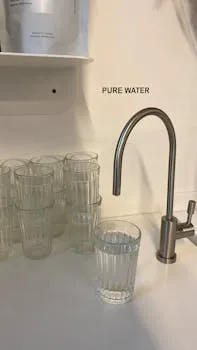
The complication is that chlorine and chloramine — the two primary disinfectants used in US municipal water treatment — react with naturally occurring organic matter in source water to form disinfection byproducts (DBPs). The most studied DBPs are trihalomethanes including chloroform and haloacetic acids. Hundreds of other DBPs form during disinfection and are largely unstudied in terms of health effects.
Research on the health effects of chronic DBP exposure is an active area with accumulating concern. Studies have associated elevated trihalomethane exposure with bladder cancer, colorectal cancer, and adverse reproductive outcomes including higher rates of spontaneous abortion and reduced birth weight. The epidemiological evidence is not conclusive but is sufficiently consistent to warrant exposure reduction when practical.
Activated carbon filtration effectively removes chlorine, chloramine, and many DBPs from water. This is one of the areas where even basic pitcher filters provide meaningful benefit. For anyone concerned about DBP exposure, any quality activated carbon filter — from a basic pitcher to an under-sink carbon block — significantly reduces both the disinfectants themselves and the taste and odor they create.
Many larger utilities have transitioned from chlorine to chloramine as a primary disinfectant because chloramine produces fewer regulated trihalomethanes. However, chloramine produces its own DBPs including iodoacids and nitrosamines that have different and in some cases more concerning health profiles. Chloramine also penetrates biological membranes more readily than chlorine and creates particular concerns for dialysis patients (for whom chloramine-free water is medically required) and aquarium owners (for whom chloramine is lethal to fish). Activated carbon removes chloramine but requires longer contact time than for chlorine removal — a factor in filter selection for chloramine-heavy water supplies.
Arsenic in Drinking Water: The Groundwater Problem
Arsenic contamination in drinking water affects millions of Americans, primarily those relying on private wells in certain geological regions. The EPA established an MCL of 10 ppb for arsenic in 2001, reduced from the previous 50 ppb standard — a reduction prompted by research showing health effects including bladder and lung cancer at exposure levels between 10 and 50 ppb. Some researchers argue that the current standard remains too permissive based on newer epidemiological data.
Arsenic in groundwater is primarily geogenic — it comes from the natural dissolution of arsenic-containing minerals in rock and soil. High-risk areas include parts of the Southwest, Mountain West, Midwest, and New England where geological formations are particularly high in arsenic. The USGS has published detailed maps of groundwater arsenic risk by region that provide a useful starting point for assessing local risk. However, because arsenic levels vary dramatically between neighboring wells based on local geology, individual well testing is essential for any accurate assessment.
Municipal water supplies exceeding the arsenic MCL are required to treat the water and bring it into compliance. Private well owners with elevated arsenic have no regulatory requirement and no utility support — identifying and implementing treatment falls entirely on them. RO removes approximately 95% of inorganic arsenic. Activated alumina and iron-based media filters are also effective and are used in some whole-house systems. The treatment investment is straightforward once the contamination is identified through testing.
Chronic low-level arsenic exposure — at concentrations present in many US groundwater sources — produces subtle health effects including increased cancer risk, cardiovascular effects, and impaired cognitive development in children exposed during critical developmental periods. The subtlety of these effects is part of why arsenic in drinking water is underappreciated as a health concern. Unlike the acute poisoning scenarios depicted in fiction, chronic arsenic exposure operates quietly over years, increasing risk without producing obvious attributable symptoms.
Emerging Contaminants: What’s Coming Next
The regulatory process for drinking water contaminants is inherently reactive — contaminants are identified in water supplies, research accumulates on their health effects, and regulatory action follows years or decades later. The gap between scientific recognition and regulatory protection is the field where consumers currently bear the risk.
Microplastics have been detected in drinking water worldwide, including in bottled water and treated tap water. The health effects of consuming microplastics are an active research area without consensus. Some studies have found microplastics in human blood, lung tissue, and reproductive organs. The long-term health implications are unknown but the absence of knowledge isn’t the same as absence of risk. Current filtration evidence suggests that reverse osmosis removes a very high percentage of microplastics; standard activated carbon filtration removes fewer. This is an area to watch as research develops.
Pharmaceutical residues — including antibiotics, hormones, antidepressants, and anti-inflammatory drugs — have been detected in drinking water at trace concentrations in water systems that source water downstream from major population centers. These residues enter water systems through human excretion and disposal of unused medications, survive partial treatment by water utilities, and are not regulated in the SDWA framework. The health effects of chronic low-level pharmaceutical exposure through drinking water are unknown but represent an emerging area of concern, particularly for hormone-active compounds including synthetic estrogens from oral contraceptives.
Chromium-6 (hexavalent chromium) became widely known through the Hinkley, California groundwater contamination case featured in the Erin Brockovich story. Chromium-6 is a likely human carcinogen that is not currently regulated at the federal level as a distinct contaminant (only total chromium, including less toxic forms, is regulated). Environmental Working Group testing found chromium-6 in 75% of US drinking water samples tested. States including California have established state-level standards. Reverse osmosis removes chromium-6 effectively.
The most dangerous things in drinking water cannot be seen, smelled, or tasted. Testing is the only honest answer to the question of whether the water is safe — and filtration is the only honest response when the answer is no.
The investment in understanding and improving household water quality is one of the most cost-effective health interventions available. An under-sink RO system costs less than a month of gym membership and provides daily protection for years. Testing costs less than a single restaurant meal. The compounding lifetime benefit — reduced lead exposure, reduced PFAS accumulation, reduced disinfection byproduct exposure — is measurable in long-term health outcomes. This is one of the cases where the evidence is clear, the action is practical, and the barrier is simply deciding to prioritize it.
Water quality improvement compounds over a lifetime. The lead not absorbed over 30 years of filtered water represents a meaningfully lower neurotoxic burden in later decades. The PFAS accumulation reduced through consistent filtration means a lower body burden as these persistent compounds slowly clear from tissue. Chronic disease risk reduction through reduced contaminant exposure is invisible in any individual year but becomes statistically significant over decades of consistent exposure reduction. This is the logic that makes routine, unsexy interventions like water filtration among the highest-value long-term health investments available.
Worth being direct about something: this isn’t about paranoia or distrust of government. America’s water infrastructure is genuinely impressive, and the water leaving most treatment plants meets or exceeds regulatory standards. The problem is that those regulatory standards have gaps — contaminants that took decades to regulate, science that evolved faster than policy, and infrastructure failures that happen between the treatment plant and the tap. A thoughtful homeowner understands the system, identifies the gaps relevant to their specific situation, and fills those gaps with targeted, informed action. That’s not fear. That’s competence.
Common Questions About American Drinking Water
- Is bottled water safer than tap water? Not necessarily, and often not worth the cost and environmental impact. Bottled water is regulated by the FDA rather than the EPA, with less stringent testing requirements than public tap water. A significant percentage of bottled water is reprocessed municipal tap water. PFAS has been detected in bottled water. The plastic containers themselves can leach BPA and phthalates into the water. For ongoing daily hydration, filtered tap water from a quality certified filter is typically safer, dramatically cheaper, and dramatically less environmentally harmful than bottled water.
- Should water used for cooking be filtered too? Yes. Boiling water concentrates non-volatile contaminants like lead, nitrates, and PFAS — it doesn’t remove them. Any water used for cooking, making coffee or tea, or preparing infant formula should be filtered when tap water contaminants are a concern. A point-of-use filter at the kitchen tap addresses both drinking and cooking water from a single installation.
- How can a filter’s certification be verified? Look for NSF/ANSI certification marks on the filter packaging or product page, with the specific standard number relevant to the concern — NSF 53 for lead, NSF 58 for RO systems, NSF 42 for taste and odor. NSF International’s website maintains a searchable database of certified products where a specific product’s claimed certification can be verified. Don’t accept manufacturer claims without an NSF certification number that checks out independently.
- Does fluoride removal require special filtration? Yes. Activated carbon does not effectively remove fluoride. If fluoride removal is a goal, RO or activated alumina filtration is required. RO removes approximately 85-92% of fluoride. Anyone who chooses to filter fluoride should maintain other sources of fluoride for dental health — fluoride toothpaste, professional fluoride treatments — to address the dental benefit concern.
- What should happen when a municipality issues a boil water advisory? Boil water advisories indicate documented or suspected microbiological contamination — typically bacterial. Boiling for at least one minute kills bacteria, viruses, and protozoa. After the advisory is lifted, flush the home’s plumbing by running all taps for several minutes to remove standing water from pipes. An RO system’s membrane is effective against microbiological contamination, but extra water run through it after the advisory is a sensible additional precaution. Replace filters after extended boil water advisories to clear any contamination that may have passed through under the unusual pressure conditions sometimes associated with distribution system contamination events.
- Is there value in a whole-house water filtration system versus a point-of-use filter? Whole-house systems treat all water entering the home, providing protection at every tap and shower. This matters for contaminants that are absorbed through skin or inhaled during showering — chlorine and chloramine, specifically. For heavy metals and PFAS, which primarily enter the body through drinking and cooking, a point-of-use filter at the kitchen tap is sufficient. Whole-house systems cost significantly more, require professional installation, and have ongoing maintenance costs. For most households, the highest-value starting point is a quality under-sink or countertop filter at the primary drinking water source, with the option to add whole-house carbon filtration if shower and bathing VOC exposure is a concern.
- How long does reverse osmosis water last in the storage tank? RO systems typically include a pressurized storage tank that holds 2-4 gallons of filtered water. Water in the storage tank is generally fine for 2-4 weeks before bacterial growth becomes a potential concern in the tank. Most households cycle through the stored water within days through normal use. If the RO system is unused for extended periods — a vacation home, for example — flush the tank by running several tanks worth of water through before resuming consumption. An inline UV post-treatment stage addresses this concern for systems that experience extended non-use periods.
The Practical Framework: Applying State American Drinking Water In Real Life
FROM THE LIBRARY ›
References
Editorial StandardsCorrectionsMedical DisclaimerAbout Our ContentAffiliate DisclosureSite Map