
On March 11, 2020, the World Health Organization declared COVID-19 a pandemic. Within weeks, governments across the Western world had issued lockdown orders of a scope and speed that would have been politically unthinkable six months earlier. Schools closed. Churches closed. Businesses closed. People were ordered to stay in their homes, prohibited from gathering, and told that asking questions about the timeline or the tradeoffs was dangerous — a public health threat in itself. The compliance was staggering. In democracies that had spent decades arguing about whether the government could compel seatbelt use, hundreds of millions of people accepted house arrest with barely a protest.
What made that possible wasn’t fear of the virus. Fear of a virus produces caution and information-seeking. What produced that level of compliance was something more sophisticated: a pre-built architecture of ideological conditioning that had been under construction for decades. COVID didn’t create that architecture. It revealed it — and then used it to its maximum extent.
This is about the architecture. Not about whether COVID was real (it was), whether racism exists (it does), or whether the environment matters (obviously). About the pattern that emerged across COVID, BLM, and climate change simultaneously — the same crisis structure, the same solution template, the same mechanisms for eliminating dissent — and what that pattern says about who built it, and why.
The Event: March 2020 and What It Revealed
- The Dissent Elimination Mechanism. In April 2020, the Stanford epidemiologist John Ioannidis published a paper questioning whether the infection fatality rate had been accurately estimated and suggesting the mortality risk was dramatically lower than initial models projected. Ioannidis was one of the most cited scientists in the world — in 2020 he ranked in the top 0.1% of researchers globally by citation count. His paper was dismissed, his character attacked, his credibility in mainstream media circles effectively destroyed within weeks. The message to other scientists was unmistakable: question the official position and you will be made an example. The scientific conversation — the thing science actually requires to function — was shut down using social and professional pressure rather than counter-evidence.
- The Moving Goalposts. The initial justification for lockdowns was “flatten the curve” — a 2-3 week measure to prevent hospital system collapse. When the curve flattened, the goalposts moved to “until a vaccine.” When vaccines arrived, they moved to “until everyone is vaccinated.” When vaccination rates plateaued, the goalposts moved to boosters. When boosters were questioned, questioning boosters became disinformation. The objective was never fixed, because the objective was never the stated one. Fixed objectives can be achieved and measured. Sliding objectives keep the emergency — and the emergency powers — permanently in place.
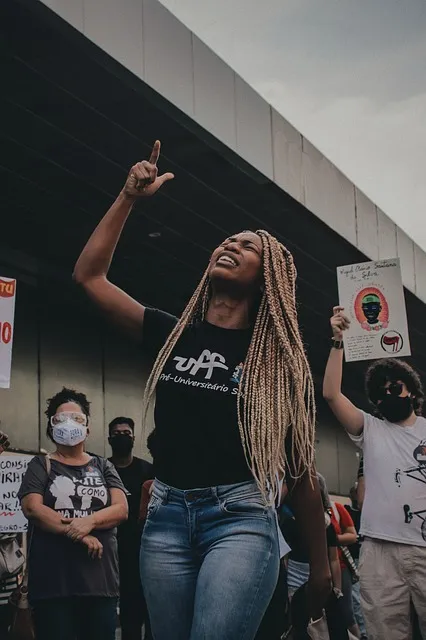
- The Asymmetric Enforcement. In the summer of 2020, mass BLM protests drew hundreds of thousands of people into streets across America. Many of the same health officials and politicians who had been enforcing strict lockdown rules publicly endorsed the protests. The California Department of Public Health issued guidance stating that “systemic racism” was itself a public health crisis that justified the gatherings. The message was clarifying: the emergency powers weren’t about public health. They were about who was permitted to assemble and for what purposes. Political movement approved by the institutional class: permitted. Church services, small business operations, family gatherings: prohibited. The carve-outs exposed the architecture.
The speed was the tell. In normal democratic governance, sweeping restrictions on civil liberties take years of legislation, judicial review, and public debate. The Emergency Powers Acts invoked in March 2020 bypassed all of that. Within 72 hours of the WHO declaration, fourteen countries had suspended their constitutional norms. Within three weeks, the number was over 80. The procedures designed to prevent governmental overreach — separation of powers, judicial oversight, legislative approval — were suspended “temporarily” at a pace that suggested the infrastructure for suspension had been pre-built and was simply waiting for the trigger.
Here’s what unfolded in the months that followed, and the pattern is worth cataloguing precisely.
None of this is conspiracy theorizing. These are documented events with publicly available records. The question isn’t whether they happened. The question is whether the pattern they form was accidental — or whether this is a methodology that has been tested, refined, and deployed across multiple decades and multiple crises. To answer that, the methodology’s origin has to be understood first.
The Pattern: What the Frankfurt School Actually Built

The founders — Max Horkheimer, Theodor Adorno, Herbert Marcuse, Erich Fromm, Walter Benjamin — were all Marxists who had concluded that classical Marxism’s failure to produce revolution in the West required a new explanation. Their answer: Western workers hadn’t rebelled because Western culture had integrated them. The family, religion, national identity, and the concept of individual sovereignty — these weren’t incidental features of Western society. They were load-bearing structures that gave ordinary people enough stability and meaning to resist revolutionary mobilization. To create the conditions for transformation, those structures had to be dismantled. Not through economic class conflict — that hadn’t worked. Through cultural engineering.
When the Nazis came to power in 1933, the Institute relocated to Columbia University in New York, and its members spent the next decade embedding themselves in American academic institutions. Marcuse eventually joined the Office of Strategic Services (the predecessor to the CIA), analyzing propaganda methods for the U.S. government. After the war, Frankfurt School graduates populated universities, think tanks, and media organizations across the United States and Western Europe. The “long march through the institutions” — a phrase coined by Rudi Dutschke, a student radical inspired by Frankfurt School thought — was precisely that: a generational infiltration of the institutions that shape public consciousness.
What makes the Frankfurt School’s methodology distinctive — and what explains COVID, BLM, and climate change simultaneously — is what Horkheimer called “Critical Theory.” The key insight: you don’t need to propose a better system. You just need to destroy confidence in the existing one. Permanent, multi-front critique of every Western institution — the family, religion, markets, nation-states, objective science — creates a population so alienated from its own foundations that it becomes susceptible to the claim that only centralized, technocratic authority can solve the resulting chaos.
Marcuse added the operational component in his 1965 essay “Repressive Tolerance.” The argument: tolerance of “harmful” viewpoints (meaning traditional, conservative, or pro-Western viewpoints) is itself a form of oppression. Therefore, suppressing those viewpoints — what Marcuse called “liberating tolerance” — is morally required. This is the intellectual DNA of every content moderation policy, every academic speech code, every “fact-check” operation that suppresses heterodox scientific opinion. Marcuse wrote it in 1965. His intellectual heirs run it in 2020 through silicon valley algorithms and institutional HR departments. The essay hasn’t changed. The technology delivering it has.
Adorno’s contribution was the “Authoritarian Personality” — a 1950 study, funded by the American Jewish Committee, that classified patriotism, religiosity, respect for authority, and conventional family values as symptoms of a psychological disorder with fascist potential. The political move here is elegant: it pathologizes the cultural foundations that the Frankfurt School needed to dismantle. Suddenly, the person defending traditional values isn’t making a political argument. They’re exhibiting a mental illness. This framing — disagreement as pathology — is everywhere in contemporary discourse, from the medicalization of “toxic masculinity” to the psychiatric categorization of climate skepticism as “denial.”
The Crisis Multiplier Framework — the pattern that runs across COVID, BLM, and climate change — has five consistent elements: (1) identify or amplify a real problem; (2) catastrophize it past its actual dimensions; (3) propose a solution that requires expanding centralized power and contracting individual liberty; (4) declare questioning the catastrophization to be immoral; and (5) make compliance the only safe social choice by destroying the careers and reputations of dissenters. Run those five steps across COVID, BLM, and climate change. See what turns up.
The Data: What the Numbers Actually Show
Specifics, because ideology without evidence is just rhetoric. Here’s what the data says about each of the three crisis deployments.
- COVID-19: The Lockdown Evidence. Johns Hopkins University published a comprehensive meta-analysis in January 2022 examining the effect of lockdown policies on COVID-19 mortality. The study reviewed 24 research papers and found that lockdowns reduced COVID-19 mortality by an average of 0.2% in Europe and the United States. The authors concluded: “lockdowns had little to no public health effects.” Meanwhile, the documented costs of the lockdowns were substantial: the World Bank estimates they pushed 97 million additional people into extreme poverty globally. Learning loss from school closures will cost affected students an estimated $17 trillion in lifetime earnings according to World Bank modeling. Suicide rates among adolescents increased significantly in multiple countries. The question that was never permitted to be asked — was the cure worse than the disease? — turns out to have a clear empirical answer. Yes. The people who asked that question in 2020 were called murderers. The data now says they were correct.
- BLM: The Financial Architecture. Black Lives Matter Global Network Foundation reported raising $90 million in 2020, the year of George Floyd’s death. By 2021, its co-founder Patrisse Khan-Cullors — who had publicly identified as a “trained Marxist” in a 2015 interview — had purchased four properties worth over $3 million in total, including a $1.4 million home in Topanga Canyon, a predominantly white neighborhood. Multiple state attorneys general launched investigations into the foundation’s finances. The New York Attorney General froze the organization’s assets. A forensic audit in 2022 found over $10 million in funds directed to a company controlled by Khan-Cullors’ brother and baby’s father without proper documentation. Local BLM chapters — the organizations doing actual community work — publicly broke with the national foundation over missing funds. Meanwhile, the cities that defunded their police departments (Minneapolis, Portland, Austin, Los Angeles) experienced significant increases in violent crime. Minneapolis saw homicides increase 58% in 2020. Portland had its highest homicide count in decades. The communities BLM claimed to be protecting paid the price for policies that served BLM’s leadership.
- Climate Change: The Prediction Record. The climate movement’s credibility problem isn’t skepticism about whether warming is occurring. It’s the 50-year track record of apocalyptic predictions that failed to materialize. In 1970, Stanford biologist Paul Ehrlich predicted that “between 1980 and 1989, some 4 billion people, including 65 million Americans, will starve to death.” In 1989, a UN Environment Programme official stated that “entire nations could be wiped off the face of the Earth by rising sea levels if the global warming trend is not reversed by the year 2000.” In 2006, Al Gore’s “An Inconvenient Truth” predicted the Arctic would be ice-free by 2013. In 2009, the head of the UN climate panel stated we had “five years” to prevent catastrophe. In 2018, a UN report said we had 12 years. Every deadline has passed. The predictions have not occurred. But the proposed solution — massive transfer of wealth to international institutions, centralized control over energy production, restriction of individual economic activity through carbon pricing — has remained constant across five decades of failed timelines.
Notice the pattern across all three cases: the catastrophization is unfalsifiable (the goalposts move when deadlines pass), the proposed solutions always expand institutional power and contract individual liberty, and the people who pointed to the evidence were attacked rather than engaged. Not a pattern that emerges from honest error. A methodology. The Crisis Multiplier Framework, running reliably across three different subject domains, by overlapping networks of institutional actors, producing the same outputs every time: more centralized control, less individual freedom, and the elimination of dissent.
The Data: How Narrative Control Was Built and Deployed
The educational pipeline is the foundation. A 2016 study by political scientists Mitchell Langbert, Anthony Quain, and Daniel Klein published in Econ Journal Watch examined the voter registration records of 7,243 tenure-track professors at 40 leading U.S. universities. In the social sciences, the Democrat-to-Republican ratio was 11.5 to 1. In history departments, 33.5 to 1. In communications, 108 to 1. These aren’t faculties where ideas compete. They’re factories that produce ideologically uniform graduates — who then populate the newsrooms, HR departments, NGOs, regulatory agencies, and think tanks that shape public discourse. The pipeline is seamless and it has been running for 50 years.
The media layer converts the pipeline’s output into public reality. Project Veritas, the Columbia Journalism Review, and multiple internal investigations at major outlets have documented systematic editorial decisions to frame stories in alignment with the institutional progressive consensus rather than following evidence. During COVID, NBC, CNN, and The New York Times all published pieces mocking the lab leak hypothesis as conspiracy theory — before the FBI, the Department of Energy, and multiple intelligence agencies concluded in 2023 that a lab leak was the most likely origin. The story wasn’t investigated because investigating it would have required questioning Chinese government narratives and the WHO, both of which were ideologically protected sources during the crisis period.
The technology layer is where the architecture became total. The Twitter Files, released in December 2022 by journalist Matt Taibbi and others working from Elon Musk’s document release, revealed systematic coordination between Twitter’s trust and safety team and federal agencies — the FBI, the CDC, and the Department of Homeland Security — to suppress content that contradicted official COVID narratives. Accounts discussing natural immunity, questioning mask efficacy, or raising concerns about vaccine side effects were demonetized, suspended, and algorithmically suppressed — not based on demonstrable falsehood, but based on deviation from the approved narrative. The people making these decisions were not elected. They held no public office. They answered to no electorate. And they exercised more control over public discourse than any government in American history. Gramsci wrote about the importance of controlling the “superstructure” — culture, education, media — as the prerequisite for political power. His intellectual descendants don’t need to theorize about it anymore. They run it.
The government coordination layer completes the circuit. Under the Biden administration, the Cybersecurity and Infrastructure Security Agency (CISA) maintained a “Disinformation Governance Board” — dissolved after public backlash but replaced by quieter inter-agency working groups — whose mandate included coordinating with tech platforms to suppress “malinformation”: technically true information that was deemed harmful to official narratives. A federal judge in Missouri v. Biden (2022) found that the administration had likely violated the First Amendment through “a vast censorship enterprise.” The Surgeon General issued formal requests to tech companies to provide data on users sharing “COVID-19 misinformation.” The State Department funded “prebunking” campaigns — programs designed to pre-emptively inoculate populations against specific arguments before those arguments could be encountered and evaluated independently. Not a conspiracy theory. Public records, filed in federal courts, documented in congressional testimony.
The Position: What This Means and What It Demands of You
The Crisis Multiplier Framework isn’t a theory about shadowy puppet-masters pulling strings behind the scenes. It’s a description of how ideological infrastructure, built over decades through legitimate academic and institutional channels, produces coordinated outputs without requiring anyone to conspire. No meeting in a smoke-filled room needed when everyone in the room has been educated by the same institutions, received approval and promotion for holding the same views, and understands instinctively which conclusions are safe to reach and which are professionally terminal.
The Frankfurt School’s project succeeded not through force but through what Gramsci called hegemony — making certain ideas seem natural, obvious, and beyond question, while making other ideas seem fringe, dangerous, and immoral. The person who questions COVID lockdown policy isn’t disagreeing with public health recommendations. In the constructed reality of the institutional class, they’re endangering lives. The person who questions CRT isn’t making a social science argument. They’re a racist. The person who questions climate policy timelines isn’t examining a prediction record. They’re “anti-science.” The moral encoding turns empirical questions into identity statements, and once that transformation is complete, evidence becomes irrelevant. You don’t counter evidence with counter-evidence when you can counter it with accusation.
Here’s the position stated plainly: the coordinated deployment of the Crisis Multiplier Framework across COVID, BLM, and climate change represents one of the most significant threats to individual liberty and democratic self-governance in the post-war West. Not theoretical. It has produced documented outcomes: the suppression of scientific debate during a pandemic, the destruction of communities under the banner of protecting them, and the transfer of regulatory authority over everyday economic life to unelected international bodies. Not abstract concerns. Things that happened, with evidence, that anyone can look up.
What it demands is not paranoia. It’s not rejection of legitimate science, genuine racial injustice, or real environmental problems. What it demands is a specific cognitive discipline that the institutional apparatus has spent considerable resources trying to eliminate: the capacity to separate a real problem from the proposed solution, and to evaluate the solution on its merits independent of the moral weight attached to the problem. COVID was a real disease. That doesn’t mean every policy response was optimal or beyond question. Racism has real effects on real people. That doesn’t mean every claim made under the banner of anti-racism is accurate or that every proposed remedy helps the people it claims to help. Environmental degradation is real. That doesn’t mean every policy proposal that invokes it is genuinely designed to address it.
The connecting thread across all three crisis deployments is a consistent directionality: from individual sovereignty toward institutional control, from local self-governance toward centralized authority, from empirical accountability toward moral assertion. Every single policy outcome, in all three domains, moves in the same direction. That is the signature of an agenda. Organic policy development produces mixed results and mixed directionalities. Agenda-driven policy produces consistent movement toward a predetermined destination, regardless of the stated justification.
The man who understands this is not a conspiracy theorist. He is a pattern-recognizer — and pattern recognition is precisely the cognitive capacity that three simultaneous “crises,” each accompanied by an intense campaign to make questioning seem immoral, are designed to suppress. Maintaining that capacity — keeping your analytical faculty operational while the emotional payload of a manufactured crisis is being delivered — is an act of intellectual sovereignty. It is also, increasingly, a rare one. Not an accident.
How to Resist the Crisis Multiplier Framework Without Losing Your Mind
Knowing the architecture exists is necessary but not sufficient. The compliance cascade — the social and professional cost structure that makes dissent expensive and silence cheap — operates on your nervous system whether or not you understand it intellectually. Knowing you’re being manipulated doesn’t automatically make you immune to manipulation. A protocol is required.
Separate the problem from the proposed solution. Every deployment of the Crisis Multiplier Framework works by fusing a real problem with a pre-determined solution in such a way that questioning the solution feels like denying the problem. Practice separating them as a deliberate cognitive habit. Yes, COVID killed people. Separate question: was this specific policy the correct response? Yes, racism has caused harm. Separate question: does this specific policy reduce racism or does it serve other interests? Real problems deserve real solutions — and real solutions are the ones you’re allowed to interrogate.
Track the consistent directionality. Every genuine policy debate produces winners and losers distributed across the political spectrum. Rent control produces some conservative supporters and some progressive opponents. Zoning reform, drug legalization, criminal justice policy — genuine complexity produces genuine disagreement across ideological lines. When every single proposed solution to a crisis moves in the same direction — more centralized power, less individual liberty — that’s not policy. That’s agenda. Ask: who gets power under this proposal? Who loses power? If the answer is always “institutions gain, individuals lose,” the tell has been found.
Test the dissent boundary. Can you question the narrative without professional or social consequences? If not, you’re not in a conversation — you’re in a compliance system. Legitimate science welcomes challenge. Legitimate policy welcomes evaluation. Legitimate moral frameworks can withstand examination. The intensity of the response to dissent is inversely proportional to the strength of the underlying argument. If the best counter-argument available is “you’re a bad person for asking that,” the underlying position can’t survive scrutiny — and someone knows it.
Build primary source discipline. The narrative control infrastructure works by controlling secondary sources — what gets summarized, highlighted, and framed in media, social feeds, and institutional communications. Primary sources are harder to control. Read the actual studies, not the press releases. Read the actual policy documents, not the summaries. Read the actual financial disclosures of the organizations you’re being asked to support. The gap between primary sources and their media representations is frequently enormous and almost always politically directional. Closing that gap is the simplest form of intellectual resistance available.
Rebuild your nervous system’s resistance to urgency. The emotional payload of the Crisis Multiplier Framework is urgency — the feeling that you must decide NOW, that questioning means you’re complicit, that the cost of being wrong about the crisis is so catastrophic that you can’t afford the time for evaluation. That urgency is manufactured. It is deliberately calibrated to bypass your prefrontal cortex and drive compliance through fear rather than through analysis. Managing your stress response isn’t just a health practice. It’s a political one. A man who can regulate his nervous system under pressure is a man who can think clearly when urgency is being used as a weapon. That capacity — the ability to feel the emotional force of a manufactured crisis and still ask “wait, let me look at the evidence” — is the single most important resistance skill available, and it is built through daily practice, not through reading articles.
Common Questions About Web Deception COVID
Is this article saying COVID, racism, and climate change are all fake? No, and the distinction matters. COVID-19 was a real pathogen that killed real people. Racism has historically caused and continues to cause real harm to real individuals. Environmental degradation from industrial activity is real and measurable. The argument here is about the Crisis Multiplier Framework: the methodology of taking real problems, catastrophizing them beyond their actual dimensions, and using the resulting emergency to justify policy outcomes that consistently expand institutional power and contract individual liberty — while declaring questioning of any element of this process to be immoral. Real problems deserve honest analysis. The Crisis Multiplier Framework is designed to prevent exactly that.
What specifically is the Frankfurt School’s connection to contemporary progressive politics? The Frankfurt School’s connection is intellectual and institutional rather than organizational. Herbert Marcuse’s work directly influenced the student radicalism of the 1960s, whose participants then entered academia and built the theoretical frameworks — Critical Theory, Critical Race Theory, gender studies, postcolonial theory — that now dominate university humanities and social science departments. Those departments have produced several generations of graduates who staff newsrooms, HR departments, NGOs, and government agencies. The influence is diffuse, generational, and self-replicating through institutional structures rather than any ongoing conspiracy. Marcuse’s “Repressive Tolerance” essay is still assigned in graduate programs in education, sociology, and communications. Its logic — that suppressing heterodox views is a form of liberation — is the explicit intellectual foundation for contemporary content moderation policies at major tech platforms.
What evidence supports the claim that lockdowns caused more harm than good? The Johns Hopkins meta-analysis (Herby, Jonung, and Hanke, 2022) reviewed 34 studies and found lockdowns had negligible effect on COVID mortality (roughly 0.2% reduction) while producing substantial documented harms including economic devastation, learning loss, mental health deterioration, and delayed medical care for non-COVID conditions. The World Health Organization’s own 2019 pandemic preparedness guidelines — written before COVID, and therefore without political pressure — did not recommend lockdowns as a pandemic response tool, citing insufficient evidence of benefit and substantial evidence of harm. Sweden, which declined to implement strict lockdowns, had comparable COVID mortality outcomes to heavily locked-down neighboring countries while avoiding the documented social and economic harms. This is not fringe analysis. These are peer-reviewed findings and official WHO guidance that were suppressed during the crisis period.
What happened to BLM’s donations and why does it matter? BLM Global Network Foundation raised approximately $90 million in 2020. Multiple investigations — by state attorneys general, independent auditors, and journalists at outlets including the New York Post and the Associated Press — found significant financial irregularities including: undisclosed property purchases, payments to family members of leadership without proper documentation, and millions in funds that local chapters (who did the actual community organizing) never received. The California Attorney General required BLM to register as a charity and submit to financial oversight after years of non-compliance. The significance is this: the moral shield of the BLM brand made financial scrutiny feel like racism, which is precisely how the Crisis Multiplier Framework protects bad actors. Organizations claiming to represent vulnerable communities should face more scrutiny, not less — because the people who suffer when the money is misused are the communities those organizations claimed to protect.
How do you distinguish a genuine crisis from a manufactured one? The Crisis Multiplier Framework produces several consistent signatures you can use as diagnostic tools: (1) The solution is predetermined and consistent across different crisis domains — if the solution to a pandemic, a racial justice issue, and an environmental problem are all structurally identical (more centralized authority, less individual autonomy), you’re looking at an agenda being applied to different pretexts; (2) The timeline is perpetually moving — genuine crises have fixed, falsifiable predictions; manufactured crises reschedule their deadlines when they pass; (3) Dissent is treated as moral failure rather than empirical disagreement — “you’re dangerous” is not a counter-argument; it’s a suppression mechanism; (4) The beneficiaries of the proposed solution are consistently institutional actors rather than the affected communities — follow the power, not the rhetoric; (5) Primary sources and their media representations diverge dramatically and directionally — when the actual study says something different from what the headline says, and this happens consistently in one political direction, you’re looking at narrative construction.
What can one person actually do about institutional narrative control? More than most people assume, and it starts with not catastrophizing your own position. Dismantling a global ideological infrastructure isn’t a prerequisite for living a life of intellectual sovereignty. The requirements are narrower: refuse to pretend belief in things not believed (the compliance cascade depends on public conformity, and every act of public dissent costs the narrative something); build relationships with people who think clearly and speak honestly (pluralistic ignorance — the mechanism by which everyone privately doubts but publicly conforms — collapses when you know other people who openly disagree); maintain your nervous system’s resistance to urgency through physical discipline, because manufactured crises operate through your stress response and a regulated nervous system is harder to panic; and vote, at every level, for candidates whose policy record demonstrates respect for individual liberty and skepticism of centralized authority, regardless of their party affiliation. These are not heroic acts. They are the daily maintenance of intellectual sovereignty in an environment designed to make that sovereignty expensive. The cost is real. The alternative — a life of performative compliance — costs more.
Is criticizing the Frankfurt School the same as antisemitism? No, and conflating them is itself a technique from the Frankfurt School’s playbook — attaching a moral accusation to an intellectual criticism to make the criticism socially dangerous. Many of the Frankfurt School’s founders were Jewish, which is historically relevant context given that they were fleeing actual fascism. It is not intellectually relevant to evaluating whether their ideas were correct, beneficial, or have been deployed in ways that harm the societies that took them in. Ideas are evaluated on their merits and their documented effects — not on the ethnicity of their authors. The documented effects of Critical Theory’s institutional deployment include: the suppression of scientific debate during a pandemic, the destruction of community institutions under the banner of progressive values, and the systematic dismantling of the cultural foundations — family, faith, individual sovereignty — that provide ordinary people with the stability to resist manipulation. Those effects are worth examining regardless of anyone’s ancestry.
How does understanding this actually change anything in daily life? It changes the relationship to urgency, which is the primary delivery mechanism of manufactured crises. Recognizing the Crisis Multiplier Framework’s emotional payload — the sense that questioning is immoral, that the emergency is too great to allow deliberation, that compliance is the only responsible choice — makes it possible to observe it operating rather than being operated by it. That observation gap is everything. It’s the difference between a man who sees the architecture of manipulation and a man who is inside it and can only see the walls. Practically: it means reading primary sources before forming opinions on crisis narratives; it means evaluating proposed solutions by who gains power rather than by the stated justification; it means building physical and social resilience so that manufactured urgency can’t hijack your judgment; and it means being willing to say, publicly, things that are true but socially costly — because the compliance cascade is maintained by individual acts of self-censorship, and it is weakened by individual acts of honest speech.
The Practical Framework: Applying Web Deception COVID BLM In Real Life
Editorial StandardsCorrectionsMedical DisclaimerAbout Our ContentAffiliate DisclosureSite Map