
Take a guy we’ll call Marcus. Six weeks of the Wim Hof Method, cold showers every morning, breathing rounds before his workout, a growing Instagram following that watched him dunk his face in ice buckets. He felt invincible — the kind of invincible that talks you into bad ideas. One afternoon he decided to try his breathing session in the bathtub. More relaxing that way, he figured. More immersive. His wife found him twenty minutes later, face-down, unconscious. He survived. Most people who make the same mistake do not.
This is not a hit piece on Wim Hof. The method works. The breathing protocol measurably alters immune response, demonstrably reduces stress markers, and genuinely produces the physiological changes Wim claims. The science is real. Matthijs Kox and his colleagues at Radboud University demonstrated in 2014 that WHM-trained subjects could voluntarily modulate their autonomic nervous system and suppress inflammatory cytokines in ways previously thought impossible — a genuine breakthrough in human physiology research.
But the method also has a kill switch, and most of the people teaching it on YouTube have no idea it exists. The dangers are specific, they are serious, and they have claimed lives. Before a single round of WHM breathing, here’s exactly what those dangers are, who’s most at risk, and the non-negotiable rules that separate a transformative practice from a fatal accident.
What Wim Hof Breathing Actually Does to Your Body

Hyperventilating — which is exactly what rapid deep breathing is — blows off carbon dioxide faster than the body produces it. This drops CO2 levels in the blood, a condition called hypocapnia. Here’s the part most people don’t know: oxygen delivery to the brain is regulated by CO2, not by oxygen. When CO2 drops, blood vessels constrict, and hemoglobin holds onto oxygen more tightly (the Bohr effect). Blood oxygen saturation may sit comfortably at 98%. Less of that oxygen still reaches the brain.
At the same time, hypocapnia pushes blood pH upward — respiratory alkalosis — which alters calcium ion distribution in the nervous system. That’s the classic tingling in the fingers and around the mouth, tetany, the physical sensation most WHM beginners read as “the practice working.” It is working. It’s also cutting cerebral blood flow by 20-40% depending on how aggressively someone breathes.
Then comes the breath hold. After exhaling and holding, the body is now running on reduced CO2, reduced cerebral blood flow, and whatever oxygen reserve remains. Most practitioners can hold for two to four minutes easily in this state — not because they’re superhuman, but because suppressed CO2 means the drive to breathe never fires. It feels comfortable. Calm. Safe. And in that state, the brain can go genuinely hypoxic and consciousness can go with it. Zero warning.
Zero warning. No tunnel vision, no urgent need to breathe, no sensation that something is wrong. The lights simply go out.
Shallow Water Blackout: The Primary Mechanism of Death
Shallow water blackout isn’t a new phenomenon. Competitive swimmers, free divers, and military personnel have been dying from it for decades. The mechanism is identical to what happens during WHM breathing: hyperventilation suppresses CO2, extends breath-hold capacity past the point where consciousness is guaranteed, and the swimmer loses consciousness and drowns before the body’s CO2-triggered urge to breathe can save them.
The water doesn’t need to be deep. A bathtub is lethal. A kiddie pool is lethal. Any body of water where an unconscious person’s face can submerge is lethal. The word “shallow” in shallow water blackout refers to the depth at which it typically occurs — near the surface — not to the depth needed for drowning.
Multiple deaths have been directly linked to Wim Hof Method breathing performed in or near water. Wim Hof himself, to his credit, is explicit about this in his materials: never practice WHM breathing in water. The problem is the warning gets buried under sixty minutes of breathtaking content about cold exposure and superhuman feats, and people remember the inspiration while forgetting the contraindication.
The risk isn’t theoretical. The Wim Hof Method website maintains a safety warning. A lawsuit filed by the family of a seventeen-year-old who drowned while practicing WHM breathing in a pool — after allegedly being led through the exercise by a video without adequate safety warning — made international news. The judge ruled against the family. The deaths themselves are not disputed.
The rule is absolute: never perform WHM breathing in water, near water, in a bath, in a pool, in a lake, at a beach, or anywhere else accidental submersion is possible. Never. Not once. Not even after a hundred safe sessions. The hundred-and-first time is when the blackout happens.
Driving and Other Blackout Risks You Haven’t Considered
Water is the most obvious hazard, but blackout during WHM breathing can be fatal in a surprising number of other contexts. The principle is the same: sudden loss of consciousness with no warning, in an environment where the unconscious body is at risk.
Driving is an obvious one — never perform breathing rounds while driving or as a passenger who might grab the wheel. This seems absurd to have to say. YouTube comment sections are full of people describing how they do their breathing rounds during commutes. People have crashed.
Standing near hard surfaces, stairs, or elevated positions creates fall risk. WHM breathing lying down, then losing consciousness briefly — some practitioners don’t even register it — means waking up on the floor. Standing on a balcony or at the top of stairs when it happens, waking up is not guaranteed.
Operating machinery — bicycles, exercise equipment with moving parts, anything with a blade or a motor — belongs in the same category as driving. Sitting in a chair rather than lying down seems minor but changes the risk profile: black out in a chair and you can fall forward and hit your head on whatever’s in front of you.
The safest position for WHM breathing is lying flat on a firm surface in a room with nothing to hit if you slide off it. Not paranoid. Just the baseline that takes location-based risk to near zero.
Medical Contraindications: Who Should Never Do WHM Breathing
Beyond the universal blackout risk, certain medical conditions create specific dangers that make WHM breathing absolutely contraindicated — meaning don’t modify the practice, don’t proceed with caution, don’t try it once “just to see.” Don’t do it at all without explicit clearance from a physician who understands the mechanism.
Epilepsy. The hyperventilation component of WHM breathing is a known seizure trigger. Neurologists have used hyperventilation as a diagnostic tool to provoke seizures during EEG testing for over a century, precisely because it reliably induces them in susceptible individuals. Respiratory alkalosis from hyperventilation alters neuronal excitability and lowers the seizure threshold. A history of seizures, epilepsy, or febrile convulsions makes WHM breathing contraindicated. Cold exposure, the other pillar of WHM, may be fine. The breathing rounds are not.
Cardiovascular conditions. The breath hold component of WHM creates significant cardiovascular stress. During extended breath holds, blood pressure rises, and the vagal response upon releasing the hold produces a sharp parasympathetic rebound. Manageable, likely beneficial, for healthy individuals. For those with arrhythmias, recent cardiac events, uncontrolled hypertension, heart failure, or coronary artery disease, this cardiovascular roller coaster can trigger dangerous events. The sharp BP spikes and vagal activation aren’t theoretical — they’re measurable and significant.
Pregnancy. During pregnancy, the developing fetus depends entirely on maternal blood oxygen delivery. Reducing cerebral blood flow and creating transient hypoxia is already a risk to the mother during WHM breathing; the risk to fetal oxygen supply adds to that. No controlled studies have examined WHM breathing in pregnant subjects, and given the mechanism, “we don’t have evidence of harm” isn’t adequate reassurance here. Until such evidence exists, the conservative position is avoidance during pregnancy.
High blood pressure. The Valsalva-like components of the WHM breathing cycle generate significant pressure spikes. For anyone with uncontrolled or stage 2 hypertension, those spikes stack onto an already elevated baseline in ways that raise stroke and aneurysm risk. Controlled blood pressure with physician approval may bring the risk profile into acceptable range — but self-medicating high blood pressure with WHM breathing while skipping the physician consultation is playing a dangerous game.
History of fainting. Some people have vasovagal syncope — a tendency to faint in response to specific triggers. The combination of hyperventilation, breath holding, and the cardiovascular stress of cold exposure is a reliable vasovagal trigger in susceptible individuals. A history of fainting isn’t disqualifying, but it’s a flag worth discussing with a physician before proceeding.
Raynaud’s phenomenon and cold-related conditions. This applies mainly to the cold exposure component rather than the breathing, but since the two are usually practiced together, it’s worth a mention. Extreme cold exposure triggers Raynaud’s attacks and can be seriously harmful for anyone with cold agglutinin disease or cryoglobulinemia.
Kox 2014: What the Science Actually Showed
The landmark Kox study published in PNAS in 2014 is the research that put the Wim Hof Method on the map scientifically. Matthijs Kox and his team at Radboud University Medical Center trained a group of healthy volunteers in the Wim Hof Method over ten days, then injected them with bacterial endotoxin (a component of E. coli bacteria that reliably produces flu-like symptoms in healthy subjects) alongside an untrained control group.
The results were striking. WHM-trained subjects produced significantly higher levels of epinephrine during the breathing exercises. They released lower levels of inflammatory cytokines (TNF-α, IL-6, IL-8) after the endotoxin challenge. Fewer and less severe symptoms — less fever, less headache, less shivering. The authors concluded the WHM allowed voluntary influence over the autonomous nervous system and the innate immune response, something prior scientific consensus held was impossible.
Genuinely impressive science. It validated a core claim of the WHM, and it’s being built upon by subsequent research into deliberate cold exposure, breathing practices, and immune modulation.
What the Kox study did not examine — because it wasn’t designed to — was safety. Healthy, vetted volunteers, controlled laboratory conditions, medical supervision. Anyone with the contraindications described above was excluded. A study demonstrating efficacy is not a safety clearance for anyone who wants to try the method solo, particularly in environments and under conditions the study never touched.
The science is legitimate. The benefits are real. The safety parameters matter regardless of how convincing the benefits are.
Panic, Hyperventilation Syndrome, and the Anxiety Trap
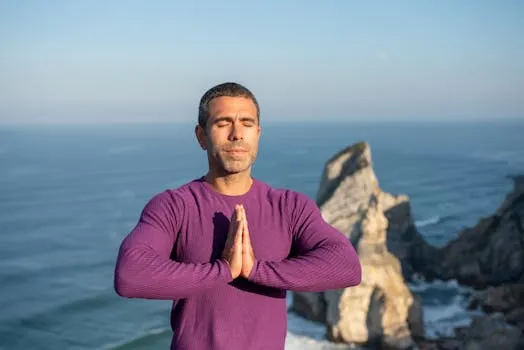
Panic disorder frequently involves dysfunctional breathing — chronic subtle hyperventilation and hypersensitivity to CO2, specifically. Some people with panic disorder have abnormally sensitive CO2 receptors, so even small fluctuations in CO2 produce overwhelming feelings of suffocation and terror. For these individuals, the deliberate hyperventilation of WHM followed by the breath hold — dropping CO2, then letting it slowly rebuild — can trigger a severe panic attack.
Not dangerous physiologically. Deeply unpleasant, though, and capable of creating a conditioned fear response to breathing practices in general. There’s a real risk of making anxiety worse through a poorly timed or poorly supervised introduction to WHM breathing.
None of this means people with anxiety can’t benefit from breathwork. The 4-7-8 protocol, box breathing, and physiological sighs all work through different mechanisms that skip the aggressive hyperventilation and are generally safer entry points for anxious individuals. Starting there and building CO2 tolerance gradually is a more appropriate pathway for most anxiety sufferers than jumping straight into WHM breathing rounds.
The WHM Safety Checklist Framework
The following is the WHM Safety Checklist — a systematic review of every key safety parameter before, during, and after a WHM breathing session. Work through it sequentially. Any item that produces a “no” or an “I’m not sure” is a stop sign until there’s enough information to answer confidently.
- Location check. Lying flat on a firm surface with no water nearby? No bathtub, no pool, no beach, no proximity to water whatsoever? Nothing in front of or around that could be hit if a fall happened? Anything other than “yes, completely clear” — move first.
- Medical contraindication screen. Epilepsy or a history of seizures? Cardiovascular disease, arrhythmia, or uncontrolled hypertension? Pregnant? A recent cardiac event? A history of fainting? Any of these — stop here and consult a physician before proceeding.
- Substance check. Alcohol or recreational drugs in the last twelve hours? Any medication affecting the cardiovascular or nervous system? Alcohol especially dramatically increases blackout risk by impairing the already-suppressed CO2 response. Never practice WHM breathing while impaired.
- Supervision consideration. Alone? Solo practice is common and generally fine for experienced practitioners in safe environments, but beginners should ideally practice with someone present for the first several sessions. That person doesn’t need to do anything — just be able to respond if something unexpected happens.
- Mental state check. Stable mental state? Active dissociation, severe anxiety, psychosis, or significant emotional dysregulation are reasons to postpone. The altered states WHM breathing produces can amplify both positive and negative mental states.
- Warm-up awareness. Reviewed the full protocol, including the recovery breath step? The recovery breath — the deep inhale held for fifteen seconds at the end of each round — is not optional. It’s the mechanism that restores blood CO2 and eliminates the residual blackout risk from the breath hold phase.
- Post-session plan. Planning to get in a vehicle, operate machinery, or do anything requiring sustained attention right after? Allow at least ten minutes of quiet recovery before resuming demanding activities. The altered physiological state can persist and affect reaction times and cognitive clarity.
- Communication. Does someone know this session is happening? Sounds paranoid for a breathing exercise. Costs nothing. Adds a meaningful safety net for edge cases.
The checklist takes sixty seconds. Run through it every time, not just the first time. Complacency is the primary risk factor for experienced practitioners — the mistaken belief that because nothing bad happened in the first hundred sessions, the hundred-and-first carries no risk.
Signs You’re Doing It Wrong
Most people who start WHM breathing have no guidance beyond YouTube videos. This produces predictable errors, ranging from ineffective (no physiological benefit) to dangerous (something that raises risk above baseline).
Breathing too fast rather than too deep. The goal is large tidal volume — filling the lungs fully on each breath — not speed. Many beginners hear “thirty to forty breaths” and interpret it as rapid shallow panting. Rapid shallow breathing shifts CO2 less effectively and produces more dizziness without the intended physiological changes. Slow, full breaths that fully expand chest and belly are the target.
Forcing the breath hold. The breath hold after exhale should be comfortable, not forced. Struggling against the urge to breathe from the first thirty seconds usually means CO2 hasn’t dropped enough during the breathing phase — which usually means the breathing wasn’t deep enough. Don’t fight the body’s signals. Let the breathing phase do the preparation work.
Skipping the recovery breath. After each breath hold: one deep inhale, held for fifteen seconds, then exhale, then the next round begins. Many beginners skip this step or shorten it, not realizing it’s critical for restoring blood CO2 to safe levels between rounds. Skip it and the hypocapnic state carries through multiple consecutive rounds — meaningfully raising blackout risk and setting up exactly the physiological conditions behind the accidents that have occurred.
Doing too many rounds back-to-back. The standard protocol is three to four rounds. More is not better. The physiological shift happens within those rounds; eight or ten rounds don’t multiply the benefits, just the cumulative physiological stress and the duration of hypocapnia.
Doing it immediately before high-intensity exercise. Some people use WHM breathing as a pre-workout. The altered CO2 state can persist and affect performance unpredictably, and combining maximal exertion with hypocapnia creates unnecessary risk for certain cardiovascular conditions. Box breathing or CO2 tolerance training is more appropriate before exercise than WHM rounds.
First-Time Practitioner Guidelines
Cleared the safety checklist and want to try WHM breathing for the first time? Here’s the appropriate first-session protocol, designed to introduce the method with every risk factor minimized.
Choose a morning session, alert, no full meal beforehand. Lie down on a bed or yoga mat. No plans for the next thirty minutes. If possible, someone else in the house — not directly supervising, just present.
Start with just one round. Thirty deep, full breaths — full expansion over speed. After the thirtieth exhale, let the air out and don’t breathe. Hold until the urge to breathe becomes uncomfortable — not unbearable, just moderately uncomfortable. For most first-timers, that’s sixty to ninety seconds. Deep inhale, hold fifteen seconds, exhale. That’s one round. Stop there.
Notice what happened. Tingling in the extremities, lightheadedness, warmth, a buzzing energy sensation — all normal. Chest pain, racing heartbeat with discomfort, vision disturbances, severe anxiety — reasons to stop and consult a physician before continuing.
If the first round went smoothly, add one round per session over the following week until three rounds feel comfortable. Only then consider adding cold exposure or extending hold durations.
“The most dangerous thing about the Wim Hof Method is not the method itself. It’s the gap between what the method demands and what conventional thinking bother to learn before they start.”
Cold Exposure Safety: The Other Half of the Method
WHM combines breathing with deliberate cold exposure — cold showers and ice baths. The breathing-specific dangers covered above are distinct from the cold exposure dangers, but since most practitioners combine both, the combined risk profile deserves attention.
Cold shock response is the immediate danger of rapid cold water immersion. Submerge in cold water and the body’s initial reaction — roughly three minutes — includes involuntary gasping, hyperventilation, and a sharp spike in heart rate and blood pressure. This is the most dangerous phase. For anyone with underlying cardiovascular conditions, this response has been fatal. Pre-existing WHM breathing-induced cardiovascular stress stacked with cold shock is an additive risk, not a redundant one.
Ice bath duration matters more than most people think. Cold water immersion produces measurable pain, involuntary shivering, and cognitive impairment even at moderate durations. Managing breath control during an ice bath is a distinct skill for experienced WHM practitioners — not the same as doing the breathing rounds dry and the cold shower separately. Combining them is an advanced technique, not a beginner starting point.
Never ice bath alone as a beginner. The cold shock response can cause involuntary loss of muscle control, making self-rescue difficult even in modest depths of water.
The Research Landscape Beyond Kox 2014
The Kox study opened a door, and subsequent research has walked through it with more nuance. What does the broader evidence base look like in 2026?
Studies on deliberate cold exposure have confirmed benefits for brown adipose tissue activation, norepinephrine release, and recovery from exercise-induced muscle damage. The WHM cold exposure component has solid mechanistic support and a growing body of observational and controlled research behind it.
The breathing component is more complicated. The immune modulation effects from the Kox study have partially replicated. The breathwork-specific effects on stress hormones — specifically the adrenaline spike that seems to drive immune modulation — are consistent. What hasn’t been thoroughly studied: long-term safety profile, dose-response relationship, and risk in populations beyond healthy young males, who dominated the Kox study sample.
The honest scientific position: short-term benefits of WHM breathing in healthy adults are plausibly real and mechanistically coherent, the risks for those healthy adults in appropriate settings are low, and the risks for specific populations and specific environments are serious enough to warrant the absolute contraindications described above. Absence of large-scale randomized controlled trials doesn’t mean the method doesn’t work — absence of evidence is not evidence of absence. But it also means appropriate humility about what’s known and unknown about safety in edge cases.
Building a Safe and Sustainable WHM Practice
None of this is meant to scare anyone away from WHM breathing. The goal is the information the breathwork influencer community routinely omits — the information that separates Marcus’s near-fatal bathtub session from a sustainable practice that might genuinely improve his health over years.
Here’s what a safe, sustainable WHM practice looks like in practical terms. Three to four rounds of breathing in the morning, lying down, before getting up. No food for an hour before. No water nearby. A consistent, verified-safe location. Two to three times per week rather than daily — the body adapts, daily practice produces diminishing returns, and cumulative physiological stress adds up.
Cold exposure — cold showers rather than ice baths for most people — as a separate practice from the breathing rounds, not combined. Two to three minutes of cold at the end of a normal shower is a meaningful stimulus. Ice baths are more powerful but demand greater caution around duration and supervision.
Annual physician review for anyone with medical conditions — not because the method is inherently dangerous, but because medical status changes and what was safe at forty-five may need reassessment at fifty-two. Basic responsible practice for any significant health intervention.
The Wim Hof Method is one of the most scientifically credible popular health practices of the last decade. It’s also one that kills people when practiced recklessly. Both true simultaneously. The people who get hurt are almost never doing something absurd — they’re doing something slightly careless in a slightly wrong environment. Usually water. Usually once. Usually enough.
Marcus survived. He runs his WHM sessions on a yoga mat in his living room now, away from the bathtub, away from the pool. Still on Instagram. Talks about safety in every post. Counts that as his second job.
What Experienced Practitioners Get Wrong
The conversation about WHM safety tends to focus on beginners, for good reason — beginners are most likely to make the environmental mistakes that turn a beneficial practice into an emergency. But experienced practitioners have their own failure mode, and it’s arguably more insidious: the belief that familiarity equals immunity.
Consider what experience actually gives you. A calibrated sense of what a normal session feels like. Efficient technique — deeper breaths, more reliable breath holds, better recovery. What it does not give is any physiological protection against blackout. The mechanism is unchanged. Still reducing CO2. Still reducing cerebral blood flow. Still extending breath hold capacity beyond the threshold where consciousness is guaranteed. Experience just means doing all of this more efficiently — which, in a dangerous environment, means doing the dangerous thing better, not safer.
The experienced practitioners who’ve been injured or killed by WHM breathing were not first-timers who didn’t know what they were doing. They were people who had done it dozens or hundreds of times and believed, on the basis of that track record, that the risk was effectively zero. They changed their environment — added water, did it in a car, stood near stairs — without appreciating that the practice itself creates the risk, and no amount of experience changes the physics of hypocapnia and cerebral blood flow.
There’s also the insidious problem of desensitization to warning signs. Beginners notice the tingling and lightheadedness and treat them as signals to pay attention. Experienced practitioners feel the same signals and simply continue — they’ve learned to read them as confirmation the practice is working rather than as indicators of physiological risk. Both interpretations are correct, which is exactly what makes the risk non-obvious. The signals that mean “this is working” and the signals that mean “you could lose consciousness” are the same signals.
The practical implication: maintain beginner-level environmental discipline regardless of experience level. Experienced practitioners who stay careful don’t make the news. Experienced practitioners who relax their safety standards do, occasionally, in the worst way.
Comparing WHM Breathing to Other Breathwork Modalities
One useful lens for understanding WHM breathing dangers: comparing the method to other breathwork modalities and understanding why WHM carries a distinct risk profile that some other practices don’t share.
Box breathing — four counts in, four counts hold, four counts out, four counts hold — is a CO2-neutral protocol. No hyperventilation, no hypocapnia. The breath holds are brief and regular. Blackout risk from box breathing is negligibly low. Military and first responder communities have used it for decades with an excellent safety record. The tradeoff: less physiologically dramatic. No adrenaline spike, no immune modulation, none of the altered states WHM breathing produces.
Holotropic breathwork, developed by Stanislav Grof, involves sustained hyperventilation for periods of one to three hours and is designed to produce altered states of consciousness. Very different risk profile than WHM — the hyperventilation is maintained rather than cycled, and the goal is psychological rather than physiological. Practitioners use it in clinical settings with trained facilitators precisely because the extended altered state carries real risks. WHM is less extreme but shares the fundamental hyperventilation mechanism.
Pranayama techniques from yogic traditions cover a wide range — some hyperventilatory (kapalabhati, bhastrika), some CO2-building (kumbhaka breath retention after inhale), some neutral. Traditional yogic practice placed breath retention after inhale, not after exhale, as the default; that fundamentally changes the risk profile, since oxygen levels are higher during the hold and consciousness is much better maintained. One reason pranayama traditions developed a detailed caution framework around specific techniques and specific practitioners — the physiological variation between techniques is significant.
The physiological sigh — a double inhale through the nose followed by a long, slow exhale — is emerging as perhaps the single most effective acute stress-reduction breathwork technique, based on recent research from the Huberman Lab and others. Completely different mechanism: elongated exhalation activates the parasympathetic nervous system, and the double inhale re-inflates collapsed alveoli. No hyperventilation, no hypocapnia, no blackout risk. For beginners or those with contraindications to WHM breathing, the physiological sigh provides meaningful acute stress relief without any of the risk profile.
FAQ: Wim Hof Breathing Dangers
Can Wim Hof breathing kill you?
Yes, under specific circumstances — primarily when performed in or near water. The hyperventilation component reduces carbon dioxide and cerebral blood flow, which can lead to sudden loss of consciousness with no warning during the breath hold phase. In water, drowning follows. Multiple deaths have been directly linked to WHM breathing practiced in pools and bathtubs. In appropriate settings — lying flat on a dry surface — the risk of death is negligibly low for healthy adults without contraindicated conditions.
Is Wim Hof breathing safe for people with anxiety?
Depends on the type of anxiety. For generalized anxiety with no panic disorder, many practitioners find it beneficial — the adrenaline release and physiological shift can produce a sense of control. For people with panic disorder, particularly those with CO2 hypersensitivity, the deliberate hyperventilation can trigger severe panic attacks. Start with gentler breathwork (box breathing, 4-7-8) and build CO2 tolerance before attempting WHM rounds if panic disorder is in the picture.
Can you do Wim Hof breathing if you have high blood pressure?
Uncontrolled hypertension: no. Controlled hypertension with physician approval: possibly, with careful monitoring. The breathing cycle produces significant pressure spikes, manageable for healthy cardiovascular systems but potentially dangerous for hypertensive individuals. A medical question requiring individualized assessment, not a general rule.
Why does Wim Hof breathing cause tingling in the hands?
Respiratory alkalosis — the rise in blood pH from blowing off CO2. Alkalosis changes calcium ion distribution in nerve membranes, producing the tingling sensation (tetany) in extremities and around the mouth. A reliable indicator the breathing phase is physiologically effective. Not dangerous in brief episodes, but a signal the CO2 shift is significant and breath-hold risk is elevated.
How long should a Wim Hof breath hold be?
As long as is comfortable, not as long as possible. The Kox 2014 study and Wim Hof’s own instructions emphasize not fighting the body’s urge to breathe. Most beginners can comfortably hold sixty to ninety seconds; experienced practitioners often reach two to four minutes. Trying to maximize hold time, particularly early in practice, raises blackout risk without proportionally raising benefit. Let hold duration grow naturally over weeks rather than forcing it.
Is it safe to do Wim Hof breathing every day?
No evidence of harm from daily practice in healthy individuals using appropriate safety precautions. Many practitioners do daily sessions. That said, the physiological stimulus is significant and the body benefits from adaptation periods. Two to four sessions per week is likely sufficient for most people seeking health benefits, and it prevents the complacency that tends to build with daily routines — complacency being the primary risk factor for safety lapses.
What should I do if someone loses consciousness during WHM breathing?
Roll them onto their side (recovery position) to prevent choking if vomiting occurs. Don’t give CPR unless breathing stops entirely — loss of consciousness without cardiac arrest requires only positioning and monitoring. Consciousness typically returns within sixty seconds. Call emergency services if it doesn’t return within two minutes, if they’re in water (get them out first), or if they remain confused or unresponsive after regaining consciousness. This is why having someone present during early sessions is worth the trouble.
FROM THE LIBRARY ›
References
Editorial StandardsCorrectionsMedical DisclaimerAbout Our ContentAffiliate DisclosureSite Map