
It was 4:45 AM in a Warsaw hotel room when Wim Hof first became news rather than folklore. A journalist named Scott Carney had gone to Poland to debunk him. Carney was a skeptic, a former medical anthropologist who’d spent years investigating faith healers and cult leaders, and he was fairly certain Wim Hof — “the Iceman,” the Dutch daredevil who claimed he could consciously control his immune system using breathing techniques and cold exposure — was going to be his next story about human gullibility.
Instead, Carney walked out of the Polish woods after a week shirtless in the snow, breathing in ways he’d never breathed before, and wrote a book called What Doesn’t Kill Us about how wrong he’d been. Not a polite, qualified wrong. Genuinely, fundamentally wrong about what the human body is capable of.
The Wim Hof Method is genuinely interesting and genuinely dangerous to overstate, which makes it something of an anomaly in the wellness industry — a practice where the science actually caught up to the extraordinary claim, but where the extraordinary claim still gets exaggerated far past what the science supports. This guide is going to navigate that territory carefully.

Who Wim Hof Actually Is
Wim Hof is a Dutch extreme athlete born in 1959 who has set numerous world records related to cold exposure, including climbing Mount Kilimanjaro in shorts, completing a full marathon above the Arctic Circle in Finland in bare feet, and standing submerged in ice for over 112 minutes. He’s also run a half-marathon in a desert without water. He holds 26 Guinness World Records.
His backstory matters for understanding why he developed his method. Hof’s wife died by suicide in 1995, leaving him to raise four children alone. His cold water practice, which he’d developed over years swimming in Amsterdam canals in winter, became his primary tool for managing the grief and psychological devastation that followed. He describes the cold as the thing that kept him present — too immediate, too demanding for the mind to drift into despair.
This context is important because it explains why the Wim Hof Method has three pillars, not just one. Cold exposure gets the attention. But the breathing and the meditation components existed, for Wim Hof personally, as survival tools for navigating psychological catastrophe. The method is a system, not a set of techniques, and it emerged from a man using every tool available to stay functional through the worst thing that can happen to a person.
The method was largely ignored by science until 2011, when Hof appeared on a Dutch television program and voluntarily injected himself with bacterial endotoxin — a substance that reliably produces flu-like symptoms in humans — and showed no symptoms. This was either extraordinary or fraudulent. Researchers at Radboud University Medical Center in the Netherlands decided to find out which.
The 2014 PNAS Study That Changed Everything
The study that legitimized the Wim Hof Method in scientific circles is Dr. Matthijs Kox and colleagues’ 2014 paper published in the Proceedings of the National Academy of Sciences: “Voluntary activation of the sympathetic nervous system and attenuation of the innate immune response in humans.”
The experimental design was elegant. Kox trained a cohort of 24 volunteers in the Wim Hof Method — specifically the breathing techniques and cold exposure — over four days. He then compared their immune response to endotoxin injection against a group of 12 control subjects who received no training.
The results were remarkable. The Wim Hof trained group showed significantly higher norepinephrine levels during the experiment, significantly lower production of pro-inflammatory cytokines (including TNF-α, IL-6, and IL-8) in response to the endotoxin, and significantly higher levels of the anti-inflammatory cytokine IL-10. The trained group also reported significantly fewer symptoms — flu-like symptoms that were measurable and consistent in the control group were substantially attenuated in the trained group.
The control group’s subjects all showed the expected endotoxin response: fever, headache, shivering, nausea. The trained subjects showed markedly reduced versions of these symptoms. Same bacteria. Same dose. Very different immune response.
This was the moment the scientific community had to take Wim Hof seriously. The capacity for voluntary modulation of the immune response — something textbooks had categorically stated was impossible — had been demonstrated in a controlled experimental setting.

Subsequent work has refined the mechanistic picture. The breathing technique produces alkalosis (rising blood pH from CO2 depletion) that appears to directly modulate the inflammatory cytokine response. The elevated norepinephrine produced by cold exposure and the breathing technique appears to suppress innate immune inflammation pathways. The combination of alkalosis and sympathetic activation creates an internal environment where the inflammatory response is functionally blunted.
The Breathing Technique: Step-by-Step
The Wim Hof breathing technique is the most distinctive and most physiologically potent part of the method. It needs to be explained precisely, because the common descriptions of it online are often imprecise in ways that produce either insufficient effect or unnecessary risk.
The technique consists of three rounds. Each round is identical in structure.
The Breathing Phase: Take 30-40 deep, full breaths. The inhalation should be an active, full expansion — breathe in through the mouth or nose as fully as you comfortably can, filling first the belly and then the chest. The exhalation is passive — you release the breath rather than actively pushing it out, and you don’t exhale completely. The rhythm should be approximately one breath every 1-2 seconds. The goal is sustained, full, rapid breathing — hyperventilation in the technical sense, though Hof prefers the term “power breathing.”
What is happening: This rapid, full breathing is rapidly depleting your blood CO2 levels (hypocapnia) and flooding your blood with oxygen (hyperoxia). CO2 is the primary trigger for your breathing reflex — when CO2 drops, the urge to breathe diminishes significantly. The oxygen saturation of your blood rises dramatically.
The Retention Phase: After the last breath of the breathing phase, take one more full inhalation, then release it without forcing an exhale — let about 80% of the air out — and then hold. Don’t breathe. The low CO2 from the breathing phase means your urge to breathe will be suppressed for far longer than you’d expect — typically 1-3 minutes for beginners, longer with practice.
What is happening: You’re now in a state of hypocapnia with high oxygen reserves. The alkaline blood pH produced by CO2 depletion is creating the physiological conditions associated with the immune modulation in the Kox study. Many practitioners report tingling in the extremities, lightness, and visual changes during this phase — these are effects of the alkalosis and altered blood flow, not mystical states.
The Recovery Breath: When you feel the urge to breathe become genuinely urgent (not just present, but urgent), take one full inhalation and hold it for 15 seconds. This “recovery breath” re-introduces CO2, re-establishes normal blood pH, and returns you to a physiologically normal state. The hold on the recovery breath appears to produce the post-round calm that practitioners describe.
Repeat: Complete three rounds of this sequence, with a brief rest between rounds. The full three-round sequence takes approximately 15-25 minutes.

The Three Pillars Protocol
The Three Pillars Protocol is a structured implementation of the Wim Hof Method designed for beginners who want a progressive, safe, and evidence-grounded approach. It’s organized around Hof’s own three-part framework — breathing, cold exposure, and commitment (which he sometimes calls meditation or mindset training) — but sequenced and dosed for people starting from zero.
Pillar One: Breathing — Weeks 1-4
Week 1: One round of breathing per morning. Don’t worry about the cold exposure yet. Get comfortable with the breathing technique first — understand the sensations, find your rhythm, learn to recognize hypocapnia symptoms. A single round takes 5-7 minutes. Do it lying in bed before you get up. This minimizes syncope risk and removes all friction.
Week 2: Two rounds per morning. Add the recovery breath hold (15 seconds). Note the difference in post-round sensation compared to Week 1.
Week 3: Full three-round sequence. This is the protocol used in the Kox study. Your retention times will likely be increasing — most practitioners see their no-breath holds go from 45-60 seconds in Week 1 to 2-3 minutes by Week 3.
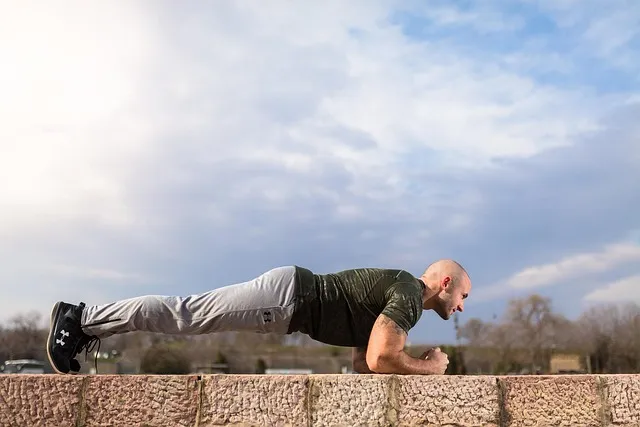
Week 4: Maintain the full three-round sequence and add a performance experiment: measure your push-up count on a morning without the breathing practice, then measure again after the breathing and retention phases. Most people discover they can do significantly more push-ups during the oxygen-rich retention state than at baseline — a demonstration that the practice is producing measurable physiological change, not just subjective experience.
Pillar Two: Cold Exposure — Weeks 2-8
Cold exposure is introduced in Week 2 after breathing is established. Beginning with cold exposure before the breathing practice is in place means you’re attempting the harder discipline first, which reduces adherence. The breathing practice modulates the nervous system state in ways that make cold exposure more manageable.
Week 2-3: 30-60 second cold shower end-of-session, following the breathing practice. The physiological state produced by the breathing — elevated sympathetic tone, alkaline blood pH, high oxygen availability — changes the cold exposure experience significantly. Many practitioners report that the cold shock response is noticeably less intense after the breathing practice than it is cold without the breathing preparation.
Week 7-8: If access to a cold plunge is available, introduce 3-5 minute cold plunge sessions 3-4 times per week. Pair with the breathing practice. The combination of Wim Hof breathing and cold plunge immersion is the full method as Hof practices it. For the box breathing practitioners among our readers, the mechanics are different but the underlying principle — using breath to regulate the nervous system response to a stressor — is the same.
Pillar Three: Commitment — Ongoing
Hof’s third pillar is the most difficult to explain without sounding vague, but it can be grounded practically. “Commitment” in the Wim Hof context means intentional mental engagement during both the breathing and cold practices — not passive endurance but active attention to what your body is doing, active effort to direct the response rather than just experiencing it.
During the breathing practice, this means maintaining awareness of the physiological sensations without either suppressing them or catastrophizing them. The tingling, the lightheadedness, the altered perception — you’re learning that these are manageable and temporary, and that you can stay present and functional within them.
During the cold exposure, this means using the breath as an active tool for managing the cold shock response. Deliberate nasal breathing during cold exposure — slow, controlled, intentional — actively engages the parasympathetic nervous system in a way that counters the sympathetic stress response the cold initiates. You’re practicing, in real time, the modulation of your stress response.
This connects directly to research on nervous system regulation — the capacity to deliberately engage the parasympathetic nervous system during stressors is one of the most practically valuable skills in the psychological health toolkit, and the Wim Hof practices are an accelerated training ground for that skill.
The Science of Alkalosis and Why It Matters
The mechanism by which the Wim Hof breathing produces its effects deserves more attention than it typically gets in popular descriptions of the method. Understanding the physiology makes you a better practitioner and a more discerning consumer of claims about what the method can and can’t do.
The rapid, full breathing of the Wim Hof technique is a controlled form of hyperventilation. This produces two primary physiological changes: (1) CO2 levels in the blood drop significantly (hypocapnia), and (2) blood pH rises as a result of the CO2 depletion — this is respiratory alkalosis.
Respiratory alkalosis has several downstream effects. It changes hemoglobin’s oxygen binding characteristics — hemoglobin in alkaline conditions holds oxygen more tightly (the Bohr effect), which is why practitioners may feel lightheaded during intense sessions despite having very high blood oxygen saturation: more oxygen is present but slightly less is being released to tissues. The alkalosis also directly affects cellular signaling, including the signaling pathways involved in inflammatory cytokine production.

The adrenaline (epinephrine) response is the other key mechanism. The combination of the breathing practice and cold exposure produces significant epinephrine release — measurably higher than baseline in the Kox study’s trained subjects. Epinephrine has direct anti-inflammatory effects via its action on immune cell β2 receptors. High circulating epinephrine suppresses macrophage activation and reduces pro-inflammatory cytokine production. This is a secondary pathway to the alkalosis effect, and the two may be synergistic.
What this tells us about claims: The Wim Hof Method, specifically the combination of breathing and cold exposure, produces documented changes in immune inflammatory response through measurable molecular mechanisms. This is not placebo, not mysticism, not biohacking hype. The Kox paper is peer-reviewed science in a top journal.
What this does not tell us: It does not mean the method cures autoimmune diseases, prevents cancer, reverses chronic illness, or does any of the more expansive things you’ll find claimed in the Wim Hof enthusiast community. Reduced inflammatory response in healthy people exposed to experimental bacterial endotoxin is a long way from therapeutic intervention for inflammatory disease. The science supports the practice as a wellness tool. It does not support the practice as a medical treatment.
What the Wim Hof Method Gets Right
The Wim Hof Method gets several important things right, and they deserve recognition before we address the overclaims.
The breathing technique reliably produces measurable physiological effects. The alkalosis, the elevated epinephrine, the reduced inflammatory markers — these are documented in peer-reviewed research and replicable. The method is not placebo.
The combination of breathing and cold exposure appears to produce effects that neither practice alone produces as reliably. The synergy between them — the breathing creates a physiological state that changes the cold exposure response, and the cold creates a physiological demand that the breathing is extraordinarily useful for managing — is a genuine insight. Most cold exposure protocols don’t include breath training. The Wim Hof Method’s insistence on both is validated by the evidence.
The method builds genuine psychological resilience. The controlled exposure to hard physiological experiences — oxygen-depleted retention, ice-cold water, discomfort of every kind — trains the mind’s relationship with difficulty in ways that have practical transfer to ordinary life. This is not specific to Wim Hof. Any deliberate stress training does this. But the Wim Hof Method does it efficiently and repeatably.
Hof himself is not a fraud. Whatever you think of his personality or marketing, his physiology has been measured under controlled conditions and found to be genuinely unusual. His ability to maintain body temperature in extreme cold is real and documented. His voluntary immune modulation is real and documented. He is not performing tricks. Whether his specific techniques are what produced his extraordinary capacities, or whether he’s physiologically unusual in ways most people can’t replicate, is a legitimate scientific question — but his fundamental claims are not fabrications.
What the Wim Hof Method Gets Wrong
The overclaims in the Wim Hof ecosystem are substantial and worth naming clearly.
The claim that anyone can achieve what Wim Hof achieves with the method is unsupported. The Kox study’s participants showed significant effects after four days of training — effects that are meaningful for healthy people pursuing wellness. Whether training duration and intensity could produce the extraordinary thermoregulatory capacities Hof demonstrates (standing in ice for 112 minutes) has never been established in population research. Hof may have unusual physiological characteristics that interact with the training in ways that aren’t generalizable.
The claim that the method is universally safe is incorrect. Syncope during the breathing technique is a real risk that has caused real deaths when practiced in water. The cardiovascular demands of the cold exposure, particularly when combined with the breathing’s physiological state, are significant and not appropriate for people with cardiovascular conditions without medical clearance. The method is safe for healthy people practicing under appropriate conditions; it has safety requirements that the marketing understates.
The wellness community’s habit of treating the Wim Hof Method as a complete health system is an overclaim relative to what it is: a combination of breathing and cold exposure practices with documented benefits in specific domains (immune inflammatory response, stress tolerance, psychological resilience) and plausible but unproven claims in others. It is a genuinely good tool. It is not a replacement for sleep, nutrition, exercise, or medical care.
The Continuation Research: What Came After Kox
The 2014 Kox study opened a research door that subsequent investigators have been walking through in interesting ways. The follow-on research helps refine what we know about the Wim Hof Method’s mechanisms and boundaries.
A 2019 study from the same Radboud University group examined whether the Wim Hof Method’s effects were specific to Hof’s techniques or generalizable to a broader trained population. The researchers trained a larger cohort and found that the immune modulation effects were reproducible across subjects — not unique to Hof’s physiology. This is an important replication that confirms the Kox findings extend beyond a single exceptional individual.
Separate research from the University of Copenhagen — related to Søberg’s broader program of winter swimming physiology — has examined the overlap between the cold exposure component of the Wim Hof Method and cold water immersion practices more generally. This work suggests that the breathing component adds meaningful immune and sympathetic nervous system effects beyond what cold exposure alone produces — supporting the integrated Three Pillars approach over cold exposure without breath training.
The pain tolerance research is another active area. Studies examining cold pressor tests (immersing the hand in ice water as a standardized pain tolerance measure) in Wim Hof Method practitioners show higher pain tolerance and lower pain ratings compared to controls. The mechanism appears to be both the endogenous opioid release from cold exposure and the psychological conditioning effect of repeated controlled exposure to aversive sensations. This is consistent with the broader pain processing research showing that expectations, prior experience, and psychological regulation all modulate pain perception at a neurological level.
What the research literature still lacks: large-scale RCTs in clinical populations. The existing evidence base is primarily in healthy volunteers. Whether the Wim Hof Method produces meaningful effects in people with chronic inflammatory conditions, autoimmune diseases, or significant mood disorders remains largely unstudied. The mechanism-level research supports plausibility. The population-level clinical evidence doesn’t yet exist at the scale required to make clinical recommendations.
Building the Practice Into Daily Life
The most common failure mode for people starting the Wim Hof Method is treating the three-round breathing sequence as something they need to “fit in” around their schedule rather than something that replaces a piece of their morning routine. The breathing practice takes 15-20 minutes. That’s time that needs to come from somewhere.
The practices that most consistently get displaced by the Wim Hof breathing are: scrolling phone in bed (15-20 minutes), sitting with coffee scrolling (15-20 minutes), and the vague unstructured time that exists between waking and actually starting the day in most people’s mornings. None of these displaced activities have physiological benefits. The Wim Hof breathing does.
The practical sequence that works for most serious practitioners: wake up, do not look at phone, go directly to the floor or bed where you’ll practice, complete three rounds of breathing, move to cold shower or cold plunge. Total time: 25-35 minutes. You’ve completed the most physiologically demanding and beneficial part of your morning before most people have decided whether to snooze their alarm.
For practitioners who also use box breathing or other breath-based practices, the Wim Hof breathing is best practiced as a separate, dedicated session rather than interspersed with slower, regulatory breathing techniques. The physiological states are different enough that mixing them within a session produces neither fully — the hyperventilatory power breathing achieves its effects through CO2 depletion, while box breathing achieves its effects through CO2 regulation. They work through opposite mechanisms and work best when given their own dedicated time.
What Scott Carney Got Right (and What He Got Wrong)
Scott Carney’s book What Doesn’t Kill Us is both the best popular account of the Wim Hof Method and an inadvertent illustration of the method’s overclaim problem.
What Carney got right: he went, he experienced, he documented honestly. He describes the physical experience of the breathing and cold exposure with the precision of a journalist who’s committed to accurate reporting even when accurate reporting complicates his prior assumptions. He acknowledges when he was wrong about what was possible. He represents the 2014 Kox study accurately. He’s skeptical of the most expansive claims while remaining open to the documented evidence.
What the Wim Hof ecosystem did with Carney’s book: used it as marketing for a system that promises much more than the book actually supports. Carney climbed Kilimanjaro shirtless — an extraordinary feat. The implication from Hof’s marketing is that anyone can do extraordinary feats of cold tolerance with the method. Carney himself did not claim this. The research doesn’t support this. Individual variation in cold tolerance and physiological adaptation to cold is large, and Wim Hof himself may represent an extreme on that distribution rather than a reachable target for most people.
The Carney experience is instructive for a different reason: he went to debunk and stayed to practice. This is the characteristic arc of many Wim Hof skeptics who actually do the method — the experience does something, even if what it does is more modest and more bounded than the marketing claims. The practice is real. The limits of the practice require honesty that the community often resists.
Cold Exposure as Meditation: The Third Pillar Unpacked
Wim Hof calls the third pillar of his method “commitment” or “mindset,” and this deliberately vague framing has allowed it to be interpreted variously as meditation, visualization, stoic practice, or simple discipline. The lack of precision is one of the criticisms the scientific community has of the method’s structure. But there’s something genuinely real and undercharacterized in what Hof is describing.
The phenomenon he’s pointing at is something like: the cold and the breathing, done with active attention, produce a quality of present-moment engagement that passive endurance does not. The cold shock response, if you’re deliberately working with it rather than just surviving it, becomes a kind of forced meditation — your attention is brought absolutely into the present by the sheer immediacy of the sensation, and your task is to maintain deliberate control of your response rather than being swept by the automatic response.
The neuroscience of this is interesting. The prefrontal cortex — the seat of deliberate, regulatory cognitive function — is involved in the deliberate modulation of stress response. When you actively work to control your breathing during cold exposure rather than letting the shock response dictate your breathing, you’re recruiting prefrontal regulation pathways that compete with the amygdala-driven stress response. The cold exposure is, in this framing, a real-time training environment for the regulatory capacity of the prefrontal cortex over the subcortical stress response systems.
This has direct relevance to research on nervous system regulation. The capacity to engage the parasympathetic nervous system voluntarily during a sympathetic activation state — to literally slow your heart rate and calm your breath while your body is screaming to do the opposite — is a skill that transfers to every other stressful situation in your life. The cold exposure is the training ground. The business negotiation, the difficult conversation, the athletic competition under pressure — these are the games where the skill gets used.
The military performance psychology literature has a term for this: “stress inoculation training.” The idea is that controlled, graduated exposure to stressors produces not just habituation to those specific stressors but a generalized capacity to remain cognitively functional under stress that wouldn’t have developed without the training exposure. The Wim Hof Method’s breathing-plus-cold combination is, in effect, an accessible civilian form of stress inoculation training.
This is probably the most undervalued aspect of the method. The immune response modulation is interesting but modest. The cold tolerance improvement is real but depends heavily on individual variation. The stress inoculation training effect — the development of a genuine, functional capacity to regulate your nervous system response under demanding conditions — is both documented in the mechanistic research and immediately applicable to the full range of challenges that life presents.
FROM THE LIBRARY ›
FAQ
- Is the Wim Hof breathing safe for daily practice? For healthy adults without cardiovascular conditions or seizure disorders, daily practice is generally considered safe when done lying down or seated, away from water. The practice produces real physiological stress — alkalosis, elevated epinephrine, altered hemoglobin oxygen binding — that is well-tolerated by healthy systems. People with cardiac arrhythmias, epilepsy, high blood pressure, or during pregnancy should consult a physician before starting.
- Why do some people feel dizzy or see colors during the breathing? These are effects of the alkalosis and CO2 depletion. The Bohr effect (alkaline conditions causing hemoglobin to hold oxygen more tightly) reduces oxygen delivery to the brain even when blood oxygen saturation is high. The tingling in the extremities comes from vasoconstriction induced by the low CO2. The visual disturbances are phosphenes from altered retinal blood flow. All of these are temporary and resolve with the recovery breath. They are not symptoms of something going wrong — they’re signs the technique is producing its intended physiological state.
- Can the Wim Hof Method help with anxiety? Possibly, through two mechanisms. The controlled exposure to physiologically intense experiences (the retention phase, the cold exposure) may reduce the behavioral avoidance response to anxiety-provoking sensations by demonstrating that uncomfortable internal states are manageable and temporary. The elevated norepinephrine and dopamine produced by cold exposure may improve mood and reduce baseline anxiety neurochemically. These are plausible and partially evidence-supported pathways. The method is not a treatment for clinical anxiety disorders, and it’s not appropriate to frame it as one.
- How long before you see measurable effects? The Kox study showed measurable immune effects after four days of training. Neurochemical effects (improved mood, focus, energy) are apparent within the first week for most practitioners. Subjective psychological changes (improved stress tolerance, reduced reactivity) typically develop over 4-8 weeks of consistent practice. The retention time metric (how long you can hold the no-breath phase) typically improves within two weeks and continues improving over months.
- Is there a wrong way to do the breathing? Several. Breathing too slowly produces insufficient CO2 depletion and reduces the technique’s potency. Forcing a complete exhale (rather than the passive ~80% exhale) changes the mechanics. Doing the breathing while in or near water is dangerous. Starting the cold exposure before completing the breathing practice prevents the synergistic state-preparation effect. These are the most common mistakes in self-taught practitioners. If possible, learning the breathing from a certified instructor or Hof’s official app before self-directing is worth the investment.
- Can children or teenagers practice the Wim Hof Method? Not recommended without medical supervision. The physiological demands of the breathing — particularly the alkalosis and reduced cerebral blood flow — are not well-studied in developing systems. The cold exposure demands are significant. Most Wim Hof practitioners recommend the method only for adults, and the Kox study was conducted on adults. There is no pediatric research on the method’s safety.
- Does the Wim Hof Method work better for some people than others? Almost certainly, based on what we know about individual variation in autonomic nervous system function, cold tolerance, and respiratory physiology. People with naturally high HRV (heart rate variability) and well-trained autonomic nervous systems appear to achieve retention times faster and report more robust subjective effects. People who smoke, have cardiovascular conditions, or are highly anxious may find the technique more challenging and its effects more variable. Individual results vary — which is a real disclaimer, not a marketing disclaimer.
“The finding that the trained subjects could voluntarily influence the immune response is new. It was the first time it had been shown in humans — and it was done in a controlled setting with objective measures. Whatever the mechanism, the effect is real.”
— Dr. Matthijs Kox, Radboud University Medical Center, on the 2014 PNAS study
Editorial StandardsCorrectionsMedical DisclaimerAbout Our ContentAffiliate DisclosureSite Map