
Eight years old. A Wednesday night in November, standing in the hallway in socks, watching a father’s body turn into something that doesn’t have a name yet. He isn’t hitting anyone. He won’t. But the cabinet door he just slammed is still shivering on its hinges, the mother has gone quiet in the specific way that means she’s made herself small and far away, a sister is behind a closed door somewhere, and every cell in an eight-year-old’s still-forming nervous system is running the same calculation: threat level critical, survival options: none. No understanding of the mortgage payment that didn’t clear. No understanding of the conversation with the boss that sat in his chest for eight hours until he walked through the front door and the first small disruption cracked the seal. None of it makes sense yet. But the body understands all of it — with a fidelity and a permanence that will outlast every conscious memory that gets built on top of it later. Eight years old. The nervous system is taking notes. Those notes do not get erased.
Twenty-five years pass. Same guy, different kitchen — his own, now. A partner says something. Something minor, something about the schedule or the dishes or where he left his keys, and he feels it arrive before he’s even decided to be angry. Pressure behind the sternum. Jaw tightening. Hands opening and closing at his sides like they’re hunting for something to absorb the charge his mouth is about to release. And in the half-second before it comes out, there’s a sliver of recognition so thin it barely registers as a thought at all. Something in him notices: this is not new. These shoulders, pulled up like armor. This neck, tendons running taut like bridge cables. This exact recipe of heat and pressure and narrowing vision. He’s been here before. Not as the man having the anger. As the boy watching it happen to someone else.
He is not having his own anger in that moment. He’s having his father’s. And whatever generational transmission ran through that hallway twenty-five years ago is now running through him, aimed at the people he loves most.
The Moment You Realize the Rage Isn’t Entirely Yours
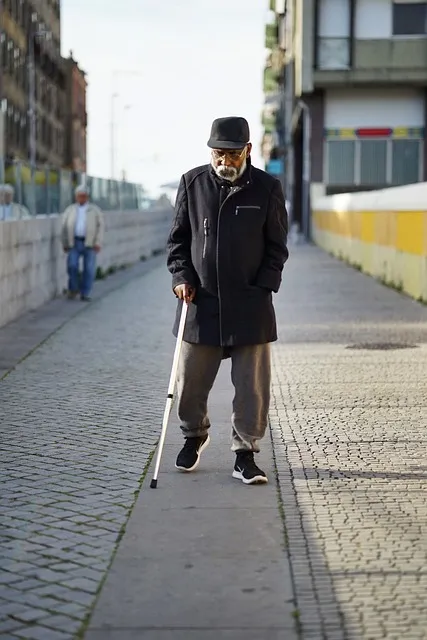
The mechanism has a name: co-regulation, and it starts at birth. Babies don’t regulate their own nervous systems — they borrow the regulation of whoever’s holding them. The caregiver’s physiological state becomes the baby’s physiological state, full stop. Rhythm, breathing, tension level, emotional tone: this is the raw material a child’s nervous system uses to answer one buried question. What is baseline? What counts as normal activation? What does safety actually feel like, in a body, before anyone has words for it? Across thousands of hours of proximity during the first decade of life, an answer gets wired in — deep in the autonomic nervous system, below language, below anything that could be called conscious memory. Not symbolic. Structural. It shapes the literal physiology of the stress response: the thresholds, the speed, the intensity, the shape of what happens when the world presses in.
When the primary co-regulation template is a man who rages, the calibration doesn’t produce resilience. It produces reactivity. Not because anyone downstream is broken. Because the system did exactly what it was built to do. A child’s nervous system learns, from thousands of repetitions delivered by the most reliable adult in the room, that this — this level of activation, this speed of escalation, this specific physiological weather pattern — is simply what a man’s body does under pressure. And it keeps running that program for decades after the original teacher is gone.
Give it a name, since the rest of this piece is going to keep referring back to it: the Inherited Activation Pattern. The bundle of physiological responses — jaw, shoulders, hands, voice register, the narrowing of attention — that a father’s body taught a son’s without either one of them exchanging a single word about it. Four words worth returning to every time the inherited charge shows up: it came from him. That doesn’t make anyone a victim. It makes the work specific. Nobody’s trying to control a character flaw here. The task is interrupting a program installed in the tissue before there was any say in the matter, and the first move in interrupting a program is knowing, in the moment, that it’s running.
The Mechanism: How Rage Travels From Body to Body Across Generations
How this transmission actually works, mechanically, matters — because it changes what the fix looks like. This isn’t a psychological wound that closes up through insight. It’s a physiological pattern that changes through physiology. Through the body. Not around it.
The core mechanism is the mirror neuron system. First identified in the early 1990s by Giacomo Rizzolatti’s team at the University of Parma, studying — of all things — macaque monkeys reaching for peanuts. Mirror neurons fire both when an organism performs an action and when it merely watches that same action performed by someone else. The discovery mattered because it gave a biological substrate to something clinicians had suspected for a long time: people don’t just observe another person’s emotional state from a safe distance. They simulate it, internally, in real time. Watching a father’s body mobilize into rage isn’t a passive visual event. The mirror neuron system runs the pattern in the observer’s own nervous system — the same motor programs, the same autonomic signature, the same emotional circuitry that would fire if the child were the one raging. Not a spectator. A participant, running the program internally, thousands of times, across the whole span of childhood.
This is what separates growing up around a parent’s chronic rage from, say, watching a violent film. A film doesn’t trigger co-regulation. A film doesn’t install anything. A father does — because a child’s actual survival once depended on reading him accurately and calibrating against him in real time. The mirror neuron system was doing exactly its job. The job just happened to be downloading a rage architecture that would go on to run in someone else’s body for the next thirty years.
Stephen Porges’s Polyvagal Theory adds the piece that explains why none of this yields to intellectual override. Porges’s research, developed through the 1990s and published comprehensively in 2011 in The Polyvagal Theory, maps three distinct states of the autonomic nervous system: ventral vagal (safe, connected, regulated), sympathetic mobilization (fight or flight), and dorsal vagal (shutdown, freeze, collapse). The finding that matters here is that the nervous system’s read on safety happens below conscious awareness, through what Porges calls neuroception — a continuous, automatic scan for threat that runs faster than thought and skips rational evaluation entirely. A child’s neuroception gets tuned to a specific father’s body during those early years. It learns his threat signature — voice register, body language, the particular shift in the air that preceded an eruption. And it keeps firing that same alarm decades later, at any input that pattern-matches closely enough — including inputs from the man’s own body, when his own activation starts to climb. He feels the activation. His nervous system reads the activation as threat. The threat response produces more activation. The loop runs beneath conscious awareness, and understanding the loop, intellectually, does approximately nothing to stop it from running.
Bessel van der Kolk’s work, laid out in his 2014 book The Body Keeps the Score, supplies the clinical evidence for what somatic therapists had been observing for decades without the vocabulary to prove it: unresolved survival activation doesn’t fade with time. It stays lodged in the body — in muscle tension patterns, in autonomic baseline settings, in the specific shape of how a body mobilizes under stress. Van der Kolk’s research with trauma survivors found that the stress response stays organized around the original threat decades after the threat itself is gone. The mortgage a father couldn’t cover in 1987 is long gone, settled or forgotten or both. The somatic pattern his raging about it printed onto his son is still sitting there, waiting for a stimulus that rhymes closely enough to trigger a full replay.
So: the mechanism of the Inherited Activation Pattern, plainly. Mirror neuron installation during years of high-volume exposure. Reinforced by co-regulation into the autonomic baseline. Stored in muscle and fascia and nervous system tone. Triggered by neuroceptive pattern-matching below conscious awareness. That’s the working material. Not a character flaw. Not weakness. A biological system doing precisely what it was built to do — and changing it requires working at the biological level, not the level of insight, not intention, not resolve, not willpower. The level of the body itself.
The rage in your body is not entirely yours. Part of it was installed. And the installation happened at a level below language, which means the uninstallation has to happen at the same level.
The Lie: That Understanding It Is Enough to Change It

This is a lie. And it has a body count.
The men who’ve done the most work on this — the ones who can explain the mirror neuron mechanism at a dinner party, who’ve sat in therapy for years, who understand their attachment wounds with something close to clinical precision, who’ve read every relevant book and can talk about the father wound in language that gets their own therapist a little emotional — these men are still exploding in their kitchens. Not from lack of insight. Because insight lives in the cortex, and the Inherited Activation Pattern lives in the brainstem and the autonomic nervous system, two neighborhoods that don’t share a phone line during an emergency. Nobody thinks their way out of a survival response. The survival response doesn’t check in with the prefrontal cortex before firing. It fires first, in milliseconds, and the cortex shows up to the scene a beat later and starts building a story about why the response was justified. By the time a thought arrives about what’s happening, the thing that scared the kid has already been said.
None of this makes understanding useless. It’s necessary. But necessary the way a map is necessary — it shows where the destination is, it does not move a single leg. The map doesn’t replace the walking. And the walking, here, happens in the body: somatic work, breathwork, physical discharge, co-regulation with nervous systems that are actually regulated, and the unglamorous, repeated, embodied practice of staying present through activation without acting from it.
The lie shows up again in the standard advice men get handed about anger — just walk away, count to ten, think before you speak. Suppression strategies, every one of them, dressed up as regulation strategies. They are not the same thing. Suppression puts a lid on the activation while the pressure underneath keeps climbing. Regulation actually discharges the activation, so the pressure drops for real. A man who suppressed his inherited rage for twenty years and then detonates with catastrophic force didn’t fail to suppress hard enough. He suppressed correctly, by the only definition that word has, and eventually hit the engineering limit of the whole approach. The activation was always there. It was looking for an exit. It found one.
Nervous system regulation is the actual work here — not the performance of control but a real physiological downshift that changes what happens in the body before words leave the mouth. And here’s the part worth sitting with: that work does not happen through insight. It happens through practice. Specifically, the five below.
The Protocol: Five Practices That Actually Break the Chain
These aren’t anger management techniques. Anger management is behavioral compliance — keep the lid on, whatever it costs. What follows is physiological change: lower the pressure so the lid stops mattering so much. The distinction isn’t academic. Behavioral compliance fails under enough stress, and the Inherited Activation Pattern generates exactly the kind of stress that breaks behavioral compliance for sport. The pressure actually has to drop. Staying covered isn’t the same thing.
Practice one: Somatic discharge. Every childhood incident where a body mobilized for fight or flight and never got to finish either one leaves undischarged survival energy sitting in the musculature. Peter Levine’s somatic experiencing model — forty years of clinical practice behind it, laid out in his 1997 book Waking the Tiger — works by bringing gentle awareness to these stored activation patterns and letting the body finally complete the survival response it was interrupted from finishing the first time. Sometimes this looks like trembling. Involuntary movement. Waves of heat. Deep, seemingly pointless sighing. Not dramatic. Not re-traumatizing. Just the nervous system doing, twenty years late, what it tried to do back then — completing the cycle, discharging the charge, returning to baseline. A trained somatic experiencing practitioner can guide the process. It can’t be willed. Only the conditions — safety, attention — can be set up to allow it.
Practice two: New co-regulation templates. A nervous system calibrated against a dysregulated man needs to be recalibrated against regulated ones. This is one of the most underrated functions of men’s groups and decent male friendships in general — not the problem-solving, not the accountability, but the blunt physiological fact that time spent near a regulated nervous system quietly updates the baseline. Spend enough repeated time around men who are genuinely regulated — not performing calm, not white-knuckling it, actually regulated — and the system starts to update what “normal” feels like. The thermostat resets. Not a metaphor. Co-regulation is a real physiological mechanism, and it runs both directions in adult nervous systems, not just childhood ones. Part of why men’s work communities exist at all. The male loneliness epidemic, underneath the headline statistics, is partly an epidemic of nervous systems that never got updated because the men who needed updating never found the relational conditions to make it happen.
Practice three: Window of tolerance expansion. The nervous system doesn’t change in comfort, and it doesn’t change in overwhelm either. It changes at the edge — what Dan Siegel calls the window of tolerance, the zone between full regulation and full dysregulation where activation is present without being overwhelming. Every time a man stays present through activation without acting from it — not suppressing, not exploding, just genuinely staying, breathing, letting the energy move without grabbing the wheel — the window gets a little wider. Capacity builds to hold more activation without the old program auto-executing. This is the real work of breaking the chain. Not the dramatic moments of heroic restraint that make good stories later. The ten thousand ordinary moments of staying present through the charge, most of which nobody will ever hear about. Transforming anger isn’t about eliminating it. It’s about expanding the container until the anger can move through without burning the house down on the way out.
Practice four: The extended exhale protocol. Extended exhales activate the parasympathetic nervous system directly — specifically the vagal brake, the primary downshift mechanism the autonomic system has. Four counts in, eight counts out. Five repetitions. Not a meditation technique. A manual override — a direct engagement of the parasympathetic branch a father’s body never got around to teaching. It works physiologically, every time, regardless of what anyone thinks about it while doing it. The problem was never that it’s complicated. The problem is it requires choosing regulation over reaction in the exact second the body is screaming for the opposite. That gap — between impulse and breath — is where the chain either continues or snaps. Small gap. Takes about a second to step into it. But only if it’s already been practiced during lower-stakes moments, because under real activation, a man only has access to patterns already built beforehand. Breathwork for regulation is a skill, and like every skill it compounds with repetition, not with reading about it.
Practice five: The age check. In any moment of strong activation, one question: how old does this feel right now? If the honest answer lands younger than the actual number of years on the calendar — if there’s something child-shaped in the urgency, the desperation, the need for one specific response from one specific person — that’s inherited material showing up uninvited. Not that the present situation is irrelevant. The intensity is borrowed, that’s all. Acknowledge the borrowed charge. Let it be acknowledged, out loud if it helps. Then address the real present situation — the actual boundary, the legitimate need, the genuine conflict — at the activation level that situation actually warrants. Not the level of a thirty-year-old recording playing on a body that has, finally, learned it has a pause button.
The chain does not break in a moment of heroic transformation. It breaks in the ten thousand ordinary moments where you choose to stay present through the charge instead of discharging it at someone else’s expense.
The Proof: What Research Shows About Intergenerational Anger Transmission
Murray Straus at the University of New Hampshire, who ran the Family Violence Research Program from the 1970s through the 2000s, found in his longitudinal data that men who witnessed parental violence as children were three times more likely to become perpetrators of violence in their own adult relationships than men who hadn’t. Critically, this wasn’t explained away by poverty, education, or any other socioeconomic variable — the transmission effect held after controlling for all of it. The mechanism was direct: childhood exposure to parental anger and violence predicted adult anger dysregulation independent of everything else in the model. Straus’s data covered thousands of families across multiple decades. The finding kept replicating.
The ACE (Adverse Childhood Experiences) study, run by the CDC and Kaiser Permanente starting in 1995 with over 17,000 participants, found that growing up in a household with a verbally or physically violent parent was one of the ten adverse childhood experiences with the strongest predictive relationship to adult mental health outcomes — anger dysregulation, relationship violence, substance abuse among them. Each additional ACE point significantly raised the odds of anger-related adult outcomes. Dose-response, clean as these things get: more childhood exposure to rage, more adult difficulty metabolizing it.
More recently, epigenetic research has added a layer that would have sounded like science fiction thirty years ago. Michael Meaney’s work at McGill University found that maternal behavior in rats — specifically the quality of maternal licking and grooming — produced measurable epigenetic changes in the pups’ stress response systems, changes passed to the next generation not through altered DNA sequence but through altered gene expression. The stress architecture got inherited without ever showing up in the genetic code itself. Meaney’s 2001 paper in Science is now considered foundational in the field. In humans the mechanism is messier and less completely mapped, but the directional evidence keeps accumulating: the physiological residue of a parent’s chronic stress and rage can pass to children not just through behavioral modeling but through epigenetic modification of the child’s own stress response genes. A father’s anger may have literally altered how a son’s stress genes express themselves. Not determinism — epigenetic expression is modifiable, that’s the whole point of bringing it up. But it explains why the Inherited Activation Pattern can feel so bone-deep and so constitutional. Because it partly is.
The genuinely hopeful finding in all of this: the transmission isn’t inevitable, and the pattern isn’t permanent. The same neuroplasticity that let the Inherited Activation Pattern get installed in the first place allows it to be modified later. Meaney’s team found the epigenetic changes from poor maternal care in rats could be partially reversed by cross-fostering pups with high-quality caregivers. The nervous system keeps its capacity for updating across the whole lifespan. The update needs the right conditions — safety, repetition, the physiological practices above — but it’s available. The chain has been passed down for generations. It can stop with the guy reading this.
The Hard Truth: Your Children Are Watching Right Now

A daughter flinches when a father’s voice rises. Not because he’s ever hurt her — he hasn’t, and he won’t. Because her mirror neurons are simulating the state his body is in when his voice hits that register, and the simulation reads as threat in her still-developing nervous system. She’s not afraid of the words. She’s afraid of the body — the physiological state she’s reading through the exact same mechanism he once used to read his own father’s. She’s eight years old. She’s standing in a hallway. She is him.
A son is doing something worse than flinching. He’s studying. Watching the way his father once watched his own father — not with avoidance, with deep, unconscious attention. His mirror neurons aren’t running a fear simulation. They’re running an identity simulation. This is what a man’s body does under pressure. This is what a man looks like when the world presses against him. This is the template. He’s downloading the Inherited Activation Pattern with the same fidelity his father once downloaded it. The chain extending through his body right now, link by link, breath by breath, while everyone in the kitchen thinks the argument is about the dishes.
Here’s the part that doesn’t get softened. The work is urgent. Not because any given man is a bad father — most aren’t. Because the transmission mechanism doesn’t wait around for a convenient time. Every month that passes is another month of one nervous system training another. The window when the template is most plastic isn’t infinite. And anyone who’s felt his own father’s body animate his in his own kitchen already knows, in his bones, exactly what’s riding on this.
Breaking the chain doesn’t require perfection. It requires enough. It requires children seeing something their nervous systems have never once witnessed: a man who feels the activation arrive and doesn’t become it. A man who says, out loud, in front of them, “I’m feeling activated right now and I need a minute before we continue this conversation.” Watch what that sentence does to a kid who’s only ever seen rage or suppression. Shoulders drop. Breathing deepens. The face shifts from vigilance to something that looks, cautiously, like safety. That’s a nervous system updating its baseline in real time, right there at the kitchen table. That’s the chain breaking, mid-sentence.
And when it fails — because it will, sometimes, when the old program executes before the new one finishes loading, when a father’s own voice comes out of his mouth and he sees the exact look on his kid’s face that he wore himself once — go to them. Get down on their level. Say this, close to word for word: “I just handled that badly. That was too much for the moment, and you didn’t deserve it. I’m sorry.” Repair isn’t weakness. Repair is the advanced move, arguably the whole ballgame. It demonstrates something a father’s own father likely never demonstrated: that a man can lose his footing and choose to come back anyway. That the relationship survives the mistake. That he’s bigger than the program running underneath him. Somatic imprints in children get shaped not only by the original injury but by what happens in its aftermath. Repair rewrites the imprint. That’s not sentiment. That’s mechanism.
Fathers Anger Lives Q&A: Breaking the Generational Chain of Male Rage
Is inherited anger real, or is this just excusing bad behavior? The data converges on one conclusion: the physiological pattern of anger dysregulation gets demonstrably transmitted across generations through somatic modeling, co-regulation, and — emerging evidence suggests — epigenetic modification. That transmission is real. It explains where the pattern came from. It does not excuse acting from it. Knowing the Inherited Activation Pattern traces back to a father doesn’t relieve anyone of responsibility for what it does to the people standing nearby. What it does is give the work a more accurate target. Nobody’s fixing a character flaw here. Somebody’s interrupting a biological program. Those require different interventions entirely, and knowing which one is actually in play matters enormously for whether the effort produces lasting change or just another round of white-knuckling.
What about a father who wasn’t violent — just went cold and distant when angry? Does this still apply? Yes, and in some ways the silent, cold-withdrawal variant produces more tangled somatic imprints than explosive anger does. Explosive anger is loud, visible, and produces a threat signal a child’s nervous system can organize around cleanly enough. The cold, withdrawn father produces something more disorienting: the threat is ambiguous. Is this abandonment? Punishment? Something else entirely? The child’s nervous system activates trying to read a signal that can’t quite be read, and that activation-without-resolution becomes its own chronic pattern over time. Men who grew up with cold, distant fathers often present not with explosive rage but with emotional shutdown — a dorsal vagal freeze response rather than a sympathetic fight response. Different flavor. Same underlying mechanism. The practices above, particularly somatic discharge and new co-regulation templates, apply to both.
Does breaking the chain require confronting a father directly? No, and for most men that’s actually the correct path to skip. The Inherited Activation Pattern lives in the body, not in the relationship with the father who installed it. His participation isn’t required. His acknowledgment isn’t required. His apology — the one a lot of men have been quietly waiting on since they were eight — isn’t required either. Breaking the chain is an inside job, a physiological project that happens in someone’s own tissue regardless of whether the father is alive, accessible, willing, or even capable of the conversation that might once have been wanted. Grieve the absence of the acknowledgment that was deserved. That grief is real and it earns its own room. But don’t make his participation a precondition for the work. Forgiveness as a tool for liberation — not absolution of the other person, but a man’s own release from the weight of waiting — is a separate, valuable project that runs alongside the somatic work rather than ahead of it.
How do you know if what you’re feeling is your own anger or inherited anger? The age check is the most reliable diagnostic available. When the anger shows up, ask: how old does this feel right now? If the intensity is out of proportion to the actual present-moment situation, if the urgency feels existential rather than circumstantial, if the activation sits closer to what a child would feel about a threat to survival than what an adult would feel about a scheduling conflict — that’s likely inherited material running the show. Genuine adult anger tends to be proportional, specific, and information-carrying: it points at a real boundary crossing, a real unmet need, a real conflict that needs addressing. Inherited anger tends to be big, fast, global, and weirdly disconnected from the actual present moment, in ways that are often only visible afterward. With practice — specifically the window-of-tolerance work — the in-the-moment recognition arrives earlier and earlier, until eventually the inherited charge can be felt arriving and set aside before it gets to speak for anyone.
What if a man is already watching himself repeat the pattern with his own kids? Then he’s exactly where he needs to be for the change to happen, and the fact that he can see it means the work is already partway done. Most men who repeat the pattern don’t see it happening. They have just enough denial, or just enough distance from their own childhood, to keep telling themselves what they’re doing is discipline, firmness, a necessary response to behavior that genuinely warranted a firm response. Seeing the pattern already interrupts a level of the transmission. What’s left is the physiological work: somatic discharge, co-regulation, window expansion, breathwork. And repair — which, done consistently, does more to interrupt the transmission than almost anything else on this list. Children’s nervous systems stay plastic longer than most parents fear. There’s time. Use it.
Is therapy necessary, or can this work happen alone? Some of the practices above can be done independently — the extended exhale protocol, the age check, the window-of-tolerance work. The somatic discharge work and the new co-regulation template work both benefit enormously from trained human support, though, because they require a regulated nervous system nearby to function properly at all. A somatic experiencing practitioner is the most direct route into the discharge work. A quality men’s group provides the co-regulation experience that self-directed practice can’t really replicate on its own. Neither one is really about talking through childhood. Both are about changing physiology in the presence of other regulated humans who can help hold the container while the work happens. The struggle with anger that most men carry in isolation gets significantly more tractable once the right support structures are in place. That’s not weakness. That’s applied understanding of how a nervous system actually changes.
What about a father who had a terrible childhood himself — anger, or compassion? Both. Simultaneously. That’s not a contradiction, it’s accuracy. That father was almost certainly also once a boy standing in a hallway, watching his own father’s body turn into something terrifying, downloading the same Inherited Activation Pattern that got passed along again a generation later. His anger wasn’t a choice at the level where it actually lived, in his tissue. The origin was real. The chain was already running by the time he showed up in it. None of that changes what it cost the son downstream — a childhood shaped by a father’s inability to interrupt the program, and that cost is real and its claims are legitimate. Both things can be held at once: the anger about the cost, and the compassion about the mechanism. Not contradictory. Two poles of the only posture that actually frees anyone: I will not carry what isn’t mine, and I will not hate the man who handed it to me without knowing what he was doing. Emotional discipline includes the capacity to hold that complexity — clear-eyed about impact without converting the clarity into hatred, which is just the rage turning inward and finding a fresh target.
How long does this realistically take to change? Longer than anyone wants and shorter than most fear. The somatic work typically produces noticeable shifts in autonomic baseline within six to twelve months of consistent practice with a skilled practitioner — not full resolution, but measurable change in the speed and intensity of the activation. The window-of-tolerance work is ongoing and compounds with repetition; most men report the first clear in-the-moment catch — noticing the Inherited Activation Pattern before it executes, rather than after — somewhere between three and six months of regular practice. The co-regulation updating through men’s groups and quality relationships is the slowest process of all, and the most transformative, operating over years rather than months. This isn’t a project with a completion date. It’s rebuilding the physiological baseline of a nervous system that’s been running a specific program for twenty or thirty years running. That takes the time it takes. The better question isn’t “how long will this take.” It’s “am I moving in the right direction.” If the practices above are happening consistently, the answer is yes.
References
Editorial StandardsCorrectionsMedical DisclaimerAbout Our ContentAffiliate DisclosureSite Map