
Washington, D.C., February 9, 1950. Senator Joseph McCarthy walks into a Republican Women’s Club dinner in Wheeling, West Virginia, and holds up a piece of paper. He tells the crowd he has a list. Two hundred and five Communists, he says, currently employed by the State Department. The number will change — 81, then 57, then “a lot” — but that’s almost beside the point. Within 48 hours, McCarthy is front-page news from coast to coast. Within four years, his name will become a verb: to McCarthyize someone means to accuse them of disloyalty with more heat than light, to ruin careers through innuendo and political theater rather than evidence.
The story most Americans learned has one villain and no nuance. McCarthy was a demagogue, a drunk, a bully who turned the legitimate threat of Soviet espionage into a cudgel for political ambition. He destroyed innocent people. He did. The Army-McCarthy hearings of 1954 ended with attorney Joseph Welch’s famous rebuke — “Have you no sense of decency?” — and within the year McCarthy was censured by the Senate, a broken man who would be dead at 48. Case closed. McCarthyism: bad. Move on.
Except that’s only half the story, and the half that got left out explains a lot about where America is right now. Because the Soviet infiltration of American institutions that McCarthy was trying — clumsily, recklessly, and sometimes dishonestly — to expose was real. The Venona intercepts, declassified in 1995, confirmed that the KGB had successfully placed agents inside the State Department, Treasury, the Office of Strategic Services, and the Manhattan Project. The McCarthy era wasn’t a paranoid hallucination. It was a real conflict, badly prosecuted, that produced two lasting consequences nobody planned on: it discredited the very act of questioning institutional loyalty, and it left the cultural infrastructure of that infiltration completely intact.
The pattern that runs from the Red Scare to today’s culture war is the Institutional Capture Cycle: a method of social transformation that operates by entering institutions through their soft points — academia, media, bureaucracy — discrediting anyone who names the process, and then replicating the original control structures under new branding. None of this requires believing in any conspiracy. The data is documented, the methods are published, and the architects of the transformation were remarkably candid about what they were doing. What’s changed isn’t the strategy. It’s the uniform.
The Event: McCarthy, Venona, and What Actually Happened
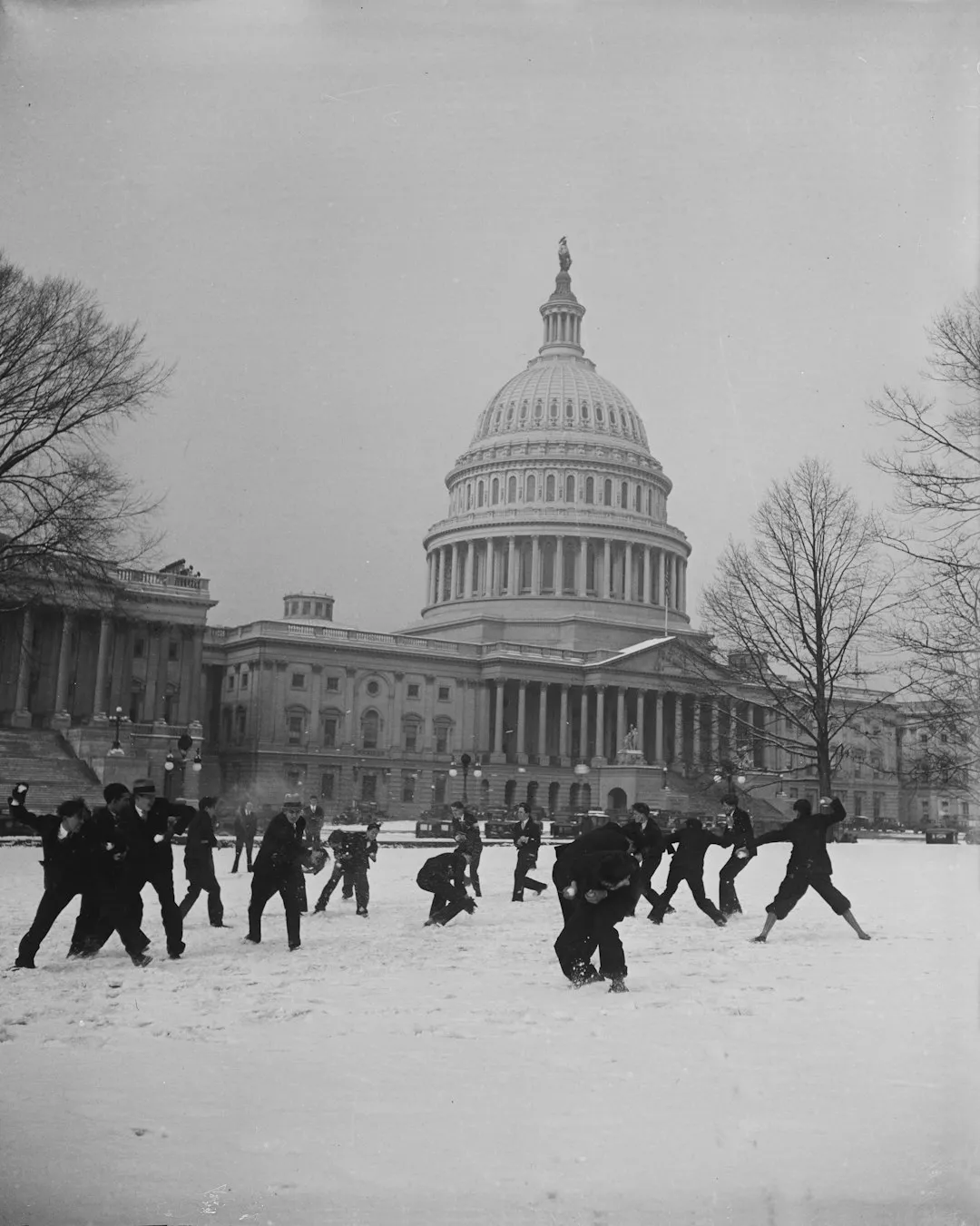
But in the decades following McCarthy’s fall, the historical accounting stopped at the civil liberties critique and never asked the next question: what was actually going on inside those institutions, and what happened after McCarthy was finished? The Venona project — a signals intelligence operation that decoded over 2,900 Soviet messages sent between 1942 and 1946 — gave definitive answers to the first question, but by the time the documents were declassified in 1995, the second question had become unfashionable to ask.
The Venona files identified roughly 349 Americans who had worked with Soviet intelligence, including Alger Hiss (State Department), Harry Dexter White (Treasury), Julius and Ethel Rosenberg (Manhattan Project adjacent), and Lauchlin Currie (White House economic adviser to FDR). The historian Harvey Klehr and his co-author John Earl Haynes, both distinguished academics at Emory University and the Library of Congress, spent two decades analyzing the Venona files and KGB archives opened briefly after the Soviet collapse. Their 1999 book Venona: Decoding Soviet Espionage in America is not a polemic. It’s an academic account of documented facts. Its conclusion: Soviet intelligence had penetrated American government at every significant level during the 1940s.
McCarthy knew some of this, got some of it wrong, used his knowledge like a wrecking ball rather than a scalpel, and was destroyed for his trouble. But his destruction had a side effect nobody planned on: it created an almost total inhibition on asking whether institutions might be carrying ideological passengers. For two generations after 1954, the phrase “McCarthyism” served as a conversation-stopper. Anyone who raised questions about the ideological composition of universities, media, or government bureaucracy could be — and was — instantly dismissed as a paranoid engaged in a witch hunt. The cultural left learned that lesson faster than the right did. They understood that McCarthy’s disgrace had handed them something valuable: an intellectual force field that made any scrutiny of their own institutional march feel like an echo of the thing everyone agreed was shameful.
The Venona files confirmed what McCarthy suspected but couldn’t prove cleanly. His failure wasn’t in identifying the problem. It was in handling it so recklessly that he made the problem impossible to discuss for 50 years.
The Pattern: The Institutional Capture Cycle — How It Works
When the Nazis came to power in 1933, most of the Institute’s leadership fled to the United States, where they took positions at Columbia, Berkeley, and later Brandeis. Herbert Marcuse, arguably the most politically influential of the group, ended up at the University of California San Diego, where he became a mentor to Angela Davis and, through his 1964 book One-Dimensional Man, provided the theoretical framework for the New Left. Marcuse’s central innovation was what he called “repressive tolerance” — the argument that true tolerance requires being intolerant of views that reinforce existing power structures. In plain language: silence your opponents in the name of freedom. Not a caricature. The phrase is in the text. Marcuse published it. It became a foundation of campus speech code theory thirty years later.
The Institutional Capture Cycle that the Frankfurt School pioneered has five phases that repeat across every institution it has touched:
-
Entry through credentialing. Institutions don’t get stormed. They get worked from the inside, one hire at a time. Academic positions, media fellowships, government appointments — these are the entry points. The first generation of Frankfurt School-influenced scholars entered American academia as intellectuals with interesting European ideas. By the 1970s, they were running hiring committees.
-
Curriculum and framework capture. Once inside, the shaping starts — what questions are considered worth asking. “Critical Theory” — which began as a Frankfurt School method — became the umbrella framework for entire departments of literature, sociology, history, and eventually law and medicine. The old books don’t get burned. They just stop getting taught, replaced with courses that make the old framework seem inadequate.
-
Language colonization. Every captured institution develops specialized vocabulary that functions as a loyalty shibboleth. Whether someone’s inside the framework becomes readable in whether they use the words correctly. “Privilege,” “positionality,” “intersectionality,” “systemic” — these are not just descriptions. They are signals. Using them marks belonging. Refusing to use them marks hostility. The language creates in-group/out-group sorting without needing a membership card.
-
Credibility laundering. Once the framework controls enough academic output, it can claim scientific or scholarly authority for political positions. This is the move that turned “the literature confirms diversity improves outcomes” from an assertion into an apparently empirical claim. The studies are real. The methodology is often contested. The institutional authority behind them is borrowed from the broader credibility of science, which is why the capture of scientific publishing matters as much as the capture of humanities departments.
-
Enforcement normalization. The final phase converts the framework from optional to mandatory. Speech codes, diversity requirements, mandatory trainings, professional certification criteria — these are the enforcement mechanisms that take an ideological framework and make compliance a condition of institutional participation. By this phase, explicit McCarthyite methods — blacklists, public denunciations, career destruction — are back, but they’re operated by the captured institutions themselves rather than by a Senate committee.
The cycle takes decades because it requires generational turnover. Enough people have to be trained inside the framework that they become the ones making hiring decisions. The Frankfurt School entered American academia in the 1930s and 1940s. Its framework dominated humanities departments by the 1980s. Its enforcement mechanisms became standard institutional practice by the 2000s. That’s a 60-year cycle, which is precisely why it was so hard to see in real time and so hard to argue with once it had arrived. By the time the enforcement phase gets noticed, the entry, curriculum, language, and credentialing phases are 40 years in the rearview mirror.
The Data: Measuring the Transformation — Hard Numbers

A documented institutional shift, not an opinion. The question isn’t whether it happened. The question is what it means for the production of knowledge and the training of the professional class that will go on to staff the rest of American institutions. A homogeneous faculty doesn’t just teach a particular set of conclusions. It trains students in a particular set of questions — what’s worth studying, what counts as evidence, what frameworks are legitimate, what assumptions don’t require defense because everyone shares them.
The Foundation for Individual Rights in Education (FIRE) has tracked campus speech restrictions since 1999. In 2022, FIRE rated 65% of American colleges as having speech codes that it classified as “yellow” or “red” — meaning they restrict speech that would be protected under the First Amendment. In the most recent FIRE College Free Speech Rankings, only 7 of 248 institutions received an “excellent” rating. The enforcement infrastructure is real, documented, and widespread.
The media transformation is equally measurable. A 2021 Gallup survey found that trust in mass media fell to 36% — the lowest since Gallup began tracking the question in 1972, and down from 72% in 1976. A 2017 survey by Politico and Morning Consult found that journalists identify as Democrats over Republicans by a ratio of approximately 4 to 1, with the imbalance more pronounced at national outlets. The 2022 Reuters Institute Digital News Report found that 53% of Americans avoid the news at least sometimes, with 35% saying they avoid it often — numbers that track exactly with the collapse in institutional trust that has accompanied the perception that news organizations are ideologically homogeneous.
The self-censorship data is striking. A 2020 Cato Institute survey of 2,000 Americans found that 62% said the political climate prevented them from saying things they believed, up from 58% in 2017. Among strong conservatives, the figure was 77%. Among strong liberals, it was 42%. But notably, 52% of moderate Democrats and 64% of independents said the same. The chilling effect isn’t limited to one side of the political spectrum. It reflects a broad institutional environment in which people across the political spectrum feel constrained in what they can say publicly.
On the corporate side: the percentage of Fortune 500 companies with explicit DEI programs grew from roughly 20% in 2010 to over 90% by 2023, according to data compiled by McKinsey & Company. ESG (Environmental, Social, Governance) assets under management globally reached $35 trillion in 2020 and were projected to hit $50 trillion by 2025. The capital allocation mechanisms that were once purely return-driven now include ideological screening criteria that would have been unrecognizable in the corporate world of 1990.
The Position: What This Actually Means for Individual Men
The Institutional Capture Cycle is most powerful when its opponents mirror its tactics. The McCarthy era is the proof. McCarthy was right that Soviet agents had penetrated American government. He was wrong in his methods, and his methods discredited the substance of what he was trying to expose for 40 years. The people who benefited most from McCarthy’s recklessness were exactly the people he was targeting, because his behavior gave them the moral high ground they needed to shut down the conversation entirely. The lesson isn’t “fight harder.” It’s “fight smarter, or your opponents win by proxy.”
The frame that actually produces results is working the problem rather than narrating it. Narrating it — cataloging the outrages, identifying the villains, building the case for how bad it is — is intellectually satisfying and operationally useless. Every hour spent documenting how captured institutions have become is an hour not spent building an alternative to them.
The practical position is this: understand the Institutional Capture Cycle well enough to make decisions about where institutional trust and institutional participation get placed. Not paranoia. Basic information hygiene in an environment where institutions have documented ideological commitments that affect what information they produce and suppress.
Specific applications: when a study claims to show that a particular policy produces a particular outcome, worth asking whether the study came from a field with a documented 33-to-1 partisan composition. That doesn’t mean the study is wrong. It means the question of whether the methodology was designed to find a particular answer is worth asking, because motivated reasoning is a real phenomenon that operates in academic research as surely as it operates in everyday life. When a corporation announces commitment to values that happen to align with a particular political framework, worth asking whether that commitment is principled or the path of least resistance in an environment where the reputational cost of dissent exceeds the reputational cost of compliance. When a professional organization issues a statement on a political question, worth asking when professional organizations decided that was their job, and what it means for the independence of the profession that they’ve taken that on.
None of this requires a conspiracy theory. Institutions are made of people. People respond to incentives. When the incentive structure inside an institution rewards certain conclusions and punishes others, the institution will reliably produce certain conclusions — not because anyone is coordinating fraud, but because the people who rise to positions of influence inside the institution are the ones who internalized the framework and produced the expected conclusions. Not sinister. Just how institutions work. The question is whether the institutions shaping American public life right now are operating with sufficient ideological diversity to produce reliable knowledge, or whether the Institutional Capture Cycle has progressed far enough that the output is systematically skewed.
The answer, based on the documented data above, is that the skew is real, it’s large, and it’s been building for 60 years. Not a call to man the barricades. A call to maintain your own locus of control, build your own sources of information, and make decisions about institutional participation with clear eyes rather than default deference to claimed authority.
The men who navigate this environment most effectively aren’t the loudest political combatants. They’re the ones who understand the mechanics well enough to make good decisions about where to invest trust, energy, and institutional loyalty — and who don’t outsource that judgment to any institution that hasn’t earned it. Not cynicism. The application of pattern recognition to a documented historical process. And pattern recognition, applied accurately, is one of the most useful things a man can have in an environment this complicated.
The deeper point about the McCarthy-to-woke trajectory is one that most political commentary misses entirely: both eras represent the failure of institutional courage. McCarthy failed because he chose political spectacle over rigorous investigation. The institutions he was investigating failed because they let social pressure prevent honest accounting. Both failures served the same outcome: a country that couldn’t have an honest conversation about the health of its institutions for two generations. That pattern — pressure suppressing honest analysis — is still the operating mechanism. The uniform changed. The pressure didn’t.
What’s different now is that the information environment has fractured enough that institutional monopolies on credibility are harder to maintain. McCarthy’s opponents could use the three broadcast networks and the major newspapers to define the narrative and contain the damage. The current institutional framework has no equivalent monopoly. This isn’t a guarantee of better outcomes — fractured information environments produce their own pathologies — but it does mean the Institutional Capture Cycle is operating in a more contested environment than it has at any point since 1950. The conversation that McCarthy’s disgrace foreclosed for 40 years is happening, imperfectly and noisily, right now. Whether it produces better institutional outcomes depends entirely on whether the people having it can separate the legitimate analytical question from the political tribalism that makes every analysis into a jersey-picking exercise.
For a man trying to build a life in this environment, the answer is the same as it always is: prioritize and execute. Understand what’s happening at the institutional level well enough to make good decisions, and don’t let the complexity of the macro picture become an excuse for passivity at the individual level. The institutions may be captured. Personal choices, personal development, the investment made in the people and structures closest to home — those remain within reach. Build there. Start there. The macro picture matters for context. It doesn’t determine what happens tomorrow morning.
What McCarthy Got Right, What He Got Wrong: The Full Accounting

What McCarthy got right: Soviet intelligence had genuinely penetrated American government institutions at a significant level. The Venona files confirm this. The State Department, Treasury, OSS, and the Manhattan Project all had documented Soviet agents operating within them during the 1940s. The cultural institutions — Hollywood, publishing, academia — had significant numbers of Communist Party members and Soviet sympathizers who were using their positions to shape American public opinion in directions beneficial to Moscow. Not paranoid fantasy. Documented fact, albeit one that wasn’t fully accessible until the 1990s.
What McCarthy got wrong: his methods. He conflated being a Communist Party member or sympathizer with being a spy. He accused people without evidence. He inflated his numbers. He used the Senate’s investigative power as a vehicle for political theater rather than rigorous investigation. He destroyed careers without due process and without distinctions that mattered — between someone who attended one party meeting in 1936 and someone who was actively passing documents to Soviet handlers. Most damaging of all, he created an environment where the legitimate question of institutional infiltration became so associated with his recklessness that asking it in any form became professionally dangerous. He didn’t just lose. He poisoned the well.
The irony that historians rarely dwell on: the people who benefited most from McCarthy’s recklessness were the ones he was targeting. Alger Hiss — a documented Soviet agent — lived to rehabilitate his reputation because the McCarthy era made it socially costly to point out that Hiss had actually been guilty. The documented infiltration of American institutions became unfashionable to discuss precisely because discussing it sounded like McCarthyism. The lesson the post-McCarthy cultural left absorbed was not “be more careful about infiltrating institutions.” It was “make sure the person pointing at you looks more reckless than you do.”
This is the structural pattern that connects the 1950s to today. Every political moment produces its version of the dynamic: a genuine problem, a reckless response that discredits the problem, and a space created by that discrediting in which the genuine problem continues to grow. The Red Scare produced McCarthyism, which produced the cultural conditions for the long march through institutions that Rudi Dutschke described in the 1960s — borrowing from Mao — as the strategy for cultural transformation. None of this requires seeing a coordinated conspiracy. It’s simpler and more depressing: an emergent result of people learning from the failures of their opponents and adjusting their tactics accordingly. McCarthy’s opponents were better at this than McCarthy was. That’s why they won.
The Long March: From Gramsci to DEI — The Ideological Lineage

Gramsci’s ideas were not widely available in English until the 1970s, by which point the Frankfurt School’s version of the same strategy was already well advanced in American universities. But the conceptual lineage from Gramsci through the Frankfurt School to the American New Left is documented and direct. Rudi Dutschke, the German student radical who coined the phrase “long march through the institutions” as the 1960s student movement’s explicit strategy, was directly drawing on Gramsci and Marcuse. Angela Davis, a student of Marcuse who became the most prominent American radical of the 1970s, went on to influence multiple generations of academic activists who now populate the departments that train future journalists, lawyers, teachers, and bureaucrats.
The Frankfurt School’s Critical Theory evolved through several iterations. Critical Race Theory, developed in American law schools primarily by Derrick Bell, Kimberlé Crenshaw, and Richard Delgado in the 1970s and 1980s, applied the Frankfurt School’s methodology to questions of race and law. Its central claims — that racism is systemic rather than individual, that neutral-seeming institutions perpetuate racial hierarchy, that traditional legal frameworks are inadequate tools for achieving racial justice — are not empirical claims in the traditional sense. They are framework claims: assertions about the right way to interpret evidence, which means they are immune to falsification in the way that empirical claims can be falsified. Data cannot disprove Critical Race Theory, because the theory provides its own interpretation of any data produced. Not a bug. The feature. A framework that can reinterpret any contrary evidence as further confirmation of itself is institutionally indestructible.
The movement from Critical Theory to DEI (Diversity, Equity, and Inclusion) as corporate and government policy is a case study in how academic frameworks get translated into institutional practice. The academic frameworks developed in law schools and humanities departments in the 1980s and 1990s were translated into HR policy by the generation of students who absorbed them in college and went on to work in corporate and government human resources. The consulting industry that grew up around DEI — firms like McKinsey, Deloitte, and KPMG all offer DEI consulting services — provided the implementation infrastructure. The result is that a set of ideas developed in academic journals and classroom discussions in the 1980s is now embedded in the hiring practices, training programs, and promotion criteria of the majority of large American institutions.
The connection to the McCarthy era is structural rather than conspiratorial. The Institutional Capture Cycle that the post-McCarthy cultural left executed over 60 years didn’t require a central coordinating body. It required a coherent framework, enough institutional entry points, and an opponent who was prevented by the memory of McCarthyism from mounting the kind of rigorous institutional audit that might have identified and interrupted the process. The inhibition on institutional scrutiny that McCarthy’s recklessness created was the most valuable thing he left behind — but he left it for the other side.
Cancel Culture and the McCarthy Mirror: Same Methods, Different Targets

McCarthy’s methods: public accusation with incomplete evidence, institutional pressure to fire the accused before due process, reputational destruction through association, compelled loyalty demonstrations (the loyalty oath), and public denunciation of non-compliant colleagues. The goal was to make association with the targeted ideology institutionally costly enough that people would self-censor to avoid it.
Cancel culture’s methods: public accusation circulated on social media with incomplete context, institutional pressure to fire or deplatform the accused before full investigation, reputational destruction through association (being photographed with the wrong person, having worked at the wrong organization), compelled public statements of ideological alignment, and public denunciation of non-compliant colleagues. The goal is to make association with the targeted ideology — usually conservatism, traditional religion, or opposition to the current DEI framework — institutionally costly enough that people self-censor to avoid it.
The operational structure is essentially identical. What changed is the direction of enforcement and the technology platform. McCarthy used Senate subpoenas and broadcasting networks. Cancel culture uses Twitter, HR departments, and institutional diversity offices. The underlying logic — make public association with certain ideas institutionally fatal — is the same.
The data on self-censorship confirms the effectiveness. The 2020 Cato survey found that 52% of Americans said they had political views they were afraid to share. Among self-identified strong liberals, 42% said the same — indicating that the chilling effect is not purely a conservative grievance but reflects a broadly experienced sense of institutional constraint on expression. The Heterodox Academy, founded by social psychologist Jonathan Haidt in 2015, surveys its members (academics across the ideological spectrum) annually. The 2021 survey found that 68% of conservative academics reported self-censoring in their research or teaching, compared to 18% of liberal academics — a differential that suggests the direction of institutional enforcement, while not eliminating the broader phenomenon of academic self-censorship.
The irony is symmetrical and pointed: the society that emerged from the McCarthyite moment having learned that government-orchestrated thought enforcement was a threat to liberal democracy went on to build, through private institutions, a thought enforcement infrastructure that is arguably more pervasive than anything McCarthy achieved. McCarthy had access to a Senate committee and three television networks. The current enforcement infrastructure has access to every employer, every social media platform, every professional licensing body, and every major financial institution. The FIRE data showing 65% of universities with constitutionally problematic speech codes suggests the institutional enforcement has reached a scale that would have been unimaginable to the civil libertarians who defeated McCarthy.
Sources & Further Reading
What People Ask About From McCarthys Red
Was McCarthy actually right about Communist infiltration of the US government? Partially, yes. The Venona project, declassified in 1995, confirmed that Soviet intelligence had successfully placed agents in the State Department, Treasury, the OSS, and other government agencies during the 1940s. Historians Harvey Klehr and John Earl Haynes documented roughly 349 Americans who worked with Soviet intelligence in their 1999 analysis of the Venona files. McCarthy’s general diagnosis — that Communist infiltration of American government was real and had not been adequately addressed — was supported by the evidence. His methods, however, conflated genuine espionage with legal political activity and destroyed careers without distinguishing between documented agents and people who had simply attended one party meeting in 1936.
What is the Frankfurt School and what does it have to do with modern American politics? The Frankfurt School was a group of German Marxist intellectuals, founded in 1923, who fled to the United States after Hitler came to power in 1933. Figures like Herbert Marcuse, Theodor Adorno, and Max Horkheimer took positions at American universities and developed Critical Theory — a framework that applied Marxist analysis to culture, media, and psychology rather than purely economics. Marcuse’s concept of “repressive tolerance,” published in 1964, argued that genuine tolerance requires suppressing views that perpetuate existing power structures. This framework became influential in American humanities departments from the 1970s onward and provided the theoretical foundation for campus speech codes, Critical Race Theory, and much of contemporary DEI practice.
How did American universities become so ideologically homogeneous? The documented shift is gradual and largely self-reinforcing. A 2016 study in PS: Political Science and Politics found Democrat-to-Republican ratios of 11.5 to 1 among tenure-track faculty at leading universities, with ratios in History at 33.5 to 1 and English at 48 to 1. Once a department reaches significant ideological imbalance, the hiring process tends to perpetuate it: hiring committees composed predominantly of one viewpoint tend to find candidates who share that viewpoint most intellectually compelling. This isn’t necessarily conscious discrimination — it’s the normal operation of hiring processes that value “cultural fit” and “intellectual compatibility” in environments where those terms have specific ideological content.
Is cancel culture really comparable to McCarthyism, or is that comparison exaggerated? The operational comparison is specific and documented. Both involve public accusations before due process, institutional pressure to fire or deplatform the accused, reputational destruction through association, compelled loyalty demonstrations, and self-censorship driven by the visible consequences for non-compliance. The 2020 Cato Institute survey found 62% of Americans reporting self-censorship of political views, comparable to or exceeding the levels of political self-censorship documented during the McCarthy era. The primary differences are the direction of enforcement (government officials then; private institutions and social media mobs now), the technology platform, and the ideological target (suspected Communists then; opponents of progressive institutional frameworks now).
What is the “long march through the institutions” and who coined it? The phrase was coined by German student radical Rudi Dutschke in the 1960s, drawing explicitly on Antonio Gramsci’s theory of cultural hegemony and Herbert Marcuse’s Critical Theory. Dutschke argued that lasting social transformation required occupying civil institutions — universities, media, bureaucracies, churches — rather than pursuing frontal political revolution. The strategy describes the gradual process by which a generation of activists trained in a particular ideological framework enter professional life and reshape the institutions they join from within. The phrase is documented in primary sources and is not a right-wing coinage — Dutschke used it to describe his own strategy.
Does this analysis mean that diversity, equity, and inclusion efforts are inherently illegitimate? No. The analysis distinguishes between the goal of reducing discrimination and expanding opportunity — which is a legitimate and important objective with strong empirical support — and the specific ideological framework (Critical Theory-derived DEI) that has become the dominant institutional implementation. These are not the same thing. It is possible to support policies that demonstrably reduce discrimination and expand opportunity while questioning whether a framework that explicitly rejects objective standards, treats group outcomes as the primary measure of institutional performance, and provides its own reinterpretation of any contrary evidence is the most effective or epistemically sound approach to achieving those goals. The documented self-censorship data suggests the current institutional implementation is producing chilling effects that constrain the honest inquiry needed to evaluate what’s actually working.
What should an individual actually do with this information? The most practical response is calibrated institutional skepticism rather than either reflexive deference or reflexive hostility. When institutions produce information or analysis, ask about the incentive structure that shaped it. When professional organizations issue political statements, ask when that became their job. When mandatory training programs present contested empirical claims as settled, ask where the evidence comes from and who produced it. Not paranoia. The same intellectual hygiene applied to any information source with a documented ideological composition. Building deliberately practiced capacity for independent judgment — and maintaining a tolerance for intellectual discomfort — is more useful than any particular political position.
Related: America Under Siege: How the Erosion of Masculinity Endangers Society’s Future