
Marcus had been sitting at his desk for eleven years. Not literally, obviously — he got up to eat, sleep, occasionally pretend to exercise. But his hips had more or less decided the chair was their permanent address. By 38 he couldn’t tie his shoes without his lower back screaming at him. His physical therapist told him he had the hip mobility of a 70-year-old. His response: “Is that bad?”
It was bad. Not catastrophically bad — no surgery, no permanent damage. The kind of bad that creeps up slowly instead, compounds quietly, and one day announces itself by making you grunt out loud getting up off the couch. The kind of bad that middle-aged men chalk up to “just getting older” when really it’s just getting lazier.
Here’s what nobody tells you about tight hip flexors: they’re not a hip problem. They’re a system problem. When the psoas and iliacus shorten up from years of sitting, they don’t just make the hips feel stiff. They yank on the lumbar spine, tilt the pelvis forward, compress the lower back discs, and quietly rewrite the mechanics of everything — the squat, the walk, the sleep position. The hips sit at the center of the kinetic chain. Fail at the center, and everything above and below it starts compensating. Compensation being just a fancier word for “something else breaking later.”

The Three Muscles Nobody Talks About
When people say “hip flexors,” they usually mean a collection of muscles that perform hip flexion — bringing the thigh toward the torso. But not all hip flexors are equal in terms of dysfunction, and lumping them together is exactly why most hip flexor “routines” miss the mark entirely.
The three primary offenders in desk-worker hip dysfunction are the psoas major, the iliacus, and the rectus femoris. Each tightens for slightly different reasons, creates slightly different dysfunction, and needs a slightly different intervention. The distinction matters because it tells you which stretches actually address your specific problem — and which ones just feel like they’re doing something.
The psoas major is the deepest muscle in the human body. It runs from the lumbar vertebrae (L1-L5) across the pelvis and attaches to the lesser trochanter of the femur — the only muscle that connects the spine directly to the leg. When it shortens, which happens every time someone sits with hips at 90 degrees for hours, it pulls the lumbar spine into excessive extension (anterior tilt) and compresses the intervertebral discs. A chronically tight psoas shows up in roughly 80% of non-structural lower back pain cases. Not a coincidence that lower back pain is the leading cause of disability worldwide and desk work is the dominant posture of modern life.
The iliacus is the psoas’s partner. It originates on the inner surface of the iliac fossa — the bowl of the pelvis — and also attaches to the femur. Together, the psoas and iliacus form the iliopsoas, functioning as a unit for hip flexion. When the iliacus tightens, it contributes to anterior pelvic tilt and can create a characteristic lower abdominal tightness a lot of people mistake for a core strength problem. Not stronger abs. A longer iliacus.
The rectus femoris is the front-most of the four quadriceps muscles, but unique among them because it crosses two joints: the hip and the knee. It originates from the anterior inferior iliac spine (AIIS) and inserts into the patellar tendon. Being both a hip flexor and a knee extensor gives it a specific dysfunction signature when tight — anterior pelvic tilt combined with knee tracking problems and a characteristic “hip pinching” sensation at the bottom of a squat. Plenty of people think they have hip impingement when what they actually have is a tight rectus femoris.
Why Sitting Destroys Hip Mechanics: The Adaptive Shortening Model
Muscle adapts to its environment. A foundational principle of physiology, this one. Immobilize a muscle in a shortened position, and it literally loses sarcomeres — the contractile units of muscle fiber — and becomes physically shorter. Adaptive shortening. It’s the mechanism through which sitting creates tight hip flexors in the first place.
Shirley Sahrmann, a physical therapist and professor at Washington University who spent decades studying movement impairment syndromes, documented this process comprehensively in her landmark 2002 text Diagnosis and Treatment of Movement Impairment Syndromes. Sahrmann’s core insight: most musculoskeletal pain isn’t caused by trauma, it’s caused by accumulated mechanical stress — the body adapting to repeated movement patterns (or the lack of them) in ways that eventually produce dysfunction and pain.
Sit down, and the hip flexors spend eight, ten, sometimes twelve hours a day in their shortened position. The brain interprets that as the new normal length. It reduces the number of sarcomeres in series to match the “required” range. The muscle becomes structurally shorter. Then, standing up and trying to extend the hip — a requirement for normal walking gait — the shortened psoas and iliacus resist. They pull the pelvis forward into anterior tilt. The lumbar spine hyperextends to compensate. The glutes can’t fully activate, because the hip flexors have been inhibiting their antagonists from firing. Reciprocal inhibition, this is called: tight hip flexors neurologically switch off the glutes. Which means the lower back has to work harder. Which is why the lower back hurts.
The research on sitting duration isn’t ambiguous about any of this. People who sit more than 8 hours a day show significantly reduced hip extension range of motion compared to more active populations. A 2010 study measuring hip extension in office workers found a mean deficit of roughly 10-15 degrees compared to age-matched non-sedentary controls. Sounds small — until it registers that normal walking requires 10 degrees of hip extension, meaning highly sedentary people are functionally at the limit of normal gait just to walk across a room.
The standard “stand up every 30 minutes” advice doesn’t solve any of this. Standing briefly interrupts the position. It doesn’t reverse the structural adaptation. Dedicated lengthening work is what actually restores resting muscle length.
Diagnosing Your Hip Flexor Restriction: The Thomas Test
- Lie on your back at the edge of a bed or table, with your hips at the very edge.
- Pull both knees to your chest and flatten your lower back against the surface.
- Hold one knee to your chest, then slowly lower the other leg toward the floor.
- The lowered leg should drop comfortably below parallel to the table surface.
- Repeat on the other side.
Before stretching everything at random, assess what’s actually going on. The Thomas Test is the clinical gold standard for hip flexor tightness, and a modified version can be done at home in about two minutes.
How to perform the Thomas Test:
What the results mean:
If the lowered thigh doesn’t reach parallel to the table surface — stays elevated instead — the iliopsoas is tight. If the knee flexes more than 90 degrees when lowering, or there’s a pull felt at the front of the thigh, the rectus femoris is the primary restriction. If the thigh drifts outward (abducts) while lowering, the TFL (tensor fasciae latae) and IT band are involved. Most desk workers fail this test on both sides, showing both iliopsoas and rectus femoris tightness at once.
Severity grading: 10-20 degrees above parallel is moderate restriction. 20-plus degrees above parallel is significant restriction. Either way the protocol below applies — significant restriction just warrants slower progression and more daily repetitions.
The Five Stretches: Form Matters More Than Duration
Most people stretch their hip flexors wrong. Into a lunge position, a vague pulling sensation, hold for 20 seconds, wonder why nothing changes. The problem is passive stretching in a non-specific position often stretches the TFL, the IT band, or the joint capsule instead of the actual hip flexors. Here are the five stretches that specifically target the psoas, iliacus, and rectus femoris — with the precise form cues that make the difference between something and nothing.
Stretch 1: The Posterior Pelvic Tilt Kneeling Hip Flexor Stretch (Psoas/Iliacus)
Get into a half-kneeling position, right knee on the ground, left foot forward. Before leaning forward, perform a posterior pelvic tilt — tuck the tailbone under, squeeze the glute on the kneeling side, brace the core. This is the step most people skip. Without the pelvic tilt, the hip joint is what’s stretching, not the psoas. With it, a fixed proximal attachment forms and the actual muscle is forced to lengthen. Now shift the weight forward until the stretch is felt deep in the right hip flexor. Hold 45-60 seconds. Three sets per side.
Stretch 2: The Couch Stretch (Rectus Femoris)
The most uncomfortable stretch on this list, and the most effective for the rectus femoris. Kneel facing away from a wall or couch. Right shin up against the wall, knee on the floor, foot pointing up. Left foot on the floor in front in a lunge position. Same posterior pelvic tilt as above — non-negotiable here too. Drive the hips forward and down. The stretch should feel intense at the very front of the right thigh, near the hip. Feeling it more at the knee means the knee needs to move closer to the wall. Hold 60-90 seconds per side. Two sets.
Stretch 3: The 90/90 Hip Flexor Stretch (Iliacus Focus)
Sit on the floor, front leg at 90 degrees (knee in front of hip, shin perpendicular to torso), back leg at 90 degrees (knee directly behind hip, shin parallel to torso). Sit upright, then hinge forward over the front leg while the back hip stays pinned to the floor. The key cue: don’t let that back hip lift. If it does, the hip flexor length has run out — work from there. This stretch specifically targets the deep iliacus fibers the kneeling stretch tends to miss. Hold 45-60 seconds per side. Two sets.
Stretch 4: The Supine Hip Flexor Stretch (Psoas via Spine)
Lie on your back. Pull the right knee to the chest and hold it there. Let the left leg extend fully on the floor. Ground contact of the lower back against the floor prevents spinal compensation. Now actively press the left leg into the floor — this engages the antagonist gluteus maximus and deepens the stretch via reciprocal inhibition. Hold 60 seconds per side. Two sets. The lowest-intensity option here, good for people with significant restriction who can’t yet tolerate the kneeling positions.
Stretch 5: The Walking Lunge with Hip Drive (Dynamic)
Unlike the static stretches above, this one’s dynamic — both a stretch and a preparation for normal gait. Step forward into a lunge, pause at the bottom, perform a brief posterior pelvic tilt, then drive the back hip through into extension while taking the next step. The hip drive is the key part — training the hip flexors to release through active range, not just passive holding. 10 reps per leg, twice a day. Also doubles as a warm-up before any of the static stretches.
The Three Activation Exercises: Because Stretching Alone Won’t Fix You
Exercise 1: The Glute Bridge with Hip Flexor Inhibition
The primary re-education exercise. Lie on your back, knees bent, feet flat on the floor. Before lifting the hips, actively think about “lengthening” the front of the hip — visualize the hip flexors releasing. Then squeeze the glutes and drive the hips up. At the top, hold a 3-second count and focus on full hip extension — hips as high as possible, no lower back compensation. The goal is establishing the neural pathway from hip extension to glute activation, which has been dormant for a while. Three sets of 15 reps daily.
Exercise 2: The Dead Bug (Core Stabilization Without Hip Flexor Dominance)
Most core exercises — crunches, sit-ups, even some plank variations — activate the hip flexors heavily. The dead bug specifically trains the deep core (transverse abdominis) while keeping the hip flexors quiet, exactly what’s needed when re-establishing proper muscle balance. Lie on your back, arms pointing toward the ceiling, knees bent at 90 degrees lifted to tabletop position. Flatten the lower back against the floor. Simultaneously extend the right arm overhead and the left leg straight, keeping the lower back flat throughout. Return and repeat the other side. Three sets of 8 reps per side.
Exercise 3: The Single-Leg Romanian Deadlift (Hip Hinge Repatterning)
The single-leg RDL trains hip extension under load through a full range of motion — the functional movement pattern that tight hip flexors have been blocking. Stand on one leg, soft bend in the knee. Hinge forward at the hip, driving the free leg back behind, until the torso is roughly parallel to the floor. Spine stays neutral throughout. Return to standing by driving through the heel and squeezing the glute of the standing leg. Start with bodyweight, progress to a light dumbbell once 10 reps can be done with perfect form. Three sets of 8 per side.
The Hip Restoration Protocol: The 14-Day Plan
- Walking Lunge Warm-Up: 10 reps per leg (2 minutes)
- Posterior Pelvic Tilt Kneeling Stretch: 3 × 45 seconds per side (5 minutes)
- Couch Stretch: 2 × 60 seconds per side (4 minutes)
- 90/90 Stretch: 2 × 45 seconds per side (3 minutes)
- Glute Bridge: 3 × 15 reps (3 minutes)
- Dead Bug: 3 × 8 per side (3 minutes)
What follows is the synthesis of everything above into a structured daily plan — designed to take 15-20 minutes a day, enough to drive real adaptation without requiring anyone to reorganize their life around it.
Daily sequence (every day for 14 days):
Add the Single-Leg RDL starting Day 4, once some basic glute activation pattern has been established from the bridges. Three sets of 8 per side, tacked onto the end of the sequence.
On Days 7 and 14, retest with the Thomas Test. Most people see measurable improvement by Day 7 — specifically, the resting leg position drops 5-10 degrees closer to parallel. By Day 14, most people with moderate restriction pass the test outright or come very close.
The critical rule: don’t skip the posterior pelvic tilt in the stretches. It has come up multiple times already because it’s that important. It’s the difference between this working and not working. No stretch felt deep in the hip flexor — not the knee, not the groin, deep in the hip — means the pelvic tilt isn’t being performed correctly. Practice it lying on the back first: flatten the lower back against the floor, feel the pelvis rotate. Then carry that cue over to the kneeling position.
The Desk Work Mitigation Strategy
The protocol above works. But only if the problem isn’t simultaneously being re-created during the 8 hours a day spent at a desk. A parallel strategy is needed to manage the sitting load while the protocol does its work.
The research on sitting breaks goes further than the “stand every 30 minutes” advice suggests. The key variable isn’t just how often the breaks happen — it’s what happens during them. Standing in place is marginally better than sitting. Walking is significantly better. But a 30-second hip flexor stretch beats either one, and it isn’t close.
The protocol: every 45-60 minutes, stand up and perform one 30-second set of the posterior pelvic tilt kneeling stretch on each side. Ninety seconds, total. Set a timer. Most people resist this at first as impractical, then discover they feel dramatically better by 3pm instead of destroyed — and productivity improves, because the chronic low-grade hip pain and the neurological drain that comes with it just disappear.
Seating position matters too. The angle of hip flexion determines the rate of adaptive shortening. Hips at 90 degrees creates moderate shortening. Hips at 110-120 degrees — a more reclined position — creates significantly less. If the chair allows it, recline slightly. Not a full lounge position. Just enough that the hips aren’t at a right angle. A lumbar support roll maintaining a neutral lumbar curve also reduces the degree to which the psoas shortens while seated.
Hip Flexors and Lower Back Pain: The Connection You Need to Understand
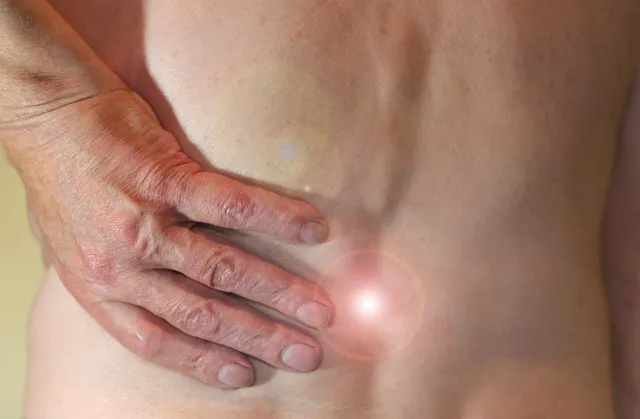
The mechanism: a shortened iliopsoas pulls the lumbar spine into excessive lordosis (swayback). That increases the compressive load on the facet joints of the lower spine and the posterior portions of the intervertebral discs. Facet joint compression causes local pain. Disc compression contributes to disc degeneration over time. The gluteal muscles, inhibited by their tight antagonists, fail to absorb the impact of each step — pushing more stress onto the spine instead. The hip extensors, specifically the hamstrings, overwork to compensate for the inhibited glutes, which is why people with tight hip flexors so often have tight hamstrings too. A cascade of compensation. It starts with the hip flexors.
Studies using objective measures of lumbar lordosis have found statistically significant correlations between iliopsoas tightness (measured via Thomas Test results) and increased lumbar lordosis angles. A 2019 study in the Journal of Orthopaedic Research found that iliopsoas stretching combined with glute activation exercises reduced lower back pain scores by an average of 43% in a cohort of desk workers over an 8-week program — significantly outperforming general exercise (which reduced pain by 18%) and stretching alone (which reduced pain by 24%).
“The hip flexors are the unacknowledged architects of lower back pain. Address the anterior chain, and the posterior chain often resolves itself.” — Shirley Sahrmann, Diagnosis and Treatment of Movement Impairment Syndromes, 2002
Beyond the Hip: How Tight Hip Flexors Affect Your Entire Body
Think of the hip as a keystone. The rest of the body gets built around it. Shift the keystone, and the whole arch distorts. Tight hip flexors don’t just cause hip pain — they alter mechanics from the foot to the neck.
Knees: Anterior pelvic tilt caused by tight hip flexors changes femur alignment, which alters how the patella (kneecap) tracks in the femoral groove. This can cause patellofemoral pain syndrome — the “runner’s knee” that plenty of non-runners mysteriously develop. A tight rectus femoris adds more patellar tilt on top of that. Fix the hip flexors, and knee pain often resolves without any direct knee intervention at all.
Thoracic spine: When the lumbar spine hyperextends from anterior pelvic tilt, the thoracic spine compensates by flexing forward — creating or worsening the rounded upper back posture that’s epidemic among desk workers. This is the foundation of upper crossed syndrome (Janda’s model), where tight anterior structures create weakness and inhibition in posterior structures in a self-reinforcing cycle.
Neck and shoulders: Following the thoracic rounding upward, forward head posture shows up as the head moves forward to maintain the visual horizon. For every inch the head translates forward, the effective weight the cervical spine has to bear increases by roughly 10 pounds. A three-inch forward head position adds about 30 pounds of stress to the neck — leading to cervicogenic headaches, upper trapezius tension, and shoulder dysfunction.
Breathing: A tight psoas attaches to the lumbar spine at the same level as the diaphragm’s crura — the tendinous extensions anchoring the diaphragm to the spine. Research suggests chronic psoas tension can restrict diaphragmatic excursion, leading to shallow chest breathing, reduced respiratory efficiency, and the chronic sympathetic nervous system activation — the fight-or-flight bias — that comes along with it.
Athletic performance: Hip extension power is the primary driver of sprinting speed, jumping height, and most explosive athletic movements. Inhibited glutes and tight hip flexors cap the athletic ceiling no matter how much training goes into it otherwise. Plenty of athletes who plateau — particularly in running economy and jumping ability — see immediate improvement once hip flexor restriction gets addressed.
Long-Term Maintenance: What to Do After Week Two
Two weeks of the Hip Restoration Protocol restores hip flexor length. The real question is what happens in week three, back at the desk, the car, the couch. Without a maintenance strategy, everything drifts back to where it started in about six weeks.
The maintenance protocol is simpler than the restoration phase. Once the Thomas Test is passed, drop from 20 minutes daily to a 10-minute maintenance routine three times a week: one set of the kneeling hip flexor stretch (60 seconds per side), one set of the couch stretch (60 seconds per side), three sets of glute bridges. Enough to hold onto the length that’s been gained.
The more important long-term change is behavioral. Walking more is the single best long-term intervention for hip health, full stop. Walking requires hip extension — each stride in normal gait moves the hip through roughly 10-15 degrees of extension. 7,000-10,000 steps a day provides daily active lengthening of the hip flexors through their functional range, which is a fundamentally different thing from the passive lengthening of stretching. The difference between maintaining mobility through use and maintaining it through remediation.
Strength training with full hip extension — specifically Romanian deadlifts, hip thrusts, and split squats — is the second major long-term protector. These exercises load the hip extensors through their full range and create lasting adaptations in both the glutes and the hip flexors, which learn to lengthen under load, a more functional outcome than static flexibility alone. Doing only hip flexor stretches without also strengthening the hip extensors is winning half the battle at best.
The Sitting Disease: A Broader Context
The tight hip flexor problem is a symptom of a broader civilizational issue whose full consequences are still only beginning to be understood. Humans spent roughly 300,000 years as hunter-gatherers — walking 5-15 miles a day, squatting to rest, sleeping on the ground, loading their bodies through full ranges of motion constantly. The chair is a historical novelty. Barely 200 years old in its widespread form. Bodies haven’t adapted to it, and there’s no particular evidence they will.
The research on sedentary behavior is converging on a disturbing picture. Sitting is independently associated with increased all-cause mortality, cardiovascular disease, metabolic dysfunction, and musculoskeletal pain — even after controlling for physical activity outside of work. In other words: being sedentary at a desk for 8 hours and then exercising for an hour doesn’t fully undo the metabolic and structural damage of those 8 hours. The exercise helps. It doesn’t cancel out the sitting.
None of this means desk work is a death sentence. It means desk work requires active countermeasures. The hip restoration protocol is one. Regular walking breaks, seated posture management, consistent strength training are others. None of it requires a dramatic life overhaul. It requires the same thing every meaningful physical improvement requires: understanding that the body isn’t a passive recipient of whatever gets done to it. It’s an adaptive system. It adapts to the inputs it gets, for better or worse.
The hips adapted to sitting. They can adapt back to moving.
FAQ: Hip Flexor Tightness
How long does it actually take to fix tight hip flexors?
With the structured protocol above (daily work for 14 days), most people with moderate restriction see significant improvement within 7 days and pass the Thomas Test by day 14. Severe restriction — particularly in people sedentary for decades — may take 4-6 weeks of consistent work. The key variable is compliance with daily practice, not the stretches themselves.
Is hip flexor stretching safe if I have lower back pain?
For most people whose lower back pain comes from tight hip flexors and anterior pelvic tilt, hip flexor stretching isn’t just safe — it’s the primary intervention that will actually help. That said, if the lower back pain is sharp, radiates down the leg (sciatica), or worsens with lumbar extension, see a physiotherapist before proceeding. Those patterns can indicate disc herniation or other structural issues needing different management.
Can I overstretch my hip flexors?
Theoretically possible, practically rare. More common: soreness in the hip flexors after aggressive stretching, which is normal — the muscle is being loaded at an unfamiliar length. Sharp pain (not muscular discomfort) in the hip joint itself is the signal to ease off and slow the progression. Discomfort in the muscle belly, expected. Pain in the joint, a warning sign.
Do standing desks actually help?
Yes, but not as much as people expect. Standing desks reduce total time in hip flexion, which slows the rate of adaptive shortening. They don’t reverse existing tightness. Standing for long periods with poor posture can create its own problems too — calf tightness, foot pain, varicose vein risk. The best setup alternates sitting and standing throughout the day, combined with the restoration protocol.
Why do my hip flexors keep getting tight even after I stretch them?
Because only half the protocol is being done. Stretching lengthens the hip flexors but doesn’t strengthen the glutes and core needed to hold the pelvis in a neutral position. Without activation work — bridges, dead bugs, RDLs — the muscle returns to its shortened state, because the neurological pattern never changed. Stretch and activate. Both halves required.
Are some people structurally unable to fix their hip flexors?
Genuine structural limitations are rare, and typically involve FAI (femoroacetabular impingement) — a bony abnormality in the hip joint itself. FAI causes hip pinching at the end range of flexion and needs imaging to diagnose. The vast majority of people who think they have structural hip limitations actually have soft tissue restrictions that respond well to the kind of stretching and strengthening outlined above.
Should I stretch before or after exercise?
For the static stretches in this protocol: after exercise, or as a standalone session — not as a warm-up before lifting. Static stretching before strength training has been shown to temporarily reduce force production. The dynamic walking lunge warm-up can be done before any workout. Save the long-hold static stretches for post-workout or evening sessions, when the muscles are warm and maximal strength output isn’t needed right after.
Does hip flexor tightness contribute to erectile dysfunction?
There’s emerging research suggesting chronic psoas tension can affect blood flow in the pelvic region and contribute to pelvic floor dysfunction, with implications for sexual function in both men and women. The mechanism involves the psoas’s proximity to the iliac vessels and its functional connection to the pelvic floor via the thoracolumbar fascia. A secondary effect, not the primary reason to address the hip flexors — but a relevant consideration, particularly for men who sit extensively and experience unexplained pelvic symptoms.
Common Mistakes That Kill Your Progress
After two weeks on the Hip Restoration Protocol, the most common reason people don’t see results isn’t the stretches — it’s execution errors quietly undermining the work. Here are the five mistakes accounting for roughly 80% of cases where the protocol doesn’t deliver.
Mistake 1: Skipping the posterior pelvic tilt. Mentioned multiple times already, because it’s that important. Without a posterior pelvic tilt before and during the stretch, the hip flexors aren’t actually being isolated. It’s a generic anterior hip stretch that misses the psoas and iliacus almost entirely instead. Not optional, the tilt. Unsure whether it’s being done correctly? Practice the floor version — lying on the back, flattening the lower back — 20 times until the movement pattern is automatic, then transfer it to the kneeling position.
Mistake 2: Stretching without the activation work. Hip flexors and glutes are antagonist muscles. When hip flexors are chronically tight, the glutes are chronically underactivated. Stretching releases the hip flexors temporarily, but without activating the glutes, they simply return to their shortened state within hours. Glute bridges and single-leg RDLs aren’t optional accessories here — they’re the mechanism by which the length change actually becomes permanent.
Mistake 3: Measuring progress by how the stretch feels rather than by the Thomas Test. Stretching feels different day to day depending on temperature, hydration, stress levels, prior activity. The subjective sensation is not a reliable measure of progress. Retest the Thomas Test every 7 days and measure the actual change in leg drop angle instead. That’s the objective marker that matters.
Mistake 4: Only stretching after the pain starts. Pain is a lagging indicator of dysfunction. By the time the hip flexors hurt, they’ve been tight for weeks or months already. And when the pain subsides, which it will, temporarily, people stop the protocol. The goal is maintaining hip mobility permanently, which requires the maintenance protocol after the restoration phase. Treating hip flexors only when they’re symptomatic is like only changing the oil once the engine starts knocking.
Mistake 5: Not addressing the sitting load. The protocol works against an 8-hour daily deficit if the sitting habits never get managed alongside it. Implement the 45-minute desk break stretch. Adjust the chair angle. Do nothing to reduce the daily input of hip flexor shortening, and the protocol is being asked to overcome a headwind it was never designed to beat alone. Restoration and mitigation, both halves of the equation, need to run at the same time.
When to See a Professional
The Hip Restoration Protocol is designed for the vast majority of people with common desk-related hip flexor tightness. But there are specific situations where it’s worth involving a healthcare professional before proceeding.
See a physiotherapist if: lower back pain includes leg pain, numbness, or tingling below the knee (suggests nerve involvement, typically a disc herniation); there’s hip pain with a clicking or locking sensation in the joint (suggests intra-articular pathology such as a labral tear); the Thomas Test reveals extreme restriction (thigh more than 25-30 degrees above parallel) that doesn’t improve after 2 weeks of diligent protocol work; or there’s been hip surgery of any kind (prosthesis, labral repair, etc.).
See a physiotherapist or sports medicine doctor for any of the following: hip pain that worsens with activity rather than improving; pain at night disrupting sleep; recent significant trauma to the hip or pelvis; or symptoms that are asymmetric and worsening over time despite treatment. These patterns can indicate inflammatory joint disease, stress fractures, avascular necrosis of the femoral head, or other conditions needing imaging and specialist input.
For everyone else — the broad majority of sedentary adults with garden-variety desk-chair tight hip flexors — the protocol above is the intervention. Not complicated. Not expensive. It takes 15-20 minutes a day for two weeks and a willingness to prioritize physical architecture the same way other aspects of health hopefully already get prioritized. The hips are the center of the machine. Keep the center mobile, and the machine runs.
FROM THE LIBRARY ›
References
Editorial StandardsCorrectionsMedical DisclaimerAbout Our ContentAffiliate DisclosureSite Map