
The supplement industry runs on confusion, and Vitamin D3 vs D2 is a textbook case. Both have legitimate uses. They are not interchangeable. Taking the wrong one for your situation wastes money and delays results — sometimes for months before anyone notices.

Both Vitamin D3 and D2 have research behind them, but the quality and quantity of that research varies a lot. Knowing what’s well-established versus what’s preliminary is what lets you decide based on evidence instead of hype.
The supplement industry generates billions by keeping people confused about what they actually need. With Vitamin D3 and D2 specifically, the confusion runs deep because both get recommended for overlapping symptoms. Cutting through it means understanding what each one does at a molecular level, which claims are backed by human trials, and which are extrapolated from test tubes and rodent studies. Here’s the breakdown.
Mechanisms of action. Strength of evidence. Bioavailability and absorption. Who benefits most from each. And the practical details that actually determine whether these supplements do anything for you at all.
Worth a bit of history before the mechanisms, because it explains why the confusion exists in the first place. Vitamin D was the fourth vitamin discovered — hence the letter — isolated in 1922 by biochemist Elmer McCollum at Johns Hopkins while investigating why cod liver oil cured rickets in dogs. A few years earlier, Edward Mellanby had shown experimentally that rickets was a dietary deficiency disease, not an infection, by feeding puppies a diet that produced the bone deformities on command. German chemist Adolf Windaus won the 1928 Nobel Prize in Chemistry for working out the sterol chemistry behind it — the same research program that eventually distinguished D2 from D3 as two structurally different molecules with the same name and, it turns out, meaningfully different behavior in the human body.
WHAT IS VITAMIN D3?
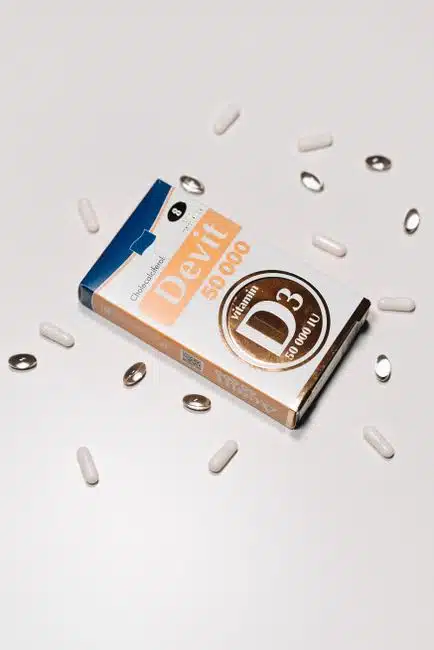
| D3 (Cholecalciferol) | D2 (Ergocalciferol) | |
|---|---|---|
| Source | Skin (UVB), animal foods (fatty fish, egg yolks) | Yeast and fungi (irradiated ergosterol) |
| Potency | 2-3x more effective at maintaining blood levels | Shorter half-life, less efficient conversion to active form |
| Best for | Most people | Vegans avoiding animal-derived D3 |
ime.
Mechanistically, D3 begins as 7-dehydrocholesterol sitting in the skin’s epidermal layers. UVB photons (290-315nm) convert it to pre-vitamin D3, which isomerizes to cholecalciferol over the following hours. From there it travels to the liver, where the enzyme CYP2R1 hydroxylates it to 25-hydroxyvitamin D (calcidiol) — the storage form that gets measured on a standard blood test. The kidneys then convert calcidiol to the biologically active hormone, 1,25-dihydroxyvitamin D (calcitriol), via the CYP27B1 enzyme, tightly regulated by parathyroid hormone and phosphate levels. Calcitriol binds the vitamin D receptor (VDR), a nuclear receptor expressed in more than thirty tissue types — not just bone and gut, but immune cells, skeletal muscle, cardiovascular tissue, and the brain. That receptor distribution is the reason vitamin D status gets tied to everything from immune resilience to mood to muscle strength; it isn’t marketing exaggeration, it’s a function of where the receptor actually sits.
The direct head-to-head data is unambiguous. Armas, Hollis, and Heaney ran the definitive comparison in a 2004 Journal of Clinical Endocrinology & Metabolism paper titled, without much subtlety, “Vitamin D2 Is Much Less Effective than Vitamin D3 in Humans.” Subjects received a single 50,000 IU dose of either form. By day 14, D3 had raised serum 25(OH)D substantially more than D2. By day 28, D2 levels had drifted back toward baseline while D3 levels remained meaningfully elevated. A 2012 systematic review and meta-analysis by Tripkovic and colleagues in the American Journal of Clinical Nutrition, pooling multiple randomized controlled trials, confirmed the pattern — D3’s advantage was most pronounced with infrequent, bolus-style dosing (weekly or monthly), and narrowed somewhat, though didn’t disappear, with daily dosing.

Vitamin D2 — ergocalciferol — comes from yeast and fungi and is the traditional vegan-friendly form. It was the first commercially synthesized vitamin D, and it was the standard prescription form for decades. The problem: shorter half-life, less efficient conversion to active D, and some research suggests it doesn’t maintain blood levels as reliably between doses. Still, it’s suitable for vegans and still effective — just less so than D3.
D2’s dominance in prescription medicine wasn’t a clinical decision — it was a manufacturing one. Ergocalciferol is produced by irradiating ergosterol, a sterol abundant in yeast and fungi, which made it cheap and scalable to synthesize industrially starting in the 1930s, decades before D3 could be produced economically at scale. That’s why the 50,000 IU prescription capsule — brand name Drisdol, still on some formularies today — is D2, not D3. Generations of physicians prescribed it not because the biochemistry favored it, but because it was what the supply chain could deliver.
The structural difference between the two molecules is small but consequential: D2 carries an extra methyl group and a double bond in its side chain that D3 lacks. That single structural quirk changes how efficiently the vitamin D binding protein (DBP) — the transport protein that ferries both forms through the bloodstream — grabs onto it. DBP has a measurably higher binding affinity for D3 and its metabolites than for D2’s, and that affinity difference is a large part of why D3 clears the body more slowly. Practically: 25(OH)D3 has a circulating half-life in the range of two to three weeks, while 25(OH)D2 clears in roughly a week — a difference that compounds every time a dose is missed or spaced out.
VITAMIN D3 VS D2: WHAT THE EVIDENCE ACTUALLY SHOWS
The differences go deeper than most surface-level comparisons let on. What follows is the quick reference, but the real decision-making information lives in the detailed breakdown after it. Orient yourself first, then read the analysis.
DETAILED BREAKDOWN: WHERE EACH ONE WINS
Mechanism of Action
Vitamin D3 works through specific biochemical pathways, and those pathways set both the ceiling and the limitations. Understanding the mechanism is how you predict whether it will actually touch your particular issue, and how it might interact with anything else you’re taking. It also determines timing — whether food matters, when to take it, how long before anything happens.
D2 runs through a different pathway entirely, which is why the effects diverge even though both get marketed for the same overlapping complaints. That mechanistic gap isn’t academic. It’s what determines which conditions each one actually helps, which symptoms it touches, and which men see the most benefit. In practice, this means D3’s advantage compounds with dosing frequency — spread the same weekly total across daily doses and the gap between D3 and D2 narrows, because D2’s faster clearance matters less when it’s being replenished constantly instead of left to decay between infrequent bolus doses.
Quality of Evidence
The research base for Vitamin D3 ranges from strong clinical trials down to preliminary studies that barely qualify as evidence. Not all of it is equal — small studies, animal models, and in-vitro work tell a different story than large randomized controlled trials in actual humans. Being honest about where the evidence sits keeps expectations calibrated and keeps you from over-investing based on hype.
D2 has its own profile — some claims well-supported, others stretched from limited data. Compare research quality, not just quantity. One well-designed human trial outweighs a dozen rodent studies. Look at who funded it, how big the sample was, and whether the dosages studied match what’s actually on the shelf. Where D3’s evidence is deepest: bone mineral density, fall/fracture prevention in the elderly, immune modulation, and — more preliminary but consistent enough to note — testosterone. Pilz and colleagues, in a 2011 Hormone and Metabolic Research trial, gave 200 overweight men 3,332 IU of D3 daily for twelve months and found total testosterone rose from roughly 10.7 to 13.4 nmol/L, close to a 25% increase, with no change in the placebo group. That’s not a testosterone-boosting supplement by design; it’s a downstream effect of correcting a deficiency that happened to be sitting upstream of hormone production the whole time.
Bioavailability and Absorption
How much of Vitamin D3 actually reaches your bloodstream and tissues depends on the form, what you take it with, and your individual gut health. Plenty of supplements have poor bioavailability in their most common commercial forms — you’re absorbing a fraction of the labeled dose and don’t know it. Specific forms, fat-solubility, and timing all decide whether you’re getting what you paid for.
D2 has its own absorption profile, which may run better or worse than Vitamin D3 depending on what you buy. Some formulations are built for improved bioavailability; others are cheap filler with minimal absorption. Paying more for a better-absorbed form often beats taking a bigger dose of a poorly absorbed one. Both forms are fat-soluble, and both absorb meaningfully better taken with a meal that contains actual dietary fat rather than on an empty stomach. Mulligan and Licata’s research, tracking patients who switched from taking vitamin D on an empty stomach to taking it with their largest meal of the day, found serum levels rose roughly 50% over two to three months with no change in dose — just timing. Body composition matters too: vitamin D is fat-soluble, which means it partitions into adipose tissue rather than staying in circulation. Wortsman and colleagues, in a widely cited American Journal of Clinical Nutrition study, found obese subjects showed a 57% smaller rise in serum vitamin D than lean subjects given the same UV exposure or oral dose — the vitamin was getting sequestered in fat stores rather than reaching the bloodstream. The Endocrine Society’s clinical practice guidelines account for this directly, recommending two to three times the standard dose for obese individuals to reach the same serum target.
Side Effects and Safety
At standard doses, Vitamin D3 carries a fairly well-characterized safety profile. Most are well-tolerated, but “natural” doesn’t mean “harmless.” Interactions with medications, effects on hormone levels, GI tolerance, long-term safety data — all of it factors in. Men on prescription medications, particularly blood thinners, blood pressure drugs, or psychiatric medications, should check for interactions before adding anything.
D2 carries its own risk-benefit ratio. Some are safe even at high doses; others have a narrow window where the effective dose sits close to the problematic one. Know the ceiling, know the interactions, and don’t assume that if some is good, more is better — that logic has hurt more supplement users than it’s helped. Vitamin D toxicity is real but rare, and it’s almost always a function of sustained megadosing rather than anything close to standard supplemental amounts. Reinhold Vieth’s 1999 review in the American Journal of Clinical Nutrition found no documented toxicity in healthy adults at doses up to 10,000 IU per day sustained over time; true toxicity cases in the literature typically involve manufacturing errors, dosing in the tens of thousands of IU daily for months, or underlying conditions like sarcoidosis that dysregulate calcitriol production independent of intake. The symptoms, when they occur, trace back to hypercalcemia — nausea, constipation, kidney stones, muscle weakness — and are caught easily by monitoring serum calcium alongside 25(OH)D during high-dose protocols.
Drug interactions deserve their own mention, since they’re the thing most men supplementing on their own never think to check. Thiazide diuretics (hydrochlorothiazide and similar) reduce urinary calcium excretion, and stacking high-dose vitamin D on top raises hypercalcemia risk meaningfully — a combination worth flagging to whoever’s managing the prescription. Statins and vitamin D both get metabolized partly through the CYP3A4 pathway, and some research suggests high-dose vitamin D can modestly reduce statin blood levels, though the clinical significance is still debated. Weight-loss drugs and cholesterol binders that interfere with fat absorption — orlistat, cholestyramine — reduce vitamin D absorption directly, since it’s a fat-soluble vitamin riding along with dietary fat through the gut. And corticosteroids, prescribed for everything from asthma to autoimmune flares, actively impair calcium absorption and vitamin D metabolism, which is part of why long-term steroid users are routinely screened for bone density loss.
Individual genetics also shape the response, and this is the part standard dosing charts never account for. The vitamin D receptor gene has several well-studied polymorphisms — FokI, BsmI, TaqI, ApaI among them — that alter receptor sensitivity and downstream signaling. Uitterlinden and colleagues’ 2004 review in Gene summarized decades of research showing these polymorphisms correlate with differences in bone density response and disease risk even at matched serum 25(OH)D levels. Two men with identical blood test results can have meaningfully different biological responses to that same number, which is one more argument for tracking symptoms and outcomes alongside the lab value rather than treating the blood test as the entire story.
On the immune-function claims specifically — the ones plastered across every supplement bottle — the evidence is stronger than the average health claim but still narrower than the marketing suggests. Martineau and colleagues ran a landmark 2017 meta-analysis in The BMJ, pooling individual patient data from 25 randomized controlled trials and roughly 11,000 participants. The finding: vitamin D supplementation modestly reduced the risk of acute respiratory infection overall, and the effect was concentrated almost entirely in participants who started deficient — daily or weekly dosing (rather than large infrequent boluses) in people below 25 nmol/L saw the biggest benefit. Translation: vitamin D isn’t a general-purpose immune booster for someone already replete. It’s a correction for people who are actually short on it, and the size of the benefit tracks with how deficient they were to begin with.
Cost-Effectiveness
Evaluating the cost of Vitamin D3 means looking past the sticker price. Consider the effective dose — capsules per day at the researched amount — the form (cheap, poorly absorbed forms can cost more per effective milligram), and how long before effects show up. Some supplements work in days. Others need 4-8 weeks of consistent use. Factor in the whole commitment, not the shelf price.
Cost-effectiveness for D2 runs on the same logic. A cheaper product that needs double the dose and twice the time to work can end up costing more than a premium option at a lower dose with faster onset. Calculate cost per effective dose per day. Not price per bottle. In practical terms, D3 is now manufactured cheaply enough — usually from lanolin extracted from sheep’s wool, or from lichen for a vegan-compatible version — that the cost difference between D3 and D2 supplements has essentially closed.
The economic argument for choosing D2 over D3, which existed decades ago, doesn’t really hold anymore outside of strict vegan sourcing requirements.
STRENGTHS AND WEAKNESSES OF VITAMIN D3
Strengths:
- Specific mechanism addressing particular biochemical needs
- Research base supporting its use for defined conditions
- Available in multiple forms allowing optimization of absorption
- Well-characterized safety profile at standard doses
Weaknesses:
- Absorption may vary significantly based on form and individual factors
- Marketing claims often extend beyond what the evidence supports
- Quality varies dramatically between brands
- May require specific timing, cofactors, or dietary conditions to work
STRENGTHS AND WEAKNESSES OF D2
Strengths:
- Different mechanism that may better suit certain biochemical profiles
- Own evidence base supporting specific applications
- May be better tolerated by individuals who respond poorly to alternatives
- Can complement (rather than compete with) other supplements in a stack
Weaknesses:
- Own set of limitations regarding evidence quality and scope
- Not a universal replacement for the alternative despite similar marketing
- Individual response varies — what works for one person may not work for another
- Dose-response relationship may not be well-established
WHEN TO CHOOSE VITAMIN D3
D3 wins for nearly everyone. Pair it with K2 in the MK-7 form to direct calcium to bones instead of arteries — critical for anyone supplementing D3 long-term. And test serum 25(OH)D first, aiming at a level rather than at a number of IU: the target is 60-80 ng/mL on the lab report, and the amount that gets a given person there is a conversation with whoever ordered the test.
Choose Vitamin D3 when your goal or condition lines up with its primary mechanism, when the research supporting it for your case beats the alternative, when you tolerate it well, and when the right form and dose are actually accessible to you. If D2 didn’t do anything for you, Vitamin D3’s different pathway might be worth a look — a non-response to one doesn’t predict a non-response to a mechanistically distinct alternative.
The K2 pairing deserves more explanation than most supplement guides give it, because it’s not a marketing add-on. Vitamin D increases intestinal calcium absorption; matrix Gla-protein (MGP), a protein expressed in vascular tissue, requires vitamin K2 as a cofactor to activate and direct that calcium toward bone and away from soft tissue like arterial walls. Knapen and colleagues, in a 2015 Osteoporosis International randomized trial, gave postmenopausal women 180mcg of MK-7 daily for three years and documented measurable improvement in arterial stiffness markers compared to placebo. The theoretical mechanism — unopposed calcium absorption contributing to vascular calcification over years of high-dose D3 supplementation without adequate K2 — is exactly the kind of long-horizon risk that a six-week trial would never catch, which is one more reason cycling and periodic testing matter more with vitamin D than with most other supplements.
WHEN TO CHOOSE D2
D2 makes sense for strict vegans who can’t source lichen-derived D3, or when D3 simply isn’t available. Anyone taking D2 should dose more frequently — daily rather than weekly — to compensate for the shorter half-life.
Choose D2 when its mechanism better matches your specific issue, when you’ve had side effects with the alternative, when cost-effectiveness favors it for your required dose and duration, or when the evidence for your particular application is stronger. Also weigh whether D2 integrates better with what you’re already taking — stacking supplements with overlapping mechanisms can produce diminishing returns or unwanted interactions. One legitimate use case that survives scrutiny: a physician correcting a severe, acute deficiency (below 10 ng/mL) with a short course of prescription-strength 50,000 IU D2 capsules under monitoring — the higher single-dose ceiling that’s been used clinically for decades, and the acute correction phase is short enough that D2’s faster clearance is less relevant than it is for long-term maintenance.
COMMON MISTAKES MEN MAKE WITH THIS DECISION
- Choosing based on marketing rather than mechanism. Supplement marketing is built to make everything sound essential. Before buying either product, understand what it actually does biochemically and whether that mechanism touches your specific problem. “Supports immune function” can mean anything from well-documented antioxidant activity to hand-waving with zero evidence behind it.
- Ignoring the form and dosage. Two products with the same ingredient name can have wildly different bioavailability depending on form. Cheap forms fill shelves because they’re profitable, not because they work. Check which form the supporting research actually used, and buy that one — not the cheapest option on the shelf.
- Supplementing without testing. Taking supplements without knowing your baseline is guessing with extra steps. A blood test showing real deficiency makes supplementation targeted and measurable. A blood test showing adequate levels saves you the money. Either way you’re making an informed call instead of playing supplement roulette.
- Dosing off the RDA instead of the deficiency-correction dose. The Institute of Medicine’s 600-800 IU daily recommendation was set to prevent rickets and osteomalacia in the general population — it was never designed as a therapeutic dose for someone starting from 15 ng/mL. NHANES survey data puts roughly 41% of American adults in deficient territory (under 20 ng/mL), and that number climbs past 80% among people with darker skin, since melanin absorbs UVB and competes directly with the cutaneous synthesis pathway. A deficient man taking 800 IU daily is not going to move the needle in any meaningful timeframe. Clinical correction protocols run considerably higher than that for a defined stretch of weeks, then drop back to maintenance, with a retest to confirm the target range was actually reached.
HOW TO MAKE THIS DECISION FOR YOURSELF
The systematic approach to choosing between Vitamin D3 and D2 starts with testing, not guessing. If relevant blood work or functional testing is available before starting either supplement, get it done. Baseline data turns supplementation from gambling into targeted intervention. You’ll know whether you actually need what you’re considering, and you’ll have a way to measure whether it’s working.
If testing isn’t accessible right now, use a structured elimination approach instead. Try one supplement at the researched effective dose for 60-90 days. Track the specific symptoms or markers you’re trying to move. Hold everything else constant — diet, sleep, training, other supplements. At the end, evaluate honestly: did measurable improvement happen? If yes, continue. If no, drop it and try the alternative with the same rigor.
Never start both at once. You’ll have no way to know which one is doing what — producing the benefit, or the side effect — and you’ll end up either taking both indefinitely or dropping both without understanding why. Sequential trials with clear evaluation windows give you actionable information. Parallel trials just give you confusion.
A basic 25(OH)D blood panel runs $40-80 out of pocket at most direct-to-consumer lab services if insurance doesn’t cover it, and results come back within a few days. That’s a small cost relative to a year of guessing with an $18 bottle of the wrong form, wrong dose, or both.
One more variable worth building into the plan: season. A retest done in August, after a summer of regular sun exposure, tells you almost nothing about where levels will sit in February. Serum 25(OH)D in temperate climates typically swings 10-20 ng/mL between summer peak and winter trough, purely from seasonal UVB variation, independent of supplementation. Anyone serious about dialing in a dose should test at least twice — once near the seasonal low, once near the seasonal high — before locking in a year-round maintenance number. A dose that holds someone at 55 ng/mL in July might leave them back under 30 by February without a seasonal adjustment upward.
CASE PROFILE: WHAT A CORRECTION ACTUALLY LOOKS LIKE
Take a guy we’ll call Dennis. Forty-seven, works an office job in Seattle, spends most daylight hours under fluorescent lighting and most weekends indoors during the wet months, which in the Pacific Northwest is most of the year. He’d been dragging for over a year — low energy that didn’t track with sleep, achy joints that felt older than they should, and enough colds over the winter that his wife started keeping count out loud.
A routine physical happened to include a 25(OH)D panel, mostly because his doctor orders it reflexively for anyone north of the 45th parallel this time of year. Result: 14 ng/mL. Severely deficient by any clinical standard, and low enough to explain a meaningful chunk of what he’d been chalking up to normal middle-age fatigue.
The protocol wasn’t complicated. 5,000 IU D3 daily with K2 (MK-7, 100mcg), taken with breakfast — the meal with the most fat in it, which happened to be eggs most mornings anyway. Retest at twelve weeks. Level came back at 52 ng/mL, comfortably inside the therapeutic range. The joint ache had mostly resolved by week eight. The energy improvement was slower and less dramatic than he expected — noticeable more in hindsight than in the moment, which tracks with how most men describe correcting a long-standing deficiency. Nobody wakes up transformed. The baseline just quietly shifts upward over a couple of months, and one day the old normal feels distant.
WHAT MOST MEN GET WRONG ABOUT VITAMIN D3 AND D2
The biggest mistake is treating supplements as a substitute for getting the basics right. No supplement compensates for poor sleep, chronic stress, a processed food diet, or inactivity. If those foundations aren’t solid, adding Vitamin D3 or D2 on top is like bolting a performance exhaust onto a car with a broken engine. Fix the engine first.
Second common error: dosing. Most commercial products contain doses chosen for profit margin, not for the amounts used in research. Before buying either one, look up the dose used in the actual studies. If the effective research dose is 500mg and the product on the shelf has 100mg, you’re not taking the supplement that was studied. You’re taking something with the same name and a different effect profile entirely.
Third — timing and cofactors matter more than most men realize. Some supplements compete for absorption when taken together. Others need fat for absorption, or specific vitamins as cofactors. Taking Vitamin D3 and D2 at the wrong time, in the wrong form, without the necessary absorption enhancers, can cut their effectiveness in half or worse. A few minutes of research on absorption pays for itself many times over.
Finally, cycling matters. The body adapts to chronic supplementation. Some supplements lose effectiveness over time; others build up to levels that create their own problems. Periodic breaks, dose adjustments, and re-testing keep you ahead of the adaptation curve and make sure you’re still getting value for what you’re spending. With vitamin D specifically, this means retesting every six to twelve months once maintenance dosing is established — sun exposure, body weight changes, and seasonal variation all shift what dose is actually needed, and a dose that was correct in January can be excessive by July.
THE BOTTOM LINE: MATCHING THE SUPPLEMENT TO YOUR SPECIFIC NEED
D3 with K2, tested and titrated to actual blood levels, is the protocol. Not a close call — the evidence clearly favors D3 for maintaining optimal vitamin D status.
These supplements serve different purposes despite being marketed to the same audience. Match the supplement to your biochemistry and your goals, not to what’s trending or what a fitness influencer is pushing this month. If you can, test the relevant biomarkers before and after a 60-90 day trial to objectively measure whether it’s doing what you expect. The men who get the most out of supplementation treat it as targeted intervention based on data — not as insurance against every possible deficiency, collected one bottle at a time.
Common Questions About Vitamin D3 and D2
Can you take too much vitamin D3? Sustained toxicity is uncommon below 10,000 IU/day, based on Vieth’s safety review, but “safe upper limit” isn’t the same as “optimal dose.” Most protocols settle at a maintenance intake well under that ceiling, reserving higher short-term amounts for correcting a documented deficiency under periodic blood work. Symptoms of true toxicity — nausea, kidney stones, muscle weakness — trace back to hypercalcemia and show up on standard labs before they become dangerous.
Does sunlight alone provide enough vitamin D? For some people in some climates, yes — but it’s unreliable. UVB synthesis depends on latitude, season, time of day, skin pigmentation, sunscreen use, and cloud cover, and at latitudes above roughly 35 degrees, the skin produces essentially no vitamin D from October through March regardless of time spent outside. That seasonal blind spot is a major reason deficiency rates spike in northern climates during winter.
Is liquid, capsule, or gummy form better absorbed? Liquid drops in an oil base (usually MCT or olive oil) tend to absorb slightly better than dry capsules for people with any degree of fat malabsorption, since the vitamin is already suspended in fat. For most healthy guts, the difference between a quality softgel and a quality liquid is negligible — consistency of use matters more than the delivery format.
How long before a deficiency actually corrects? Serum 25(OH)D typically takes eight to twelve weeks of consistent dosing to reach a new steady state, which is why retesting before that window has passed usually just measures a work-in-progress. Subjective symptom improvement — energy, joint discomfort, mood — often lags behind the blood marker by a few additional weeks.
Should vegans avoid D3 entirely? Not necessarily. Traditional D3 is sourced from lanolin (sheep’s wool grease), which isn’t vegan, but lichen-derived D3 is now widely available and delivers the same cholecalciferol molecule without the animal source — it’s the better option over D2 for a vegan who wants D3’s superior potency without compromising on sourcing.
Is a single high-dose D2 prescription still useful? Yes, in a specific context — acute, severe deficiency correction under physician supervision, where the established 50,000 IU weekly protocol has decades of clinical use behind it. For anyone managing their own long-term maintenance without medical supervision, D3 remains the more reliable choice given its slower clearance and stronger comparative data.
What does a decent D3 protocol actually cost per year? A quality D3/K2 combination softgel runs somewhere between $15 and $30 for a 90-to-120-day supply at typical maintenance doses, putting a full year around $60-$120 depending on brand and whether K2 is bundled in or bought separately. Compared against a single 25(OH)D lab panel every six months (roughly $80-$160 annually without insurance), the full protocol — testing included — usually lands under $250 a year, which is difficult to beat against almost any other health intervention with comparable evidence behind it.
Does body weight change how much D3 is needed? Yes, substantially. Because vitamin D is fat-soluble and sequesters into adipose tissue, men carrying more body fat need proportionally more to reach the same serum target — the Endocrine Society’s own guidelines suggest two to three times the standard dose for obese patients. This is also why weight loss during a supplementation protocol can shift serum levels upward on its own, as previously sequestered vitamin D releases back into circulation from shrinking fat stores.
References
Editorial StandardsCorrectionsMedical DisclaimerAbout Our ContentAffiliate DisclosureSite Map