
Recovery tools and stress management practices have gone mainstream, which means the conflicting advice on Standing Desk vs Treadmill Desk is now unavoidable. The marketing makes both sound essential. The reality is more specific than that.

Both Standing Desk and Treadmill Desk have legitimate applications, but they work through different mechanisms and serve different purposes. Understanding those differences is what lets you pick the right tool for the specific situation instead of chasing whatever’s trending.
The recovery and wellness space has exploded with options, and it’s easy to spend real money and time on practices that sound good but don’t match the actual need. Both Standing Desk and Treadmill Desk have genuine science behind them. But they serve different purposes, and understanding those differences is what keeps you from investing in the wrong tool.
What follows: the mechanism of each, the quality of evidence behind both, the practical considerations that affect real-world implementation, and a clear framework for choosing.
Worth naming the actual enemy first, because neither of these products fixes it on its own. The enemy is what researchers now call “sitting disease” — a term that sounds like tabloid science until you see the mortality data behind it. Peter Katzmarzyk’s 2009 cohort study in Medicine & Science in Sports & Exercise, tracking over 17,000 Canadians, found that time spent sitting predicted all-cause mortality independently of leisure-time physical activity. Meaning: hitting the gym for an hour didn’t cancel out ten hours in a chair. The body treats prolonged stillness as its own distinct risk factor, separate from whether someone exercises. That finding is the entire reason this product category exists.
WHAT IS STANDING DESK?
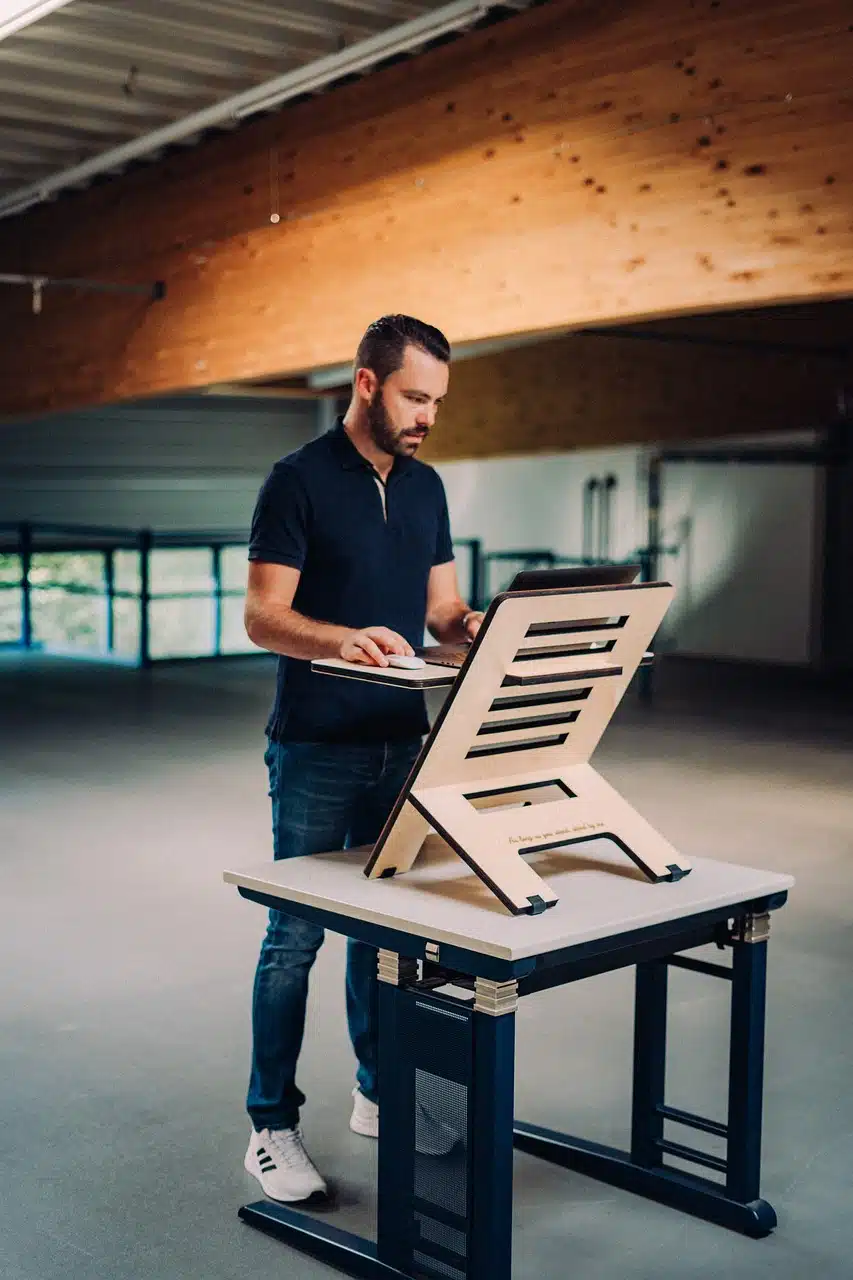
The mechanism behind the glucose finding is worth sitting with (no pun intended, and yes, that’s a fragment doing exactly what it looks like it’s doing). Standing recruits the postural muscles of the legs and lower back continuously — the soleus and gastrocnemius in particular — which keeps GLUT4 transporter activity elevated in a way pure sitting doesn’t. Dunstan and colleagues published the study that actually moved this from theory to protocol: a 2012 paper in Diabetes Care comparing three conditions in overweight adults — uninterrupted sitting, sitting broken up by 2-minute standing breaks every 20 minutes, and sitting broken up by 2-minute light walking breaks. Both interruption conditions reduced postprandial glucose and insulin significantly compared to uninterrupted sitting, with the walking breaks producing a slightly larger effect. That single study is the scientific backbone behind every “stand up every 30 minutes” recommendation that followed it.
The history matters too, if only because it explains why standing desks got marketed so aggressively starting around 2013. James Levine, an endocrinologist at the Mayo Clinic, had spent the prior decade studying something he called NEAT — non-exercise activity thermogenesis, the calories burned through everyday movement that isn’t formal exercise: fidgeting, walking to the printer, standing instead of sitting. Levine’s early 2000s research (published across several papers in Science and Obesity Research) found that lean and obese subjects, matched for activity level on paper, differed enormously in how much time they spent upright versus seated — as much as two hours a day. His conclusion, blunt enough to make headlines: “sitting is the new smoking.” That phrase did more to sell standing desks than any product marketing department ever could, even though Levine himself was talking about a spectrum of NEAT behaviors, not a single piece of furniture.
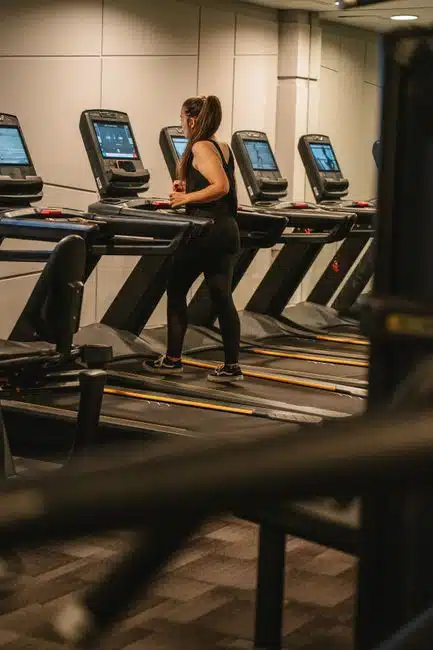
A treadmill desk — a walking treadmill with a desk surface — allows slow-paced walking (1.0-2.0mph) while working. The metabolic and cardiovascular benefit is significantly higher: research shows 200-500 extra calories burned per day, meaningful reductions in triglycerides and blood glucose, and improved NEAT (non-exercise activity thermogenesis). The challenge is cognitive: fine motor tasks and complex cognitive work suffer at higher speeds, though most desk tasks are doable at 1.0-1.5mph after adaptation.
| Standing Desk | Treadmill Desk | |
|---|---|---|
| Calorie burn | ~0.15 kcal/min more than sitting | 200-500 extra calories per day |
| Metabolic benefit | Lower fasting blood sugar after meals | Meaningful drops in triglycerides and blood glucose |
| Drawback | Prolonged standing increases lower-limb fatigue, varicose vein risk | Fine motor/complex cognitive work suffers at higher speeds |
Levine ran the foundational treadmill-desk study himself, published with Jennifer Miller in the British Journal of Sports Medicine in 2007. Subjects walked at 1 mph while working, and the researchers measured energy expenditure at roughly 100 kcal per hour above the resting seated rate — which, extrapolated across a six-hour workday, lines up with the 200-500 kcal daily figure that gets quoted everywhere. A larger follow-up out of the Mayo Clinic, led by Koepp and colleagues in 2013 in Obesity, put treadmill desks into a call-center workplace for six months and tracked actual weight and body composition changes in real office conditions, not a lab. The workers using the treadmill desks lost an average of 1.4 kg over the study period and improved several cardiometabolic markers, despite using the treadmills for less time than researchers hoped (an average of about 45 minutes a day rather than several hours) — a finding that says something honest about real-world adherence versus lab conditions.
The cognitive cost is real and it’s dose-dependent on speed, not a myth invented by standing-desk loyalists. John Buckley and a team at Chester University, along with a separate study by Alan Hedge at Cornell’s human factors lab, both measured typing speed and accuracy at various treadmill speeds. The consistent finding: at 1.0 mph, typing speed and accuracy stayed within about 6% of seated baseline after a short adaptation period. At 2.0 mph and above, error rates climbed and fine mouse-control tasks (spreadsheet work, precise cursor placement) degraded noticeably. The takeaway that gets lost in the marketing: a treadmill desk used at a speed fast enough to matter metabolically is often too fast to type accurately on, and the speed slow enough to type accurately barely counts as exercise. Most productive users land around 1.0-1.2 mph and accept the metabolic benefit is closer to the NEAT end of the spectrum than to a cardio session.
STANDING DESK VS TREADMILL DESK: WHAT THE RESEARCH AND REAL-WORLD EXPERIENCE SHOW
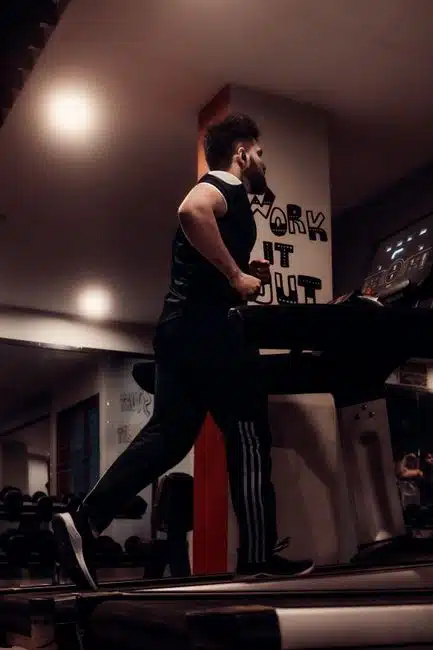
The gap between Standing Desk and Treadmill Desk runs deeper than the quick-comparison version. The table below is the orientation pass. The detail that actually helps decide is in the breakdown after it.
DETAILED BREAKDOWN: WHERE EACH ONE WINS
Primary Mechanism
Standing Desk produces its effects through a specific physiological pathway. Knowing that mechanism tells you who benefits most, what conditions it addresses, and how to optimize the protocol for maximum effect. It’s also the reason it works for some goals and does nothing for others.
Mechanistically, standing is closer to “reducing harm” than “producing benefit.” Alkhajah and colleagues, in a 2012 American Journal of Preventive Medicine study of over 700 Australian office workers, found that workers in workplaces with sit-stand desks had significantly better waist circumference and HDL cholesterol than those without — but the effect size was modest, and the study couldn’t fully separate the desk effect from other lifestyle differences between the groups. Standing at a static desk without alternation doesn’t burn much more than sitting; a 2016 review in the Journal of Physical Activity and Health put the difference at roughly 0.15 kcal per minute, which sounds trivial until multiplied across a working life, but which will never substitute for actual movement.
Treadmill Desk runs through a different pathway, targeting a different slice of recovery or stress management. That mechanistic difference is exactly why the two aren’t interchangeable, despite getting marketed to the same audience. Matching mechanism to need is the whole game here.
The treadmill’s mechanism is closer to genuine low-intensity exercise, and that distinction shows up in the biomarker data. Where standing nudges glucose handling and burns a trivial number of extra calories, walking at 1-2 mph activates skeletal muscle glucose uptake through AMPK-mediated pathways independent of insulin — the same mechanism that makes post-meal walks effective for blood sugar control. This is why the triglyceride and glucose improvements documented in treadmill-desk studies are measurably larger than anything standing alone produces. The trade-off is the cognitive interference discussed above, and the practical reality that most offices, and most spouses, are not thrilled about a treadmill running under a desk eight hours a day.
Evidence Base
The research on Standing Desk ranges from well-established findings to newer, less proven claims. Separating solid from speculative is what keeps expectations calibrated. Look for human studies at realistic doses and durations — not rodent studies, not extreme protocols that never translate into daily practice.
What’s well-established: short-term postprandial glucose benefit (Dunstan 2012), modest waist-circumference and lipid associations in cross-sectional data (Alkhajah 2012), and reduced upper-back and neck discomfort when alternation is actually followed, documented in the Pronk et al. 2012 “Take-a-Stand” project at Ramsey County, Minnesota, which tracked 24 employees using sit-stand desks over 12 weeks and found self-reported upper-back and neck pain dropped by 54% and 58% respectively. What’s less established: long-term weight-loss claims, and any suggestion that standing alone materially changes cardiovascular disease risk over years. The 2018 British Journal of Sports Medicine consensus statement on standing (authored by a working group including John Buckley) explicitly walked back some of the more aggressive early claims, recommending 2 hours of standing/light activity per workday as a reasonable starting target, building to 4 — not the “stand all day” advice that circulated in the desk’s early marketing.
The evidence for Treadmill Desk has its own profile — some applications well-supported, others resting on preliminary data or anecdote. The responsible move is trying what the evidence suggests while staying honest about the limits of current knowledge. Personal response matters more than any study average, in the end.
Well-supported: weight and cardiometabolic improvements over months of real-world use (Koepp 2013), meaningful daily calorie expenditure at slow speeds (Levine & Miller 2007), and documented NEAT increases that persist as long as the habit does. Less supported: any claim that a treadmill desk replaces structured cardiovascular training for fitness or performance goals — the intensity is simply too low to drive VO2max adaptations. A 2016 review in Preventive Medicine Reports pooling several workplace treadmill-desk trials found consistent modest metabolic benefit but flagged that most studies ran 6-12 months with substantial dropout, meaning the long-term adherence data is thinner than the short-term physiology data.
Practical Implementation
How easy Standing Desk is to fit into daily life matters as much as its theoretical benefits. Time commitment, equipment or facility needs, cost, scheduling constraints — all of it counts. The most effective recovery practice is the one that actually gets done consistently. Not the one that wins in a lab under ideal conditions.
A quality electric sit-stand desk runs $300-800 for a solid frame (Uplift, Fully, Autonomous are the common mid-tier names); manual crank versions run cheaper but get abandoned faster because the friction of manually cranking a desk up and down kills the habit within a month for most people. Add an anti-fatigue mat ($40-100) — non-negotiable, since standing on hard flooring for extended periods is the single biggest driver of the foot and lower-back complaints that make people quit standing desks. Total realistic entry cost: $350-900.
Treadmill Desk has its own practical profile. Some setups need dedicated equipment or facilities; others work anywhere. Some take 5 minutes; others need 20-30. Factor in the actual schedule, environment, lifestyle. A practice that fits naturally into a routine will always outperform one that demands heroic scheduling.
A dedicated under-desk treadmill (no incline console, quiet motor, load-bearing for 8-hour daily use) runs $400-1,200; combining it with a fixed-height or sit-stand desk adds another $200-600. Total realistic entry cost: $600-1,800. Noise is the practical dealbreaker most buying guides skip — a treadmill motor humming under a desk for six hours is audible on video calls unless it’s a specifically designed “walking pad” motor, and open-plan offices rarely tolerate it. This is why treadmill desks succeed disproportionately in home offices and fail disproportionately in shared workspaces.
Time to Noticeable Effect
Some of Standing Desk’s effects show up immediately — a single session and something feels different. Others accumulate over weeks of consistent practice. Knowing the expected timeline is what keeps people from quitting too early, and what lets them actually judge whether it’s working. Set a reasonable trial period based on the research. Not on impatience.
Subjective energy and reduced afternoon stiffness show up within the first week for most users. The Pronk “Take-a-Stand” data showed pain-reduction benefits emerging by week 4 and continuing to improve through week 12. Metabolic markers like fasting glucose take longer — the Alkhajah cross-sectional data reflects habits sustained over months to years, not a quick before-and-after.
Treadmill Desk has its own onset timeline. Acute effects can differ from the chronic adaptations, and both take their own time. Give any new practice at least 2-4 weeks of consistent use before judging it. The men who get the most from recovery tools are the ones who commit to an honest trial instead of sampling everything once and moving on.
Cognitive adaptation to walking-while-working is the bottleneck here, and it’s faster than most people assume. The Cornell typing-speed research found most of the typing-accuracy recovery happened within the first two weeks of regular use, with performance plateauing close to seated baseline by week three at speeds under 1.5 mph. Metabolic improvements — the triglyceride and glucose shifts documented in Koepp’s six-month workplace study — take the full months-long horizon to show up on bloodwork, even though the calorie deficit is accumulating daily from day one.
Who Benefits Most
Not everyone responds equally to Standing Desk. Age, training status, stress level, sleep quality, individual physiology — all of it shapes the response. Knowing who tends to benefit most is what lets someone gauge their own likely response. Fit the profile of a strong responder, and this deserves a serious trial.
Standing desks show the clearest benefit for men with chronic low-back stiffness driven by static posture, and for anyone whose job is heavy on video calls or reading — tasks that don’t require fine motor precision and tolerate an upright posture without friction. Men with pre-existing varicose veins, chronic venous insufficiency, or plantar fasciitis should be cautious — a 2000 study by Krause and colleagues in Occupational and Environmental Medicine found prolonged standing occupations independently associated with chronic venous disorders, which is exactly why alternation (not all-day standing) is the evidence-based protocol, not a hedge.
Treadmill Desk benefits a different subset of people, though there’s real overlap. Current state matters: a highly stressed man with poor sleep may respond very differently than a well-recovered athlete chasing marginal gains. Start with whichever practice addresses the biggest current limitation.
Treadmill desks show the clearest benefit for men carrying visceral fat and metabolic syndrome markers — elevated fasting glucose, elevated triglycerides, waist circumference over 40 inches — where the extra 200-500 kcal a day and the improved insulin sensitivity compound meaningfully over months. They benefit least, or actively hinder, anyone whose job leans heavily on precision data entry, detailed design work, or high-stakes writing where a 6% accuracy drop actually matters.
Sales calls, email, reading, and planning work are the sweet spot; spreadsheet auditing and code review are not.
STRENGTHS AND WEAKNESSES OF STANDING DESK
Strengths:
- Specific mechanism targeting defined physiological pathways
- Growing evidence base supporting its primary applications
- Many practitioners have extensive real-world experience with it
- Can be calibrated (dose, duration, frequency) to individual needs
Weaknesses:
- Not a universal solution — works better for specific conditions
- May require equipment, facilities, or specific conditions
- Individual response varies significantly
- Some popular protocols exceed what the evidence supports
STRENGTHS AND WEAKNESSES OF TREADMILL DESK
Strengths:
- Targets different aspects of recovery or stress management
- May be more accessible or practical for daily implementation
- Addresses needs that the alternative doesn’t cover
- Can be combined with other practices for synergistic effect
Weaknesses:
- Own limitations in terms of who benefits and by how much
- May be overhyped relative to the actual evidence
- Requires consistency for meaningful results
- Not a replacement for the fundamentals (sleep, nutrition, training load management)
WHEN TO CHOOSE STANDING DESK
A standing desk is the right choice for shared offices, video call-heavy workdays, and budgets under $800. It’s an accessible, proven upgrade over pure sitting. The key is actually using it — set a timer, alternate every 30-45 minutes, and use an anti-fatigue mat.
Choose Standing Desk when the primary goal lines up with its specific mechanism, when the required equipment or environment is available, and when a consistent protocol can be maintained for at least 4 weeks. Also worth choosing if the response to preliminary sessions was positive — early responders tend to see the most benefit from sustained practice.
WHEN TO CHOOSE TREADMILL DESK
A treadmill desk is the right choice if the primary goal is NEAT, metabolic health, and there’s a home office where noise isn’t a constraint. The calorie and cardiovascular benefit is dramatically higher than a standing desk. Many treadmill desk users report being more focused on routine tasks while walking, not less.
Choose Treadmill Desk when the need matches its mechanism better, when practical considerations (cost, time, access) favor it, or when the alternative’s already been tried without meaningful results. Also worth considering if it fits more naturally into an existing routine — consistency beats theoretical superiority, every time.
THE CASE FOR EITHER: A COMPOSITE FROM THE DATA
Take a guy we’ll call Derek. Forty-four, operations manager, six years into a desk job after two decades of physical warehouse work. His A1C came back at 5.8 — prediabetic range — at his annual physical, and his doctor’s advice was the standard “move more, eat less.” Derek didn’t have time for a gym habit he’d tried and dropped four times already. What he had was eight hours a day at a desk, already lost.
He didn’t buy a treadmill desk first. He tried a $250 manual-crank standing converter for six weeks, alternated roughly every 45 minutes using a phone timer, and felt marginally better — less stiffness, no measurable change on a follow-up glucose check. That’s consistent with what the Alkhajah data would predict: standing alone moves cross-sectional associations over years, not glucose numbers over six weeks. Frustrated, and now motivated by the fact that standing “did nothing” on paper, he switched: sold the converter, bought a used under-desk treadmill for $380, and set it to 1.0 mph for two hours a day, building slowly from thirty minutes.
Twelve weeks in, his fasting glucose had dropped from 118 to 104. Not a controlled trial. One data point. But it maps cleanly onto Koepp’s six-month workplace finding — meaningful cardiometabolic movement takes sustained walking-desk time, not standing time, and it takes months, not weeks. Derek’s own honest complaint: email and phone calls were fine at 1.0 mph; anything requiring the mouse got sloppy above that, which is exactly the Cornell/Buckley finding playing out in one man’s actual Tuesday.
He didn’t get a clean six months, either. Month four coincided with a project deadline that had him on back-to-back Zoom calls, and the treadmill sat unused for three weeks because walking while presenting felt distracting to him — a complaint that doesn’t show up in the lab studies but shows up constantly in office forums. He restarted at a slower pace, 0.8 mph, specifically for call-heavy days, and kept 1.2-1.5 mph for solo focus work. The lesson in that adjustment matters more than the glucose number: the studies measure average daily minutes on the machine, not a fixed unbroken protocol, and real adherence looks like Derek’s — lumpy, interrupted, restarted, still net positive over the quarter.
Contrast that with a second composite, a man we’ll call Anthony, who bought a treadmill desk for a shared open-plan office against the advice of literally every practical-implementation note above. The motor noise became a running joke on his team’s Slack channel within two weeks. He moved it home, used it twice, and it became an expensive clothes rack — the single most common fate for treadmill desks purchased for the wrong environment. His mistake wasn’t the science. The mechanism he was chasing was sound. The mistake was buying hardware before auditing whether his actual workspace could tolerate it.
COST-EFFECTIVENESS AND THE HYBRID OPTION
Neither tool is cheap relative to its marginal benefit, and it’s worth being blunt about that before recommending either one. A $700 sit-stand desk used consistently for interrupted sitting delivers a documented reduction in musculoskeletal complaints and a modest metabolic nudge — real, but not transformative on its own. A $1,200 treadmill desk used at 1.0-1.2 mph for two hours a day delivers something closer to an extra 15-20 minutes of light cardio distributed across the workday, which is genuinely useful but still well short of the 150 minutes of moderate-intensity activity per week the WHO’s 2020 physical activity guidelines recommend as a baseline. Neither tool replaces that target. Both make it slightly easier to approach.
The hybrid approach solves more of the practical friction than either tool alone. A sit-stand desk with a separate, portable walking pad stored under the desk and pulled out for specific blocks — reading, calls, planning — lets someone stand during focused work and walk during low-precision work, switching states rather than committing to one posture for eight hours. Portable walking pads (the flat, console-free type) run $150-350, considerably cheaper than a full treadmill-desk unit, and store away when not needed, which solves the shared-office noise and space problem that sank Anthony’s setup. For men without the budget or space for two dedicated pieces of equipment, this hybrid is frequently the more cost-effective entry point than either extreme.
COMMON MISTAKES MEN MAKE WITH THIS DECISION
- Neglecting sleep and nutrition while chasing recovery tools. No recovery practice compensates for 5 hours of sleep and a poor diet. Get the fundamentals right first — 7+ hours of sleep, adequate protein, managed stress. Recovery tools are force multipliers. Not substitutes for the basics.
- Copying an elite athlete’s protocol. Professional athletes use recovery tools inside professional-level training loads, medical teams, and schedules built entirely around recovery. What works for them may be overkill, underkill, or plain irrelevant to anyone else’s situation. Match the tool to the actual load and recovery demand.
- Not tracking the response. Without measuring something — sleep quality, HRV, soreness ratings, performance metrics — there’s no way to know if a recovery practice is doing anything. Pick a simple metric, track it before and during the trial period, and let the data decide.
- Standing all day with no alternation. This is the single most common standing-desk mistake, and it inverts the entire evidence base. The research supporting standing desks is research on interrupted sitting, not all-day standing. Static all-day standing produces its own fatigue, venous pooling, and lower-back load — arguably trading one static-posture problem for another. Set a hard alternation schedule and actually follow it.
- Buying the treadmill before testing walking speed at the desk setup. Desk height and monitor position that work seated rarely work walking without adjustment — screens need to sit slightly further back, and keyboard height often needs to drop an inch or two to avoid shoulder strain while in motion. Men who skip this end up with new neck and shoulder pain within a month and blame the treadmill instead of the setup.
HOW TO MAKE THIS DECISION FOR YOURSELF
Start with the practice that addresses the most limiting factor right now. Poor sleep holding back recovery — choose the approach that most directly improves sleep quality. Post-training soreness limiting frequency — choose the one that accelerates tissue recovery. Chronic stress the bottleneck — choose the one that most effectively down-regulates the nervous system. Match the tool to the problem. Not the trend.
Give the chosen approach a fair trial: at least 3-4 weeks of consistent practice before evaluating anything. The first few sessions of any new recovery method produce unfamiliar sensations that aren’t the same thing as results. The body needs time to adapt to the stimulus, and enough data points are needed to separate real effects from placebo or novelty. Track one or two simple metrics — sleep quality, soreness, HRV, perceived readiness — and review weekly.
No meaningful improvement after a genuine 4-week trial? Switch to the alternative. Don’t stack it on top — replace it. Piling recovery tools on top of each other without evaluating each one individually just produces a confusing picture where nothing’s clearly working. Sequential testing with a clear evaluation window beats simultaneous stacking every time.
If bloodwork is on the table — fasting glucose, A1C, lipid panel — get a baseline before starting either tool and re-test at 90 days. That single step turns this from a subjective “I feel better” decision into a measurable one, and it’s the difference between Derek’s two attempts above: the standing-converter phase had no number attached, so quitting it was a guess; the treadmill phase had one, so continuing it was a decision.
THE RECOVERY HIERARCHY: WHERE STANDING DESK AND TREADMILL DESK ACTUALLY FIT
Before spending time or money on any recovery tool, get honest about whether the fundamentals are covered. Sleep is the single most powerful recovery tool that exists, and it’s free. Seven to nine hours of quality sleep does more for recovery than any protocol involving Standing Desk or Treadmill Desk. Sleeping fewer than 7 hours? Fix that before adding anything else. The return on investment isn’t close.
Nutrition is the second tier. Adequate protein — around 0.7 to 1 gram per pound of bodyweight — sufficient micronutrients from whole foods, and proper hydration are the raw materials the body needs to repair and adapt. Without those inputs, recovery tools are trying to build with nothing to build from. Get the protein in, eat the vegetables, drink the water. Then optimize.
Training load management is the third tier. Training so hard or so often that recovery can’t keep up isn’t fixed with more recovery tools. It’s fixed with less volume, better periodization, or more strategic deload weeks. Adding Standing Desk or Treadmill Desk to compensate for chronic overtraining treats a symptom while ignoring the cause. Smart programming prevents more problems than any recovery tool ever solves.
Only once sleep, nutrition, and training load are handled does it make sense to invest in specific recovery practices like Standing Desk or Treadmill Desk. At that point, these tools deliver genuine marginal gains. They help recovery from training that’s actually being absorbed. They reduce accumulated stress. They support adaptations that good sleep and good food already made possible. In the right context, valuable. In the wrong context, an expensive distraction.
FAQ
Can a standing desk cause back pain? Yes, if used without alternation or a supportive mat. Static standing for hours loads the lumbar spine and lower limbs differently than sitting but not necessarily less — the 2018 BJSM consensus statement specifically recommends against all-day standing for this reason. Alternate every 30-45 minutes and the back-pain complaints documented in early standing-desk adopters mostly disappear.
Is walking at 1 mph actually exercise? Barely, in cardiovascular terms — it’s well below the intensity needed to build VO2max. But it counts meaningfully as NEAT, and the accumulated calorie burn (200-500 kcal/day per Levine’s data) and improved insulin sensitivity are real, independent benefits that don’t require hitting a cardio training zone to matter metabolically.
Do I need a doctor’s input before starting either? Worth a conversation if there’s an existing joint issue, vascular condition, or balance concern, since both change how the lower body is loaded across a workday. For most healthy adults, starting slow — short bouts, building gradually — is sufficient self-management.
How long before the metabolic benefits show up on bloodwork? Based on the Koepp workplace trial and the Dunstan glucose research, expect meaningful movement on fasting glucose and lipids in the 8-16 week range with consistent use, not days or a single week.
Can these tools help with weight loss on their own? Not meaningfully, without also addressing diet. A treadmill desk’s extra 200-500 kcal a day is real but modest against the size of the calorie deficit needed for noticeable fat loss — roughly the caloric equivalent of one extra slice of bread, sustained daily. It shifts the math in a helpful direction. It doesn’t do the job alone. Standing desks move even less caloric weight than that. Treat both as compounding assists to nutrition, not replacements for it.
What monitor and keyboard setup works for a treadmill desk? Screens generally need to sit 2-4 inches further back than a standard seated setup to account for the natural head bob of walking, and keyboard trays often need to drop slightly to avoid shoulder elevation. Skipping this adjustment is the most common reason new treadmill-desk users develop neck or shoulder soreness in the first month and blame the treadmill itself rather than the unadjusted setup.
Is a used treadmill desk a reasonable way to start? Often, yes — the motor and belt mechanics are simple and durable, and used units (from people who bought one and quit within a month, which happens constantly) can be found for 40-60% of retail. Check belt wear and motor noise before buying, since a loud unit defeats the open-office use case entirely.
THE BOTTOM LINE: MATCH THE TOOL TO YOUR RECOVERY GOAL
If budget and space allow, a treadmill desk is the more impactful health investment. Shared office, or a tighter budget — a quality sit-stand desk plus walking breaks gets significant benefit at a fraction of the cost.
Start with whichever practice addresses the biggest current limitation — chronically stressed, choose the one targeting nervous system regulation; recovering poorly from training, choose the one supporting tissue repair and inflammation management. And remember the most effective recovery strategy was never a single tool. It’s consistent sleep, good nutrition, and intelligent training load management, with specific recovery practices layered on top as targeted support.
References
Editorial StandardsCorrectionsMedical DisclaimerAbout Our ContentAffiliate DisclosureSite Map