
The monastery was six hours from the nearest city, somewhere in the Welsh hills, and Ryan Holiday had driven there specifically to interview a monk about Stoicism. Not Buddhism — Stoicism. The monk, twelve years into contemplative practice, said something that stopped the conversation cold: “The Stoics and the Buddhists solved the same problem. They just argued about which tool to pick up first.” Holiday never used that quote in his book. But it might be the most useful thing anyone’s said about the stoicism vs. Buddhism debate, because it reframes the whole question. Nobody’s choosing a religion here. The choice is a starting point in a toolkit both traditions contribute to.
That distinction matters because most people approach the comparison hunting for a winner. They want someone to declare Marcus Aurelius beats the Buddha, or the reverse, pick a side, move on. That framing produces nothing useful. What actually produces results: understanding that these two traditions are solving slightly different versions of the same human problem — how to stay fully functional in a world constantly trying to destabilize you — using complementary tools to do it. The framework laid out here goes by the name Inner Architecture Stack: a two-layer system for building mental discipline that uses Stoic techniques as the structural foundation and Buddhist practices as the load-bearing interior. Both layers are required. The question is which one to install first, and why.
The Problem Both Traditions Are Actually Solving
| Aspect | Stoicism | Buddhism |
|---|---|---|
| Core Philosophy | Defined in article | Defined in article |
| Best For | See breakdown below | See breakdown below |
| Scientific Backing | Named studies cited | Named studies cited |
| Difficulty Level | Varies by implementation | Varies by implementation |
| Our Verdict | Read the full analysis below | |

In 500 BCE, Siddhartha Gautama was sitting under a Bodhi tree in northeastern India, trying to work out why intelligent, capable human beings kept manufacturing their own suffering. His diagnosis, after years of investigation, was precise: the suffering comes from craving things to be different than they are. Not from circumstances. Not from other people. From the mental habit of insisting reality should be something other than what it is. His prescription: train the mind to observe experience directly, stripped of the craving-and-aversion overlay that normally distorts it.
Two different problems. Two different tools. But notice the overlap — both Marcus and the Buddha were solving the same underlying condition: the untrained human mind is a spectacularly poor instrument for producing a good life. Left untrained, it catastrophizes trivial inconveniences, minimizes genuine threats, manufactures suffering out of imaginary scenarios, and makes decisions off momentary emotional states rather than considered values. Both traditions are training programs aimed at that mind. Stoicism trains it to act well. Buddhism trains it to see clearly. Figuring out which one to reach for starts with being honest about which problem is actually the one in front of you.
This is what the Inner Architecture Stack gets right that most Stoicism-vs.-Buddhism comparisons get wrong: the question isn’t philosophical allegiance. It’s diagnostic. What’s actually broken, and which tool is built to fix it? For more on building the foundational discipline layer, see how to build self-discipline from nothing.
What Stoicism Actually Is (Not the Instagram Version)
Stoicism was founded in Athens around 300 BCE by Zeno of Citium, a Phoenician merchant who lost everything in a shipwreck and, while waiting for his affairs to get sorted, wandered into a bookshop and read Xenophon’s account of Socrates. Struck hard enough by it that he asked the bookseller where he could find a man like that. The bookseller pointed at a philosopher walking past named Crates, and Zeno followed him. Historically documented, and more useful than most Stoic quotes floating around, because it establishes the tradition’s founding premise: philosophy isn’t armchair theorizing. It’s a practical response to catastrophe.
The core teaching is the dichotomy of control, most clearly articulated by Epictetus in the Enchiridion: “Of things, some are in our power and others are not. In our power are: opinion, motivation, desire, aversion, and, in a word, whatever is of our own doing. Not in our power are: our body, our estate, reputation, office, and, in a word, whatever is not of our own doing.” Deceptively simple. Operationally transformative. Truly internalize that other people’s behavior, economic conditions, physical outcomes, and social reputation sit outside your control, and the energy spent managing them stops. That energy redirects to the only domain where it actually produces results — your own judgments, choices, actions.
The Stoic virtues — wisdom, courage, justice, temperance — aren’t ideals to aspire toward. They’re competencies developed through practice. Seneca was explicit: virtue isn’t a state you achieve, it’s a skill you train. Courage gets practiced by acting correctly when it costs something. Temperance gets practiced by refusing to let pleasure or pain dictate behavior. Every difficult situation isn’t an obstacle to a good life. It’s the raw material a good life is made from. Which is why Stoicism is the discipline tradition, not the contemplation tradition. Built for people in the arena. See discipline when everything is falling apart for how this plays out under maximum pressure.
What Stoicism isn’t: emotional suppression. The Stoics distinguished between passions (irrational emotional reactions driven by false judgments) and good emotions (rational responses to accurate assessments of reality). Grief when someone dies is appropriate. Joy at genuine goods is appropriate. The goal was never becoming a robot. The goal was ending the manufacture of suffering from misperceptions — the anger at traffic that assumes the traffic is a personal attack, the anxiety about the future that treats imaginary disasters as present realities. Transforming anger from a reactive explosion into a precise instrument is a Stoic project, not a Buddhist one.
What Buddhism Actually Is (Not the Wellness Industry Version)

Buddhism’s central insight — the one that separates it most sharply from Stoicism — is the doctrine of anatta, non-self. The continuous, fixed “you” narrating a life is a construction, not a discovery. The sense of being a permanent self is a useful fiction the mind produces through habit. Investigate that sense directly, through sustained meditative attention, and it reveals itself to be a constantly shifting process, not a stable entity. Not nihilism. A precise phenomenological observation. And once the grip loosens on a fixed identity that must be protected and maintained and justified at every turn, suffering loosens considerably along with it, because most suffering is the suffering of a self that doesn’t want to be threatened.
The practical technology of Buddhism is meditation — specifically the Vipassana (insight) style, which trains observation of the arising and passing of sensory experience, thought, and emotion without reacting to any of it. No suppressing. No analyzing. Observing. Over time this builds what the tradition calls equanimity — not the fake calm of someone gritting their teeth insisting they’re fine, but the genuine stability of someone who’s watched enough thoughts and emotions come and go to stop being surprised or overwhelmed by them. For a deeper look at how Buddhist and Stoic techniques overlap with modern neuroscience, see the neuroscience of discipline.
The Inner Architecture Stack: Layer One vs. Layer Two
Here’s the framework most comparisons miss. Think of mental discipline as a building. It requires two things, both essential and distinct: structural engineering (the load-bearing capacity that lets it stand under external pressure) and interior architecture (the quality of the internal environment determining what it’s actually like to live inside).
Layer One is Stoic. The structural layer — the discipline of action, the management of judgment, the practice of engaging difficulty without being destroyed by it. Layer One provides the capacity to perform under pressure, make decisions under uncertainty, hold behavior standards when the emotional state is screaming for something else. This is the layer Marcus Aurelius was building on his Roman frontier. Built through practice, repetition, the daily application of principles to real situations. Nobody meditates their way to Layer One. It’s built by doing hard things, reviewing how it went, correcting the judgments, doing more hard things. The deliberate practice framework maps almost perfectly onto Stoic virtue development.
Layer Two is Buddhist. The interior layer — the quality of awareness underneath the action. Layer Two isn’t about what gets done. It’s about what remains when nothing’s being done. It determines whether the person performing all those disciplined Stoic actions is genuinely at peace or running on adrenaline and willpower until the tank empties. Someone with a strong Layer One and no Layer Two is extremely functional and profoundly restless. They can execute under any condition. They cannot rest. The driven executive with every external metric of success, still lying awake at 3 AM wondering if any of it matters — Layer Two is exactly what’s missing there. Built through meditation, through investigating the nature of the self, through the Buddhist practice of seeing experience clearly instead of through the distorting lens of desire.
The Inner Architecture Stack proposes a specific sequence: build Layer One first. Most people reading an article like this aren’t wrestling with existential emptiness — they’re wrestling with the gap between what they know they should do and what they actually do. That’s a Layer One problem. Stoic techniques solve it more directly than Buddhist practices, which require a baseline of stability and focus most people don’t have when starting out. Meaningfully investigating the nature of the self isn’t possible while unable to sit still for ten minutes, and sitting still for ten minutes isn’t possible while life is in chaos. Get the structure up first. Refine the interior after.
The caveat: some people arrive at this material from the opposite direction. They’ve built an impressive Layer One — high-functioning, disciplined, accomplished — and find themselves profoundly hollow anyway. For those, starting with Layer Two makes more sense. The Buddhist practices will go deeper faster, because the structural capacity to engage seriously with contemplative practice is already there. What’s missing isn’t more discipline. It’s understanding what the discipline was for in the first place.
Where Stoicism Outperforms: The Five Conditions

Condition 2: High-performance environments requiring sustained output. Leading a team, raising children, building a company, competing at any level — what’s needed is a philosophy built for people who can’t step back from their responsibilities. Stoicism was built for the arena. Its exemplars — Marcus Aurelius, Seneca, Epictetus — were a sitting emperor, a political advisor, a former slave turned teacher. None had the luxury of retreat. The Stoic journaling practice (evening review, morning intention-setting) takes fifteen minutes and slots into any schedule. The prioritize and execute methodology is essentially Stoic philosophy applied to tactical decision-making.
Condition 3: Rebuilding after failure. Knocked down — job gone, relationship gone, money gone, health gone — what’s needed is a framework explaining why trying again makes sense and tools for getting back into motion. Stoicism does this better than any tradition worth mentioning. Its account of failure as training material, its insistence that character is the one thing that can’t be taken away, its emphasis on the present moment as the only relevant arena for action — exactly the tools that move a person from floor to feet. The hidden power of failure is a Stoic insight Buddhism eventually reaches too, by a different route.
Condition 4: Managing specific emotional patterns. Anger, anxiety about the future, resentment, excessive attachment to outcomes — all directly addressed by Stoic cognitive technique. Reframing judgments about threatening situations — recognizing it’s not events that disturb, it’s the interpretations of events — moves faster and lands more precisely than Buddhist practice for these specific patterns. The American Psychological Association’s research on resilience identifies cognitive reframing as one of the strongest evidence-based interventions for emotional regulation, and Stoicism was doing cognitive reframing two thousand years before anyone coined the term.
Condition 5: Building new habits and behavior patterns. When the problem is the gap between intention and action — knowing what to do and not doing it — Stoicism addresses it more directly. The Stoic emphasis on daily practice, on reviewing behavior each evening, on premeditation of obstacles (premeditatio malorum) before attempting difficult actions — these are habit-formation technologies that pair naturally with what behavioral science has confirmed about how behavior change actually works. Nervous system regulation is the biological substrate underneath Stoic emotional management, and modern research has since confirmed the mechanism.
Where Buddhism Outperforms: The Four Conditions
Buddhism outperforms Stoic practice in four specific conditions — less dramatic, arguably more common over the long run.
Condition 1: Chronic mental restlessness that achievement doesn’t fix. Already accomplished — already disciplined, already performing, already checking the boxes supposedly producing satisfaction — and still feeling the low-grade hum of something missing? That’s a Buddhist problem. Stoicism can make a person more productive. It cannot make a person feel fundamentally at peace with existence. That takes Layer Two, and Layer Two is built through Buddhist practice. The dukkha the Buddha was diagnosing wasn’t acute suffering. It was the pervasive unsatisfactoriness of ordinary life — the fact that even good things feel hollow eventually, that getting what’s wanted rarely produces the expected relief, that the mind keeps searching for something more regardless. Buddhist meditation addresses this directly, revealing the mechanism producing the search and training the practitioner out of being driven by it.
Condition 2: Repetitive thought loops and rumination. A mind running the same loop over and over — the same argument replayed, the same worry rehearsed, the same scenario examined from every angle — gets some help from Stoic cognitive reframing, but reframing often can’t fully interrupt the loop. Buddhist mindfulness practice trains recognition of the loop while it’s happening, observing it without getting captured by it. A different intervention entirely. Reframing changes the content of the thought. Mindfulness changes the relationship to the process of thinking itself. For particularly stubborn patterns, the Buddhist approach tends to run deeper. See how to permanently stop chronic stress for practical protocols combining both approaches.
Condition 3: Understanding the nature of desire rather than managing it. Stoicism teaches desiring virtuously — wanting the right things (virtue, right action) instead of the wrong things (pleasure, status, approval). Enormously useful. But it still operates inside a framework where desire is the engine. Buddhism takes a different angle entirely: investigating what desire actually is, where it comes from, what happens once the driving stops. A more radical project, producing a more fundamental shift. For anyone exhausted by the constant management of their own desires and aspirations, the Buddhist investigation of desire itself lands as more liberating than learning to desire better things.
Condition 4: Sustained contemplative depth. Given the time, inclination, and stability to engage seriously with contemplative practice — extended meditation retreats, sustained inquiry, the kind of interior investigation that requires real space — Buddhism offers a more complete map of consciousness than Stoicism ever attempted to draw. Stoicism is a practical philosophy. It never claimed to fully map the interior. Buddhism’s contemplative literature — the Abhidhamma, Tibetan mind training, Zen koans — represents thousands of years of empirical investigation into the nature of mind, containing insights with no Stoic equivalent. The yoga and meditation tools that work best are drawn almost entirely from this tradition.
The Five Deepest Differences: Where the Traditions Genuinely Diverge
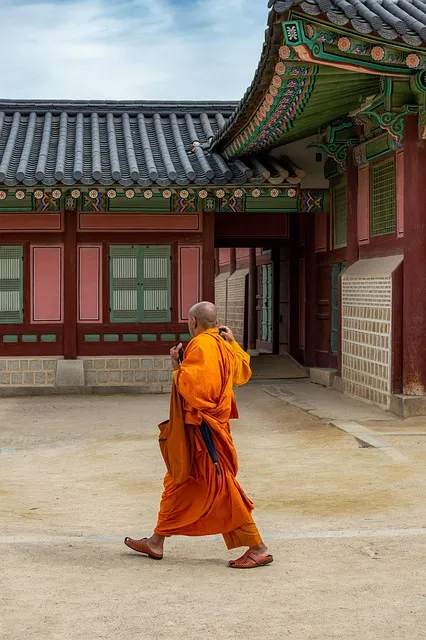
2. The Role of Engagement. Stoicism was built for engaged life. Marcus Aurelius could not become a monk. He had an empire. The Stoic tradition never treated withdrawal from civic and social responsibility as a valid response to life’s difficulty. Fulfill the role — citizen, parent, leader — with excellence and equanimity. Withdrawal is failure. Buddhism, in its most traditional form, leans the opposite direction. The monk who leaves conventional life behind isn’t failing — he’s taking the practice more seriously than those still distracted by worldly affairs. Lay Buddhism exists and is legitimate, but the tradition’s highest exemplars have typically left ordinary life to pursue practice undistracted. Not a minor difference. It determines the fundamental relationship to the world lived in.
3. The Approach to Emotion. The Stoic approach is cognitive: emotions follow from judgments, and the emotion changes by correcting the judgment. Epictetus is explicit: “Men are disturbed not by things but by the opinions about things.” That’s a lever. Identify the judgment, examine it, correct it if wrong, and the emotional disturbance resolves. Buddhist practice is phenomenological rather than cognitive: no attempt to change the judgment. Observe the emotion arising, recognize its impermanence, let it pass without reacting. The Stoic approach is faster for acute situations. The Buddhist approach is more thorough for chronic patterns. The Inner Architecture Stack uses both: Stoic cognitive intervention for immediate emotional management, Buddhist observation for the underlying patterns that keep regenerating the same emotional responses despite repeated cognitive correction.
4. The Goal. Stoicism aims at eudaimonia — a life of flourishing through virtue. A positive achievement: full actualization of the rational nature through excellent action. Buddhism aims at nirvana — the cessation of suffering through the extinction of craving. Nirvana isn’t quite eudaimonia. Closer to the absence of a disease than the presence of a flourishing. Fundamentally different destinations. Stoicism is moving toward something. Buddhism is releasing something. The practical difference: Stoic practice motivates in a way Buddhist practice initially doesn’t — building toward an ideal feels different than tolerating a period of dismantling things that felt like identity, before discovering what’s actually underneath.
5. Cosmological Scope. Stoicism operates within a single life. Time is finite, and that urgency is meant to sharpen the practice. Traditional Buddhism includes rebirth, karma spanning multiple lifetimes, a cosmological framework of enormous scope. Secular practitioners usually set these elements aside. But their presence in the tradition isn’t accidental — part of why Buddhism’s ultimate goal (liberation from the cycle of conditioned existence) runs so much more radical than Stoicism’s goal (living well in this one life). Drop the cosmological framework and what’s left is a simplified version of Buddhism. Still enormously useful. Worth knowing what’s being simplified, though.
The Inner Architecture Stack in Practice: A 90-Day Protocol
Here’s how to actually implement the two-layer system in a way that produces measurable results within ninety days. Not a spiritual program. A mental performance protocol.
-
Days 1-30: Build the Stoic foundation (Layer One). Morning: five minutes with Marcus Aurelius or Epictetus, specifically the dichotomy of control. Before the day starts, identify the three most important things that need accomplishing and make explicit which aspects of each fall inside actual control. This prevents the single most common productivity failure: burning energy on things outside control while neglecting the things that could actually be influenced. Evening: ten-minute written review. Three questions — What went well today? Where did I fail to apply my values? What’s one adjustment for tomorrow? This is the Stoic examinis diurni, the daily examination, and it compounds. Thirty days of honest evening reviews produces a clear picture of actual behavioral patterns, not the story usually told about them. See the four-step process to becoming unbreakable for how this foundation connects to the larger resilience system.
-
Days 31-60: Introduce the Buddhist layer (Layer Two). Add a fifteen-minute morning meditation before the Stoic review. Use the most basic Vipassana technique: sit quietly, close the eyes, observe the sensations of breathing at the nostrils. When the mind wanders — and it will, constantly, especially at first — notice the wandering without judgment and return attention to the breath. That’s the whole technique. The point isn’t achieving a particular state. The point is training the capacity to notice being captured by a thought and redirecting attention on purpose. The foundational skill of Layer Two. Don’t expect this to feel productive in the first two weeks. It won’t. It will feel pointless and frustrating, which is genuinely useful information about how rarely presence to one’s own experience actually happens. The box breathing protocol is an excellent primer that softens the transition into formal meditation.
-
Days 61-90: Integrate both layers at the point of friction. By now there’s a morning meditation, a morning Stoic planning session, an evening review running. The integration phase applies both layers to real situations as they arise. Something difficult happens — a conflict, a setback, a threat — apply the Stoic response first: identify what’s in control, act on it, release the rest. Then apply the Buddhist layer: after the immediate response, sit with the residue. Notice what thoughts are still running. Notice what emotional charge is still present. Don’t analyze it. Don’t argue with it. Just observe until it passes. The Stoic layer handles the situation. The Buddhist layer handles the aftermath. Together, they leave almost no residue — no stored resentment, no accumulated anxiety, no emotional backlog coloring every subsequent interaction. This is what the full Inner Architecture Stack produces: not just disciplined behavior, but a genuinely clean internal environment.
The research behind this protocol isn’t speculative. Neuroscientist Richard Davidson at the University of Wisconsin-Madison, working with Buddhist meditators carrying more than 10,000 lifetime hours of practice, found measurable differences in cortical thickness in areas tied to attention and interoception compared with matched controls. The same lab found that eight weeks of mindfulness-based stress reduction — far less practice than traditional Buddhist training — produced structural changes in the amygdala detectable by fMRI. Meanwhile the cognitive-behavioral therapy tradition — essentially Stoic philosophy in clinical form — has accumulated probably more evidence for effectiveness than any other psychotherapy approach around. Two different mechanisms producing two different but complementary results. The Inner Architecture Stack uses both, deliberately.
Stoicism Buddhism Which: What The Evidence Reveals
Worth being precise about the evidence here, because this topic attracts a lot of confident claims that don’t survive contact with the actual data.
On the Stoic side, the research is largely indirect. Nobody’s run a randomized controlled trial on Marcus Aurelius specifically. But cognitive-behavioral therapy, developed by Aaron Beck at the University of Pennsylvania in the 1960s, is essentially Stoic philosophy in clinical packaging. Beck’s core insight — emotional disturbance follows from cognitive distortions, and correcting the distortions resolves the disturbance — is Epictetus restated in psychiatric language. The CBT evidence base is enormous: the 2012 meta-analysis by Hofmann et al. in Cognitive Therapy and Research, covering 269 studies, found strong and consistent evidence for CBT’s effectiveness across anxiety, depression, substance use, and personality disorders. Accepting CBT’s effectiveness — and the evidence is hard to argue with — means accepting the effectiveness of the underlying Stoic cognitive model.
On the Buddhist side, mindfulness research is both larger and more direct. Jon Kabat-Zinn’s Mindfulness-Based Stress Reduction program, developed at the University of Massachusetts Medical School in 1979, has been studied across hundreds of trials. A 2014 meta-analysis by Khoury et al. in Clinical Psychology Review, covering 209 studies and over 12,000 participants, found significant effects for stress, anxiety, and depression. What the research consistently shows: the two mechanisms — cognitive reframing (Stoic) and non-reactive observation (Buddhist) — are distinct, additive, targeting different aspects of mental regulation. Not alternative routes to the same destination. Routes to genuinely different destinations that both happen to represent improvements over the untrained default. The capacity to rewrite the moment in real time is a Stoic skill. The capacity to watch the moment pass without being destroyed by it is a Buddhist skill. Both are worth having.
Research on combined approaches is still emerging, but the preliminary data is consistent with the Inner Architecture Stack model: programs combining cognitive strategies with mindfulness practice tend to outperform programs using either approach alone. Makes mechanistic sense. The cognitive layer corrects false beliefs generating unnecessary suffering. The mindfulness layer trains the capacity to observe mental events without identification, preventing new false beliefs from taking hold. Running them in sequence — cognitive first, mindfulness second — addresses the most common sequencing problem: people who try meditating before stabilizing their relationship to their thoughts find the practice unproductive, spending the meditation lost in the same cognitive patterns that created the problem in the first place.
The Trap Most Practitioners Fall Into

The Stoic version of this trap is using the dichotomy of control as a bypass for uncomfortable emotions. “That’s not in my control, so I won’t feel anything about it.” Not Stoicism. Emotional suppression wearing a philosophical costume. The Stoics were explicit that appropriate emotions are part of the virtuous life — grief at genuine loss, anger at genuine injustice, joy at genuine goods. The goal was never becoming someone who doesn’t feel things. It’s ending the manufacture of feelings from false judgments. The distinction matters. Emotional discipline is not emotional elimination.
The Buddhist version of this trap is using mindfulness as spiritual bypass — using the observation of experience as a way to avoid engaging with difficult situations. “I’m just being mindful of this problem” can be cover for doing nothing about it. Buddhism does not teach passivity. The Eightfold Path includes right action and right livelihood. The tradition’s social engagement lineage — Thich Nhat Hanh, the Buddhist Peace Fellowship — is explicit that deep practice leads to more engagement with the world, not less. A meditation practice making someone more effective and more present is working. A meditation practice making someone more ethereal and less functional means something’s gone wrong.
The combined trap — specific to people trying to run both traditions at once — is treating them as a complete system that replaces judgment. No philosophical framework removes the need to actually think about a specific situation. Marcus Aurelius’ situation was not the reader’s situation. The Buddha’s situation was not the reader’s situation. The Inner Architecture Stack gives structure and sequencing. It doesn’t dictate the right action in any particular circumstance. That still requires thinking, consulting people who know the situation, and acting on the best available judgment while staying open to being wrong. Tools don’t replace thinking. They make thinking better.
Marcus Aurelius and the Hidden Buddhism: What the Convergence Actually Means
Here’s the detail most Stoicism-Buddhism comparisons skip entirely: Marcus Aurelius, writing in the second century CE, produced passages in the Meditations almost indistinguishable from Buddhist philosophy. Book IV, entry 3: “Things do not touch the soul, for they have no admission to it, and no power of moving it; but our disturbances come only from the opinion which is within.” Book IX, entry 28: “Do not disturb yourself by thinking of the whole of your life. Let not your thoughts range over the many troubles which have come in the past and will come in the future, but ask yourself with regard to every present difficulty: What is there in this that is intolerable and beyond endurance?” Book XI, entry 18: “The soul harms itself, first and most, when it becomes, as far as it can, a separate growth and a kind of tumor on the universe — for to be displeased at anything that happens is a revolt against Nature.”
That last passage could get published in a Zen collection without raising an eyebrow. Not accidental convergence. Two sophisticated traditions, working independently across two thousand years of separation, arrived at similar conclusions about the relationship between the trained mind and human suffering. Which suggests both are tracking something real — not a cultural preference, not a philosophical fashion, but an empirical truth about how human consciousness works and what it takes to function well.
Scholars of comparative philosophy have noted that Pyrrho of Elis, the early Greek Skeptic predating the Stoics, traveled with Alexander the Great’s campaign to India and spent time with Indian gymnosophists — philosophers likely including both Brahmin ascetics and proto-Buddhist practitioners. Pyrrho returned with philosophical ideas that influenced the development of Greek philosophy, some of which filtered into the Stoic tradition. No clean line of influence exists, and the similarities are better explained by convergent investigation than by cultural borrowing. But two traditions, working from radically different starting points, arriving at overlapping conclusions about the nature of suffering and the necessity of mental training — that’s significant regardless. Both traditions are pointing at the same territory.
The Verdict and Your Next Move
Forcing a single choice: start with Stoicism. Not because it’s deeper — it isn’t, and claiming otherwise would embarrass anyone who’s read seriously in both traditions — but because it’s more immediately applicable to the conditions most people in 2026 are actually navigating. Ordination as a monk isn’t in most people’s future. Work keeps happening, leadership keeps happening, the friction of real relationships and real obligations keeps happening. Stoicism was designed for exactly that life. It assumes you’re in the arena and hands over tools to perform there with integrity. The Meditations of Marcus Aurelius, read seriously and applied daily, will change how adversity gets handled faster than almost any other practice available. Start there.
But the honest answer is that choosing one is a false constraint. The Inner Architecture Stack — Stoic structural layer first, Buddhist interior layer second — isn’t a compromise. It’s the most complete system available for the problem both traditions are solving. Read the Stoics and practice mindfulness. Apply the dichotomy of control and sit with the impermanence of all things. Use cognitive reframing for immediate emotional management and observation for the underlying patterns cognitive reframing alone can’t reach. Build Layer One until behavior is reliable. Then build Layer Two until experience is genuinely spacious, not just disciplined. The people who thrive over the long run aren’t the philosophical purists who chose a side. They’re the pragmatists who took what works from every available tradition and built a practice that actually holds up under pressure, over years, when the stakes are real and conditions are hard.
The unshakable locus of control both traditions cultivate — the refusal to be governed by what lies outside — is available through either door. But it gets built faster, and holds up more reliably, using both layers together. Start the morning review tonight. Start the fifteen minutes of meditation in thirty days. Give both practices a full ninety days before evaluating anything. That’s the protocol. That’s the only thing that will actually show what works.
Reader Questions About Stoicism Buddhism Which

Can you practice Stoicism and Buddhism simultaneously? Not only is it possible, the combination addresses weaknesses in each tradition taken alone. Stoicism without meditation can turn intellectualized — the theory gets understood while the body still registers stress the mind has reframed away on paper only. Buddhist meditation without Stoic engagement can turn passive — sitting beautifully while avoiding the difficult decisions and demanding roles that growth actually requires. The pairing is deliberate and productive: cognitive reframing (Stoic) for immediate emotional management, non-reactive observation (Buddhist) for the deeper patterns reframing doesn’t fully reach. Most practitioners who work seriously with both traditions report they stopped experiencing them as separate somewhere around six months in.
What are the key differences between Stoicism and Buddhism on the nature of the self? This is the deepest philosophical divergence. Stoicism assumes a rational self that can be strengthened and cultivated toward virtue — the goal is an unshakeable character built through practice. Buddhism teaches the fixed, continuous self is a construction rather than a discovery — the goal is seeing through the illusion of a permanent self, releasing the suffering that comes from defending and maintaining that identity. Practically: Stoicism is building something while Buddhism is dissolving something. Both reduce suffering, through opposite metaphysical moves. The Inner Architecture Stack sequences them — build the Stoic structural layer first (strengthening what you are), then the Buddhist interior layer (investigating what that self actually is).
Which is better for anxiety — Stoicism or Buddhism? Both address anxiety effectively, through different mechanisms. Stoicism reduces anxiety by correcting the judgments generating it: identify the false belief underlying the anxious response (usually an assumption that some external outcome is necessary for wellbeing) and correct it, and the anxiety reduces. Fast and targeted for situational anxiety. Buddhism reduces anxiety by training observation of anxious thoughts without identifying with them — watching the anxiety arise and pass, no longer treating it as information about imminent danger, and the grip loosens. For acute situational anxiety, the Stoic approach moves faster. For chronic generalized anxiety with deep roots, the Buddhist observational approach tends to run deeper and produce more lasting results. Using both — correcting the judgment, then observing the residue — is the most effective combination available.
Did Stoics and Buddhists know about each other? Limited evidence of indirect contact through trade routes and Alexander’s Indian campaigns exists, but the similarities between the traditions are better explained by what philosophers call convergent evolution — two rigorous traditions independently investigating the same human problem and arriving at overlapping conclusions. Pyrrho of Elis, who traveled to India with Alexander, returned with ideas that influenced Greek Skepticism and indirectly shaped Stoicism. Some scholars have traced specific doctrinal parallels. But even without a clean line of influence, both traditions were doing serious empirical investigation of human consciousness and suffering, and it shouldn’t be surprising they found similar things. Two independent explorers mapping the same territory produce maps that resemble each other, collaboration or not.
How long does it take to see results from Stoic and Buddhist practices? The Stoic morning and evening review practice produces noticeable changes in emotional reactivity within about two weeks for most practitioners, since it’s a cognitive intervention that takes effect fairly quickly. The daily review, consistently applied, has typically produced observable changes in behavioral patterns by the end of the first month. Buddhist meditation takes longer. Most practitioners report noticeable changes in their relationship to their own thoughts around the four-to-six week mark, when the observational capacity starts turning automatic rather than effortful. Structural neurological changes — the kind that show up in fMRI studies — have been documented after eight weeks of consistent mindfulness practice, across multiple studies. The full Inner Architecture Stack, practiced consistently for ninety days, produces changes typically visible to people who know you, not just changes noticed internally.
Is Stoicism a religion like Buddhism? Stoicism is a philosophy with no worship, no clergy, no ritual requirements, no metaphysical demands regarding supernatural beings. A committed Stoic practitioner can hold any religious or non-religious worldview. Buddhism occupies a wider spectrum: secular Buddhism functions essentially as a psychological and ethical practice, while traditional Buddhist institutions in many countries are fully religious in structure, with monasteries, ordained clergy, ritual calendars, and metaphysical commitments including rebirth and karma. The version of Buddhism most commonly practiced in the West by non-converts sits closer to the secular end of that spectrum. Neither tradition requires faith in the Western sense — both demand practice and investigation rather than belief.
What’s the best first book for someone new to Stoicism and Buddhism? For Stoicism: Marcus Aurelius’ Meditations, translated by Gregory Hays (Modern Library, 2002) — the most readable translation, and the most direct encounter with a practicing Stoic’s actual daily thought process. Don’t start with academic commentary. Start with the primary source. For Buddhism: Mindfulness in Plain English by Bhante Gunaratana, available free online, providing a complete, practical introduction to Vipassana meditation without requiring any prior background in Buddhist philosophy. For the combined approach: Ryan Holiday’s The Obstacle Is the Way for Stoic application, then Tara Brach’s Radical Acceptance for the Buddhist interior layer. Read them in that order.