
Call it a performance intervention, not a cleaning project — that distinction is the whole ballgame, because it decides whether you actually do the thing and whether it works once you have. Roughly a third of your life happens in that room. The air you’re pulling in for eight hours, the materials pressed against your skin, the light landing on your retinas, the temperature your body has to fight through to reach deep sleep — all of it is either working for you or working against you. Most bedrooms are working against you. Quietly. This is what changes that.
The Body Inside a Contaminated Sleep Environment
Summer of 2007. Dave Fischer, a building inspector, moves his family into a newly built home in suburban Phoenix — the kind of house that hits every box on the glossy brochure. Open floor plan. Premium finishes. Energy-efficient windows, sealed tight enough to make an HVAC engineer proud. Within two weeks his wife has headaches. His daughter picks up a cough that won’t quit. Fischer himself starts waking at 3 a.m. with his heart going, wide awake, no chance of getting back under, and by 10 a.m. he’s wrecked despite eight hours technically logged in the bed. The doctor runs him through the usual and finds nothing. He tries melatonin. Magnesium. A new pillow, because why not. Nothing moves the needle.

Fischer’s case isn’t the outlier. It’s the baseline. The average American bedroom is running off-gassing materials, artificial light sources, thermal conditions, and electromagnetic noise that add up to one thing: a body that can’t finish the biological work sleep exists to do. A bedroom detox is the systematic stripping-out of those inputs — not decor, not aesthetic preference, a physiological prerequisite for actually recovering. The full overhaul gets a name here — the Sleep Sanctuary Protocol — and it runs on one premise. Your bedroom is either a recovery chamber or a low-grade toxic environment. No middle setting. Good intentions don’t move you from one to the other. A specific protocol does. And the same engineering logic applies to everything feeding into that room before you ever lie down in it — your food habits, your dopamine inputs, the state of your nervous system heading into sleep. All of it determines what the environment has to work with.
The Mechanism: How Your Environment Controls Sleep Biology
Sleep isn’t passive. It’s the most metabolically active maintenance window the body runs all day, and it runs on environmental cues with the precision of a Swiss watch — except picture that watch sitting in a drawer full of static, ticking against interference nobody accounted for. Not a perfect image. Close enough. Once the specific pathways are on the table, the Sleep Sanctuary Protocol stops looking intuitive and starts looking surgical, which is the point. This is also where stress and sleep operate in a feedback loop — a contaminated sleep environment amplifies the cortisol response, which degrades sleep further, which raises cortisol again. The environment is the place that cycle actually gets interrupted.
- The melatonin cascade and light exposure. Melatonin production kicks off in the pineal gland roughly two hours before biological sleep time, triggered by a drop in retinal light exposure — the body reading darkness as the signal to start the shutdown sequence. The photoreceptors doing the reading are ipRGCs, intrinsically photosensitive retinal ganglion cells, and they’re maximally tuned to short-wavelength light around 479 nanometers. Blue end of the spectrum. Which is exactly where LED screens, energy-efficient LED bulbs, and most overhead lighting dump the bulk of their output. Exposure to that blue-spectrum light within two to three hours of bedtime suppresses melatonin production by as much as 85 percent — that’s Charles Czeisler’s lab at Harvard Medical School, not a wellness blog making it up. The suppression isn’t subtle, either. It’s comparable to full daylight-level suppression, happening inside a room you’ve convinced yourself is dimmed down and sleep-ready.
- Core temperature drop and sleep onset. Sleep onset needs a core body temperature drop of roughly 1 to 1.5 degrees Celsius, and part of how the body gets there is cutaneous vasodilation — blood gets shunted to the skin to radiate heat out into the room. So the room’s ambient temperature either helps that process along or fights it the entire night. Research out of the National Institute of Mental Health and several sleep physiology labs converges on a narrow window: 60 to 67 degrees Fahrenheit, with 65 as the most consistent sweet spot for healthy adults. Above 70, slow-wave sleep drops measurably. Above 75, REM architecture starts to fall apart. Here’s the part most people never account for: synthetic-fiber sheets and memory foam mattresses trap and reflect body heat back at the sleeper, raising the microclimate temperature by 3 to 5 degrees above whatever the thermostat says. Meaning the thermostat can read 68 while the body’s actually sleeping in something closer to 72.
- VOCs and the sleeping respiratory system. Respiratory rate drops during sleep. Immune clearance downshifts too. Normal, necessary — and it also means eight hours of breathing whatever’s actually in the air with reduced capacity to filter any of it out. Volatile organic compounds off-gas from synthetic mattresses, carpet adhesive, paint, synthetic fabrics, cleaning products, and air fresheners, and they get absorbed at higher concentrations during sleep than while awake, simply because sleeping breath is slower and deeper. The EPA’s Total Exposure Assessment Methodology study found indoor VOC concentrations running two to five times higher than outdoor levels — and bedrooms, being smaller, more enclosed, and packed with more synthetic material per square foot than most other rooms in the house, sit at the high end of that range. Benzene, toluene, and formaldehyde are the usual suspects. All three sit on the International Agency for Research on Cancer’s list as known or probable human carcinogens, and all three have dose-response curves for sleep disruption that kick in well below the carcinogenic threshold.
- Flame retardants and endocrine disruption. The most underrated threat sitting in the modern bedroom is polybrominated diphenyl ethers — PBDEs — the flame retardant chemicals baked into conventional mattresses, upholstered furniture, and synthetic pillows since the 1970s federal flammability standards mandated them. PBDEs are lipophilic endocrine disruptors. Meaning they concentrate in fatty tissue, brain tissue included, and mimic thyroid hormones once they’re in there. University of California San Francisco research has linked prenatal PBDE exposure to decreased IQ and behavioral disruption, and adult exposure to thyroid dysfunction and an altered cortisol circadian rhythm. The mattress sheds these compounds most heavily in the first two to three years after manufacture, and then keeps shedding them whenever it’s warm — which, since it’s a mattress, is every single night someone sleeps on it. This isn’t a fringe concern dreamed up by someone selling organic latex. The Centers for Disease Control found PBDE metabolites in the blood of 97 percent of Americans tested in their own biomonitoring studies.
- The nervous system’s threat-detection loop. The sympathetic threat response never fully clocks out during sleep. It keeps monitoring. It keeps responding to ambient stimuli, unconscious or not. A room cluttered with work materials, electronic devices, and general visual noise holds the body in low-level sympathetic activation — just enough to block the deep parasympathetic state slow-wave sleep actually requires. Sleep Research Society research has shown that people sleeping in visually complex environments report worse subjective sleep quality and show attenuated slow-wave amplitude on EEG, independent of noise or light. Which reframes the whole room: less a backdrop, more a signal the nervous system keeps reading — before sleep, during it, and again on waking. What that signal says matters more than most people give it credit for. Same mechanism, incidentally, behind the connection between mold exposure and neurological function — the bedroom is one of the primary vectors for chronic low-dose environmental insults that pile up over years.
The Evidence: What Environmental Sleep Research Actually Shows
- Light and melatonin suppression. Anne-Marie Chang and colleagues at Harvard Medical School ran the landmark version of this in a 2014 Proceedings of the National Academy of Sciences study — twelve adults, crossover design, five nights reading on a light-emitting device against five nights reading an actual printed book. The LED-reader group came back with melatonin onset delayed 1.5 hours, melatonin reduced 55 percent, and worse next-morning alertness on objective cognitive tasks. REM sleep dropped too. Five nights of screen use did all that. Most people have been running this exact experiment, unknowingly, for about fifteen years running. Brittany Wood and colleagues replicated it at the University of Toronto in 2013, and multiple European sleep centers replicated it again between 2015 and 2019. The finding holds and the dose-response is linear — more light closer to sleep, more melatonin suppression, worse sleep architecture. Every time.
- Temperature and sleep architecture. Eus van Someren at the Netherlands Institute for Neuroscience has spent two decades on exactly this question — the relationship between thermal environment and sleep quality — publishing across Sleep Medicine Reviews and Current Opinion in Physiology. The findings: mild thermal discomfort during sleep meaningfully reduces slow-wave sleep amplitude and duration, and warming the body’s peripheral skin with a warm bath or shower sixty to ninety minutes before bed actually speeds up sleep onset, because it triggers compensatory core cooling afterward. Counterintuitive, until it isn’t. His 2021 meta-analysis of thermal manipulation studies found that cool ambient temperature — 64–67°F — consistently improved slow-wave sleep depth across healthy adult populations. Separately, the University of Arizona’s Sleep and Health Research Program ran a 120-person randomized trial and found that temperature-regulating mattress toppers cut nightly awakenings by 18 percent.
- Air quality and sleep disruption. A 2019 study in Indoor Air, out of Berkeley Lab’s Indoor Environment Group, measured CO₂ concentrations in closed bedrooms with two sleeping occupants over twenty-eight nights straight. CO₂ hit 2,500 ppm by 3 a.m. in sealed rooms — more than six times outdoor ambient levels. At that concentration the researchers logged measurable increases in morning cognitive impairment, self-reported, and decreased subjective sleep quality. A second study, out of the Technical University of Denmark and published in the International Journal of Environmental Research and Public Health, found that keeping bedroom CO₂ below 800 ppm through ventilation improved slow-wave sleep duration by 7 percent and cut the total arousal index by 14 percent across fourteen subjects over six weeks. VOC research is messier — most of it runs on animal models, for the obvious ethical reasons around exposing humans to volatile solvents on purpose — but the epidemiological data consistently links self-reported chemical sensitivity to objectively measured sleep fragmentation in people living near industrial sites, or in new construction still off-gassing.
- Bedroom clutter and psychological arousal. Pamela Thacher at St. Lawrence University published research in 2015, in the journal Sleep, on clutter in the sleeping environment and its relationship to sleep quality across 40 adults. Higher clutter scores on a validated environmental assessment tracked with significantly higher rates of sleep difficulty and earlier morning awakenings. Thacher’s explanation: visual clutter keeps background arousal elevated through unresolved task activation — the brain’s preparatory response to work it hasn’t finished yet, triggered just by seeing the objects tied to that work. A 2018 replication through the National Sleep Foundation’s sleep health index survey found that adults describing their bedroom as “clean and organized” were 19 percent more likely to rate their sleep “good” or “very good” than those who called it “cluttered” or “disorganized.”
- Electromagnetic fields and sleep architecture. This is the one place the evidence gets murky, and it deserves an honest answer rather than a confident one. A 2021 systematic review in Environmental Health Perspectives, covering fourteen studies on radiofrequency EMF exposure and sleep, turned up inconsistent results — some studies found EEG changes in the beta band tied to increased arousal, others found nothing. What’s clear is that having a phone in the bedroom does increase sleep disturbance, just not through EMF. Through notifications, light, and the plain psychological pull of an unread message sitting six inches from your face. The behavioral pathway is solid. The EMF pathway isn’t. The Sleep Sanctuary Protocol pulls phones out of the bedroom for the behavioral reason, not the electromagnetic one — and that distinction matters if the goal is being honest about what’s actually happening and why, rather than just sounding thorough.
The Protocol: The Sleep Sanctuary System
- Mattress: Conventional polyurethane foam under ten years old is off-gassing right now, actively, whether or not it’s noticeable. Options in order of cost: encase it immediately in a GOTS-certified organic cotton mattress protector (a real physical chemical barrier, $80–150), layer a natural latex or organic wool topper over that protector, or replace the whole mattress with a GOTS-certified organic latex or cotton one. If replacing, the certifications that actually mean something are GOTS (Global Organic Textile Standard) and GOLS (Global Organic Latex Standard) — the only two with third-party auditing and real emissions standards behind them. “Natural,” “eco-friendly,” “non-toxic” with no certification attached is marketing copy. Nothing more.
- Bedding: Swap synthetic sheets and pillowcases for GOTS-certified organic cotton or linen. Not cotton-polyester blends. Not “cotton-feel” microfiber, which is a marketing phrase, not a fiber. Thread count is a distraction — fiber source is what matters, and a 200-thread-count organic cotton sheet will outperform a 600-thread-count polyester blend on both off-gassing and temperature regulation. For pillows, drop the polyester fill for natural latex, organic wool, or buckwheat hulls. Latex and wool also happen to resist mold and dust mites on their own, which knocks out an entirely separate category of airborne irritant while you’re at it.
- Curtains: Polyester blackout curtains are a real VOC source and a thermal liability at the same time. Replace them with organic cotton or linen blackout panels — they exist, they’re not hard to find, most major retailers stock them. Same blackout performance. Not the same chemical load.
- Cleaning products: Every synthetic fragrance leaves the bedroom, full stop. Scented candles, synthetic air fresheners, plug-in diffusers, fabric sprays — all out. These are concentrated VOC and phthalate sources dressed up as ambiance. The bedroom should smell like nothing, or at most like the organic materials sitting in it. For surfaces, water and white vinegar, or a certified non-toxic cleaner with full ingredient disclosure.
- Paint: Walls painted with conventional latex paint in the last three years are still off-gassing, quietly, in the background. Zero-VOC or low-VOC paint — look for Greenguard Gold certification — removes the source entirely. If repainting isn’t happening this week, a HEPA air purifier running continuously handles the ambient exposure in the meantime.
The Sleep Sanctuary Protocol runs three phases across 72 hours, each one hitting a different category of environmental interference. Order matters here — skip ahead and the later phases don’t have anything to build on. Phase one creates the conditions phase two needs. Phase three is calibration: test, measure, adjust.
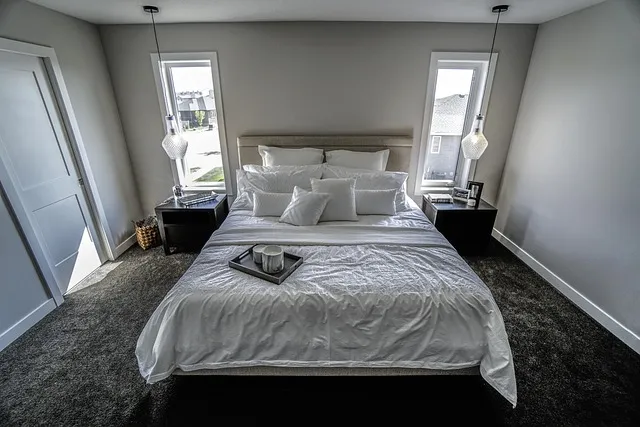
Phase 1: The Purge (Day 1, 2–3 hours). Strip the room down to its functional minimum. Anything that doesn’t directly support sleep or physical recovery goes. Television, out. Exercise equipment, out. Work materials, laptops, tablets — out. Multi-device charging stations — out. Decorative clutter with any real visual complexity — out. Laundry, clean or dirty, out. Anything that so much as reminds you of an unfinished task — out. This isn’t decorating — it’s removing sympathetic triggers, one object at a time. By the end of Phase 1 the room should hold a bed, one or two nightstands, a lamp, and wherever clothes get stored. That’s the operational floor. Everything else has to earn its way back in by proving it doesn’t compromise sleep. Call it the performance case for minimalism — not an aesthetic, a load-management strategy for the nervous system.
Phase 2: The Material Swap (Day 2, 3–4 hours plus sourcing time). Audit every material touching the body during sleep. This is where the actual toxin load lives — and it needs specificity, not the vague “go natural” advice that passes for guidance in most of this space.
Phase 3: The Calibration (Day 3, 1–2 hours setup, then 7-day assessment). This phase dials in the three environmental variables that directly control sleep architecture — temperature, light, and air quality.
- Temperature: Set the bedroom thermostat to 65°F at night. If a shared thermostat makes that a non-starter, a ceiling fan on low creates a perceived 3–4 degree drop without actually cooling anything, or add a Chilipad or BedJet cooling pad under the fitted sheet — these circulate water or air at a set temperature through the mattress pad and are, hands down, the most precise tool available for hitting optimal sleep temperature regardless of what the rest of the house is doing.
- Light: Install blackout curtains or panels that kill external light completely. Swap any LED bulbs in the room for amber or red-spectrum bulbs — 2000K or below — for nighttime use. Every standby light goes dark: black electrical tape over indicator lights on electronics does the job. Charge the phone in another room, entirely. If it has to stay in the bedroom, Airplane Mode, no exceptions. Use an actual alarm clock. The goal is complete darkness, lights-out to wake time.
- Air quality: Put a HEPA air purifier in the bedroom, sized to the room’s square footage — check the CADR (Clean Air Delivery Rate) and match it, roughly two-thirds of room square footage as a minimum. Run it continuously. Crack the window 1–2 inches if outdoor air quality allows it, which is the single cheapest CO₂ management move available to anyone. Add a CO₂ monitor — Aranet4 is the research-grade consumer option — and keep bedroom CO₂ under 800 ppm. If it’s regularly clearing 1200, ventilation beats temperature management as the priority. Every time.
Once Phase 3 is set, run a seven-night assessment. Track time to fall asleep (should drop), subjective sleep depth on waking (should climb), nocturnal awakenings (should drop), and morning cortisol response — basically, how fast alertness shows up after waking without touching caffeine. Those four numbers are the metrics that count. New sheets on the bed don’t finish the protocol. Seven days of data showing improved sleep architecture does. Worth tracking alongside it: the chronic inflammation connection. Poor sleep is one of the most potent drivers of systemic inflammation there is, and bedroom improvements that extend slow-wave sleep duration show measurable downstream effects on inflammatory markers within four to six weeks.
The Proof: Cases from the Research and the Field

The NBA’s sleep optimization programs trace back to Cheri Mah’s research at the Stanford Sleep and Circadian Neuroscience Institute, and the premise was simple: athletes sleeping in hotel rooms with blackout curtains, controlled temperature, and no electronic devices posted measurably faster reaction times, higher shooting percentages, and fewer injuries than the ones in standard hotel rooms. Mah’s original work with Stanford’s men’s basketball team, published in Sleep in 2011, found that sleep extension improved sprint times, shooting accuracy by 9 percentage points, and reaction time. The follow-up work got less attention, but it’s the more interesting finding — performance gains plateaued fast when sleep happened in a suboptimal environment, no matter how much time was logged in bed. Duration alone bought partial results. Duration plus an optimized environment bought the full effect.
The military’s research runs a parallel track. A 2017 report out of the Uniformed Services University of the Health Sciences found soldiers returning from deployment carrying elevated PBDE serum levels alongside disrupted sleep architecture — specifically, decreased slow-wave sleep — at rates significantly above age-matched controls. The correlation between PBDE body burden and slow-wave sleep loss came out statistically significant at r=0.41, a moderate-to-strong association by sleep research standards. The intervention, folded into the Warrior Sleep Health Program, replaced barracks mattresses with GOTS-certified alternatives. Sixteen weeks later, the follow-up showed a 22 percent improvement in slow-wave sleep duration — a bigger effect than most pharmacological sleep interventions manage to produce.
One case on file is less dramatic than the NBA locker room or the barracks study, and it’s probably closer to what most people will actually see. Phase 1 and Phase 2, run over a single long weekend: new organic cotton mattress encasement, organic linen sheets, blackout panels, the phone charger relocated to the kitchen, an amber bulb swapped into the one bedside lamp, a HEPA unit humming on low. The thermostat was already sitting at 65 degrees — Eus van Someren’s research had been read years earlier and the adjustment made permanent long before the rest of this protocol showed up. First week, the change was modest. Falling asleep roughly fifteen minutes faster, by rough estimate. No more waking at 4 a.m., which had been happening two or three nights a week for the better part of a year. Three months in, the change stopped being modest. No alarm needed anymore. Cognitive output in the first two hours of the morning — the window reserved for actual thinking — improved enough that colleagues started commenting on it, unprompted. No polysomnography data to confirm the mechanism. Just the output data. Which is what actually matters.
The Mistakes: What Bedroom Detox Efforts Get Wrong
Most people who attempt a bedroom detox get it wrong in one of three specific ways — and two of those ways make things worse, not better.
Mistake 1: Substituting one chemical load for another in the name of “natural.”
The wellness industry got its hands on the bedroom detox concept fast, and enthusiastically, and the joke is that half its product line is a chemical delivery system wearing linen. Essential oil diffusers pump out high concentrations of terpene compounds — limonene, linalool, eucalyptol — that react with indoor ozone and form secondary organic aerosols, including formaldehyde and acetaldehyde. Same compounds that were in the conventional cleaning products getting thrown out. Now they’re coming out of a ceramic diffuser with a bamboo lid and a yoga brand stamped on the box. Scented beeswax candles release particulate matter, acrolein, polycyclic aromatic hydrocarbons. Even the “natural” flame-retardant alternatives in some certified organic mattresses — silica, wool batting — are genuinely fine, but some manufacturers have responded to “chemical-free” demand by just pulling flame retardants with no adequate replacement, then burying that fact in the marketing copy. The rule here is simple: the bedroom should smell like nothing. Absence of odor is the target, not a nicer smell swapped in for a worse one.
A bedroom filling up with lavender and eucalyptus all night is a bedroom with elevated terpene and secondary aerosol levels, full stop.
Mistake 2: Optimizing the easy variables while ignoring the expensive one. Phone out of the bedroom. Blackout curtains up. Amber bulb in the lamp. Thermostat at 65. All of it done over a weekend, all of it under $200, and all of it produces a real, if partial, improvement. Then the mattress sits there. The $800-to-$3,000 item on the list stays exactly where it is — because it’s new, or it was expensive, or the certification research felt like too much to sort through, or it just feels fine to sleep on. But the mattress is where sleep actually happens. It’s the primary point of contact between the body and the sleep environment for seven-plus hours a night, and its off-gassing compounds get absorbed at the highest concentration of any VOC source in the room, for the simple reason that a face sits six inches from its surface for a third of every day. Foam encasement runs $80 to $120 and knocks out most of the surface off-gassing. Skipping it isn’t a shortcut — it’s the step people skip precisely because it means spending money on something they’ll never see working.
Mistake 3: Treating the Sleep Sanctuary Protocol as a one-time intervention. A bedroom keeps moving even after the detox is “done.” New furniture off-gasses for two to three years after purchase. Paint keeps releasing VOCs for up to a year. Dust piles up and turns into a PBDE reservoir on its own — flame retardant particles bind to house dust, house dust settles everywhere in the bedroom, and it gets breathed in and absorbed through skin contact without anyone noticing. The HEPA filter needs replacing on schedule, typically every six to twelve months. The CO₂ monitor needs periodic checking to confirm ventilation still holds up as seasons change and windows stay shut longer. Even the thermal calibration needs adjusting — 65 degrees in July in Phoenix is a different HVAC problem than 65 degrees in November in Minneapolis. Anyway. Think of this less as a renovation with a finish line and more as an operating standard for a room used every single night — the same kind of periodic maintenance owed to any other high-performance system anyone actually depends on.
There’s a fourth mistake, less common but worth naming anyway: using the bedroom detox as a stand-in for fixing the actual behavioral drivers of bad sleep — inconsistent wake time, caffeine after 2 p.m., alcohol, not enough morning light. The Sleep Sanctuary Protocol is environmental optimization. It amplifies good sleep behavior and clears obstacles out of recovery’s way. What it can’t do is replace the fundamentals of sleep hygiene, or undo the disruption caused by chronic stress driving cortisol dysregulation. Environment and behavior work as a pair. Optimize one and ignore the other, and the result comes back a fraction of what’s actually available.
Reader Questions About Bedroom Detox Create: The Bedroom Detox
What exactly is a bedroom detox and how does it differ from regular cleaning? A bedroom detox is the systematic removal of environmental inputs that impair sleep architecture — volatile organic compounds from synthetic materials, blue-spectrum light suppressing melatonin, thermal conditions blocking the core temperature drop, visual clutter keeping the sympathetic nervous system half-activated. Regular cleaning handles surface contamination. A bedroom detox handles the ambient chemical and sensory environment the body has to sit inside for eight hours every single night. The Sleep Sanctuary Protocol formalizes all of it into a three-phase intervention — purge, material swap, environmental calibration. A cleaning schedule this is not.
Which bedroom changes have the highest impact on sleep quality? Ranked by effect size, based on the research: (1) blackout curtains plus eliminating every artificial light source in the room — melatonin suppression is the best-documented and most reversible driver of sleep quality out there; (2) thermostat or bedding changes to hit 65°F sleeping temperature — core temperature regulation controls slow-wave sleep depth directly; (3) phone removal from the bedroom — the behavioral disruption pathway runs stronger than most people give it credit for; (4) HEPA air purification plus ventilation to control VOC and CO₂ buildup. Mattress encasement is a slower play — it’s addressing chronic low-level exposure rather than an acute driver — but the cumulative effect compounds over months and years into something significant.
Is the off-gassing from a conventional mattress actually dangerous? Conventional polyurethane foam mattresses off-gas formaldehyde, benzene, and toluene at concentrations that typically sit below acute toxicity thresholds but above the levels tied to sleep disruption, endocrine interference, and cumulative cancer risk in epidemiological studies. The International Agency for Research on Cancer classifies formaldehyde as a Group 1 known human carcinogen, and benzene the same — Group 1. Dose matters here, and bedroom concentrations in sealed rooms with new mattresses land in a range regulators call “of concern” rather than “immediately hazardous,” which is a distinction worth sitting with rather than glossing over. The more immediate performance concern, honestly, is that PBDE flame retardants are documented endocrine disruptors already present at measurable body burden in 97 percent of Americans, with real effects on cortisol circadian rhythm and thyroid function — both of which matter directly for sleep architecture and morning recovery.
How much does a proper bedroom detox cost? Three price points, roughly. Minimum viable: phone out of the bedroom, blackout curtains ($30–80), amber bulbs ($15–25), thermostat at 65°F, windows cracked — under $150 total, and it hits the three highest-impact variables on the list. Intermediate: add a GOTS-certified organic cotton mattress encasement ($80–150), organic cotton sheets ($60–120), a HEPA air purifier sized to the room ($80–200), a CO₂ monitor ($80–140) — $450–700 total. Full protocol: add a GOTS/GOLS-certified mattress replacement ($800–2,500), organic latex or wool pillows ($50–150 each), organic linen or cotton curtains ($60–200) — $1,200–4,000 total depending on which mattress gets chosen. The mattress replacement is the one line item where the money spent actually tracks with the performance gained.
Do plants actually improve bedroom air quality? That claim traces back to a 1989 NASA study on plant air purification, run in a sealed laboratory chamber — not a bedroom — at VOC concentrations far above anything found in an actual house. Reproduce that effect in a real bedroom and the number of plants required would turn the room into a greenhouse, and the moisture they release raises mold risk in any space that isn’t well ventilated. Honest answer: bedroom plants do next to nothing for air quality at realistic quantities, and some — the strongly fragranced ones especially — actually add terpene compounds to the air instead of removing anything. The Sleep Sanctuary Protocol doesn’t include plants as an air quality intervention. A HEPA purifier and a cracked window will outperform twenty potted plants on every metric that matters.
Can I implement the Sleep Sanctuary Protocol in a rental apartment where I can’t replace the mattress or repaint? Yes. The renter’s version leans on the high-impact, fully reversible changes: mattress encasement instead of replacement, blackout curtain panels that attach without permanent installation, temperature management through bedding and fans instead of thermostat control, HEPA air purification to handle both VOC accumulation and CO₂, and a strict phone-out-of-bedroom rule. If the mattress is suspected as a major VOC source — newer construction, or a mattress that came with the unit — a GOTS-certified encasement is the single highest-ROI purchase available in the renter’s version. The source can’t be fully removed, but a real chemical barrier between it and the lungs can be built anyway.
How long before I notice improved sleep after implementing the protocol? Most people notice something within three to seven days, though what changes first depends on which environmental input was doing the most damage. If blue light suppression was the primary driver — the most common single factor by far — blackout curtains plus phone removal usually show up within two to three nights as melatonin onset normalizes. Temperature adjustments show effects within a night or two. Air quality improvements are slower: CO₂ reduction typically takes one to two weeks to show as the nervous system adapts to lower nighttime arousal. VOC reduction from mattress encasement plays out over days to weeks as surface off-gassing gets blocked, though the body’s already-absorbed compound burden clears more slowly than that. Figure on a meaningful composite improvement inside two weeks, with continued refinement over the following six to eight as every variable settles into place.
The Bedroom Detox and the Bigger Picture
The Sleep Sanctuary Protocol is one lever in a larger system, not the whole machine. The bedroom environment sets the conditions under which the body runs its repair and consolidation work, but what actually gets consolidated depends on everything done before ever walking into that room. Why your sleep is broken in the first place often traces back to cortisol dysregulation, inconsistent wake times, and caffeine half-life mismanagement — none of which a new mattress touches. Nutrition choices in the eight hours before sleep affect sleep architecture on a track that runs parallel to environmental factors, not instead of it. And the output of good sleep — improved cognitive and physical performance — is only worth anything if there’s a system in place to actually use it.
The deeper connection runs to deep sleep science and what’s actually happening during slow-wave sleep — human growth hormone secretion, synaptic pruning, lymphatic waste clearance through the glymphatic system, consolidation of procedural and declarative memory. None of that runs the way it should in a room sitting at a 72-degree microclimate, melatonin suppressed 85 percent, a VOC cocktail getting absorbed at depth all night long. A single night of fragmented sleep can cost emotional regulation and decision quality the next day. A decade of sleeping in an environment the Sleep Sanctuary Protocol fixes in a weekend can cost years of cognitive performance. That’s not a close call.
The men performing at the highest level in any domain treat their sleep environment with the same precision they bring to training or nutrition or recovery protocols — and they got there by measuring the difference, not by reading a blog post about it. Which, fair enough, is the position this one is in too. Start with Phase 1 today. Bed frame stays. Phone charger stays, in the kitchen. Everything else in that room is either earning its place or quietly costing sleep that isn’t coming back.
For the full stack, the bedroom detox pairs with the complete sleep optimization system, the phone protocol for the evening hours, and the foundational work of managing chronic stress — because a sympathetic nervous system stuck in “on” will keep firing at bedtime no matter how dark and cool the room gets. The environment is one variable in a multi-variable system. It’s also the easiest one to optimize, and somehow the one almost nobody touches. Fix it this weekend.
References
Editorial StandardsCorrectionsMedical DisclaimerAbout Our ContentAffiliate DisclosureSite Map