
Ordering the wrong health test wastes money and — worse — gives incomplete information that leads to misguided interventions. The GI-MAP vs Organic Acids Test decision matters because each reveals a different slice of the health picture.

Both tests have legitimate clinical applications. The question isn’t which is “better” in the abstract. It’s which one answers the specific question the body is asking right now.
Functional medicine has given men access to testing that goes far beyond what conventional medicine typically offers. But more testing options mean more decisions — and more opportunities to spend money on the wrong test. What follows is an honest comparison of these two tools, including the limitations that marketing materials conveniently leave out.
What follows compares what each test actually measures, its accuracy and limitations, cost and accessibility, who should prioritize it, and how to use the results effectively.
Take a guy we’ll call Dale. Forty-four, runs a small logistics outfit, been bloated after every meal for two years and assumed it was just what happens to a man’s gut past forty. His GP ran a basic celiac panel and a CBC, both clean, and told him to try cutting gluten. He didn’t have celiac disease. He had, it turned out, a Blastocystis hominis colonization and a secretory IgA reading low enough to suggest his mucosal immune system had been running on fumes for a while. None of that shows up on a CBC. It shows up on a GI-MAP. His case is worth keeping in mind through the rest of this, because it’s the difference between generic testing and testing that actually answers the question being asked.
WHAT IS GI-MAP?

The technology matters here, not just as trivia. Older stool testing relied on culture — growing organisms on a plate and seeing what showed up, a method that’s been standard since the 1880s and misses the roughly 60-70% of gut microbes that don’t culture well outside the body, obligate anaerobes especially. qPCR skips culturing entirely. It amplifies specific DNA sequences unique to each target organism and counts how many copies show up, which is both faster and dramatically more sensitive — Diagnostic Solutions’ own validation data, published in their technical white papers, shows detection thresholds in the low copy-number range that culture-based stool testing simply can’t reach. That’s a real methodological advance, not marketing language, and it’s the reason GI-MAP replaced culture-based panels as the standard in functional gut work over the past decade.
What it actually screens for runs wide. On the pathogen side: H. pylori, including its virulence genes cagA, vacA, and iceA — strains carrying cagA are associated with a roughly two- to six-fold higher risk of gastric cancer according to case-control data going back to Nomura and colleagues’ 1991 study in the New England Journal of Medicine, which is part of why a positive H. pylori result with cagA carriage gets treated more aggressively than a cagA-negative one. Parasites — Giardia, Cryptosporidium, Entamoeba histolytica, Dientamoeba fragilis, and Blastocystis hominis (which is common, often asymptomatic, and controversial as a pathogen; some strains provoke real GI symptoms, others appear to be harmless commensals, and the field hasn’t fully settled which is which). Bacterial pathogens — Campylobacter, Salmonella, Shigella, C. difficile toxin A/B, and several E. coli virulence factor groups (STEC, EPEC, ETEC) that standard stool cultures frequently miss.
Then there’s the dysbiosis picture, which is where GI-MAP earns its reputation as a map rather than just a pathogen screen. It quantifies opportunistic bacteria — Klebsiella pneumoniae, Citrobacter freundii, Pseudomonas aeruginosa, Staphylococcus aureus — that live in most guts at low levels and only become a problem when they overgrow. It also measures keystone commensal species: Akkermansia muciniphila (a mucin-degrading bacterium whose depletion correlates with metabolic syndrome and gut barrier thinning in multiple human cohort studies), Faecalibacterium prausnitzii (one of the primary butyrate producers in the colon, chronically low in inflammatory bowel disease patients), and Bifidobacteria and Lactobacillus species. Low keystone species alongside high opportunistic species is the dysbiosis signature most functional practitioners are actually hunting for — not a single pathogen, but an ecosystem tilted the wrong way.
The functional markers round it out. Zonulin, the protein Alessio Fasano’s group at Massachusetts General characterized in a landmark 2011 Physiological Reviews paper, regulates the tight junctions between intestinal epithelial cells — elevated zonulin is the closest thing to an objective “leaky gut” marker currently available, though it’s worth saying plainly that zonulin testing remains a contested area; some assays cross-react with non-zonulin proteins, and interpretation varies by lab. Calprotectin, a neutrophil-derived protein, is far less controversial — it’s validated well enough to be used in conventional gastroenterology to distinguish inflammatory bowel disease from irritable bowel syndrome, with cutoffs generally set around 50 μg/g (normal), 50-120 μg/g (equivocal, warrants monitoring), and above 120 μg/g (suggestive of significant inflammation requiring further workup, per meta-analytic thresholds summarized in Konikoff and Denson’s 2006 review in Inflammatory Bowel Diseases). Secretory IgA reflects the gut’s front-line mucosal immune defense — chronically low levels suggest an exhausted immune response (seen in long-term stress states and after prolonged infection), while acutely elevated levels often reflect the immune system actively fighting something right now. Pancreatic elastase-1 flags exocrine pancreatic insufficiency, a genuinely underdiagnosed cause of fat malabsorption and loose stool in middle-aged men that gets missed constantly because nobody thinks to test for it. Beta-glucuronidase, a bacterial enzyme, deserves a specific mention: elevated levels uncouple conjugated estrogens in the gut, allowing them to be reabsorbed into circulation rather than excreted — a mechanism implicated in both estrogen-dominant symptom pictures and, per older epidemiological work, colorectal cancer risk.
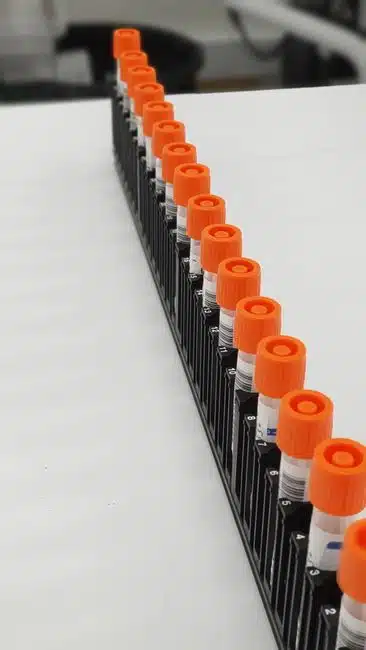
The Organic Acids Test (OAT) is a urine-based metabolic assessment — Great Plains Laboratory’s version being the most widely used. It measures byproducts of cellular metabolism, gut bacteria fermentation, mitochondrial function, neurotransmitter pathways, and nutritional status. If the GI-MAP is a map of who’s living in the gut, the OAT is a readout of what they’re producing and how the mitochondria are functioning.
| Test | Method | Measures |
|---|---|---|
| GI-MAP | DNA-based stool test (quantitative PCR) | Bacteria, viruses, parasites, H. pylori, fungi, zonulin, calprotectin, secretory IgA |
| Organic Acids Test | Urine-based metabolic assessment (~70 markers) | Mitochondrial function, neurotransmitter pathways, gut fermentation byproducts |
The panel runs across roughly 70 markers, grouped into clusters that each tell a different part of the story. The yeast and fungal cluster centers on arabinose, a sugar alcohol that’s elevated when Candida species are overgrown in the gut. William Shaw, the biochemist who built much of the OAT’s original marker panel at Great Plains, published research showing arabinose inhibits transketolase — an enzyme in the pentose phosphate pathway involved in cellular energy production — which is the proposed mechanistic link between candida overgrowth and the brain fog patients frequently report alongside it. Tartaric acid and citramalic acid, also fungal metabolites, round out that cluster.
The bacterial metabolite cluster is where things get genuinely strange, and it’s arguably the most clinically underused part of the OAT. HPHPA — 3-(3-hydroxyphenyl)-3-hydroxypropionic acid — is a metabolite produced by certain Clostridia species. Shaw’s 2010 paper in Nutritional Neuroscience, looking at urine samples from patients with autism and schizophrenia, found elevated HPHPA correlated with the presence of psychiatric symptoms, and proposed a mechanism: HPHPA inhibits dopamine-beta-hydroxylase, the enzyme that converts dopamine to norepinephrine, functionally backing up dopamine in a way that’s been associated with agitation, tics, and mood dysregulation in case reports. It’s not a mainstream psychiatric finding — the research base is thin and mostly from one lab — but it’s a real, measurable, and actionable marker that conventional psychiatric workups never look for, and it illustrates something the OAT is good at: catching gut-bacteria-driven biochemical effects that show up nowhere else. 4-cresol and 4-hydroxyphenylacetic acid are other bacterial byproducts in the same cluster, generally rising alongside dysbiotic bacterial overgrowth.
The Krebs cycle and mitochondrial cluster measures citrate, cis-aconitate, isocitrate, alpha-ketoglutarate, succinate, malate, and the pyruvate-to-lactate ratio — intermediates of the pathway every cell uses to generate ATP. A pattern of elevated lactate relative to pyruvate suggests either mitochondrial dysfunction or thiamine (B1) insufficiency, since thiamine pyrophosphate is a required cofactor for the enzyme that converts pyruvate into acetyl-CoA before it enters the Krebs cycle proper. Specific block patterns — say, an isolated alpha-ketoglutarate elevation — can point toward B2, B3, or CoQ10 insufficiency, since those nutrients are cofactors at specific steps.
Then the neurotransmitter metabolite cluster: homovanillate (HVA, the breakdown product of dopamine), vanilmandelate (VMA, from norepinephrine and epinephrine), 5-hydroxyindoleacetic acid (5-HIAA, from serotonin), and quinolinic acid — a neurotoxic metabolite of the kynurenine pathway that rises under inflammatory conditions. Steiner and colleagues’ 2011 postmortem study, published in the Journal of Neuroinflammation, found elevated microglial quinolinic acid in the anterior cingulate gyrus of patients who had died by suicide during a depressive episode, and proposed that inflammation-driven kynurenine pathway activation — shunting tryptophan away from serotonin synthesis and toward quinolinic acid production instead — may be a distinct biological pathway into depressive symptoms, separate from straightforward serotonin deficiency. That’s a meaningful distinction, because it means two men with identical depressive symptoms could have entirely different underlying biochemistry, one needing serotonin support and the other needing inflammation addressed first.
Nutritional markers close out the panel — methylmalonate as a functional B12 marker (more sensitive than serum B12, which can look normal while methylmalonate is already elevated, indicating a true functional deficiency at the cellular level), formiminoglutamate (FIGLU) reflecting folate status, and pyroglutamate reflecting glutathione — the body’s master antioxidant — status. Alpha-hydroxybutyrate, a marker of oxidative stress and glutathione depletion, tends to run high in men under chronic physiological load, whether from poor diet, heavy training without adequate recovery, or ongoing infection.
How the Two Tests Are Actually Collected and Processed

The practical mechanics matter more than most comparison articles bother mentioning, because they affect compliance — and a test that doesn’t get collected properly produces garbage data regardless of how good the underlying science is.
GI-MAP requires a single stool sample, collected at home using a provided kit, then shipped back to the lab (typically overnight, sometimes with a cold pack depending on ambient temperature). The whole collection process takes about five minutes. Diagnostic Solutions recommends stopping certain probiotics and antimicrobial supplements 14 days before collection and avoiding recent antibiotic use if possible, since active antimicrobial exposure will suppress the very organisms the test is trying to detect — a false negative isn’t a flaw in the test, it’s a flaw in timing. Results generally take 10-15 business days.
The OAT requires a first-morning urine sample, which matters because overnight urine concentrates metabolites in a way that a random daytime sample doesn’t, improving signal-to-noise on markers that would otherwise be diluted by hydration status. Great Plains recommends avoiding high-dose vitamin C supplementation for 24 hours beforehand (ascorbic acid can interfere with several of the assay’s chemistry steps) and, similarly, stopping certain antifungal and antibacterial supplements that would suppress the metabolites being measured. Turnaround is typically 10-14 business days.
GI-MAP VS ORGANIC ACIDS TEST: WHICH TEST GIVES YOU BETTER INFORMATION
The differences between GI-MAP and Organic Acids Test go deeper than most surface-level comparisons suggest. A quick-reference table only gets you so far; the real decision-making information lives in the detailed breakdown that follows. Use the table for orientation, then read the analysis for the full picture.
DETAILED BREAKDOWN: WHERE EACH ONE WINS
What Each Test Actually Measures
GI-MAP measures specific biomarkers that provide direct information about a particular system or function. Understanding exactly what these markers represent — and what they don’t — prevents misinterpretation. Every test has a scope, and respecting that scope keeps conclusions from outrunning the data.
Concretely: GI-MAP tells you who’s living in the gut and how the gut’s structural and immune defenses are holding up. It will not tell you whether the mitochondria are producing energy efficiently, whether dopamine synthesis is bottlenecked, or whether B12 is functionally adequate at the cellular level even if serum B12 looks fine. Those questions live entirely outside GI-MAP’s scope — no amount of re-testing or re-interpreting a stool sample will answer them, because the sample doesn’t contain that information.
Organic Acids Test measures a different set of markers targeting different aspects of health. The overlap between these two tests is smaller than most people assume, which is why they’re complementary rather than competing. Knowing what Organic Acids Test uniquely reveals helps determine when it’s the better starting point for the investigation.
The OAT’s arabinose and clostridia markers do capture a downstream echo of gut dysbiosis — an overgrowth GI-MAP would also flag directly — but the OAT gets there through metabolic byproducts rather than direct organism detection, which means it can miss organisms that don’t happen to produce a distinctively elevated metabolite, and it can’t tell you the organism’s name, only that something fermentative is happening. Where OAT pulls ahead is everything downstream of the gut: mitochondrial function, neurotransmitter metabolism, detoxification capacity, and B-vitamin functional status — none of which GI-MAP touches at all.
Clinical Accuracy and Limitations
No test is perfect. GI-MAP has specific sensitivity and specificity characteristics that determine how much trust the results deserve. False positives, false negatives, and ranges that vary by lab and methodology all affect interpretation. A single test result is a data point, not a diagnosis. The best practitioners use test results alongside symptoms, history, and other data.
The specific caveat with GI-MAP’s qPCR methodology: it detects DNA, not necessarily live, active organisms. A dead pathogen that hasn’t fully cleared the GI tract can still show up as “detected,” which is one reason results are usually reported with a quantitative range (colony-forming-unit equivalents) rather than a flat positive/negative — low-level detection of an opportunistic organism within its reported “normal” range is common and often clinically irrelevant, while high-level detection outside the reference range is what warrants action. Blastocystis hominis is the classic example of this ambiguity: it shows up positive in a meaningful percentage of asymptomatic people, and whether a given positive result explains a given patient’s symptoms requires clinical judgment the test itself can’t provide.
Standard Blood Sugar Testing has its own accuracy profile with its own set of limitations — actually, that’s not this comparison. Organic Acids Test has its own accuracy profile with its own set of limitations. Understanding which results are highly reliable and which are merely suggestive helps avoid both over-treatment and under-treatment. Ask any practitioner who orders these tests what they consider the most and least reliable markers — good ones will be transparent about the limitations.
The OAT’s core limitation is specificity for some of its more novel markers. Calprotectin and methylmalonate have decades of validation behind their reference ranges. HPHPA and some of the fungal metabolites have a thinner research base — useful clinically, tracked by experienced practitioners, but not validated to the same rigor as, say, a fasting glucose test. A single elevated marker on the fringe of the panel shouldn’t drive an aggressive treatment plan on its own. It’s a lead to investigate, not a verdict.
Actionability of Results
The value of a test is measured by what can be done with the results. GI-MAP provides data that leads to specific, targeted interventions when abnormalities are found. The clearer the path from test result to action, the more valuable the test. Some markers suggest obvious next steps; others require additional investigation before action is warranted.
A confirmed H. pylori positive with cagA carriage and elevated calprotectin has an almost direct line to treatment — typically a combination antimicrobial protocol (whether pharmaceutical triple therapy or an herbal alternative like mastic gum and berberine, depending on the practitioner’s philosophy), followed by retesting at 60-90 days to confirm clearance. A parasite hit is similarly direct. Low keystone species with high opportunistic bacteria is murkier — it usually points toward a broader gut-rebuilding protocol (fiber diversity, fermented foods, targeted probiotic strains, sometimes a course of an antimicrobial botanical) rather than a single clean intervention, and it takes longer to resolve.
Organic Acids Test produces its own set of actionable data. Some results point directly to specific interventions; others serve as red flags that warrant deeper investigation. The best use of any test result is within a clinical context where a qualified practitioner translates numbers into a personalized plan rather than a generic supplement protocol.
Elevated arabinose with a matching symptom picture (brain fog, sugar cravings, skin issues) has a fairly direct antifungal protocol attached to it. Elevated quinolinic acid is murkier — it flags a kynurenine pathway shift worth investigating, but the actual intervention depends on what’s driving the underlying inflammation, which the OAT alone can’t identify. That’s a case where pairing OAT findings with inflammatory bloodwork (hs-CRP, IL-6 if available) sharpens the picture considerably.
Cost and Accessibility
The cost of GI-MAP, including the consultation needed to properly interpret results, represents a real investment. Consider not just the sticker price but whether insurance covers any portion, whether the test needs to be ordered by a practitioner, and whether follow-up testing will be needed to track changes. Factor in the cost of any interventions the results suggest.
The test itself typically runs $300-400 through a functional or integrative practitioner, plus whatever the consultation costs to interpret it — often another $150-300 for a dedicated results review. It requires a practitioner order in most states; Diagnostic Solutions doesn’t sell direct-to-consumer. Insurance essentially never covers it, since it’s coded as a non-covered functional test rather than a standard diagnostic.
Organic Acids Test has its own cost structure. Direct-to-consumer options may be cheaper but lack the clinical interpretation that makes results actionable. Practitioner-ordered tests cost more but come with guidance on what the numbers mean and what to do about them. For most men, the interpretation is worth more than the test itself.
Great Plains Laboratory’s OAT runs $300-350, similarly requiring a practitioner order for full interpretation, though some direct-to-consumer labs offer stripped-down organic acids panels without the full 70-marker breadth. Those cheaper versions tend to skip the more clinically interesting bacterial and neurotransmitter metabolite clusters, keeping mostly the nutritional and mitochondrial markers — worth checking exactly what’s included before assuming a discount panel covers the same ground.
When to Re-Test
Tracking changes over time multiplies the value of GI-MAP. A single snapshot gives a baseline; serial testing shows trends, treatment response, and whether interventions are working. The optimal re-testing interval depends on what’s being tracked and what interventions have been implemented. Most markers need 60-90 days to reflect meaningful change.
Pathogen clearance (parasites, H. pylori, bacterial overgrowth) is usually retested at 60-90 days post-treatment to confirm eradication, since some organisms shed inconsistently and a too-early retest can produce a false negative. Dysbiosis rebuilding — shifting the balance of keystone versus opportunistic species — moves more slowly and is often not retested for four to six months, since meaningful microbiome shifts genuinely take that long to stabilize.
The re-testing cadence for Organic Acids Test depends on similar factors but may differ based on the biological half-life of what’s being measured. Some markers change quickly; others require months. Understanding these timelines prevents premature re-testing (wasting money) and delayed re-testing (missing important trends).
Yeast and bacterial metabolites can shift within 30-60 days of a targeted antimicrobial protocol. Nutritional markers (B12, folate, glutathione status) typically need 60-90 days to show meaningful movement, since they reflect accumulated cellular status rather than something that turns over daily. Neurotransmitter metabolites are the slowest to normalize meaningfully and are usually left for a 90-120 day retest window.
STRENGTHS AND WEAKNESSES OF GI-MAP
Strengths:
- Directly measures the markers most relevant to its target system
- Provides specific data that leads to targeted interventions
- Well-established in functional and integrative medicine
- Results are interpretable with proper clinical context
Weaknesses:
- Limited to its specific scope — doesn’t reveal everything
- Interpretation requires a qualified practitioner
- Cost can be prohibitive without insurance coverage
- Single test represents a snapshot, not a trend
STRENGTHS AND WEAKNESSES OF ORGANIC ACIDS TEST
Strengths:
- Reveals a different dimension of health data
- May catch issues that the alternative test misses entirely
- Useful as both a standalone and complementary assessment
- Growing evidence base supporting clinical utility
Weaknesses:
- Own set of accuracy limitations and potential for misinterpretation
- Cost is an investment that needs to produce actionable information
- Quality of results varies by lab and methodology
- Requires clinical context to avoid over-treatment based on isolated markers
The Gut-Brain Connection: Why These Two Tests Often Need Each Other
Here’s the part that gets skipped in most comparison content, because it complicates the “just pick one” framing that sells better. The gut and the metabolic markers the OAT tracks aren’t separate systems. They’re feedback loops.
Roughly 90% of the body’s serotonin is synthesized in the gut, not the brain, largely by enterochromaffin cells that respond to signals from the gut microbiome itself. Certain bacterial species directly influence tryptophan availability — the amino acid precursor for serotonin — by either metabolizing it for their own use or producing metabolites that shift it down the kynurenine pathway (the same pathway that produces the quinolinic acid discussed above) instead of toward serotonin synthesis. Dysbiosis identified on a GI-MAP, in other words, can be mechanistically upstream of an abnormal neurotransmitter metabolite pattern on an OAT. Fix the gut, and the OAT markers sometimes normalize on their own without ever touching a neurotransmitter-specific intervention.
This is why a lot of experienced functional practitioners run GI-MAP first, address whatever dysbiosis or pathogens turn up, and then run OAT only if symptoms persist afterward — using the second test to identify whatever wasn’t explained by the gut work alone. Running both simultaneously at the outset isn’t wrong, but it can produce a confusing pile of data when a chunk of the OAT abnormalities were actually downstream effects of a gut problem that was about to get fixed anyway.
WHEN TO CHOOSE GI-MAP
Dominant digestive symptoms — bloating, IBS, reflux, chronic diarrhea or constipation, or a suspicion of H. pylori or parasites — point straight at the GI-MAP. It gives a direct window into the environment causing the symptoms.
Prioritize GI-MAP when the primary symptoms align with the system it measures, when a qualified practitioner recommends it based on the clinical picture, or when baseline data is needed before starting a targeted intervention. Also choose GI-MAP first if symptoms are more localized to the specific area it assesses, since starting with the more targeted test often saves time and money.
Specific red flags that push a practitioner toward GI-MAP over OAT: symptoms that started or worsened after travel to a region with higher parasite exposure, a history of food poisoning that never fully resolved, bloating that correlates tightly with meal timing, or blood or mucus in stool (which warrants a conventional GI workup first, full stop — GI-MAP is not a substitute for ruling out structural disease via colonoscopy when there are red-flag symptoms like these).
WHEN TO CHOOSE ORGANIC ACIDS TEST
More systemic symptoms — fatigue, brain fog, mood dysregulation, anxiety, insomnia, or a gut that’s already been addressed with no relief — make the OAT the better starting point. It reveals metabolic dysfunction that stool tests cannot capture.
Prioritize Organic Acids Test when symptoms are more diffuse or systemic, when GI-MAP has already been run without explaining the full picture, or when a practitioner suspects involvement of the systems Organic Acids Test specifically measures. Also choose Organic Acids Test to complement existing test data with a different perspective on the underlying health picture.
Specific patterns that push toward OAT first: fatigue that doesn’t track with sleep quality, cognitive symptoms (brain fog, poor focus, word-finding trouble) without a clear digestive trigger, a family or personal history suggesting mitochondrial or methylation issues, or a man who’s already done a gut protocol elsewhere and plateaued. Persistent low energy after normalizing sleep, training load, and basic bloodwork (thyroid, ferritin, vitamin D) is one of the more common reasons practitioners reach for an OAT — it’s often the test that finally explains why a man who’s doing everything “right” still feels like he’s running on 60%.
COMMON MISTAKES MEN MAKE WITH THIS DECISION
- Ordering tests without a clear clinical question. Testing everything available is expensive and often produces incidental findings that create anxiety without improving health. Start with the symptoms, form a hypothesis, and order the test that best evaluates that hypothesis. Targeted testing produces better outcomes than shotgun panels. Dale, the guy from the intro, almost did this — nearly ordered a full hormone panel, a heavy metals test, and both gut tests at once before his practitioner talked him down to just the GI-MAP first. Good call. It answered the question.
- Interpreting results without professional guidance. Lab ranges, methodology differences, and the interplay between markers require trained interpretation. Self-diagnosing based on Google and a test result can lead to unnecessary supplementation, missed diagnoses, and wasted money. Invest in the interpretation, not just the test. A GI-MAP with six mildly elevated opportunistic bacteria and no pathogen looks alarming to an untrained eye and is, in a lot of cases, an unremarkable dysbiotic pattern that responds to diet and time — not a reason to start three simultaneous antimicrobial herbs.
- Testing once and never following up. A single test result is a starting point, not an endpoint. The real value emerges from tracking changes over time — after dietary changes, supplementation, or lifestyle interventions. Budget for at least one follow-up test 60-90 days after intervention.
- Treating every positive result as equally urgent. A low-level Blastocystis detection within reported range and a high-level Cryptosporidium detection are not the same category of finding, but a man reading his own results for the first time will often panic at both equally. This is the single most common reason men over-treat — hitting a mild dysbiosis pattern with the same three-month aggressive antimicrobial protocol that a confirmed pathogenic infection would warrant, which can do more harm than good by wiping out the keystone species along with everything else.
HOW TO MAKE THIS DECISION FOR YOURSELF
Start with the symptoms, not the test menu. Write down the top 3-5 health complaints. For each one, ask: would this test directly measure something that could explain this symptom? The test with the most direct line to the dominant complaints is the one to order first.
If working with a practitioner, ask them to explain their reasoning for recommending one test over the other. Good practitioners will connect the test to the specific clinical picture and explain what they expect to find and how they’d act on different results. A practitioner who can’t articulate this may be ordering tests by habit rather than clinical reasoning.
Budget also matters practically. If one test is affordable now and another in three months, start with the one most likely to reveal actionable findings based on the current symptom pattern. Use those results to guide treatment, then re-evaluate whether the second test is still necessary. Sometimes the first test reveals enough to direct treatment effectively.
MAKING TEST RESULTS ACTUALLY USEFUL
A test result without context is just a number. The value of either GI-MAP or Organic Acids Test depends entirely on what happens with the information afterward. Before ordering any test, have a plan: if the result shows X, do Y; if it shows Z, do W. That decision tree is what turns testing from data collection into a decision-making tool. Without it, the result is expensive information that gathers dust.
Reference ranges on lab reports are population averages, not optimal ranges. A result that falls within the normal range can still indicate suboptimal function. This is where working with a practitioner who understands functional ranges, not just pathological ones, makes a meaningful difference. The gap between normal and optimal is where most preventable health decline happens.
Track results over time. A single test gives a snapshot. Serial testing, every 3-6 months, reveals trends that are far more informative than any single data point. A marker within range but trending the wrong direction warrants attention before it becomes a problem. A marker that was flagged but is improving confirms the intervention is working. Trends tell the story that snapshots miss.
Budget realistically. The test itself is only part of the cost. Factor in practitioner consultation for interpretation, follow-up testing to confirm results or track progress, and the cost of any interventions the results suggest. A $400 test that leads to a $200 consultation and $100 per month in targeted supplementation for six months is a $1,200 commitment. Know this going in and make sure the potential value justifies the investment.
Dale’s version of this cost about $1,400 all in — the GI-MAP, two consultations, three months of targeted antimicrobial herbs and a rebuilding protocol, and a follow-up retest. His bloating resolved almost completely by week seven, though it took a genuinely irritating flare-up around week four (a die-off reaction, the practitioner called it, from the antimicrobials working) before it got better. He didn’t need the OAT. The gut work explained the whole picture. That’s not always how it goes — plenty of men need both — but it’s a reasonable illustration of what “start with the test that answers the actual question” looks like in practice.
THE BOTTOM LINE: LET YOUR SYMPTOMS GUIDE THE DECISION
In an ideal world, run both. They’re complementary, not competing. But if budget forces a choice, follow the dominant symptom cluster. Many functional practitioners order the GI-MAP first, then the OAT if stool results don’t explain the full picture.
Let the symptoms guide the decision. If the primary complaints point toward one system, start with the test that directly measures that system. If the symptoms are broader or the first test comes back normal, the second test often reveals what was missed. For men who can afford both, running them together provides the most complete picture. But choosing just one means talking to a qualified functional medicine practitioner about which test best matches the specific clinical picture. The right test at the right time is worth ten times the wrong test ordered out of curiosity.
References
Editorial StandardsCorrectionsMedical DisclaimerAbout Our ContentAffiliate DisclosureSite Map