
Anna could fold herself nearly in half at the hips. Six years of yoga, and on every seated forward fold she’d sail well past her toes without much effort. When hip pain showed up during running, her first instinct was the obvious one: stretch more. Her physical therapist’s assessment told a different story entirely.
“You’re extremely flexible,” the therapist said, “but your hip abductors can barely activate at the end of your range. You’re moving into positions your muscles can’t control. That’s what’s hurting you.”
Anna had plenty of flexibility. Almost no mobility, in the technical sense that actually matters. A distinction she’d never once heard of had been quietly generating her injury for months.

Time to fix that confusion for good.
Flexibility vs. Mobility: The Critical Distinction
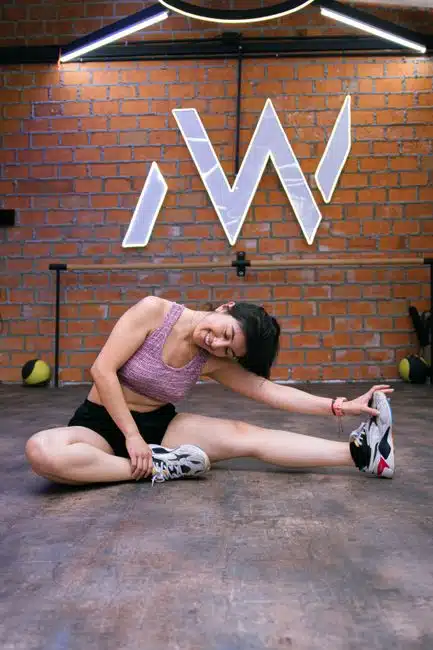
Flexibility is passive range of motion — how far a joint or muscle-tendon unit can be moved by an external force: gravity, a stretching partner, your own arms pulling a limb. It measures the mechanical properties of the passive tissues — muscle length, fascial extensibility, tendon compliance. A flexibility assessment tells you how far you can be moved.
Mobility is active range of motion plus the strength and neuromuscular control to move through that range purposefully. It measures what you can do with your joints, not what can be done to them. A mobility assessment tells you how far you can move yourself, under control, through a functional range.
This matters practically because the two don’t always travel together. Excellent passive flexibility can coexist with poor active mobility — Anna’s case exactly — where the passive tissues are long and compliant but the muscles lack the strength or neural recruitment to actually control movement through that range. Call it the hypermobile-unstable pattern: plenty of range, no control once you get to the end of it.
Flip side: limited passive flexibility with good functional mobility is entirely possible, if the available range, smaller than ideal as it might be, sits under complete active control. A gymnast and a powerlifter can both function beautifully in their sports with very different passive flexibility profiles, because their mobility — within whatever range they’ve got — is excellent and well-controlled.
Take a guy we’ll call Derek, a competitive powerlifter, 34, who could not come close to Anna’s forward fold. Hamstrings tight enough that a standard sit-and-reach test put him below the fifth percentile for his age group. Nobody would call him flexible. And yet his squat depth was excellent, his hip hinge mechanics were textbook, and he’d gone four years without a single soft-tissue injury in a sport that chews through backs and hips. His mobility — the active, controlled range he actually used — was superb, built entirely through years of loaded squatting, hinging, and pressing to full depth. His passive flexibility never budged. His functional capacity was elite regardless. That’s the distinction in a single side-by-side comparison: Anna’s tissue was long and her control was poor; Derek’s tissue was short and stiff and his control was total.
Here’s the practical translation. Stretching builds flexibility. It does not, on its own, build mobility. Building mobility takes training strength and control through the range you actually want to use — which requires different exercises than passive stretching. Specifically: active flexibility work, strength training through full ranges, and loaded mobility exercises that force the muscles to work at lengthened positions instead of just hanging out there.
“Flexibility without strength at end range is an injury waiting to happen. The body moves into a position where the passive structures are the primary restraints because the active muscles can’t do the job. When an unexpected load arrives in that position — a stumble, a slip, a sudden force — the passive structures absorb a load they weren’t designed to handle.”
The Static Stretching Myth: What Shrier’s Research Actually Shows

The research disagrees, and has disagreed consistently since the early 2000s. Ian Shrier’s 1999 systematic review in Clinical Journal of Sport Medicine, examining the evidence for stretching and injury prevention, found no reliable evidence that pre-exercise stretching reduces injury risk. What came after was even more damning: acute static stretching before exercise actively impairs performance.
The specific performance deficits are well-documented at this point.
Reduced force production: Muscles that have just been statically stretched produce less force for minutes to hours afterward. The effect is dose-dependent — longer stretches, more of them, bigger performance hit. Kay and Blazevich’s 2012 meta-analysis found static stretching held for more than 60 seconds significantly impaired maximum voluntary contraction force.
Reduced explosive performance: Jump height, sprint speed, change-of-direction speed — all measurably down immediately after static stretching. The mechanism runs through both the reduced force production and a likely impairment of stretch-shortening cycle function, the elastic energy storage-and-release system underneath most explosive movement.
Impaired proprioception: Static stretching transiently dulls the sensory feedback from muscle spindles and Golgi tendon organs — the receptors reporting joint position and muscle tension. Less proprioception, more injury risk, right after static stretching, because the body’s ability to respond to an unexpected perturbation just got worse.
Put it together and the picture is stark: pre-exercise static stretching doesn’t prevent injury, and it impairs the performance of whatever comes right after it. About the worst possible warm-up for nearly any physical activity you could name.
Behm and Chaouachi ran a broader 2011 review in the European Journal of Applied Physiology comparing static stretching, dynamic stretching, and combined warm-up protocols across dozens of studies, and the pattern held everywhere they looked — static stretching alone consistently underperformed dynamic alternatives on strength, power, and speed outcomes, with the deficit sometimes lasting up to an hour post-stretch depending on hold duration. McHugh and Cosgrave’s 2010 review in the Scandinavian Journal of Medicine and Science in Sports went further and questioned the entire premise that flexibility itself prevents injury, noting that some of the tissues most prone to strain injury — hamstrings, in particular — actually showed higher injury rates in athletes with greater flexibility in certain sports, likely because greater range without proportional strength puts the muscle-tendon unit under load in positions it isn’t equipped to control. The same pattern as Anna’s hip, just documented at scale.
One distinction worth holding onto, though: these findings apply to static stretching as an acute pre-activity intervention. They don’t mean stretching itself is worthless. Static stretching after exercise, as part of a cool-down, doesn’t impair anything — the performance is already done — and appears to support long-term flexibility gains, reduce post-exercise soreness, and feed into parasympathetic recovery. Regular static stretching in dedicated flexibility sessions, kept separate from performance training, does produce real long-term increases in passive range of motion.
Dynamic Warm-Up: What Actually Prepares the Body for Exercise
- General cardiovascular raise: 3-5 minutes of light aerobic activity (easy cycling, walking, light jogging) that raises heart rate and core temperature without fatiguing the muscles about to be trained.
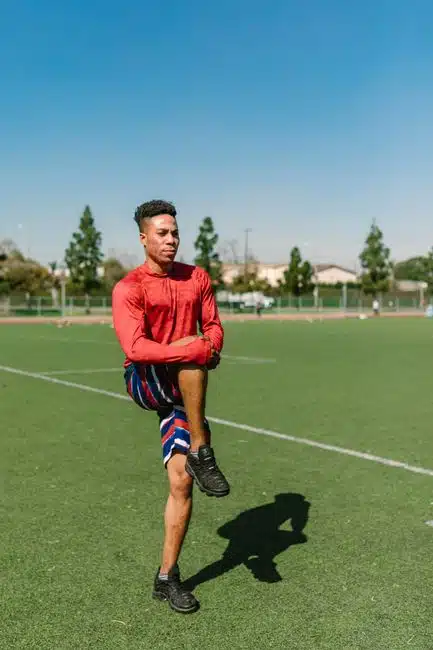
- Dynamic joint mobility: Movement through increasing ranges of motion for the joints involved in the upcoming training. Hip circles, leg swings, shoulder circles, thoracic rotations — movements taking joints through their full available range in a controlled, rhythmic pattern. These prep the joint surfaces and surrounding tissue for loading without the inhibitory drag of sustained static stretching.
- Movement-specific activation: Low-intensity versions of the primary movements about to be trained. Bodyweight squats before loaded squats. Pushup variations before bench press. Single-leg balance work before running. This primes the neuromuscular patterns and lets technique get established before load enters the picture.
- Progressive loading: Working up to training load through warm-up sets rather than starting cold at working weight. Particularly important for strength training — the warm-up sets aren’t wasted time, they’re valuable preparation that cuts injury risk and improves performance once the working sets start.
So if static stretching is the wrong warm-up, what does the evidence actually support? Dynamic warm-up — movement-based preparation that progressively ramps intensity toward training demands — is the clear evidence-based answer.
The physiological goals of a pre-exercise warm-up: raise core temperature (muscle contractile efficiency climbs with it), increase blood flow to working muscles, activate the neural recruitment patterns needed for the upcoming exercise, prime movement-specific neuromuscular patterns, and boost joint lubrication through synovial fluid. Dynamic movement hits every one of those. Static stretching hits none of them — and actively works against a few, through the performance-decreasing mechanisms above.
Effective dynamic warm-up components:
The dynamic warm-up is faster than a traditional static stretching warm-up, more effective at prepping the body for performance, and backed by research in ways static pre-activity stretching simply isn’t. Ten to fifteen minutes invested here pays immediate dividends in movement quality once training starts.
The Neuroscience of Why Passive Stretching Doesn’t Build Mobility
Worth getting into the mechanism, briefly, because it explains why so many years of diligent stretching can leave someone like Anna with a beautiful forward fold and an unstable hip. Two receptor systems govern how much a muscle resists being lengthened: the muscle spindle, which sits within the muscle belly and detects the rate and magnitude of stretch, and the Golgi tendon organ, which sits at the muscle-tendon junction and detects tension. When a muscle gets stretched quickly or beyond a certain threshold, the spindle triggers the stretch reflex — an involuntary contraction meant to protect the muscle from overlengthening. Hold a stretch long enough, and a separate mechanism, autogenic inhibition, kicks in through the Golgi tendon organ and temporarily relaxes the muscle, which is part of why a 30-second static hold produces more visible range than a quick bounce.
None of that builds strength. It’s a temporary neurological accommodation — the nervous system permitting more range, not the muscle developing more capacity to control that range. Once the accommodation fades (and it does, within hours), the underlying strength profile at end range is unchanged. This is the core reason static stretching alone produces flexibility gains that don’t transfer to functional mobility: the intervention operates almost entirely on the nervous system’s tolerance for stretch, not on the muscle’s ability to produce force once it’s there.
There’s a structural piece too. Muscle length is partly determined by sarcomere number — the number of contractile units arranged in series along a muscle fiber. Weppler and Magnusson’s 2010 review in Physical Therapy examined whether stretching interventions actually add sarcomeres (which would represent a genuine structural adaptation) or whether flexibility gains are purely the neurological tolerance changes described above. Their conclusion: most of the evidence pointed toward increased stretch tolerance rather than true tissue-level change from typical stretching protocols. Later work, including a 2021 study by Panidi and colleagues in Frontiers in Physiology using ultrasound to directly measure fascicle length and sarcomere number, found that resistance training through full range of motion — not passive stretching — produced measurable increases in fascicle length via serial sarcomere addition. In other words, the tissue actually got structurally longer under loaded training in a way passive holds didn’t reliably produce. That’s a fairly direct experimental confirmation of the loaded stretching approach covered further down.
Worth a brief detour here, because it comes up constantly: foam rolling and other self-myofascial release techniques operate through a similar mechanism to static stretching — temporary changes in stretch tolerance and possibly some transient reduction in muscle stiffness through neurological pathways, not lasting tissue remodeling. Beardsley and Škarabot’s 2015 review in the Journal of Bodywork and Movement Therapies found foam rolling reliably improves range of motion for roughly ten to twenty minutes without the performance decrements associated with static stretching, which makes it a reasonable pre-training tool, but the effect washes out quickly and doesn’t accumulate into durable mobility gains on its own. Useful as a short-term unlock. Not a substitute for the loaded work that actually changes what a joint can do under control.
The Mobility-Stability Paradigm: Gray Cook’s Contribution
Physical therapist and movement specialist Gray Cook developed the Functional Movement Screen (FMS) and, more broadly, a model for understanding how mobility and stability relate across different joints — a model that’s profoundly shaped athletic training and rehabilitation since.
Cook’s key insight: different joints need different combinations of mobility and stability, and the body functions well only when the right joint has the right quality. A joint that should be mobile but goes stiff forces the adjacent joints, the ones that should be stable, to provide mobility instead — which is how compensatory movement patterns start generating chronic pain and injury.
The alternating pattern runs from the ground up.
Ankle: Needs mobility — particularly dorsiflexion, the ability to bring the top of the foot toward the shin during a deep squat or during running. Restricted ankle dorsiflexion forces the knee to compensate with internal rotation and the lower back to compensate with extra flexion, generating knee pain and lumbar stress from what’s actually an ankle problem.
Knee: Needs stability. The knee is primarily a hinge and wants muscular stability rather than mobility to function well. “Knee mobility” complaints are usually stability deficits, or the downstream result of an ankle forcing the knee to compensate.
Hip: Needs mobility — particularly extension, abduction, and rotation. Restricted hip mobility is one of the most common drivers of lower back pain (the lumbar spine compensates for the hip restriction) and knee pain (the hip drops or rotates when it can’t extend fully, stressing the knee downstream).
Lumbar spine: Needs stability. The lower back shouldn’t be moving extensively at all — it should provide a stiff, neutral platform the hips move from. Restrict the hip, and the lumbar spine compensates by moving instead, generating chronic stress on lumbar structures.
Thoracic spine: Needs mobility — rotation and extension, specifically. A stiff thoracic spine, the desk-posture kind, forces the lumbar spine and cervical spine to compensate by generating excess motion, piling stress onto both regions.
Shoulder girdle: Needs stability. The glenohumeral joint has the biggest range of motion of any joint in the body, and it needs extraordinary rotator cuff and periscapular muscle strength just to function without getting hurt.
Cervical spine (neck): Needs mobility — extension and rotation especially. Chronic restriction here generates headaches and arm symptoms.
The practical application: before adding strength or flexibility work, figure out which joint in the chain is failing to provide its required quality. Training stability into a joint that needs mobility, or stretching a joint that needs stability, makes the dysfunction worse either way. Getting the right intervention at the right joint is the whole foundation of effective mobility training.
The Cook model isn’t just theoretical — the FMS built around it has been validated against real injury outcomes. Kiesel and colleagues published a 2007 study in the North American Journal of Sports Physical Therapy on professional football players, finding that a composite FMS score of 14 or below (out of a possible 21) predicted significantly higher odds of sustaining a serious injury during the following season. O’Connor and colleagues replicated the pattern in a 2011 study in the Journal of Strength and Conditioning Research with a military population, and a handful of subsequent studies across other athletic populations have found broadly similar associations, though the predictive strength varies by population and some later meta-analyses have been more cautious about how large an effect size to attribute to the screen alone. The consistent thread across the research, regardless of how tightly any single study nails the numbers: asymmetrical or restricted movement patterns, the kind the Cook model identifies joint by joint, associate with elevated injury risk. That’s the practical payoff of taking the mobility-stability distinction seriously rather than treating it as an academic curiosity.
Loaded Stretching: The Bridge Between Flexibility and Mobility
The most effective way to turn passive flexibility into functional mobility is loaded stretching — strength training movements performed through the full range of motion, including the end-range positions where the muscles are longest and under the most tension.
This approach, championed by sports scientists and trainers including Dr. John Rusin and Emmet Louis, sometimes goes by “active stretching” or “active flexibility training,” and it’s a fundamentally different approach to flexibility work than passive stretching.
Examples of loaded stretching, or active flexibility:
Deep squat with counterbalance: A goblet squat, or simply a weight held out front for counterbalance, to full depth, pausing at the bottom, actively pressing the knees out with the elbows — that creates a loaded stretch of the hip adductors, hip flexors, and ankle dorsiflexors all at once. The load forces the body to hold the position actively rather than collapse into it passively. That’s mobility, strength and control at end range, not just flexibility.
Romanian deadlift: Lowering the bar along the legs through a controlled hip hinge to the deepest position achievable with a neutral lumbar spine creates a loaded hamstring stretch. The eccentric loading during the descent actively lengthens the hamstrings under load, building length and strength together in a way passive hamstring stretching just doesn’t touch.
Bulgarian split squat: Rear foot elevated creates a deep hip flexor stretch on the rear leg while simultaneously demanding hip extensor strength on the front leg. This loaded, active hip flexor stretch produces mobility gains a lot faster than passive kneeling hip flexor stretches, because the muscles are actually forced to work at end range instead of just sitting there.
Overhead pressing with thoracic extension: Overhead press, dumbbell or barbell, through full range — shoulders traveling past the head, upper back extending — improves thoracic mobility and shoulder overhead range at the same time.
The principle underneath all of it: train strength through the full range of motion intended for use, reach full range on every single rep, and load the end-range positions progressively. That builds not just the passive tissue length of flexibility, but the active neuromuscular control that actually defines mobility.
One more mechanism worth naming: eccentric loading at long muscle length appears to be the specific stimulus responsible for most of the structural adaptation. A 2021 study by Warneke and colleagues, using a static stretching protocol that also incorporated an active loaded component, found stretch-mediated hypertrophy and range gains were considerably larger when the muscle was placed under tension at end range rather than simply held there passively. The nervous-system story from earlier — stretch tolerance, autogenic inhibition — explains why passive holds feel like they’re working in the moment. The structural story explains why the gains don’t stick unless the muscle is actually asked to produce force from that lengthened position. Loaded stretching does both at once, which is the entire reason it outperforms passive stretching for anyone whose goal is functional capacity rather than a number on a sit-and-reach test.
The Most Important Mobility Restrictions and How to Address Them
Specific mobility restrictions vary person to person, but a handful are common enough in modern sedentary populations to deserve dedicated attention.
Hip flexor restriction: The product of hours upon hours of sitting with hips in flexion. Tight hip flexors tilt the pelvis anteriorly, causing lumbar hyperlordosis and piling on lower back stress. They also limit hip extension during walking and running, cutting into propulsive force. Targeted interventions: kneeling hip flexor stretch, couch stretch, deep lunge with active hip extension, Bulgarian split squat training. The loaded approach gets faster, more durable results than passive stretching alone.
Ankle dorsiflexion restriction: Possibly the single mobility restriction with the biggest effect on squat mechanics, gait quality, and lower extremity injury risk. Limited dorsiflexion forces the heel to lift during squats, creating anterior knee stress; causes excessive pronation and internal tibial rotation during running; forces knee and lumbar compensation on the stairs. Targeted interventions: ankle circles, banded ankle mobilizations, elevated-heel exercises working toward full range, and calf stretching with the knee bent, to target the soleus specifically, which crosses the ankle but not the knee.
Thoracic extension/rotation restriction: Desk posture creates a chronically flexed thoracic spine that restricts both extension and rotation. Following the Cook model, that forces the cervical spine and lumbar spine to pick up the slack. Targeted interventions: thoracic extension over a foam roller at each spinal segment, seated thoracic rotation, cat-cow with emphasis on thoracic extension, and any exercise that demands overhead range — which requires thoracic extension as a prerequisite whether you plan for it or not.
Hip external rotation restriction: Limited ability to externally rotate the hip drags down running mechanics and squat depth, and contributes to knee valgus, the inward collapse, under load. Targeted interventions: seated figure-four stretch, 90/90 hip mobility work (sitting with both knees at 90 degrees in different planes), clamshell exercises for hip abductor activation, and single-leg balance work that demands hip stability and rotation control together.
Aging and the Mobility Cliff: Why This Matters More With Every Passing Decade
Mobility restriction isn’t just a young-athlete performance issue. It’s one of the more consequential predictors of functional decline with age, and the mechanism has a name: sarcopenia, the age-related loss of muscle mass and strength that accelerates measurably after age 40 and picks up further after 60. Cruz-Jentoft and colleagues, in the widely cited European Working Group consensus paper (updated 2019 in Age and Ageing), documented that Type II muscle fibers — the fast-twitch fibers most responsible for the strength and power needed to control a joint through end range under load — decline disproportionately compared to Type I fibers with age. Which means the specific capacity mobility depends on is precisely the capacity aging erodes first.
The practical consequence shows up as a narrowing base of usable range. An older adult doesn’t typically lose passive flexibility as dramatically as commonly assumed — plenty of sedentary 70-year-olds can still be passively moved through a reasonably large range by a physical therapist. What collapses first is the strength to actively use that range: to catch a stumble with a wide step, to rise from a low chair without pushing off the armrests, to reach overhead to a top shelf without compensating through the lower back. Reid and Fielding’s research at Tufts, published across several studies in the 2010s, demonstrated that resistance training targeting exactly these functional end ranges — not passive stretching — produced the largest gains in functional mobility measures (gait speed, chair-rise time, stair-climb power) in older adults. Passive flexibility programs alone, by contrast, showed minimal transfer to these functional outcomes.
This is the same Anna-and-Derek distinction playing out over decades instead of months. The person who spends their 40s, 50s, and 60s doing loaded mobility work — squatting to depth, hip-hinging under load, pressing overhead — is banking active control that will still be there at 75. The person doing gentle passive stretching alone is maintaining a range of motion their muscles may no longer be able to use when it actually matters, which is exactly the profile that shows up disproportionately in fall-related hip fracture statistics. The fall itself is rarely the root cause. The absent strength to catch it, at end range, under an unexpected load, is.
The Mobility Assessment Protocol: Framework
The Mobility Assessment Protocol offers a systematic approach for identifying specific restrictions before prescribing targeted work. The principle underneath it: mobility training without assessment is guesswork. Real time can go into addressing something that isn’t actually your limiting factor, while the true root cause of the movement dysfunction sits there untouched.
Step 1 — Overhead squat assessment: Stand feet shoulder-width, arms extended overhead. Squat as deep as possible while keeping the arms overhead and the feet flat. This single movement reveals ankle dorsiflexion, hip flexor, thoracic extension, and shoulder mobility restrictions all at once — each with its own characteristic compensation pattern. Heels rising: ankle restriction or hip flexor tightness. Forward lean: hip flexor tightness and/or thoracic restriction. Arms falling forward: thoracic extension or shoulder mobility restriction. Knee valgus, knees collapsing inward: hip abductor weakness and/or hip internal rotation restriction.
Step 2 — Hip flexor assessment (Thomas test): Lie on your back on a table edge, one leg hanging off. Pull the other knee to the chest. If the hanging leg lifts off the table, or the knee bends significantly, hip flexors on that side are restricted. This catches one of the most common causes of lumbar pain and gait dysfunction.
Step 3 — Shoulder rotation: Standing, reach one arm down the back (internal rotation) and the other up the back (external rotation), trying to touch the hands together. The gap between the hands, compared side to side, flags rotational asymmetry. Marked asymmetry in external rotation combined with shoulder pain during overhead pressing suggests posterior shoulder capsule restriction or rotator cuff weakness worth specific attention.
Step 4 — Ankle dorsiflexion: Standing, big toe 4 inches from a wall. Try to touch the knee to the wall without the heel lifting. Can’t do it? Restricted ankle dorsiflexion, and it will show up in squat depth and gait mechanics both.
Step 5 — Active vs. passive range comparison: Wherever passive range is significantly greater than active range, mobility training — active strengthening at end range — is the priority. Where both passive and active ranges are limited, a combination of passive stretching and active mobility work makes sense.
Use the assessment results to prioritize the work. Address whatever’s limiting the primary training goals first, then move to the secondary restrictions. Reassess every 4-6 weeks to track progress and adjust priorities as things shift.
Integrating Mobility Work: When and How Much
The most common mistake with mobility work is treating it as a separate, occasional activity instead of building it into the training structure and daily life.
Daily mobility practice (5-10 minutes): Brief targeted work on the primary restriction areas beats occasional longer sessions. The nervous system adapts through repeated exposure, not marathon flexibility sessions. Five minutes of daily hip flexor and thoracic mobility work outperforms one 40-minute session once a week, over the long run.
Pre-training dynamic mobility (10-15 minutes): The dynamic warm-up from earlier should include specific mobility work for whatever joints that day’s training involves. Hip mobility work ahead of lower body training, shoulder mobility ahead of upper body training, thoracic work ahead of any compound movement.
Post-training static stretching (10-15 minutes): The right time for passive stretching. Performance decrements from static stretching are temporary — one to two hours — so post-training stretching carries no performance cost and may contribute to long-term flexibility gains and post-exercise recovery.
Mobility snacks throughout the day: Brief mobility interventions, two or three minutes, during work breaks counter the postural effects of sustained sitting without needing a formal session. A quick hip flexor stretch at a standing desk, thoracic extensions over a chair back, calf stretches during a phone call — these add up to meaningful exposure across a day.
A sample weekly structure for someone training three to four days a week: Monday, lower-body training day, opens with 10 minutes of hip and ankle dynamic mobility before the working sets, and closes with 5 minutes of static hip flexor and hamstring stretching. Tuesday, a rest or light day, gets a standalone 10-minute mobility session targeting whatever the Step 5 assessment flagged as the biggest active-passive gap — usually hip flexors or ankles for someone who sits most of the day. Wednesday, upper-body training, mirrors Monday’s structure with shoulder and thoracic mobility instead of hip and ankle. The daily mobility snacks run every day regardless of what’s on the training calendar, since they cost almost nothing and target the postural restriction that accumulates from sitting whether or not a formal session happened that day. This isn’t a rigid template — the point is that mobility work gets distributed across the week in small, consistent doses tied to what’s already being trained, rather than bolted on as an occasional 45-minute yoga class that has to fight years of restriction in one sitting.
Five Mistakes That Keep Mobility Training From Working
1. Chasing range instead of control. The sit-and-reach test, the splits, the ability to plant palms flat on the floor — these are flexibility milestones, and they feel like progress because they’re visible and measurable. Chasing them without the corresponding strength work produces exactly Anna’s problem: range the body can’t actually use safely. If a stretch goal isn’t paired with a strength goal at the same range, the training plan is incomplete.
2. Static stretching cold, right before performance. Covered above in detail, but it bears repeating because it’s still the default habit at most gyms and on most sidelines: static holds before the activity they’re meant to prepare for reduce force output and explosive performance for the immediate session. Save the static holds for after.
3. Treating mobility as a warm-up afterthought instead of programmed training. Five minutes of half-hearted arm circles doesn’t move the needle on a restriction that took years to develop. Mobility work that actually changes tissue and neuromuscular control needs the same programming logic as strength training — progressive overload, consistency, and specific targeting of the actual restriction, not generic “stretch everything” routines.
4. Ignoring the assessment and guessing. Working hip mobility for months when the actual limiter is ankle dorsiflexion wastes the time invested and leaves the real restriction untouched, quietly generating compensation patterns the whole while. The five-step assessment above takes fifteen minutes. Skipping it in favor of whatever exercise looked good on social media is how people end up, like Anna, doing the wrong work diligently for years.
5. Overcorrecting hypermobility with more stretching. Genuinely hypermobile individuals — plenty of range already, often more than needed — who respond to joint pain or instability by stretching more are pouring gasoline on the fire. The intervention that actually helps in that population is strength and stability work, not further range. Covered in more detail in the FAQ below, but worth flagging here as its own category of mistake, since it’s the mirror image of the standard advice and catches a lot of naturally flexible people off guard.
Reader Questions About Mobility Flexibility Distinction
- What is the difference between flexibility and mobility? Flexibility is passive range of motion — how far a joint can be moved by an external force. Mobility is active range of motion plus the strength and neuromuscular control to move through that range purposefully. Flexibility tells you how far you can be moved; mobility tells you how far you can move yourself with control. Both matter, but mobility is more relevant for athletic performance and injury prevention.
Flexibility Mobility Definition Passive range of motion — how far a joint can be moved by external force Active range of motion plus the strength/control to move through it purposefully Tells you How far you can be moved How far you can move yourself with control More relevant for General range of motion Athletic performance and injury prevention - Does stretching before exercise prevent injury? No — static stretching before exercise does not reduce injury risk and actually impairs performance (reduces force production, explosive output, and proprioception) for the subsequent activity. Dynamic warm-up — progressive movement-based preparation — is the evidence-based alternative. Post-exercise static stretching is appropriate and may support long-term flexibility gains.
- How do you improve mobility, not just flexibility? Build strength through the full range of motion you want to use. Loaded stretching — strength training exercises performed to end range, including pausing at end range positions under load — is the most effective method for converting passive flexibility into functional mobility. Passive stretching builds tissue length but not the neuromuscular control that defines mobility.
- What is the most important mobility exercise? Context-dependent based on individual restrictions, but the deep squat to end range (with counterbalance if needed) is one of the most comprehensive mobility assessments and training exercises. It requires and trains ankle dorsiflexion, hip flexion and rotation, and thoracic extension simultaneously. If you can perform a deep squat with feet flat and arms overhead, you have excellent lower-body mobility in the most important movement pattern.
- Does yoga improve mobility? Yoga builds passive flexibility and some active flexibility, particularly in well-designed yoga practices that include strengthening components. The limitation is that many yoga practices emphasize passive flexibility (using gravity and breath to move into stretched positions) without the loaded end-range training that builds functional mobility. People with high yoga-derived flexibility may still have limited mobility — like Anna — if their practice hasn’t included building strength at end range.
- How long does it take to improve mobility? Neural adaptations occur quickly — improved motor control and confidence moving through a range can occur within days to weeks of consistent practice. Tissue changes (increased muscle extensibility, changes in fascial properties) require weeks to months. Meaningful mobility improvements are typically noticeable within 4-8 weeks of consistent targeted practice. Significant restriction that has been present for years may take 3-6 months of consistent work to meaningfully change.
- What is the most common mobility restriction? Hip flexor tightness from prolonged sitting is arguably the most widespread restriction in modern populations, with the most significant downstream consequences for lower back health and movement quality. Ankle dorsiflexion restriction is a close second and has large effects on squat mechanics and gait quality. Both are largely a product of modern sedentary work patterns and both respond well to targeted mobility training.
- Should I stretch if I’m hypermobile? Hypermobile individuals (those with genetically high passive range of motion, often diagnosed with Ehlers-Danlos syndrome or joint hypermobility syndrome) typically benefit from the opposite of what is often prescribed: strengthening exercises and stability work rather than additional stretching. Adding more passive range to a joint that is already hypermobile without the muscular stability to control it increases injury risk. If you’re hypermobile, focus on building strength and control through your available range rather than increasing it further.
Anna eventually found her way to a coach who actually understood the mobility-flexibility distinction. She stopped stretching for thirty minutes a day and put that time into loaded hip exercises instead — Bulgarian split squats, single-leg RDLs, hip thrusts with a full glute contraction at end range. Eight weeks in, the hip pain from running was gone. Her passive flexibility hadn’t moved an inch. Her ability to control and generate force through her available range had transformed.
The irony: she’d been working on her movement quality for six years straight. Just the wrong quality — the one that felt virtuous, the toe-touching, the impressive-looking poses, instead of the one that actually determined whether her body could handle what she was asking of it.
Mobility isn’t a feel-good add-on to fitness. It’s a fundamental determinant of movement quality, injury resistance, and the physical capability training is supposed to build in the first place. Get the distinction right — passive range and active control are different things, and they need different interventions — and it changes everything about how warm-up, flexibility work, and physical preparation should actually be approached over the long term.
For the complete strength and movement framework, the companion articles on Strength Training for Longevity and Lower Back Pain and the McGill Protocol provide the adjacent context for building a body that moves well and lasts.
References
Editorial StandardsCorrectionsMedical DisclaimerAbout Our ContentAffiliate DisclosureSite Map