
Daniel spent forty-two dollars on a bottle of magnesium glycinate that turned out to be mostly rice flour. “800mg” on the label. Sounded right. Except that number referred to the total capsule weight, not the magnesium content — the actual elemental magnesium was buried in fine print at 45mg per serving. One-tenth of what the label implied. He wondered for weeks why he wasn’t sleeping better, paying premium prices the entire time for a product that contained almost no active ingredient.
This isn’t a fringe case. The supplement industry operates under a regulatory framework that, compared to pharmaceutical manufacturing, is essentially the honor system. The FDA does not review or approve dietary supplements for safety or efficacy before they reach market. The burden of proof is reversed: products are assumed safe until the FDA proves otherwise after the fact. In this environment, the quality variation between manufacturers isn’t measured in percentage points. It’s measured in orders of magnitude.
Independent testing organizations that purchase supplements off store shelves and test them for label accuracy, contamination, and potency regularly find that 20-40% of randomly selected supplements fail to meet their label claims. Some contain less than half the stated active ingredient. Some contain none. Some contain contaminants — heavy metals, pesticide residues, pharmaceutical adulterants — not mentioned anywhere on the packaging.

The Regulatory Reality: Why Supplements Aren’t Drugs
Understanding why supplement quality varies so dramatically starts with understanding the regulatory gap between supplements and pharmaceutical drugs.
When a pharmaceutical company wants to sell a drug in the United States, it must submit clinical trial data demonstrating safety and efficacy to the FDA before the drug can be marketed. The FDA reviews that data, may require additional studies, and ultimately approves or rejects the application. Manufacturing facilities are inspected regularly and must comply with Current Good Manufacturing Practices (cGMP) that specify everything from raw material testing to equipment calibration to contamination prevention protocols.
When a supplement company wants to sell a product in the United States, it must notify the FDA of its intent for new ingredients, ensure the product is “safe,” and label it accurately. That’s the requirement on paper. In practice, enforcement is reactive — the FDA investigates after problems are reported, not before products hit shelves. Manufacturing inspections happen, but compliance is inconsistent, particularly for smaller manufacturers and contract manufacturers who produce products for multiple brands.
The Dietary Supplement Health and Education Act (DSHEA) of 1994 is the legislative foundation of this regulatory gap. Passed with heavy industry lobbying, DSHEA removed supplements from the pre-market approval requirement that drugs face, essentially classifying them as food ingredients rather than drugs. A calculated choice, and an enormously profitable one: the supplement industry grew from roughly $4 billion in 1994 to over $50 billion today, largely free from the regulatory constraints that govern pharmaceutical products.
The cGMP regulations for dietary supplements, implemented in 2007, did establish manufacturing standards. But these standards govern process, not outcomes. A cGMP-compliant manufacturer has documented procedures, trained employees, and clean equipment. It may still produce products that don’t match their labels if the raw material suppliers provided inaccurate or adulterated inputs and the manufacturer’s testing didn’t catch the discrepancy. The regulations create a floor, not a ceiling.
Third-Party Testing: The Gold Standard and What It Actually Tests
Third-party testing refers to independent laboratory verification of supplement contents, purity, and label accuracy by organizations with no financial stake in the outcome. It’s the most reliable proxy for quality available to consumers who can’t test products themselves, and understanding what the major certifications actually test is essential for using them intelligently.
USP (United States Pharmacopeia) Verified is among the most rigorous certifications available. Products bearing the USP Verified mark have been tested for: label claim accuracy (the product contains what it claims, at the stated potency), purity (absence of specified contaminants including heavy metals and microbiological contaminants), proper disintegration or dissolution (the product breaks down appropriately in the body), and manufacturing facility compliance with USP’s own manufacturing standards. USP conducts surprise inspections of manufacturing facilities and re-tests products annually. The verification is ongoing. Not a one-time stamp.
NSF International has two relevant certification levels. NSF Certified for Sport is specifically designed for athletes concerned about doping — it tests for the presence of over 270 substances banned by major sports organizations, in addition to testing label accuracy and contaminants. This is the certification that professional and elite athletes typically require. NSF/ANSI 173 is the standard supplement certification, testing for label accuracy, contaminants, and prohibited substances without the expanded sports-specific panel.
ConsumerLab is a subscription-based service that publishes test results for hundreds of supplements purchased off the shelf. Unlike USP and NSF, which grant certifications to manufacturers who pay for testing, ConsumerLab is adversarial — it buys products anonymously and publishes results regardless of outcome. Which makes it particularly useful for catching failures in name-brand products that might otherwise seem reputable.
Informed Sport and Informed Protein are UK-based certifications similar in scope to NSF Certified for Sport, and are well-respected in the global supplement market, particularly in Europe and Australia.
The key limitation of all third-party certifications: they test specific products at specific points in time. Manufacturing batches vary. A product that passed testing in 2023 may not reflect current production quality. Certifications are most valuable as indicators of a manufacturer’s consistent quality management culture — a company that pursues rigorous third-party certification and maintains it across years is demonstrating a systematic commitment to quality, not just a one-time achievement.
Proprietary Blends: The Information Red Flag
A proprietary blend is a combination of ingredients listed on a supplement label as a group under a single collective weight, without disclosing the individual amounts of each ingredient. You see the total weight of the blend — say, 850mg — and the list of ingredients in it. Not how much of each.
This matters because it makes quality assessment impossible. If a “testosterone support blend” lists zinc, ashwagandha, and fenugreek as a 500mg proprietary complex, there’s no way to know whether it contains 400mg of cheap zinc oxide and 50mg each of the other two — essentially useless amounts — or meaningful doses of all three. The blend weight tells you how heavy the pill is. Not whether the effective ingredients are present at doses that matter.
Proprietary blends exist for two stated reasons and one unstated reason. The stated reasons: protecting formulation secrets from competitors, and the logistical convenience of not reformulating labels when ingredient ratios shift slightly. The unstated reason: allowing manufacturers to include clinically validated ingredients at doses so low that they’re functionally inert, while still being able to feature those ingredients on the label. The industry has a term for this. “Label dressing” — using small amounts of compelling ingredients to justify marketing claims while filling the bulk of the product with cheap fillers.
A product that lists individual ingredient amounts is demonstrating transparency. A product using a proprietary blend is hiding something. The hiding might be a genuinely proprietary formulation worth protecting, but given the distribution of incentives in the industry, assume concealment until transparency is established.
One exception worth noting: some legitimate companies use proprietary blends not to obscure dosing but because their formulations involve patented complexes where the ratio itself is the intellectual property. In these cases, look for whether the company provides dose information upon request, whether the blend has been independently tested, and whether the manufacturer has a track record of third-party certification for other products.
Fillers, Excipients, and the Ingredients That Shouldn’t Be There
Every supplement contains something beyond the active ingredient. The capsule shell, the binder that holds a tablet together, the flow agent that prevents powder from clumping in manufacturing equipment — these are excipients, and their presence is unavoidable. The question is which excipients are harmless and which are worth avoiding.
Magnesium stearate is the most debated excipient in the supplement industry. It’s a lubricant used in manufacturing to prevent powder from sticking to equipment, and it’s found in the majority of supplements on the market. Critics claim it forms a biofilm in the gut that reduces absorption. The evidence for this claim in humans is weak to nonexistent at the trace amounts found in supplements — studies showing absorption effects used doses of magnesium stearate many times higher than typical supplement content. For most people, magnesium stearate in a supplement is a non-issue. The debate is largely manufactured controversy within the industry to allow “magnesium stearate-free” claims as a marketing differentiator.
Titanium dioxide is a different matter. This white colorant, used to make supplement coatings bright and uniform, has raised genuine toxicological concerns in recent years. Animal studies have shown nanoparticle titanium dioxide accumulating in tissues and causing inflammatory responses at relevant exposure levels. The European Food Safety Authority banned titanium dioxide as a food additive in 2022, citing uncertainty about genotoxicity. The United States has not followed suit, and titanium dioxide remains common in American supplements. This is one excipient worth actively avoiding — look for it in the “other ingredients” section of labels and choose alternatives when available.
Artificial colors (FD&C Red No. 40, Yellow No. 5, Blue No. 1, etc.) are unnecessary in supplements. They serve no functional purpose — they make pills look more appealing. Products using artificial colors are signaling that aesthetics matter more than clean formulation, which isn’t necessarily damning but suggests manufacturing priorities that favor appearance over ingredient quality.
Silica (silicon dioxide) as an anti-caking agent is generally considered safe. Cellulose-based capsules (HPMC or hydroxypropyl methylcellulose) are cleaner alternatives to gelatin capsules for vegetarians, with comparable dissolution characteristics. Rice flour as a filler is inert and common — harmless but worth noting when it constitutes a significant portion of capsule weight, as in Daniel’s case, where it displaced actual active ingredient.
GMP Certification: What the Stamp Actually Means
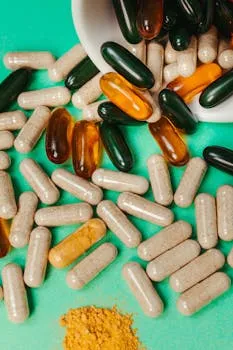
FDA GMP compliance for dietary supplements requires manufacturers to maintain written procedures, test raw materials for identity (confirming the ingredient is what the supplier says it is), test finished products for potency and purity, maintain sanitary manufacturing conditions, document everything, and investigate consumer complaints. Meaningful requirements. They represent a significant operational commitment for serious manufacturers.
The FDA conducts facility inspections to verify compliance. However, inspection frequency varies, smaller manufacturers may go years between inspections, and inspection results are not publicly reported in a consumer-accessible format. When you see “manufactured in a GMP-certified facility” on a label, you’re seeing a claim that the manufacturer has documented GMP-compliant processes — not necessarily that those processes have been recently audited and found to be functioning correctly.
NSF International offers GMP certification as a separate service from product certification. An NSF GMP certification indicates that the manufacturing facility has been inspected by NSF auditors and found to meet NSF’s manufacturing standards, which are more rigorous than FDA minimums. This is a more meaningful indicator than a self-declared GMP claim because it involves independent verification.
The hierarchy: NSF GMP certified facility > self-declared “manufactured in GMP facility” > no GMP claim. But facility quality is only part of the picture. A product can be manufactured in a state-of-the-art GMP facility using impure, mislabeled, or adulterated raw materials if the manufacturer’s incoming material testing protocols are inadequate. GMP certification must be combined with product-level third-party testing for a complete quality picture.
Heavy Metal Contamination: The Hidden Risk
Heavy metal contamination in supplements — primarily lead, arsenic, cadmium, and mercury — is one of the most serious and underappreciated quality issues in the industry. Not rare. Not limited to fly-by-night operators. And not detectable from labels or packaging.
The sources of heavy metal contamination in supplements are numerous. Herbal ingredients grown in contaminated soil absorb heavy metals through their root systems. Marine-sourced ingredients (fish oil, sea vegetables, shellfish-derived glucosamine) can accumulate mercury, lead, and arsenic from contaminated ocean environments. Mineral supplements can be sourced from industrial byproducts or poorly refined ores that contain heavy metal impurities. Even manufacturing equipment can introduce trace contaminants if it’s not properly cleaned or if it’s made from inappropriate materials.
The regulatory limits set by the FDA for heavy metals in supplements are less protective than California’s Proposition 65 standards, which is why California-labeled supplements frequently carry Prop 65 warnings for heavy metal content that meets federal standards. The practical implication: federal compliance doesn’t mean safe, particularly for products taken daily over long periods where cumulative heavy metal exposure adds up.
ConsumerLab’s testing regularly identifies supplements with heavy metal levels of concern, including products from established brands. Among the most commonly contaminated categories: protein powders (particularly chocolate-flavored products, where cocoa concentrates lead and cadmium), herbal supplements from Southeast Asian sourcing, calcium supplements (oyster shell calcium is a particularly common lead source), and sea-sourced minerals.
The practical defense: prioritize supplements that provide certificates of analysis (COAs) documenting heavy metal testing results for specific batches, or choose products with USP Verified or NSF certification that includes heavy metal testing in their protocols. For high-risk categories — herbal supplements, marine-sourced products, protein powders — third-party heavy metal testing is not optional if you’re taking these products daily for extended periods.
Reading Labels Like an Expert
The supplement label contains everything you need to make a quality judgment, if you know what to look for. Here’s the systematic read.
Start with the Supplement Facts panel — the equivalent of the Nutrition Facts panel on food products. Check that each active ingredient lists its specific form (magnesium glycinate vs. magnesium oxide, vitamin K2 as MK-7 vs. unspecified menaquinone), its amount per serving, and whether the amount is of the elemental mineral or the compound weight. The difference between 400mg of magnesium glycinate (containing roughly 50mg elemental magnesium) and 400mg elemental magnesium is a sevenfold difference in actual mineral content — both can legally appear on labels in ways that look similar to an uncritical reader.
Check the serving size and servings per container. A bottle labeled “90 capsules, one per day” is a 90-day supply. A bottle labeled “90 capsules, three per day” is a 30-day supply. Price comparisons that ignore serving sizes are comparing nothing meaningful.
Examine the “Other Ingredients” section after the Supplement Facts panel. This lists everything in the product that isn’t the active ingredient. Look for titanium dioxide (avoid), artificial colors (prefer to avoid), and unusual fillers that displace active ingredient. A short, recognizable list of excipients (cellulose capsule, rice flour, silica) is preferable to a long list of synthetic stabilizers and colorants.
Check for third-party certification logos and understand what each certifies, as described above. Check for the manufacturer’s name, address, and contact information — legally required on US supplements. Products without this information are violating federal labeling requirements and should be avoided entirely.
Look for lot numbers or batch numbers. A manufacturer that includes batch-specific identification is enabling traceability — they can recall specific batches if problems are identified, and you can request COAs for your specific batch. Supplements without batch identification are operating with less accountability.
The Supplement Quality Scorecard
The framework for assessing supplement quality operates as a scoring system. No single signal is definitive, but the combination creates a reliable quality picture across the full spectrum from unacceptable to excellent.
Automatic disqualifiers (fail on any single one): Proprietary blend with no individual doses disclosed. No manufacturer name or address. Pharmaceutical drug claims (“cures,” “treats,” “prevents” disease). No lot/batch number on container. Titanium dioxide as listed ingredient. Heavy metal content exceeding 100% of Prop 65 daily safe harbor limits.
Strong positive signals (+2 points each): USP Verified mark. NSF Certified for Sport or NSF/ANSI 173 certification. Published certificate of analysis available on manufacturer website with matching lot number. Manufacturer is vertically integrated (controls raw material sourcing, not purely reliant on contract manufacturers). Active ingredient specified as specific, bioavailable form (glycinate not oxide, MK-7 not “vitamin K2,” methylcobalamin not cyanocobalamin).
Moderate positive signals (+1 point each): Informed Sport certification. ConsumerLab “approved” rating for the specific product. NSF GMP-certified manufacturing facility. Short, clean excipient list. Individual ingredient doses fully disclosed (no proprietary blends). Established manufacturer with 10+ years of operation and no major FDA enforcement actions.
Moderate red flags (-1 point each): Self-declared “GMP certified” with no third-party verification. Proprietary blend for secondary ingredients (acceptable if major ingredients are disclosed). Artificial colors without functional justification. No third-party testing claims of any kind. Extreme price outliers below market rates for ingredients with established commodity prices.
Scoring interpretation: 6+ points = high confidence quality. 3-5 points = acceptable, worth using if no higher-scoring alternative available. 1-2 points = low confidence, seek alternatives. Any disqualifier = do not purchase regardless of other signals.
This scorecard won’t identify every substandard product — sophisticated fraud can pass initial label review. But it reliably identifies the vast majority of quality failures through signals that legitimate manufacturers avoid and fraudulent or negligent ones consistently exhibit.
Common Questions About Supplement Quality Spot
- Are expensive supplements always better quality? No, and the correlation is weaker than you’d hope. Some premium-priced supplements are premium quality. Others use premium pricing as a marketing signal to imply quality that their manufacturing doesn’t deliver. The price-quality relationship in supplements is best described as “low price is a reliable negative signal, but high price is not a reliable positive signal.” Below a certain price threshold, adequate quality is logistically impossible — raw material costs preclude it. Above that threshold, price tells you very little about whether the product was actually tested.
- Are store-brand supplements (Costco Kirkland, CVS, etc.) acceptable? Costco’s Kirkland brand supplements have historically performed well on third-party testing and USP verification — several Kirkland products carry USP Verified marks and have passed ConsumerLab testing. Not true of all store brands, but it demonstrates that house-brand pricing doesn’t preclude quality. Check whether the specific Kirkland product you’re considering has a USP Verified mark rather than assuming the Kirkland quality standard extends across all products.
- What do I do if a supplement I’m taking isn’t third-party tested? Request a certificate of analysis (COA) from the manufacturer directly. Reputable manufacturers produce COAs for every production batch and will provide them to consumers upon request. A COA should show testing for identity (this is the ingredient claimed), potency (it contains the stated amount), and purity (absence of specified contaminants). If a manufacturer can’t or won’t provide a COA, treat that as a significant red flag.
- Is Amazon a safe place to buy supplements? Amazon’s marketplace model creates genuine counterfeiting and diversion risks for supplements. Third-party sellers may list authentic-looking products that are counterfeit, expired, or improperly stored. The safest approach for supplements purchased through Amazon is to buy directly from the brand’s official Amazon storefront (not third-party resellers) or from the manufacturer’s own website. Prime fulfillment doesn’t guarantee product authenticity.
- Do I need to worry about Chinese-manufactured supplements? China is the world’s largest producer of supplement raw materials and a major contract manufacturer for global brands. Quality varies enormously — some Chinese manufacturers have international GMP certifications and supply major reputable brands reliably. Others are the source of the most severe adulteration and contamination problems identified in supplement testing. The “made in China” label is not itself disqualifying, but it increases the importance of verifying third-party testing and manufacturing certifications. Many American supplement brands use Chinese raw materials regardless of where the final capsules are filled.
- How do I find ConsumerLab results without paying for a subscription? ConsumerLab’s full database requires a subscription (approximately $50/year for individual access). One of the better value investments in the supplement space — a year’s worth of testing data can prevent multiple substandard product purchases that would cost more than the subscription. Alternatively, search “[supplement name] ConsumerLab results” — ConsumerLab occasionally publishes summary findings publicly, and results from their testing are frequently discussed in health journalism and forums where subscribers share findings.
- What’s the safest category of supplements from a quality standpoint? Single-ingredient minerals from established manufacturers with USP verification tend to have the lowest quality variance and the clearest testing criteria. Products like magnesium glycinate, zinc picolinate, and potassium citrate from USP-verified brands are straightforward to test and verify. Complex herbal blends, multi-ingredient formulas, and products from high-risk sourcing categories (marine-derived, Southeast Asian herbs, protein powders) carry higher quality uncertainty and require more rigorous vetting.
- Are pharmaceutical-grade supplements worth the premium? The “pharmaceutical grade” label on supplements has no regulatory definition and is essentially a marketing claim. It cannot be verified through any standardized certification process. The term sounds authoritative but means nothing specific. USP Verified, NSF Certified, and ConsumerLab-approved are the verifiable quality standards. “Pharmaceutical grade” without one of these is marketing copy.
Daniel’s magnesium solution turned out to be simple: he switched to a USP-verified magnesium glycinate with full ingredient disclosure, eliminated the proprietary-blend sleep support product he’d added unnecessarily, and started requesting COAs before buying any new supplement. Within a month he was sleeping through the night. Not because he’d found some exotic new ingredient — because he was finally taking what the label said he was taking, at the dose that had been shown to work.

The Supplement Quality Scorecard gives you the tools to stop subsidizing fraud. Use it every time you make a new supplement purchase, treat third-party certification as a non-negotiable threshold for categories where quality matters most, and remember that the forty-dollar bottle of rice flour is just as profitable for the manufacturer as the forty-dollar bottle of actual magnesium glycinate. You’re the only one who can tell the difference.
How to Investigate a New Supplement Brand
When you encounter a new supplement brand — from a recommendation, an advertisement, or a new product category you’re considering — a systematic five-minute investigation should precede any purchase decision.
Start with the FDA’s website. The FDA maintains a database of warning letters and enforcement actions against supplement companies. Search the brand name in the FDA warning letter database. A company with multiple warning letters for formulation fraud, adulteration, or false labeling is a brand to avoid regardless of current marketing claims. Companies that have received warnings and addressed them transparently are in a different category from repeat offenders.
Next, search the brand on ConsumerLab. Even without a subscription, the search results will tell you whether ConsumerLab has tested the specific product and whether it passed or failed. A failed ConsumerLab test is publicly reported and searchable, because ConsumerLab’s model depends on publishing failure results to maintain credibility with consumers.
Check the brand’s website for third-party certifications and COA availability. Legitimate manufacturers prominently display their certifications and often have a searchable COA portal where you can enter a lot number and access the testing documentation for that specific batch. If you can’t find COA information on a manufacturer’s website after two minutes of looking, it’s either absent or deliberately obscured. Neither is reassuring.
Look for the manufacturer behind the brand. Many supplement companies are marketing entities that contract out manufacturing to third parties. The question is who the contract manufacturer is, whether that manufacturer has NSF GMP certification, and whether the brand requires its contract manufacturer to test finished products for potency and purity. Some brands will provide this information transparently. Others won’t, which is itself informative.
Finally, search for independent reviews that specifically mention third-party testing. Supplement review sites that test products — not just review marketing materials — provide information that label analysis alone can’t. Examine Labdoor, which tests and grades supplements across multiple categories, and whose methodology is publicly documented enough to assess its reliability. Combine multiple information sources and your picture of a brand’s quality commitment becomes clearer than any single source can provide.
Pharmaceutical Adulterants: The Problem You Haven’t Heard Enough About
Among the most serious quality failures in the supplement industry is intentional adulteration with pharmaceutical compounds — actual prescription drugs hidden in supplements to enhance their marketed effects.
This practice is most common in sports performance, weight loss, and sexual enhancement supplements. The pattern is predictable: a manufacturer wanting to differentiate their “natural” product adds sildenafil (the active ingredient in Viagra) to their sexual enhancement supplement, sibutramine (a withdrawn weight-loss drug) to their fat burner, or anabolic steroids to their muscle-building product. The user experiences apparent efficacy from the pharmaceutical adulterant, attributes it to the natural ingredients, and keeps buying. The manufacturer profits until an adverse event triggers an investigation.
The FDA maintains a database of tainted supplement products — supplements that have been found to contain undisclosed pharmaceutical drugs. As of the mid-2020s, hundreds of products have been added to this database, many of them from brands that appear professional and market themselves as natural health companies. The database is searchable at FDA.gov and is worth consulting before purchasing products in high-risk categories.
High-risk categories for pharmaceutical adulteration: sexual enhancement supplements, weight loss products, pre-workout and sports performance products, muscle-building supplements, and sleep aids. Lower-risk categories: single-ingredient vitamins and minerals from established manufacturers with third-party testing. The risk is concentrated in products where consumers are seeking acute, measurable effects and manufacturers face strong commercial incentives to deliver perceptible results.
The defense is the same as for other quality failures: third-party testing by NSF Certified for Sport (which specifically tests for pharmaceutical adulterants), ConsumerLab testing, and avoidance of unverified products in high-risk categories. The NSF Certified for Sport certification was specifically designed with pharmaceutical adulteration detection as a primary goal — it tests for over 270 pharmaceutical substances and is the credentialing standard used by professional sports organizations for exactly this reason.
Bioavailability and Form: Why the Same Ingredient Isn’t the Same
Even when a supplement contains exactly what its label claims, in the exact amount stated, the quality of that ingredient can vary enormously based on its chemical form. This is a quality dimension entirely separate from testing and certification — it’s the question of whether the form of the ingredient you’re taking is actually well-absorbed and utilized by the human body.
Magnesium is the most illustrative example because the form difference is so large. Magnesium oxide — the cheapest and most common form in supplements — has approximately 4% bioavailability in studies using intestinal absorption measurements. Magnesium glycinate, malate, and citrate have bioavailability between 30% and 50%. This means that a supplement with 300mg of magnesium oxide delivers roughly 12mg of absorbable magnesium, while 300mg of magnesium glycinate delivers approximately 90-150mg. Same stated dose. Tenfold difference in what actually reaches your tissues.
Chromium similarly varies: chromium picolinate is well-absorbed; chromium chloride has poor bioavailability. Zinc picolinate and zinc citrate are superior to zinc oxide. Iron bisglycinate is gentler on the gut and better absorbed than ferrous sulfate. B12 as methylcobalamin or adenosylcobalamin is directly usable; cyanocobalamin requires conversion and contains a cyanide molecule (at harmless doses, but still). Folate as methylfolate bypasses MTHFR polymorphisms that affect roughly 40% of the population; folic acid does not.
The practical rule: when a supplement uses the cheapest, least bioavailable form of an ingredient, it is optimizing for cost, not for your health outcomes. When it uses the most bioavailable, best-studied form, it is incurring higher raw material costs in the service of efficacy. The form listed on the label tells you which priority the manufacturer chose. A quality label doesn’t just list “zinc” — it lists “zinc picolinate” or “zinc bisglycinate.” The specificity is the signal.
Form decisions are separate from certification decisions. A product can be USP Verified and use inferior forms — USP tests whether the product contains what it claims, not whether the claimed form is the most bioavailable option. Your quality assessment requires both: is the product verified to contain what it says (testing question), and does what it says represent the best-available form (formulation question)?
Together, these two assessments — verified testing and optimal form — define the quality ceiling for any supplement you buy. Neither alone is sufficient. Both together give genuine confidence that what you’re taking is real, is what it says it is, and is formulated to actually work in your body the way the research suggests it should.
In an industry where the default is opacity and the incentive is deception, the consumer who understands the Supplement Quality Scorecard, knows how to read a COA, and can identify inferior ingredient forms is playing a fundamentally different game than everyone else. Daniel figured this out the hard way — a hundred dollars and two months of poor sleep later. Nobody else has to learn it that way.
The Practical Framework: Applying Supplement Quality Spot Fakes In Real Life
References
Editorial StandardsCorrectionsMedical DisclaimerAbout Our ContentAffiliate DisclosureSite Map