
James wanted whiter teeth before his wedding. Ordered three different over-the-counter whitening kits, used all three aggressively over the same two weeks, and got exactly what he was after. Briefly. His teeth were noticeably whiter on the wedding day — bright, camera-ready, done. By the honeymoon they ached in the cold. Six months later he had visible translucency at the incisal edges, and his dentist used a word he’d never heard before: demineralization.
The teeth whitening industry generates over $3.7 billion annually in the United States alone. It’s one of the most aggressively marketed cosmetic dental procedures available, sold across virtually every retail channel with promises of dramatic results and no mention of the conditions under which those results come at the cost of your enamel. The reality: teeth whitening is safe when done correctly and dangerous when done incorrectly, and the margin between the two is smaller than most consumers realize.
How Teeth Whitening Actually Works
All effective teeth whitening relies on one of two oxidizing agents: hydrogen peroxide (H₂O₂) or carbamide peroxide (which breaks down into hydrogen peroxide and urea in the mouth). These agents penetrate through the enamel and dentin — both porous structures — and oxidize the chromogen molecules responsible for tooth discoloration. Chromogens are large organic compounds derived from colored foods (coffee, tea, red wine, berries), tobacco products, and some medications that accumulate within the enamel and dentin over time.
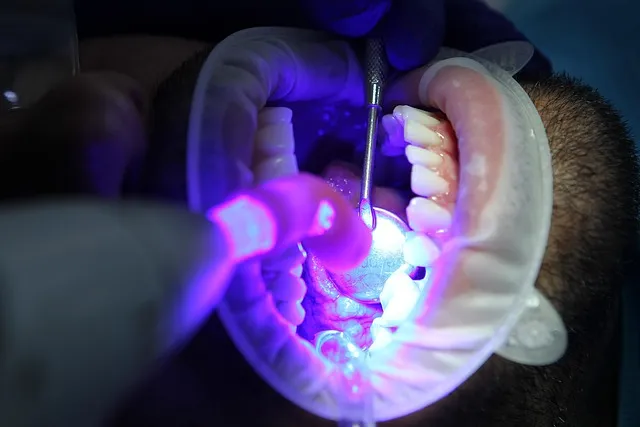
Concentration and contact time are the two primary variables determining both effectiveness and safety. Professional in-office whitening typically uses 25-40% hydrogen peroxide with short contact times (3 × 15 minutes, for example), often with light activation — though the evidence for light activation adding substantial benefit is weaker than manufacturers suggest. Professional at-home trays use 10-22% carbamide peroxide or 6-10% hydrogen peroxide in custom-fitted trays worn for 30-60 minutes or overnight. Over-the-counter products use 3-10% hydrogen peroxide in generic trays, strips, or paint-on formulas.
Enamel: The One Thing You Cannot Regenerate
Enamel is the hardest tissue in the human body — harder than bone. It’s also irreplaceable. Unlike bone, which has living osteocytes that can remodel and repair, mature enamel is acellular: the ameloblasts that produce it die after tooth eruption, leaving no cellular mechanism for enamel regeneration. This is the single most important fact about teeth whitening safety: any permanent enamel damage is exactly that. Permanent.
Whether hydrogen peroxide whitening agents damage enamel has been studied extensively, with conflicting results depending on concentration, contact time, baseline enamel mineralization, and salivary conditions during treatment. The current scientific consensus, summarized in a 2019 systematic review in the Journal of Dentistry, is that clinical concentrations of hydrogen peroxide used according to professional protocols produce temporary enamel surface changes (softening, increased porosity) that remineralize within 24-48 hours of exposure to saliva. Permanent enamel damage requires either very high concentrations (>30%), very prolonged contact, or use in a state of acid-softened enamel — immediately after acidic food or drink.
The high-risk scenarios for actual enamel damage: using whitening products immediately after consuming acidic foods or drinks (within 30-60 minutes, since acids temporarily soften enamel and increase its permeability to oxidative damage); using multiple whitening modalities simultaneously or in rapid succession; overusing strips or trays beyond recommended exposure time; and using products at concentrations higher than the label recommends in an attempt to accelerate results. James did several of these at once. His dentist’s “demineralization” assessment was accurate — and while much of it eventually partially remineralized over months, he has visible structural changes at his incisal edges that won’t reverse.
Hydroxyapatite: The Alternative That Supports Enamel
Nano-hydroxyapatite (nHAp) is a fundamentally different approach to tooth whitening — one that works through remineralization rather than oxidation. Hydroxyapatite is the mineral component of enamel and dentin. Formulated as nano-sized particles in toothpaste or whitening products, it integrates into the enamel surface, filling micro-cracks and surface irregularities that scatter light and create the appearance of yellowish or gray discoloration.
The whitening effect of nano-hydroxyapatite is milder than hydrogen peroxide whitening — it addresses surface characteristics rather than internal chromogen oxidation — but the risk profile is entirely different. It protects and strengthens enamel rather than potentially compromising it. Multiple studies have compared nHAp to fluoride toothpaste for remineralization and found comparable or superior remineralization capability. A 2019 randomized controlled trial published in the Journal of Clinical Dentistry found that nHAp toothpaste produced significant whitening improvements over 8 weeks compared to control, while fluoride control showed no whitening effect.
The practical application: nano-hydroxyapatite toothpaste (Boka, Davids Natural Toothpaste, Apagard Premio, Risewell) as a daily use product provides ongoing mild whitening, enamel support, and desensitization without any risk to enamel integrity. For people who want whitening without hydrogen peroxide, nHAp is the evidence-based alternative. For people chasing the maximum whitening effect from hydrogen peroxide, using nHAp toothpaste between whitening sessions supports enamel remineralization and reduces sensitivity.
The Sensitivity Problem: Why It Happens and How to Prevent It
Tooth sensitivity during and after whitening treatment is the most common adverse effect, affecting between 30-77% of patients in clinical trials depending on concentration and duration. Understanding the mechanism allows for prevention strategies that substantially reduce this barrier to comfortable whitening.
Hydrogen peroxide increases the permeability of dentinal tubules — microscopic channels that run from the dentin surface to the pulp, filled with dentinal fluid. Movement of this fluid (hydrodynamic theory of sensitivity) stimulates nerve fibers in the pulp, producing the sharp sensitivity to cold, heat, and pressure that characterizes whitening-induced sensitivity. The sensitivity is typically transient, resolving within 24-48 hours after treatment ends, but it can be severe enough to make a significant minority of patients quit treatment altogether.
Prevention strategies with meaningful evidence: potassium nitrate (the active in Sensodyne and similar products) depolarizes sensory nerve fibers in the pulp, reducing signal transmission. Using 5% potassium nitrate toothpaste twice daily for two weeks before beginning whitening pre-loads this desensitization. Continuing potassium nitrate use throughout the whitening protocol maintains nerve desensitization. Fluoride (in tooth mousse, varnish, or high-fluoride toothpaste) applied immediately after whitening sessions promotes enamel remineralization and reduces the window of enamel porosity during which sensitivity peaks. Nano-hydroxyapatite in the same application fills enamel irregularities and occludes dentinal tubule openings.
Professional application of calcium phosphate remineralizing paste (MI Paste or similar) immediately after whitening sessions is standard in advanced dental whitening protocols — a step omitted in virtually all OTC products. For people who’ve experienced significant sensitivity with whitening, pre-treating with remineralization for two weeks, whitening with lower concentration for shorter periods, and applying remineralizing paste immediately after each session is the sensitivity-minimizing protocol.
The Whitening Safety Protocol
The Whitening Safety Protocol is a framework for achieving meaningful whitening results while protecting enamel integrity and minimizing sensitivity — the two concerns most marketing materials either ignore or actively mislead consumers about.
- Baseline Assessment: Get a dental cleaning and examination before any whitening protocol. Whiten after cleaning, not before — tartar and surface staining are addressed by cleaning, not whitening agents. Your dentist should confirm you have no active cavities (hydrogen peroxide can penetrate cavitated enamel and cause pulp irritation), no exposed root surfaces (which lack enamel protection and are extremely sensitive to peroxides), and no significant enamel erosion from acid damage. Pre-existing issues must be addressed before whitening.
- Pre-treatment Preparation (2 weeks before): Switch to nano-hydroxyapatite or high-fluoride (5000 ppm prescription) toothpaste. Add potassium nitrate toothpaste for desensitization if previous sensitivity with whitening. Evaluate dietary acid exposure — reduce carbonated drinks, citrus, and acidic foods to baseline. This remineralization and desensitization preparation significantly improves both comfort and enamel resilience during the whitening phase.
- Whitening Phase — Appropriate Concentration Selection: For mild yellowing without sensitivity history: 6-10% hydrogen peroxide strips or OTC trays, used every other day rather than daily. For moderate discoloration with professional oversight: 15-22% carbamide peroxide in custom trays from a dentist, 30-60 minutes per day for 2 weeks. For maximum results with sensitivity management: professional in-office session followed by professional at-home tray continuation. Never use in-office concentration products at home, and never combine multiple whitening products at once.
- Post-whitening Remineralization: Apply MI Paste, nHAp toothpaste, or prescription fluoride immediately after each whitening session. Wait a minimum of 30 minutes before eating or drinking. Avoid colored foods and drinks for 48 hours after whitening — the enamel surface is temporarily more porous and more susceptible to re-staining. Continue potassium nitrate toothpaste for 48 hours after the last session.
- Maintenance: Whitening results last 1-3 years depending on dietary habits and oral hygiene. “Touch-up” whitening for 1-2 days every 6-12 months maintains results far more safely than annual full whitening protocols. Daily nHAp toothpaste maintains mild whitening effect between touch-ups. Reducing coffee, tea, and red wine exposure (or rinsing with water immediately after) slows chromogen re-accumulation.
“The people who are happiest with their whitening results five years later are the ones who were patient and methodical. The people who are unhappiest are the ones who whitened aggressively in the two weeks before their big event and never had their enamel’s opinion on the matter.”
What Doesn’t Work: Debunking Whitening Myths
The whitening market generates enormous income from products with minimal efficacy. Knowing what doesn’t work lets you allocate whitening spend appropriately instead of paying for interventions that were never going to move the needle.
Whitening toothpastes that don’t contain hydrogen peroxide or nHAp primarily work through abrasive polishing. They remove surface stain effectively (and some contain blue-light optical brighteners that create an immediate visual effect), but they don’t penetrate enamel to oxidize intrinsic chromogens. Good for maintaining results after whitening. Not going to achieve significant whitening on their own. Charcoal toothpaste is particularly problematic — activated charcoal is highly abrasive, removes surface stain through scratching, and may increase enamel roughness that accelerates new stain accumulation. Multiple dental associations have issued warnings against charcoal toothpaste.
The evidence for charcoal whitening is effectively zero, and the evidence for potential harm is accumulating.
Oil pulling with coconut oil has enthusiastic adherents and essentially no credible evidence for whitening. It may have mild antimicrobial benefits for gum health (weak evidence), but it has no chemical mechanism for pulling chromogens out of enamel. The whitening experience people report is more likely the clean mouth feeling from oil’s surfactant properties reducing surface debris — not actual enamel brightening.
Baking soda (sodium bicarbonate) has mild abrasive and mild whitening properties — it’s included in some whitening toothpastes for good reason. Used directly as a paste occasionally, it removes surface stain safely. Used aggressively as a daily abrasive, it progressively removes enamel surface. As a mild, occasional supplement to a proper whitening protocol, harmless. As a primary whitening approach, inadequate for meaningful results.
Internal Discoloration: When Whitening Won’t Help
Hydrogen peroxide whitening addresses acquired extrinsic and mild intrinsic discoloration from dietary chromogens. It cannot address several categories of discoloration that require different interventions.
Tetracycline staining — from tetracycline antibiotic use during tooth development (in utero through age 8-10) — creates gray or brown horizontal banding within the dentin that’s resistant to peroxide whitening. Whitening can improve mild tetracycline staining somewhat but rarely to the patient’s satisfaction. Porcelain veneers are the conventional solution for severe tetracycline staining.
Fluorosis (from excess fluoride ingestion during tooth development) creates white spots, brown staining, or surface pitting in the enamel that peroxide whitening may actually worsen by increasing contrast. Microabrasion (controlled enamel surface removal), resin infiltration (Icon), or veneers address fluorosis aesthetically.
Dead or traumatized teeth turn gray because of pulp necrosis and hemosiderin deposition from internal hemorrhage within the pulp space. External whitening has minimal effect here. Internal bleaching (placing bleaching agent within the root canal space) performed by an endodontist can lighten non-critical teeth, though with less predictable results than critical tooth whitening. Veneers or crowns are often the final solution for severely discolored non-critical teeth.
The Regulatory Landscape: What’s Permitted Matters
Hydrogen peroxide concentration regulations for OTC whitening products vary significantly by country, creating a global gray market in higher-concentration products purchased online from jurisdictions with less restrictive regulations. In the European Union, OTC products are limited to 0.1% hydrogen peroxide — essentially non-therapeutic concentrations — while professional dentist-applied products can use up to 6%. In the US, OTC products are available at up to 10% hydrogen peroxide without prescription. In Australia, concentrations above 18% require professional application.
These regulations aren’t arbitrary bureaucracy. They’re based on evidence for the threshold concentrations at which adverse effects become clinically significant without professional oversight. Buying higher-concentration products from online vendors to get around these regulations is a risk decision that removes the professional assessment of individual enamel status and treatment suitability from the equation entirely. The 35% carbamide peroxide kits available on some international marketplace platforms are formulated for professional application on patients who’ve been screened for contraindications — not for unsupervised home use. James’s kit was 22% carbamide peroxide purchased from an overseas vendor and used three times longer than the instructions indicated. That combination was predictable in its outcome.
Teeth Whitening Safe Q&A
Is professional whitening worth the extra cost over OTC products?
For most people wanting significant whitening results, yes. Professional whitening provides custom-fitted trays (better coverage, less gum contact), professional concentration products, pre-treatment assessment of enamel health, and the ability to apply remineralizing agents immediately after treatment. The incremental cost over 2-3 years of OTC products is modest relative to achieving better results with lower enamel risk. The cost-benefit shifts for very mild yellowing, where OTC products may be entirely adequate.
How white can teeth realistically get?
The natural color of teeth is determined by the dentin color (which shows through the semi-translucent enamel) plus accumulated chromogens. Whitening can remove accumulated chromogens — effectively returning teeth to their baseline natural color. Teeth cannot be whitened beyond their natural baseline, and cannot be made as bright as the porcelain restorations (crowns, veneers) that some people use as their reference for “white.” Natural tooth white has a slightly yellow-gray undertone distinct from artificial white. A realistic expectation that whitening consultations often fail to communicate clearly.
How soon after whitening can I eat normally?
The “white diet” recommendation (avoiding colored foods and beverages) for 24-48 hours after whitening is evidence-based. The enamel surface is temporarily more porous after whitening, and chromogen uptake is accelerated during this window. Coffee, tea, red wine, berries, tomato sauce, and curry are the primary chromogen sources to avoid for 48 hours after the last whitening session. After this window, normal eating is fine — the enamel surface has remineralized back to baseline permeability.
Does whitening damage existing dental work like crowns and veneers?
Hydrogen peroxide whitening doesn’t damage porcelain, ceramic, or composite dental restorations. It also doesn’t whiten them — restorations are colorfast. Which creates a potential mismatch problem: if your natural teeth whiten significantly, existing restorations may become noticeably darker by comparison. If you’re planning significant whitening and have visible restorations, discuss timing and shade matching with your dentist. You may need new restorations to match the post-whitening tooth color, or should limit whitening to a shade that keeps the match with existing restorations.
Can whitening cause permanent sensitivity?
Whitening-induced sensitivity is almost always temporary, resolving within 24-72 hours of treatment completion. Permanent sensitivity from whitening is rare and typically associated with using very high concentrations for very long periods in already compromised enamel. If sensitivity persists beyond a week after whitening completion, dental evaluation is warranted to rule out pulp inflammation, which can develop from peroxide penetration to the pulp space in teeth with very thin enamel or large pulp chambers. The right response to persistent sensitivity is stopping whitening immediately and getting professional assessment, not adding more whitening.
Teeth Whitening and Diet: Prevention as Maintenance
The most effective long-term teeth whitening strategy isn’t repeated whitening cycles. It’s preventing chromogen re-accumulation between sessions in the first place. Understanding the dietary sources of tooth staining and implementing practical mitigation strategies extends whitening results dramatically.
The primary dietary chromogen sources, ranked by staining intensity: black coffee and espresso (tannins and chromogens, direct prolonged contact with tooth surfaces), black tea (high tannin content, worse than coffee in terms of staining efficiency), red wine (tannins plus anthocyanin pigments, a synergistic staining effect), dark berries consumed regularly (blueberries, blackberries, pomegranate), tomato-based sauces (lycopene-based chromogens with acidic pH that softens enamel simultaneously), and soy sauce and balsamic vinegar at high consumption. These aren’t foods to eliminate — several are among the most health-beneficial options available. They’re foods where specific post-consumption habits matter.
Rinsing with water immediately after consuming staining beverages or foods (within 30 seconds, not 30 minutes) removes surface chromogens before they begin the penetration process. Drinking coffee through a straw reduces anterior tooth surface exposure significantly. Waiting 30 minutes after coffee or tea before brushing prevents brushing acid-softened enamel. Not dramatic lifestyle changes. Ten-second habits that meaningfully extend whitening results between touch-ups.
Regular professional cleanings (every 6 months) remove accumulated surface staining through air abrasion and ultrasonic scaling before it penetrates to the enamel depth that requires bleaching for removal. People who maintain regular dental hygiene appointments typically need less intensive whitening at any given assessment point than those who skip cleanings and accumulate years of surface stain. The intersection of prevention and maintenance is where sustainable dental aesthetics actually live — not in increasingly aggressive whitening cycles.
Children, Teens, and Whitening: A Clear Boundary
Teeth whitening is not appropriate for children or for adolescents whose teeth have not fully matured. Developing teeth have larger pulp chambers, thinner enamel, and more open dentinal tubules than adult teeth — all factors that substantially increase the risk of peroxide penetration to the pulp and the resulting pulp inflammation and sensitivity. Professional dental organizations universally recommend against whitening in children and teenagers with mixed dentition (before all permanent teeth have erupted) and advise caution even in older teenagers with recently erupted permanent teeth.
 The marketing pressure toward teenage whitening is significant — it’s one of the most common cosmetic requests in adolescent dentistry. That pressure should be resisted until age 16-18 at minimum, with individual assessment of tooth maturity by a dentist rather than arbitrary age cutoffs. White spots and early fluorosis from orthodontic treatment or remineralization issues after braces removal are common in adolescents and require resin infiltration, not whitening, for appropriate management. Whitening these teeth can worsen the white spot appearance by creating contrast between more-whitened surrounding enamel and the already-lighter spotty areas.
James’s story resolved reasonably well, eventually. His dentist applied a series of fluoride varnish applications over three months, he switched to nano-hydroxyapatite toothpaste as his daily driver, and the demineralization substantially remineralized. The incisal edge translucency is permanent — enamel lost there won’t come back — but it’s minor and not cosmetically significant. The sensitivity resolved within four months. He got his whiter teeth. He also learned more about enamel biochemistry than he’d expected to learn before age 35. Next whitening cycle: professional trays, dentist-supervised, two weeks at 16% carbamide peroxide with pre-treatment remineralization. Whatever level of vanity drove the original plan, the next round will be smarter about it.
New Technology: LED Light, Laser, and Combination Systems
The lights and lasers used during in-office whitening procedures generate marketing excitement and price premiums that warrant evidence scrutiny. The claimed benefit: light activation accelerates the decomposition of hydrogen peroxide into its active oxygen radical species, speeding the whitening reaction and allowing shorter exposure times with equivalent effect.
The evidence for light activation adding meaningful benefit beyond time-matched controls is genuinely mixed. A Cochrane systematic review examining light-activated versus conventional bleaching found no statistically significant difference in whitening outcomes at 3-month follow-up. The immediate post-treatment difference seen in office — higher whitening immediately after light treatment — appears to result largely from dehydration. Light and heat dry the enamel surface, which appears whiter when dehydrated. Rehydration over the subsequent 2 weeks shows convergence between light-activated and non-light-activated results. Doesn’t mean light-activated whitening is useless — it may reduce treatment time in-office — but paying substantially more for “laser whitening” primarily on the basis of light activation isn’t supported by the evidence.
At-home LED whitening devices (Smile Direct, GLO Science, Colgate Optic White Overnight) provide light activation at home in addition to peroxide gel. Same evidence caveats apply. Where these systems add genuine value is in providing custom or semi-custom tray delivery with better peroxide-to-tooth contact than strips, combined with timed treatment protocols that reduce over-exposure risk. The LED is the marketing element. The tray delivery system and appropriate peroxide concentration are the functional ones.
Whitening for Sensitive Teeth: The Modified Protocol
Individuals with pre-existing dental sensitivity or hypersensitivity are a specific subgroup for whom the standard whitening protocols are inappropriate — but for whom whitening is still achievable with modification. The modified protocol emphasizes extended remineralization periods, lower concentrations, shorter exposure times, and aggressive desensitization support.
Starting baseline: four weeks of twice-daily potassium nitrate toothpaste use (Sensodyne Rapid Relief or comparable product) plus daily application of Sensodyne Repair and Protect (stannous fluoride or hydroxyapatite component). This extended pre-treatment period substantially occludes patent dentinal tubules, reducing baseline sensitivity before peroxide exposure begins. For individuals with sensitivity from enamel erosion, addressing the erosion source (dietary acid, GERD, bruxism) before whitening is not optional. Whitening eroded teeth risks pulp-level sensitivity that can be genuinely severe.
During whitening: use the lowest effective concentration (6-10% hydrogen peroxide strips or 10% carbamide peroxide trays) with every-other-day rather than daily application. This allows full remineralization between sessions. Apply remineralizing paste immediately after each session — MI Paste or nHAp toothpaste — and leave it on for 20-30 minutes before rinsing. Take a complete break of 3-5 days if sensitivity develops. Don’t push through significant sensitivity. The whitening cycle will run longer (4-6 weeks versus 2), but the result will be comparable and achieved without sensitivity escalation.
The whitening endpoint for sensitive patients: stop at “natural white” — the best the teeth can achieve given their intrinsic dentin color — rather than chasing the extra shade that requires extended treatment of compromised enamel. Learning to identify your natural tooth shade baseline and accepting it as the target, rather than comparing against the shade guides in whitening commercials that use porcelain as their reference, is both realistic and protective of your long-term dental health.
Realistic Expectations and the Psychology of Tooth Color
The cosmetic industry has done extraordinary work shifting what people perceive as “normal” tooth color. The ultra-bright white seen on television, in advertising, and on social media filtered photos corresponds to porcelain laminate veneer or zirconia crown shades — not natural tooth enamel. Natural tooth enamel, even at its most natural and unstained, has a slight yellow-gray quality from the dentin color showing through. The idea that natural healthy teeth should be the same white as a printed page is a manufactured expectation that drives billions in whitening product revenue and significant enamel damage annually.
Cosmetic dentists who understand this psychology don’t chase the maximum shade on the whitening guide. They aim for the shade that looks natural for the patient’s skin tone, age, and facial coloring. Teeth that are too white for a given face look artificial — like an obvious cosmetic procedure rather than good dental health. The goal of whitening, approached thoughtfully, is removing accumulated stain to reveal natural tooth color. Not manufacturing artificial white that doesn’t belong on a natural human face.
Setting this expectation clearly before beginning any whitening protocol determines whether you’ll be satisfied or perpetually chasing one more shade. Natural teeth after optimal whitening look good. They don’t look like a teeth whitening commercial. That’s the realistic target, and it’s achievable, sustainable, and compatible with long-term enamel health. James’s post-treatment teeth look genuinely better — natural, healthy white. They don’t look like the influencer ads that launched his initial aggressive treatment. They look better than that, actually, because they look real.
Enamel Remineralization: Supporting Tooth Structure After Whitening
Post-whitening enamel management is the most commonly skipped step in consumer whitening protocols and the most clinically important. Understanding the remineralization process and actively supporting it prevents the cumulative enamel damage that occurs in chronic over-whiteners and people who do whitening cycles without adequate recovery periods.
Remineralization is the process by which calcium and phosphate ions from saliva and topical applications reprecipitate into enamel surface hydroxyapatite crystals, repairing the micro-dissolution created by acid exposure or peroxide treatment. Saliva is the primary natural remineralization medium — it’s supersaturated with calcium and phosphate relative to enamel, meaning it’s continuously driving net mineral deposition onto the enamel surface under normal pH conditions. This is why mouth breathing (which dries saliva), dry mouth conditions, and very low salivary flow states all increase caries risk and impair enamel recovery after whitening.
Xylitol — the sugar alcohol found in some chewing gums and mints — promotes remineralization indirectly: it’s not fermented by Streptococcus mutans, the primary caries bacterium, starving this organism and reducing the acid production that competes with remineralization. More directly, chewing xylitol gum stimulates salivary flow rate, increasing the delivery of calcium and phosphate to enamel surfaces. Using xylitol gum for 20-30 minutes after meals or after whitening sessions is a practical, evidence-supported remineralization support tool — inexpensive, widely available, and pleasant to use.
Prescription fluoride toothpaste at 5000 ppm (Colgate PreviDent, 3M Clinpro 5000) provides dramatically higher fluoride concentration than OTC toothpaste (1000-1500 ppm) and produces significantly greater remineralization in clinical studies. For people with significant enamel erosion, post-whitening sensitivity, or a history of high caries risk, a prescription fluoride toothpaste as part of the post-whitening protocol provides the best available non-professional remineralization support. It requires a dental prescription in most jurisdictions but is typically available through prescription from general practitioners in addition to dentists.
Casein phosphopeptide-amorphous calcium phosphate (CPP-ACP) — marketed as Recaldent in MI Paste and some chewing gums — provides free calcium and phosphate ions in a stabilized format that integrates into enamel more effectively than simple calcium phosphate solutions. Multiple RCTs have demonstrated CPP-ACP’s efficacy for white spot lesion remineralization and post-whitening recovery. Applied as a topical paste for 20-30 minutes after whitening sessions, it’s the professional standard for post-whitening enamel support. For consumers, MI Paste is available OTC in many countries and online — using it consistently after whitening sessions is the single most impactful post-whitening protective measure available outside a dental office.
The complete post-whitening protocol for enamel support: immediately after each whitening session, apply MI Paste or nHAp toothpaste to teeth, leave 20-30 minutes. Continue potassium nitrate toothpaste twice daily for the first 48 hours. Chew xylitol gum for 20 minutes after meals during the whitening phase. Avoid acidic foods and drinks for 48 hours after the last session. Return to fluoride toothpaste (prescription if available, OTC otherwise) as the daily toothpaste once the whitening phase is complete. The entire enamel support protocol costs less than any whitening kit and provides the margin of safety separating intelligent whitening from the enamel attrition James experienced. Do the whitening. Support the enamel. Keep doing it in that order, indefinitely.
Long-Term Teeth Whitening Safe Strategy: Dental Health as Foundation for Aesthetics
Teeth whitening exists in a context that’s easy to lose sight of when you’re focused on one cosmetic outcome: the structural health of the teeth and supporting tissues determines whether any cosmetic result is sustainable long-term. Whiter teeth on a dentition with uncontrolled periodontal disease, active caries, or progressive enamel erosion is a cosmetic outcome sitting on a deteriorating foundation. The aesthetic work is secondary to the structural work, always.
The men who have the best-looking teeth at 50 and 60 are the ones who treated their teeth as a long-term investment from an early age — not through obsessive whitening, but through consistent preventive care: regular professional cleanings, fluoride protection, remineralization support, dietary acid management, treatment of bruxism if present, and prompt management of cavities and periodontal disease when they occur. Whitening fits into this framework as an occasional, controlled aesthetic enhancement. Not the foundation of the approach.
The practical framework: one professional cleaning per 6 months, daily brushing with nHAp or fluoride toothpaste, daily flossing, dietary acid awareness, and a whitening touch-up protocol every 12-18 months if desired. This produces better long-term dental appearance outcomes than any amount of aggressive periodic whitening on a neglected foundation. Health, then aesthetics. Structure, then appearance. The sequence matters for every part of the body. Teeth are no different.
Choosing the Right Whitening Product: A Practical Guide
With dozens of products across multiple delivery formats competing for attention, picking the right whitening product for your situation means matching product characteristics to your specific needs rather than choosing based on marketing claims.
For mild yellowing with no sensitivity history: whitening strips at 10% hydrogen peroxide (Crest 3D Whitestrips Professional Effects, Oral-B 3D White Luxe Whitestrips) used every other day for 14-20 days produces noticeable results safely. The key is every-other-day use rather than daily for the entire cycle — this allows partial remineralization between sessions. Do not use the express one-hour strips that use higher concentrations. These sacrifice enamel safety for speed.
For moderate yellowing or patients who’ve previously experienced sensitivity: professional custom trays from a dentist, with 10-16% carbamide peroxide gel for 30-60 minutes daily. The custom fit prevents gel contact with gingival tissue, which irritates gums. The dentist-provided gel concentration is calibrated for controlled results. This is the best value in whitening — usually $200-400 for trays and initial supply of gel, with gel refills available thereafter.
For maximum results, for major events: in-office professional whitening (Zoom, KoR, Opalescence Boost) combined with take-home trays for the two weeks following. The combination provides the most sustained and dramatic results available. Cost: $500-1200 depending on geography and protocol. Schedule 6-8 weeks before any event to allow tooth rehydration and color stabilization. The immediate post-in-office result is slightly dehydration-enhanced and will settle to its final shade in 2 weeks.
For daily maintenance between whitening cycles: nano-hydroxyapatite toothpaste as the daily product, with whitening strips used for 3-4 consecutive days every 3-6 months as needed to maintain shade. This maintenance approach is gentler on enamel than periodic full whitening cycles and consistently maintains results from the prior full whitening treatment without repeatedly subjecting enamel to sustained peroxide exposure.
References
Editorial StandardsCorrectionsMedical DisclaimerAbout Our ContentAffiliate DisclosureSite Map