
Sarah had eaten yogurt every morning for three years because the label said “probiotic” and the brand’s Instagram ran endless photos of glowing women doing yoga. She felt vaguely virtuous about it. She also had persistent bloating, sluggish digestion, and a gut that registered every stressful week with immediate, annoying consequences. Nobody had told her that her yogurt contained two bacterial strains — both dead by the time the container reached her fridge after sitting in a distribution warehouse — and that she’d have been better served by a tablespoon of raw sauerkraut costing thirty cents. The fermented food market is enormous, confusing, and packed with products that have borrowed the health halo of genuinely beneficial foods while delivering a fraction of the value. Time to sort that out.
Why Fermented Foods Matter (And Why Most People Are Doing This Wrong)
Fermentation is one of humanity’s oldest food preservation technologies. For most of human history it wasn’t a health intervention — it was survival. Salt the cabbage so it lasts through winter. Ferment the dairy before it spoils. Culture the grains to make them digestible. The probiotic benefit was a side effect of necessity, not the point.
Now fermentation has been turned into a wellness industry, and the results are, predictably, mixed. There’s raw, traditionally fermented sauerkraut sitting on the shelf next to shelf-stable “fermented” sauerkraut that’s been pasteurized for shelf life — killing every living organism in the jar. Kombucha is sold at every gas station, and most of it carries more sugar than probiotics. Yogurt gets marketed as a gut health food while containing two strains of bacteria that were originally selected for texture and flavor, not for compatibility with the human microbiome.
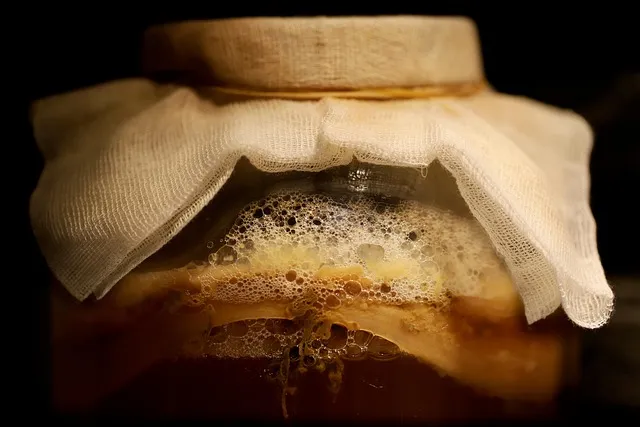
The key phrase there is “fermented foods” — not “foods labeled as fermented.” That distinction matters enormously, and most shoppers have no way of making it at the shelf.
The Fermentation Value Index is a ranking framework built around four axes: probiotic diversity (number of distinct species), colony-forming unit density per serving, survival rate through the digestive tract, and evidence quality for human health benefits. Here’s how the rankings shake out.
Not all fermented foods are created equal. Some contain thousands of microbial species in quantities that genuinely colonize the gut. Others contain a handful of pasteurized or yeast-only microbes that make for good marketing and mediocre biology.
#1: Raw Sauerkraut — The Undisputed Champion
Given one fermented food to eat for the rest of a life, for gut health purposes, the answer is raw, traditionally fermented sauerkraut. Not the pasteurized stuff in cans. Not the vinegar-brined stuff that never fermented in the first place. Raw, lacto-fermented sauerkraut: cabbage, salt, time. Nothing else required.
Why does it rank first?
Microbial diversity is exceptional. A well-fermented batch can carry 20-30 different bacterial species, mostly from the Lactobacillus and Leuconostoc genera, plus Weissella and Pediococcus species. That diversity matters because different species colonize different niches in the gut, produce different beneficial metabolites, and provide redundancy when something disrupts the system.
CFU counts are astronomical. Raw sauerkraut at peak fermentation typically runs between 10 million and 10 billion colony-forming units per gram. A typical serving — 2-3 tablespoons — delivers a meaningful microbial load, comparable to many probiotic supplements and far ahead of heat-treated commercial products.
Survival through digestion gets a boost from the lactic acid matrix itself. The acidic environment of fermented vegetables actually helps some bacteria survive the trip through stomach acid, since they’ve already adapted to acidic conditions during fermentation. The food matrix provides buffering that helps too.
Beyond the probiotics, sauerkraut carries glucosinolates — compounds from the cabbage with demonstrated anti-inflammatory and potentially anti-carcinogenic properties. And fermentation increases the bioavailability of vitamins C and K2, adds B vitamins (a small amount of B12 included), and pre-digests compounds that would otherwise cause bloating in sensitive people.
How to choose it: refrigerated section only. Look for “raw,” “unpasteurized,” or “live cultures” on the label. Ideally the jar has an airlock lid or shows signs of active fermentation. Ingredients should read: cabbage, salt, nothing else — some brands add caraway seeds or juniper berries, that’s fine. If vinegar shows up on the ingredient list, put it back. That’s pickled cabbage, not fermented cabbage. Completely different product, no matter what the label implies.
Brands worth seeking out: Bubbies (widely available), Farmhouse Culture, Cleveland Kitchen (their raw line), Hawthorne Valley, or any local fermentation producer at a farmers market. Or make it at home — genuinely one of the simplest fermentation projects around.
#2: Kimchi — Sauerkraut’s More Complex Cousin
Kimchi takes second place, and on some dimensions — bacterial diversity in particular — arguably ties for first. Traditional Korean kimchi is a lacto-fermented vegetable preparation that can carry dozens of bacterial species, often more diverse than sauerkraut thanks to the broader mix of ingredients: napa cabbage, radish, scallions, garlic, ginger, fish sauce or shrimp paste in traditional versions.
Research on kimchi’s health effects has expanded a lot over the past decade, driven largely by Korean research institutions. Studies have linked kimchi consumption to reduced body weight, improved lipid profiles, lower blood pressure, and anti-diabetic effects — all mediated at least partly through gut microbiome modulation.
The Lactobacillus kimchii and Leuconostoc species that dominate kimchi differ from the ones dominant in European-style sauerkraut, meaning they colonize different gut niches and produce different metabolites. Eating both provides real additive benefit. They’re not interchangeable.
Kimchi also carries allicin from garlic, with its own antimicrobial and anti-inflammatory properties, and capsaicin from gochugaru, which influences gut motility and has been shown to reduce appetite and improve insulin sensitivity. Genuinely multi-functional, this one.
Fermentation Value Index score: very high. Bacterial diversity and CFU density are excellent in traditionally fermented versions. Same caveat as sauerkraut applies: refrigerated, unpasteurized, traditionally made. Most shelf-stable commercial kimchi has been heat-treated and carries no live cultures at all.
One consideration: traditional kimchi is quite spicy and uses fish sauce, which rules it out for vegetarians and the spice-averse. Vegan kimchi (made with doenjang or kelp stock instead of fish sauce) and mild versions are widely available and keep the probiotic profile while dialing back the heat.
#3: Kefir — The High-CFU Powerhouse
Kefir earns third place because it delivers something the vegetable ferments can’t: extraordinarily high CFU counts in a bioavailable liquid matrix that gets absorbed fast and delivers bacteria to the gut efficiently.
Traditional milk kefir, fermented with kefir grains (a symbiotic community of bacteria and yeasts), typically carries 10-50 billion CFU per 8-ounce serving across 30-50 different microbial strains. That puts it on par with or above the highest-dose probiotic supplements on the market — for a fraction of the cost.
Kefir’s microbial diversity is its defining feature. Where yogurt typically has 2-3 strains, kefir has dozens — spanning multiple Lactobacillus species (L. acidophilus, L. kefiri, L. kefiranofaciens), Lactococcus species, Leuconostoc, and various beneficial yeasts including Saccharomyces and Kluyveromyces. That yeast component is genuinely unique; most fermented foods are purely bacterial.
The research on kefir is extensive and favorable. Systematic reviews have found significant positive effects on lactose intolerance (the bacteria pre-digest most of the lactose), IBS symptoms, blood pressure, lipid profiles, blood glucose regulation, and immune function. A 2021 meta-analysis found kefir consumption significantly reduced fasting blood glucose and improved insulin sensitivity markers.
Kefiran — a polysaccharide produced by Lactobacillus kefiranofaciens as it grows on kefir grains — has distinct immunomodulatory properties, stimulating macrophage activity and IgA production. Unique to kefir. Not present in other fermented foods on this list.
For anyone with dairy intolerance: coconut milk kefir, water kefir, and non-dairy kefir alternatives offer similar bacterial diversity when made with genuine kefir grains, though without the kefiran and with a different yeast population. Water kefir specifically is a highly underrated fermented beverage — worth trying.
How to choose: look for “made with kefir grains” or products listing 10+ identified strains on the label. Lifeway is the dominant US brand and puts out a legitimate product with 12 live, active cultures. Small-batch local producers often beat it on diversity. Avoid “kefir-flavored” or “kefir-style” products — that’s yogurt wearing kefir branding.
#4: Kombucha — Mostly Yeast, Less Bacteria Than You Think
- The organic acids it contains — particularly glucuronic acid — may support liver detoxification pathways, though human clinical evidence remains limited.
- The acetic acid content inhibits pathogen growth and may have direct antimicrobial effects in the gut.
- It provides a zero-to-low-alcohol fermented beverage alternative that satisfies the desire for a complex, carbonated drink without the gut-damaging effects of beer or wine.
- Some kombucha brands have developed specific SCOBY cultures with higher bacterial diversity — check the label for Lactobacillus species identification.
Kombucha is the celebrity of the fermented food world — the one generating the most marketing spend, the most social media content, and arguably the most inflated health claims. It’s earned an honest reassessment.
Kombucha comes from fermenting sweet tea with a SCOBY — a symbiotic culture of bacteria and yeasts. The resulting drink carries organic acids (mainly acetic acid, glucuronic acid, gluconic acid), B vitamins, and a microbial profile dominated by yeast, with a smaller bacterial component led by Acetobacter and Gluconobacter species — not the Lactobacillus species most tied to gut health benefits.
The bacteria in kombucha are acetic acid bacteria. They’re beneficial in a gut context — anti-inflammatory properties, organic acids with antimicrobial effects against pathogens. But they aren’t the primary probiotic species linked to the microbiome benefits of fermented foods generally. The CFU count of health-relevant bacteria in kombucha runs typically lower than in sauerkraut or kefir.
Where kombucha genuinely earns its keep:
The problem with commercial kombucha: most mass-market bottles have been pasteurized or UV-treated for retail stability, which kills the live cultures. And the sugar content of many kombucha products rivals soda — GT’s original formula runs relatively low-sugar, but flavored commercial versions can carry 15-25 grams of sugar per serving.
Drink it if it’s enjoyable. Just don’t rely on it as the primary probiotic source. It ranks fourth mainly because bacterial species diversity and CFU counts for gut-specific strains trail the top three, and because the commercial market is flooded with pasteurized, high-sugar products delivering minimal probiotic value.
#5: Commercial Yogurt — The Overhyped Staple
This is where Sarah’s morning routine falls apart. Commercial yogurt — the dominant form of fermented food consumption in the United States — is the least effective entry on this list, despite being the most commonly eaten “probiotic” food by a wide margin.
The fundamental problem: most commercial yogurt contains only two bacterial strains, Lactobacillus delbrueckii subsp. bulgaricus and Streptococcus thermophilus. These get selected for their role in dairy fermentation — they produce the lactic acid that thickens milk into yogurt — not for probiotic efficacy in the human gut. They don’t colonize the gut effectively. They’re transient visitors, in and out.
A 2017 ISAPP (International Scientific Association for Probiotics and Prebiotics) consensus statement authored by Marco et al. addressed this head-on: yogurt’s health benefits are real but modest, and crediting them solely to probiotic strains overstates the case. Much of yogurt’s benefit comes from its nutritional matrix — protein, calcium, phosphorus — rather than its microbial content.
On top of that, most commercial yogurt gets heat-treated after fermentation to extend shelf life. Greek yogurt in particular often undergoes secondary processing that kills live cultures. “Contains live and active cultures” on a label means the cultures were present at manufacture — not necessarily at the moment of consumption, and not necessarily in quantities large enough to do anything meaningful.
When does yogurt earn its probiotic reputation? With “added cultures” products that specifically include L. acidophilus, Bifidobacterium species, and L. casei alongside the standard strains. Siggi’s, Stonyfield, and some Chobani products add these. Icelandic-style skyr tends toward more diverse cultures. Traditional, small-batch yogurt made with heirloom cultures can carry 5-15 strains with genuine probiotic activity.
None of this makes yogurt worthless — it’s an excellent protein source, and some research supports it for reducing antibiotic-associated diarrhea, improving lactose digestion, and contributing modestly to gut health. But expecting standard commercial yogurt to meaningfully shift a microbiome is like expecting a garden hose to irrigate a farm. Right category of tool. Wrong size for the job.
The dose makes the medicine. Two billion CFUs of two strains in a pasteurized yogurt cannot compete with 50 billion CFUs across 30 strains in a jar of properly fermented sauerkraut. Both are technically “probiotic foods.” Only one actually moves the needle.
The Runners-Up: Miso, Tempeh, and Natto
A few other fermented foods deserve mention before getting into the practical application of the Fermentation Value Index framework.
Miso is a fermented soybean paste central to Japanese cuisine and health for over 2,000 years. Traditional miso contains Aspergillus oryzae (koji mold), Lactobacillus species, and other organisms that develop during a fermentation period ranging from weeks to years. Aged miso carries a more complex microbial profile and a higher concentration of beneficial compounds.
The challenge with miso: it’s typically eaten dissolved in hot liquid, and heat above 120°F (49°C) kills live cultures. Anyone eating miso soup should let it cool below that threshold before stirring the miso in, or use miso as a cold condiment or salad dressing instead. On top of that, serving sizes tend to be small — 1-2 teaspoons — limiting probiotic impact per serving. Miso’s strongest case is as a source of fermentation byproducts, plant-based protein, and the well-documented health patterns of miso-consuming Japanese populations, rather than as a live-culture probiotic delivery vehicle.
Tempeh is a fermented soybean cake, significantly less well-known in Western markets than it deserves to be. Made by culturing soybeans with Rhizopus oligosporus (a mold), tempeh forms a firm, protein-dense block with a rich umami flavor. Fermentation partially breaks down phytic acid (an antinutrient that impairs mineral absorption), boosts protein bioavailability, and generates vitamin B12 precursors.
Tempeh is less useful as a live probiotic source, though, because it’s eaten cooked — the heat kills the live Rhizopus cultures. Its value is more as a fermented food that beats unfermented soy on nutrition: more bioavailable protein, fewer antinutrients, isoflavone profiles altered favorably by fermentation. For microbiome diversity specifically, the top five here do more.
Natto is fermented soybeans made with Bacillus subtilis, and it’s genuinely exceptional for a specific reason. B. subtilis forms spores that survive cooking, digestion, even antibiotic courses. That makes natto one of the most resilient food-based probiotic sources available anywhere. It also contains the highest known food source of vitamin K2 (menaquinone-7), critical for directing calcium into bones and out of arteries.
 Anyone who can get past the sticky, stringy, ammonia-sharp, divisive flavor — and plenty of Westerners can’t — will find natto a legitimate superfood for gut and cardiovascular health both. It’s an acquired taste that most people in Japan acquired as children, and most Western adults never acquire at all.
The Fermentation Value Index: Scoring System
The Fermentation Value Index scores fermented foods across four dimensions, each rated 1-5:
- Microbial diversity score (1-5): Number of distinct species and genera present in a properly made version of the food. Higher is better for microbiome colonization breadth.
- CFU density score (1-5): Colony-forming units per typical serving. Minimum threshold for meaningful gut impact is approximately 1 billion CFU per serving.
- Gut survival score (1-5): Estimated percentage of viable bacteria that survive transit through stomach acid and bile to reach the colon. Influenced by the food matrix, bacterial species, and fermentation environment.
- Evidence quality score (1-5): Quality of human clinical evidence for specific gut and metabolic health benefits, weighted toward RCTs over observational data.
Rankings under the FVI framework:
Raw Sauerkraut: 4.5/5.0 — Diversity: 5, CFU: 4, Survival: 4, Evidence: 5. Penalty: limited clinical trials specifically on sauerkraut (most evidence gets extrapolated from lacto-fermented vegetable research and Lactobacillus strain-specific studies).
Kimchi: 4.4/5.0 — Diversity: 5, CFU: 4, Survival: 4, Evidence: 4. Strong Korean research base but primarily from Korean institutions, with some replication questions for Western populations.
Kefir: 4.5/5.0 — Diversity: 4, CFU: 5, Survival: 5, Evidence: 5. Excellent clinical trial base including randomized controlled trials on metabolic outcomes, IBS, and immune function.
Kombucha: 2.8/5.0 — Diversity: 2, CFU: 2, Survival: 3, Evidence: 3. Real potential, but commercial products consistently underdeliver; the primary bacteria aren’t the most clinically impactful strains.
Commercial Yogurt: 2.5/5.0 — Diversity: 1, CFU: 3, Survival: 3, Evidence: 3. Substantial research base, but much of it addresses specific conditions (lactose intolerance, AAFB prevention) rather than broader microbiome optimization.
Note: traditional yogurt with added probiotic strains (Bifidobacterium, L. acidophilus) scores significantly higher — around 3.5/5.0.
How to Build a Fermented Food Rotation That Actually Works
- Daily: 2-3 tablespoons of raw sauerkraut or kimchi with at least one meal. Non-negotiable foundation. The habit should become as automatic as reaching for the salt — a condiment, not a medical intervention.
- Daily or every other day: One serving of kefir, 8 ounces. Morning works fine. If dairy-free, coconut kefir or water kefir made with genuine kefir grains.
- Several times weekly: Traditional yogurt with diverse added cultures as a convenient snack or breakfast base. Choose varieties with 5+ identified strains.
- 2-3 times weekly: Kombucha as a stand-in for soda or alcohol. Choose refrigerated, raw, low-sugar versions. GT’s Synergy line is a reliable pick.
- Weekly: Miso in soup, salad dressings, or marinades, added after cooking to preserve live cultures. Tempeh as a protein source 1-2 times per week for its fermentation nutrition benefits. Natto, if it’s tolerable.
The Stanford Wastyk study that showed the biggest microbiome improvements from fermented foods had one key characteristic: diversity. Participants ate multiple different fermented foods across the week, not the same one every day. That tracks biologically — different fermented foods deliver different bacterial species that colonize different gut niches and produce different beneficial metabolites.
A practical weekly rotation based on the Fermentation Value Index:
The total weekly diversity of this rotation, properly executed, could expose the gut microbiome to 50-100 distinct microbial species. Compare that to the 2-3 strains in a morning yogurt and the “I eat yogurt every day” strategy starts to make a lot more sense as a strategy that isn’t moving the needle.
Microbial diversity is like financial diversification. Multiple asset classes, not one index fund. Sauerkraut every day beats nothing, but rotating sauerkraut, kimchi, kefir, and miso builds a portfolio resistant to the inevitable disruptions of antibiotics, stress, and life.
Homemade vs. Commercial: The Quality Gap
Here’s a fact worth sitting with: homemade sauerkraut made with nothing but cabbage and salt typically carries more microbial diversity and higher CFU counts than most commercial products — premium-priced specialty brands included.
Commercial production creates its own selection pressure. Companies want consistent flavor, predictable shelf life, products that don’t explode in transit. That means standardizing fermentation conditions, using controlled starter cultures instead of wild fermentation, and often pasteurizing or using modified atmosphere packaging to get the stability they need. All of it reduces microbial diversity and live culture counts.
Wild fermentation — the traditional method of letting naturally occurring bacteria on vegetable surfaces (mainly Leuconostoc mesenteroides) kick off fermentation — produces more diverse microbial communities that better reflect the local environment. There’s emerging evidence that local wild fermentation may help “seed” the gut with species better adapted to a person’s specific environment and diet.
The basic sauerkraut recipe: one head of cabbage, one tablespoon of non-iodized salt per pound of cabbage, a clean jar, and a week of patience. Shred the cabbage, massage with salt until it releases liquid, pack it tightly into a jar submerged in its own brine, cover loosely, leave at room temperature for 5-7 days. Burp the jar daily. Taste it. Move it to the fridge once it’s sour enough.
Total cost: under $2. Total probiotic value: measurably superior to most $8-12 commercial products.
The Prebiotic Partner: Feeding the Bacteria You Introduce
Introducing bacteria through fermented foods is only half the equation. If those bacteria have nothing to eat once they arrive, they can’t establish themselves. Prebiotics — non-digestible fibers that selectively feed beneficial bacteria — are the other half.
The most important prebiotics for supporting the bacteria found in fermented foods:
Inulin and fructooligosaccharides (FOS) are the preferred food for Bifidobacterium and Lactobacillus species — the primary inhabitants of high-quality kefir, yogurt, and some sauerkraut cultures. Sources: chicory root, Jerusalem artichokes, garlic, onions, leeks, asparagus, dandelion greens.
Pectin (from apples, citrus, berries) feeds Akkermansia muciniphila and Bifidobacterium species. The “apple a day” line has more microbiome science behind it than most people realize.
Beta-glucan (from oats, mushrooms, seaweed) feeds Lactobacillus and Bifidobacterium, and carries the strongest evidence of any dietary fiber for LDL cholesterol reduction.
Resistant starch (from cooked-and-cooled potatoes, green bananas, legumes) ferments in the colon into butyrate — the primary fuel for colonocytes and a powerful anti-inflammatory compound. Cold potato salad is genuinely medicinal for anyone optimizing gut health.
The ideal move is eating fermented foods alongside prebiotic-rich foods in the same meal — delivering the bacteria and their food source together. A salad with raw sauerkraut, asparagus, and sliced apple. Kefir with oats topped with berries. Kimchi next to a bowl of lentils and cooked-then-cooled rice.
FAQ: Fermented Foods
Q: How much fermented food do I actually need to eat to see gut benefits?
The Stanford Wastyk study that showed the strongest benefits used around 6 servings of fermented food per day across diverse sources. No need to hit that number right away — start with 2-3 servings daily (a couple tablespoons of sauerkraut at lunch and dinner, plus a serving of kefir) and build from there. Consistency over time matters more than any single large dose. Treat it as a daily habit, not a therapeutic intervention.
Q: I get bloated when I eat fermented foods. Is that normal?
Yes, and it’s usually temporary. Introducing new microbial populations to a dysbiotic gut can cause gas and bloating as the newcomers compete with established populations and produce gases along the way. Start with very small amounts — a teaspoon of sauerkraut — and build up gradually over 2-4 weeks. If severe bloating persists past a month, consider getting tested for SIBO (small intestinal bacterial overgrowth), since fermented foods can worsen SIBO symptoms before they improve them.
Q: Can I get the same benefits from probiotic supplements as from fermented foods?
No, and the Wastyk study helps explain why. High-dose single-strain or limited-strain probiotic supplements didn’t produce the microbiome diversity improvements that diverse fermented foods did. Food matrix matters — the organic acids, fibers, and other compounds in fermented foods likely support the survival and establishment of probiotic bacteria in ways a capsule can’t replicate. Supplements have their place (post-antibiotic recovery, SIBO treatment, specific clinical conditions), but for general microbiome optimization, food wins.
Q: Is store-bought kimchi as good as homemade?
Depends entirely on the product. Refrigerated kimchi from Korean grocery stores, or brands like Choi’s or Mother-in-Law’s that are genuinely traditionally fermented, is excellent. Much of the kimchi in mainstream supermarkets has been pasteurized for shelf stability and carries no live cultures at all. Check for: refrigerated storage, “raw” or “unpasteurized” labeling, no artificial preservatives, and that characteristic slight fizz on opening. Shelf-stable usually means pasteurized.
Q: Does the vinegar in some sauerkraut and pickles kill the probiotics?
One of the most important, most overlooked distinctions in fermented food shopping. Vinegar-brined products — most commercial pickles, many commercial “sauerkrauts” — are NOT fermented foods. They’re acidified with vinegar for flavor and preservation. No live cultures, no probiotic benefit. Lacto-fermented products use salt and time, not vinegar. Vinegar on the ingredient list is a reliable tell that the product in hand is pickled, not fermented.
Q: I’m lactose intolerant. Can I still benefit from kefir?
This is one of kefir’s strongest selling points for the lactose-intolerant. The bacteria consume most of the lactose during fermentation, cutting lactose content by up to 99% in some analyses. Multiple studies confirm lactose-intolerant people can typically drink kefir symptom-free. The bacteria also produce lactase — the enzyme that breaks down lactose — adding further digestive support. Most people with lactose intolerance tolerate kefir far better than regular milk. Still sensitive? Coconut kefir or water kefir are solid alternatives.
Q: How should fermented foods be stored to preserve live cultures?
Always refrigerated, always in an airtight container (or one that lets gas escape through an airlock), away from direct light, and eaten within the timeframe on the label. Higher temperatures speed up fermentation and eventually produce an overly acidic, less diverse environment — the “too sour” problem. Freezing kills most live cultures. Don’t heat fermented foods above 115°F (46°C) if preserving the probiotic content matters. Add sauerkraut to hot dishes at the very end of cooking, once the heat’s off.
The practical conclusion: treat fermented food quality the way produce quality gets treated. Fresh, local, raw, traditionally made products from a verifiable producer are vastly superior to the heavily processed, shelf-stabilized alternatives that dominate the mainstream market. The investment in quality scales directly with the microbial return.
Fermented Foods and Mental Health: The Gut-Brain Connection
The gut-brain axis is one of the most active research areas in neuroscience and psychiatry right now, and the findings are forcing a rethink of how mental health gets approached. The gut produces roughly 90% of the body’s serotonin — not the brain. The enteric nervous system in the gut has more neurons than the spinal cord.
The bidirectional communication between gut and brain via the vagus nerve means what happens in the gut has direct neurological consequences.
Fermented foods enter this picture through multiple mechanisms. The Lactobacillus species dominant in fermented vegetables and dairy produce gamma-aminobutyric acid (GABA), the brain’s primary inhibitory neurotransmitter — the one that reduces anxiety and promotes calm. A 2013 study by Bravo et al. found that Lactobacillus rhamnosus supplementation in mice reduced anxiety-like behaviors and altered GABA receptor expression in the brain — effects mediated by the vagus nerve (cutting the vagus nerve eliminated the anxiolytic effect entirely).
In humans, the evidence is building but still emerging. A 2019 randomized controlled trial published in Translational Psychiatry found probiotic supplementation reduced perceived stress and improved mood over 4 weeks in healthy volunteers. A 2020 systematic review found consistent associations between probiotic and fermented food consumption and reduced depression and anxiety scores.
The mechanism likely runs through multiple pathways: production of neurotransmitter precursors (tryptophan to serotonin, tyrosine to dopamine), reduction of systemic inflammation that drives neuroinflammation, and direct vagal signaling along the gut bacteria-brain communication route.
Practically: building a consistent fermented food practice isn’t just a gut health decision. It’s potentially a mental health decision, a cognitive performance decision, a stress resilience decision. The evidence isn’t strong enough yet to recommend fermented foods as a primary intervention for clinical depression or anxiety. But for the subclinical stress, low-grade mood disruption, and mental fog that characterize modern life, the gut-brain case for fermented foods is genuinely compelling.
Fermented Foods During and After Antibiotics
One of the most underused applications of the Fermentation Value Index is in the post-antibiotic window. Antibiotics are the single most acute insult the gut microbiome faces — capable of cutting microbial diversity by 30-50% in a single course — and most people get no dietary guidance for recovery afterward.
Fermented foods, particularly high-diversity sources like kefir and raw sauerkraut, play a specific and important role in post-antibiotic microbiome recovery, for reasons beyond their general gut benefits. In the depleted post-antibiotic environment, the competitive pressure that normally limits how much new bacteria from fermented foods can establish is reduced. The ecological niches vacated by antibiotic-killed bacteria are wide open for new colonization. This is the window where fermented food consumption has the highest potential for meaningful microbiome reconstitution.
The caveat: most bacterial probiotics taken alongside antibiotics simply get killed. Saccharomyces boulardii — a yeast-based probiotic present in kefir-adjacent fermented beverages — survives antibiotic exposure. During the active antibiotic phase, focus on kefir (it carries both bacteria and yeasts), keep eating fermented vegetables as substrate for any surviving beneficial bacteria, and ramp up the higher-intensity fermented food protocol once the antibiotic course is finished.
A 2012 study by Wenus et al. found kefir consumption during a course of antibiotics significantly reduced the incidence and severity of antibiotic-associated diarrhea compared to yogurt. The greater microbial diversity of kefir — including its yeast component — appears to offer better protection than single-species probiotic products.
Going on antibiotics? Double up on fermented food consumption for the duration of the course and for at least four weeks after. Think of it as steady inoculation pressure into an ecosystem that’s being repeatedly disrupted and needs every recovery signal it can get.
Making Fermented Foods Work Long-Term: Overcoming the Taste Barrier
The biggest practical obstacle to building a fermented food rotation, for most people, isn’t knowledge — it’s palatability. Raw sauerkraut is sour and pungent. Kimchi is sour, spicy, and funky. Kefir is tart and slightly effervescent. Natto occupies a sensory category all its own.
Here’s the actionable part: taste adaptation is real. Most people who commit to small, consistent amounts of fermented food for 2-3 weeks find their palate adjusts, and what tasted aggressively sour at first becomes pleasant — even craved. Sourness in sauerkraut and kimchi gets detected partly by the same receptors that pick up flavor complexity, and the brain learns to associate that sourness with the satisfying, complex flavors that come along with it.
Practical strategies that lower the palatability barrier:
Start small and hidden. A tablespoon of raw sauerkraut buried in a sandwich is virtually undetectable in terms of sourness but still delivers live cultures. Build from there.
Use kimchi as a cooking ingredient. Kimchi fried rice, kimchi quesadillas, kimchi scrambled eggs — the heat kills the probiotic content but keeps the flavor, and it builds a positive association with the food itself. Once the flavor’s welcome, start adding some raw kimchi alongside the cooked versions.
Use kefir as a yogurt replacement. Anyone already eating yogurt regularly can swap to kefir — in smoothies, as a breakfast bowl base, or straight as a drink — for a simple change with dramatically better microbiome impact.
Add miso to sauces, marinades, and dressings rather than soup, which needs heat that kills the cultures. Miso tahini dressing on salads, miso-ginger vinaigrette, miso-butter for vegetables — these deliver fermented food flavor with no adaptation required, plus prebiotic fiber from the accompanying foods.
The fermented food habit, once it takes hold, tends to reinforce itself. The gut bacteria being cultivated through consistent intake eventually produce craving signals for more of what they need — a biological feedback loop that makes the habit easier to sustain than it was to start.
For more context on how fermented foods fit into a comprehensive gut health strategy, see our gut health guide. For a detailed analysis into targeted probiotic supplementation, see our guide to the best probiotics for men.
References
Editorial StandardsCorrectionsMedical DisclaimerAbout Our ContentAffiliate DisclosureSite Map