
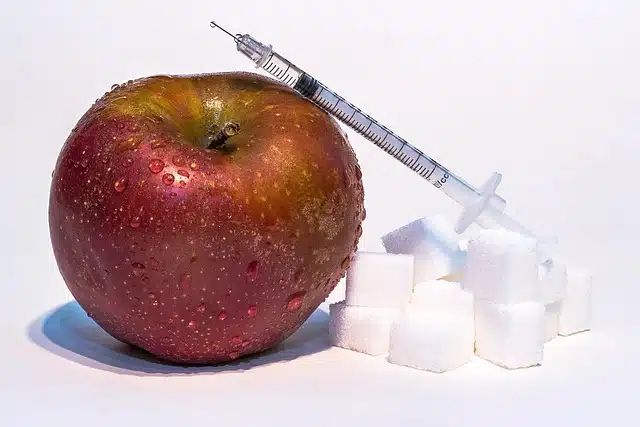
Insulin isn’t just a blood sugar hormone. It’s one of the most powerful hormonal regulators in the body, with documented effects on testosterone production, estrogen metabolism, cortisol sensitivity, thyroid hormone conversion, leptin and ghrelin (hunger hormones), growth hormone secretion, and SHBG levels. Get insulin wrong — specifically, develop the chronic insulin elevation that defines insulin resistance — and every other hormone on that list pays for it. Fix insulin, and everything else gets more tractable. That’s the connection this article makes.
What Insulin Resistance Actually Does to Your Body
Insulin resistance isn’t binary — nobody simply has it or doesn’t. It’s a spectrum, and most adults in modern societies sit somewhere on it long before the frank hyperglycemia that earns an actual diabetes diagnosis shows up. The tragedy of conventional medicine’s approach is waiting for the dramatic endpoint (diabetes) instead of recognizing and intervening at the earlier stages, where hormonal disruption is already running full tilt while blood glucose still looks “normal” on paper.
Here’s what actually happens in insulin resistance: cells stop responding normally to insulin’s signal to let glucose in. The pancreas compensates by producing more insulin. Blood glucose stays normal — because the pancreas is working overtime to keep it there. But insulin runs chronically elevated. And it’s that chronically elevated insulin, years before blood glucose ever climbs to diagnostic levels, that disrupts every other hormonal system in the body. By the time someone develops prediabetes (fasting glucose of 100-125 mg/dL), they may have been living with chronic hyperinsulinemia for a decade or more already.
Fasting insulin is the most direct way to catch early insulin resistance, and it’s almost never routinely tested. A fasting insulin above 10-15 µIU/mL — well within the “normal” lab reference range of up to 25 or even 30 µIU/mL at some labs — is associated with meaningful insulin resistance and the hormonal fallout that comes with it. HOMA-IR (Homeostatic Model Assessment of Insulin Resistance), calculated from fasting glucose and fasting insulin, is a sharper clinical tool: a HOMA-IR above 1.9 suggests early insulin resistance; above 2.9 is significant. The calculation needs nothing more than a $30 lab draw. It should be standard in every metabolic health evaluation, full stop.
Insulin and Testosterone: The PCOS Connection and Beyond
The relationship between insulin and testosterone is best illustrated by polycystic ovary syndrome (PCOS), the most common hormonal disorder in women of reproductive age. Insulin resistance shows up in 70-80% of women with PCOS, and it’s not incidental — it’s mechanistically central. Chronically elevated insulin directly stimulates ovarian theca cells to produce excess androgens (testosterone and androstenedione). That’s what produces the high testosterone, low SHBG, anovulation, and polycystic ovaries defining the syndrome. Treat the insulin resistance, and the testosterone-driven symptoms — acne, hirsutism, cycle irregularity — improve, often dramatically, without touching hormones directly.
Insulin’s effect on SHBG is a critical piece of this story. Insulin suppresses hepatic SHBG production — the liver makes less of it when insulin runs high. Lower SHBG means more free, biologically active testosterone and estrogen circulating. In women with PCOS, that amplifies already-elevated testosterone, worsening androgenic symptoms further. In men, high insulin similarly lowers SHBG, which sounds beneficial on the surface (more free testosterone), but the full story is more complicated — high insulin in men also associates with lower total testosterone through multiple mechanisms, so the net effect often runs unfavorable.
In men, the insulin-testosterone relationship doesn’t stop at SHBG effects. Insulin resistance is strongly associated with hypogonadism — low testosterone — in the male population. Mechanisms include direct inhibition of Leydig cell steroidogenesis by the inflammatory cytokines that accompany insulin resistance, cortisol elevation secondary to metabolic stress (which inhibits testosterone through the mechanisms covered elsewhere), and the aromatase pathway: insulin resistance promotes visceral fat accumulation, visceral fat expresses high levels of aromatase, aromatase converts testosterone to estrogen, and higher estrogen feeds back to suppress testosterone production centrally.
Insulin and Estrogen: The Fat-Feedback Loop
The relationship between insulin and estrogen runs bidirectional and complicated, with real implications for both men and women. Insulin resistance and estrogen excess often travel together, each feeding the other through several mechanisms at once.
Estrogen normally improves insulin sensitivity — one reason premenopausal women tend to be more insulin-sensitive than men of the same age, and why menopause, with its estrogen decline, brings a sudden worsening of insulin sensitivity and increased visceral fat accumulation. But that positive relationship assumes physiological estrogen levels. Estrogen excess, which can develop through multiple routes, impairs insulin signaling directly at the receptor level.
The visceral fat loop is the most practically important connection here: insulin resistance leads to visceral fat accumulation, which drives aromatase activity, which produces estrogen excess, which impairs insulin signaling, which drives more visceral fat. Each step reinforces the next. In men, this produces the “metabolic male” picture — significant belly fat, low testosterone, high estrogen, poor energy and libido, insulin markers tracking toward diabetes. In women, insulin-driven estrogen excess can contribute to estrogen dominance symptoms, irregular cycles, and increased risk of estrogen-sensitive conditions.
Estrogen metabolites get processed in the liver through pathways requiring adequate methylation (B vitamins and methionine), sulfation, and glucuronidation. Insulin resistance impairs liver function broadly, detox pathway efficiency included. This can result in an accumulation of more potent, potentially harmful estrogen metabolites (16-hydroxyestrone versus the more benign 2-hydroxyestrone) — a shift with implications for both cancer risk and symptom burden. Improving insulin sensitivity improves liver function, which improves estrogen clearance and metabolite profiles in turn.
Insulin and Cortisol: The Stress-Metabolic Spiral
Cortisol promotes hepatic glucose production (gluconeogenesis) and impairs insulin-mediated glucose uptake in peripheral tissues — in other words, cortisol creates or worsens insulin resistance directly. At the same time, insulin resistance impairs the negative feedback on the HPA axis, so the body gets less effective at shutting off the cortisol response once it’s activated. Result: chronic stress worsens insulin resistance, and insulin resistance makes stress responses more prolonged and dysregulated in turn.
This cortisol-insulin spiral shows up especially clearly in visceral fat distribution. Cortisol preferentially drives fat deposition into visceral (abdominal) adipose tissue, which is metabolically distinct from subcutaneous fat. Visceral fat responds more strongly to cortisol, carries more glucocorticoid receptors than subcutaneous fat, and releases free fatty acids directly into the portal circulation, flowing straight to the liver. Those portal free fatty acids impair hepatic insulin signaling directly, worsening insulin resistance further. More cortisol, more visceral fat, worse hepatic insulin resistance, higher insulin, more visceral fat, higher cortisol. Another loop that reinforces itself.
The practical implication: insulin resistance can’t be effectively addressed without addressing chronic stress, and HPA dysfunction can’t be effectively addressed without improving metabolic health. They aren’t separate problems. Treating metabolic syndrome as purely a diet-and-exercise issue while ignoring chronic stress, and treating HPA dysregulation as purely a stress-management issue while ignoring diet and insulin, both amount to incomplete approaches producing incomplete results.
Insulin and Thyroid: The Conversion Effect
Insulin’s effects on thyroid function run through several mechanisms, the most significant being the interaction between insulin-resistance-driven inflammation and T4-to-T3 conversion. As covered in the thyroid-gut axis discussion, inflammatory cytokines — IL-6, TNF-alpha, and IL-1 beta particularly — shift T4 conversion away from active T3 and toward inactive reverse T3. Insulin resistance is a major driver of chronic low-grade inflammation, producing exactly the cytokine profile that impairs thyroid conversion in the first place.
People with insulin resistance and hypothyroid symptoms who show “normal” TSH and T4 often have impaired free T3 alongside elevated reverse T3 — a pattern the inflammatory environment of insulin resistance explains directly, by shifting the conversion equation the wrong way. This doesn’t always mean thyroid medication is needed. It often means addressing the insulin resistance driving the inflammatory state that’s impairing conversion in the first place. Improving insulin sensitivity in this context can meaningfully improve active T3 availability without any thyroid-specific intervention at all.
Thyroid hormones, conversely, regulate insulin sensitivity. Hypothyroidism reduces insulin-mediated glucose disposal — people with untreated hypothyroidism develop insulin resistance as a downstream consequence. Normalizing thyroid function (free T3, not just TSH) improves insulin sensitivity in turn. That bidirectionality means optimizing insulin and thyroid together produces synergistic improvement that neither approach alone captures on its own.
Growth Hormone, IGF-1, and the Insulin Equation
Growth hormone (GH) and insulin have a particularly interesting, practically important relationship. Growth hormone secretes in pulses, primarily during deep sleep, with anabolic effects on muscle and bone alongside fat mobilization effects. Insulin and growth hormone antagonize each other — insulin promotes glucose uptake and storage, growth hormone promotes glucose production and fat mobilization. But the interaction runs deeper than simple antagonism.
Chronic hyperinsulinemia suppresses growth hormone secretion. The pituitary responds to insulin by cutting GH pulse amplitude and frequency. This matters enormously because adequate GH is required for the liver’s IGF-1 production, and IGF-1 is the primary mediator of GH’s anabolic effects on muscle and bone. Chronically elevated insulin therefore drags down both GH and IGF-1, contributing to the body composition deterioration — lost lean mass, gained fat — that characterizes insulin resistance.
This GH-insulin interaction is one reason intermittent fasting and time-restricted eating carry documented anabolic-preserving effects despite creating caloric deficits. Fasting periods let insulin fall, removing the chronic GH suppression and allowing stronger GH secretion during overnight fasting. Research has documented the enhancement of GH pulsatility during fasting directly — a 24-hour fast can raise GH secretion several-fold compared to the fed state. For body composition optimization, this GH-restorative effect of low-insulin periods is a meaningful mechanism behind why time-restricted eating protocols work as well as they do.
Leptin, Ghrelin, and the Hunger Hormone Cascade

Chronically elevated insulin drives chronic fat storage. As fat mass increases, leptin production rises too (adipose tissue produces more leptin as it grows). Eventually the hypothalamus downregulates leptin receptor sensitivity in response to that chronically elevated signaling — leptin resistance develops. Now the satiety signal that should say “eat less” gets ignored, hunger regulation fails, and the drive to eat persists despite adequate energy stores already on board. Not a willpower problem. A neuroendocrine problem with a metabolic origin.
Ghrelin, the hunger-stimulating hormone produced primarily in the stomach, gets dysregulated by insulin resistance too. In healthy people, ghrelin drops sharply after eating — the satiety response. In insulin-resistant people, that suppression response is blunted, so hunger doesn’t turn off as effectively after meals, contributing to overconsumption. Insulin normally suppresses ghrelin, but when cells are insulin-resistant, that ghrelin-suppressing effect gets impaired right along with everything else.
The practical consequence: insulin resistance hijacks the hunger regulation system in ways that make caloric reduction feel nearly impossible — not from lack of discipline but because the hormonal signals that should enforce satiety are systematically disrupted. Which is why high-fiber, protein-rich, low-glycemic-load diets outperform simple calorie counting for weight management — they address the hormonal hunger regulation failure, not just the caloric arithmetic sitting on top of it.
The Insulin-Hormone Optimization Protocol
Given insulin’s central role in the hormonal system, optimizing insulin sensitivity is the foundational step of any serious hormonal optimization strategy. Here’s the evidence-based protocol, organized by impact level:
Highest impact — dietary carbohydrate quality: Not about eliminating carbohydrates. About a radical improvement in carbohydrate quality. Refined carbohydrates and sugar-sweetened beverages drive insulin spikes that, over time, reduce insulin sensitivity. A dietary pattern built around whole food carbohydrates with intact fiber (legumes, vegetables, whole fruits, intact grains) produces dramatically lower insulin responses than the same calories from refined sources. For people with significant insulin resistance, a lower-carbohydrate approach (50-100g/day) may be necessary initially to meaningfully reduce insulin levels and let receptor sensitivity recover before reintroducing more carbohydrate from quality sources.
High impact — resistance training: Muscle is the largest glucose-disposal organ in the body. Resistance training raises GLUT4 expression in muscle, improving insulin-independent glucose uptake. It also builds lean mass, expanding the body’s glucose disposal capacity outright. Multiple studies have shown resistance training to be as effective as, or more effective than, aerobic exercise for improving insulin sensitivity per unit of time invested. Three to four resistance sessions per week, prioritizing compound movements and progressive overload, is a foundational insulin sensitivity intervention on its own.
High impact — time-restricted eating: Compressing the eating window to 8-10 hours, with no caloric intake outside that window, lets insulin levels fall during the fasting portion of the day, which is necessary for insulin receptor sensitivity to actually recover. Post-meal insulin elevation is normal and healthy; chronically elevated insulin that never returns to a low fasted baseline is what’s pathological. Even without caloric restriction, time-restricted eating has demonstrated improvements in insulin sensitivity, fasting insulin, and metabolic flexibility across clinical studies.
Moderate-high impact — sleep: Sleep restriction of even one to two nights measurably impairs insulin sensitivity, by 20-30% in some studies, and this impairment reverses with sleep recovery. Chronic sleep deprivation is a significant independent contributor to insulin resistance. Protecting sleep is metabolic medicine, plain and simple.
Moderate impact — targeted supplements: Berberine, at the intakes used in the trial literature, has demonstrated insulin-sensitizing effects comparable to metformin across multiple randomized trials, and it’s one of the more well-evidenced natural insulin sensitizers available. Magnesium deficiency associates with insulin resistance, and supplementing with magnesium glycinate improves insulin sensitivity in people who are actually deficient. Alpha-lipoic acid, inositol (particularly myo-inositol for women with PCOS), and chromium have supporting evidence for insulin sensitivity improvement at documented doses.
“Insulin is not just a blood sugar hormone. It’s the operating system on which your entire endocrine network runs. Corrupt the operating system, and every application — testosterone, thyroid, cortisol, growth hormone — starts glitching. Fix the operating system first.”
- Test fasting insulin, not just glucose: Insulin resistance can persist for a decade before blood glucose rises to diagnostic levels. Fasting insulin above 10 µIU/mL and HOMA-IR above 1.9 indicate meaningful insulin resistance.
- Insulin affects every major hormone: Testosterone, estrogen metabolism, cortisol dynamics, thyroid conversion, growth hormone, leptin, and ghrelin are all directly disrupted by chronic hyperinsulinemia.
- Resistance training is insulin medicine: Building and maintaining muscle is the most powerful long-term insulin sensitivity intervention — more so than cardio or dietary manipulation alone.
- Low-insulin periods are as important as low-insulin meals: Time-restricted eating works partly by allowing insulin to fall to a true fasted baseline daily — a necessary condition for receptor sensitivity recovery that chronic snacking prevents.
- The stress-insulin loop requires dual targeting: Addressing insulin without addressing chronic stress, and addressing stress without improving insulin, both produce incomplete results. These systems must be targeted together.
Insulin Resistance Actually Q&A
What’s the difference between type 2 diabetes and insulin resistance? Insulin resistance is the underlying condition; type 2 diabetes is the endpoint when the pancreas can no longer compensate for insulin resistance by producing more insulin. People can live with significant insulin resistance (and its hormonal consequences) for 10-20 years before developing frank diabetes. The hormonal disruption is occurring throughout that entire period, not just after the diabetes diagnosis.
Can lean people have insulin resistance? Yes. “Metabolically unhealthy normal weight” (MONW) — sometimes called TOFI (thin outside, fat inside) — is a recognized phenotype in which individuals have normal BMI but significant visceral and ectopic (liver, pancreas) fat accumulation, with the associated insulin resistance and hormonal disruption. Body weight is a poor proxy for metabolic health. Waist circumference and direct insulin testing are far more informative than BMI for assessing metabolic health.
Is a ketogenic diet necessary for insulin optimization? Not necessarily. It’s the most efficient approach for rapid initial improvement in severe insulin resistance, but it’s not the only effective approach. For people with mild to moderate insulin resistance, a whole-food, lower-glycemic-load diet with adequate protein and fiber, combined with resistance training and time-restricted eating, is effective without requiring ketosis. Ketogenic diets have specific advantages and disadvantages that may or may not apply to an individual’s situation, health history, and sustainability preferences.
Does stress eating worsen insulin resistance beyond just the calories? Yes. Cortisol elevation from stress independently impairs insulin sensitivity, and the combination of stress-elevated cortisol plus stress-driven consumption of refined carbohydrates (the typical stress-eating pattern) produces a compounded insulin resistance effect greater than either factor alone.
How quickly does insulin sensitivity improve with lifestyle changes? Measurable improvements in fasting insulin and HOMA-IR can appear within 2-4 weeks of significant dietary change and exercise initiation. More complete improvements in downstream hormonal parameters — testosterone normalization, SHBG recovery, leptin sensitivity improvement — typically take 3-6 months of sustained effort. Reassess fasting insulin quarterly when actively improving metabolic health.
Is berberine safe to take long-term? Available evidence suggests berberine is well-tolerated for long-term use at therapeutic doses, though very long-term safety data (beyond 1-2 years) is limited. The most common side effects are GI (loose stools, nausea, cramping), which are dose-dependent and often resolve with gradual dose titration. Berberine has mild antimicrobial effects that could theoretically affect gut microbiome diversity with prolonged use — cycling (3 months on, 1 month off) is a reasonable precaution.
Can women with PCOS reverse it by fixing insulin? PCOS is a complex condition with multiple contributing factors, but for insulin-resistant PCOS (the most common subtype), aggressive insulin sensitization produces dramatic hormonal improvements — reduced testosterone, restored SHBG, improved ovulation frequency, and reduced androgen-driven symptoms. While “reversal” varies by individual and PCOS subtype, meaningful hormonal normalization is achievable in many insulin-resistant PCOS patients through diet, exercise, and targeted supplementation without pharmaceutical intervention.
Measuring Insulin Resistance: The Tests That Actually Matter
- Tier 1 (baseline): Fasting glucose + fasting insulin → calculate HOMA-IR. Annual monitoring. Identifies early insulin resistance before glucose rises to diagnostic levels
- Tier 2 (concerning HOMA-IR or symptoms): Full lipid panel (triglycerides/HDL ratio is a surrogate insulin resistance marker — a ratio above 3:1 in non-diabetics is a strong indicator), HbA1c, uric acid (elevated uric acid is highly associated with insulin resistance and hyperinsulinemia)
- Tier 3 (comprehensive metabolic assessment): 2-hour oral glucose tolerance test with insulin measurements at fasting, 30 min, 60 min, and 120 min. Reveals insulin secretion dynamics and identifies post-load hyperinsulinemia missed by fasting-only testing
- Downstream hormonal panel: Free testosterone + SHBG, free T3 + reverse T3, fasting cortisol (morning), and IGF-1 to assess the full hormonal cascade described in this article. These contextualize insulin resistance’s reach beyond metabolic markers
Standard medical screening for metabolic health is inadequate for catching early insulin resistance. Fasting blood glucose is the conventional marker, but it’s a late signal — glucose only rises once the pancreas can no longer compensate for worsening insulin resistance with more insulin production. By the time fasting glucose reaches the prediabetic range (100 mg/dL), insulin resistance has typically been present for years already. Testing glucose without testing insulin is like watching the oil pressure warning light instead of the oil level itself — the light comes on too late to matter much.
Fasting insulin is the single most important test most people never get. A fasting insulin below 5 µIU/mL is optimal. 5-10 is acceptable. Above 10-15 (still inside most labs’ “normal” reference range) starts reflecting meaningful insulin resistance with downstream hormonal consequences. Above 20-25 represents significant insulin resistance associated with the full spectrum of hormonal disruption covered here. Ask for fasting insulin alongside fasting glucose at the next metabolic panel — plenty of physicians will agree when asked, even if they wouldn’t order it routinely on their own.
HOMA-IR (Homeostatic Model Assessment for Insulin Resistance) is calculated as (fasting insulin µIU/mL × fasting glucose mg/dL) / 405. Optimal is below 1.0; below 1.9 is acceptable; 1.9-2.9 reflects early insulin resistance; above 2.9 is significant. The calculation needs no additional testing beyond the two values already drawn — available at any lab measuring both. It’s far more sensitive than glucose alone for catching early metabolic dysfunction.
A 2-hour oral glucose tolerance test with insulin measurements adds information about insulin secretion dynamics that fasting measurements alone miss entirely. Some people have normal fasting insulin but an exaggerated post-glucose insulin response — reactive hyperinsulinemia — producing the same downstream hormonal effects as chronically elevated fasting insulin would. This pattern often gets missed by fasting-only testing and shows up only when glucose and insulin get measured at 1 and 2 hours after a 75g glucose challenge.
Continuous glucose monitors (CGMs), now available without prescription, offer a practical window into post-meal glucose dynamics no single fasting lab test can capture. Two weeks of CGM use reveals glucose spikes after specific foods, the impact of meal timing and composition on glucose stability, and glycemic variability — all clinically relevant beyond fasting glucose values alone. Plenty of metabolically healthy-appearing people discover significant post-meal glucose spikes on CGM that explain energy crashes, brain fog, and hunger dysregulation they’d previously chalked up to other causes entirely.
Exercise as the Most Potent Insulin Sensitizer Available
If insulin resistance is the central metabolic dysfunction, exercise is the most potent insulin-sensitizing intervention available — more consistent than any supplement, and comparable to pharmaceutical agents in controlled studies. Understanding how exercise affects insulin sensitivity, and which types produce which effects, allows for more precise protocol design than the generic “exercise more” advice that tends to produce mediocre adherence and unremarkable results.
Resistance training improves insulin sensitivity through several distinct, non-redundant mechanisms. Skeletal muscle is the primary site of insulin-mediated glucose disposal — the larger and more metabolically active the muscle mass, the greater the glucose-absorbing capacity available after every meal. Building muscle is building insulin-sensitive tissue, directly. Beyond mass alone, the contraction-mediated glucose uptake pathway — where GLUT4 transporters translocate to the muscle cell surface during contraction, independent of insulin — creates an insulin-independent glucose disposal route that’s particularly valuable for people with significant insulin resistance already. Post-strength-training, this contraction-mediated disposal continues for hours, improving post-meal glucose control well after the session ends.
Aerobic exercise improves insulin sensitivity through mitochondrial biogenesis — building new mitochondria and improving existing mitochondria’s fat-burning capacity. Insulin-resistant cells often carry dysfunctional mitochondria that are poor at oxidizing fatty acids, leading to intracellular lipid accumulation (diacylglycerols and ceramides specifically) that interferes with insulin signaling directly. Aerobic exercise drives mitochondrial adaptation through AMPK and PGC-1α activation, directly improving the cellular fat-handling that drives insulin resistance at the molecular level.
High-intensity interval training (HIIT) produces insulin sensitivity improvements comparable to much longer sessions of moderate-intensity aerobic work, through more efficient activation of the AMPK-PGC-1α pathway and greater GLUT4 expression per unit of time invested. A 2012 meta-analysis in the Journal of Physiology found HIIT improved insulin sensitivity significantly within 2 weeks of training initiation — faster than most dietary interventions manage on their own. Which makes HIIT particularly valuable for time-constrained people who need efficient insulin sensitization without a huge time investment.
The evidence-based combination for optimal insulin sensitivity: resistance training three to four times weekly (the primary driver of muscle mass and GLUT4 density) plus two to three cardiovascular sessions weekly at varying intensities, including at least one HIIT session for mitochondrial adaptation. This combination outperforms either modality alone and produces the broadest hormonal improvements — better testosterone, GH secretion, reduced cortisol, improved leptin and ghrelin regulation — layered on top of the insulin sensitization itself.
The Practical Insulin Optimization Protocol: Dietary Strategy, Timing, and Supplementation
- Berberine, taken in divided portions with meals: The most evidence-supported insulin-sensitizing supplement. Multiple RCTs show berberine reduces fasting glucose and insulin comparably to metformin through AMPK activation. Particularly useful for people with significant insulin resistance who want a non-pharmaceutical option
- Magnesium glycinate: Magnesium deficiency — common in people eating Western diets — impairs insulin receptor function. Correcting deficiency improves insulin sensitivity. Magnesium glycinate provides good bioavailability with minimal GI side effects
- Alpha lipoic acid: Improves insulin-mediated glucose uptake and has documented effects on peripheral insulin sensitivity in multiple trials. Also an antioxidant that may reduce the oxidative stress that contributes to insulin receptor impairment
- Inositol, in the 40:1 myo- to d-chiro ratio the PCOS trials used: Particularly well-evidenced for insulin-resistant PCOS (multiple RCTs), with improving evidence in other insulin resistance contexts. Functions as an insulin second messenger — improves intracellular insulin signaling downstream of the receptor
- Vitamin D3 (target 50-70 ng/mL serum 25-OH-D): Vitamin D deficiency independently worsens insulin sensitivity. Multiple studies confirm that correcting deficiency improves insulin markers. Vitamin D also improves testosterone production in men — double benefit through the insulin-testosterone axis
The dietary principles producing the most consistent improvements in insulin sensitivity across study populations are well established at this point. The challenge isn’t knowing what they are — it’s implementing them in a form that’s sustainable, satisfying, and matched to individual circumstances. This section offers the practical translation of the evidence into a workable protocol.
Dietary carbohydrate quality and quantity are the most direct dietary levers on insulin. Eliminating refined carbohydrates (white flour products, added sugars, sweetened beverages) removes the primary drivers of post-meal insulin spikes and chronic hyperinsulinemia. Not about eliminating carbohydrates entirely — about replacing high-glycemic-load carbohydrates with lower-glycemic alternatives: whole grains over refined, legumes over processed starches, whole fruit over fruit juice, vegetables as the baseline carbohydrate source. Each substitution reduces insulin secretory demand for a comparable caloric intake.
Protein quantity matters significantly for insulin sensitivity, beyond its satiety effects alone. Adequate protein intake (1.6-2.2g/kg/day) supports muscle mass maintenance, and muscle mass is insulin-sensitive tissue. Protein also carries a lower insulin response per calorie than carbohydrates, and adequate protein reduces appetite through GLP-1 and PYY hormone effects that improve hunger regulation independent of calorie counting. High-protein diets consistently outperform high-carbohydrate, lower-protein diets on insulin resistance outcomes across multiple RCT comparisons.
Meal timing and time-restricted eating provide insulin-sensitizing benefits through multiple mechanisms: extending the daily fasting window increases fat oxidation, lets insulin return to baseline between meals, and restores GH pulsatility. A practical 8-10 hour eating window (consuming food within an 8-10 hour period, typically 10am-6pm or 12pm-8pm) is well-tolerated and produces meaningful improvements in fasting insulin and HOMA-IR over 4-8 week periods across multiple studies. The benefit appears independent of caloric restriction — even without weight loss, time-restriction improves insulin dynamics on its own.
The most important principle in insulin optimization isn’t any single intervention. It’s recognizing insulin as the master upstream regulator that determines how well every other hormonal optimization strategy actually works. Testosterone replacement in an insulin-resistant man with chronic hyperinsulinemia, elevated aromatase, and low SHBG will run less effective — and need higher doses, produce more side effects — than the same intervention in a man whose insulin has already been normalized. Thyroid hormone supplementation in someone whose conversion is impaired by insulin-resistance-driven inflammation will produce less usable tissue T3 than in someone whose metabolic health supports normal conversion to begin with. Get the foundation right first. Everything built on top of it gets more effective, and more durable, as a result.
Tracking Insulin Resistance Recovery: Markers, Timelines, and Expectations
Knowing what measurable improvements to expect, and when, matters enormously for sustaining the effort insulin resistance recovery actually requires. The timeline runs longer than most people expect, and the sequence of improvements follows a predictable biological order worth knowing in advance, to head off premature discouragement.
The fastest measurable changes — within 2-4 weeks of significant dietary change and initiated exercise — show up in fasting glucose and post-meal glucose dynamics on continuous glucose monitoring. The glucose response to meals, the spike height and the return-to-baseline speed, improves rapidly as liver glycogen availability shifts with lower carbohydrate intake and initial exercise-mediated GLUT4 expression begins kicking in. This is the most encouraging early signal that the protocol is working at the physiological level.
Fasting insulin and HOMA-IR show meaningful improvement at the 4-8 week mark with consistent dietary and exercise intervention. This is the marker to watch for confirming that insulin secretory demand is genuinely decreasing — not just that glucose is being handled differently against an already-elevated insulin backdrop. A HOMA-IR drop of 0.5-1.0 points in the first 6-8 weeks is achievable with serious dietary and exercise intervention, and it represents a meaningful reduction in the downstream hormonal burden already discussed.
Downstream hormonal improvements — testosterone normalization, SHBG recovery, free T3 improvement, leptin sensitivity restoration — typically lag the insulin markers by 4-12 weeks. That lag reflects the time the body needs to register improved insulin status and adjust hormone production and binding protein levels accordingly. Men often report a subjective sense of improved energy, libido, and body composition before their hormone labs show anything dramatic — functional improvement frequently arrives before measured hormonal normalization catches up, sometimes by several weeks. Staying consistent through that lag matters. The labs eventually catch up.
The Practical Framework: Applying Insulin Resistance Actually Does In Real Life
References
Editorial StandardsCorrectionsMedical DisclaimerAbout Our ContentAffiliate DisclosureSite Map