
The supplement industry thrives on confusion, and Collagen vs Bone Broth is a perfect example. Both have legitimate uses. They are not interchangeable, and grabbing the wrong one for your situation wastes money and delays results.

Both Collagen and Bone Broth have research behind them, but the quality and quantity of that research varies a lot. Knowing what’s well-established versus what’s preliminary is how you make a decision based on evidence instead of hype.
The supplement industry makes billions keeping people confused about what they actually need, and Collagen and Bone Broth is one of the more common places that confusion shows up, since both get recommended for overlapping symptoms. Cutting through it means understanding what each one does at a molecular level, which claims are backed by human trials, and which are extrapolated from test tubes and rodent studies.
What follows: mechanisms of action, the strength of evidence for each, bioavailability and absorption, who benefits most from each, and the practical details that actually decide whether these supplements work for you.
Worth naming the actual protein chemistry before anything else, because it clears up most of the confusion in one pass. Collagen is a structural protein, the most abundant one in the human body, making up roughly 30% of total protein mass — it’s the scaffolding in skin, tendon, cartilage, bone matrix, and blood vessel walls. Type I collagen dominates skin, bone, and tendon. Type II dominates cartilage. Type III runs alongside Type I in skin and blood vessels. Gelatin is simply cooked, partially broken-down collagen — the stuff that makes bone broth gel when it cools. Hydrolyzed collagen (collagen peptides) is gelatin broken down further, enzymatically, into shorter chains that dissolve in cold liquid and absorb faster. Same source protein, three different processing states, three different products on a shelf.
WHAT IS COLLAGEN?

The Verisol research is worth naming specifically because it’s the most-cited human trial in the entire collagen category. Proksch and colleagues published two studies in 2014 in Skin Pharmacology and Physiology, both using this specific patented peptide at 2.5g daily for eight weeks in women aged 35-55. The first found a significant improvement in skin elasticity versus placebo, measured objectively with a cutometer rather than self-report. The second, in a slightly older cohort, found reduced wrinkle depth around the eyes. Both are real, measured, statistically significant findings — and both are specific to one branded, patented peptide formulation at a specific dose, which matters because most collagen products on the market use generic hydrolyzed bovine collagen that was never tested in these trials at all.
The mechanism behind why an oral peptide would do anything at all — since digestion normally breaks proteins down to individual amino acids, destroying any “signal” — runs through di- and tripeptides. Some collagen-derived peptide fragments, specifically hydroxyproline-glycine and prolyl-hydroxyproline, survive digestion intact enough to enter the bloodstream as small peptides rather than single amino acids, a finding documented by Iwai and colleagues in a 2005 Journal of Agricultural and Food Chemistry study using radiolabeled collagen in humans. Those surviving peptides appear to act as chemical signals that stimulate fibroblasts — the cells responsible for producing new collagen and hyaluronic acid — which is the proposed explanation for why oral collagen shows measurable skin and joint effects despite being, technically, “just protein” from a pure nutrition standpoint.
On the joint side, the Fortigel data (a different patented hydrolysate, aimed at cartilage support) comes from a body of research led by Milan Adam and later replicated by other groups, generally using 10g daily over 3-6 months in athletes and older adults with joint pain, showing measurable reductions in activity-related joint discomfort. Separately, undenatured type II collagen (branded as UC-II, a much smaller dose — 40mg daily) works through an entirely different immunological mechanism: oral tolerance induction, where small amounts of intact type II collagen exposed to gut-associated lymphoid tissue reduce the autoimmune-like inflammatory response against the body’s own cartilage. Crowley and colleagues published the primary UC-II trial in 2009 in the International Journal of Medical Sciences, finding it outperformed a much larger dose (1,500mg) of standard glucosamine/chondroitin on knee pain and function scores over 90 days — a genuinely surprising result given the dose difference, and one reason UC-II gets marketed heavily despite most consumers never having heard of the mechanism behind it.
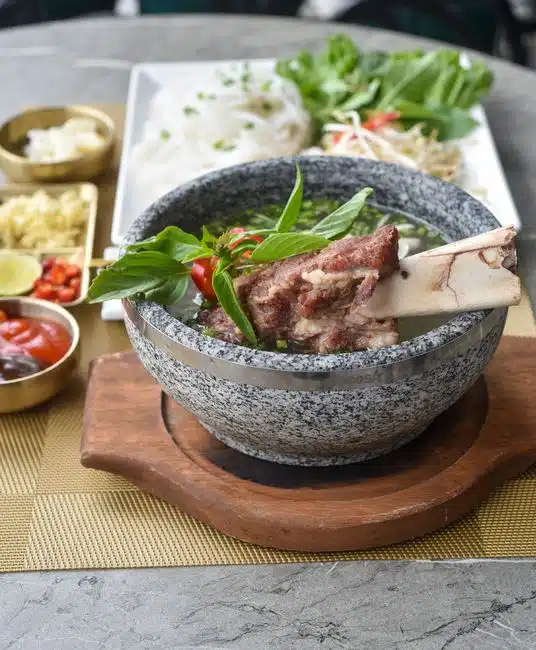
Bone broth is made by simmering animal bones for 12-24 hours, extracting collagen, glycine, proline, gelatin, minerals, and glycosaminoglycans. It’s a whole-food matrix that delivers not just collagen precursors but also gut-healing compounds (gelatin, glycine), minerals, and glucosamine/chondroitin from cartilage. The evidence base is less controlled than isolated peptides, but the nutritional density and gut benefits are real. Quality varies enormously — commercial bone broth often contains very little actual collagen.
| Collagen Peptides | Bone Broth | |
|---|---|---|
| Form | Hydrolyzed, rapidly absorbed peptides | Whole-food matrix (collagen, glycine, proline, minerals, GAGs) |
| Dose | 2.5-10g daily, clinically studied (Verisol, Fortigel) | Variable — commercial versions often contain little actual collagen |
| Evidence | Controlled clinical trials on skin elasticity, joint pain | Less controlled, but strong on glycine/gut-healing benefit |
The glycine content is where bone broth’s evidence base is strongest, separate from the collagen question entirely. Glycine is the single most abundant amino acid in collagen (roughly one in every three residues), and it’s also a documented sleep aid and a precursor for glutathione, the body’s primary intracellular antioxidant. Yoto and colleagues published a widely cited 2012 study in the Journal of Pharmacological Sciences finding 3g of glycine before bed improved subjective sleep quality and next-day cognitive performance in sleep-restricted subjects — a separate line of research from the joint and skin claims, and arguably bone broth’s most defensible use case, since a typical cup delivers somewhere in the 2-3g glycine range depending on how long it was simmered and what bones were used.
The gut-lining claim — that bone broth’s gelatin content “seals” or repairs intestinal permeability — is more contested. The mechanistic plausibility is real: gelatin and glycine both play documented roles in maintaining tight-junction integrity in intestinal epithelial cells, and glutamine (also present, though in smaller amounts than glycine) is a primary fuel source for enterocytes, the cells lining the small intestine. But the direct human clinical evidence specifically for bone broth (as opposed to isolated glutamine or glycine supplementation) treating conditions like leaky gut is thin — mostly animal models, in-vitro cell studies, and traditional-use evidence rather than controlled human trials. This is a case where the individual nutrients have real research behind them and the whole-food product built from them has real plausibility, but hasn’t itself been the subject of the kind of randomized trial that the Verisol peptide has.
Mineral content is the other pillar of the bone-broth pitch, and it’s the most overstated one. A 2013 analysis by Hsu and colleagues published informally (and widely cited since) tested calcium content across various bone broth preparation methods and found levels considerably lower than marketing claims typically suggest — often in the range of 2-20mg of calcium per cup, a tiny fraction of the 1,000mg daily requirement for most adults, and nowhere near what a glass of milk (roughly 300mg) delivers. Broth made with vinegar (which helps leach minerals from bone, a common folk-remedy addition) and simmered longer showed somewhat higher mineral content, but “bone broth as a significant calcium or mineral source” is one of the more exaggerated claims in the wellness space relative to the actual numbers.
COLLAGEN VS BONE BROTH: WHAT THE EVIDENCE ACTUALLY SHOWS

The gap between Collagen and Bone Broth runs deeper than the quick-comparison version most people get. The table below is the orientation pass. The detail that actually helps you decide is in the breakdown after it.
DETAILED BREAKDOWN: WHERE EACH ONE WINS
Mechanism of Action
Collagen works through specific biochemical pathways that set both its effects and its limits. Knowing the mechanism tells you whether it’ll touch your particular problem, and whether it’ll clash with anything else you’re taking. It also sets the timing — when to take it, whether food matters, how long before it does anything.
Bone Broth runs through a different pathway entirely, which is why it produces different effects even though it gets marketed alongside collagen for the same complaint. These aren’t academic distinctions. They determine which conditions each supplement actually helps, which symptoms it touches, and who sees the benefit.
The practical distinction: collagen peptides are a concentrated, standardized, single-mechanism intervention aimed mostly at fibroblast stimulation for skin and cartilage-matrix support. Bone broth is a diffuse, variable-dose, multi-mechanism food delivering some of the same collagen-derived peptides alongside glycine (sleep, antioxidant precursor), minerals (modest amounts), and gut-supportive compounds. Neither is “better” at the mechanism level — they’re not really competing for the same job.
A man taking collagen peptides specifically for skin elasticity data (the Verisol trials) is chasing something bone broth was never dosed or standardized to deliver reliably.
Quality of Evidence
The research on Collagen ranges from strong clinical trials down to preliminary studies, and not all of it deserves equal weight. Small studies, animal models, and in-vitro work tell a different story than a large randomized trial in humans. Being honest about where the evidence actually stands keeps expectations calibrated instead of hype-driven.
Bone Broth has its own mix — some claims well-supported, others stretched from limited data. Compare research quality, not just study count. One well-designed human trial outweighs a dozen rodent studies. Check who funded it, how big the sample was, and whether the dosages studied match what’s sitting on the shelf.
A blunt way to summarize the gap: collagen peptides, at least the patented branded forms (Verisol, Fortigel, UC-II), have double-blind, placebo-controlled, objectively-measured human trials behind their specific claims. Bone broth has strong traditional-use history, real nutrient content, and solid mechanistic plausibility for several of its claims, but almost no randomized controlled trials testing the whole product itself against a placebo in humans. That’s not a dismissal of bone broth — food doesn’t usually get studied the way patented supplement extracts do, because there’s no patent to fund the trial — but it does mean the evidence tiers are genuinely different, and claims that bone broth is “clinically proven” for skin or joints are overstating what actually exists in the literature.
Bioavailability and Absorption
How much of the Collagen you swallow actually reaches your bloodstream and tissues depends on the form, what you take it with, and your own gut health. Plenty of supplements have poor bioavailability in their most common commercial forms — you’re absorbing a fraction of the labeled dose. Form, fat-solubility, and timing all decide whether you’re getting what you paid for.
Bone Broth has its own absorption profile, which can run better or worse than Collagen depending on the form. Some are built for better absorption; others are cheap filler that barely gets used. Paying more for a better-absorbed form usually beats taking a bigger dose of a poorly absorbed one.
Hydrolyzed collagen peptides have a clear absorption edge on paper — the enzymatic pre-digestion that produces peptides means less work for the gut, and the Iwai 2005 tracer study specifically confirmed intact di/tripeptide absorption from hydrolyzed sources. Bone broth’s collagen is only partially hydrolyzed by the cooking process (gelatin, not peptides), meaning digestion has to do more of the breakdown work itself. In practice this matters less than it sounds for most healthy adults with normal digestive function — the difference is more relevant for someone with compromised digestion (older adults, certain GI conditions) where the pre-hydrolyzed peptide form removes a step the gut might otherwise struggle with.
Side Effects and Safety
At standard doses, Collagen has a known safety profile. Most people tolerate it fine, but “natural” doesn’t mean “harmless.” Drug interactions, hormone effects, GI tolerance, and long-term safety data all matter. Men on blood thinners, blood pressure medication, or psychiatric medication should check for interactions before adding anything.
Bone Broth carries its own risk-benefit math. Some forms are safe even at high doses; others have a narrow window where the effective dose sits close to the problematic one. Know the ceiling, know the interactions, and drop the assumption that more is automatically better — that logic has hurt more supplement users than it’s helped.
One safety consideration specific to bone broth that rarely makes it into the wellness coverage: lead content. Bones can concentrate heavy metals over an animal’s lifetime, and a small but real body of testing (including a frequently cited 2013 analysis published in Medical Hypotheses by Monro and colleagues) found detectable, though generally low, lead levels in homemade bone broth, higher than in the bones themselves before simmering — plausibly because acidic simmering (with added vinegar) leaches trace lead alongside the desired minerals. The levels found were below regulatory concern for occasional consumption in most testing, but daily, long-term, high-volume bone broth drinking from unknown-sourced bones is a theoretical exposure pathway worth knowing about, particularly for anyone consuming it as a near-daily staple rather than occasionally. Sourcing bones from reputable, tested suppliers reduces this risk meaningfully.
Cost-Effectiveness
Pricing out Collagen means looking past the sticker. Consider the effective dose (capsules per day at the researched amount), the form (cheap, poorly-absorbed forms can cost more per effective milligram), and how long before it does anything. Some supplements work in days; others need 4-8 weeks of consistent use. Factor in the whole commitment, not just the bottle price.
Bone Broth gets evaluated the same way. A cheaper product that needs double the dose and twice the time to work can end up costing more than a premium one at a lower dose with faster onset. Calculate cost per effective dose per day. Not price per bottle.
Rough numbers: a quality hydrolyzed collagen peptide powder at the researched 10g daily dose runs $30-50 a month, roughly $1-1.70 a day. Store-bought bone broth, at the volume needed to meaningfully approach research-level glycine or protein intake (2-3 cups daily), runs $4-9 a day for quality products — considerably more expensive per day than peptides, though homemade broth from butcher-shop bones (often free or a few dollars) undercuts both if the twelve-to-twenty-four-hour simmer time and freezer storage are worth the effort. Time cost matters here as much as dollar cost: peptides take fifteen seconds to mix into coffee; a proper bone broth batch is most of a weekend day, even if most of that is unattended simmering.
STRENGTHS AND WEAKNESSES OF COLLAGEN
Strengths:
- Specific mechanism addressing particular biochemical needs
- Research base supporting its use for defined conditions
- Available in multiple forms allowing optimization of absorption
- Well-characterized safety profile at standard doses
Weaknesses:
- Absorption may vary significantly based on form and individual factors
- Marketing claims often extend beyond what the evidence supports
- Quality varies dramatically between brands
- May require specific timing, cofactors, or dietary conditions to work
STRENGTHS AND WEAKNESSES OF BONE BROTH
Strengths:
- Different mechanism that may better suit certain biochemical profiles
- Own evidence base supporting specific applications
- May be better tolerated by individuals who respond poorly to alternatives
- Can complement (rather than compete with) other supplements in a stack
Weaknesses:
- Own set of limitations regarding evidence quality and scope
- Not a universal replacement for the alternative despite similar marketing
- Individual response varies — what works for one person may not work for another
- Dose-response relationship may not be well-established
WHEN TO CHOOSE COLLAGEN
Collagen peptides win for targeted, evidence-backed supplementation aimed at skin, joints, and connective tissue. Those the primary goals? 10g of a quality hydrolyzed peptide (Verisol for skin, Fortigel/UC-II for joints) is the highest-evidence intervention available.
Choose Collagen when the specific goal lines up with its actual mechanism, when the research backing it fits the situation better than the alternative, when it’s well-tolerated, and when the right form and dose are actually available. Tried Bone Broth and got nothing from it? Collagen’s different pathway might still be worth a shot — failing to respond to one supplement says nothing about a mechanistically unrelated one.
WHEN TO CHOOSE BONE BROTH
Bone broth wins as a whole-food gut health and mineral-delivery matrix. Goals include gut lining support, glycine replenishment (supports sleep and detoxification), and a preference for whole-food nutrition over isolated supplements — quality bone broth from grass-fed bones is the better fit.
Choose Bone Broth when its mechanism fits the specific issue better, when the alternative gave side effects, when the cost math favors it at the required dose and duration, or when the evidence for the particular case is simply stronger. Also worth considering if it fits better alongside whatever else is already in the stack — overlapping mechanisms piled on top of each other tend to produce diminishing returns, sometimes worse.
A COMPOSITE CASE: TRAINING THROUGH A KNEE ISSUE
Take a guy we’ll call Wesley. Forty-six, recreational rugby, chronic right-knee discomfort that flares after any session involving lateral cutting. An orthopedist ruled out structural tears via MRI — the diagnosis was early-stage cartilage wear, nothing surgical yet, “manage it.” Wesley started with bone broth, a cup a day, partly because it felt like the more natural intervention and partly because a teammate swore by it. Eight weeks in: no measurable change in knee symptoms, tracked with a simple 1-10 pain-on-activity log.
He switched to UC-II at the studied 40mg daily dose — a fraction of the volume, a fraction of the effort compared to simmering bones every weekend. By week ten of the new protocol his activity-related pain score had dropped from a consistent 6-7 to a 3-4 on hard training days, roughly matching the magnitude of improvement in the Crowley 2009 trial timeline. Worth being honest about what this case does and doesn’t prove: it’s one man, no blinding, no placebo control, and knee symptoms fluctuate for reasons unrelated to any supplement — training load, weather, sleep, all of it moves the number too. What it does illustrate is the mechanism argument playing out as predicted: bone broth’s cartilage-relevant glycosaminoglycan content is a diffuse, low, unstandardized dose, while UC-II delivers a specific, researched dose through a specific, researched immunological pathway. When the mechanism is that different, “I tried collagen-adjacent stuff and it didn’t work” isn’t actually informative about whether the right form of it would.
Wesley kept the bone broth in his diet anyway, just repositioned it — not as a joint intervention anymore, but as an evening ritual that replaced a second glass of wine most nights, with the incidental glycine possibly helping the sleep he’d been chasing separately. That’s a reasonable way to land on this decision in practice: the supplement doesn’t have to “win” outright to earn a place in a routine, provided its actual role gets named honestly instead of assumed by default.
THE SKIN VS. JOINT VS. GUT DISTINCTION MOST MARKETING COLLAPSES
One pattern worth naming explicitly, because supplement marketing deliberately blurs it: “collagen” gets sold as a single product for skin, joints, gut, hair, and nails simultaneously, as if one mechanism covers all five. It doesn’t. The Verisol skin trials, the Fortigel and UC-II joint trials, and the glycine/gelatin gut-lining research are three separate bodies of evidence, using three different doses, three different collagen preparations, and three different outcome measures. A man buying a generic 5g collagen scoop hoping it’ll simultaneously fix his skin, his knee, and his digestion is applying a single under-dosed product across three research programs that each called for a different form and amount.
The practical fix is picking the single outcome that matters most and dosing for that specific research protocol rather than a generic “collagen” serving size. Chasing skin elasticity specifically — 2.5g of a Verisol-type peptide is the tested amount, not 5g of an unspecified blend. Chasing general joint comfort — 10g of Fortigel-type hydrolysate, or 40mg of UC-II if the goal is the specific immune-modulation pathway rather than general connective-tissue support (worth noting these two don’t stack meaningfully, since they work through different, non-additive mechanisms — taking both isn’t obviously better than picking the one whose mechanism actually matches the problem). Chasing gut and sleep support — this is closer to bone broth’s actual evidence base than collagen peptides’ anyway, and the relevant dose is closer to the 2-3g of glycine research than an arbitrary collagen serving.
COMMON MISTAKES MEN MAKE WITH THIS DECISION
- Choosing based on marketing rather than mechanism. Supplement marketing is built to make everything sound essential. Before buying either product, know what it actually does biochemically and whether that mechanism touches the specific problem. “Supports immune function” can mean anything from documented antioxidant activity to hand-waving with zero evidence behind it.
- Ignoring the form and dosage. Two products with the identical ingredient name can have wildly different bioavailability depending on form. Cheap forms fill shelves because they’re profitable, not because they work. Check which form the supporting research actually used, and buy that one — not whatever’s cheapest.
- Supplementing without testing. Taking supplements without a baseline is guessing with extra steps. A blood test showing real deficiency makes supplementation targeted and measurable. A blood test showing adequate levels saves the money outright. Either way, that’s an informed decision instead of supplement roulette.
- Buying generic collagen and expecting Verisol-level results. The skin-elasticity and wrinkle-depth findings are specific to a patented, tested peptide at a specific dose. A generic hydrolyzed bovine collagen tub from a discount supplement rack contains the same broad category of protein but was never run through the same trial, may use a different molecular weight distribution, and may not replicate the same effect. Check the label for the actual branded ingredient (Verisol, Peptan, Fortigel, UC-II) if the goal is to match a specific study’s outcome, not just “collagen” as a category.
- Assuming bone broth is nutrient-dense because it “seems” that way. The gelatinous texture and rich flavor create a strong impression of density that the actual mineral testing doesn’t fully support, particularly for calcium. Bone broth is a legitimate source of glycine, gelatin, and modest protein — not the mineral powerhouse the marketing implies.
HOW TO MAKE THIS DECISION FOR YOURSELF
The systematic approach to choosing between Collagen and Bone Broth starts with testing, not guessing. Relevant blood work or functional testing before starting either, if it’s accessible, turns supplementation from gambling into a targeted intervention. It tells you whether there’s an actual need for what’s being considered, and gives a way to measure whether it’s working.
No testing available right now? Use a structured elimination approach instead. Try one supplement at the researched effective dose for 60-90 days. Track the specific symptoms or markers being targeted. Hold everything else constant — diet, sleep, training, other supplements. At the end, evaluate honestly: did anything measurable improve? If yes, keep going. If no, drop it and try the other one with the same rigor.
Never start both at once. There’s no way to know which one is doing anything — or causing side effects — and it ends with either taking both forever or dropping both without understanding why. Sequential trials with a clear evaluation window give actionable information. Running them in parallel just gives confusion.
Match the specific product to the specific claim being chased, not just the broad category. “Collagen” isn’t one intervention — it’s at least three distinct research programs (Verisol for skin, Fortigel for general joint support, UC-II for cartilage-specific immune modulation) that happen to share a marketing category. Buying “collagen” without checking which branded form, if any, matches the actual goal is the single most common way men waste money in this category. Read the label. Match the ingredient to the study, not the aisle.
WHAT MOST MEN GET WRONG ABOUT COLLAGEN AND BONE BROTH
The biggest mistake with Collagen and Bone Broth is treating supplements as a substitute for getting the basics right. No supplement compensates for poor sleep, chronic stress, a processed-food diet, or sitting still all day. Adding Collagen or Bone Broth on top of a shaky foundation is like bolting a performance exhaust onto a car with a broken engine. Fix the engine first.
The second common error is dosing. Most commercial products are dosed for profit margin, not for the amounts used in research. Before buying either Collagen or Bone Broth, check the dose used in the studies actually backing it. Effective research dose is 500mg and the bottle has 100mg? That’s not the supplement that got studied. It shares a name with it. Nothing more.
Third — timing and cofactors matter more than most men realize. Some supplements compete for absorption when stacked together. Others need fat present, or specific vitamins as cofactors, to work at all. Vitamin C specifically functions as an obligate cofactor for prolyl and lysyl hydroxylase, the enzymes the body uses to stabilize newly synthesized collagen — taking collagen peptides alongside a vitamin C source (even just the citrus in a smoothie) isn’t folk wisdom, it’s basic enzyme biochemistry, and low vitamin C status genuinely blunts the body’s ability to use the amino acids collagen supplementation provides. Taking Collagen and Bone Broth at the wrong time, in the wrong form, or without the right absorption support can cut their effectiveness in half or worse.
Finally, cycling. The body adapts to chronic supplementation. Some supplements lose their punch over time; others build up to levels that cause their own problems. Periodic breaks, dose adjustments, and re-testing keep you ahead of that adaptation curve and make sure the money’s still buying something.
FAQ
Does collagen actually build muscle like whey protein? Not effectively. Collagen is low in leucine, the amino acid that most directly triggers muscle protein synthesis via the mTOR pathway, and it’s missing tryptophan entirely, making it an incomplete protein by classic standards. It’s a legitimate connective-tissue and skin supplement. It’s a poor substitute for a complete protein source when the goal is muscle growth.
How long before collagen supplementation shows visible results? The Verisol trials ran 8 weeks for the skin-elasticity finding; the joint-focused Fortigel and UC-II research generally ran 90 days to see meaningful symptom change. Expect a minimum 8-week honest trial before drawing conclusions, and closer to 12 for joint-specific outcomes.
Is homemade bone broth meaningfully better than store-bought? Usually yes, mainly because commercial products are frequently diluted or made with short cooking times that don’t fully extract collagen and gelatin — many store-bought broths gel weakly or not at all when refrigerated, a rough proxy for how much actual gelatin made it into the product. A broth that gels solidly in the fridge is a reasonable, if crude, quality signal; one that stays liquid probably delivered less collagen than the label implies.
Can these be taken together? Yes, and plenty of people do, but for evaluation purposes it defeats the point of a controlled trial. If the goal is figuring out whether either one is actually doing something measurable, run them sequentially first. Once a clear response to one or both is established individually, combining them for ongoing use is reasonable.
Does cooking temperature or simmer time change bone broth’s collagen content? Significantly. Longer simmer times (18-24 hours versus a quick 3-4 hour stovetop batch) and a mild acid addition (a splash of vinegar) both increase collagen and mineral extraction from the bone matrix. A quick-simmered broth is closer to a flavorful stock than the collagen-dense product the wellness claims are describing.
Does age affect how well someone responds to collagen supplementation? The body’s own collagen synthesis declines with age — roughly 1% per year after the mid-twenties, accelerating further after menopause in women, with a comparable though less-studied decline pattern in aging men tied to declining growth hormone and testosterone. This is part of the rationale for collagen supplementation mattering more in the 40s and beyond than in the 20s, when endogenous production is still relatively robust and the marginal benefit of extra substrate is smaller.
Is marine collagen meaningfully different from bovine collagen? Marine sources are almost entirely Type I collagen with a smaller peptide size on average, which some research suggests may absorb slightly faster, though head-to-head human trials comparing marine and bovine hydrolysates directly on hard outcomes like skin elasticity are limited. Bovine sources typically provide a Type I/Type III blend, useful when the goal includes broader connective-tissue support rather than skin alone. Neither is clearly superior across the board — the choice mostly comes down to dietary preference, allergy considerations, and which specific branded ingredient carries the research behind the target claim.
THE BOTTOM LINE: MATCHING THE SUPPLEMENT TO YOUR SPECIFIC NEED
Use collagen peptides for targeted outcomes with clinical backing. Use bone broth for its gut and mineral matrix benefits. Plenty of people run both — peptides in coffee or smoothies daily, bone broth as a meal base or evening warm drink.
These supplements serve different purposes despite getting marketed to the same audience. Match the supplement to actual biochemistry and goals — not to whatever’s trending or whatever a fitness influencer is pushing this month. Test the relevant biomarkers before and after a 60-90 day trial if that’s an option, and measure whether the supplement is doing what’s expected instead of assuming it. The men who get the most out of supplementation treat it as targeted intervention based on data. Not as insurance against every possible deficiency at once.
References
Editorial StandardsCorrectionsMedical DisclaimerAbout Our ContentAffiliate DisclosureSite Map